


Likes
Comments
Share


@FireAntTheGrower
Follow
Gary Payton smell earthy pine on the nose. Very smooth on the exhale . Smoking a blunt and feeling good outside today 6/20/24. On my way to get tattoo so yeah I need to be high as a kite right now . Good looking MSNL I’m a return buyer.

Likes
4
Share

@GoodTimesOrganics
Follow
Welcome Back!💚
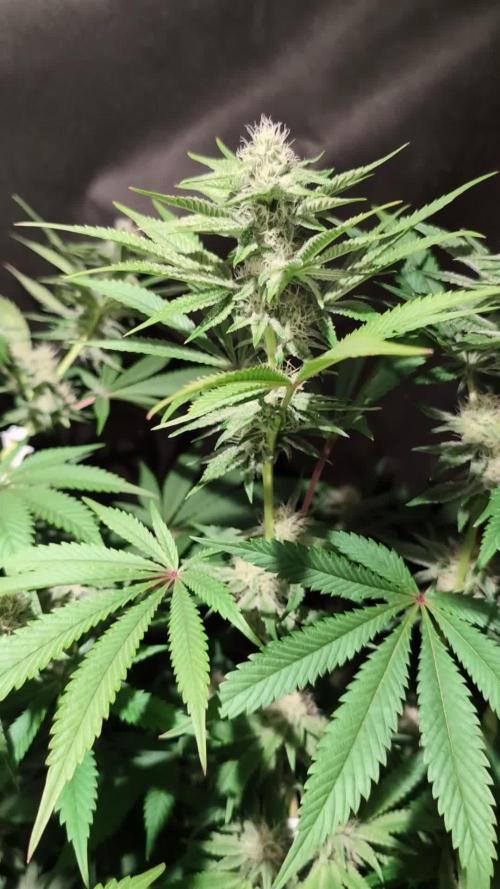
Nach der vierten Blütewoche, kommt der Stretch langsam zur Ruhe, allerdings hat die Pflanze nochmal 7cm zugelegt.
Die Blütenbildung setzt jetzt richtig ein und es bilden sich schöne Nuggets.
Die Pistillen bilden sich immer stärker aus.
Ich habe die Pflanze nun das erste Mal mit einem PK Booster Compost Tee gegossen.
Die Umgebungsgegebenheiten sind auch im Blütezelt optimal:
—————
🌞 Temp: 24,3°C
🌚 Temp: 19°C bis 20°C
💨 RH: 56%
VPD: 0,97 kPa👍
😎 PPFD: 830 mqm
—————

Likes
1
Share


@DrGL_Thumb
Follow
Dropped the 3 seeds in water bath with a little HESI rooting mix, little mycorrhizae.
On a heat mat, covered for complete darkness. 24 Hr soak -
then seeds moved into own Seed Germinator - Karl’s Bubatz Popper 😂
24 hrs after 22 degrees and 90-95% humidity seeds developed long enough roots to hit the soil. To avoid any chance of damage the cotton pads hit the soil too.

Likes
228
Share


@Still_Smoq
Follow
📆 Week 13, 4-10 January 2024
4 January - Turned light time back 2hrs to a schedule of 14/10, and lowered light power to 50%. This will facilitate ripening by mimicking an autumn environment.
7 January - Flushed system, filled with RO water and 10ml p/gal HG FloraKleen, PH 6.2.
10 January - Turned lights off.
📑 This was the final week of flowering. It will be followed now by 3 days in darkness, giving a total of 7 days in plain RO water. This provides the proper nutrient flush and a small cannibinoid/terpene boost just prior to harvest. Which will be 13 January. She will then be followed by a 7-14 day curing process, where she’ll hang for 5-7 days until the chlorophyll has dried in the leaves, then trimmed, weighed, put into mason quart jars and burped until a RH of 62% is reached/maintained. While in this state the flower will reach its peak potency/flavor in about 30-40 days, and can last for 6-12 months.
An overall interesting grow. Especially if you like the color purple. She grew rather rapidly for about 6 weeks as expected from an autoflower, then slowed down and flowered simultaniously. Buds are on the smaller side but tight. There certainly was no problem in resin development as she is quite frosty, sticky and smelly. The trichomes have purple and clear stems with milky heads, about 5-10% amber and 10%(+) clear. All white pistils have turned orange or brown. Genetics are very stable with no signs of foxtailing or hermaphroditism. The only problem I’ve had was with nutrient sensitivity in flower phase - specifically week 8. It will depend on the end product quality as to whether I will grow this strain again or not.
My final update will run a few days later than usual, but will include the Harvest and Smoq review information. I want everyone to know I appreciate all the support, likes, looks, follows, mentions and speedy answers to my questions! You are all phenomenal! Muchas gracias! Vielen dank! Спасибо! Merci beaucoup! Thank you!
🍽️ Nutrient change on 4 January
🐲 Feeding schedule updated 4 January
🌊 Using reverse osmosis water with EC/TDS at 0
🐉 Nutrient Solution EC .8 at 60 degrees F
💡 Light power at 50%
That is it for this week. Thanks for the look, read and stopping by.
Likes
220
Share


@CRiSPrGrow
Follow
Week 0 : Sixshooter
Hawkbo says Six Shooter is one of the top Fast Buds Strains, so i'm like "yeah man might as well run me some of these, i do like my weed top of the shelf!" so here it is with the six shooter , bought these direct during one of Fast bud's promotions, 3+2 x2 for the price of one, so yeah that' s a good deal ! germinating 5 let's see how many i end up keeping, depends on the rest of the seeds too ! overnight in a glass of water with a few drops of my kelp extract , protect it from the light , the next day looks like some already cracked, putting it in the RQS propagator, dont use your fingers to manipulated activated seeds , cover with some dirt, cover the propagator with a blanket to protect it from light and keep the temperature up. Let's see ! within a day three had cracked the surface, one was all squiggly from being put upside down but within a day it has straightened out, the two last ones took 3 more days to crack the surface, i'm saving them and keeping them closeby in case i need to replace any of the planted seeds. Six shooter have been great genetrics so far, i transplanted three of them on day 4. see you next week for more updates !
Likes
5
Share


@Mr_nugs_lover_David
Follow
She's looking gorgeous on her 3rd week it's just a wonderful strain to grow,let's see how she performs,I prepare a super soil mix using guanokalong organic dry amendments so I can't tell you about mililiters exactly because that's just not the way I like growing,I also add lactobacillus which are an awesome bacteria,every time I add lactobacillus to their water they just love it,the next day they get suuper green,obviously all the bacteria and humic acids from batguano worm castings and all of that helps,so I recomend if you're growing organic investigate a little about lactobacillus and how to prepare the lactobacillus liquid. Wish you all the best in your projects guys! 💚♥️💛🌱
Processing
Likes
84
Share


@Beans
Follow
This week I'd like to dedicate my growth to beans sister, who would've had a birthday if she was still with us. I day I caught him laughing his ass off for no apparent reason like he lost his damn mind. It turned out he was thinking about this time she was super sun burned and she dropped her ice cream and cried. So we are gonna watch some kids drop their ice cream and cry while listening to her favorite band, Guns n Rose's.
(Keep in mind she was 11 years older than beans and tormented him every chance she got. Also she was probably 19 at the time of her incident.)

Likes
3
Share


@TeamQuality420
Follow
This was a very ups and downs type grow . I feel very blessed to get buds from this crop . It was a big one . Now I got the confidence back and will be full steam ahead .
"NO QUIT"

Likes
2
Share

@zazazilla
Follow
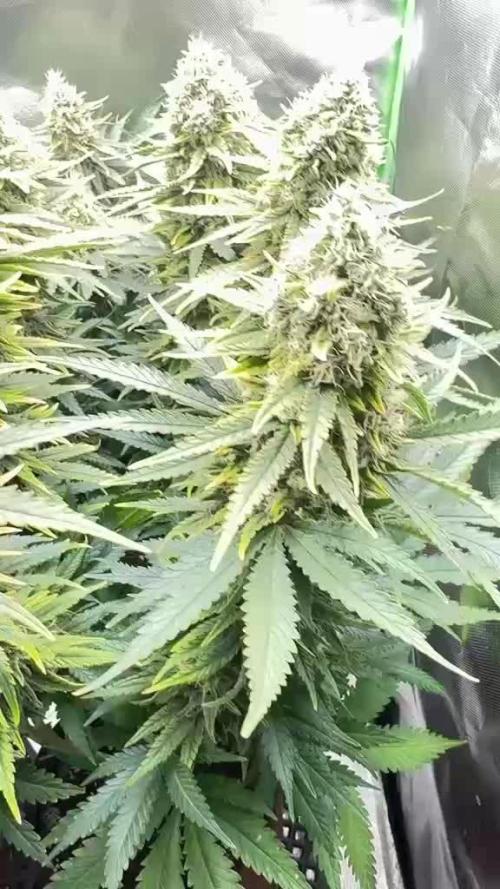
Den 69. Den 42. květu. Tento týden holky ještě pěkně dorostly, ale poslední tři dny už je vidět, že se růst postupně zastavuje a rostliny se soustředí hlavně na zrání a nabírání objemu palic.
Malý a velký Critical Orange Punch vypadají jako dvě úplně odlišné kytky, a to nejen vzhledem, ale i výnosem a vůní. Menší má krásně zbarvené oranžové pestíky a příjemnou sladší vůni. U toho většího jsem musel svázat korunu dohromady, aby se pod tíhou palic nelámaly větve. Manipulace už je docela o nervy, protože ty palice jsou opravdu těžké.
Frozen Biscotti má taky velmi pěkný výnos a palice začínají přecházet do fialových odstínů. Vůně se od minulého týdne zase posunula, cítím v tom zázvor a sladký podtón, připomíná mi to jemné zázvorky. Opravdu zajímavý profil a těším se na výsledek.
Trichomy se začínají pěkně kalit, zatím bych řekl půl na půl mléčné a čiré, jantarové jsem zatím moc nezaznamenal spíš jen na listech.
Na rostlinách je vidět lehké přehnojení, hlavně na sugar leaves, ale zároveň palice krásně nabobtnaly, takže už do toho nebudu nijak zasahovat a nechám to v klidu dojet. Teď už nemá smysl dělat větší změny.
Aktuálně se soustředím hlavně na stabilní podmínky, hlídám teplotu a vlhkost, aby všechno doběhlo bez problémů až do sklizně.

Likes
41
Share


@Zurban_Poison
Follow
this is the last week before the harvest.
the buds are formed 100% all in trichomes!
this variety is very reminiscent of Afghan genetics. leaves and their shape. I think it should be an indica dominant variety. find out very soon)


Likes
7
Share


@Bingbings_garden
Follow
Hellow growers.
Not quite sure whats going on but im now under the impression this isnt an auto as labelled. Lights have been on an 18/6 schedule but now i have set them to 12/12. I should be seeing pistils by now if it was an auto lol. I aint mad if it aint but i have veged a monster. Her stem has lots of girth her canopy is nice and even. Defoliated 22/11
Yay positive they are not automatic. So correcting info.
Likes
3
Share

@ElCapitol
Follow
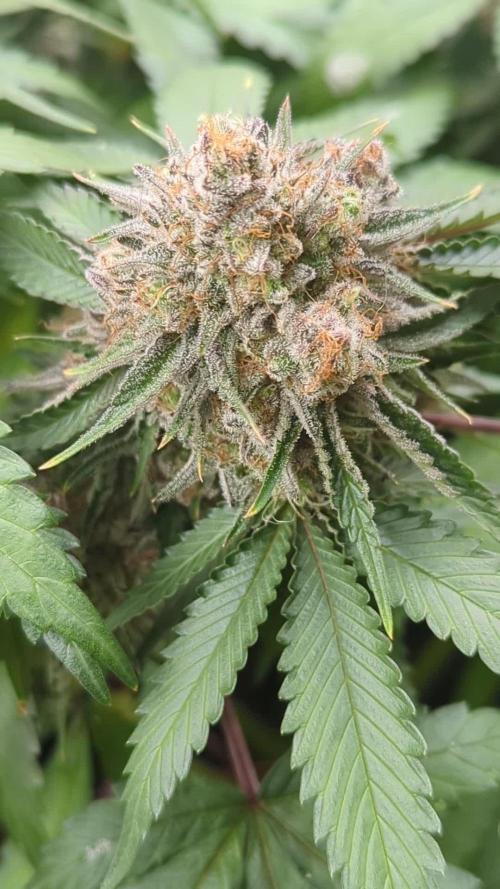
Could probably harvest three of the four of I was short of smoke. Ones lagged behind a little, but I'm in no hurry :)
Classic Kush smell and these have been real quick to flower. I know there's a lot of new strains around with quirky names but honestly everyone should have a Kush grow and these are a good place to start that Kush adventure. Been real easy to grow, stayed low, no silly stretch and no complex needs. Good signs of strong genetics. You could do a LOT worse than pop these for your next grow. Hopefully the smokes as good as the smell. Going to leave these on plain water with a dash of calmag as long as possible, see how stanky they get when left a little over ripe. Ten days maybe 🤔

Likes
12
Share


@cookingwithninja
Follow
day 49 just pure water phed down.
it is day 51, morning before lights on, I might chop today. I use a zero water filter pitcher got off walmart. My humidifier is only a sonic wave. If you use regular tap water it will get gunky in a sonic humidifier. If you have a heat humidifier that boils the water the mist should be clean. These are the 2 types of water humidifiers. Researching best water filters this "zero water" also comes with a free ppm meter! yay! Other water pitcher brands; the water still has ppm. So water misted will still have ppm contamination. You can easily used distilled water only, and reverse osmosis. I just fill a 4gal office water jug with the pitcher and fill my humidifier when needed. I do not use a humidifier in my entire grow up to this point when I chop, I need the perfect rh or this whole effort can fail. growing up to this point only requires 20% effort, chopping now for the 2 weeks dry is this 80% of crucial determination, succeed. A lot of tasks are required today for a clean chop. I feel confident, observed my cross seeds with pink paradise and one with a slightly open caylex looks dark enough for successful germination. I figured 8-16 seeds may be created, 3-4 buds were potentially pollinated. Many growers don't understand when creating genetics with female/female there is a slight chance of herm. You lose 50% of your genetic function. Just water last 2 days, no humic no folvic, 1st time entire grow ha!
There is a lot of cleaning to do, remove the trees, clean the entire tent and environment with bleach water, hacksaw.
I am very proud of my grow. I have sampled 3 of the strains, dr. thunder legit made my lips numb but it could have just been the terps removing my skin cells from the sticky filter, no lie. This is my best grow to date. I did this for you, and to document hype or not under the best conditions I could give my plants, full max potential, although I wish I had more lights, I am not looking for industrial lol, this is how I grow. Learn a lot on youtube and podcasts there is many good content and I may dab into it. You can have a room full of growers and you have 1 seed in your hand, they will all tell you that their way is correct ;) and the best way. Oreo is stinky AF, Bridal is just amazing glad its massive, just not into sativa but the test seemed slight sativa with majority indica, pink untested, dr, thunder just a lip numming plant aha, its very nice, all 4 amazing appeal like advertised, and excited for next run. Either crosses from this or other copycat genetics.
I will give you beautiful glamout shots today, the sizes of the plants, My guesstimate bridal 1lb, thunder 1lb, pink, 0.4lb, bridal 0.5, I am ambitious off 640w lm301h, and 4x 20w blurples daisy chained.
day 51 4 chopped see you in a few weeks :D

Likes
8
Share


@Hexus
Follow
Days 78-84 - Been lax in updates, but I still log every week to completion. Back injury in addition to The Nineteen, Rona Style, has been a bit of a pain in the posterior. (That means ass) Plants are gigantic and sassy. Had Dangergirl come out and defoliate/lollipop the bottoms out of the girls, saving me painful labor and increasing my yields, so yay for her! Plants are happy, pompoms are getting thick, and everything looks good. Switched FF01 to flower on day 84.


Likes
56
Share


@Ultraviolet
Follow
What's in the soil? What's not in the soil would be an easier question to answer. 16-18 DLI @ the minute. +++ as she grows.
Probably not recommended, but to get to where it needs to be, I need to start now.
Vegetative @1400ppm 0.8–1.2 kPa 80–86°F (26.7–30°C) 65–75%, LST Day 10, Fim'd Day 11
CEC (Cation Exchange Capacity):
This is a measure of a soil's ability to hold and exchange positively charged nutrients, like calcium, magnesium, and potassium. Soils with high CEC (more clay and organic matter) have more negative charges that attract and hold these essential nutrients, preventing them from leaching away.
Biochar is highly efficient at increasing cation exchange capacity (CEC) compared to many other amendments. Biochar's high CEC potential stems from its negatively charged functional groups, and studies show it can increase CEC by over 90%. Amendments like compost also increase CEC but are often more prone to rapid biodegradation, which can make biochar's effect more long-lasting. biochar acts as a long-lasting Cation Exchange Capacity (CEC) enhancer because its porous, carbon-rich structure provides sites for nutrients to bind to, effectively improving nutrient retention in soil without relying on the short-term benefits of fresh organic matter like compost or manure. Biochar's stability means these benefits last much longer than those from traditional organic amendments, making it a sustainable way to improve soil fertility, water retention, and structure over time. Needs to be charged first, similar to Coco, or it will immobilize cations, but at a much higher ratio.
a high cation exchange capacity (CEC) results in a high buffer protection, meaning the soil can better resist changes in pH and nutrient availability. This is because a high CEC soil has more negatively charged sites to hold onto essential positively charged nutrients, like calcium and magnesium, and to buffer against acid ions, such as hydrogen.
EC (Electrical Conductivity):
This measures the amount of soluble salts in the soil. High EC levels indicate a high concentration of dissolved salts and can be a sign of potential salinity issues that can harm plants.
The stored cations associated with a medium's cation exchange capacity (CEC) do not directly contribute to a real-time electrical conductivity (EC) reading. A real-time EC measurement reflects only the concentration of free, dissolved salt ions in the water solution within the medium.
98% of a plants nutrients comes directly from the water solution.
2% come directly from soil particles.
CEC is a mediums storage capacity for cations. These stored cations do not contribute to a mediums EC directly.
Electrical Conductivity (EC) does not measure salt ions adsorbed (stored) onto a Cation Exchange Capacity (CEC) site, as EC measures the conductivity of ions in solution within a soil or water sample, not those held on soil particles.
A medium releases stored cations to water by ion exchange, where a new, more desirable ion from the water solution temporarily displaces the stored cation from the medium's surface, a process also seen in plants absorbing nutrients via mass flow. For example, in water softeners, sodium ions are released from resin beads to bond with the medium's surface, displacing calcium and magnesium ions which then enter the water. This same principle applies when plants take up nutrients from the soil solution: the cations are released from the soil particles into the water in response to a concentration equilibrium, and then moved to the root surface via mass flow.
An example of ion exchange within the context of Cation Exchange Capacity (CEC) is a soil particle with a negative charge attracting and holding positively charged nutrient ions, like potassium (K+) or calcium (Ca2+), and then exchanging them for other positive ions present in the soil solution. For instance, a negatively charged clay particle in soil can hold a K+ ion and later release it to a plant's roots when a different cation, such as calcium (Ca2+), is abundant and replaces the potassium. This process of holding and swapping positively charged ions is fundamental to soil fertility, as it provides plants with essential nutrients.
Negative charges on soil particles: Soil particles, particularly clay and organic matter, have negatively charged surfaces due to their chemical structure.
Attraction of cations: These negative charges attract and hold positively charged ions, or cations, such as:
Potassium (K+)
Calcium (Ca2+)
Magnesium (Mg2+)
Sodium (Na+)
Ammonium (NH4+)
Plant roots excrete hydrogen ions (H+) through the action of proton pumps embedded in the root cell membranes, which use ATP (energy) to actively transport H+ ions from inside the root cell into the surrounding soil. This process lowers the pH of the soil, which helps to make certain mineral nutrients, such as iron, more available for uptake by the plant.
Mechanism of H+ Excretion
Proton Pumps: Root cells contain specialized proteins called proton pumps (H+-ATPases) in their cell membranes.
Active Transport: These proton pumps use energy from ATP to actively move H+ ions from the cytoplasm of the root cell into the soil, against their concentration gradient.
Role in pH Regulation: This active excretion of H+ is a major way plants regulate their internal cytoplasmic pH.
Nutrient Availability: The resulting decrease in soil pH makes certain essential mineral nutrients, like iron, more soluble and available for the root cells to absorb.
Ion Exchange: The H+ ions also displace positively charged mineral cations from the soil particles, making them available for uptake.
Iron Uptake: In response to iron deficiency stress, plants enhance H+ excretion and reductant release to lower the pH and convert Fe3+ to the more available form Fe2+. The altered pH can influence the activity and composition of beneficial microbes in the soil. The H+ gradient created by the proton pumps can also be used for other vital cell functions, such as ATP synthesis and the transport of other solutes. The hydrogen ions (H+) excreted during photosynthesis come from the splitting of water molecules. This splitting, called photolysis, occurs in Photosystem II to replace the electrons used in the light-dependent reactions. The released hydrogen ions are then pumped into the thylakoid lumen, creating a proton gradient that drives ATP synthesis.
Plants release hydrogen ions (H+) from their roots into the soil, a process that occurs in conjunction with nutrient uptake and photosynthesis. These H+ ions compete with mineral cations for the negatively charged sites on soil particles, a phenomenon known as cation exchange. By displacing beneficial mineral cations, the excreted H+ ions make these nutrients available for the plant to absorb, which can also lower the soil pH and indirectly affect its Cation Exchange Capacity (CEC) by altering the pool of exchangeable cations in the soil solution.
Plants use proton (H+) exudation, driven by the H+-ATPase enzyme, to release H+ ions into the soil, creating a more acidic rhizosphere, which enhances nutrient availability and influences nutrient cycling processes. This acidification mobilizes insoluble nutrients like iron (Fe) by breaking them down, while also facilitating the activity of beneficial microbes involved in the nutrient cycle. Therefore, H+ exudation is a critical plant strategy for nutrient acquisition and management, allowing plants to improve their access to essential elements from the soil.
A lack of water splitting during photosynthesis can affect iron uptake because the resulting energy imbalance disrupts the plant's ability to produce ATP and NADPH, which are crucial for overall photosynthetic energy conversion and can trigger a deficiency in iron homeostasis pathways. While photosynthesis uses hydrogen ions produced from water splitting for the Calvin cycle, not to create a hydrogen gas deficiency, the overall process is sensitive to nutrient availability, and iron is essential for chloroplast function.
In photosynthesis, water is split to provide electrons to replace those lost in Photosystem II, which is triggered by light absorption. These electrons then travel along a transport chain to generate ATP (energy currency) and NADPH (reducing power). Carbon Fixation: The generated ATP and NADPH are then used to convert carbon dioxide into carbohydrates in the Calvin cycle. Impaired water splitting (via water in or out) breaks the chain reaction of photosynthesis. This leads to an imbalance in ATP and NADPH levels, which disrupts the Calvin cycle and overall energy production in the plant. Plants require a sufficient supply of essential mineral elements like iron for photosynthesis. Iron is vital for chlorophyll formation and plays a crucial role in electron transport within the chloroplasts. The complex relationship between nutrient status and photosynthesis is evident when iron deficiency can be reverted by depleting other micronutrients like manganese. This highlights how nutrient homeostasis influences photosynthetic function. A lack of adequate energy and reducing power from photosynthesis, which is directly linked to water splitting, can trigger complex adaptive responses in the plant's iron uptake and distribution systems.
Plants possess receptors called transceptors that can directly detect specific nutrient concentrations in the soil or within the plant's tissues. These receptors trigger signaling pathways, sometimes involving calcium influx or changes in protein complex activity, that then influence nutrient uptake by the roots. Plants use this information to make long-term adjustments, such as Increasing root biomass to explore more soil for nutrients. Modifying metabolic pathways to make better use of available resources. Adjusting the rate of nutrient transport into the roots. That's why I keep a high EC. Abundance resonates Abundance.


Processing
Likes
4
Share


@Englandshigh
Follow
This one my favourite plants to ever grow , she is producing loads of pistols everyday and producing colours change in the them, very stinky smell recommended this strain to every one

Likes
3
Share

@BluntTrauma416
Follow
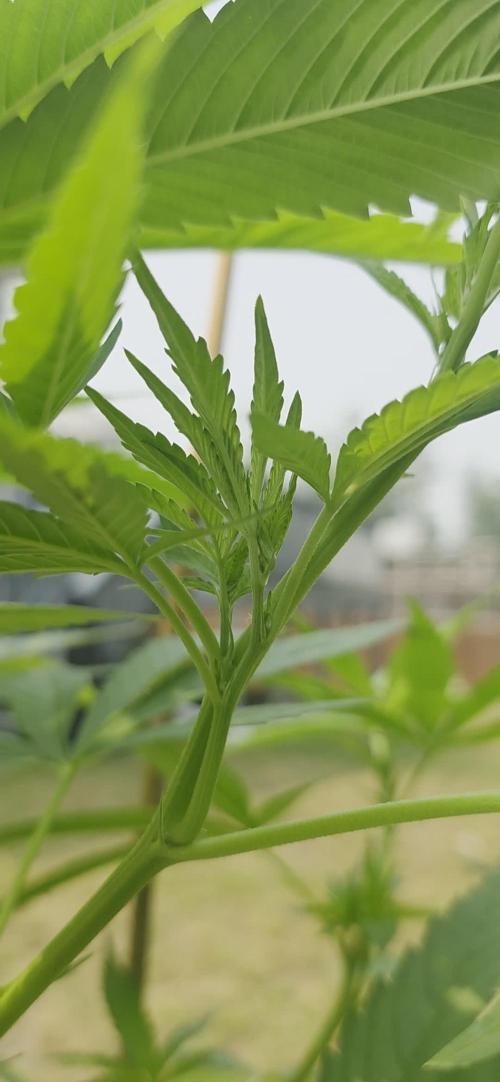
Gave 50/50 gaia green all purpose and bloom, I cleaned up the lower branches, lollipoped basically, , and i think we have started to flower , i see the white pistils starting to form .
Likes
24
Share


@DogDoctorOfficial
Follow
🌱 Divine Seeds Week Five Report 🌱
Hey, fellow growers! 🌿✨
Welcome back to our weekly update on the Divine Seeds journey. We’ve now entered Week Five, and all our plants are in the flowering stage. This week brought some necessary changes as we adjusted the light schedule to 12/12 due to the rapid growth of our Big Demon. Here’s the latest on our Moon Rock, Opium, and Big Demon plants.
🌟 Week Five Highlights 🌟
All plants are now officially in the flowering stage, and we made an important adjustment to our light schedule to accommodate the vigorous growth of the Big Demon. Here’s a detailed look at each plant’s progress:
1. Moon Rock 🚀
• Growth: Maintaining its compact and sturdy structure.
• Flowering: Buds are developing nicely, with a healthy formation and density.
• Notes: Moon Rock remains strong and healthy, adapting well to the 12/12 light schedule.
2. Opium 🌸
• Growth: Balanced growth with a steady flowering transition.
• Flowering: Buds are forming uniformly, showing excellent health and structure.
• Notes: Opium continues to flourish gracefully, with beautiful bud development.
3. Big Demon 💪
• Growth: Rapid and robust, necessitating a change in light schedule.
• Flowering: Finally transitioning into flowering, with buds beginning to form.
• Notes: Big Demon’s vigorous growth prompted the switch to a 12/12 light schedule to manage its size and ensure it flowers properly.
🌟 Light Schedule Adjustment 🌟
Due to Big Demon’s impressive and rapid growth, we decided to switch to a 12/12 light schedule. Here’s why:
• Inducing Flowering: The 12/12 schedule simulates the natural shortening of days, signaling to the plants that it’s time to flower. This is crucial for photoperiod strains like Big Demon ( yes she turned out not an auto).
• Managing Plant Size: Big Demon’s rapid growth risked outgrowing the grow space. Switching to 12/12 helps control its size by focusing energy on flowering rather than continued vegetative growth.
• Uniform Development: Ensuring all plants are on the same light schedule helps maintain uniformity in the grow room, making it easier to manage and monitor their progress.
🌟 Environmental and Nutrient Strategy 🌟
Our current environmental parameters and nutrient strategy remain consistent:
• Water:
• TDS: 400 ppm
• pH: 6.2
• Temperature: 18°C
• Grow Room Conditions:
• Temperature: 30.3°C
• Relative Humidity (RH): 51%
🌟 LED Lighting and Control System 🌟
We continue to rely on the Lumatek Zeus 465 Compact Pro LED to provide optimal lighting. This LED delivers a balanced spectrum and ensures even light distribution across our canopy, which is crucial during the flowering stage.
The TrolMaster Hydro X controller with its 3-in-1 sensor for temperature, humidity, and light detection helps us maintain ideal growing conditions. This system ensures our plants receive the perfect environment for healthy growth and flowering.
🌟 Nutrient Strategy 🌟
Our feeding regimen includes:
• Regulator (0.15ml/L): To reduce stress and improve overall plant health.
• CaMg-Boost (0.25ml/L): To provide essential calcium and magnesium, supporting strong cell wall development and photosynthesis.
The rich organic soil, combined with these supplements, continues to support robust growth and healthy flowering.
🌟 Key Observations 🌟
• Plant Health: All plants are super healthy, with no signs of nutrient deficiencies or stress.
• Growth Patterns: Moon Rock remains the most compact, Opium is gracefully flowering, and Big Demon is transitioning into flowering after the light schedule change.
• Environmental Control: The grow room conditions are stable, with ideal temperature and humidity levels supporting healthy development.
🌱 Next Steps 🌱
As we move further into the flowering stage, our focus will be on:
• Monitoring Bud Development: Keeping a close eye on bud formation and ensuring optimal conditions for flowering.
• Adjusting Nutrients as Needed: Observing plant responses and adjusting the nutrient regimen if necessary.
• Maintaining Optimal Conditions: Continuing to use the Lumatek LED and TrolMaster controller to ensure perfect growing conditions.
Stay tuned for more updates as our Divine Seeds continue to flourish in the flowering stage. We’re excited to see the results of the 12/12 light schedule and share every milestone with you on this incredible journey!
Happy growing, and may your gardens be ever green! 🌿💚
#DivineSeeds #WeekFiveVegReport #FloweringStage #AptusHolland #MoonRock #Opium #BigDemon #GrowDiaries #PlantMagic #GreenThumb #Inspiration #LumatekZeus #TrolMasterHydroX
Germination method 🌱 @thecannakan
Genetics
@divine.seeds
Nutrition
@aptusholland 🌿
@aptus_world 🌎
@aptus_es 🌍
@aptusbrasil 🌱
@aptus_thailand 🌿
@aptus_portugal 🌳
@aptususa_officiala 🍀
@aptusplanttechnz 🌺
@aptusplanttechaus 🍃
Ambient controls🎮
@trolmaster.eu @trolmaster.eu.support @trolmaster.support @trolmaster.agro
Soil @promix_growers_eur @promix_cannabis
LED - @lumatekeu
Watering- @autopot_usa @autopot_global
Love and attention- @dogdoctorofficial
#aptus #aptusplanttech #aptusgang #aptusfamily #aptustrueplantscience #inbalancewithnature #trolmaster #trolmastereurope #trolmastersecrets #Autopots
#GreenJoy
As always thank you all for stopping by, for the love and for it all , this journey of mine wold just not be the same without you guys, the love and support is very much appreciated and i fell honored and so joyful with you all in my life 🙏
With true love comes happiness 💚🙏 Always believe in your self and always do things expecting nothing and with an open heart , be a giver and the universe will give back to you in ways you could not even imagine so 💚
More info and complete updates from all my adventures can be found ⬆️link in the profile description ⬆️
Friendly reminder all you see here is pure research and for educational purposes only
💚Growers Love To you All 💚
