


Likes
Comments
Share


@IndianaGrow
Follow
Week 6th done so far so good i put scrog net down and small bit of defoliation to get some air flow through the canopy next week i will be put another scog net down to open some light penetration for the lower buds

Likes
223
Share


@Tropicannibis_Todd
Follow
💩Holy Crap We Are Back At It And Loving It💩
👉WE R SO CLOSE NOW👈
Growmies we are at DAY 70 and there all just killing💀it👌
The Gorilla Punch Is Amazing 👏 But so is the OG
👉We are in full flowering mode for the👈 OG 👍 GP 👍 the AF was the hold out but shes finally flowering👈
So Shit , I gave them just a tad to much nutes at the start feeding 👈 But I have since fixed it
So I'm still doing some low stress training 🙃 and some defolation 😳
Lights being readjusted and chart updated .........👍rain water to be used entire growth👈
👉I used NutriNPK for nutrients for my grows and welcome anyone to give them a try .👈
👉 www.nutrinpk.com 👈
NutriNPK Cal MAG 14-0-14
NutriNPK Grow 28-14-14
NutriNPK Bloom 8-20-30
NutriNPK Bloom Booster 0-52-34
I GOT MULTIPLE DIARIES ON THE GO 😱 please check them out 😎
👉THANKS FOR TAKING THE TIME TO GO OVER MY DIARIES 👈

Likes
3
Share


@CaliJ
Follow
fast eddy measures 60 cm, the 3 gelato cookies between 70 and 80 cm, the 3 northern light from 90 cm to 1 meter 20, the smell is stronger when the tent is opened, major heat problem solved thanks to a portable air conditioning🍀

Likes
56
Share


@Zannabis7
Follow
Day 35 – The Auto Kush is beginning to throw out some nice flowers and is starting to frost up a bit. She continues to stretch as she has gained 6” in height this week and hasn't shown any signs of slowing.
Continuing to feed the Nectar for the Gods nutrients and have added Triton’s Trawl (liquid fishbone meal that is rich in calcium from fish cartilage and is designed to deliver flavor, aroma and color to the finished product) and Aphrodite’s Extraction (a rich blend of sucrose, fructose, chelated nutrients, and organic acids necessary for enzymatic activity, and a complete balance of vitamins A, C, D, E, B1, B6 and B12, which are essential to a plants’ biological growth processes). These two additions are known to increases oil, resin, frost, and terpene production in flower. Continuing to add Recharge as a soil amendment to establish colonies of beneficial fungal and bacterial microbes.
Temperatures are consistently between 74° - 78° and humidity between 30% - 45%. Soil pH is 6.5 and PPMs at 321 which is perfect for the Nectar for the Gods nutrient line.
Added a homemade Co2 generator to boost carbon dioxide levels and to improve overall plant growth and health. – Zannabis7
Day 36 - Fed the Nectar of the Gods nutrients as indicated above and in photo. Added Recharge to the nutrient mix for microbes and to aid in the breakdown and uptake of nutrients. - Zannabis7
Day 39 - Fed the Nectar of the Gods nutrients as indicated above and in photo. Again added Recharge to the nutrient mix for microbes and to aid in the breakdown and uptake of nutrients. Also did some very light defoliation and more leaf tucking to expose flower sites - Zannabis7

Likes
15
Share

@420DeepGrow
Follow
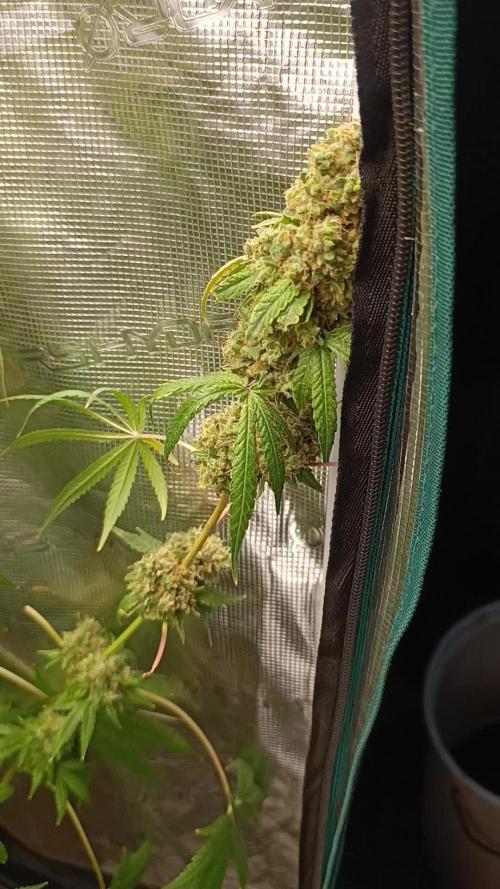
📆 Semana 12
Las flores continúan en su fase final de maduración, ganando densidad y terminando de desarrollar su producción de resina. Los pistilos siguen oscureciéndose y retrayéndose progresivamente, mientras los cogollos presentan un aspecto cada vez más compacto y maduro.
Entrando ya en la recta final, cambio la nutrición habitual por Master Piece, comenzando la fase de lavado de raíces y preparando las plantas para la cosecha. Mantengo unas condiciones estables para que puedan completar tranquilamente su maduración durante estos últimos días.
💧 Master Piece: fase de lavado de raíces
💧 pH: 6.2–6.4
🌡️ Agua: 19–21°C
🌫️ Humedad: 40–45%
💡 Luz: PPFD 900–1000
🔥 Nota: Última etapa antes de la cosecha. A partir de ahora, el objetivo es acompañar la planta durante su maduración final y dejar que las flores terminen de expresar todo su potencial antes del corte.
¡Seguimos creciendo fuerte! 💪
Likes
87
Share


@Roberts
Follow
Banana kush auto is growing. I messed her up with ph fluctuations and improper feed amounts. She was way hungrier then I had expected. She smells nice just looks rough. She did okay under the Medic grow mini Sun-2. The next update will be a harvest. Thank you Medic Grow, Athena, and Weed Seeds Express. 🤜🏻🤛🏻🌱🌱🌱
Thank you grow diaries community for the 👇likes👇, follows, comments, and subscriptions on my YouTube channel👇. ❄️🌱🍻
Happy Growing 🌱🌱🌱
https://youtube.com/channel/UCAhN7yRzWLpcaRHhMIQ7X4g

Likes
6
Share


@StarSkream
Follow
Week 1 24 hours ethos popped and began to stretch
Temp 76 humidity domes on top 5 of 5 out going directly into pots and 24 hour lighting on day 3! gonna run 24/7 for 30 then switch over hopefully. Nothing added but FishShit and rootdrench to pop

Likes
11
Share


@Smokeitup091191
Follow
This week seems to have gone fine no major problems to document. Girls are growing strong. Wouldn’t say it been a speedy process going into flowering but I have done some extensive training so that could be the reason for slower growth. Going to leave them alone now let them do there thing this next coming week
Likes
37
Share


@Brothersfromweed420
Follow
Bueno primera semana y va muy bien vamos a ver como continúa el seguimiento.

Likes
9
Share


@Downunder90
Follow
Yooo growers 🌱,
Week 9 check-in! Just mixed in the Bloom nutrients from Green House Seeds and switched up the feed — 1.2L daily now. The girls are still thriving and soaking it all up. Thinking about flipping to 12/12 next week — time to bring on the bloom show! 🌸
Stay tuned, it’s about to get real 🔥
Peace ✌️✌️✌️✌️
Likes
9
Share


@En_Eff_Tee
Follow
Trailing the whole CYCO platinum series range and following their feed schedule.

Likes
38
Share

@FatnastyzBudz
Follow
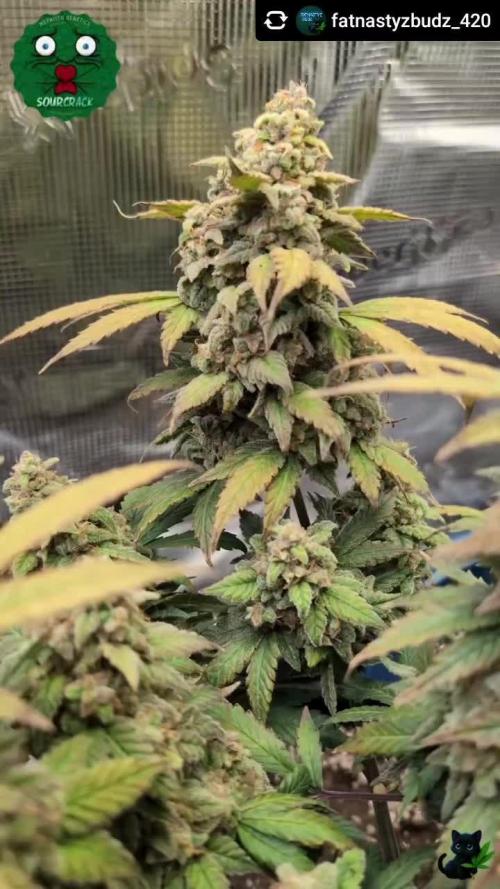
Super glad I got to finally run her again! Wanted to for a while, but then ol' Personalsmok3s had to call me out! 😂😂Which just ensured it was next! 🙏
Love this thing and I could grow a tent full at once!
😻😁🤘

Likes
2
Share

@Jardin33ro
Follow
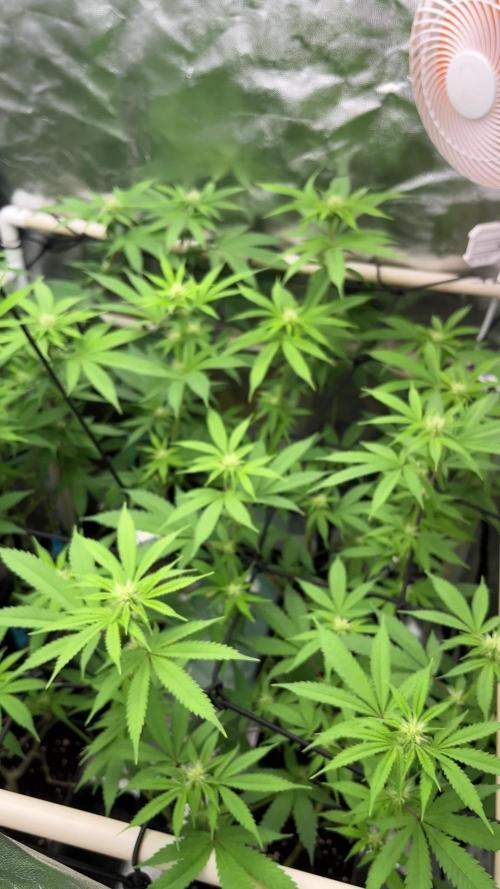
Comienzan a formarse las flores, arranca la semana 2. Incorporamos big bud para estimular la formacion de calices. Tratamos de mantener un ph en 6.3 y una ec no tan alta aun.

Likes
8
Share

@Greybeardbud
Follow
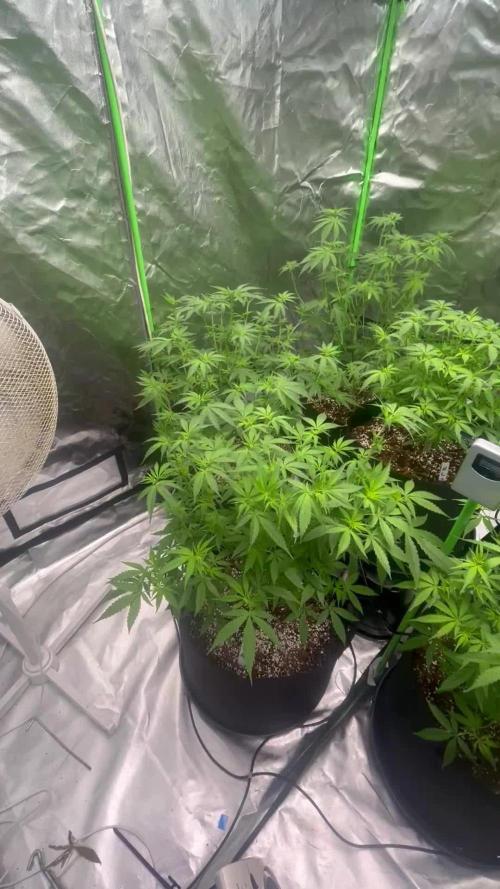
Had a few issues this week mostly with ph runoff, was very high at 8.5 (had been on the rise for a little while given that I have been time poor and a lack of energy this was put on the I’ll do it tomorrow list). Picked up some drip clean and reset the coco. Now getting runoff at 6.4 and improving. The girls have been growing this week some more than others but overall I’m pretty happy with the progress shortest being 36cm tallest 67cm with most averaging 53-55cm. Picked up 2 more fans to keep the air moving and will be hopefully doing some restructuring of the tent to help reduce this humidity and potentially relocating 4 of the girls into the 1.5x1.5 tent to give them all some extra room
Other than that just maintaining the light into the plants and trimming where required all be it in stages when time allows
Potentially too late in this grow but have moved over to filtered water to remove chlorine, tds remains at 87 for tap water and filtered water but filtered there is 0 chlorine
Have dialled up the lights from 45%/45%0% to 45% veg 60% bloom 0% uv for another 6 days if all is looking good will ramp to 60% veg 80% bloom for week 10 and checking for light stress. Have an overlap of 20cm in the hellion vs3 lights which is going to give the centre a bit of punishment. Also looking into putting some co2 grow bags into the tent so the plants can handle the extra light.
After 12 hours of increased light there does not appear to be any light stress yet
Wednesday 28-Jan - pre flowers have appeared! 1 1/2 weeks into flip 7/8 plants have pistils 1 more to go and I can worry less that there’s a rooster amongst the hens hiding amongst the forest.
Have obtained a 20L/day dehumidifier currently stable lights off 25’c 63% lights on 28’c 63% which is a massive improvement from the crazy 80-90%rh we did have. Plants have responded extremely well with their new climate and are well into their stretch (moreso since they have been able to breathe) day 21 defoliation is going to be a big job
Likes
6
Share


Likes
7
Share


@MaxWax
Follow
The plants are all doing well, unfortunately they are developed differently, in the future I will make a report per plant
Likes
30
Share


@ArtisticGrown
Follow
Sooooo this has been an amazing and exciting week! Ive been patient with this last plant and really checking the trichomes i inly wanted a few amber caps on the nugs, was looking for milky on this one! Shes smelling amazing and the color change was such a sight to see! She did so well with the nutrients and loved the 2 week flush i did! I cut her down did a wet trim and have em in the drying rack! Im excited to see how she cures and drys ready for the smoke reveal! Much love and happy growing!!!
*check out the examples of the rewards from the traing i did with lst, hst, desolation love seeing this!!* learning this craft and style of growing is a blast! And everyone should try it!

Likes
13
Share


@FlavoursUk
Follow
Welcome back to another week, finally decided to flip to flower as these girls do grow pretty quickly in DWC. Aiming for some nice quality buds bit also a decent yield of at least 1 gram per watt of light.
Nutrient solution has not been changing to complete flower schedule yet but I will be sure to switch it over in a few days. The crucial part now is keeping the EC and pH in a good range to avoid any deficiencies or Nutrient lock out.
Let's see what the stretch brings the first few weeks. Stay tuned, and I'll be back for the by the end of the week to report some video feedback.
End of the week has ending with a heavy defoliation session. Plants were getting bushy and covering potential tops so that needed to be addressed. For now, it will be selective defoliation once they have recovered, which should be in 2/3 days.
Let's watch them bounce back. Stay tuned for week 2.
Check out my YouTube and Instagram channel for a closer look. (Link on profile)


Likes
8
Share


@GrowPassionItalyChris
Follow
Sono felice è stata una settimana perfetta, clima estivo caldo ed umido e fresco di notte è ormai arrivato e stabile. Continuano tutte a fiorire in maniera assurda, sono quasi tutte piene di infiorescenze gonfie, dure e molto resinose ed appiccicose, nessun insetto o parassita delle piante riesce ad invadere le piante, stanno morendo tutti appiccicati alla resina! Si intravedono i primi tricomi di colore ambrato e per molte piante ormai mancano un paio di settimane alla raccolta mentre per il resto delle piante tra circa tre settimane saranno tutte pronte per la raccolta! Si sente un forte odore nauseante di frutta incensata, e odorarle significa avere poi il naso appiccicato di resina per ore! La maggioranza delle piante supera il metro e cinquanta centimetri di altezza ma sono molto piene di diramazioni stracolme di infiorescenze dure e appiccicose, ogni varietà ha il suo forte odore particolare e viene l'acquolina in bocca! Ultima settimana di nutrienti poi solo acqua pura! Ci vogliono circa un litro di acqua a pianta ogni due giorni con questo caldo ma ormai la magica fine è vicina! Un abbraccio a tutti e forza Dutchfem seeds in Italia!


