


Likes
Comments
Share


@Chuckwaggon420
Follow
This week is another step towards the end goal of getting to see these beautifull buds. Gave them a dose of build a flower on day 17. Gave them a heavy dose of molasses on day 21 mild on 17 with flower. 1 pheno is getting covered in resin early. All have a musky gas smell as of now. Something sweet them fist open the tent.

Likes
4
Share


@Based_Buds
Follow
I had a good week. Been cutting back on the nutrients and I’ve been adding some unsulphured black strap molasses into my mix. Hoping it helps the microorganisms in the soil.
Likes
1
Share


@Sketchyfrog
Follow
So much stretching going on this week. I think we are just about done though. Which is good because I do not want to have to move the exhaust and all. Really upped the nutrients this week. Burned em just a tad but I think I found her sweet spot. 1300-1500 ppm. Seems strong but if I even go down to 1000ppm #3 starts getting yellow. Finally some nice flowers forming. Aromas are starting to fill the room when I open the tent each morning. I thought this was supposed to be an 8 weeks strain but I'm 17 days in and it's feeling more like a 10-11 week strain.
Processing
Likes
22
Share


@eldruida_lamota
Follow
Esa familia, ya actualizo última semana de crecimiento, la verdad y siendo sinceros, da igual que compres semillas de marca que de granel si tienes conocimientos , sacarás buena yerba, veréis.
A llegado el otoño y lo notamos a bajado la temperatura entre 20/22 grados ya sea de día o de noche.
.
La humedad anda entre 55% la temperatura está entre 22/23 grados , y como siempre el ph , ya que es de lo más importante,está en 5,8/6,0.
.
AgroBeta:
1 ml x L Growth black line , vía radicular.
0,2 ml x L Tucán , vía radicular.
0,2 ml x L Flash Root , vía radicular.
0,05 ml x L Gold Joker, vía radicular.
.
Hasta aquí es todo familia, espero que os vaya gustando el proceso tanto de crecimiento como la futura floración 💨💨💨 buenos humos.

Likes
30
Share


@BudXs
Follow
Tick tock SBG, follow him on tik tok too.
So far the rest of the plants are yielding really nicely all the way down. Minimal larf and 5oz+ average. Lets see what a non defo will do
Thanks for lookin

Likes
69
Share


@Crazyweedpt
Follow
Week 10
The Trichomes are cloudy and some are amber, their production are so huge that looks like a snow blizzard frosted over the nugs! The Plant has dryed after a flush and been left in complete darkness 2 days ago! The smell reek the entire house! It´s time for Harvest! 👌
RQS fabric pots 😎 VS cheap ebay fabric pots 💩
Extra oxygen to the roots can help extend cannabis growth rates, in RQS pots, cannabis plants will not become “root-bound”, which is when roots cover the ends of the container and “choke” the plant. It is a very big problem for any plant to become root bound, but in these, that doesn’t happen since the plant will receive plenty of air, which will lead to the plant naturally “air pruning” itself, and forgoing the roots wrapping around the container edges. Because the air comes in from all sides, your plant will receive a lot of oxygen, and thereby avoid getting “wet feet” from overwatering. When water sits in your pot for too long, it can lead to root rot and other diseases that put your crop at risk. Because of such consistent air-filtration, pots will have to be irrigated more frequently because the soil will continually dry out from the exposure. Still your plants will ultimately be protected from over watering and the problems that arise from it. This pots comes with handles, which makes transportation easier and they´re built with top quality materials, wich make them more rigid than cheap fabric pots that i experienced before, rigidity means easily moving pots around and RQS pots rigid shape reduces damage to plants and roots during transportation and prevents from folding over during filling or watering.
RQS fabric pot provide maximum aeration and moisture retention for optimal growth.
Thanks for turning on and tuning in. Jah Bless 🙏

Processing
Likes
10
Share


@Barcelona_Farmers710
Follow
Bueno Farmers un error por ni contar la época de Pre-Flora entramos ahora semana 2 de flora, ya empieza salir la resina...sobre todo la Royal Gorila. No podremos pasar a led de momento próximamente mas novedades compañeros!🍁
Likes
55
Share


@CBD_Sweden
Follow
2018-07-17 Start of week 16 of veg.
The girls is doing awesome and growing like crazy.
I have topped them hard from the beginning and i will do a final topping this week.
I will start flower as soon as i get my 4 x HLG 260W QUANTUM BOARD KIT V.2 that i have ordered.


Likes
22
Share


@Njaak
Follow
Login issues led to missing a couple weeks, but things have been super smooth.
Buds are looking sweeeet and hairy. And they're really fattening up. She's one thick hairy lady.
Following the nutrient schedule without deviation, swapping and cleaning the reservoir every week (H2O2 clean), and keeping the humidifier filled.
I swapped the pump. First one randomly stopped working for no apparent reason. New one I spec'd with a much lower pump rate and it's a great improvement. No splashing, just a trickle recirculation so I keep it on 24/7.
The pH monitoring is so so so much easier now with the good Apera pen. What a difference it makes over the generic ones.

Likes
3
Share


@Mr_nugs_lover_David
Follow
This lady looks fantastic for 14 days since planted,let's see how she performs but I trust dutch passion and I know it's gonna be great to grow this beautiful strain! Let's keep on working! 👷♂️👨🌾💚🌱🤞

Likes
85
Share


@CRiSPrGrow
Follow
Oh cindy.... be mine ! They're all doing great , pushing out these typical sativa plant leafs, thin, long, real nice. this plant is squat but it got flipped a few days ago so lets see how it does with the stretch. Smell is getting serious by now, i dont know how that's going to work when i'm in the full flower probably i'll need a third extractor and a third carbon filter... the noise on these fans is insane though at 150W each it's not easy to stay in the room with the buzzing sound .... Did some training on these, two defoliations that "s a total of three so far. Funniest thing happened : i mixed my specialised micro (cal mag + "rare micro" like boron, mobi, etc) which is green powder with the Biotabs Orgatrex which is brown liquid and my feed ended up blue lol i still watered with it, so pray for my plants lol Veg is finally over ! Now it gets interesting ! 🚀

Processing
Likes
9
Share


@PizzaMan024
Follow
Transplanted blueberry clone 3 to a 5 gallon, amnesia auto 3 has had a burn spot on the leaf for a while, she is also the smallest auto, any help appreciated!
Update, starting using GHE flora series nutrients. Saved blueberry clone #3 finally I do believe.


Likes
Comments
Share

@Franci5
Follow
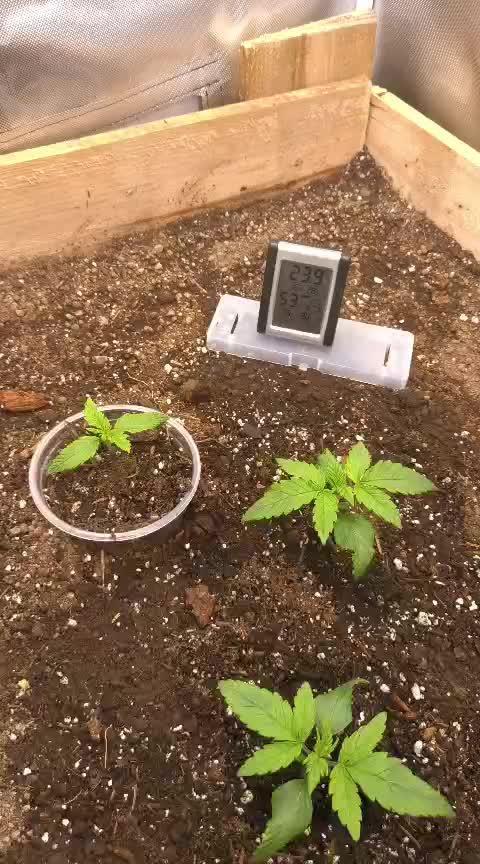
In the third week, fertilizers are added, and the plants are lightly pruned to encourage diagonal growth. I also tuck the leaves to allow light to penetrate, and transfer the plants to the growing bed.😋

Likes
7
Share

@AlexBeck
Follow
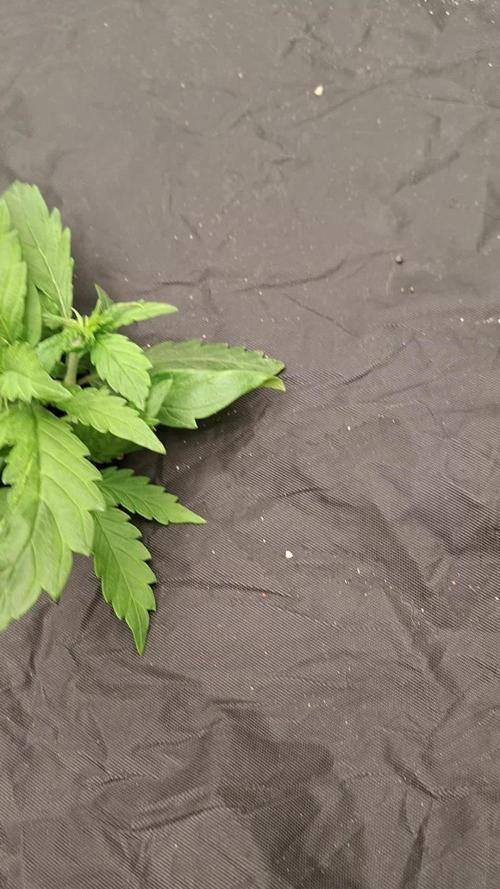
Plants are looking healthier now. Ladies are now being feed via drip system. Timer drips 30 seconds every 12 hours. In addition to the micro watering, every other day i feed 2 gallons of liquid amendments and let it pump straight through, until finished.
Topped the plants today and noticed the Amnesia Fast is growing 2 tops without being topped. This is a first and very unusual for me. Not sure what to think but it is cool to see.
Fed pound water PH'd at 6.


Processing
Likes
10
Share


@Reaper
Follow
day 15: flowers start to appear
day 16-17: temps go 24 celcius, i throw ice bottles in the res
day 25: insane stretch stops flowers fatten up, even crystals around the young budz.

Likes
11
Share


@NoProbation4Weed
Follow
Last week was Perfect weather conditions with 20°C ~ 30°C at daytime and 8°C ~ 15°C at night and humidity always around 35 - 50 %.
weather frog says it is going to be absolute ASS next week with way lower temperatures and higher humidity.
Processing
Likes
1
Share


@Ferenc
Follow
Day 65: All good guys, I started flushing Sour Stomper rest of them need more time the next ones will be Critical Orange Punch and Lemon Zkittle. Bids are developing nicely. Need more time a bit to get ready.
Water intake 200 ml a day. 600W LED, 18 hours on 6 hours off humidity is low approx 35 percent.
Day 67: I started flushing Critical Orange Punch as well.


Likes
35
Share


@Hiroots420
Follow
Impecable cosecha de Sweet Cheese, se llenó todo el espacio de secado de buenas cabezas, próximamente actualizaré números finales de cantidades pero hasta el momento se lo ve muy prometedor.
Likes
45
Share


@masterofsmeagol
Follow
8/21, 8/22 TOASTED TOFFY WAS TREATED WITH PLANT DOCTOR ON THE 22nd. It's been a few days of rainy dreary weather. This morning I went over and did some MORE defoliation on the toasted toffy trying to get all infected leaves off. I then used the rest of the k bicarb on the gmo in the middle. I haven't seen hardly any pm. So that seems to be working. However I don't want septoria to spread through my garden either. Hopfully the plant doctor will take care of the problem. If not I'll get something different. I can make a diy Dr. Zymes or I could just go to the store and buy something specific like trichodermia. The weather has been a fungus nirvana. The conditions couldn't have been anymore perfect for mold development. I'm super impressed with the k bicarb treating the pm. I took tons of pictures yesterday but I've been sick and couldn't upload them. I still need to sanitize and put my supports up. I'll keep this updated with what I'm doing.
UPDATE: AFTER UNCKES FUNERAL I WATERED THE SHERB PIE THAT I DIDNT LAST TIME AND THEN I FED. I DIDNT FEED THE TOASTED TOFFY DUE TO IT BEING TREATED WITH PLANT DOCTOR. EVERYTHING GOT A QRT THE 50GAL GOT MORE. TWO GALLONS TOTAL USED. I NOTÌCED SOME SLIGHT PM ON THE GMO IN THE MIDDLE. IT WOULD BE TIME TO TREAT AGAIN ANYWAY. I PLAN ON WATERING TOMORROW AND TREATING THIS PLANT AGAIN. IM HESITANT TO UsE PLANT DOCTOR (do to feeding tonight) RIGHT OFF SO ILL PROBABLY USE YHE K BICARD. IT WORKS GOOD. I SHOULDNT HAVE FED THAT PLANT SO I COULD APPLY THE PLANT DOCTOR INSTEAD. THAT SEEMS TO BE WORKING REALLY WELL. LAST TIME I USED IT WAS ON FUSARIUM AND THATS JUST A LOSING BATTLE. DID A QIICK VIDEO ILL UPLOAD TOMORROW.
8/23 I HAD A CRISIS SITUATION AND I FUCKED UP THE DIARY. I THINK I JUST DIDN'T RECORD WHAT I DID ON THIS DAY.
8/24 I checked the bags and they were heavy. I watered the sherb pie today as it missed the last watering. Everything but the toasted toffy got fed yesterday. I noticed some slight pm on the middle GMO that I've been treating with k bicarb. Just a couple leaves. Looks like a couple spots I missed. I was going to apply it again but I dodnt have time. I'll be back over soon and I'll treat it and do the defoliation needed. Maybe I'll even sanitize and get support up. Since I fed yesterday I don't want to use the plant doctor for a few more days. I'm thinking of treating everything with it. I need to read and see when the next application for toasted toffy is due. Things are really starting to flower. Once I get the work done I may add beastie bloom to my nute line up. I think I'll do another k-bicarb app on the plant with pm. It's doing a good job. Since the l bicarb I don't see any pm. I should've held off feeding it so I could've used plant doctor. I'm monitoring toasted toffy and if it keeps working good I'll treat everything preventatively.
WENT BACK OVER AROUND 11:30 BECAUSE IT HAD CLIMBED INTO THE UPPER 80'S. AS I SUSPECTED THE PLANTS NEEDED WATER. THEY COULDVE WAITED UNTIL TONIGHT BUT UNFORTUNATELY I HAvE TO DO THINGS WHEN IM ABLE TOO. EVERYTHING GOT A GALLON EXCEPT THE GMO IN THE MIDDLE IN THE 30, THAT GOT 1.5. SHERB PIE GOT IT YESTERDAY AND ISNT FLOWERING AS VIGEROUS SO IT USES LESS WATER. BEFORE WATERING I WENT THROUGH THE ENTIRE GARDEN AND DEFOLIATED WHAT NEEDED TO BE DEFOLIATED. I HAVE A FEW SMALL LIMBS I SHOULD PRUNE BUT THAT STUFF MAKES GOOD HASH MATERIAL AND ACTUALLY ADDS UP. I NOTICED A LITTLE BIT OF PM ON THE GMO I TREATED. Just a couple spots on a couple leaves and I removed them. I MIXED UP K BICARB AND ILL APPLY IN THE MORNING. I WANTED TO USE PLANT DOCTOR BUT SEEING THAT I FED ILL WAIT. ID LIKE TO GIVE THEM ALL PLANT DOCTOR AS A PREVENTATIVE. SUPPOSABLY IT STIMULATES AN IMMUNE RESPONSE WITHIN THE PLANT WHICH FIGHTS THE PATHOGENS THEN LEAVES POTASSIUM AND PHOSPHORUS BEHIND AFTER 4 DAYS FOR THE PLANT TO USE. I THINK ITS GETTING CLOSE TO TREATING THE TOASTED TOFFY AGAIN. ILL HAVE TO LOOK. I TOOK A VIDEO BUT ILL HAVE TO UPLOAD IT it.
8/25 I know the diary is fucked up. But I know I watered yesterday. Except the sherb pie. I didn't check the weight bit did a bunch of defoliation. I made another half gallon of k bicarb with a drop of dawn and sprayed all the gmos. I only saw a COUPLE spots with pm on them and I removed them. Still though I wanted to make sure it doesn't get out of control. I should've checked the weight of the sherb pie but I'm sure it's fine.. I took a video but I can't upload it yet.
WENT BACK OVER AROUND TWO. IT WAS A BLISTERING HOT DAY IN THE 80'S. THE BAGS WERE DRY. THEY HAD A LITTLE WRIGHT TO THEM AND MOST SOME LEAVES WERE PRAYING. SOME WERE STARTING TO DROOP THOUGH. I WATERED EVERYTHING A GALLON EXCEPT THE SHERB PIE I GOT THIS MORNING. I gave the gmo in the 30 1.5. THE EVENT HORIZON IN THE MIDDLE COULDVE WAITED UNTIL MORNING BUT AT LEAST I CAN KEEP TRACK OF IT EASIER THIS. MAYBE I SHOULD GIVE THE 50 MORE WATER AT A TIME. IM GETTING YELLOW LEAVES. I THINK ITS PROBABKY SENESCENCE. ITS ABOUT THE SAME TIME EVERY YEAR I START LOSING SOME LEAVES. IT SEEMS TO BE JUST THE SHERB PIE AND THE BIG ONE IN THE 50. THAT PLANT HAS QUARTER SIZE BUDS ON IT THOUGH. ITS AMAZIBG HOW MUCH THE WATER INTAKE CHANGES WHEN ITS 60 OR UPPER 50S WITH HIGH HUMIDITY TO WHEN ITS IN THE 80S ALMOST 90. I HOPE IM NOT WATERING TO OFTEN. ITS BEEN COLD AT NIGHT. IN THE 50S. THE EVENT HORIZON HAS TURNED A NICE PURPLE ON MANY LEAVES. THE GMO'S AND SHERB PIE ALSO ARE TURNING PURPLE AND OTHER FALL COLORS. I SAW WHAT LOOKED LIKE SEPTORIA SPOTS CRAWLING UP KY EVENT HORIZON IN THE BACK. IN GOING TO TREAT IT WITH PLANT DOCTOR TOMORROW.
8/26 Rainy day. I noticed some septoria on the toasted toffy climbing a bottom branch. But it is time to reapply plant doctor. I saw a couple spots on the event horizon and I treated it today with 1/4 gallon of 2tsp per gallon plant doctor. I sprayed the leaves then I used the rest on the soil. The k bicarb is still keeping any pm at bay. I haven't seen a spot. I hope the plant doctor helps the event hotlrizon. I'm not even sure if it has it but I want to be cautious. I'm thinking of treating them all with plant doctor. I'm also going to use beastie bloom on some of the more advanced plants. I wasn't expecting it to rain but it wasn't for at least a couple hours after I sprayed. I ran another support line across the cage. I need to lst both event horizons and defoliate the sherb pie. It's weird but it seems like EVERY day I go over the flowers are bigger! I see birds darting out when I approach. Maybe that's why i haven't been finding pillars. I found ONE hairy one this week trying to escape to the soil on a string. I got him though. We'll see how it goes. If not I have other options for treatments if needed. That plant in the 10 is HUGE. I'm suprised it got that big in 10gals! Trying to upload videos but they are LONG so I don't know if they
