


Likes
Comments
Share


@CreoWeed
Follow
Here we are in what it will be the final week... I am now at day 61 and I'm considering to cut at the end of this current week... in 2 days basically...
I recently bought a scope that allows me to check the trichomes and I can see all milky ones, I also posted some videos of it, please guys let me know your thoughts...
Beside this buds are hard like rocks and smell still pretty intense and I cannot wait to taste this short but bulky phenotype.
I'll keep you guys posted if I harvest or not this week hoping to read some of your comments.
So Stay tuned, stay high!
- - - - - - - - - - - - - -
Little update at Day 63.
I decided to give her few more days, so next week will be chopping her, this mostly cause I watered her last time on Day 61 and now I am basically just waiting for the soil to be dry.
I count to put her in the dark for 48 hours at Day 65 and finally chop her at day 67, I cannot wait to update you for the harvesting part.
I expect to reach 50/60 grams dry and I really hope to achieve that.
Keep you guys posted! Stay tuned, stay high!

Likes
19
Share


@A_Rolling_Stoner
Follow
All the plants show pistils and look hralthy except the one in the middle, probably taking it out if it doesnt get better.


Likes
16
Share


@GYOweed
Follow
This was the fastest photoperiod i had and most fruitiest. Not most frost.

Likes
14
Share


@indacouch
Follow
Day 8 Shes a little deformed, but im sure she will grow out of that. Going to water tomorrow so ill give an update on that. do people give daily updates? is it better like that or do i give one weekly update?
Day 9 My stubbornness has led me to water her today. but lets see how she takes it. Hope you guys have a wonderful day !!!🙌
Day 12 watered her with my secret sauce lol. well shes getting better! dont know what else to report. have a good one :D

Likes
8
Share

@RakonGrow
Follow
+
#
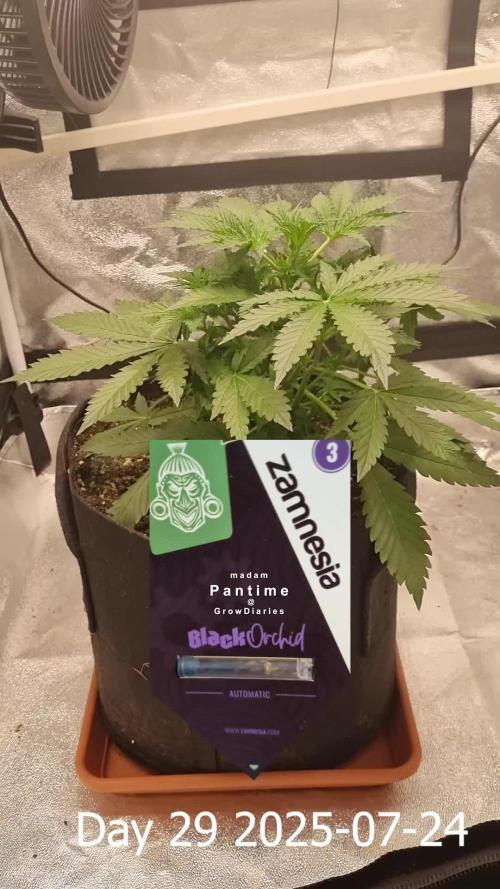
Day 35:
growing !!!
Day 34:
more light, more progress
Day 33:
3L Water (mixed EC 4.8) + Nutrien = PH 5.8
Day 32:
expanding !!
Day 31:
temps go down , Pantime feels happy !!!
Day 30:
Okay, it's staying small now, and it's growing at an angle, so something must have happened to the roots. Well, it'll be interesting to see what happens.
Day 29:
all fine . it grows .
+
Likes
18
Share


@BufoAlvarez
Follow
Did first nutrient feeding w fox farms nutes. Very little. Things were going perfect then I woke up this am to slight curling again. I changed light distance and put in my other light as well so I’m now in need of ac unit or another fan bc it’s getting hotter, 85. Or I figure I could run my exhaust fan 24/7 and take it off my humidity switch but then I got to possibly get another humidifier bc the exhaust fan takes the humidity out of the room. Idk but the girls all in all are looking good to me.
started lst on 6/30
using grow big and big bloom now

Likes
5
Share


@Bluethum94
Follow
Transplanted and separated into a 4x8 and 5x5 started to get deficiencies I think either cal or mag maybe even a little of both I flushed the soil in case ph was off in the soil then a couple had nitrogen deficiency so I gave them a tea last night will see how they look tonight when I’m off work once they are healthy I’ll flip to flower
Likes
3
Share

@AestheticGenetix
Follow
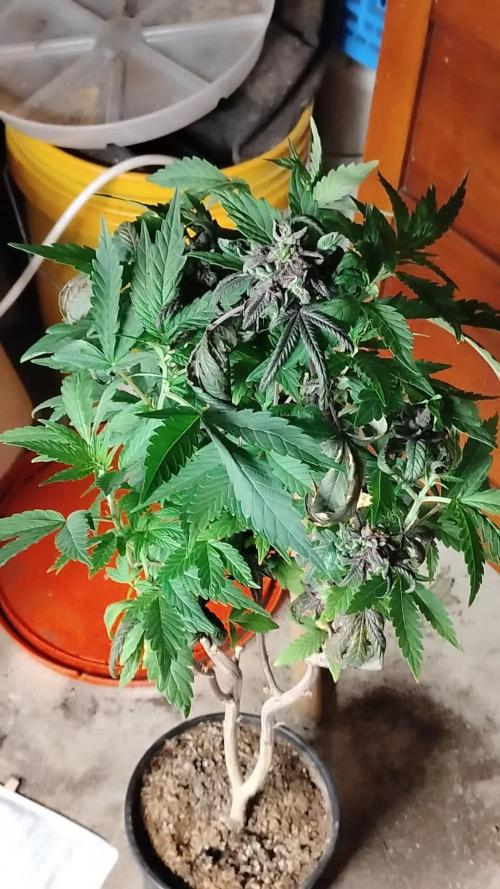
Looking better and better each day
Hopefully starting 12/12 before the plants fully revegged isnt super detrimental to the whole process.
Processing
Likes
26
Share


@eldruida_lamota
Follow
Que pasa familia, hemos vuelto para actualizar las skunk que ya tenemos cosechadas.
Que gran genética, y muy típica entre fumadores de hierba, un crecimiento más indico pero floración lenta bastante lenta, en teoría se supone que es Sativa, 17% thc en la tas con un tamaño medio pequeño pero flores mi compactas y dulces, un cultivo ni fácil ni difícil, sin más, bastante neutral para los cambios climáticos algo sensible con el aspecto alimentación.
La recomendaría en verdad, sobre todo para aquellos amantes del dulce.
Nos vemos en próximos proyectos fumetillas

Likes
3
Share

@kdifiori_
Follow
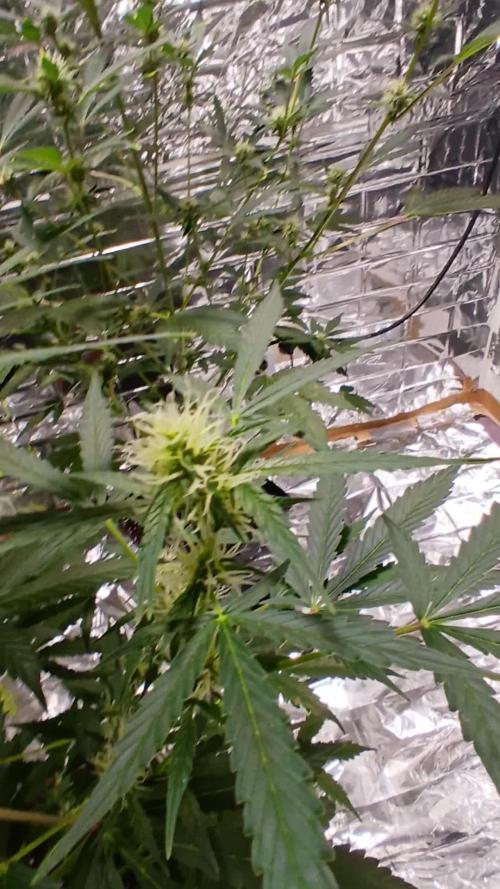
Week seven and this beauty continues to grow. This week it drank 2 L and I slowly started adding Overdrive to the magic mixture. Let's see what happens next week!

Likes
6
Share

@bkickstand
Follow
📋 Grow Diaries: Week 12 Log – The Organic Pivot
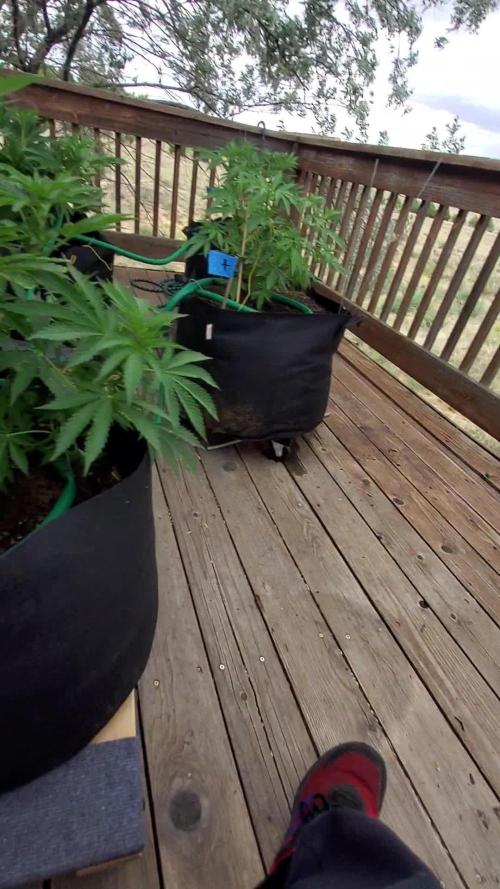
The Durban Poison crew DP1, DP4, DP5, and DP6 is officially off the bottle. Running short on liquid vegetative nutrients forced a shift in the garden strategy, and the decision was made to ditch the synthetic/liquid lines completely in favor of a 100% organic, microbe-rich regimen.
The immediate explosion of new vegetative tops proving that these pure sativa genetics thrive when fed naturally on the deck.
The Feeding Regimen: Castings & Kelp
The Top-Dress:** Two days ago, the entire quartet received a heavy top-dressing of pure worm castings across their 25-gallon root zones, providing a slow-release blanket of nitrogen, micronutrients, and humic acids.
Today's Feeding: Followed up today with a rich sea kelp drench. The liquid kelp acts as a perfect complement to the castings, packing the soil with natural cytokinins and auxins to stimulate lateral branching and provide environmental stress protection against the intense high-plains UV and wind.
The Reaction: The response was instantaneous. New tops are aggressively forming across all four canopies, pushing vibrant, healthy green growth from the inner nodes outward.
🌿 Individual Plant Progress & Observations
DP1 (The Lattice Frontier)
Satus: The central shoots have officially reached the lower edge of the bamboo-mounted elastic lattice. She isn't quite tall enough to begin tucking horizontally yet, so the plan is to let her poke through by 2–3 inches before naturally guiding her growth outward to open up the canopy space.
DP4 (The Main-Line Grid)
Status: Symmetrical tops are reaching straight for the sky next to the railing irrigation hub. The kelp feeding today is providing excellent structural flexibility to the main stems, preparing them beautifully to expand into the lower grid squares.
DP6 (The Low-Stress Explosion)
Status:Displaying phenomenal reaction to the new organic diet. Tied down aggressively with twine to the fabric pot handles, the flattened canopy has allowed the worm castings and kelp to force hidden lower nodes straight to the surface, creating an incredibly bushy profile loaded with fresh tops.
DP5 (The Canopy Leader)
Status: Massive, dense, and wide. DP5 is completely capitalizing on the 25-gallon container volume, showing thick stalks and wide fan leaves that are taking full advantage of today's microbial wash.
⚙️ Deck Infrastructure & Logistics
Status:*The entire layout is locked in. The automated watering lines are perfectly dialed to wash the top-dressed nutrients down into the pots, the wheeled dollies are making plant rotation effortless, and the companion marigolds are holding down pest security on the perimeter. The large white mixing bucket is staying active at the ready for the organic tea brews.
Grower's Note: Moving away from liquid nutrients was a forced play, but the sheer speed at which these plants are forming new tops demonstrates that living soil biology is exactly what this Durban Poison lineage wanted. Canopy training will continue as they naturally expand into their spaces next week.
Update 6.6.2026: Recieved a camera to keep a close eye on the girls. 😳💪


Likes
29
Share


@Spliffing_Around
Follow
This has been going for more than intended, but I lack light still to fill in the whole tent. I will continue for more weeks in order for all the plants to mature and be able to dry it at the same place.


Likes
16
Share


@SAC87
Follow
Hey Growers.
These FastBuds Afghan Kush are coming along nicely. These girls are in their final week/s. I’m just watering and watching trichomes. I removed a bunch of leaves especially the damaged ones and the buds bulked up immediately and the frost poured on. The trichomes are bulbous and granular, they’re so big. The buds aren’t massive, but they are firm. I think that may be because of the XS2000. They are quite similar to the super lemon haze from last run. I’m totally fine with a bunch of buds the size and firmness of golf balls!!
A bit more time and I’ll chop them down.
Happy Growing 🌱
Likes
55
Share


@Ultraviolet
Follow
What's in the soil? What's not in the soil would be an easier question to answer. 16-18 DLI @ the minute. +++ as she grows.
Probably not recommended, but to get to where it needs to be, I need to start now.
Vegetative @1400ppm 0.8–1.2 kPa 80–86°F (26.7–30°C) 65–75%, LST Day 10, Fim'd Day 11
CEC (Cation Exchange Capacity):
This is a measure of a soil's ability to hold and exchange positively charged nutrients, like calcium, magnesium, and potassium. Soils with high CEC (more clay and organic matter) have more negative charges that attract and hold these essential nutrients, preventing them from leaching away.
Biochar is highly efficient at increasing cation exchange capacity (CEC) compared to many other amendments. Biochar's high CEC potential stems from its negatively charged functional groups, and studies show it can increase CEC by over 90%. Amendments like compost also increase CEC but are often more prone to rapid biodegradation, which can make biochar's effect more long-lasting. biochar acts as a long-lasting Cation Exchange Capacity (CEC) enhancer because its porous, carbon-rich structure provides sites for nutrients to bind to, effectively improving nutrient retention in soil without relying on the short-term benefits of fresh organic matter like compost or manure. Biochar's stability means these benefits last much longer than those from traditional organic amendments, making it a sustainable way to improve soil fertility, water retention, and structure over time. Needs to be charged first, similar to Coco, or it will immobilize cations, but at a much higher ratio.
a high cation exchange capacity (CEC) results in a high buffer protection, meaning the soil can better resist changes in pH and nutrient availability. This is because a high CEC soil has more negatively charged sites to hold onto essential positively charged nutrients, like calcium and magnesium, and to buffer against acid ions, such as hydrogen.
EC (Electrical Conductivity):
This measures the amount of soluble salts in the soil. High EC levels indicate a high concentration of dissolved salts and can be a sign of potential salinity issues that can harm plants.
The stored cations associated with a medium's cation exchange capacity (CEC) do not directly contribute to a real-time electrical conductivity (EC) reading. A real-time EC measurement reflects only the concentration of free, dissolved salt ions in the water solution within the medium.
98% of a plants nutrients comes directly from the water solution.
2% come directly from soil particles.
CEC is a mediums storage capacity for cations. These stored cations do not contribute to a mediums EC directly.
Electrical Conductivity (EC) does not measure salt ions adsorbed (stored) onto a Cation Exchange Capacity (CEC) site, as EC measures the conductivity of ions in solution within a soil or water sample, not those held on soil particles.
A medium releases stored cations to water by ion exchange, where a new, more desirable ion from the water solution temporarily displaces the stored cation from the medium's surface, a process also seen in plants absorbing nutrients via mass flow. For example, in water softeners, sodium ions are released from resin beads to bond with the medium's surface, displacing calcium and magnesium ions which then enter the water. This same principle applies when plants take up nutrients from the soil solution: the cations are released from the soil particles into the water in response to a concentration equilibrium, and then moved to the root surface via mass flow.
An example of ion exchange within the context of Cation Exchange Capacity (CEC) is a soil particle with a negative charge attracting and holding positively charged nutrient ions, like potassium (K+) or calcium (Ca2+), and then exchanging them for other positive ions present in the soil solution. For instance, a negatively charged clay particle in soil can hold a K+ ion and later release it to a plant's roots when a different cation, such as calcium (Ca2+), is abundant and replaces the potassium. This process of holding and swapping positively charged ions is fundamental to soil fertility, as it provides plants with essential nutrients.
Negative charges on soil particles: Soil particles, particularly clay and organic matter, have negatively charged surfaces due to their chemical structure.
Attraction of cations: These negative charges attract and hold positively charged ions, or cations, such as:
Potassium (K+)
Calcium (Ca2+)
Magnesium (Mg2+)
Sodium (Na+)
Ammonium (NH4+)
Plant roots excrete hydrogen ions (H+) through the action of proton pumps embedded in the root cell membranes, which use ATP (energy) to actively transport H+ ions from inside the root cell into the surrounding soil. This process lowers the pH of the soil, which helps to make certain mineral nutrients, such as iron, more available for uptake by the plant.
Mechanism of H+ Excretion
Proton Pumps: Root cells contain specialized proteins called proton pumps (H+-ATPases) in their cell membranes.
Active Transport: These proton pumps use energy from ATP to actively move H+ ions from the cytoplasm of the root cell into the soil, against their concentration gradient.
Role in pH Regulation: This active excretion of H+ is a major way plants regulate their internal cytoplasmic pH.
Nutrient Availability: The resulting decrease in soil pH makes certain essential mineral nutrients, like iron, more soluble and available for the root cells to absorb.
Ion Exchange: The H+ ions also displace positively charged mineral cations from the soil particles, making them available for uptake.
Iron Uptake: In response to iron deficiency stress, plants enhance H+ excretion and reductant release to lower the pH and convert Fe3+ to the more available form Fe2+. The altered pH can influence the activity and composition of beneficial microbes in the soil. The H+ gradient created by the proton pumps can also be used for other vital cell functions, such as ATP synthesis and the transport of other solutes. The hydrogen ions (H+) excreted during photosynthesis come from the splitting of water molecules. This splitting, called photolysis, occurs in Photosystem II to replace the electrons used in the light-dependent reactions. The released hydrogen ions are then pumped into the thylakoid lumen, creating a proton gradient that drives ATP synthesis.
Plants release hydrogen ions (H+) from their roots into the soil, a process that occurs in conjunction with nutrient uptake and photosynthesis. These H+ ions compete with mineral cations for the negatively charged sites on soil particles, a phenomenon known as cation exchange. By displacing beneficial mineral cations, the excreted H+ ions make these nutrients available for the plant to absorb, which can also lower the soil pH and indirectly affect its Cation Exchange Capacity (CEC) by altering the pool of exchangeable cations in the soil solution.
Plants use proton (H+) exudation, driven by the H+-ATPase enzyme, to release H+ ions into the soil, creating a more acidic rhizosphere, which enhances nutrient availability and influences nutrient cycling processes. This acidification mobilizes insoluble nutrients like iron (Fe) by breaking them down, while also facilitating the activity of beneficial microbes involved in the nutrient cycle. Therefore, H+ exudation is a critical plant strategy for nutrient acquisition and management, allowing plants to improve their access to essential elements from the soil.
A lack of water splitting during photosynthesis can affect iron uptake because the resulting energy imbalance disrupts the plant's ability to produce ATP and NADPH, which are crucial for overall photosynthetic energy conversion and can trigger a deficiency in iron homeostasis pathways. While photosynthesis uses hydrogen ions produced from water splitting for the Calvin cycle, not to create a hydrogen gas deficiency, the overall process is sensitive to nutrient availability, and iron is essential for chloroplast function.
In photosynthesis, water is split to provide electrons to replace those lost in Photosystem II, which is triggered by light absorption. These electrons then travel along a transport chain to generate ATP (energy currency) and NADPH (reducing power). Carbon Fixation: The generated ATP and NADPH are then used to convert carbon dioxide into carbohydrates in the Calvin cycle. Impaired water splitting (via water in or out) breaks the chain reaction of photosynthesis. This leads to an imbalance in ATP and NADPH levels, which disrupts the Calvin cycle and overall energy production in the plant. Plants require a sufficient supply of essential mineral elements like iron for photosynthesis. Iron is vital for chlorophyll formation and plays a crucial role in electron transport within the chloroplasts. The complex relationship between nutrient status and photosynthesis is evident when iron deficiency can be reverted by depleting other micronutrients like manganese. This highlights how nutrient homeostasis influences photosynthetic function. A lack of adequate energy and reducing power from photosynthesis, which is directly linked to water splitting, can trigger complex adaptive responses in the plant's iron uptake and distribution systems.
Plants possess receptors called transceptors that can directly detect specific nutrient concentrations in the soil or within the plant's tissues. These receptors trigger signaling pathways, sometimes involving calcium influx or changes in protein complex activity, that then influence nutrient uptake by the roots. Plants use this information to make long-term adjustments, such as Increasing root biomass to explore more soil for nutrients. Modifying metabolic pathways to make better use of available resources. Adjusting the rate of nutrient transport into the roots. That's why I keep a high EC. Abundance resonates Abundance.
Likes
9
Share


@Rastaluna
Follow
Helloo, planties are roughtly 3 week into vegetative growth.
Into second week our cat snucked into the tent and being the motivated gardener she is, dug out quick one and speedy chille, we put them both back into place gave planties some water, and with time they recovered, speedy chille got most stress, but being photoperiod, recovered slowly aswell, still the shortest and very loved.
:) so everythings good
Royal kush has the strongest smell of them all, few leafs we defoliated we grind in our hard and smell a deep green canna scent.
Northen lights is the leader in hight since begining
When planties grew 5 tops we topped them, began doing LST and a bit of defoliation, bended stems away from the lamp and taking off leaf that blocks light reaching tops.
The stems hardened and remind me now more of a tree

Likes
13
Share


@Robeeriegenetics
Follow
I went ahead and transferred this week I also decided to start up my out door project things are looking good clones are Adapting well to new systems


Likes
7
Share

@GoodTimesOrganics
Follow
Hi liebe Community and Welcome Back! 💚
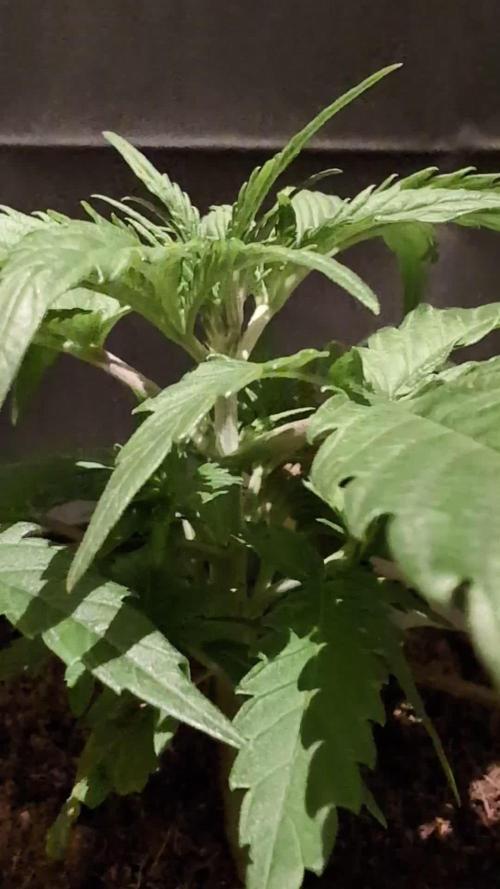
Nach der dritten Wachstumswochen entwickelt sich die Orange Bud solide. Die Verformungen haben aufgehört und das Pflänzchen entwickelt sich sehr Vital.
Die neuen Blätter sehen sehr Gesund aus und insgesammt hat sich die Pflanze gut erholt.
Diese Woche habe ich die Pflanze mit etwas Orgatrex gedüngt.
Die Umgebungsgegebenheiten sind aktuell gut:
—————
🌞 Temp: 21
🌚 Temp: 18°C bis 19°C
💨 RH: 48%
VPD: 1,00 kPa
💡ppfd: 330 mpm
—————
Viele Grüße 👋


