


Likes
Comments
Share


@Kartell420
Follow
Lst wurde über die vegi weiter ausgeführt, Dünger anwedung ungefähr 60-70 % laut Tabelle.

Likes
16
Share


@VIPgrower
Follow
Ok week 8 is here on a water cycle so next feed I guess I’ll switch the lsd have caught up to same height and I keep bending laughing budda in there netting which is full everything going well except I keep sucking up plant beaches when a vacuum opps all good they seem to like the cleaning I think hahahahaha careless must pay attention mire but hard not much room left to get around not to much else to say this week

Likes
6
Share


@Frosty905budz
Follow
So far the autopots are doing their job.
Havent manually watered the plants over a week and they are just blowing up with growth...
Been keeping track of how much water the system has been using .. and just over a week they used about 4gallons of water ..
My nutrients are still the same , nothing changes in the veg state ..Topped last week and Started LTS this week and plants are looking great ..
I might veg for 1 or 2 more weeks
Likes
12
Share


@BrMarijuana
Follow
Plantas saudáveis, ótima qualidade, estão reagindo muito bem a alimentação, regas todos os dias e alimentação todos os dias,.cheiro doce

Likes
47
Share


@Ultraviolet
Follow
The cannabis strain Grape Guava can be a purple strain, depending on its specific phenotype and genetic makeup. While not all phenotypes of Grape Guava are purple, some variations, such as the Zatix Grape Guava, are noted for their striking purple appearance due to the genetic expression of anthocyanin pigments.
https://www.youtube.com/watch?v=cKdVmdoKJ5k
In a garden of green, Grape Guava gleams,
With its fruity aroma, enchanting dreams.
Clusters of grapes, guava's sweetness ignite,
A strain so divine, in purple and white.
Euphoria whispers, a lush fruity haze,
Grape Guava's embrace, a tranquil daze.
Off and away.@1400ppm. The increased CO2 allows plants to thrive at higher temperatures, which in turn necessitates higher humidity to maintain the ideal VPD for healthy growth and transpiration. 80F -5F = 75F LST with 70% RH = 0.72 kPa. Higher temperatures and humidity promote rapid growth, nutrient uptake, and photosynthesis while maintaining a lower stress level. Temperature influences the rate of enzymatic reactions involved in aerobic respiration. Enzymes, such as those involved in glycolysis, the Krebs cycle, and the electron transport chain, work most efficiently at an optimal temperature range. In low temperatures, enzymatic activity will slow down, thus reducing the rate of aerobic respiration. In high temperatures, enzymes can become denatured, thus impairing their function and stopping the process of aerobic respiration. Glucose is the primary fuel for aerobic respiration. The rate of aerobic respiration increases with the availability of glucose, as it is the starting point for glycolysis. If glucose levels are low, cells may rely on alternative energy sources such as fatty acids or amino acids , but these processes may yield less ATP or be less efficient. To determine this effect, carbon dioxide volume was measured (as carbon dioxide is an output of aerobic respiration)
18/6 with the 6 being IR. The near infrared (IR-a) borders around 700nm up to 1400nm @ photon par flux density of 1.8 instead of darkness, keeping temps overnight a neat 77F-80F.
Think of my tent as a lung. What goes in must come out. When the rate of air going out exceeds the amount of air coming in, it creates a negative pressure. Tent concaves (bends in). If set up correctly, your RH will begin to drop slowly to the desired level you set, and the extraction turns off when it reaches desired% RH. The plant, as it performs cellular respiration, will always be releasing more water into the air, so the RH% of the tent overnight will always increase, so long as oxidative phosphorylation is occurring. As soon as the RH% creeps back up to 55%, the extraction turns back on, over and over. This creates a strong pressure differential which will work wonders on your grow. Replicating high and low-pressure fronts in nature. Critical for oxygen diffusion at the critical time of peak cellular respiratory function..
Moisture will not transfer from a saturated atmosphere to another if that air is already at or above its saturation point, meaning the air can't hold any more water vapor. Once I understood that water is produced as a by product during cellular respiration, specifically at the very end of the electron transport chain (ETC) where electrons are finally transferred to molecular oxygen, the higher the RH of the air, the more resistance there is for more moisture to be added to that environment, and effects the ease with which it does so. But none of that water comes from the pot; it's pulled from the air. If you run high daytime RH, your medium/pot is 100% reliant on transpirational root pull to move water. ZERO evaporation happens across the atmosphere if the tent air has high RH%, the medium cannot release its water through evaporation. Once a canopy develops, light no longer slowly wicks and evaporates from the topsoil. The Soil-Plant-Atmosphere Continuum (SPAC) describes the continuous pathway and process of water movement, driven by a gradient in water potential, from the soil, through the plant's roots, stem, and leaves, and finally evaporating into the atmosphere through transpiration. There is evaporation, there is transpiration, and then there is evapotranspiration; Evapotranspiration (ET) is the combined total of two processes: evaporation (water lost directly from soil and surface water into the atmosphere) and transpiration (water released from plants to the atmosphere through their leaves). Evapotranspiration represents the total amount of water that moves from the medium into the air. There is no such thing as a medium with too much water, only a medium that retains too much for too long.
The water must always flow efficiently from one atmosphere(Medium) to another(Air) in a timely manner. Moisture is a critical factor for bacterial growth and decay. Dictating how long it's allowed to sit in any one location for any given period is a key preferred control. To ensure a net reduction in a bacterial population, the rate of removal (ET) must exceed the rate of bacterial growth (decay rate), which is often modeled as a growth rate for the specific bacterium under the given conditions. By optimizing daytime VPD, we also optimize conditions for bacterial growth to explode exponentially above 77°F.. If water is allowed to sit in a medium without an escape within a timeframe, nothing good will happen. IF High RH is maintained overnight as well as during the day, placing 100% of water movement at the behest of daytime transpiration, roots can only pull where they can reach, and if soil is compressed above a certain point, moisture will become trapped in a medium with no way of moving day or night. This will begin the countdown for decay to take hold. When water stagnates in a medium, it loses oxygen, creating anaerobic conditions that foster the growth of harmful microorganisms like bacteria and fungi, which can produce toxins and disease vectors.
Thigmomorphogenesis, the process by which plants respond to mechanical stimuli like touch by altering their growth and development, results in significant morphological changes to improve survival against mechanical perturbations. This complex response involves sensing touch and initiating physiological and genetic responses, leading to changes in form and structure over days or weeks. The process is triggered by physical forces such as wind, rain, or touch. Plants adapt to these stimuli by changing their shape and structure, which may include slower growth, thickened stems, or altered leaf development. Plants possess sophisticated mechanisms to detect even subtle mechanical stimuli and initiate responses. A variety of molecules, including calcium ions, jasmonates, ethylene, and nitric oxide, are involved in signaling these mechanical inputs. Touch can induce the expression of genes that encode proteins for calcium sensing, cell wall modification, and defense mechanisms. A plant exposed to constant wind may become shorter and sturdier. A plant that is touched frequently might grow more slowly to conserve energy and develop thicker cell walls. These changes increase a plant's resilience and ability to survive in harsh environments.
Let's get Thiggy with it.
Likes
28
Share

@Joni2017
Follow
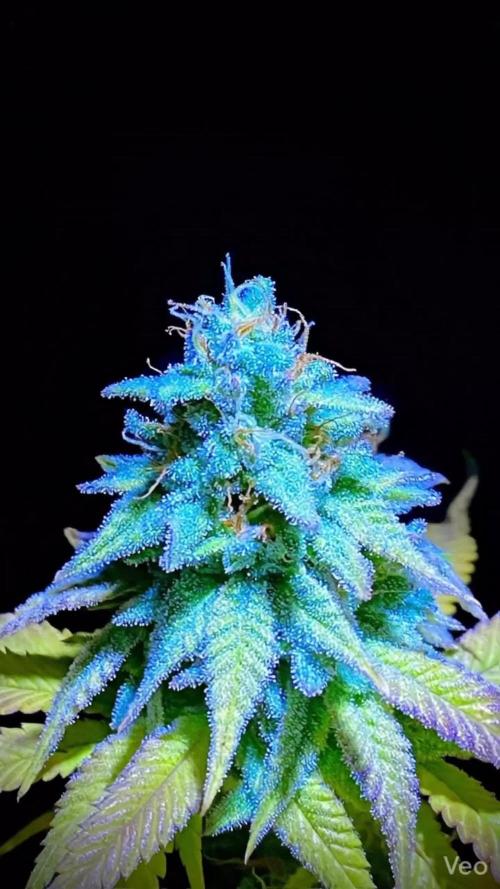
The big day is here! 😎 Today, March 28th, 104 days (15 weeks) after germination, I have harvested my first indoor photoperiod plant. It has been an incredible challenge, especially managing it in the middle of a winter environment, but the results speak for themselves.
📏 Harvest Data (Wet Weight)
-Total Wet Weight: 56.5 grams (15.7g + 40.8g).
-Final Height: 40 cm of pure density.
-Status: Rock-hard buds and an impressive resin layer.
-Dry Estimate: I estimate that after water loss (60-70% less), the final dry weight will be between 14 and 17 grams, given how dense the buds are and the cold conditions we’ve faced.
🌡️ Process Summary
-Managing a grow with lows of 12°C for my first indoor photoperiod experience has been difficult. I am aware that a climate control system would have been ideal, but the budget is what it is 😆.
Despite the limitations, using lukewarm water for irrigation and controlling the lamp height were vital. This plant has been a great learning experience, and I am sure the next one will be much better, applying everything I’ve discovered during these 15 weeks.
Now, on to a slow and controlled dry so the flavor is as spectacular as its look!
I want to wrap up this diary by thanking everyone who has joined me during these 15 weeks. Your likes, and comments have been an extra motivation to pull this Critical through despite the cold challenges.
It has been an incredible learning journey, and I couldn't be happier with the outcome of my first indoor photoperiod plant. See you all very soon with the Cream Caramel and that Main-Lining I have planned!
Happy growing and happy smoking to everyone! 🌿💨


Likes
14
Share


@AndrewC
Follow
So this is the Tear Down week. The timing of it makes it so i will need to the harvest flag in a few days when I can weight and test the plants.
I have included the Cleaning, and Cutting and some Root Porn.
I will make the harvest post in about 4-5 days, when I can trim these plants. There is a lot of Plant here. I got way more than I was expecting. I don't have a scale that measure this amount of plant, without taking like 10 measurements and then adding them together. So I will just be posting the dry weight. I will post the wet weight as dry weight * 1.65.
Autopots: Wow, what a great product. I have been blown away by how well and how easy it was to work with them. They really did solve the watering issues. Excellent product. If you are a beginner, start with Autopots.
-= Lessons Learnt =-
- Overdrive the air to your Autopots. In my control plant, I used a small rectangle air stone (instead of a standard air dome). This lead to root rot and some other issues, it also put significantly less air into the water. The root rot, give the material for the Brown Algae to grow. Using a huge Air-disc-Air-Stone would be an excellent combo to mix in with the air dome itself. Something like this: https://www.amazon.ca/Pawfly-Diffuser-Suction-Hydroponics-Aquarium/dp/B01MY3AQ33 at the bottom and the air-dome on top of it, will be what I do with my next experiment.
- Air stone in the reservoir. I had two instances where algae grew into the res. An air stone would have helped. It would have also helped my control plant get less root rot. Given the amount that the air-domes and air sources got engulfed, having the water have more o2 in it would have only been beneficial.
- Don't grow 6 plants in a 4x4. Since my control plant was about 1/8th the size of the others, I think I could have grown 5 in the shape of a 5 (on a 6 sided dice)⚄ This placement would give a much more spaced canopy for airflow and more importantly light. The sides of some of the plants were lighter green and produced larf due to lack of light penetration.
- This tent was on 19-5 schedule. This worked out very well for this strain. After every lights on, they were in the praying position, so this strain was able to recover in that 5hrs off. If I had more seeds, I would run these again, and try 20-4. I think this strain could handle it. All for all, I think I'm going to 19-5 as my default timing. This kept up a solid DLI.
- Staring at .9EC (really .7 EC cause my water here is .2 EC) Then bumping up at .1 a week, until 1.6EC worked out VERY well. I experimented on this crop all the way up to 1.9EC, which burnt the tips of this plant. I think if I did this strain again, I would do 1.6EC until 3-4 weeks left then crank it to 1.9. It did plump them up when I went to 1.9, however it left them looking rough. Bulk was added though.
- Sticking to 6.0PH for all of veg, and 2 weeks into flower worked great. The plant had solid and consistent color and leaf shape . The plant's did get hurt, due to some issues (as noted on the weeks). I switched to 6.5 PH in the last 3-4 weeks and it helped them recover, and plump up noticeably.
-VPD. The #1 thing I focused on was VPD. I keep it .9kpa range, as best as humanly possible. It was honestly, HUGELY noticeable compared to my other grows. I know truly understand the value of properly dialed in VPD. This is the one lesson that will stick with me forever.
- Super-cropping: On the plants I give the chiropractic treatment too, had much thicker stems as much larger channel internally. I did this treatment to 4 of the 6, and the 4 that had it done has larger buds and recovered from defoliation faster.
TLDR; VPD is king. Super-cropping is worth the time. Keeping PH and EC dialed in were all wins. Autopots kick ass.


Likes
41
Share


@bruxup
Follow
Week 26: September 20 2020 - September 26 2020
Great week, no issues, no complaints. Buds are getting fatter and the smell is really starting to come off of them.
Fertilized for the last time on Friday and will begin flushing with water until harvest. Blue Dream looks like she can come down now but trichomes are still milky with very little amber. Keeping a close eye on her but I think 2-3 weeks more at most before she's chopped.
Girl Scout Cookies is an absolute beast! She got some wild colors from the cold snap last week and she looks awesome. I got some dead leaves I could pull, but they all look awesome with the reds, purples and greens. Buds are dense too! The pictures and videos don't do them justice. The fan leaves have long stems so they're hiding the buds, but if you pull them back, each cola is huge and gets bigger almost daily. Trichomes are starting to come in more heavily, and pistils are just starting to turn red.
Purple Kush is starting to put on weight and has really shaped up in the last couple weeks. Surprised she's still so green compared to the purple in Girl Scouts, but it could just be the phenotype. She's definitely the furthest back of the two and may stay out a little longer. Overall, I'm extremely impressed and happy with my results this year.
Decent weather in the forecast for the month of October. Looks like we're on the road to a pretty sweet harvest.
Hope everyone is staying safe. Thanks for stopping by. Cheers!

Likes
92
Share


@DogDoctorOfficial
Follow
🌸 Week 3 Flower – Growing Strong, Tall, and Vibrant! 🌱
Hey Grow Fam! It’s already Week 3 in flower, and I’m thrilled to bring you this update because these plants are doing phenomenally well! Some are stretching up so tall that I might have to get creative in the coming weeks! Fruit production is well underway, and it’s absolutely amazing to watch the canopy fill out as these girls reach their potential.
Aptus Holland Pack Unboxing & New Additions
This week kicked off with a big arrival: the Aptus Holland nutrient pack! 🙌 I couldn’t wait to share the unboxing with you all; there’s a video up where I go through all the goodies, so check it out if you haven’t yet! Between the photos and videos, you’ll be able to see just how well these nutrients are already feeding these green beauties. Having a blast sharing more content lately—I’m in the zone with editing and creating, so get ready for even more shares!
🌡️ Environmental Control and Fine-Tuning the Reservoir pH
Temps this week have been holding around 27.2°C with RH at 65.2% and CO2 at 800 ppm, creating a VPD of 1.26 for ideal flower development. The lighting intensity is at 833 PPFD, and the solution in the reservoir is fine-tuned to a pH of 6.22, EC of 475, with a temp of 21.8°C.
Let’s talk pH in the reservoir: it’s a dynamic process, and I’m constantly adjusting it to keep everything at the right level. The pH tends to rise throughout the week, and each day, I work it back down, fine-tuning it to keep those plants happy and balanced. Managing pH is truly a hands-on job, and it’s worth every moment. I love staying on top of it for optimal nutrient uptake—it’s all about consistent effort and keeping that perfect range dialed in.
Leaf Maintenance & Selective Defoliation
These leaves are HUGE and gorgeous, creating a lush canopy that’s nearly too perfect! I’ve been taking a few leaves here and there, focusing on leaves that may be blocking light from reaching lower parts of the plant. Selective defoliation at this stage is key because it opens up airflow and allows light to penetrate deep, boosting energy distribution across the whole plant.
Big, healthy leaves mean we’re getting excellent photosynthesis, but a gentle, strategic defoliation can guide that energy toward those developing buds. Leaf removal is all about balance, giving the plant space to breathe and thrive while still maximizing growth in flower!
🌐 TrolMaster + App – Real-Time Precision
Huge shoutout to the TrolMaster system and the app—keeping everything in sync and at peak performance is honestly effortless with this ecosystem. The app provides a full overview of each environmental parameter, allowing me to make real-time adjustments as needed and track trends over time. The precision here is unbeatable, giving me complete control over temps, humidity, CO2, and VPD, ensuring my girls are in a controlled paradise 24/7.
What I love most is how the app records everything automatically, so I always know exactly where things stand without having to keep separate records. If you haven’t tried TrolMaster yet, it’s a total game-changer for any grow setup!
💥 Shoutouts & Gratitude
Massive shoutout to TrolMaster and Aptus Holland for powering this grow with tech and nutrition that’s second to none. And, of course, gratitude to Pro-Mix for the superb growing medium and to the seed banks behind the genetics. We’re running strong thanks to each of you.
And to the whole community—thank you, everyone, from new friends to seasoned followers, lovers to haters. Your energy, whatever form it comes in, is all part of this journey, and I’m so grateful for it all. Special shoutout this week to my brother Daggadna—head over to IG and give him a follow! And if you’re loving the journey, remember to like, comment, and subscribe—it really helps the channel grow and reach others who may also dig this content!
Discount Codes so you can save big on your next check out 💚💚💚
Kannabia - DOGDOCTOR 30% off
SeedsmanSeeds - DOGDOCTOR 10% off
CannaKan- DOGDOCTOR 15% off
terpyz.eu - DOCTOR 15% off
The Neutralizer - PORKIT5-DOG 15% off
As always thank you all for stopping by, for the love and for it all , this journey of mine wold just not be the same without you guys, the love and support is very much appreciated and i fell honored and so joyful with you all in my life 🙏
With true love comes happiness 💚🙏 Always believe in your self and always do things expecting nothing and with an open heart , be a giver and the universe will give back to you in ways you could not even imagine so 💚
Friendly reminder all you see here is pure research and for educational purposes only
Growers Love to you all 💚💚💚


Likes
27
Share


@LockDownGrow
Follow
well this lady has been a gem too work with , she really stretched out at flower growing from a rose into too a sun flower lol but not quiet as tall as her sister the cali snow ,
she has been no trouble at all so far no deficiency's at all , also her bud structure is forming nicely and again not too far behind the cali snow ,
but both plants have almost identical structures too each other until you rub your fingers on those sugar leaves and they tell you they are doing there own thing by the lush sent they leave you sniffing your fingers in delight , the cali snow has much more of a friuty smell than the GSC but they both smell delicious thats for sure


Likes
27
Share


@2Byte
Follow
1 week of 12/12 in the books and already getting some stretchhhhh. Dropped the silica to save some ppms for the massive bloom and gp3 bloom.
One last major defol and sucker clean up, I figure at this point whatever branches make it, make it. Starting to get a nice smell.
They're both drinking about 2 gal over the course of the week.
Likes
39
Share


@J_diaz420
Follow
Realmente muy feliz con lo obtenido, 307g en 0.8me me parece genial, estas flores tienen un aroma genial entre el típico haze mezclado con cacao, un efecto muy agradable y confortable, rica al fumar y muy poco picante gracias al lavado de raíces con flawles finish 👌👨🌾🏻
Totalmente recomendable esta genética de royalqueenseeds muy agradecido por la oportunidad 👍👌👨🌾🏻
Likes
2
Share

@DogDoctorOfficial
Follow
🍮 Chem Brûlée – Pheno A
Week 9 | Small? Maybe. Beautiful? Absolutely. ❄️🔥
Welcome back to another week of the 8×8 Adventure! 💚🌱
And this week, Chem Brûlée Pheno A has something very simple to say:
You don't have to be the biggest plant in the room to be one of the most beautiful.
At approximately 126 cm, she certainly isn't the smallest plant in the garden.
But she's also not trying to become the biggest.
She's simply doing her thing.
Growing.
Flowering.
Stacking.
And increasingly covering herself in frost.
And honestly...
she's beautiful. 🍮❄️
🌱 A Quick Look Back
Chem Brûlée Pheno A continues to be one of those plants that has developed her own identity throughout this adventure.
From the beginning, we've watched her establish a strong structure and gradually transition from producing plant architecture to putting more and more energy into flowers.
Last week, we gave her a little selective cleanup.
Not because the calendar told us to.
Not because we wanted to make her look "perfect."
But because some leaves had simply reached the end of their useful contribution, while opening a little space around the canopy made sense.
And that's the approach we're continuing with.
Read the plant.
Respond to the plant.
Then let her grow.
This week, the result is becoming increasingly obvious.
The plant is settling into flower.
And the flowers are becoming the stars of the show.
🌸 The Flowers Are Taking Over
This is where Chem Brûlée really starts to shine.
The developing flowers are becoming much more pronounced now, with increasingly defined structures throughout the plant.
Those beautiful white pistils are still reaching out from the flowers, but something else is becoming much harder to miss.
The frost.
❄️❄️❄️
The resin coverage is building.
Looking at the close-up photographs, you can see that the sugar leaves and developing flowers are becoming increasingly coated.
We're still not at the finished product, of course.
There is plenty of flowering time ahead.
But we're definitely entering that stage where you can start seeing the plant's character developing through the resin.
And that's one of my favourite transitions in the entire grow.
Early flower is exciting because the flowers appear.
Mid flower becomes exciting because suddenly you start seeing what those flowers might become.
Chem Brûlée is entering that territory now.
❄️ Frost Is Coming
If I had to choose one word for this week's photographic update...
Frost.
😂❄️
The resin production is becoming increasingly visible, and the close-ups really capture it.
Those developing flowers are surrounded by sparkling trichome-covered surfaces, while the pistils continue creating that beautiful contrast against the green foliage.
It's still early enough that the plant has plenty of work to do.
But we're getting the first real glimpse of what makes this phenotype special.
And I have to admit...
I could probably spend far too much time standing there with the macro lens looking at her.
One photograph becomes ten.
Ten becomes twenty.
And suddenly I've been standing in the jungle taking pictures of one flower for half an hour.
😂📸🌿
But that's part of the fun.
🌿 She Doesn't Need to Be the Biggest
One thing I really want to emphasize with Chem Brûlée Pheno A is that I'm not judging her against the tallest plants in the room.
Yes, there are girls in the 8×8 Adventure who are taller.
Some have stretched more.
Some occupy more physical space.
But that's not the only measurement of a successful plant.
Chem Brûlée has created her own structure.
She's filling the space she's been given.
She's producing flowering sites throughout that structure.
And now those flowers are developing beautifully.
That's what matters.
A phenotype doesn't have to win the height competition.
She just needs to show us what she can do.
And she's doing exactly that.
🔬 Her Structure Is Becoming More Interesting
The further we move into flowering, the easier it becomes to understand the architecture she created earlier in the run.
The branches are now carrying developing flowers rather than simply supporting vegetative growth.
The spacing between the flowering sites gives us a good view of the individual structures, while the remaining foliage continues supporting the plant through this important stage.
And this is where the earlier selective training and cleaning start making more sense.
We're no longer trying to create the plant.
The plant has already created herself.
Now we're simply supporting the structure she chose.
That's something I really enjoy about this run.
The grower starts with an idea.
The plant then says:
"That's nice... but here's what I'm actually going to do." 😂
And our job is to adapt.
✂️ Selective Cleaning – Keep It Sensible
The selective defoliation from last week has left the plant with a little more breathing room without compromising the healthy canopy.
And we're going to continue treating defoliation as a tool rather than a scheduled event.
If a leaf is blocking an important flowering site...
we can remove it.
If a leaf is damaged or no longer contributing...
we can remove it.
If a part of the canopy is becoming unnecessarily crowded...
we can open it.
But if a healthy leaf is doing exactly what we want it to do?
Let her work. 🌿
There's no reason to remove healthy foliage simply because we're in flower.
The goal is balance.
Enough foliage to support the plant.
Enough space for light and airflow.
And enough openness to avoid creating unnecessary dense pockets around the developing flowers.
It's a living canopy, not a haircut appointment. 😂✂️
💨 Airflow & Flower Development
As the flowers continue increasing in size and density, airflow becomes increasingly important.
The room is carrying twelve different plants, and every phenotype creates its own microclimate.
That's another reason I like keeping an eye on canopy density rather than treating every plant identically.
Chem Brûlée has plenty of foliage, but we're keeping an eye on the areas where leaves and flowers begin getting too crowded.
A little extra space can help air move through the plant.
And as the flowers continue developing, that's something I definitely want.
We're not trying to eliminate every gram of humidity from the room.
We're simply trying to avoid unnecessary stagnant pockets around increasingly dense flowers.
Healthy airflow is part of the overall strategy.
💡 Light – Give the Flowers What They Need
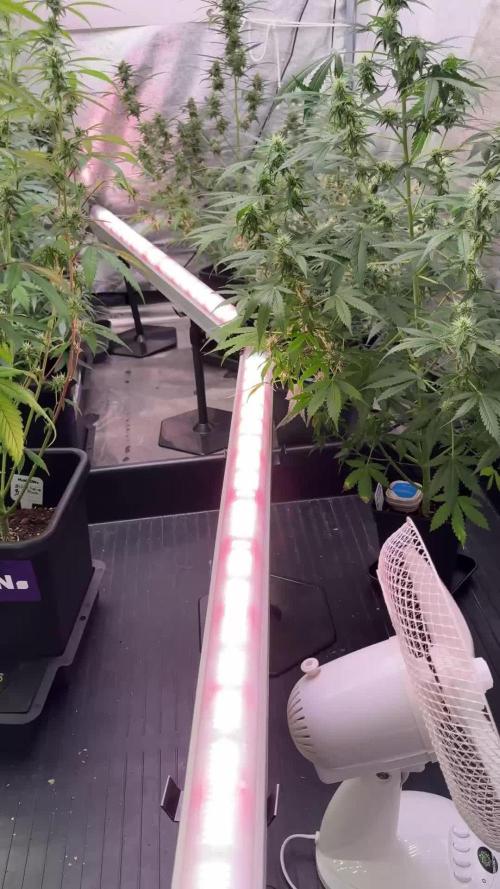
The lighting setup continues providing the room with strong overhead illumination, while the additional inner and under-canopy lighting helps support areas that naturally receive less light.
And Chem Brûlée's structure gives us plenty of interesting angles to work with.
The developing flowers aren't all sitting at exactly the same height.
They're distributed throughout the plant.
That means the combination of canopy structure and supplemental lighting becomes particularly useful.
The objective isn't simply:
"More light."
It's:
"Useful light reaching as much of the productive plant as reasonably possible."
And that's an important distinction.
More isn't automatically better.
We're looking for balance between light intensity, temperature, CO₂, nutrition and plant health.
Right now, she appears very comfortable with the environment she's receiving.
⚗️ Feeding – No Need to Reinvent Anything
The feeding strategy remains consistent with last week.
We're continuing with:
🌱 Plagron Terra Bloom – 2.2 ml/L
🌱 Plagron Green Sensation – 1 ml/L
🌱 Plagron Power Buds – 1 ml/L
🌱 Plagron Sugar Royal – 1 ml/L
With Lemon Kick / pH Plus used as required to maintain the target pH.
Current solution:
⚗️ pH – approximately 6.0
⚡ EC – approximately 2.0 mS/cm
And once again, I'm not interested in changing something just because another week has passed.
She's growing.
She's flowering.
She's producing resin.
She's maintaining beautiful foliage.
Those are all good reasons to stay consistent.
The plants don't receive extra points for having their nutrient recipe changed every seven days.
Sometimes the best adjustment is:
no adjustment.
🌡️ Current Environment
The room continues running with a remarkably stable flowering environment:
🌡️ Day temperature – 29°C
🌙 Night temperature – 25°C
💧 Relative humidity – 60%
🥥 Substrate temperature – 26°C
💦 Solution temperature – 25°C
⚗️ pH – ~6.0
⚡ EC – ~2.0 mS/cm
💨 CO₂ – 639 ppm
💡 Light schedule – 12/12
? Pot size – 15 L
💧 Watering – approximately 1.3 L/plant/24h
The environment remains stable, and that stability is particularly valuable now.
We're moving further into flower.
The flowers are becoming denser.
Resin production is increasing.
And consistency gives the plants the opportunity to focus on development rather than constantly adapting to environmental changes.
🌙 Day vs Night
One thing I continue paying attention to is the relationship between the daytime and nighttime conditions.
We're running around 29°C during the day and 25°C at night, giving us a noticeable but controlled temperature difference.
That daily rhythm is part of the overall environment rather than something we're looking at in isolation.
Temperature, humidity, light intensity, CO₂ and plant transpiration all interact.
And that's why I prefer looking at the room as a system.
You can change one number and accidentally change several other things along with it.
For now, the system is behaving nicely.
So once again...
don't fix what isn't broken.
📸 Behind the Lens
This week's photographs really made me appreciate her.
The wider photographs show the plant's overall structure.
But the close-ups?
That's where she really starts showing off.
The developing flowers are becoming increasingly complex.
The pistils are still beautiful and prominent.
And the resin is beginning to give the flowers that characteristic frosted appearance.
There are moments where I look through the camera and think:
"Okay... now I see you."
😂❄️
That's what makes documenting a grow so rewarding.
The plant changes gradually enough that when you see her every day, you don't always notice how much has happened.
Then you compare photographs from previous weeks...
and suddenly the difference is obvious.
🌿 My Little Jungle
And honestly, I'm having an absolute blast with this run.
There are twelve plants in there.
Twelve different personalities.
Twelve different structures.
And now twelve different flowering stories developing in front of me.
I walk into that room and sometimes feel like I'm Tarzan wandering around his little jungle. 😂🌿
Checking flowers.
Looking underneath leaves.
Watching the canopy.
Taking photographs.
Looking for anything unusual.
And most importantly...
learning.
That's what this entire adventure has become for me.
Every plant teaches something.
Every phenotype gives us another comparison.
Every week gives us another opportunity to adapt.
And Chem Brûlée Pheno A is teaching us that beauty doesn't need to come from size.
Sometimes it's sitting right there in the flowers.
Covered in frost.
Waiting for you to notice.
🔮 Looking Ahead
The next week should be another interesting step forward.
I'm expecting:
❄️ Increasing resin production
🌸 Continued flower swelling
? Further pistil development
🌿 Healthy foliage supporting the flowers
📈 More definition and density throughout the developing colas
And what am I planning to do?
Honestly...
Not much.
😂
I'll continue observing.
I'll keep the environment stable.
I'll maintain the current feeding strategy while watching her response.
I'll clean selectively if the plant gives me a reason to.
And I'll keep photographing her.
Because at this stage, patience is becoming increasingly important.
We've built the structure.
We've established the flowers.
Now we let Chem Brûlée put the work into them.
🍮 Small? No. Her Own Kind of Beautiful.
That's probably the biggest message I take from this week.
Chem Brûlée Pheno A may not be the biggest girl in the room.
But stand in front of her.
Look closely.
Look at the flowers.
Look at the structure.
Look at the pistils.
Look at that frost beginning to build.
She's doing her thing.
And she's doing it beautifully.
There is no reason for her to compete with another phenotype.
She doesn't need to be taller.
She doesn't need to be wider.
She doesn't need to stretch another twenty centimetres just so we can call her impressive.
She's already impressive.
Because she's becoming herself.
And that's exactly what this 8×8 Adventure is all about.
💚 One More Week, One More Lesson
Every week I become more convinced that growing is less about controlling plants and more about learning how to understand them.
We create the environment.
We provide the light.
We provide the nutrition.
We provide water.
We make adjustments when necessary.
But ultimately...
the plant decides what she's going to become.
Chem Brûlée Pheno A has made her decision.
She's going to be elegant.
She's going to be beautiful.
She's going to build flowers.
And apparently...
she's going to get very, very frosty. ❄️🍮🔥
And I am absolutely here for it.
🙏 Thank You
As always, thank you so much to everyone following the 8×8 Adventure. 💚
Every week, this project becomes another little lesson in genetics, observation and patience.
A huge thank you to GrowDiaries for giving us the space to document this journey and share it with the growing community.
Thank you to Zamnesia for the Chem Brûlée genetics and for giving us the opportunity to discover what these phenotypes can become.
Thank you to Plagron for the growing media and nutrition supporting the plants throughout this adventure.
Thank you to Future of Grow LED for providing the lighting powering this jungle.
Thank you to LumiFlora for helping illuminate those lower and inner flowering areas.
And thank you to TrolMaster for helping us keep an eye on the environment behind the scenes.
And finally...
thank you to everyone following along.
Whether you're here every week, dropping comments, asking questions, taking inspiration, or simply enjoying the photographs...
thank you. 💚
This adventure has become so much more than twelve plants growing in one room.
It's twelve different stories.
And Chem Brûlée Pheno A has another beautiful chapter for us this week.
She may not be the biggest.
She doesn't need to be.
She's beautiful.
She's building frost.
She's developing her flowers.
She's doing exactly what she needs to do.
So let's stop comparing her to everyone else...
and simply let her shine.
Because she deserves it. 🍮❄️🌸🔥
Growers Love, my friends. 💚🌱
See you next week in the jungle. 🌿📸

Likes
Comments
Share

@SidekickGrowie
Follow
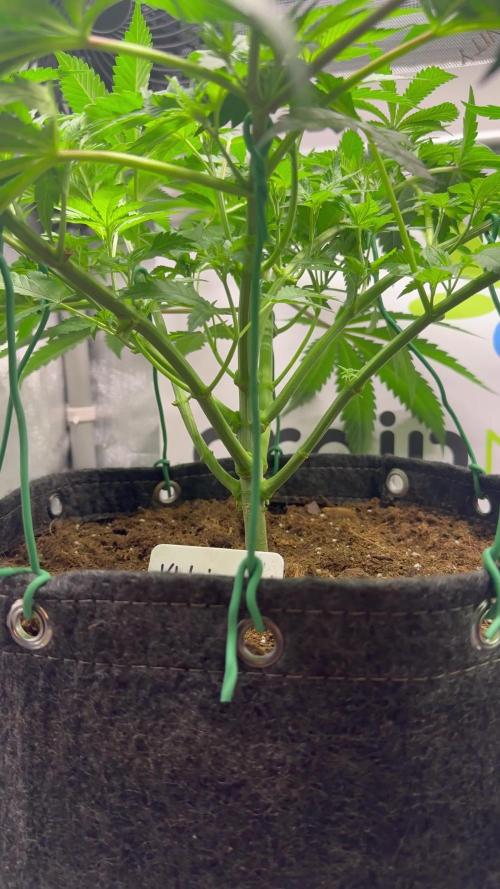
-In dieser Woche habe ich das Licht auf ca 400 PPFD gestellt.
- Zusätzlich habe ich die untersten Blätter entfernt damit die Kraft mehr in die Triebe geht.
- Ansonsten musste ich nur einmal gießen, was aber normal am Anfang ist solange noch wenig Wurzeln im Topf sind.
- Der Drain war ziemlich erschreckend sodass ich beim nächsten Mal erstmal nur Wasser kriegt.
Likes
36
Share


@NAS_Garden
Follow
Week 6 Report
The plants are thriving with strong growth and great color.
Day 39: The last feed of the vegetative phase—1L of water per plant. At this stage, they’ve absorbed everything really well, and this marks the final watering before transitioning to the flowering phase.
Day 40: Defoliation day! I decided to give the 3 FullGas plants a proper trim, removing excess foliage to improve airflow and light penetration. These are the only plants that haven’t been topped so far, and they're responding well to this treatment.
Day 41: Final day of the vegetative phase. All the plants have grown beautifully and are ready for the next chapter. They look healthy, strong, and vigorous.
The plants are growing at a good pace, with no major issues. The Athena nutrients continue to work wonders, really boosting their health and growth. Some of the leaves are showing signs of thrips, but it’s nothing to worry about. Overall, everything looks great.


