


Likes
Comments
Share


@Roberts
Follow
RSV11 is growing great. She was topped a few days ago, leaving the 2nd, 3rd, and 4th nodes. She has a really long roots system going. She has been doing great, and nothing more to report. Thank you Spider Farmer, and Terpyz mutant Genetics. 😉🤛🏻🌱🌱🌱
Thank you grow diaries community for the 👇likes👇, follows, comments, and subscriptions on my YouTube channel👇.
❄️🌱🍻 Happy Growing 🌱🌱🌱
https://youtube.com/channel/UCAhN7yRzWLpcaRHhMIQ7X4g

Likes
137
Share


@MrJones
Follow
mrjones - Slurricane #7 S1
🌱Slurricane #7 S1
@inhousegenetics_official
👨🌾🏽GD Grower: MrJones
🔹🔹🔹🔹🔹🔹GOALS🔹🔹🔹🔹🔹🔹
🌞Environment - 75/80℉ and 60% Humidity Good Old Mother Nature
💧 Feeding - The Green Sunshine Company - Earth Dust All-Natural Plant Nutrients
⚗️Soil - 35% ProMix MP / 25% Ocean Forest / 20% Tupur Royal Gold / 10% lobster Compost / 10% Additional Perlite
🍃Training / So this girl was 60 Inches and spread her out under a 5x5 Trellis
🕷️ IPM - Will be using Green Cleaner" 1 OZ per Gallon, and CannControl from Mammoth alternating between product each month
🔹🔹🔹🔹🔹🔹🔹🔹🔹🔹🔹🔹🔹🔹🔹
📜 Rambling - Week 16 / This lady was already 60 inches tall, built a 5x5 Trellis, and spread her out, with the whole summer to go she is going to Beast Mode On Me! Going to be top dressing with the Green Sunshine Company - Earth Dust All-Natural Plant Nutrients, Two-part Dry Amendment, Base, and Bloom, will be making compost teas each week, see recipes below, will be doing a vegetarian focus tea, and a flowering focused tea.
🔹🔹🔹🔹🔹🔹🔹🔹🔹🔹🔹🔹🔹🔹🔹
▶️ Sunday - 05.23.21 / Watered today with Dechloranted H20 filtered through a Boogie Brew 40k Inline Filter
▶️ Monday - 05.24.21 / Started a compost tea today - see the recipe below.
▶️ Tuesday - 05.25.21 / Watered plants with the compost tea today, they drank it up!
▶️ Wednesday - 05.26.21/ Plants looking perky! Rain some today.
▶️ Thursday - 05.27.21 / Outside is going well, and a bit yesterday and today, no need to water :) The plant is just looking amazing, will be adding a clone from this one over a few days, this one will be all-natural! The Earth Dust is smoking!
▶️ Friday - 05.28.21 /
▶️ Saturday - 05.29.21 /
🔹🔹🔹🔹🔹🔹🔹🔹🔹🔹🔹🔹🔹🔹🔹
Earth Dust - DESCRIPTION
🔹Earth Dust is our all-natural plant nutrient designed for indoor and outdoor flowering plant growers. You can grow easily by “just adding water” to your soil for the entire growth cycle. It creates a “living soil” so your plants thrive from seedling all the way through flower and harvest. Earth Dust represents an organic dry amendment method of gardening, it’s made of a natural powder of ingredients.
🔹Because you only need to water your soil with Earth Dust, you can concentrate on caring for your plants and getting a healthy crop “on autopilot”. Now you can grow without spending hours of your life mixing chemical nutrients, and you can do it naturally. What’s more, is you will enjoy the cleanest, most aromatic, and flavorful harvest you’ve ever experienced when a plant grows in a rich, organic web of living soil.
Product Highlights
🔹All-Natural Ingredients – Mostly plant-based – Safe around children and pets.
🔹Packaged in kraft paper bags that are recyclable and compostable.
🔹Easy to Use – Just mix the powder into the soil 3 separate times – then water only.
🔹Packed full of rich microbe food & contains billions of beneficial fungi and bacteria! Creates a resilient, living soil that defends against pests and diseases.
🔹Rich in trace minerals and nutrients for full plant expression. Sourced from rock dust, sea-farmed kelp, and land-grown crops.
🔹Soil Conditioners help balance pH and make nutrients more available in the soil. Achieved with ingredients like bat guano, worm castings, limestone, molasses, and humic acid.
🔹The correct balance of N-P-K nutrients for each stage of growth:
🔹Earth Dust Base (3-1-2) contains key nutrients for sustained vegetative growth. High nitrogen (N), Low Phosphorous (P), and Medium Potassium (K).
🔹Earth Dust Boost (2-3-6) contains accelerated-release nutrients for powerful flowering growth. Low nitrogen (N), Medium Phosphorous (P), and High
Potassium (K).
🔹Re-use soil harvest after harvest by simply adding more Earth Dust Base to begin again. Create your own living soil that gets better every time it’s used.
🔹Go organic, save time, and get predictable, healthy harvests.
🔹🔹🔹🔹🔹🔹🔹🔹🔹🔹🔹🔹🔹🔹🔹
Compost Tea for Vegetative Stage
Water 4 Gallons
3 Cups Composr (Your Favorite Worm)
4 TBL Molasses
4 TBL Seaweed Extract
4 TBL Fish Fertilizer
Use air Stone o the tea for 24/3 hours 70/75F, use at full strength for establishing plants and a half strength for younger plants

Processing
Likes
10
Share


Likes
52
Share

@Hempface86
Follow
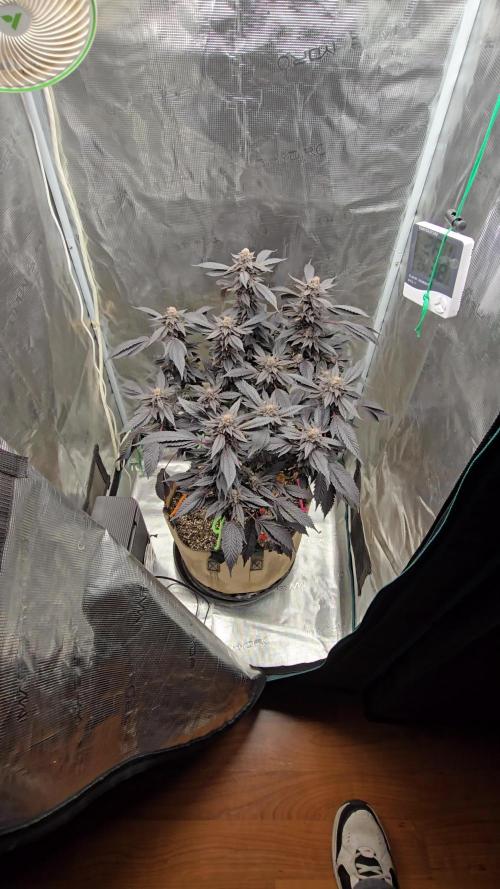
This girl is nearing the end... Very happy the buds are the hardest.I have ever felt.. looking forward to this one.Hope everyone is doing well, happy growing ✌️
Likes
8
Share

@Sobreruedas
Follow
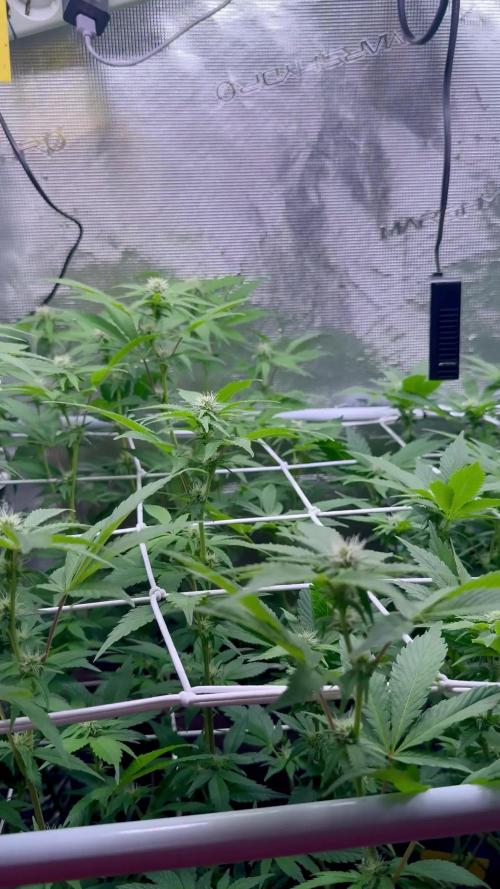
This week I performed a good defoliation to clean up the canopy and improve light penetration and airflow.
I also added a second scrog net to help support and organize the branches as the plant continues developing in flower.
On the positive side, I haven’t seen any more signs of the thrips since the treatment, so hopefully the issue is under control now 🌱💪

Likes
54
Share


@Rasta_Faraev
Follow
26.09.21. У Халка очередная неделя прошла отлично, начал растягивать боковые ветви, в дальнейшем будет Top макцшки или Fim подрезка, не решил. На выходе показывает небольшое завышение ppm и снижение ph, что говорит о том, что девчонка перевела и надо бы полить водичкой с минимальным количеством удобрения. Всем удачи, жду в гости, пишите комментарии друзья, лайк это здорово, но мнение человека неоценимо👍🏿👍🏿👍🏿🌱
28.09.21 немного потренировал Халкушу, главный стебель как из железа, толстый и не тянется, через пару дней топну макушку.
30.09.21 мне очень нравится развитие Халка, потенциал у растения очень серьёзный, о чем говорит размеры листьев и толщина ствола.

Likes
4
Share


@Jofflepov
Follow
First plants are outside. 3 are growing in a large container. They have to share it with an old lady who is stil flowering after 90 days
Two are growing guerilla style between the sunflowers. The rest will get their own pot.

Likes
8
Share


@Chronnoisseur
Follow
Loved growing in my hydro system defientley not gonna look back to coco.
Stay tuned for the next to come I'll be using the pollen collected of the lemon skunk and will be crossing with chemo,blueberry,m39 grand daddy purple,gg4

Likes
6
Share


@MG2009
Follow
10/20/2020
Starting week 4 of flower the top dress I did should be kicking in this week, watering once a week till 5-10% run off.
Likes
3
Share

@Chef_LA
Follow
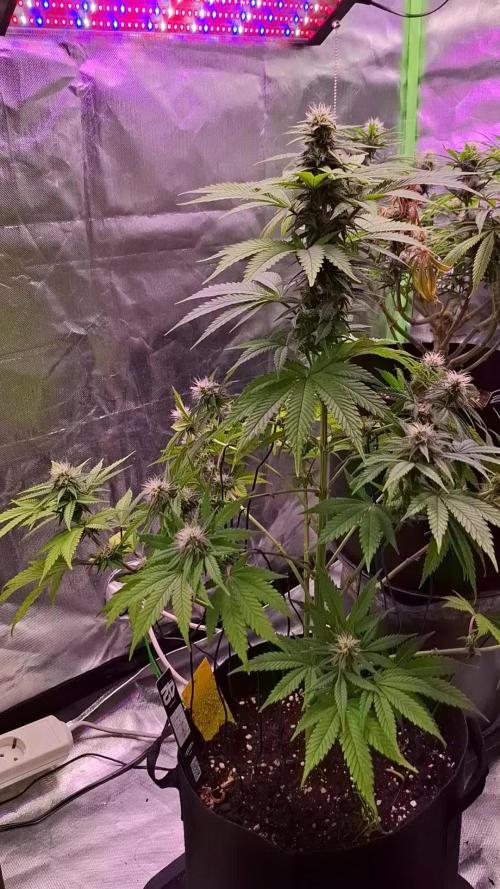
Kein Höhenwachstum mehr. Die Blüten werden größer und dicker. Langsam fangen sie zum duften an. Nur etwas LST und Dünger nach Herstellerangaben. Und es bilden sich schon viele Trichome 🤩.

Likes
6
Share

@GoodTimesOrganics
Follow
Welcome Back!💚
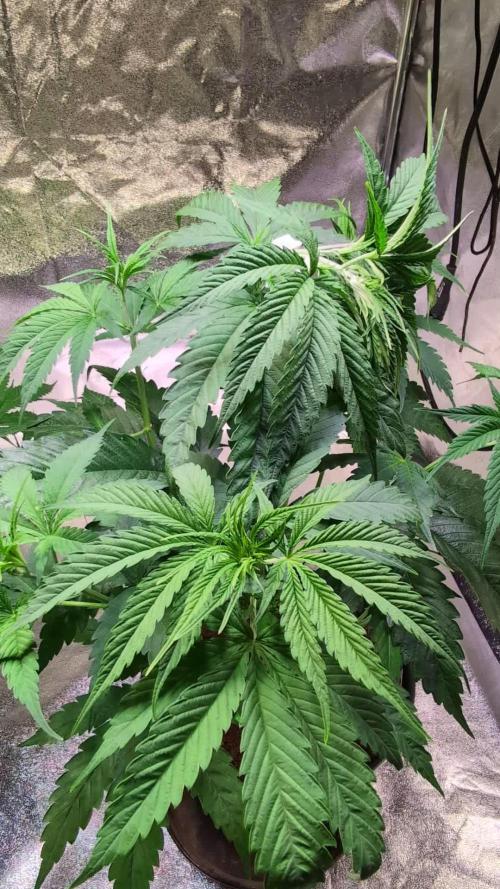
Nach der vierten Woche entwickelt sich die THC-Victory weiterhin rapide und nach dem topping zeichnet sich es ab, dass die Pflanze sich nun sehr schnell in die Breite ausdehnt.
Dieses Mal ist mir leider ein Trieb beim LST irreparabel Abgebrochen, aber wie ich die Pflanzen so kenne, kompensieren Sie dass relativ schnell.
Da die Pflanze eine reine Sativa ist, wird heute (26.09.25) die Blüte eingeleitet, da ich mit einem sehr starken Stretch rechne.
Die Umgebungsgegebenheiten sind weiterhin optimal:
—————
🌞 Temp: 24°C bis 26°C
🌚 Temp: 18°C bis 19°C
💨 RH: 68%
VPD: 0,7 kPa👍
—————
Grüne Grüße 🥦



Likes
6
Share


@Growstopher
Follow
5.27.25.
What’s up growers! So plant is growing but was stressed out way to much so plant is definitely well under performing. 4th week of flower started on 5.26.25. I got about 5-6 weeks left of flower so hopefully she turns out ok.
Thanks for checking out grow!

Likes
13
Share


@as_smas_ter
Follow
she's been in flush for nearly a week. still about another week left, im loving this strain. Been an easy grow, was still hungry for nitrogen early flower other than that has been a breeze, has luscious dense sour buds top to bottom, mephistos genetics are the best when it comes to autos that's for sure

Likes
23
Share


@RussianGrower
Follow
Recently, in the tent of my friend, we have prepared plants for the cultivation of guerrilla outdoor. Later, when the plants are already strong, you took them out and organized 5 plantations of several plants. They will grow themselves, with minimal care in the harsh Russian climate. The big danger for us now is not the police, and hunters for someone else's cannabis.
Who are the green hunters? These are bastards who do not grow cannabis, but steal other people's plants, they are ready for anything. When I was growing grass from my grandfather in the garden, I sometimes had to protect my plants at night with weapons, then I thought really to get a fighting dog, so that it bit off the uninvited guests eggs.
Now my grandfather is dead, and now I grow cannabis as a partisan and at home in a tent. But the memory of those times remained. In Russia, a terrible tradition to steal other people's bushes. Just imagine, you on your back brought water to the plants from the river, looked after and loved your plants, and a greedy hunter of greens cut your plants under the root, without waiting for their flowering. I'm willing to kill these bastards, I sometimes found myself on someone else's guerrilla plantations, but I never took everything, took samples on a couple of branches and prayed for this man when I smoked his weed.
Sometimes I hear from people that they steal other people's plants directly from private property from someone else's greenhouse, lulling someone else's dog. When I was drunk, I used to beat these people up really hard, because I had these green-hunter bastards stealing my weed, too.
In General, let's hope that our plantations will not be found, and the plants will be able to harvest. I really hope so, but I don't really believe it, because I've had such a bad experience many times, let's see how it will be this time. I hope with your moral support, the police and the green hunters will pass by our plantations.


Likes
11
Share


@pHilosophy420
Follow
The plant did grow big and fat did not expect that.
She have massive buds from top to bottom and she is now ready to be harvested and it should be a pleasure to trim the buds.

Likes
3
Share

@AestheticGenetix
Follow
12/21/25
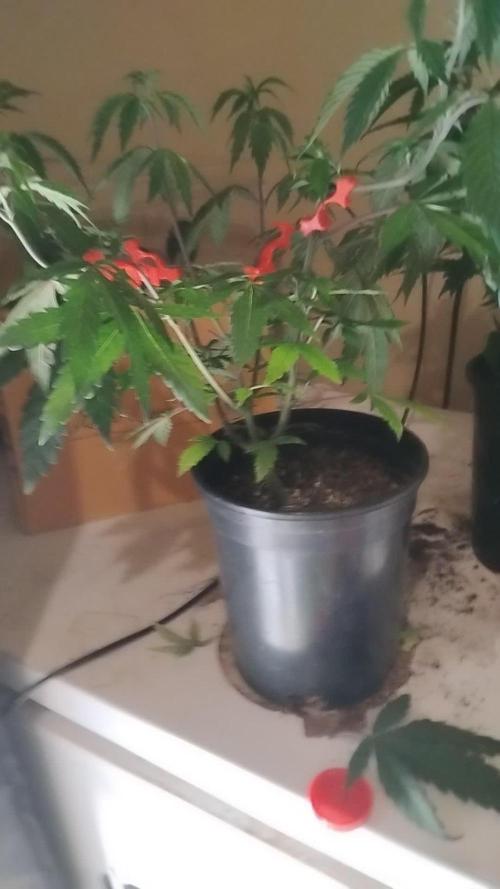
some of the plants have a really strong dominance for one side of the plant compared to the other.
They seem mostly happy and growing healthy.
The lower branches have a tendency to grow larger than the tops and have started to crowd the tops a bit so I have used LST to try and let the tops grow a bit more.
No feeding recently, just daily water from the auto drip irrigation from vivosun and the worms living in the soil.
Check out my YouTube@ AestheticGenetiX
Instagram @ Aestheticgenetix2
Likes
3
Share


@rihaksi
Follow
Grow is on cruise control plants are doing well. 4 of the 5 should flower out it 2 weeks but the fifth is only in week 2 of flower. Will just be watering plants for the remainder of the grow to flush out the last of the nutrients in the coco. Colas are starting to pack on some size and smell and look great. Mid week a few of the plants have started to turn purple and red and have added some color to the tent!

Likes
6
Share


@Shellshocked
Follow
This week went well I gave 1 cup of water per plant ph to 6.7 ocean Forrest will feed them for 2 weeks to a month (the soil there in)

Processing
Likes
154
Share


@CBD_Sweden
Follow
@FAST_BUDS,
Hi all the happy people here in GrowDiaries.
This is my second cultivation ever and it will be fun to try a bigger space than my closet grow.
First, I'm just going to say I'm done with the construction of my new growroom.
I put some pictures on the construction here in week one.
The room is 2.14 meters by 1.7 meters and has a ceiling height of 2 meters.
It provides a floor area of 3.6 square meters.
I use a 54 Watt Lightwawe T5 for germination and 2 Pcs 400 Watt HPS lamps.
I have a channel fan that replaces the room air about 40 times an hour to get a comfortable environment in the room, the air enters a fresh air intake from the outside.
The air is purified through a carbon filter to then leave the room to the rest of the basement.
Then I use that heat to heat the rest of the basement.
I will use 8 pcs 15 liter Autopots to grow with and a 100 liter water tank that supplies the pots of water and nutrition.
I will grow completely organically in soil and will watercure my buds to get the best possible medicine for me.
But there are no cultivation rooms to be displayed here, so I continue with what is most important.
Today I have put my seeds in my moisture dome and hope the seeds have germinated within a few days.
I am very excited to see how the new growroom will work and how this new secret CBD plant from @FAST_BUDS, will turn out.
..............................................................................................................................................................................................................................................................................................................................................
2017-09-11. Kl 12.00. Week 4 starts. I have cleaned the whole room for the new week and gave the girls water and nutes. Added videos and pics. Girl nr 1 is 27 cm high and girl nr 2 is 22 cm high.
-----------------------------------------------------------------------------------------
2017-09-12. Kl 10.00. New pics and video. Girl Nr1 has grown 5 cm in 23 hours, from 27 to 32 cm.😍
-------------------------------------------------------------------------------------
2017-09-13. Kl 22.00. Everything is looking great in the garden right now. Added new video.
--------------------------------------------------------------------------------------------------
2017-09-15. KL 10.00. New video added. Girls are looking great and they got 3 liters of water and nutes this morning. Girl Nr 1 is 38 cm high and Nr 2 is 28.
-----------------------------------------------------------------------------------------------------------------------------------------------------------------------------
2017-09-16. Kl 10.00. The girls grow like crazy, i have to defoliate about 20 leafs a day. Added 2 liters of water and nutes this morning and 2 new videos.
-------------------------------------------------------------------------------------------------------------
2017-09-17. This is the last day of week 4. Added a time laps from germ to week 4.