


Likes
Comments
Share


@MrPipi
Follow
Mr. Pipi defoliated a bit after the topdress last week. just some old leafs here and there, not much. And Frost is building up, terps are coming. Mr.Pipi is happy :)
AND the colors BOI oh BOI. thats what Mr.Pipi dreamt of.
Day 46: Heights : Frank 47cm , Pedro 44cm and Lance 34cm.


Likes
64
Share


@DogDoctorOfficial
Follow
What an amazing girls this 2 are, gave them a “mass” defoliation and lollipoping and they love it 😍 i know people say dont do defoliating on autos , this and that , bla bla bla , they love it, you just need to pay attention to them and give them the love you fell they need. They are now flowering and they keep stretching af 😆 lets see if they will feet the place i have for them 😅💚
Loving this autos world and how fast it all happens 🤩
Girls 2# Magnum Autos from @buddhaseeds
All i grow is medicine for myself, nothing to sell
So don’t even ask 😆
💚If you put your heart in to it, you will get love out off it 💚
Growers love to you all


Likes
16
Share


@Dr_Rook
Follow
Otra semana más que me pasa algo 😅
Tuve una avería de luz y pasaron frío durante unas cuantas horas, de ahí el reverso de algunas hojas moradas Espero no afecte mucho al rendimiento final.
Por lo demás todo bien, ya empiezan a oler un poco.
Seguimos en la lucha 💪🏽

Likes
58
Share


@MadeInGermany
Follow
Flowering day 9 since the time change to 12/12 h.
Hi everything 😀.
Another great week has passed and the cuttings have now all taken root and are developing beautifully 😍👌.
The leaf colors are perfect 👍 and the growth is extremely strong as always on Aero 😍👍.
You can tell that this week you stopped putting your energy into the roots and the energy is now growing :-).
The growth is clearly stronger than on other media, and despite the immediate flowering, the growth continues on 12/12 gone 👍.
Contrary to the assumption by some here in the forum, the Ph remains at 5.2 - 5.8 and there it will stay 😂👍.
I can only recommend trying out Aero, you will be amazed at the end result 😃.
Everything is going exactly as it should 👍, and I'm very curious to see how beautifully you will develop until next week.
Until then, I wish you a lot of fun with the update, stay healthy and let it grow. 🍀
You can buy this Strain at :
www.Zamnesia.com
☝️🏼☝️🏼☝️🏼☝️🏼☝️🏼☝️🏼
Strain
Gelato clone from mother (Zamnesia )
☝️
Genetics: Wedding Cake x Gelato x Gelato 33
👍
Vega lamp: 2 x Todogrow LED CXB3590 COB 55 W
1 x Sanlight S2W 62 W
💡
Flower lamp : 2 x Todogrow LED CXB3590 COB 55 W
1 x Sanlight S2W 62 W
💡 ☝️
Grow Aero System : Growtool 0.8
☝️
Fertilizer:
Canna Aqua Vega A + B , Canna Aqua Flores A + B , Rizotonic, Cannazym, CANNA Boost, Pk 13/14, Canna Cal / Mag, Canna Ph - Grow, Canna Ph-Bloom
☝️🌱
Water:
Osmosis water mixed with normal water (24 hours stale that the chlorine evaporates) to 0.2 EG. Add Cal / Mag to 0.4 Ec Ph with ph- to 5.2 - 5.8
💦 💧

Processing
Likes
11
Share


@ganjaman24
Follow
It’s bern roughly two months these guys have been growing! Lst’d Both but untied the gg because I wasn’t sure she was benefiting from it so I’m going to do it over. These ladies (I hope) will start their flower journey next week when I revive my new flower tent 😎..stay tuned for some epic buds..I hope!!


Likes
4
Share

@jdean88
Follow
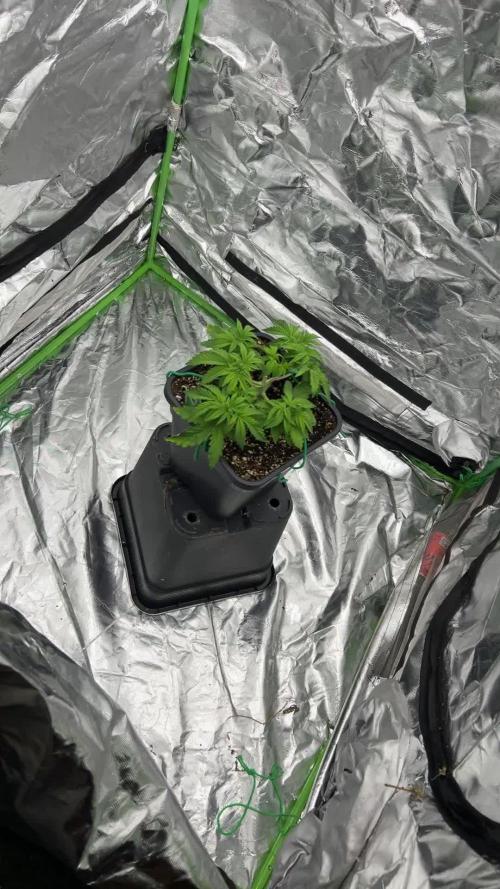
A lot of lst this week so plants looking a bit twisted from the amount of training the claw is slowly going away now on the og found ti be very sensitive to nutrients but she has riveted and starting to out grow the rest they are now showing signs of preflower coming so iam praying for a big stretch..the gorilla melon is now in the tent ready to be vegged big enough to fill the full tent will transplant soon into a bigger pot


Likes
15
Share


@CampaCavallo
Follow
È stato bello portare a raccolta la Bay Burger 🍔💚
Colori intensi e scuri ed un profumo abbastanza skunky, agliato.
Purtroppo la chiavetta pacco ha danneggiato un paio di video del raccolto 🤬... E nn é la prima volta che succede... Se qualcuno volesse sponsorizzarmi una chiavetta usb per smartphone, è ben gradita 😊
Grande attesa per il test del razzo 🚀 DryRocket 👀

Likes
20
Share

@DapperDabber
Follow
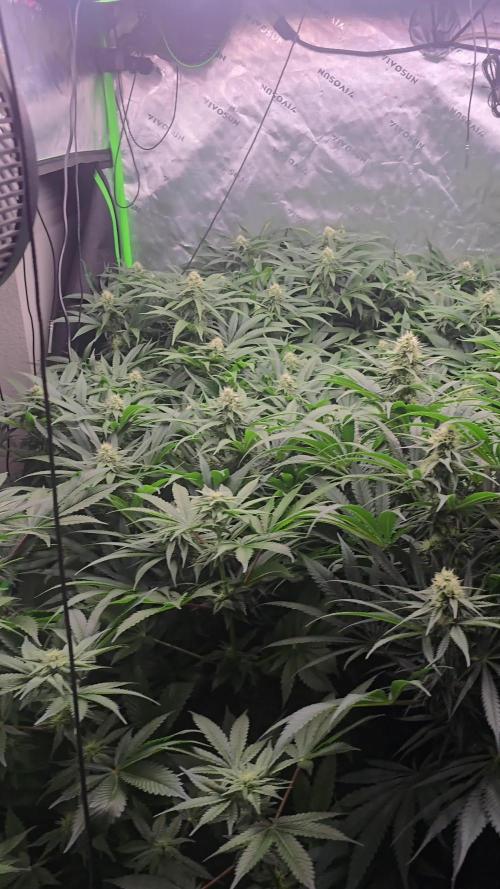
We're at 29 days in flower from the flip. The two Sweet Cherry Kush plants are packing on weight, at a very promising rate! Around 4-5 weeks anticipated to remain. Nothing much to say, just happy ladies! They get watered every other day with 72 hours being the longest stretch in-between. The temperaturs are pretty consistent, The VPD has still been fighting me, I'll probably end up with a dehumidifier for the summer month. The DLI has been very consistent as it appears we have ceased stretching.
Thanks for reading! Take care!
Likes
13
Share


@FlavoursUk
Follow
Welcome back,
Day 23, everything is on track, and I'm able to leave the system to run, although I still check on the girls 2 times a day and foliar feed Remo cal-mag.
pH sweet spot seems to be around 5.8/5.9 upto about 6.3. EC has been gradually dropping which let's me know the plants are uptaking the nutrients.
Roots are now getting very established hence the faster growth. I am due a RO water change in the next day or so.
Plant training - I plant to do some LST and Topping soon. Withing the next week for sure. Stay tuned until then!
Day 28 - Things are looking good, some decent growth the past few days. Everything is luscious green and looking healthy. Occasionally foliar feeding cal-mag as I use RO water.
Taken off 2 fan leaves off each plant as they were pretty big blocking light. The rest I've just leaf tucked. Trying to open up the lower shoots without causing too much stress to the girls. The LST and topping will start properly soon. Let the fun begin

Likes
6
Share


@Terp_Derp
Follow
Do far so good. Fattening nicely. Going to give last nutrient feeding this week and flush around 04/04

Likes
5
Share


@GERGrowDesigns
Follow
Dear Growers ,
Over the next weeks, we’re excited to share a very special project with you: Sensi Seeds Supreme Jack F1 Automatic 2025 Release
With dedication, knowledge, and hands-on practice, we’ll guide you step by step through the journey—watch with us as growth, development, and small wonders unfold before your eyes.
Whether you're a beginner or an expert, you are warmly invited to join, ask questions, and share your own experiences along the way!
Project Setup & Conditions:
• Brand/Manufacturer: Sensi Seeds
• Tent: 120cmx60cmx80cm
• Light: 2x 200 Watt Full Spectrum
• Humidity: 45%
• Soil: Narcos Organix Mix
• Nutrients: Narcos Products
• pH Value: 5.8
A Special Thanks To
Sensi Seeds
for the amazing collaboration, trust, and generous support in making this project possible. Your contribution is truly appreciated!
Congratulations on Your Own Projects!
We celebrate your growth, your creativity, and the passion you bring to the table. It’s truly inspiring to witness at Each visit .
Stay curious and keep up Growing —we look forward to welcoming you back for the next chapter soon!
Likes
7
Share


@JamrockGrows
Follow
23/08 - In week 5 of flower now, the buds continue to fatten and smell is getting stronger. I increased the nutes but overall the plants are looking green and are happy. I water them every 2-3 days. I watered them 1L with nutes today.
27/08 - watered today with 1L water at ph 7. The smell is starting to get very intense.

Likes
52
Share


@Santica_Garden
Follow
At the end of Week 3 from Seed, this is how the ladies are doing. Could be doing alot better but they have been transplanted and topped so I will give them a chance to recover fully. Happy Growing guys, any questions just ask 👍🏾🌱💚

Likes
4
Share


@TheNaturalist
Follow
Explosive growth after one week! Looking to do a topping and starting some LST next week. Things are looking great and going pretty smooth. The clones are still recovering from the deficiencies they came with.
Likes
17
Share


@FrankieBones
Follow
Hi 420 Family.
Start of week 6, and we are well into the blooming stage. So far so good, these ladies have gained a lot of growth over the past 2 weeks, they have stretched a lot and have now shifted their energy into making buds. The one WW is a little ahead of the rest in maturity it seems, the other two WW's not far behind. PL's I think will flower for an extra week or two looking at the bud sites and the pistils. At this stage they are getting about 1L of bloom feed every 1.5 days but it does seem to pick up and they are getting more thirsty every watering. I guess they will eventually settle on about 1L per day.
D36 - 11 Aug - All good and no complaints, other than the stretchy PL's. Let's hope they just make for awesome bud sites.
D38 - 13 Aug - Steady as it goes... Bud sites are forming nicely and I have not again spotted any sacks on the WW that initial had about 6/8 sacks on the oldest branches, nodes closest to the main stem. Very happy that I didn't kill her; I am still keeping a close eye tho. The PL's have again stretched a little bit but not as much as last week, thank goodness. They were watered yesterday morning and will be letting them dry out properly before giving them another feeding.
D38 Heights:
WW1 - 46CM
WW2 - 45CM
WW3 - 62CM
PL1 - 65CM
PL2 - 72CM
PL3 - 76CM
Stay blessed and I wish you all a happy grow!
Likes
14
Share


@Gamepichayut420
Follow
ตัดแล้ว Harvest เล่นเอาซะเหนื่อย แต่ก็มีความสุข ไม่อยากจะเชื่อว่า Aeroponics จะทรงพลังได้มากขนาดนี้ ชอบโดยรวมแล้วชอบมากๆเลย สุดยอดสุดสุด และถ้าปลูกต่อไปจะหาวิธีปลูก ป้องกันการอุดตันของหัวฉีด

Likes
Comments
Share

@mihixd
Follow
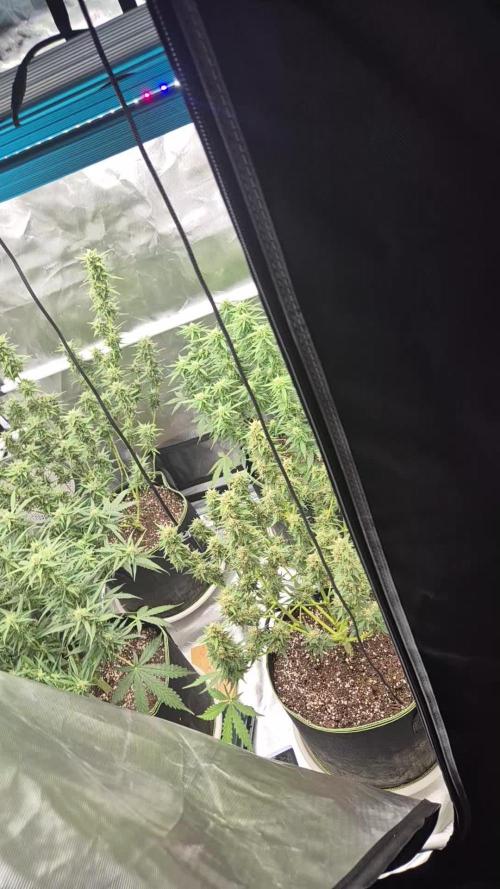
only took pics on d62 this week
D60
10L for 2 with calmag+bloom for smaller plants
10L for 2 with calmag+bloom+gs for bigger plants
d62
big defo on 2 small plants
Likes
10
Share


@Hazehouse
Follow
Lower leaves died and so I needed to defoliate plants grew quite a bit in this stage and preflowering shows they are girls temp dropped outside finally and so dehumidifier is constantly running. With a nice 78 degrees 50 rh
