





Likes
13
Share


@Dunk_Junk
Follow
She only grew 8cm this week. The stretch is slowing down a lot now.
She's doing well. Nothing else to the report as I'm just letting her do her own thing.
Still loving her Sativa-like leaves!! 😍 They are as thin as a blade!
For nutrients I'm using 15g of 20-20-20 powder mixed with 10L of water. Also added 4ml/L of both Cannazym and Terpinator. This brings it to around 1600ppm including ~300ppm for my clean water.
Timelapse Sequence:
*** Blue Dream ***
Auto Jack
Pineapple Express
CBD Compassion
*** BLue Dream ***
Auto Jack
Pineapple Express
CBD Compassion

Likes
30
Share


@WeWantItToGrow
Follow
Simply put I am so very pleased with the way this plant has performed my only worry is how to properly dry and cure this magnificent specimen

Likes
5
Share

@brrt22
Follow
Fall is coming...
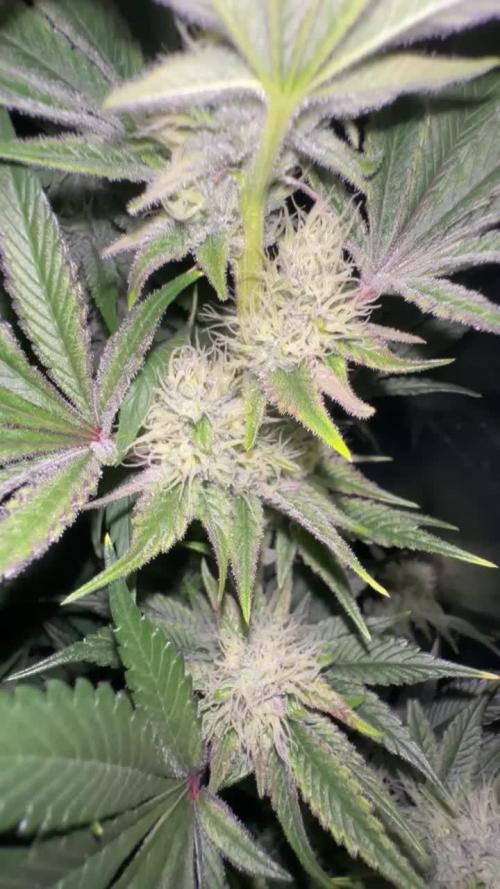
After finishing stretch last week, the introduction of Hy-Pro Epic Bloom really got the bud production going. Mimosa stem is covered in trichomes, Blueberry is showing beautiful colors and Jack Herer is bulking.
Everything is going as planned so far.
Not that much to do at this point.
Following my Hy-Pro nutrient scheme makes it just super easy, to turn those plants into the most beautiful ones, i ever grew.
Just like last week, i fed them the following:
Hy-Pro Terra: 4,5ml/l (component nutrients)
Hy-Pro Generator: 0.16ml/l
Hy-Pro Cal-mag: 4ml/l
Hy-Pro Epic Bloom: 0,5ml/l
EC: 1,8
VPD: 1,40
PPFD: 930 µmol/m²/s
Blueberry and Mimosa Evo are showing some very characteristic colouring. I am very happy, to see this.
Can't wait to see them in full colouration. It really is a Joy, to watch them change colours so rapidly, you can see differences every day.
Pure plant entertainment.
Stay tuned!
Grow strong, Friends! 👽



Likes
35
Share


@Mega420
Follow
Day 64 : Week 10, I'm near of the end !! I give her less nutrient to 'wash' her and the last watering will be without nutrient.
I think I will harvest in around 10 days, I can't wait to smoke her after she will have dried 😍

Likes
22
Share


@bypado_farm
Follow
Day 49:
Watered each plant with 1L with nuts
1568 ppm, 3345 us/cm, 3.3 EC (purple punch, strawberry banana, wedding Cheesecake)
1573 ppm, 3346 us/cm, 3.3 EC
It wasn't me who did the feeding
(gorilla cookies)
2 different feedings for the 10 plants
Day 51:
Watered each plant with 1L with nuts
1562 ppm, 3325 us/cm, 3.3 EC (purple punch, strawberry banana, wedding Cheesecake)
1514 ppm, 3293 us/cm, 3.2 EC
It wasn't me who did the feeding
(gorilla cookies)
2 different feedings for the 10 plants
Day 53:
Watered each plant with 1L with nuts
1632 ppm, 3472 us/cm, 3.4 EC (purple punch, strawberry banana, wedding Cheesecake)
??? ppm, ??? us/cm, ??? EC
It wasn't me who did the feeding
(gorilla cookies)
2 different feedings for the 10 plants
Day 55:
Watered each plant with 1L with nuts
1655 ppm, 3521 us/cm, 3.5 EC (purple punch, strawberry banana, wedding Cheesecake)
2142 ppm, 4557 us/cm, 4.5 EC ?
It wasn't me who did the feeding
(gorilla cookies)
2 different feedings for the 10 plants
Processing
Likes
7
Share


@BongRip
Follow
Terrible week.
Day 43 - No sign of over-fed. They are doing great regardless the ppm so I checked online and found out the ppm In organic soil could be higher and it's normal. Anyhow, I gave my plants plain PHed water after the fed, and the run off is about 1800ppm. I think I will remain around this ppm for coming weeks.
Day 45 - Half of the Led broke.
Day 46 - Gave them natural sunlight. Accidentally broke the main stem :((((
Day 47 - New Light, New Tent!
(It's BloomPlus BP-1500 light)


Likes
5
Share

@Snipes420
Follow
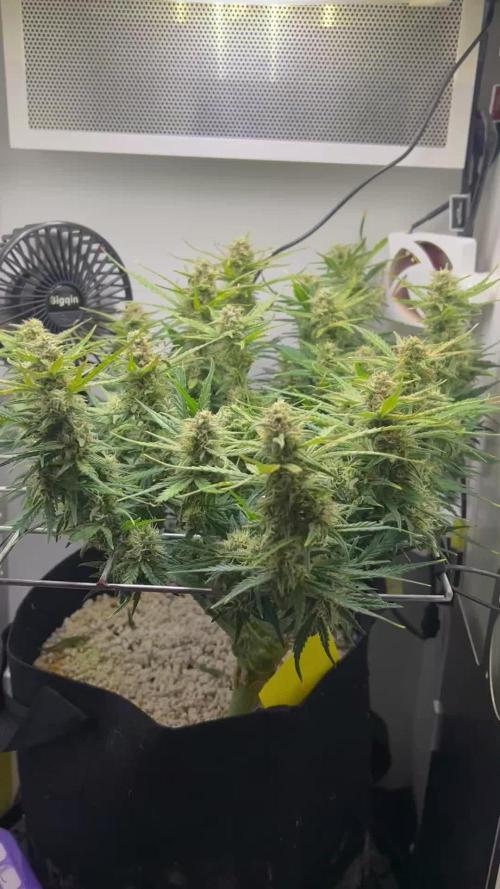
This week humidity is getting better. I have bought a dehumidifier and it kinda helps. I open the growbox couple Times a day to helps it get the humidity out. On rainy days the humidity still gets kinda high but not too crazy (67% on rainy days due to natural high humidity)
Overall humidity is better. Now im facing higher temps even with fans on max and heater off. This is only during night times when my bedroom windows are closed
I have done some defol again to help wirh airflow and humidity control
The bud sites are developing really well. Im feeding with some nutes again. It shows some deficiency in the upper canopy but might be due to the high heat? Plant seems to handle the stress okay
Im really starting to question what strain i have got since the plant is slowly turning purple. Im really new to growing so i cant really tell what it smells like. Its spells quite strong when opening the box and she is very sticky. Note to self: weer gloves from now in. I have washed my hands 4 times and they are still sticky and smell strong
Likes
26
Share


@Gardengobblin
Follow
Récolte total de 222g séché .
Une merveille cet plante . Vraiment je la recommande . Belle tête bien givré , bien compact , très odorante et collante comme jamais . J'ai vraiment hâte que la cure soit terminé pour déguster ca

Likes
77
Share


@Basementganja
Follow
Day 70 - It takes 5 days for the soil to dry out, with a 2.5 gallon dosage of the above listed nutrients.
She has been selectively de-leafed, since the last major defoliation.
The goal from now to harvest, is to maximize the light penetration, and airflow throughout the canopy, while sacrificing as few leaves as possible!
Likes
6
Share


@GoldenWeedGrower
Follow
Legend
Timestamp: 📅
EC - pH: ⚗️
Temp - Hum: 🌡️
Water: 🌊
Food: 🍗
pH Correction: 💧
Actions: 💼
Thoughts: 🧠
Events: 🚀
Media: 🎬
D: DAY, G: GERMINATION, V: VEGETATIVE, B: BLOOMING, R: RIPENING, D: DRYING, C: CURING
______________
📅 D15/V11 - 30/04/24
⚗️ EC: 0.7 pH: 6.0
🌡️ T: 21 °C H: 50%
🌊
🍗
💧
💼
🧠
🚀
🎬 1 TL video
______________
📅 D16/V12 - 01/05/24
⚗️ EC: 0.7 pH: 6.0
🌡️ T: 21 °C H: 50%
🌊
🍗
💧
💼
🧠
🚀
🎬 1 TL video
______________
📅 D17/V13 - 02/05/24
⚗️ EC: 0.6 pH: 5.8
🌡️ T: 20 °C H: 50%
🌊
🍗
💧
💼
🧠
🚀
🎬 1 TL video
______________
📅 D18/V14 - 03/05/24
⚗️ EC: 0.8 pH: 5.6
🌡️ T: 22 °C H: 60%
🌊
🍗
💧
💼
🧠
🚀
🎬 1 TL video
______________
📅 D19/V15 - 04/05/24
⚗️ EC: 0.8 pH: 5.5
🌡️ T: 22 °C H: 60%
🌊
🍗
💧
💼
🧠
🚀
🎬 1 TL video
______________
📅 D20/V16 - 05/05/24
⚗️ EC: 0.7 pH: 5.5
🌡️ T: 22 °C H: 60%
🌊
🍗
💧
💼
🧠
🚀
🎬 1 TL video
______________
📅 D21/V17 - 06/05/24
⚗️ EC: 0.7 pH: 5.3
🌡️ T: 22 °C H: 50%
🌊
🍗 Calmag, Grow A-B
💧5L
💼
🧠
🚀
🎬 1 TL video

Likes
15
Share


@Plugged_Inn
Follow
This has got to be one of the best Plants i have ever grown. The Taste and Sweet smell is like A Starburst . Cherry , ice cream . Buzz is Smooth And very high but mellow . 10/10 👌


Likes
37
Share


@Roberts
Follow
Mandarin XL auto looks like she is done stretching. She is starting to for trichromes and start bulking. I did a solution change in her several days ago. Everything Is looking good. 🤞🏻for some nice buds to form. Nothing more to report. Thank you Gen1:11, Medic Grow, and Ganja Farmer. 🤜🏻🤛🏻🌱🌱🌱
Thank you grow diaries community for the 👇likes👇, follows, comments, and subscriptions on my YouTube channel👇. ❄️🌱🍻
Happy Growing 🌱🌱🌱
https://youtube.com/channel/UCAhN7yRzWLpcaRHhMIQ7X4g
Likes
6
Share

@CadillacGreen_420
Follow
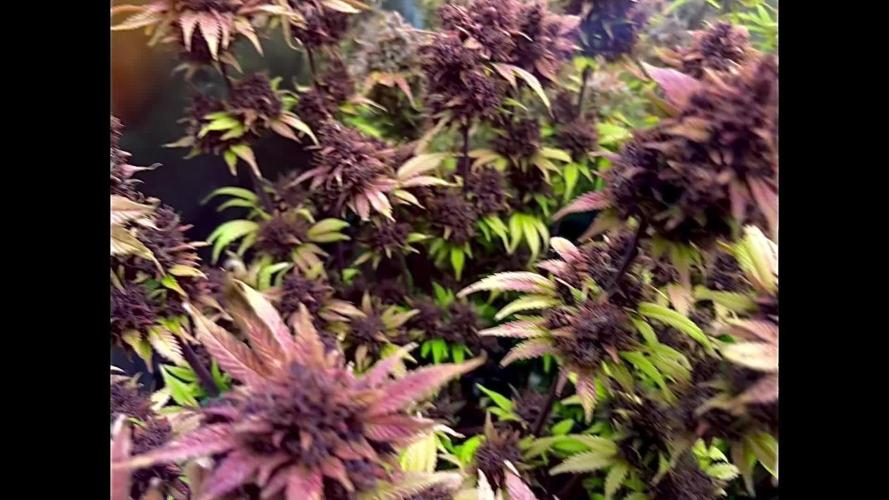
Week 13 – Ripening is now progressing slowly, as I had expected, due to my choice to provide a light stimulus that isn’t too intense but rather gentler. From flowering until now I’ve maintained 30 DLI and a steady 470 PAR.
In this run, the goal has been to keep the resin thick and sticky. Humidity has been kept between 57–62% max. My lamp is an Omega Pro 300W, which I’m currently running 37% (111 W).
This strategy seems to be working well: resin production has been abundant, and on this point—and not only this one—I’ve completely fallen in love with Gorilla Cookies.
The aroma is exquisite, and the resin… the flowers are covered in ointment-like resin.
The macro shots of the trichomes still don’t show any amber heads, so I believe harvest is probably about 10–15 days away. 🍮🤤
I think I’ll grow only Gorilla in the next run! 🦍👀
P.SThe leaf discoloration happened very quickly! The previous photos are from yesterday when it was still green — today it looks like this. Really interesting
Likes
44
Share


@Mr_Pgrow
Follow
Another wonderful auto to run and what a terp monster she turned out to be. Every square inch of her was covered in trichomes.
Her yield is impressive, Weighting in a 73g of flower and 23.9g of trim.
Overall very pleased, some of the best stash I have grow.... so far !!!!
Peace ✌️
Mr.PersonalGrow
Follow me here
https://www.theweedtube.com/user/Mr.PersonalGrow
Likes
1
Share


@NeoCat
Follow
TCP Auto has been an effortless grow so far. Everything is going smoothly. The smell is getting much sweeter now and has quite a nice citrus hint to it.
Likes
11
Share


@Homestickycannabis
Follow
I'm excited for this one, really skunky smell and lovely buds. Hey growth was right on point with a auto and having her under 24 hours if light a day really fattened up her flowers. She grew with zero stretch between nodes and stacked nothing but nice colas. I would definitely recommend this strain for anyone looking for a fast turnaround of fat resinous buds.
Cheers.

Likes
30
Share


@cheetah844
Follow
Nice growth but it does look like this one is going to be a thirsty girl. She already wants some additional nitrogen.
I topped every bud site on every plant, both indoors & outdoors.


