


Likes
Comments
Share


@DrGreenThumb95
Follow
Soo! Eventful week in the tent as I think I I have discovered a lot of my problems with slow growth. So I purchased an EC meter at the beginning of the week and decided to test my run off (rookie mistake this was the first run off since the air pot transfer) and it's fair to say my EC was EXTREMELY fu**ing high... like 3.6 high so this week the first flush I did quarter strength feed I got the run off down to 2.8 then next flush it came down to 2.2 at half strength and the last flush was half strength with an introduction to terpinator and the run off came down to 1.6. It's fair to say I have notice a incredible difference in growth I really want to switch over this week but I'm going to let the plants recover and flick the next week. Little bit worried about space but I love a challenge.
Also been a bit of an expensive week as my carbon filter final packed up so I treat myself to a new ram air (6inch)
Happy growing!

Likes
10
Share


@HideAndFly420
Follow
Something wrong happened on the end of last week.
I had a little irrigation problem and I did a m mistake with the fan’s position, it was too direct on the roots.
I think this could have caused a block to the nutrients transmission.
I will give just water with regulator ed enzym+.
Let’ a see

Likes
11
Share


@Sejnik
Follow
Vypadají velmi spokojeně.
Díky odvlhčovači vzduchu je ve stanu trochu tepleji než bych si přál, ale to nevadí, vše je lepší než plíseň.
Shogun voní jako svěží citrón.
Sweet Orange XL voní skutečně jako sweet orange...OMG miluji tu vůni
Jednou zalévám pouze s RQS tabletami easy bloom booster (jedna tableta na 8 litrů) EC 0.7-1.
Podruhé RQS tablety easy bloom booster (jedna tableta na 8 litrů) + hnojiva od Biobizz EC 1,5-1,7.
Zalévám každou z rostlin tak, aby měla dostatečný odtok vody ze spodku květináče.

Likes
12
Share

@El-Ecko
Follow
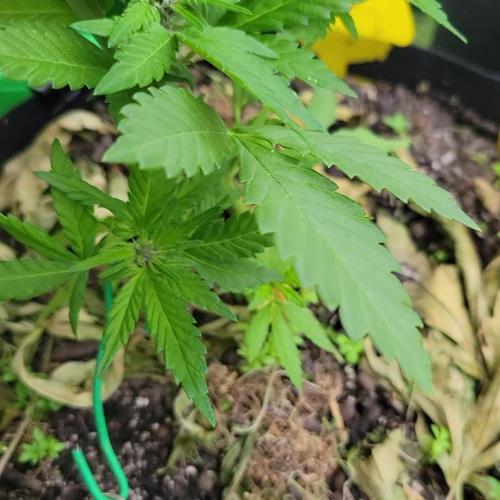
2 Weeks into Flowering
Daytime temperatures have gone from 15° to 30° in just one or two days. But I really can’t complain… because I needed the warmth, too😅. I decided to do a light LST to help the little side shoots get more sunlight. The little flowers are slowly taking on a beautiful purple hue.
Hopefully, they’ll get really plump and sticky. 😋🤤
Thanks so much for stopping by. ✌️
Likes
56
Share


@Ultraviolet
Follow
What's in the soil? What's not in the soil would be an easier question to answer. 16-18 DLI @ the minute. +++ as she grows.
Probably not recommended, but to get to where it needs to be, I need to start now.
Vegetative @1400ppm 0.8–1.2 kPa 80–86°F (26.7–30°C) 65–75%, LST Day 10, Fim'd Day 11
CEC (Cation Exchange Capacity):
This is a measure of a soil's ability to hold and exchange positively charged nutrients, like calcium, magnesium, and potassium. Soils with high CEC (more clay and organic matter) have more negative charges that attract and hold these essential nutrients, preventing them from leaching away.
Biochar is highly efficient at increasing cation exchange capacity (CEC) compared to many other amendments. Biochar's high CEC potential stems from its negatively charged functional groups, and studies show it can increase CEC by over 90%. Amendments like compost also increase CEC but are often more prone to rapid biodegradation, which can make biochar's effect more long-lasting. biochar acts as a long-lasting Cation Exchange Capacity (CEC) enhancer because its porous, carbon-rich structure provides sites for nutrients to bind to, effectively improving nutrient retention in soil without relying on the short-term benefits of fresh organic matter like compost or manure. Biochar's stability means these benefits last much longer than those from traditional organic amendments, making it a sustainable way to improve soil fertility, water retention, and structure over time. Needs to be charged first, similar to Coco, or it will immobilize cations, but at a much higher ratio.
a high cation exchange capacity (CEC) results in a high buffer protection, meaning the soil can better resist changes in pH and nutrient availability. This is because a high CEC soil has more negatively charged sites to hold onto essential positively charged nutrients, like calcium and magnesium, and to buffer against acid ions, such as hydrogen.
EC (Electrical Conductivity):
This measures the amount of soluble salts in the soil. High EC levels indicate a high concentration of dissolved salts and can be a sign of potential salinity issues that can harm plants.
The stored cations associated with a medium's cation exchange capacity (CEC) do not directly contribute to a real-time electrical conductivity (EC) reading. A real-time EC measurement reflects only the concentration of free, dissolved salt ions in the water solution within the medium.
98% of a plants nutrients comes directly from the water solution.
2% come directly from soil particles.
CEC is a mediums storage capacity for cations. These stored cations do not contribute to a mediums EC directly.
Electrical Conductivity (EC) does not measure salt ions adsorbed (stored) onto a Cation Exchange Capacity (CEC) site, as EC measures the conductivity of ions in solution within a soil or water sample, not those held on soil particles.
A medium releases stored cations to water by ion exchange, where a new, more desirable ion from the water solution temporarily displaces the stored cation from the medium's surface, a process also seen in plants absorbing nutrients via mass flow. For example, in water softeners, sodium ions are released from resin beads to bond with the medium's surface, displacing calcium and magnesium ions which then enter the water. This same principle applies when plants take up nutrients from the soil solution: the cations are released from the soil particles into the water in response to a concentration equilibrium, and then moved to the root surface via mass flow.
An example of ion exchange within the context of Cation Exchange Capacity (CEC) is a soil particle with a negative charge attracting and holding positively charged nutrient ions, like potassium (K+) or calcium (Ca2+), and then exchanging them for other positive ions present in the soil solution. For instance, a negatively charged clay particle in soil can hold a K+ ion and later release it to a plant's roots when a different cation, such as calcium (Ca2+), is abundant and replaces the potassium. This process of holding and swapping positively charged ions is fundamental to soil fertility, as it provides plants with essential nutrients.
Negative charges on soil particles: Soil particles, particularly clay and organic matter, have negatively charged surfaces due to their chemical structure.
Attraction of cations: These negative charges attract and hold positively charged ions, or cations, such as:
Potassium (K+)
Calcium (Ca2+)
Magnesium (Mg2+)
Sodium (Na+)
Ammonium (NH4+)
Plant roots excrete hydrogen ions (H+) through the action of proton pumps embedded in the root cell membranes, which use ATP (energy) to actively transport H+ ions from inside the root cell into the surrounding soil. This process lowers the pH of the soil, which helps to make certain mineral nutrients, such as iron, more available for uptake by the plant.
Mechanism of H+ Excretion
Proton Pumps: Root cells contain specialized proteins called proton pumps (H+-ATPases) in their cell membranes.
Active Transport: These proton pumps use energy from ATP to actively move H+ ions from the cytoplasm of the root cell into the soil, against their concentration gradient.
Role in pH Regulation: This active excretion of H+ is a major way plants regulate their internal cytoplasmic pH.
Nutrient Availability: The resulting decrease in soil pH makes certain essential mineral nutrients, like iron, more soluble and available for the root cells to absorb.
Ion Exchange: The H+ ions also displace positively charged mineral cations from the soil particles, making them available for uptake.
Iron Uptake: In response to iron deficiency stress, plants enhance H+ excretion and reductant release to lower the pH and convert Fe3+ to the more available form Fe2+. The altered pH can influence the activity and composition of beneficial microbes in the soil. The H+ gradient created by the proton pumps can also be used for other vital cell functions, such as ATP synthesis and the transport of other solutes. The hydrogen ions (H+) excreted during photosynthesis come from the splitting of water molecules. This splitting, called photolysis, occurs in Photosystem II to replace the electrons used in the light-dependent reactions. The released hydrogen ions are then pumped into the thylakoid lumen, creating a proton gradient that drives ATP synthesis.
Plants release hydrogen ions (H+) from their roots into the soil, a process that occurs in conjunction with nutrient uptake and photosynthesis. These H+ ions compete with mineral cations for the negatively charged sites on soil particles, a phenomenon known as cation exchange. By displacing beneficial mineral cations, the excreted H+ ions make these nutrients available for the plant to absorb, which can also lower the soil pH and indirectly affect its Cation Exchange Capacity (CEC) by altering the pool of exchangeable cations in the soil solution.
Plants use proton (H+) exudation, driven by the H+-ATPase enzyme, to release H+ ions into the soil, creating a more acidic rhizosphere, which enhances nutrient availability and influences nutrient cycling processes. This acidification mobilizes insoluble nutrients like iron (Fe) by breaking them down, while also facilitating the activity of beneficial microbes involved in the nutrient cycle. Therefore, H+ exudation is a critical plant strategy for nutrient acquisition and management, allowing plants to improve their access to essential elements from the soil.
A lack of water splitting during photosynthesis can affect iron uptake because the resulting energy imbalance disrupts the plant's ability to produce ATP and NADPH, which are crucial for overall photosynthetic energy conversion and can trigger a deficiency in iron homeostasis pathways. While photosynthesis uses hydrogen ions produced from water splitting for the Calvin cycle, not to create a hydrogen gas deficiency, the overall process is sensitive to nutrient availability, and iron is essential for chloroplast function.
In photosynthesis, water is split to provide electrons to replace those lost in Photosystem II, which is triggered by light absorption. These electrons then travel along a transport chain to generate ATP (energy currency) and NADPH (reducing power). Carbon Fixation: The generated ATP and NADPH are then used to convert carbon dioxide into carbohydrates in the Calvin cycle. Impaired water splitting (via water in or out) breaks the chain reaction of photosynthesis. This leads to an imbalance in ATP and NADPH levels, which disrupts the Calvin cycle and overall energy production in the plant. Plants require a sufficient supply of essential mineral elements like iron for photosynthesis. Iron is vital for chlorophyll formation and plays a crucial role in electron transport within the chloroplasts. The complex relationship between nutrient status and photosynthesis is evident when iron deficiency can be reverted by depleting other micronutrients like manganese. This highlights how nutrient homeostasis influences photosynthetic function. A lack of adequate energy and reducing power from photosynthesis, which is directly linked to water splitting, can trigger complex adaptive responses in the plant's iron uptake and distribution systems.
Plants possess receptors called transceptors that can directly detect specific nutrient concentrations in the soil or within the plant's tissues. These receptors trigger signaling pathways, sometimes involving calcium influx or changes in protein complex activity, that then influence nutrient uptake by the roots. Plants use this information to make long-term adjustments, such as Increasing root biomass to explore more soil for nutrients. Modifying metabolic pathways to make better use of available resources. Adjusting the rate of nutrient transport into the roots. That's why I keep a high EC. Abundance resonates Abundance.
Likes
19
Share

@TrickzGrowz
Follow
Servus Moin!
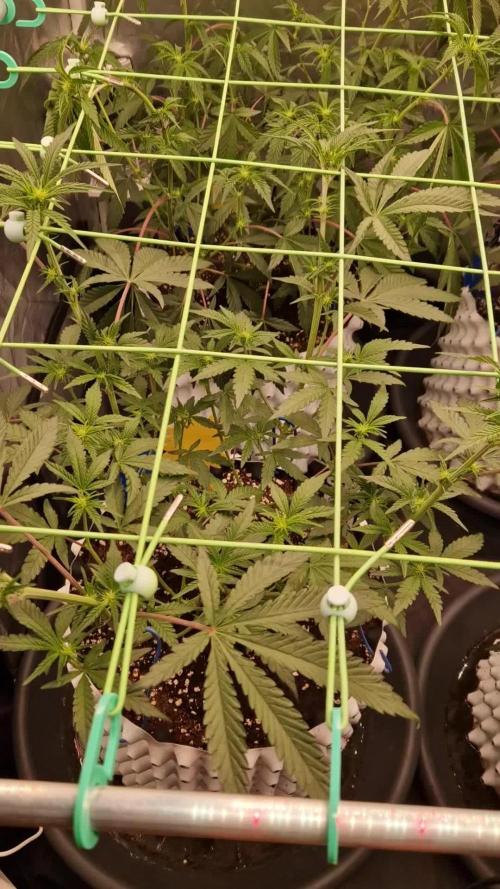
Der Stretch macht sich langsam mehr bemerkbar. Die Blucci OG musste dennoch ein wenig höher gestellt werden.
Likes
16
Share


@JohnnyBlaz3
Follow
WOW! I swear this is exactly 7 day difference lol I have noticed the folair feeding makes the leaves darker and the ridges more pronounced. the leaves just look stronger and healthier. I was given a sample of optic foliar from the local grow store i just started a few days ago. Its kinda weird i feel like i'm a week behind from usual but i also have a feeling this could be a tent record coming this crop. I still have not topped my 2nd grows tent record of 782 grams. I'm thinking about a week until i flip to flower. I want the roots to have lots of time to fill up those pots and get ready for flower. I can feel it, 800+ grams coming this grow!!!!!! I also think this girl is gonna be a heavy producer, lets throw out a really early really random guess of 160 grams from this lady.

Likes
156
Share


@StarLorr
Follow
Helloing 👋🏻friends and visitors.
Welclone to my Clone diary🙃
Both Clones are doing fantastic!
Some leaves are changing colour from green to burgundish underneath and dark green on top.
Some top buds have so much frost on them that I mistakenly thought it was mold😳😅 all is good though 😉
______________________________
Feeding:
Tue 12Dec: 3L each w/nuts pH'd 6.5
Fri 15Dec : 3L each w/nuts pH'd 6.5
Mon18Dec:2L each water only pH'd 6.5
_______________________________
Thanks for stopping by, likes and comments are appreciated 👊🏻😎
Keep on growin!
Keep on tokin!!!
😙💨💨💨💨💨


Likes
24
Share


@Kirsten
Follow
30.12.24:
So I finally became brave enough last night to use LST on my grow for the first time.
Watermelon 🍉 is doing much better than the other plants were at this stage, and still better than one that's 7 weeks old already!
I'm very pleased with this strain and phenotype so far. As I've implemented the LST much earlier for her, I'm very excited to see what happens in the next couple of weeks 😃
Thanks for checking out my diary 🙂🍃✌️
Likes
38
Share


@ScouseCityLX
Follow
First time taking clones. Took 6 and 6/6 rooted. Put 5 in the grow tent and eventually took one out to make space for the dehumidifier.

Likes
6
Share


@TheCalyxLaboratory
Follow
Week Update: Absolute Growth Explosion! 🚀🌱
We are officially at the end of the vegetative stage, and honestly, the growth rate in this setup is nothing short of crazy! 🤯 The Super Sativa Seed Club (SSSC) genetics of The Gassy One are showing their true power. These girls are ridiculously vigorous, pushing out massive, thick fan leaves and branching beautifully. 🔥
I’ve finally tucked them under the ScrOG net to manage the canopy in my 60x60cm space, and they are reacting perfectly. Every single shoot is already aiming straight back up for the light! 🗺️📐
A massive shoutout to Athena Nutrients – the clean, stable run with their line is paying off big time! 💎 The root zone is incredibly happy, and the plants have that vibrant, healthy glow that every grower wants to see. Combined with the AutoPot sub-irrigation system and AirDomes, it’s a hands-free turbo engine right now. 🏎️💨
📊 Environment & Reservoir Stats this week:
💡 Light: Dialed in at a crisp 500 PPFD
📈 EC: Sitting stable at 1.5
🎯 pH: Perfectly anchored at 5.9
We are letting the canopy settle for just another 2–3 days, and then it’s officially time to flip the switch to 12/12! ⏳🔄 The tent is already packed, and the stretch is going to be absolutely wild. Stay tuned! 🌿
Likes
6
Share


@AbbyCat
Follow
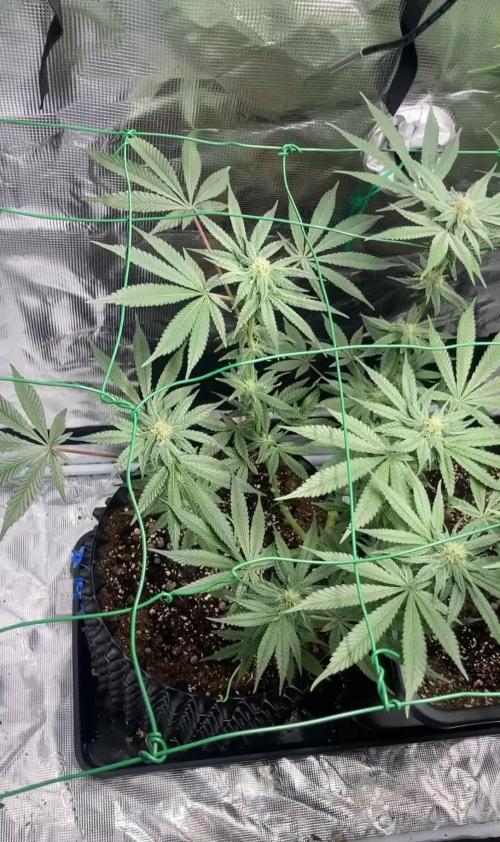
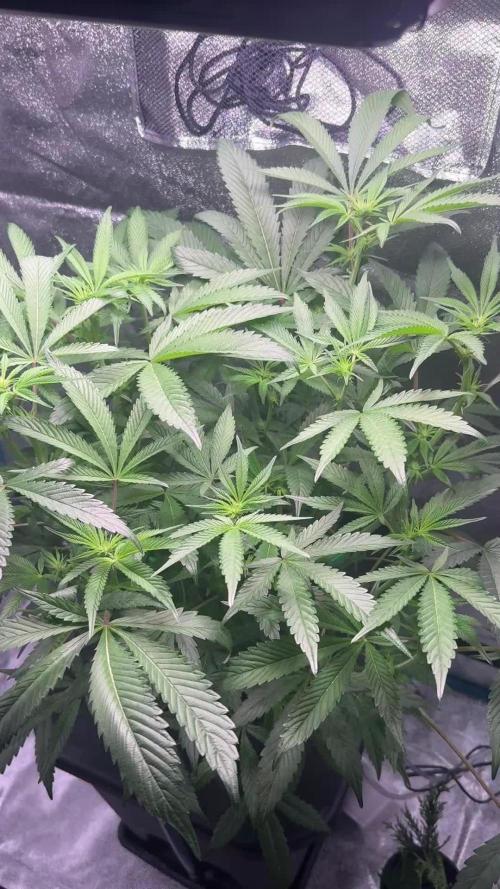
The weight listed is wet, so I expect to lose about 20% as it dries and cures, leaving a final yield of around 8–9 ounces. This is a fantastic strain with an uplifting, energetic high—perfect for thinking, dreaming, and relaxing without knocking you out. I had a lot of fun growing this strain even with all the challenges in the beginning





Likes
32
Share


@FlynnRyder
Follow
ugh just hate myself right now lol. I feel like it would have done AMAZING had I flipped sooner and SCROG way better. I was timid and had a lot of personal obligations preventing me from staying in the garden as much as I would have liked. Its a grower! and stretches so much in early flower. Stay on top of her but I think she may make some amazing bud based on what I did have drying recently. I wish I didnt mess up the timing but I just couldnt have the second wave be held up by these mistakes and felt it best to let it go

Likes
4
Share


@Chucky324
Follow
Hello. This is the end of week 6 and the beginning of week 7 of flowering.
The plant is growing well. I've spotted 2 small leaves with some white powdery mildew on them.
Took them off and throw them away. I have some heavy water that works well... I'll use it on the WPM.
I'll add another fan through the night to stir up the air more so the spores don't settle on the leaves, and drop the dehumidifier to 50%.
I've got the WPM on the squash plants in the garden just 20 feet away.
It's in the air here this time of year, just waiting for the right environment to start.
I see it on the leaves of the bushes and trees on our forest hikes.
So, I guess I'm saying that I might cut this plant down early if it gets to bad.
OK. Be Great.
Chuck.
Likes
7
Share


@Adkguerrilla44
Follow
Candy kush express #3 should be done by the end of this month and she's chunking up very nice and the smell coming from her is like nothing I've grown before it's wild!! Candy kush #1 is loving the foop bloom and is almost as tall as my gp x bkp which is like 6 weeks older 😅 😳 amazing growth with this strain. Candy kush #2 is growing super unruly lol 😆 branches growing every which way going to be a unique looking plant when all is said and done,I would seriously recommend this strain for anybody growing outdoors ,I'll be ordering a 10 pack for next season(depending on the smoke,which I already know is going to be fire 🔥) I was forced to move all 3 plants out in front of my house because the sun is slowly moving back behind the trees later and later as these fall weeks move foward but my front yard stays lit up from around 930am-730pm luckily or I'd be screwed
Likes
6
Share


@Kassus_Kush
Follow
Molly is finally bulking up.. she looks beautiful. M for Monster! The colours of this plant are truely eye catching. Not sure the camera picks it up… truely amazing. The finish line is sight.. her final lunch and it should be time to flush.

Likes
45
Share


@masterofsmeagol
Follow
6/12 Thunderstorms turned to sun
Plants are growing substantially. The ones that were damaged from the sun have pulled out of it. I checked the fim I did on a gmo that later burned and it has five tops! I took a couple videos bur I'll have to wait until tomorrow to upload them. Despite the weather severity and inconsistencies I'm in a really good spot. I'll upload the two videos tomorrow when I'm in a better area. Wifi is far to slow.
6/13 Rained yesterday before turning to hot sun. Supposed to be in the 90s today. Due to the rain and storms we've been having I hacebt had to water. Soil is still moist. Plants seem to be growing at a great pace. With all this rain they've gotten a hearty dose of the nutes in my soul mix and then when the sun comes out and they bask for a few hours they look considerable bigger. Another storm coming up but other than that weather is good. Plants are happy and doing well.
6/14 Plants are loving this hot weather. Rainy then it will clear up and be sunny. All plants have recovered from the shock of the weather and are growing like crazy. Ice started some lsting. I haven't even had to water.
6/15 Medium is still damp. I don't think we'll get much rain the next few days but we've gotten a lot lately. I'll continue playing it by ear. The water lasts much longer with the smaller plants in lather containers. Later in the summer I could be watering daily. If there is no rain I'll allow the bags to dry out and I'll water them. I may start them on a small nutrient schedule like the fox farm organic one you use for the entirety. I've hesitated though because my soil is chock full of nutrients and they show no sighs of deficiencies. I'll keep an eye on it. They look great though.
9/16 Watered after church. 3 1/2 gallons so approximately a half gallon each. Iys been really hot and i dont see rain in the forecast. Also broke the gmo that I fimmed right at a topping point. It wasnt wilted, and I ran and grabbed duct tape and fixed it. I've had good luck in the past this way. Hopfully I will this time as well. Still sucks though
9/17 The plant that split at the V that I taped up seems to be doing just fine. Looks just like the other top next to it. Thank God. Things seem to be going well. I'm wondering if I should start giving nutrients but I don't see any deficiencies and I know this soil mix lasts pretty much through veg without showing signs of deficiencies. I think it might be a case of "if it's not broke don't fix it." I'll look back on diaries and I'll do some research.
9/18 It's overcast but it's been in the upper 80's. I checked the plants around 11 and they looked good. They'll need water but I'm holding off until the morning. The plant I broke at the crook shows no signs of wilting or any negative effects. I assume it will come back stronger. I was thinking about watering tonight but at 12 there was still a little moisture. They will be fine until morning. Plants seem bigger every day.