Likes
Comments
Share
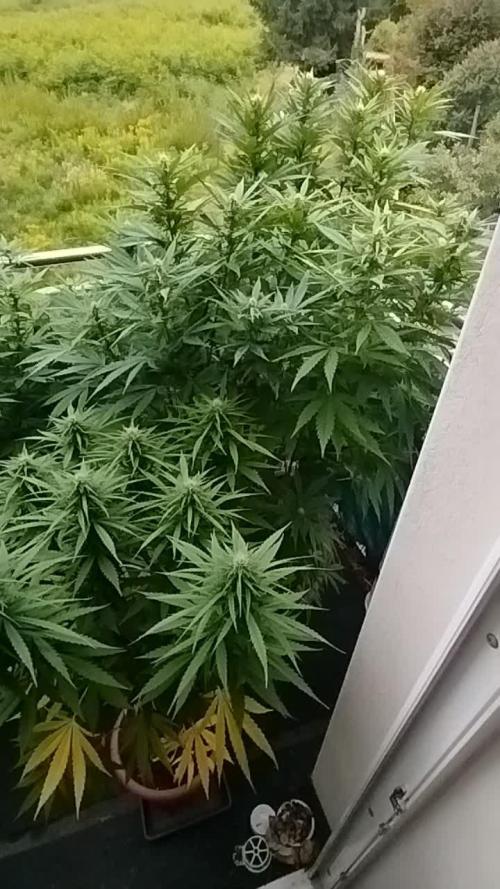
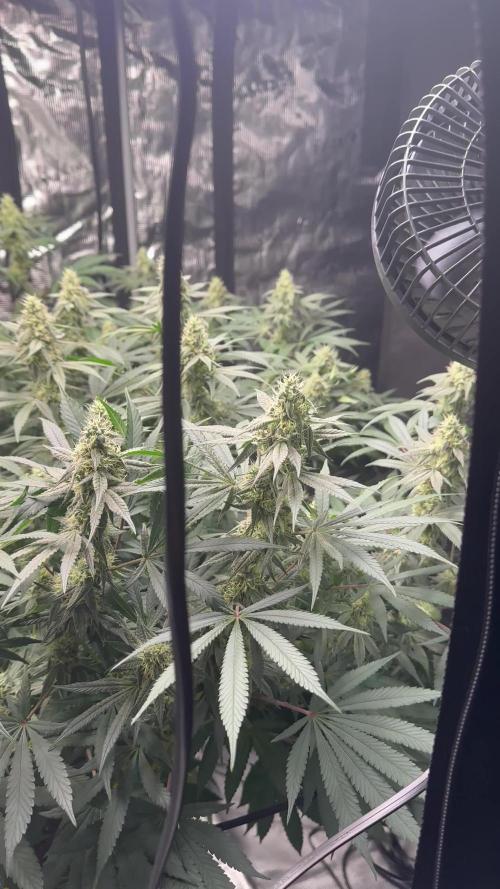
Hallo zusammen 🤙. Habe sie heute geerntet. Wir sehen uns in 3 Wochen mit dem Ergebnis wieder. Bis dann 🤙
Processing
Likes
21
Share
Been feeding just water ready for the chop. Some of them have all brown pistils and have pretty much stopped all together. The kalimist indica pheno is still flowering so I'll let it go until it looks ripe 👍
Likes
19
Share
Likes
25
Share
ANTHOCYANIN production is primarily controlled by the Cryptochrome (CR1) Photoreceptor ( !! UV and Blue Spectrums are primary drivers in the production of the pigment that replaces chlorophyll, isn't that awesome! 1. Diverse photoreceptors in plants Many civilizations, including the sun god of ancient Egypt, thought that the blessings of sunlight were the source of life. In fact, the survival of all life, including humans, is supported by the photosynthesis of plants that capture solar energy. Plants that perform photosynthesis have no means of transportation except for some algae. Therefore, it is necessary to monitor various changes in the external environment and respond appropriately to the place to survive. Among various environmental information, light is especially important information for plants that perform photosynthesis. In the process of evolution, plants acquired phytochrome, which mainly receives light in the red light region, and multiple blue light receptors, including his hytropin and phototropin, in order to sense the light environment. .. In addition to these, an ultraviolet light receptor named UVR8 was recently discovered. The latest image of the molecular structure and function of these various plant photoreceptors (Fig. 1), focusing on phytochrome and phototropin. Figure 1 Ultraviolet-visible absorption spectra of phytochrome, cryptochrome, phototropin, and UVR8. The dashed line represents each bioactive absorption spectrum. 2. Phytochrome; red-far red photoreversible molecular switch What is phytochrome? Phytochrome is a photochromic photoreceptor, and has two absorption types, a red light absorption type Pr (absorption maximum wavelength of about 665 nm) and a far-red light absorption type Pfr (730 nm). Reversible light conversion between the two by red light and far-red light, respectively(Fig. 1A, solid line and broken line). In general, Pfr is the active form that causes a physiological response. With some exceptions, phytochrome can be said to function as a photoreversible molecular switch. The background of the discovery is as follows. There are some types of plants that require light for germination (light seed germination). From that study, it was found that germination was induced by red light, the effect was inhibited by subsequent far-red light irradiation, and this could be repeated, and the existence of photoreceptors that reversibly photoconvert was predicted. In 1959, its existence was confirmed by the absorption spectrum measurement of the yellow sprout tissue, and it was named phytochrome. Why does the plant have a sensor to distinguish between such red light and far-red light? There is no big difference between the red and far-red light regions in the open-field spectrum of sunlight, but the proportion of red light is greatly reduced due to the absorption of chloroplasts in the shade of plants. Similar changes in light quality occur in the evening sunlight. Plants perceive this difference in light quality as the ratio of Pr and Pfr, recognize the light environment, and respond to it. Subsequent studies have revealed that it is responsible for various photomorphogenic reactions such as photoperiodic flowering induction, shade repellent, and deyellowing (greening). Furthermore, with the introduction of the model plant Arabidopsis thaliana (At) and the development of molecular biological analysis methods, research has progressed dramatically, and his five types of phytochromes (phyA-E) are present in Arabidopsis thaliana. all right. With the progress of the genome project, Fi’s tochrome-like photoreceptors were found in cyanobacteria, a photosynthetic prokaryotes other than plants. Furthermore, in non-photosynthetic bacteria, a homologue molecule called bacteriophytochrome photoreceptor (BphP) was found in Pseudomonas aeruginosa (Pa) and radiation-resistant bacteria (Deinococcus radiodurans, Dr). Domain structure of phytochrome molecule Phytochrome molecule can be roughly divided into N-terminal side and C-terminal side region. PAS (Per / Arndt / Sim: blue), GAF (cGMP phosphodiesterase / adenylyl cyclase / FhlA: green), PHY (phyto-chrome: purple) 3 in the N-terminal region of plant phytochrome (Fig. 2A) There are two domains and an N-terminal extension region (NTE: dark blue), and phytochromobilin (PΦB), which is one of the ring-opening tetrapyrroles, is thioether-bonded to the system stored in GAF as a chromophore. ing. PAS is a domain involved in the interaction between signal transduction-related proteins, and PHY is a phytochrome-specific domain. There are two PASs and her histidine kinase-related (HKR) domain (red) in the C-terminal region, but the histidine essential for kinase activity is not conserved. 3. Phototropin; photosynthetic efficiency optimized blue light receptor What is phototropin? Charles Darwin, who is famous for his theory of evolution, wrote in his book “The power of move-ment in plants” published in 1882 that plants bend toward blue light. Approximately 100 years later, the protein nph1 (nonphoto-tropic hypocotyl 1) encoded by one of the causative genes of Arabidopsis mutants causing phototropic abnormalities was identified as a blue photoreceptor. Later, another isotype npl1 was found and renamed phototropin 1 (phot1) and 2 (phot2), respectively. In addition to phototropism, phototropin is damaged by chloroplast photolocalization (chloroplasts move through the epidermal cells of the leaves and gather on the cell surface under appropriate light intensity for photosynthesis. As a photoreceptor for reactions such as escaping to the side of cells under dangerous strong light) and stomata (reactions that open stomata to optimize the uptake of carbon dioxide, which is the rate-determining process of photosynthetic reactions). It became clear that it worked. In this way, phototropin can be said to be a blue light receptor responsible for optimizing photosynthetic efficiency. Domain structure and LOV photoreaction of phototropin molecule Phototropin molecule has two photoreceptive domains (LOV1 and LOV2) called LOV (Light-Oxygen-Voltage sensing) on the N-terminal side, and serine / on the C-terminal side. It is a protein kinase that forms threonine kinase (STK) (Fig. 4Aa) and whose activity is regulated by light. LOV is one molecule as a chromophore, he binds FMN (flavin mononucleotide) non-covalently. The LOV forms an α/βfold, and the FMN is located on a β-sheet consisting of five antiparallel β-strands (Fig. 4B). The FMN in the ground state LOV shows the absorption spectrum of a typical oxidized flavin protein with a triplet oscillation structure and an absorption maximum wavelength of 450 nm, and is called D450 (Fig. 1C and Fig. 4E). After being excited to the singlet excited state by blue light, the FMN shifts to the triplet excited state (L660t *) due to intersystem crossing, and then the C4 (Fig. 4C) of the isoaroxazine ring of the FMN is conserved in the vicinity. It forms a transient accretionary prism with the tain (red part in Fig. 4B Eα) (S390I). When this cysteine is replaced with alanine (C / A substitution), the addition reaction does not occur. The effect of adduct formation propagates to the protein moiety, causing kinase activation (S390II). After that, the formed cysteine-flavin adduct spontaneously dissociates and returns to the original D450 (Fig. 4E, dark regression reaction). Phototropin kinase activity control mechanism by LOV2 Why does phototropin have two LOVs? Atphot1 was found as a protein that is rapidly autophosphorylated when irradiated with blue light. The effect of the above C / A substitution on this self-phosphorylation reaction and phototropism was investigated, and LOV2 is the main photomolecular switch in both self-phosphorylation and phototropism. It turns out that it functions as. After that, from experiments using artificial substrates, STK has a constitutive activity, LOV2 functions as an inhibitory domain of this activity, and the inhibition is eliminated by photoreaction, while LOV1 is kinase light. It was shown to modify the photosensitivity of the activation reaction. In addition to this, LOV1 was found to act as a dimerization site from the crystal structure and his SAXS. What kind of molecular mechanism does LOV2 use to photoregulate kinase activity? The following two modules play important roles in this intramolecular signal transduction. Figure 4 (A) Domain structure of LOV photoreceptors. a: Phototropin b: Neochrome c: FKF1 family protein d: Aureochrome (B) Crystal structure of auto barley phot1 LOV2. (C) Structure of FMN isoaroxazine ring. (D) Schematic diagram of the functional domain and module of Arabidopsis thaliana phot1. L, A’α, and Jα represent linker, A’α helix, and Jα helix, respectively. (E) LOV photoreaction. (F) Molecular structure model (mesh) of the LOV2-STK sample (black line) containing A’α of phot2 obtained based on SAXS under dark (top) and under bright (bottom). The yellow, red, and green space-filled models represent the crystal structures of LOV2-Jα, protein kinase A N-lobe, and C-robe, respectively, and black represents FMN. See the text for details. 1) Jα. LOV2 C of oat phot1-to α immediately after the terminus Rix (Jα) is present (Fig. 4D), which interacts with the β-sheet (Fig. 4B) that forms the FMN-bound scaffold of LOV2 in the dark, but unfolds and dissociates from the β-sheet with photoreaction. It was shown by NMR that it does. According to the crystal structure of LOV2-Jα, this Jα is located on the back surface of the β sheet and mainly has a hydrophobic interaction. The formation of S390II causes twisting of the isoaroxazine ring and protonation of N5 (Fig. 4C). As a result, the glutamine side chain present on his Iβ strand (Fig. 4B) in the β-sheet rotates to form a hydrogen bond with this protonated N5. Jα interacts with this his Iβ strand, and these changes are thought to cause the unfold-ing of Jα and dissociation from the β-sheet described above. Experiments such as amino acid substitution of Iβ strands revealed that kinases exhibit constitutive activity when this interaction is eliminated, and that Jα plays an important role in photoactivation of kinases. 2) A’α / Aβ gap. Recently, several results have been reported showing the involvement of amino acids near the A’α helix (Fig. 4D) located upstream of the N-terminal of LOV2 in kinase photoactivation. Therefore, he investigated the role of this A’α and its neighboring amino acids in kinase photoactivation, photoreaction, and Jα structural change for Atphot1. The LOV2-STK polypeptide (Fig. 4D, underlined in black) was used as a photocontrollable kinase for kinase activity analysis. As a result, it was found that the photoactivation of the kinase was abolished when amino acid substitution was introduced into the A’α / Aβ gap between A’α and Aβ of the LOV2 core. Interestingly, he had no effect on the structural changes in Jα examined on the peptide map due to the photoreaction of LOV2 or trypsin degradation. Therefore, the A’α / Aβ gap is considered to play an important role in intramolecular signal transduction after Jα. Structural changes detected by SAXS Structural changes of Jα have been detected by various biophysical methods other than NMR, but structural information on samples including up to STK is reported only by his results to his SAXS. Not. The SAXS measurement of the Atphot2 LOV2-STK polypeptide showed that the radius of inertia increased from 32.4 Å to 34.8 Å, and the molecular model (Fig. 4F) obtained by the ab initio modeling software GASBOR is that of LOV2 and STK. It was shown that the N lobes and C lobes lined up in tandem, and the relative position of LOV2 with respect to STK shifted by about 13 Å under light irradiation. The difference in the molecular model between the two is considered to reflect the structural changes that occur in the Jα and A’α / Aβ gaps mentioned above. Two phototropins with different photosensitivity In the phototropic reaction of Arabidopsis Arabidopsis, Arabidopsis responds to a very wide range of light intensities from 10–4 to 102 μmol photon / sec / m2. At that time, phot1 functions as an optical sensor in a wide range from low light to strong light, while phot2 reacts with light stronger than 1 μmol photon / sec / m2. What is the origin of these differences? As is well known, animal photoreceptors have a high photosensitivity due to the abundance of rhodopsin and the presence of biochemical amplification mechanisms. The exact abundance of phot1 and phot2 in vivo is unknown, but interesting results have been obtained in terms of amplification. The light intensity dependence of the photoactivation of the LOV2-STK polypeptide used in the above kinase analysis was investigated. It was found that phot1 was about 10 times more photosensitive than phot2. On the other hand, when the photochemical reactions of both were examined, it was found that the rate of the dark return reaction of phot1 was about 10 times slower than that of phot2. This result indicates that the longer the lifetime of S390II, which is in the kinase-activated state, the higher the photosensitivity of kinase activation. This correlation was further confirmed by extending the lifespan of her S390II with amino acid substitutions. This alone cannot explain the widespread differences in photosensitivity between phot1 and phot2, but it may explain some of them. Furthermore, it is necessary to investigate in detail protein modifications such as phosphorylation and the effects of phot interacting factors on photosensitivity. Other LOV photoreceptors Among fern plants and green algae, phytochrome ɾphotosensory module (PSM) on the N-terminal side and chimera photoreceptor with full-length phototropin on the C-terminal side, neochrome (Fig. There are types with 4Ab). It has been reported that some neochromes play a role in chloroplast photolocalization as a red light receiver. It is considered that fern plants have such a chimera photoreceptor in order to survive in a habitat such as undergrowth in a jungle where only red light reaches. In addition to this, plants have only one LOV domain, and three proteins involved in the degradation of photomorphogenesis-related proteins, FKF1 (Flavin-binding, Kelch repeat, F-box 1, ZTL (ZEITLUPE)), LKP2 ( There are LOV Kelch Protein2) (Fig. 4Ac) and aureochrome (Fig. 4Ad), which has a bZip domain on the N-terminal side of LOV and functions as a gene transcription factor. 4. Cryptochrome and UVR8 Cryptochrome is one of the blue photoreceptors and forms a superfamily with the DNA photoreceptor photolyase. It has FAD (flavin adenine dinucle-otide) as a chromophore and tetrahydrofolic acid, which is a condensing pigment. The ground state of FAD is considered to be the oxidized type, and the radical type (broken line in Fig. 1B) generated by blue light irradiation is considered to be the signaling state. The radical type also absorbs in the green to orange light region, and may widen the wavelength region of the plant morphogenesis reaction spectrum. Cryptochrome uses blue light to control physiological functions similar to phytochrome. It was identified as a photoreceptor from one of the causative genes of UVR8 Arabidopsis thaliana, and the chromophore is absorbed in the UVB region by a Trp triad consisting of three tryptophans (Fig. 1D). It is involved in the biosynthesis of flavonoids and anthocyanins that function as UV scavengers in plants. Conclusion It is thought that plants have acquired various photoreceptors necessary for their survival during a long evolutionary process. The photoreceptors that cover the existing far-red light to UVB mentioned here are considered to be some of them. More and more diverse photoreceptor genes are conserved in cyanobacteria and marine plankton. By examining these, it is thought that the understanding of plant photoreceptors will be further deepened.
Likes
50
Share
@Pr3m_85
Follow
RiP Rick ▪️︎ 01/05/2017 - 07/09/2021 ▪️︎ forever in our hearts ! 💚💚💚💚💚💚💚 My baby, I gonna miss you...🐈
Likes
35
Share
The start of the week is going well.Did some defoliation. Added a scrog net. I removed the scrog the next day, might use it if the buds need support. There’s no way to add the rabbit poo to the nutrients accurately all I did was top dress the soil with a few scoops and worked it in the soil lightly. Water with distilled water.
Likes
85
Share
💩Holy Crap💩 That was so much fun , it's full on winter where I am and it kept me busy , and come on there's nothing like growing your own stuff. I had a blast as it's been at least over 10 years since my last indoor grow , and it was fun , I had used all of my old techniques and equipment and it worked out just fine , so I was glad I had a ruff idea of what to expect...... Final thoughts Gonna be honest about that grow , it should me just how far Genetics have come, 10 plus years ago before I stopped growing indoors , all we had was like lowrider auto and greenomatic auto and maybe few others but they were horrible...... but this auto produced quite well as expected it should with the size of my medium and my soil base and very little nutrients, which is what I had hoped for from the start , cause I didn't really know where to start in terms of Genetics as I have been out the game for awhile but I'm super glad with the results and some gratitude needs to be sent to CanukSeeds , they came through as it always starts and ends with elite Genetics👌 ........... I can't wait to start my next grow diary, so keep an eye out , there's gonna be more to come , I'm going to try some really interesting cultivars........ PS. Can anyone tell me this , back in the day like 2003-4-5-6 wasn't growdiaries.com just a private forum cause if memory serves me , I was among those lucky enough to find a community that did complete grow logs, fourm style, which is where I found my growmie and Mentor Franco Loga from Greenhouse seeds , RIP BUDDY 😃 CANT WAIT TO START MY NEXT GROW 👉I HAVE CREATED A PLACE FOR GROWMIES TO VISIT , SHOW OFF THERE GROWS , AND JUST HANG OUT .....👈 👉ALL YOU NEED IS TO JOIN THE GROWDIARIES DISCORD SERVER !!!!!!!!!!!👈 LINK IS 👉 https://discord.gg/zQmTHkbejs
Likes
2
Share
What’s up y’all!!?? Week 9 got me getting antsy I can’t lie. The trichomes are very milky white. The leaves are turning a deep green and a few of them even turning purple. This grow is in a tent with a photoperiod which has just began flowering. For that reason the light cycle is 12/12 which isn’t ideal but I gotta work with what I have. I’m not expecting a crazy amount out of this grow because of the light cycle change but I think it’s doing well for the circumstances. I’m expecting a 12 maybe even 13 week finishing on this plant. The light cycle it’s on does slowdown the flowering stage just a bit. I have some lower branches which have popcorn nuggets. It’s not much so I’m not going to worry about cutting them. Especially not this late in the flowering stage. I find myself watering / feeding every other day. Maybe every 2 days.
Likes
10
Share
@toscky
Follow
ya le instale el sistema de ventilacion. el foco sigue a la misma altura desde el primer dia a unos 58 cm y cada vez que aumente el tamaño en altura ira disminuuyendo la distancia entre el fooco y las plantas. Ire mejorando los cables. La potencia dle spider farmer sf4000 la tengo en 40%
Likes
2
Share
@Valley
Follow
Geruch etwas weniger als erwartet trdm sehr sehr sehr geile terps bin gespannt wenn’s fertig gecured ist wie es dann schmeckt
Processing
Likes
26
Share
@rhodes68
Follow
9/28 Week 11 and Beginning Flush No nuets Look for 7-10 days till harvest 9/29 All good just a pic of the clones 9/30 Pics She is slowly ripening, good trics, be ready in a few
Likes
6
Share
CASH EXPRESS 03.01.2025 Tag 44 / 19.02.2025 Die 6 Woche ist erfolgreich erreicht! Das Umtopfen war erfolgreich es gab keine großen Schäden an den Wurzeln. Zwischenzeitlich habe ich noch mal gedüngt und einen Wurzelaktivator in das Wasser hinein gegeben. Gerne nehme ich Ratschläge von der Community an.
Likes
25
Share
Was a good final week. All went really well. Tuned it down to match ripening. Lowered the timings to 11/13 on/off. And moved the plants to the side lowering their ppfd input to match the hight of 40cm ppfd. Was a super easy pheno to do from seed-harvest. Got a lovely pheno and delighted to have gotten a nice tasty example of what divine seeds is about. Liking them so much. I've committed making divine seed make up 30% of my current crop. Amounting to about 10-12 plants. Sadly none will make the competition but, I'm just glad I'll have a lot of weed i know more or less will be something I like
Likes
13
Share
@DevelGrow
Follow
Hallo Freunde 👋 Grand Daddy ist 35 Tage alt und in Blüte! Nun kommt noch der Stretch und bin gespannt wie hoch sie noch kommen möchte 😁🌴 bis nächste Woche keep Green and grow High ✌️🍀💚🍀
Processing
Likes
38
Share
8/2: Everybody is potted up in a 3 gallon pot now. I sprayed them all with Boom Boom Spray one day, and foliar fed with kelp and Superthive all week. They got their first real feeding with TPS One and seemed to like it. I also gave them a little molasses.
Likes
24
Share
Likes
23
Share
The time is quickly approaching, when these three girls will be harvested and whole-plant dried for like 2 weeks or so. I believe I will be harvesting this coming weekend after I check the maturity of the trichomes. I'm hoping that Big Lemon produces at least 2 LBS of dried flowers.
Likes
12
Share
Did some defoliation this week, not much but enough to create some airflow and unblock a few bud sites. Readjusted my DIY “floating” to take up some of the stretch that had gotten out of control, ❤️ that I can do that! The frost is real for this strain OMG, week 3 and it’s already as frosty as some of the Autoflower’s I have grown. Temps have been climbing here and there, we’re getting a lot of dry heat so that’s the plus at least, not a lot of humidity at the moment. I’m really wishing I had taken clones from these girls because I’m sure they are going to be insane if they look this good at week 3. 🇨🇦👊❤️
Likes
6
Share
Its that time of week again for our weekly update. Starting week 7 and im really impressed with this grow. The bud sites are started to form nicely any previous problems I had with her with a PH issue has now gone thankfully. Smells wonderful growing big and strong just trying to work out how much I may get from this plant. Any guesses out there as to what you may think ? 🤔 🌱