





@RastaGrow
Volgen
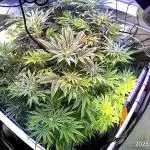
Greetings Rastamans, as you can see my girl is getting thicker and is growing weekly. Every used fertilizers have very good results. Slowly aproaching the time of harvesting, This is evidenced by the trichomes as well as the timing of the flowering cycle. I believe that the harvest from this plant will be great. Use of the necessarry techniques at the right period of times gave me the results that you see yourselves. It is the last day of lighting. It will be in dark for 36hrs. Also today defoliation will take its place and I have already splited main stalk. hope you get enjoyment and also knowledge from my diaries. Wish you all good luck.
Yours trully Rastagrow


@BarneyRumble420
Volgen
This strain was an absolute pleasure to grow, amazing dense buds, stunning terps on the nose 👃 really sweet and cookie like, very resistant to pests and weather fluctuations, I will definitely be running this strain again, I harvested with more amber 5han usual it was about 40 % amber 60 cloudy as I want a heavier more indica like effect, I will keep you updated on the dry weight and smoke review guys, sorry I haven't made the last few weeks update, I'm away for work for a few weeks and having someone look after my plants for me 🙌, thankyou fastbuds for the chance to grow these amazing genetics I will get more pictures uploaded asap


@Gefjon_Grow420
Volgen
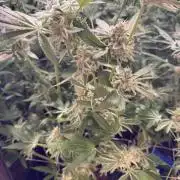
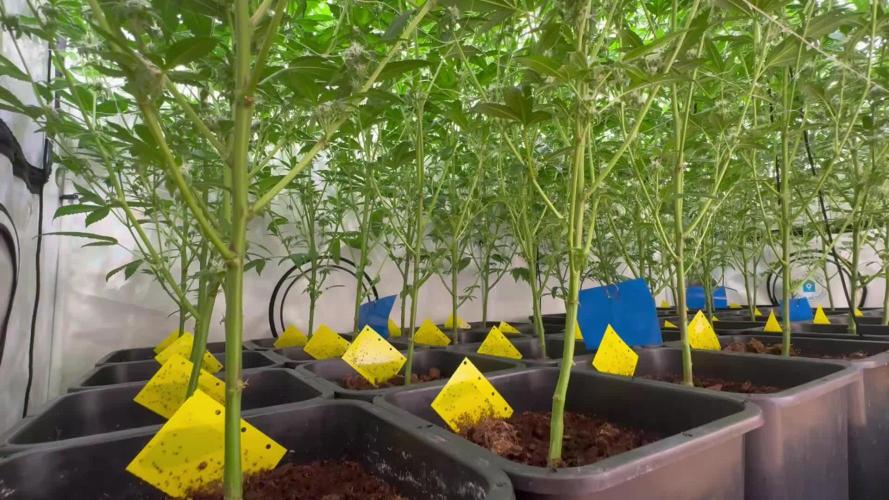
Little white hairs are starting to show and she's really stretching new if you look at the pictures of last week


@PigBearMan
Volgen
Hey there,
Everything‘s fine so far.
EC is 1.6, pH is ~6.
SanLights are now at 100% and ~40cm above the plants.
Since Flower Day 25 I give Green Sensation.
How do you like the field?
See you.


@Grilla
Volgen
Tuesday, May 2, 2023 at 10:45 AM D 62
-Ooof! Not really sure what happened but a couple of my plants got rocked pretty hard. I must’ve overwatered them. I bought a soil meter so I can check what’s going on. I’ll put some pictures up. Hopefully it’s still going to be some fire. The strawberry crinkle is kicking ass one of the blood oranges is looking good and smelling great but the other blood orange and the forum Stomper got hit pretty hard. The blood oranges leaves have started to yellow and the smell It had disappeared. The forum Stomper still smells good but its leaves got hit the hardest.
-this is my first indoor soil grow. Before this I grew everything hydroponically and if I dealt with soil, it was all outdoors. I’ve also grown using cocoa so I had that as a reference. That was a mistake. Growing in cocoa is really hard to drown your plants. Drenching a plant that’s growing in soil is not a good idea.
-It might sound dumb to some of you growers out there, but having a digital meter for your soil is awesome. I stick that thing in there and I stop watering when it tells me that it’s good, highly recommended.


@Earthy_Greens
Volgen
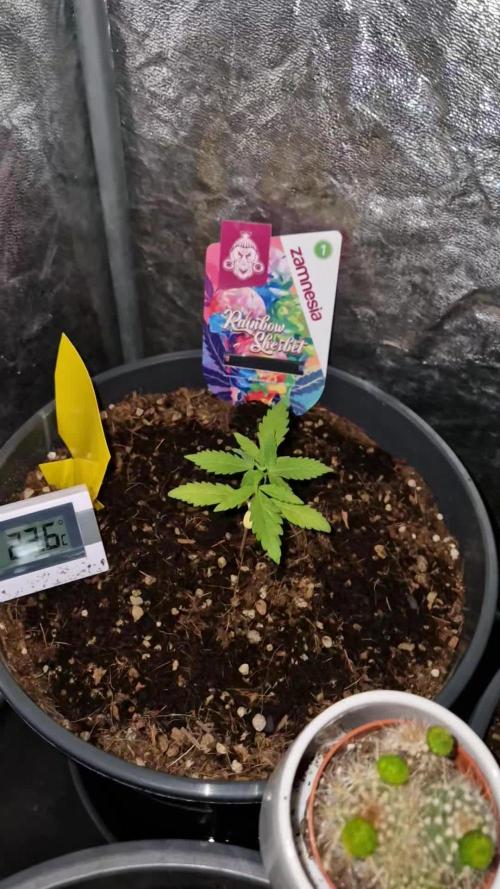
🌱✨ Hello friends! Guess what? 🎉 Our gorgeous 6-week-old girls 🍀🌿 have officially taken their final shape💎. Now, all their stems 🌱 are ready to grow in a beautifully rounded and symmetrical way 🔄🌿, setting the stage for something truly amazing!
This careful shaping will bring us incredible results in both lush vegetation 🍃🌟 and stunning flowering 🌸🔥. Every step we’ve taken so far has led to this exciting point, and we can’t wait to see how they bloom into their full potential! 🌞💚
Stay tuned for more updates as we continue this beautiful journey together! 🚀👊✨


@xXHappy420
Volgen
Sie wachsen super außer die rainbow sherbert die will komischer weiße nich obwohl sie genau das gleiche bekommt wie die anderen 2 will sie nicht trinken..



@Ultraviolet
Volgen
What's in the soil? What's not in the soil would be an easier question to answer. 16-18 DLI @ the minute. +++ as she grows.
Probably not recommended, but to get to where it needs to be, I need to start now.
Vegetative @1400ppm 0.8–1.2 kPa 80–86°F (26.7–30°C) 65–75%, LST Day 10, Fim'd Day 11
CEC (Cation Exchange Capacity):
This is a measure of a soil's ability to hold and exchange positively charged nutrients, like calcium, magnesium, and potassium. Soils with high CEC (more clay and organic matter) have more negative charges that attract and hold these essential nutrients, preventing them from leaching away.
Biochar is highly efficient at increasing cation exchange capacity (CEC) compared to many other amendments. Biochar's high CEC potential stems from its negatively charged functional groups, and studies show it can increase CEC by over 90%. Amendments like compost also increase CEC but are often more prone to rapid biodegradation, which can make biochar's effect more long-lasting. biochar acts as a long-lasting Cation Exchange Capacity (CEC) enhancer because its porous, carbon-rich structure provides sites for nutrients to bind to, effectively improving nutrient retention in soil without relying on the short-term benefits of fresh organic matter like compost or manure. Biochar's stability means these benefits last much longer than those from traditional organic amendments, making it a sustainable way to improve soil fertility, water retention, and structure over time. Needs to be charged first, similar to Coco, or it will immobilize cations, but at a much higher ratio.
a high cation exchange capacity (CEC) results in a high buffer protection, meaning the soil can better resist changes in pH and nutrient availability. This is because a high CEC soil has more negatively charged sites to hold onto essential positively charged nutrients, like calcium and magnesium, and to buffer against acid ions, such as hydrogen.
EC (Electrical Conductivity):
This measures the amount of soluble salts in the soil. High EC levels indicate a high concentration of dissolved salts and can be a sign of potential salinity issues that can harm plants.
The stored cations associated with a medium's cation exchange capacity (CEC) do not directly contribute to a real-time electrical conductivity (EC) reading. A real-time EC measurement reflects only the concentration of free, dissolved salt ions in the water solution within the medium.
98% of a plants nutrients comes directly from the water solution.
2% come directly from soil particles.
CEC is a mediums storage capacity for cations. These stored cations do not contribute to a mediums EC directly.
Electrical Conductivity (EC) does not measure salt ions adsorbed (stored) onto a Cation Exchange Capacity (CEC) site, as EC measures the conductivity of ions in solution within a soil or water sample, not those held on soil particles.
A medium releases stored cations to water by ion exchange, where a new, more desirable ion from the water solution temporarily displaces the stored cation from the medium's surface, a process also seen in plants absorbing nutrients via mass flow. For example, in water softeners, sodium ions are released from resin beads to bond with the medium's surface, displacing calcium and magnesium ions which then enter the water. This same principle applies when plants take up nutrients from the soil solution: the cations are released from the soil particles into the water in response to a concentration equilibrium, and then moved to the root surface via mass flow.
An example of ion exchange within the context of Cation Exchange Capacity (CEC) is a soil particle with a negative charge attracting and holding positively charged nutrient ions, like potassium (K+) or calcium (Ca2+), and then exchanging them for other positive ions present in the soil solution. For instance, a negatively charged clay particle in soil can hold a K+ ion and later release it to a plant's roots when a different cation, such as calcium (Ca2+), is abundant and replaces the potassium. This process of holding and swapping positively charged ions is fundamental to soil fertility, as it provides plants with essential nutrients.
Negative charges on soil particles: Soil particles, particularly clay and organic matter, have negatively charged surfaces due to their chemical structure.
Attraction of cations: These negative charges attract and hold positively charged ions, or cations, such as:
Potassium (K+)
Calcium (Ca2+)
Magnesium (Mg2+)
Sodium (Na+)
Ammonium (NH4+)
Plant roots excrete hydrogen ions (H+) through the action of proton pumps embedded in the root cell membranes, which use ATP (energy) to actively transport H+ ions from inside the root cell into the surrounding soil. This process lowers the pH of the soil, which helps to make certain mineral nutrients, such as iron, more available for uptake by the plant.
Mechanism of H+ Excretion
Proton Pumps: Root cells contain specialized proteins called proton pumps (H+-ATPases) in their cell membranes.
Active Transport: These proton pumps use energy from ATP to actively move H+ ions from the cytoplasm of the root cell into the soil, against their concentration gradient.
Role in pH Regulation: This active excretion of H+ is a major way plants regulate their internal cytoplasmic pH.
Nutrient Availability: The resulting decrease in soil pH makes certain essential mineral nutrients, like iron, more soluble and available for the root cells to absorb.
Ion Exchange: The H+ ions also displace positively charged mineral cations from the soil particles, making them available for uptake.
Iron Uptake: In response to iron deficiency stress, plants enhance H+ excretion and reductant release to lower the pH and convert Fe3+ to the more available form Fe2+. The altered pH can influence the activity and composition of beneficial microbes in the soil. The H+ gradient created by the proton pumps can also be used for other vital cell functions, such as ATP synthesis and the transport of other solutes. The hydrogen ions (H+) excreted during photosynthesis come from the splitting of water molecules. This splitting, called photolysis, occurs in Photosystem II to replace the electrons used in the light-dependent reactions. The released hydrogen ions are then pumped into the thylakoid lumen, creating a proton gradient that drives ATP synthesis.
Plants release hydrogen ions (H+) from their roots into the soil, a process that occurs in conjunction with nutrient uptake and photosynthesis. These H+ ions compete with mineral cations for the negatively charged sites on soil particles, a phenomenon known as cation exchange. By displacing beneficial mineral cations, the excreted H+ ions make these nutrients available for the plant to absorb, which can also lower the soil pH and indirectly affect its Cation Exchange Capacity (CEC) by altering the pool of exchangeable cations in the soil solution.
Plants use proton (H+) exudation, driven by the H+-ATPase enzyme, to release H+ ions into the soil, creating a more acidic rhizosphere, which enhances nutrient availability and influences nutrient cycling processes. This acidification mobilizes insoluble nutrients like iron (Fe) by breaking them down, while also facilitating the activity of beneficial microbes involved in the nutrient cycle. Therefore, H+ exudation is a critical plant strategy for nutrient acquisition and management, allowing plants to improve their access to essential elements from the soil.
A lack of water splitting during photosynthesis can affect iron uptake because the resulting energy imbalance disrupts the plant's ability to produce ATP and NADPH, which are crucial for overall photosynthetic energy conversion and can trigger a deficiency in iron homeostasis pathways. While photosynthesis uses hydrogen ions produced from water splitting for the Calvin cycle, not to create a hydrogen gas deficiency, the overall process is sensitive to nutrient availability, and iron is essential for chloroplast function.
In photosynthesis, water is split to provide electrons to replace those lost in Photosystem II, which is triggered by light absorption. These electrons then travel along a transport chain to generate ATP (energy currency) and NADPH (reducing power). Carbon Fixation: The generated ATP and NADPH are then used to convert carbon dioxide into carbohydrates in the Calvin cycle. Impaired water splitting (via water in or out) breaks the chain reaction of photosynthesis. This leads to an imbalance in ATP and NADPH levels, which disrupts the Calvin cycle and overall energy production in the plant. Plants require a sufficient supply of essential mineral elements like iron for photosynthesis. Iron is vital for chlorophyll formation and plays a crucial role in electron transport within the chloroplasts. The complex relationship between nutrient status and photosynthesis is evident when iron deficiency can be reverted by depleting other micronutrients like manganese. This highlights how nutrient homeostasis influences photosynthetic function. A lack of adequate energy and reducing power from photosynthesis, which is directly linked to water splitting, can trigger complex adaptive responses in the plant's iron uptake and distribution systems.
Plants possess receptors called transceptors that can directly detect specific nutrient concentrations in the soil or within the plant's tissues. These receptors trigger signaling pathways, sometimes involving calcium influx or changes in protein complex activity, that then influence nutrient uptake by the roots. Plants use this information to make long-term adjustments, such as Increasing root biomass to explore more soil for nutrients. Modifying metabolic pathways to make better use of available resources. Adjusting the rate of nutrient transport into the roots. That's why I keep a high EC. Abundance resonates Abundance.


@Ferenc
Volgen
It has been raining and raining since whatever... 2 weeks....checked the trichomes nice milky white.
Based on the fact the the weather won't be better and also the temperature is lower day by the now usually 6 Celsius degrees in the evening and 13-16 during the day or less, I decided to harvest next week.
I was thinking to let her out 3 more weeks just to have more amber trichomes but she is OK, ready but this weather is not ...
She is sativa dominant as I saw in the breeder's description so totally cool.
So she ain't gonna be maturing that much she reached the point.... especially because no sun....
... but compare to that she has som nice colas so I am excited let's see soo guys. Thanks all of you checking this progress out.
Beautiful lady, large LST made her really nice literally she looks like more plant but yes ONLY ONE PLANT IN THE PICTURE AND THE GARDEN :)
Have a lovely day :)



@Bunterbiber
Volgen
I flushed the 3 girls with approx. 30l each and of course stopped feeding them about 1 week ago. Therefore, as you can see in the pictures, the older leaves turn yellow. Most of trichomes are milky. We'll see when the girls are ready for the harvest.
GG#4 No.1: 100 cm
GG#4 No.2: 100 cm
Runtz F1 Auto: 45 cm


@TOTEM
Volgen
Here we go! New setting for this CBD Crack. Just under the big 384W led panel. I hope she doesn’t stretch much, or she will be light burnt for sure. It makes me smile because it’s an autoflowering strain that wants photoperiod-style nutrients. This week I started giving her bloom nutrients. I forgot the Bud Candy, but I’ll add it on the next watering (I think in just a few days). Much hype for this CBD Crack. Canadian ruderalis definitely makes the difference. Great job FastBuds!


@Algar
Volgen
Just feeding her water and getting her ready for harvest, she’s almost there. Buds are really full and heavy. Branches are tilting down from the weight. I believe, i’ll harvest at the end of this week, but the rain might might put a dampner on that.


@Hawkbo
Volgen
Purple Lemonade , Gelato 1&2, LAK 2&3 are all just about done theyll be coming down over the weekend or early next week. T26, Pineapple Express, Mexican Airlines, LAK 1, 6 Shooter Blue Dreamatic and Cream Cookies are all on the flush but will need a few more before chop. This tent reeks up the whole block it's pretty intense skunk in the driveway right now. There will be one more update I'm guessing for most of these before the harvest update. This was the most successful autoflower crop I've had in a long time I think theres some really good quality buds on some of these. I'll put the video up now and as I go thru the pics theyll be uploaded so if your interested come back tmm for the pics.


@EBxAH
Volgen
Really late update from last week, lol. Had a slight issue with trying to bottom feed but other than that it went well.
Happy Growing Everyone
✌️❤️😁🍀🎶👽
EB


@KingSalomonsWeed
Volgen
Day 78 flower 54
17.04. So Leute. Die erste Main Bud liegt zum trocknen.
Die anderen Grape Ape F1 .. äh explodieren gerade.
Kommt mir so vor. Sind so fluffig.
Sieht gut aus. Und alles wächst.
Alles? Nein, nur die Knospen.
Ok , das sind ca 80 % der Pflanze.
💙👏
Genießt die Photos. Ich genieße ebenfalls+ Geruch.
Übrigens, 50 cm hat keine erreicht.
Later: Oh ein Geschmack, EIN GESCHMACK, wie Seide legt sich der Weintraubenartige Geschmack über deinen Gaumen.
Mein Kopf summt.
Müde und hungrig werde ich auch...
Häh ? War doch nur ein Köpfchen..
21% THC Punkt Indica Style.
18.04. Ich glaube der Server ist in Wartung. Keine Updates mehr.
Aber ist egal, denn sie schmeckt vorzüglich. 😂😂