Likes
Comments
Share
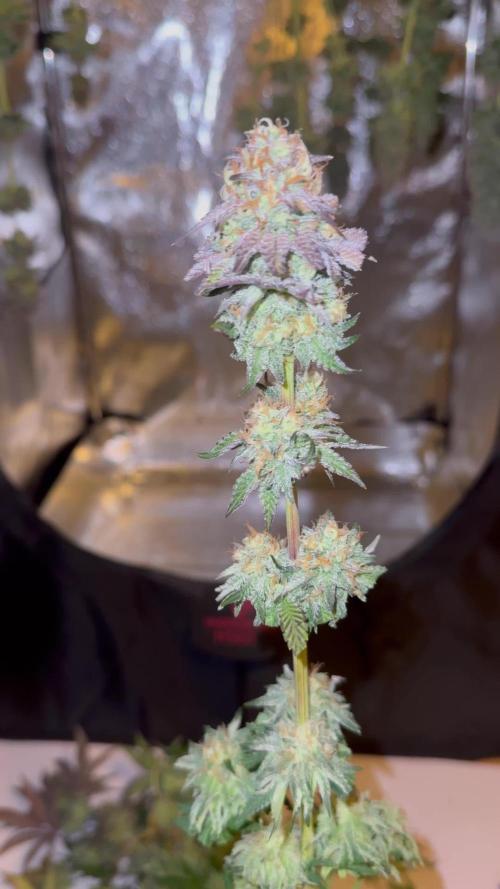
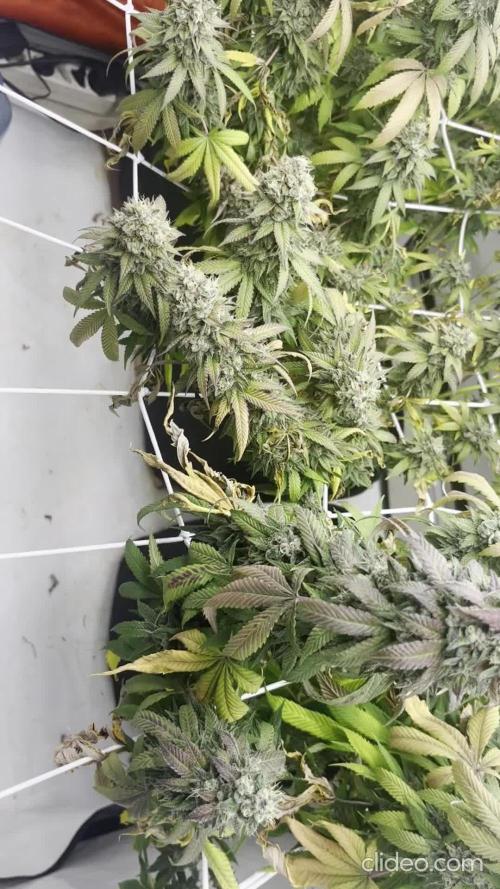
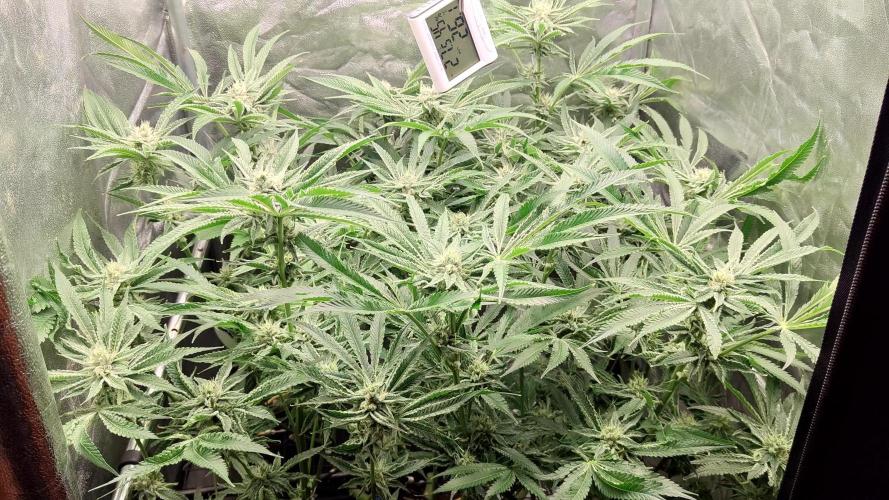
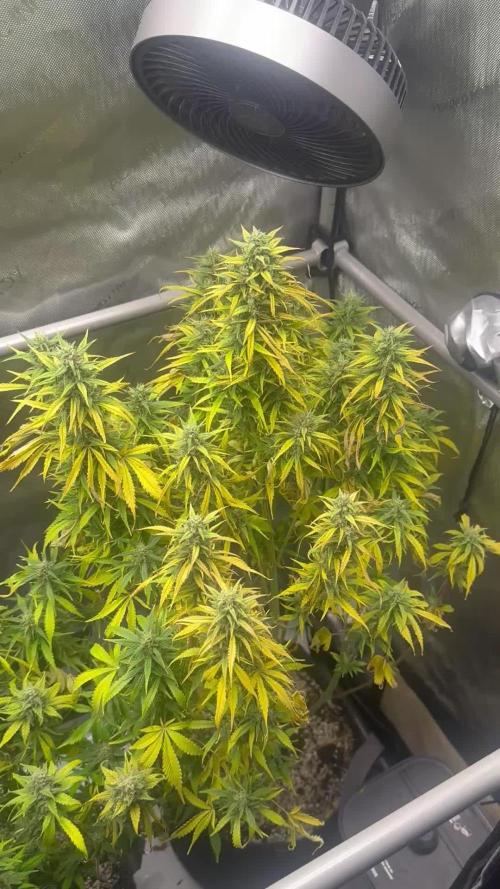
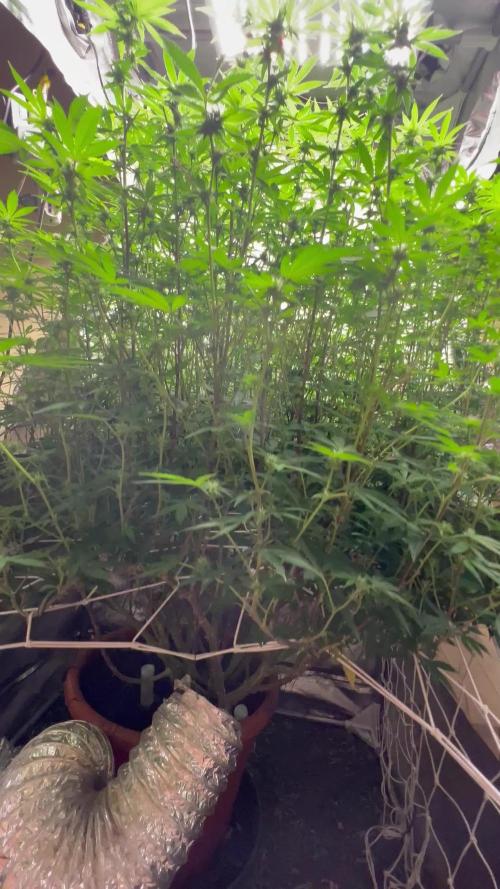
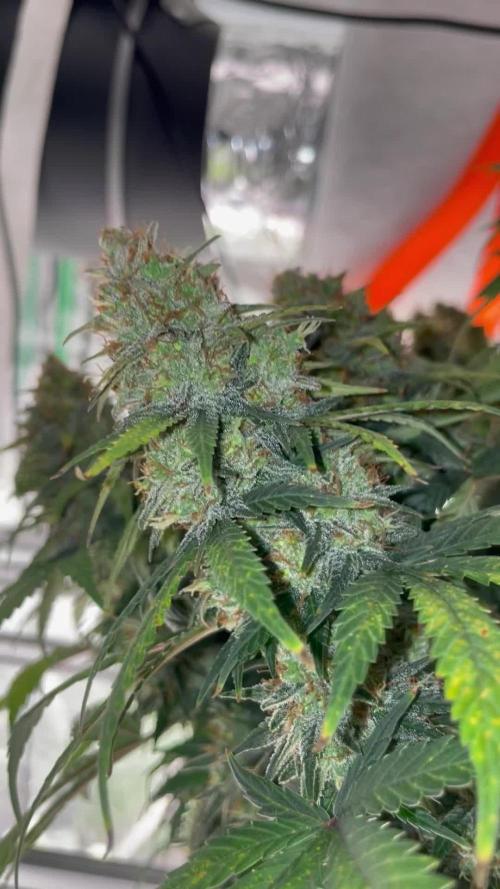
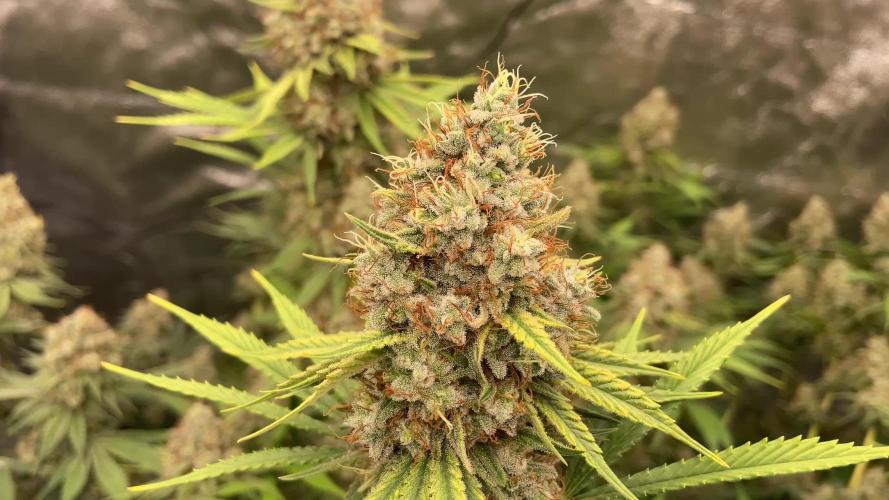
Day22, Tuesday Week 3 Both are growing quick now. Might have to clip some of the big fan leaves blocking light to the lower bud sites. Day27, Sunday, End of the week both getting bigger an bushier and drinking a lot more. Hulkberry started going into flower, so I expect it to stretch during next week.
Likes
13
Share
@Optico45
Follow
All seems well so far. Had a nice sprout towards the end of week 2. All six plants now how adult leaves. Raised the CO2 levels this week. Plants seem to be enjoying it.
Likes
10
Share
@JreyBudz
Follow
She is running a few days over due. Still growing strong start a light trimming. Just waiting for some amber on the heads and I am going to pull it.
Likes
2
Share
@fabialien
Follow
Semana del 19 al 25 de enero 2025
Likes
15
Share
This week the Bruce Banner girls really started to show weight. The buds are getting heavy enough that I had to give some support, especially to #1 and #3. Branches were starting to lean outward, so I created a support ring with string to keep everything stable 💪🌿 Bruce Banner #1 She’s still the biggest plant but also the one recovering from a past deficiency. The reddish leaves are still visible, but she’s pushing forward with bud production. Her smell this week: chemical + lemon 🍋⚗️ Trichomes are clear to milky. Bruce Banner #2 This one surprised me the most… She already shows multiple amber trichomes on the main cola 😳🔥 Most trichomes are milky and she looks like she’s maturing way faster than expected. Her smell is a mix of earthy, chemical and lemon. Bruce Banner #3 She’s catching up quickly and has buds almost as developed as #2. Trichome maturity is nearly the same: mostly milky with the first ambers starting. Her aroma is more fruity, lemony and sweet 🍓🍋🍭 All three plants look very healthy overall. Just heavy buds and strong terp development this week. Environment & Light Temp: 24°C RH: 50% Light: increased from 70% → 80% Watering RO + CalMag only Honestly, these girls smell insane right now. With the amount of amber already showing on #2 and #3, I’m expecting both to be ready within about two more weeks, but I’m watching them daily to be sure 👀🔥
Likes
5
Share
@Jpinkman
Follow
This is my first grow getting back into it after a 25 yr absence.
Likes
20
Share
@m0use
Follow
Ok, so first week is finally here. First off I want to extend a big thank you to the brands Seedsman, MSNL, Exotic Seeds for sending CBG seeds and a big sorry from me for not being able to germinate them. I have made notes that all CBG seeds need a bit of special treatment, Living soils are not great unless they are aged well, and better to just start them in perlite, compost and coir/peat. stupid simple. Now the other none CBG seeds did fine in living soil, same with the herbs but some of the herbs also struggled and has low germination rates like the chives. No idea of the chive seed age as I have not grown them in years so this could be part of it. In better news some of CBG seeds have been replaced with a CBDv and THCv and regular CBD The THCv is a GTR seed vs a Kannabia THCv Seed, curious how these two will compare. Both are a 1:1 ratio of THC : THCv The CBDv is from GTR and the CBD is from CANUK, they sent it alongside the CBG as a "try this out as well" PS still rocking the hoodie, its nice and thick perfect for this time of year. SO onto diary updates, The seeds got their first transplant into smaller square pots at 3.5" vs mini yogurt cups, now I will wait for them to acclimatize into its new size and then transfer up to 1Gal when the time is right. Made a little video of transplanting them and took some extra photos of the herbs that are going strong. Also took a photo of 12hrs after transplant the the plants are looking nice still. I over watered them and let them drain to prevent a spike in EC in the soil. this way the soil can breakdown a bit more slowly and prevent any burning and such. The one THCv seedling I plucked out of one pot is going strong with the cilantro. I did this so their would only be one in the other pot, Will gift this to my buddies who need some plants. Also have some leftover CBDv CBD seeds that I started out of caution, they will be doing the same thing, going to buddies. I'm hoping my one guy takes em all as he was intrested in some of the different cannabinoids like THCv and CBDv and CBG The transplanted medium is amended with lots of stuff and Acti-Sol, the plants seem to do really well on this once they are established. I find topdressing with Acti-Sol is hard and does not work well so it needs to be added into the medium/pot before hand. Outdoors is a bit easier as the roots don't fill the pot to the brim, so topdressing is much easier. Once transplanting is over and they are in their final pot then they will get the liquid feed from the same company, Acadie :) Also first time trying out a Si additive into the soil. Using DE or diatomaceous earth, its now super available but should do the trick. I read studies about it on how adding it into the soil did increase SI content in the plant despite it not being readily available. The mineral wollastonite is a better option but I don't have any on hand. Weird that it comes from a Canadian mine as well. I think that's all, will comeback and update as needed. Fertilizer is going to be added in ml for the whole container not doing the math for what it is per L.
Processing
Likes
5
Share
Processing
Likes
4
Share
These is a project in the we try (test) tge products of our sponsors to see how good they genetics are, for example we have know 6 seeds banks on these round. Sweetseeds with the dark devil auto have break the time record for seed on the ground , 20 hours , only these tine have the seeds from sweetseeds on the soil and they just jump out to 2 cm , simple amazing
Likes
52
Share
You don't become confident by shouting affirmations in the mirror, but by having a stack of undeniable proof that you are who you say you are, outwork your self-doubt. Nitrogen fixation is a chemical process by which molecular nitrogen (N2), which has a strong triple covalent bond, is converted into ammonia (NH3) or related nitrogenous compounds, typically in soil or aquatic systems but also in industry. The nitrogen in air is molecular dinitrogen, a relatively nonreactive molecule that is metabolically useless to all but a few microorganisms. Biological nitrogen fixation or diazotrophy is an important microbe-mediated process that converts dinitrogen (N2) gas to ammonia (NH3) using the nitrogenase protein complex (Nif).[2][3] Nitrogen fixation is essential to life because fixed inorganic nitrogen compounds are required for the biosynthesis of all nitrogen-containing organic compounds, such as amino acids and proteins, nucleoside triphosphates and nucleic acids. As part of the nitrogen cycle, it is essential for agriculture and the manufacture of fertilizer. It is also, indirectly, relevant to the manufacture of all nitrogen chemical compounds, which include some explosives, pharmaceuticals, and dyes. Nitrogen fixation is carried out naturally in soil by microorganisms termed diazotrophs that include bacteria, such as Azotobacter, and archaea. Some nitrogen-fixing bacteria have symbiotic relationships with plant groups, especially legumes.[4] Looser non-symbiotic relationships between diazotrophs and plants are often referred to as associative, as seen in nitrogen fixation on rice roots. Nitrogen fixation occurs between some termites and fungi.[5] It occurs naturally in the air by means of NOx production by lightning.[6][7] All biological reactions involving the process of nitrogen fixation are catalyzed by enzymes called nitrogenases.[8] These enzymes contain iron, often with a second metal, usually molybdenum but sometimes vanadium. Green clover (Fixation) White clover (Fixation) Red Clover. (Fixation) Yellow Clover. (Fixation, deeper roots) Sweet Thai Basil. (Terpenes) Italian Basil. (Terpenes) Chamomile.(Oil production) Borage.(Pest attraction taste) Lavender.(Pest attraction smell) Marigold(Pest attraction visual) Mycorrhizae are beneficial associations between mycorrhizal fungi and a plant’s root system. Mycorrhizal fungi spores germinate in the soil, creating filaments (hyphae) that penetrate the root cells, thus establishing a symbiotic relationship. This collaboration leads to the development of both intra-radical and extra-radical networks of filaments, enabling efficient exploration of the soil for enhanced access to nutrients and water. Consequently, these vital resources are transferred to the plant, resulting in numerous benefits for crop cultivation. Various mycorrhizal products are available in diverse formulations (powder, granular, and liquid), concentrations, and qualities. Ongoing advancements in products, technologies, and research are reshaping our understanding of mycorrhizae. Despite these positive developments, certain misconceptions persist. In the following discussion, we aim to clarify the truths and dispel the myths surrounding mycorrhizae products. MYTH #1 A HIGHER NUMBER OF MYCORRHIZAE SPECIES MEANS BETTER RESULTS. Contrary to common belief, having a higher number of mycorrhizae species in a product does not translate to better results; in fact, it often yields the opposite outcome. A plant can sustain only one association with a particular mycorrhizal fungi species. Introducing multiple species creates competition among them, which is not advantageous for the plant. The initial colonizer does not ensure the highest success; instead, it gains precedence. It is recommended to select a product with a concentrated presence of a single mycorrhizae species known for its effective performance, rather than opting for a product with multiple species at lower concentrations. MYTH #2 ECTOMYCORRHIZAE ARE EFFECTIVE FOR CANNABIS PLANTS. Although ectomycorrhizae can colonize five to ten percent of plant species, cannabis is not among them. Ectomycorrhizae do not penetrate the root cells; instead, they develop around the roots and on the exterior. For cannabis plants, it is essential to seek out endomycorrhizae. Endomycorrhizae are capable of colonizing 70% to 90% of plant species, including cannabis. Unlike ectomycorrhizae, endomycorrhizae penetrate the root cells, forming structures like arbuscules for the exchange of nutrients and water with the plant. MYTH #3 WHOLE INOCULANT (PROPAGULES) PERFORM BETTER THAN ONLY VIABLE SPORES. The propagule count specified on most mycorrhizae products indicates the presence of spores (viable and unviable), hyphae, and root fragments. However, it is crucial to note that only viable spores, those with the capacity to germinate, can successfully colonize a plant’s root system. Spores are to mycorrhizal fungi what seeds are to cannabis plants—a fundamental component enabling fungi reproduction. Consequently, even if a mycorrhizal product boasts millions of propagules, its effectiveness hinges on the presence of viable spores. Without viable spores, the product will not contribute to plant development. Therefore, the genuine value of a mycorrhizal inoculant lies in the quantity of viable spores it contains, as only viable spores can efficiently initiate symbiosis. MYTH #4 ALL METHODS OF APPLICATION YIELD IDENTICAL RESULTS. To establish the symbiosis, mycorrhizal fungi spores must be close to the plant roots. The optimal recommendation is to directly apply mycorrhizal inoculant to the roots, either in powder, granular or slurry form. This method ensures maximum proximity between the spores and the roots, facilitating a rapid establishment of symbiosis. Particularly with crops like cannabis, which have a short growing cycle, employing this technique is the most effective way to obtain optimal benefits. Alternatively, techniques such as blending the inoculant with the soil are effective, but there may be a delay in the establishment of symbiosis. This is because the roots need to grow and come into contact with the dispersed spores throughout the growing media. MYTH #5 MYCORRHIZAE CAN ONLY BE GROWN ON LIVING PLANTS. While the predominant method for commercially producing mycorrhizae involves growing them on the root systems of living plants (in vivo production), it is not the exclusive nor the optimal technique. In fact, this production approach has notable drawbacks that the “root organ culture” method just does not have (in vitro production). In vitro production occurs in meticulously controlled, aseptic laboratory conditions, allowing for the consistent generation of products that are viable, highly concentrated, species-specific, and free from pathogens. Achieving such precision and quality is impossible when relying on the cultivation of mycorrhizal fungi on plants exposed to external conditions. In conclusion, it is crucial to take all these factors into consideration when choosing the appropriate product for your crop to fully harness the wide array of benefits provided by a high-quality mycorrhizal product. STRONGER PLANT – Stress resistance. FASTER GROWTH – Improve plant structure and shorter veg time. INCREASE YIELD – Overall more biomass. IMPROVED QUALITY – Increase cannabinoids and terpenes content.
Likes
8
Share
@Spliffi
Follow
Heya👍🤙👍🌱 No feed. Riding out the final stretch. Check out my Facebook profile: https://www.facebook.com/share/v/H6PnoahTHrEzm63U/?mibextid=oFDknk Big BIG BIG thank you to Sebastien, Heather from Fastbuds420. You guys are the best. Can't wait for the next live. Even Bigger shout out to Hydroponic.co.za. My local Hydro Shop and Sponsor. Thank you Sir. 👍🤙👍🌱
Likes
Comments
Share
It is a vigorous plant with very uniform branching, high resinous and high yield, if you grow from seed there are a few different phenos that I got, equally as good
Processing
Likes
49
Share
Hi everyone :-) This week it has become a real bush 😍. I will watch the whole thing a bit, and put it in the flower chamber in the next 10-15 days :-). Otherwise there is nothing to tell this week, everything is going well 👍. I wish you all a nice week, stay healthy 🙏🏻 and let it grow 🌱 Strain : Sour Diesel ☝️🏼😍 Genetik: Diesel x Northern Lights 👍 Vega Lampe: 2 x Todogrow Led Quantum Board 100 W 💡 Flower lampe: 2 x Todogrow Led Cxb 3590 COB 3500 K 205 W 💡 ☝️ Erde: Canna Terra Professional + ☝️ Dünger: Canna Termittel Vegra Vega, Canna Terra Flores, Rizotonic, Cannazym, CANNA Boost, Pk 13/14, Canna Cal/Mag, Canna Ph - Grow, Canna Ph - Flores ☝️ 🌱 Water: Osmosis water mixed with normal water (24 hours stale that the chlorine evaporates) to 0.2 EG. Add Cal / Mag to 0.4 Ec Ph with Organic Ph - to 6.0 💦 💧
Processing
Likes
4
Share
@Bossman
Follow
Just updating last weeks progress
Processing
Likes
2
Share
@MG2009
Follow
I am really excited about this one, it's the culmination of my favorite plants. Star Cookie x (grapefruit male, sativa dominate ) x Captains Cake 06/18/2018 Posting pics of parent plants. Looking for my grape fruit male pics 06/19/2018 She is growing fast half inch at least since yesterday it's good to see her growing under natural Sunlight, no leggy growth,and standing up to the constant breeze around my home. Captains cake is a 91 girlscout cookie x White Fire Alien og (OF Rascal seeds i think?) breed by captains connection Maine. Star cookie is (OG Kush x Durban) x GDP. Topdawg seeds. 06/25/2018 Still in seedling stage . . .this will be interesting never started seed this late outside, hoping veg starts by mid week. 06/27/2018 Still in seedling stage,starting a lite feed with AACT Made from Tomato Tone at 1 tablespoon to 1 gallon h2o and 1 tablespoon of unsulphured molasses to multiply the microbes, get
Likes
22
Share
@Trip614
Follow
So I harvested on day 70, Pretty excited, I started with 12 seeds, 1 never popped, 2 got messed up in shell, but I hoped they would make it, they did, but they are embarrassing, I one the root system barley existed the other got so bushy and I didn't stay on top of it so it was all frost, no actual buds, pfff. THE OTHER GIRLS more than made up for it, I changed the light cycle to 10 on, 14 off for the last 4 days of light, and then the last 2 days no lights at all. Super happy so far, oh, I did not water at all the last 4 days, I thought that may help my rh during the dry, starting the dry a little on the plant, nope, my rh is high. still happy
Likes
11
Share
*Week 5 Flower 09/24* Thus far both both plants are flowering and budding nicely, Trichomes are setting in accordingly, Increase in Phosphate and Potassium nute feeds. Both plants have appeared to stop growing in height settling in at 48Inches. Top COLAS are pretty dense and the aroma coming off both of them is bright and vibrant White Hairs are starting to turn bright orange. *Week 5 Flower Mid week update - 09/28* Both plants have reached max height (48 Inches) Bud sites are filling up and have become more dense with trichomes cover through the flowered bud. 60% orange hair coverage - Nearing harvest *Week 5 Flower End week recap 09/30* Both Apple Fritter and Critical+2.0 nearing harvest Cutting back on nute feeds starting tomorrow and will increase clean water feeds Flushing will begin in a week - both will be harvested in 2 weeks.