


Likes
Comments
Share


@BudBoutique
Follow
! this is my current status, gonna upload my last veg weeks within the next week - got a bit busy around Spannabis - thank you for your understanding! 💚
Welcome to Bud Boutique Grow Diary - really appreciate all your love and support :)
Dont forget to check out my other current grows!
🗓️ This Week:
- Day 24: attaching once a week APTUS Foliar with Regulator & Nutrispray with the amazing CannaFogger by Petra Grow
- Day 28: bud development is super beautiful and praying up
Thank you for still staying with me 💚
___________________________________________
--- 🌱 Strain (Sponsor) ---
🏷️ Stardawg by MSNL
https://www.marijuana-seeds.nl/stardawg-feminized-seeds
--- 🥗 Nutrients and Feeding (sponsored by APTUS: APTUS Ambassador) ---
🍸 APTUS: full nutrient schedule extreme
-- Regulator, N-Boost, P-Boost, CaMg-Boost, K-Boost, Allin1 Liquid, Startbooster, Topbooster, Enzym+ every feeding
-- Fulvic-Blast, NutriSpray as Foliar each once a week
🔗 https://aptus-holland.com/
--- ♻️ Grow Control (Sponsor) ---
TROLMASTER: TENT-X + LM14 Light Adapter to dim/sunrise/sunset lights + Temp & rH Sensor all remote on App
🔗 https://www.trolmaster.eu/
--- 🚿 PetraGrow (Sponsor) ---
CannaFogger Foliar Spray
🔗 https://www.petratools.com/product/petragrow-cannafogger-atomizer-new-mini-fogger
--- 🏭 Grow Setup ---
💡LUMATEK Zeus Pro 600
* 🏠🌿 Indoor: Homebox 120x120x200cm (4x4)
* 📐🌀 PrimaKlima exhausting Fan 1180m3/h (running on 60-80%)
* 🌀 Can Light Filter 800m3/h & 1x Fanbox 1x Dyson fan for Air circulation
🔗 https://lumatek-lighting.com/zeus-600w-pro-29/
🔗 https://primaklima.com/de/shop/ventilatoren-de/ec-ventilatoren/pk160ec-tc/
🔗 https://canfilters.com/products/filters/
All Likes and comments are highly appreciated!!!
👨🌾 don't forget to check out my Instagram for daily educational content: budboutiquee
- Bud Boutique

Likes
35
Share


@farahweed
Follow
This week, the buds will grow a lot and you can feel it🌱😍
In this week, the booster must be fed to the children from this week onwards🌱
I always use booster green house feeding😍😍


Likes
9
Share


@Tango_Hotel_Charlie
Follow
I absolutely love big bag growing. Check out my discord...
https://discord.gg/wWM4rsCv
Processing
Likes
10
Share


@Fibro_Witch
Follow
Critical Cure is filling out nicely. Picked most of the inchworms off and have some BT showing up on Monday. She got a ring of Coast of Maine 5-2-4 around her base. I'll have to put up the tomato roof in the next couple weeks!
Processing
Likes
6
Share


@StickyFruits
Follow
37 flowerin day - bumps become heavy, set up branch supports
Likes
2
Share


@GrowLXB352
Follow
Pineapple Chunk dursty an growing, defoliated what was touching the soil Watering every 2 days
Runtz developed next Noodie, transplanting in 3L Pot by End of the Week 2 and starting Vegetative Sta
Watering all 3 days

Likes
3
Share

@SpaceHaze123
Follow
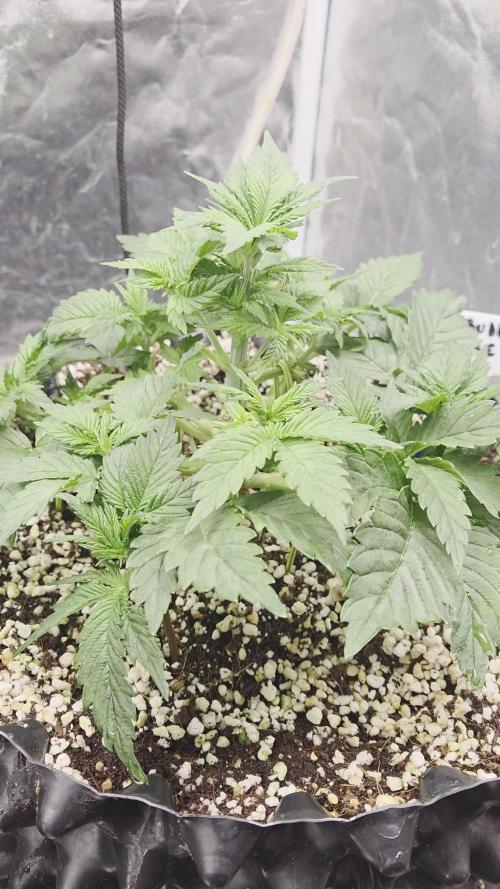
Snip snip, there goes half of the plant. I waited untill the plant was a little bit stronger to cut off the top and made sure to leave a little bit of the main stem sticking upward to try to prevent splitting the main stem because of the topping. Amped up the feeding a little to give her the strength to pull through. Now at 75% of recommended feeding 😶🌫️


Likes
35
Share


@SAC87
Follow
Flower day 7ish
Hey Growers
I did a minor defoliation to remove the beastly fan leaves and the ones in the mud. I also did a bit more LST to even the canopy as much as possible. As it seems, I have no more control haha. One or 2 plants have stretched more than I’d have like but the entire canopy is pretty even.
The SF4000 is about 8” off the top of the tent at 78%.
They start to droop for end of day about 3 hours before lights out, I was concerned something was wrong as I’ve never really seen drooping that much in healthy plants.
Just gonna keep cruising along and hopefully things will be good in the end. I’ll keep my eyes open for any problems.
Happy Growing 🌱👍🏻

Likes
Comments
Share


@andzzz
Follow
added a layer of coco soil (1l) mixed with 80g BioBloom at the beginning of this week
now every other day following combination:
- 2ml CalMag + 5ml Bio Heaven + 200 ml water
- 4ml Mono Trace + 5ml Bio Heaven + 200 ml water
@PH 6
therefore removed 800ml of water that week
applied nemathodes and a little bit of leaf coat, because flies take over

Likes
14
Share


@Ctrellis90
Follow
So it's another week down for this tent and we're looking great. Both the Pluto's are surpassing what I expected from them. These are going to be some of the biggest indica leaning plants I've grown....I've gotta good feeling about these plants 😉.
The fan leaves are bigger than my head! Her structure is big and dominant which I love, especially when I didn't do any training. It shows good genetics and good flowers to come.
We're continuing the insect frass and alfalfa for this last week then it's straight Frass for a few weeks. Other than that we're good. No amending, nothing. Easy breezy water only grow.
Thanks for stopping by and we'll see ya next week!

Likes
13
Share


@Leanback
Follow
I pour the beet by Hand. Every two days like 5%-10% of the total soil amount.
Today (12.5.) is 28.Day of flower (55-70 Days total)
Lamps are on 600w the top of the flowers have 600-800ppfd
Vpd is 1.2-1.3

Likes
21
Share


@DRO420
Follow
Almost doubled in height over the last week. Looking good , feeding full formula now. Switching to flower next week right after they are pushed down with the trellis net or scrog.

Likes
22
Share


@Susquihanna
Follow
Miss Mango is growing well and reached a full 12 inches which is actually 6 inches shorter than Gorilla Cookies and I started them at the same time. When I looked on Zamensia website is said, "Cultivating Mango Kush Automatic is an easygoing affair thanks to some robust and reliable autoflowering genetics. This plant stays close to the earth, only reaching 80cm indoors and around 100cm outdoors."
It also said that Mango Kush takes, "it takes is 10–11 weeks from seed to harvest to really get the best out of this cultivar. At which point, Mango Kush Automatic has the potential to yield 200g/plant when grown outside under ideal conditions." That means Miss Mango should be ready about the end of July or first week of August. GAME ON:)
Comments are welcome and let's watch Miss Mango tango dance herself to a winning harvest. Stay tuned!!


Likes
91
Share


@MrCOCO
Follow
The girls grew 10 cm during the first week of flowering ... So far everything is going well and I am happy to see them 🍃🍃🍃
Likes
89
Share


@DrGruen
Follow
Mittlerweile haben sich schon recht schöne Buds gebildet, die stätig an Volumen und Grösse zunehmen 😀
Die ersten Härchen haben sich jetzt auch braun gefärbt und die beiden sind auch schon total harzig 😘
Der Duft nimmt jetzt auch ordentlich zu und es riecht angenehm nach Zitrone 😉
---------------------------------------------------------------------------------------------
ein kleines update.........😉
an der Qualität des Videos muss ich noch ein bisschen arbeiten😂😂
Likes
2
Share


@MindFlowers68
Follow
Oh man a but if a rough week moving her several times and despite the effort she still got rained on. Was in the greenhouse after bad weather last week then moved outside and onto the deck most of the week. Then rain out of nowhere one afternoon. I had to get a fan on her and shake water off. Luckily got a breeze that night and sun in the morning and she dried off fine. Hung out there another day then looked like another chance of rain so I moved off the deck and carted back out to greenhouse. She surprisingly help onto a lot of the frost, and is getting plumper. May only be a few more days before harvest. I wanted A little time for the trichomes to come back after the rain but looking ready for the most part. I had compost tea already made up so just watered with it once this week.
Likes
16
Share


@AestheticGenetics
Follow
3/18/25
beautiful plant
i need to take clones so i dont lose these genetics
3/22/25
i have taken clones 🤙
this plant has super long and wispy type pistils. shes starting to look like shes going to produce nicely and im excited about that.
This week we fed her with even amounts of bloom and grow.
i am keeping the vpd around 1.4-1.6 kpa
this is resulting in 79-82°F and 55-60%

Likes
Comments
Share

@DogDoctorOfficial
Follow
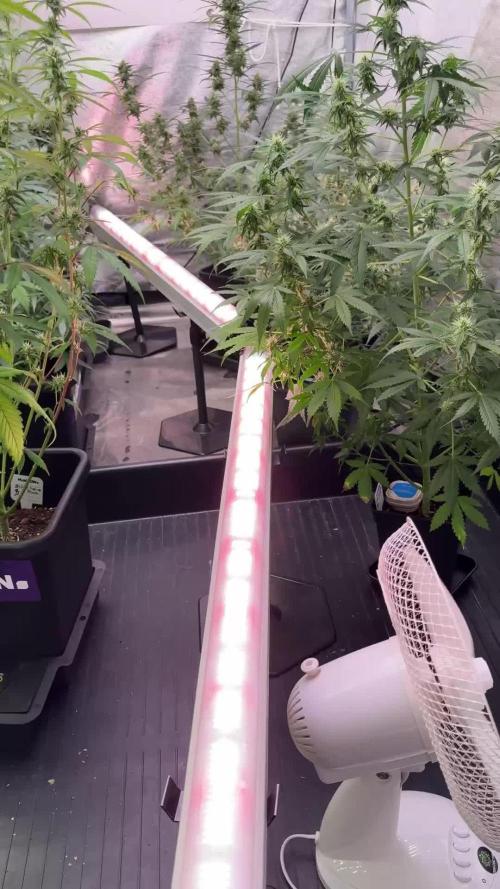
🌿 Frosted Guava Auto by Zamnesia | Pheno B | Week 9
❄️ Dark, Frosty & Moving Fast
Welcome back to another chapter of the 8×8 Adventure!
And this girl...
She's shining. 💚
Every phenotype has something that makes it recognizable.
Something that, after enough weeks of watching them develop, becomes part of their identity.
With Frosted Guava Pheno B, I think I've finally found hers.
That green.
That incredibly deep, rich, dark green.
It's one of the first things I notice every time I look at her.
She's not the tallest plant in the room.
She's not trying to become the biggest.
But she has developed into a beautiful, compact, extremely healthy-looking flowering plant with an appearance that is becoming increasingly difficult to ignore.
And right now?
She's moving.
She's developing quickly.
The flowers are progressing.
The resin is becoming more obvious.
And the whole plant looks like she's very happy with the direction she's taking.
So this week...
the spotlight belongs to her.
🌱 The 8×8 Adventure
For anyone discovering this diary for the first time, welcome to the 8×8 Adventure.
Twelve plants.
Different genetics and phenotypes.
One growing environment.
One general philosophy.
And an awful lot of personality.
The project is being run under a 12/12 light schedule from seed, allowing each plant to reveal its natural architecture without giving them an extended traditional vegetative period.
And this is exactly why I love documenting individual phenotypes.
Because even when plants share the same genetic line, they don't necessarily tell the same story.
Some stretch.
Some stay compact.
Some build enormous central flowers.
Some distribute their flowers differently.
Some become monsters.
Some become elegant.
And some...
become very, very dark green Frosted Guavas. 😂💚
🌿 Look at That Green
Let's start with the obvious.
Look at her foliage.
That colour is beautiful.
Deep.
Dark.
Rich.
Healthy-looking.
The leaves have become one of the defining visual characteristics of this phenotype.
And when you put that dark foliage next to the developing flowers, the contrast is fantastic.
The white pistils stand out.
The developing resin catches the light.
The flowers appear almost brighter because they're surrounded by that deep green background.
It's a beautiful combination.
And I honestly really like this plant.
There are plants you admire because they're enormous.
There are plants you admire because they're unusual.
And then there are plants where you simply look at them and think:
"Damn... that's a beautiful plant."
Frosted Guava Pheno B is becoming one of those for me.
🌸 The Flowers Are Moving Fast
The biggest difference I'm noticing this week is the speed of development.
She's moving.
The flowers are becoming increasingly defined, with more structure appearing throughout the developing buds.
The calyxes are becoming more obvious.
The pistils are still beautifully prominent.
And the resin continues making its presence known.
Looking through the photographs, you can see how much is happening across the plant.
She's not sitting still.
She's building.
And that's exactly what I want to see at this stage.
There is still plenty of development ahead, but the direction is becoming increasingly clear.
She's a flower builder.
And she's getting on with the job.
❄️ Frosted Guava Is Starting to Look Frosted
The name continues making more sense every week.
The flowers are carrying increasingly visible resin, particularly around the developing calyxes and sugar leaves.
And when you get close with the camera...
that's when this plant really becomes interesting.
The individual flowers have so much detail.
White pistils crossing over one another.
Calyxes stacking and expanding.
Tiny sugar leaves surrounding the developing structures.
And that little sparkle beginning to appear everywhere.
This is exactly why I love photographing these plants.
From a distance, they're simply beautiful flowering plants.
Up close...
they become another world.
👀 A Little Foxtailing?
I can see a little bit of foxtailing beginning to appear in some of the flowers.
And honestly?
I'm not losing sleep over it. 😂
It's there.
I'm seeing it.
I'm documenting it.
But I'm also looking at the entire plant.
And the entire plant looks fantastic.
The flowers are developing.
The foliage is beautiful.
The structure is healthy-looking.
The plant is progressing quickly.
So I'm not going to turn one characteristic into the entire story of the plant.
This is phenotype observation.
Sometimes a plant shows you a particular expression.
You document it.
You watch how it develops.
And you let the plant finish telling you what that expression means.
For now...
I'm simply curious.
Let's see where she takes it.
✂️ After Last Week's Cleanup
Last week we gave her a selective cleanup.
We removed foliage that had become unnecessary, opened some areas of the canopy and cleaned some of the lower growth.
And importantly, we didn't try to strip everything.
There was no reason to.
Healthy leaves remained.
The productive structure remained.
And now we're watching how she responds.
This week, I'm not looking to chase her with the scissors again.
She's doing exactly what I want her to do:
grow.
The cleanup has been done.
The room has been cleaned.
The canopy has been organized.
Now we let the plant work.
Sometimes the best intervention after making a change...
is to stop intervening and observe the result.
🌿 Small Plant. Absolutely Not a Small Plant.
One thing that continues to amuse me about this phenotype is the difference between her physical size and her personality.
At approximately 108 cm, she's considerably more compact than some of the other girls in the room.
But she doesn't feel small.
She has presence.
She has flowers.
She has structure.
And she's becoming increasingly impressive every week.
That's another lesson the 8×8 keeps teaching me.
Height doesn't tell you everything.
A shorter plant can still have an enormous personality.
A compact plant can still produce an impressive flowering structure.
And a plant doesn't need to reach the ceiling to deserve the spotlight.
Frosted Guava Pheno B certainly doesn't.
☀️ Eating Photons
The lighting environment continues to provide plenty of energy for this stage.
The Future of Grow Black Series LED remains the main overhead light source, with Lumiflora contributing additional illumination into the lower canopy.
And this girl is clearly making use of what she's receiving.
Light goes in.
The plant does its biological magic.
And week after week...
we see the result.
More structure.
More flowers.
More resin.
More development.
This is one of the reasons I love having different phenotypes in the same room.
You can give them essentially the same environment...
and then watch how differently they use it.
Frosted Guava Pheno B has found her own rhythm.
And I really like her rhythm.
💧 Feeding & Environment
The feeding program remains consistent with the flowering strategy:
🌱 Plagron Terra Bloom — 2.2 ml/L
🌿 Plagron Power Buds — 1 ml/L
✨ Plagron Green Sensation — 1 ml/L
🍯 Plagron Sugar Royal — 1 ml/L
⚗️ pH adjustment as required
Current recorded parameters:
🌸 Flowering: Week 9
📏 Height: 108 cm
💡 Light schedule: 12/12
🌡️ Day temperature: 29°C
🌙 Night temperature: 25°C
💧 Relative humidity: 72%
⚗️ pH: 6.0
⚡ Recorded EC/TDS: ~2.0
🌡️ Solution temperature: 25°C
🌱 Substrate temperature: 26°C
🌬️ CO₂: 639 ppm
? Pot size: 15 L
💦 Watering: approximately 1.2 L per plant / 24h
At this point in the cycle, stability remains the priority.
The plant is moving well.
The flowers are developing.
The foliage remains remarkably dark and vigorous.
So there is no reason to start changing things simply for the sake of changing them.
🌬️ Keeping an Eye on the Canopy
With flowering progressing and the canopy continuing to develop, airflow and environmental consistency remain important.
This is another reason I liked the cleanup we performed last week.
Not because fewer leaves automatically means a better plant.
It doesn't.
But because thoughtful canopy management can help keep the structure organized as the flowers continue developing.
And now that she's cleaned up?
I'm happy to leave her alone.
Let the remaining leaves work.
Let the flowers develop.
Let the plant show us what she wants to become.
📸 This Week's Gallery
I think this week's gallery really captures her personality.
The full-plant photographs show the structure.
The closer photographs show the flowers.
And the macro-style views reveal the details that make this phenotype special.
The deep green foliage.
The white pistils.
The developing calyxes.
The increasing resin.
And those little signs of foxtailing appearing here and there.
Everything together creates a plant that looks very much like herself now.
And that's something I love about reaching this stage of a grow.
Earlier in the cycle, you're asking:
"What is this plant going to be?"
Eventually you stop asking.
You start saying:
"Ah... this is who she is."
And I think we're getting there with Frosted Guava Pheno B.
🔬 Phenotype Spotlight — The Dark Green Girl
If I had to describe her in a few words right now:
Compact.
Dark green.
Frosty.
Fast.
Beautiful.
That's her.
Her sister has her own personality.
The other Frosted Guava phenotypes have their own expressions.
But this girl?
She's becoming very easy to recognize.
And that's the beauty of phenotype hunting.
You're not necessarily looking for one "perfect" plant.
You're looking for differences.
You're looking for expressions.
You're looking for those little characteristics that make one plant stand out from another.
And sometimes...
you find a phenotype whose biggest characteristic is simply that you really, really enjoy looking at her.
That's Frosted Guava B for me.
🔭 Looking Ahead
Now I'm very curious.
Because she's moving quickly.
The flowers are developing beautifully.
The resin is increasing.
The structure is becoming more defined.
And that little bit of foxtailing gives us another characteristic to watch.
Will it continue?
Will it settle?
Will the flowers simply keep stacking and swelling around it?
We'll see.
I'm not going to write the ending yet.
That's the plant's job.
For now, I'm just going to keep watching.
Keep documenting.
Keep photographing.
And keep letting this beautiful girl show us what she has.
💚 Final Thoughts — She Deserves the Spotlight
Frosted Guava Pheno B started this adventure as the smaller, quieter sister.
And look at her now.
She's still compact.
She's still different.
But quiet?
Not anymore.
She's shining.
That deep, deep green foliage is absolutely beautiful.
The flowers are moving quickly.
The calyxes are developing.
The white pistils are everywhere.
The frost is increasing.
And the whole plant has developed an identity of its own.
Yes, I can see a little foxtailing.
And no...
I don't mind. 😂
Because overall?
She's outstanding.
She's healthy-looking.
She's balanced.
She's beautiful.
And she's giving me exactly what I love most about this project:
something interesting to watch.
Every week she gives me another little detail.
Another change.
Another reason to stop and look.
And that's what the 8×8 Adventure is all about.
Not just growing plants.
Watching plants become themselves.
Frosted Guava Pheno B is doing exactly that.
And I have to admit...
I really like who she's becoming.
So let's keep watching.
Let's keep photographing.
Let's keep learning.
And most importantly...
let's let this dark green beauty shine. 💚❄️🌿
🙏 Thank You
A huge thank you to Zamnesia for these beautiful genetics.
Thank you to Plagron for supporting the flowering program.
Thank you to Future of Grow LED for the main lighting driving the garden.
Thank you to Lumiflora for adding the under-canopy dimension to this experiment.
Thank you to TrolMaster for helping maintain the environment behind the scenes.
And, of course, thank you to everyone following the 8×8 Adventure on GrowDiaries.
Every comment.
Every question.
Every observation.
Every grower following along.
It all makes this project more enjoyable.
Frosted Guava Pheno B may not be the biggest girl in the room...
But she's certainly becoming one of the girls I enjoy watching the most.
Deep green.
Beautiful flowers.
A little frost.
A little foxtailing.
And a whole lot of personality.
Let's see where she goes from here.
Growers Love & Happy Growing! 🌱💚❄️