


Likes
Comments
Share


@ROY4L_GU4RD
Follow
Day 68 flower. I stopped using the Ripen on day 65. Since then I've been using Florakleen at 2tsp per gallon and RO water only for flush.
Pineapple express is flushing at a faster rate still. I had to brace several colas because of the size so I'm really watching closely for any molding issues. I'm planning to hang her up at day 71ish.
Rainbow cake is turning a little purple. It looks like its almost finished and I'm planning to pull around day 71 as well.
London mint cake is finishing up nicely. I think she's going to need a little more time flushing so she might get pulled a little later than the other 2.
Hope you like my pics and videos!


Processing
Likes
22
Share


@herbalistssword
Follow
First day of week 6, I will be adding content as the week progresses, have a look at week 5 as that is now complete.
Status:
Candy Kush #1 d36 - Looking awesome, some pistils showing. Was too bushy so did some LST and slight defoliation today with supercrop on 1 branch.
Candy Kush #2 d36 - Looks like nitrogen deficiency is sorted, now I have excess? :D see the clawing tips? Gonna stick with the current feed, hopefully she'll overcome otherwise I'll flush her once if things get worse.
Bubble Kush d32 - Amazing, nothing to report, some tucking done
Fastberry d32 - Looking as weird as ever, some tucking done
Sugar Mama d36 - growing and getting really bushy, shame about the mess I did with the roots/stem but she is doing ok now.
----
Fed 2nd day of weeks 6 (day 37), 3ml biogrow 2ml calmag. pH was at 6.5 Ec was at 1.5.
New leaves are really yellow in candy Kush 2, iron deficiency? Not sure what is happening, will be monitoring.
----
Day 38, Removed the yellow leaves and a little defoliation on all the plants
----
Day 39, Raised the shorter plants so they get some more lights. All of them have finished 35 days (5 weeks from seedling today) and are looking great. Feed the same, although they still look very bright, brighter than I am used to.
----
Day 41, Feeding time, started giving them bloom at 5ml/l and the other normal dosages as in diary.
----
Day 42, End of week 6
The girls are all looking great, there is is so much hair on the buds, haven't seen so much with outdoor grows. Exciting :D
Sugar mama is way too bushy and not getting taller. The new blades are too thin, maybe I'm overfeeding her (only biogrow+calmag)? defoliated her, lots of fan leaves removes, she is asking for some training, I've ordered plant tie and will do some LST when delivered.
Fastberry also had a couple of leaves removed
All kushs doing great
Thanks for reading and happy growing!


Likes
3
Share


@Happydays58
Follow
10/04 - DAY 71
- Girls are within the harvest window per breeder. Trichomes still immature and 70/30 clear/cloudy
- Both girls giving off slight diesel aromas with Jane giving off more strawberry.
10/08 - DAY 75
- Some purple filled trichomes are appearing. Foxtails are starting on Mo. Gonna push for another week.

Processing
Likes
3
Share


@Ogbangbang2981
Follow
I harvested my pollen sacks plant looks healthy at this point I dont feed till harvest just water every 3-4 days. think o got 21 more days to go b4 harvest but until then I'm just checking out my trichomes so that I dont harvest to late .....one love and dont forget weed is love so share the love with those you know .......

Likes
7
Share


@Sabac
Follow
Plantitas sanas.
Hoy cumplen 21 días de flora
Día 22 comienzo con los fertilizantes de engorde.


Likes
26
Share


@Ukfarmer420
Follow
Day 28 flower, things are doing well, humidity and heat are stable, plucking off leafs as I go along now anything blocking bud sites.
I'm on week 7 of the biobizz feed schedule full dose, these girls not showing any nute burn or stress so far either I could probably push them more.
Day 33 from flip.
Heat and humidity are under control. Sitting at 27°c and 40-47% humidity with lights on. And 20°c and 47% humidity lights off.
Ph levels on feeds and watering is 6.5, there really loving the biobizz range and the marshydro tsl2000 combo. So today the plants are getting fatter and nice and dense. Its super sticky and stacking on trichomes.
These 3 beans came from The same pack, and each one smells diffrent.
Closest pheno is a really lemon citrus smell and its strong.
Middle pheno is like a sherberty smell and really tickles the 👃.
Pheno 3 at the back is like a lemon skunk, really pungent and its got the fattest buds so far too.
Day 34 flower,
Feeding molasses today in 6.5ph water, I will start the next week tomorrow and will be starting on week 8 of the bio bizz nutes schedule.
Thanks for all your support so far.
Keep on growing


Likes
1
Share


@TommyBVRSA75
Follow
Semana 1 de fase de floración (sprouting day 21/04/202)
1) Radiante y magnifico el desarrollo de las cepas híbridas con ascendiente de genotipo Indica ( las tres cepas de Mr.Hide Seeds - Mr. Shiska USA / Mr. Jekyll Kush / Mr. California Pearl y la cepa híbrida con ratio 60/40 de Sativa/Indica).
En comienzo de floración es muy claro que los trazos de Sativa en estas cepas híbridas, pese a que tengamos razones de genética (y sus fenotipos) marcados a un 70/30 (Ind./Sat.) ; 80/20 (Ind./Sat.) y 75/25 (Ind./Sat.) en acuerdo en este orden de Mr.Shiska USA // Mr. California Pearl // Mr. Jekyll Kush, Han revelado muchísimo de modo claro fenotipos de carácter Sativa y os explicó. En las tres cepas mencionadas resulta clarísima la naturaleza de hojas con puntas estrechas; internudos en regla cortas entre si y además la estructura arbustiva en forma general de abeto donde se diseña una cola central donde se desarrollará un cogollo central de dimensiones muy destacadas y después en áreas medianas a bajas, un conjunto de ramas secundarias donde se desarrollarán un número muy significativo de ramas donde el set de cogollos secundario se producirá sen limites mayores de estrés.
Resulta pues muy claro que las tres cepas referidas sacando al porcentaje menor de fenotipo Sativa, enseñan en esta entrada a floración, la estructura característica de un "pino de navidad" y por sus esbozos resulta muy claro que tendremos la ya mencionada cola central que será de un grosor muy significativo y todos los cogollos secundarios en las áreas de base. Todos los cogollos serán muy significativos a lo tocante a un carácter muy resinoso y al los cogollos esféricos que son muy típicos de los de los fenotipos Sativa. Además la linea de terpenos de los cogollos Sativa, acostumbran a tener un aroma muy pungente de pino; trazos dulzones y esse cierre terroso que es la imagen de marca de cepas Kush y mucho de las herencias OG.
En contrapartida, la cuarta cepa por orden y por qué las tres que ya han sido mencionadas por pertenecer a un mismo banco - el Mr. Hide Seeds - en el caso lá Lockdown Kush de Sensei Seeds, siendo una muy particular genética híbrida 60/40 (Ind.//Sat.) , ha revelado una genética que destaca por la enorme anchura de su grupo de hojas primarias de base.
La Lockdown Kush de Sensi es además una cepa con una característica muy definitiva, pongamos el enorme tamaño de su set de hojas primarias, la enorme anchura de las hojas; la disposición en cruce alternado de sus hojas primarias y además habrá que tener muy en cuenta el enorme cruce de un carácter increíblemente pungente de terpenos y de aromas tremendamente dulzones.
La Lockdown Kush será una cepa a la cual es necesario volcar una atención extremada en el plan de defoliación, pues la anchura de hojas y el cruce de los tipos alternados de las mismas, tendrá una importancia muy destacada para que no haya áreas del grow que queden con una combinación nefasta de caracteres como sombra, calor y humedad elevada
Esa área de hojas anchas cubriendo ramas secundarias - donde se dan condiciones para esbozos de cogllos- hay que estar muy al pendiente, pues con las condiciones de verano - temperatura y humedad elevada - si no se procede a un defoliado regular, puede que se den las condiciones para la expansión de patógenos de extrema gravedad.
En eso, no es nunca demasiado llevar en cuenta el surgimiento de hongos como mildiu, rimam y botritis.
Además los patógenos a nivel radicular, temibles en estas fechas pasan por algunos de niveles de letalidad de grow enormes como el Fusarium ó el Pythium .
No solo son patógenos que son críticos en su desarrollo sino que son muy agresivos en su expansión y además son muy rápidos en la forma con la cual eliminan a cualquier grow.
Además y si no fuera lo bastante, por ejemplo en el caso del Fusarium, si después de su surgimiento no se procede a una desinfección generalizada del medio de grow y incluso de toda la casa, los esporos del Fusarium se quedan latentes y es muy fácil que pese a que tiremos macetas y medios de crecimiento, al año siguiente, los esporos vuelvan a tener condiciones para reproducción y en Fusarium vuelva a desarrollarse de modo muy rápido y agresivo.
Nunca es demasiado poner los hermanos growers al dato y dar énfasis a todos que todos los años procedáis a la inoculación de mycorrhizas y sobretodo a lo que considero uno de los "escudos" de protección más efectivos en el grow canabico y que es el uso , SI Ó SI, de la Trichoderma harzanium y en todas las aplicaciones posibles - sea a nivel foliar; a nivel radicular, a nivel de las semillas y en combinaciones simbióticas con micorrizas; con bacterias de grow y con otros agentes.
Ha sido en los últimos años muy importante la aportación de estos agentes fúngicos; bacteriológicos y otros, para que el control de plagas sea efectivo sin necesidad de cargar el grow sea con óleo de neem; de los insecticidas de la "vieja escuela" como las Cipemetrinas; ó algunos agentes que en mi opinión siendo muy efectivos en lo que se desea crean desequilíbrios muy profundos en lo que sea considerado los biomas como la bacteria Bacillus thuringiensis.
Este agente de control de mariposas, pupas y orugas es la "solución final" a las mariposas, sus huevos, sus estágios de pupas y orugas, eliminando estos a una razón de casi 100%, pero para mi todo es muy sencillo, "la naturaleza le tiene ódio Al vacío" y que una bacteria te produzca extinción masiva de estos insectos, algo se altera en el bioma que causará a la postre, problemas en ciclos de vida de otras especies vegetales, animales, saprofitas ó otras y siempre le digo a los amigos que les apasiona la naturaleza y en concreto lo relativo a los grows canabicos.
Eliminar las mariposas, orugas y pupas, tendrá un impacto biológico que no es posible cuantificar...o sea...es justo para que nuestros grows estén protegidos de plagas que se haga uso de algunos agentes que permitan controlar el desarrollo y la relación biológica inter-especies. O seu, no necesitamos seguramente que nuestro grow este prejudicado por una plaga que lo coloque en riesgo, pero para la naturaleza como un "todo", no es en mi opinión válido, que se use un agente como el Bacillus thuringiensis, que elimina 100% de las mariposas y sus estadios, de huevos a pupas y de ahí a orugas y de ahí a mariposas.
En Biología, hay siempre que llevar en cuenta que las mariposas/orugas tienen una función y que si sacamos de un "exterminador total" como el Bacillus thuringiensis, estaremos creando un "inbalance" a nivel de bioma y con ello, tendremos quizás en poco tiempo, desequilíbrios en la cadena alimentar; en las bacterias, nematodos y otros seres vivientes, que necesitan de las mariposas/orugas para su ciclo y que en la naturaleza si como "humanos" y a "nuestra utilidad*, usamos una bacteria para eliminar las orugas/mariposas que nos comen las hojas del grow...la naturaleza y su plan es perfecto... Por algún motivo, hay necesidad de que puedan haber orugas y mariposas, que coman hojas de la Cannabis spp. (sin con ello haber un descontrol y una amenaza a nuestra intención). Por ejemplo, las mariposas tienen funciones de polinización y la acción de las orugas, tiene desde hace milenios, función de estimulación por estrés, lo que ha llevado a perfeccionar terpenos y incluso la estructura de producción de moléculas como el THC ∆-9. O sea que el estrés que las mariposas y orugas inducen, con su ciclo de alimentación, por ejemplo en el ciclo de grow de cannabis, es de importancia trancendiente a la evolución de la cannabis.
Imaginemos pues que desde el día 1 de la Cannabis spp., se hubiera empezado a cargar el suelos y hojas de la cannabis con el Bacillus thuringiensis, para que las orugas y mariposas no comiesen la Cannabis...como tendríamos mariposas que hiciesen polinización? Como podria la cannabis por el estrés, apurar sus canabinóides y sus terpenos?
Por eso y como os digo, para mí, las "soluciones finales" como el Bacillus thuringiensis, son un campo muy peligroso y es por antonomasia, contrariar la naturaleza en su perfección. Si la idea es tener un grow "perfecto", el "perfecto" es en mi opinión, especies que se interrelacionan, que "tiran" unas de otras y donde el principio de simbiosis se asegure...la cannabis necesita de orugas que coman de si, pues las orugas ganan con esa relación biológica en alimento; en desarrollo de mariposas que harán la polinización de la cannabis proporcionando variabilidad genética y la alimentación de las orugas y mariposas conllevará a la respuesta química de la planta, apurando canabinóides, aumento de tasas de estos y creando desarrollo de terpenos que serán fundamentales para efectos de "entourage" que mejorarán el producto final.
2) En entrada de floración hay que destacar la buenísima pegada de crecimiento a cada semana.
Este paso de vegetativo a floración con el cambio a 12/12 en el ciclo lumínico de encendido a oscuro, ha sido programado tomando en cuenta que el 24 de abril (día del cambio de ciclo lumínico) ha sido coincidente con luna nueva (ciclo lunar donde el estrés es menor y donde los cambios sufren un impacto menor).
Ha sido muy importante también estar "al dato" con el agua en el sistema, pues en macetas de 9 litros, si se hace fácil aportar exceso de agua, las características de los airpots también tienen una tendencia de un secado de sustrato más rápido y con ello hay que tener presente que los riegos tendrán que hacerse según necesidad.
En esta semana, como medida de rectificación creí necesario de hacer entre riegos, aspersiones foliares sacando a uso elementos que en este comienzo de floración son indispensables.
Pese a que el Boost de Hesi no sea un orgánico, en regla cuando usado en simultáneo como aspersión foliar con el Big One de Top Crop; el C4 de Mills; el Ultra MG de Gold Label y además el Organic Bloom de B.A.C. .
Así que disfrutad, hermanos y la próxima semana y entrada, que sea claro para vosotros el estupendo trabajo que está en desarrollo y muy claro tengo que estamos en la antepara de una temporada magnífica.
420 Forever y que el verde sea sempre nuestro corazón.
Abrazo,
Tom


Likes
4
Share

@DogDoctorOfficial
Follow
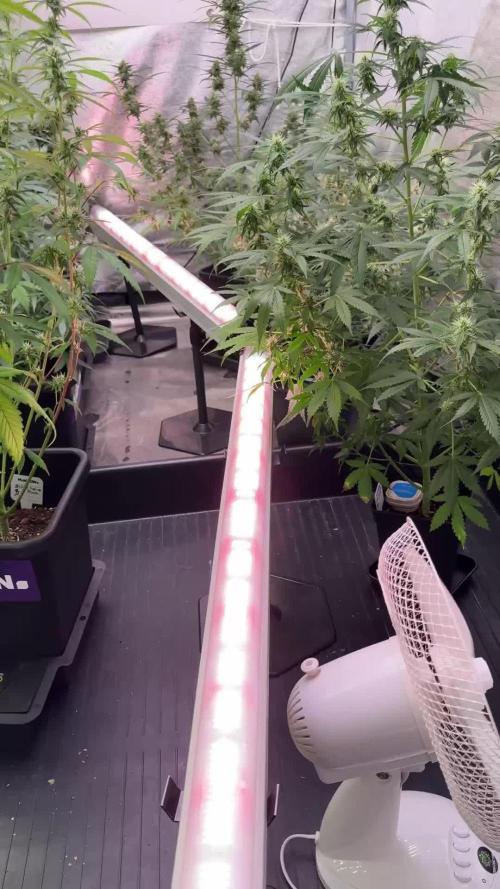
🌿 Frosted Guava Auto by Zamnesia | Pheno A | Week 9
✨ She's Shining — And Sometimes Beautiful Plants Need a Little Cleaning
Welcome back to another chapter of the 8×8 Adventure!
And our Frosted Guava girl?
She's still shining. 🌿✨
Actually...
She's shining more and more.
The flowers are developing beautifully, the plant remains lush and green, and those gorgeous flowering structures are becoming increasingly impressive.
But this week wasn't just about watching her grow.
This week, she told me something.
She needed a little attention.
Not because anything was wrong.
Not because she was struggling.
Simply because she had reached the point where some of the older, tired leaves had done their job and it was time to clean things up.
So...
we did exactly that.
A little defoliation.
A little cleaning.
A little maintenance.
And then?
Back to letting this beautiful girl do what she does best.
Grow.
Flower.
And shine. 💚
🌱 The 8×8 Adventure Continues
For anyone discovering this diary for the first time, welcome to the 8×8 Adventure.
This project is all about watching different genetics and phenotypes develop under the same general environment.
The same room.
The same 12/12 lighting schedule.
The same environmental philosophy.
The same nutrition strategy.
The same lighting ecosystem.
And yet...
every plant tells a completely different story.
Frosted Guava Pheno A has been writing hers beautifully.
She's not necessarily the biggest plant in the room.
She's not trying to compete with every phenotype around her.
She simply has her own personality.
And right now, that personality is becoming very easy to recognize:
lush, green, balanced, beautiful, and increasingly frosty.
✂️ This Week: Time for a Cleanup
Last week I was looking at her thinking:
"She's looking really good."
This week I was looking at her thinking:
"Okay girl... I think you need a little haircut." 😂
There were older leaves.
Leaves that had started to fade.
Leaves that were no longer contributing much to the plant.
And there were a few areas where the canopy simply benefited from a little more organization.
So we went in and cleaned her up.
Nothing extreme.
Nothing crazy.
No stripping the plant bare.
Just a sensible removal of the leaves that had reached the end of their useful life and a little bit of canopy maintenance.
Because there's an important difference between defoliating a plant because you think you should...
and cleaning a plant because you've actually looked at the plant and decided it needs it.
This week was the second one.
🍃 We Don't Need to Take Everything
One thing I always want to make clear when I talk about defoliation:
The goal isn't to remove every leaf.
Far from it.
Healthy leaves are still part of the plant's machinery.
They're capturing light.
They're contributing to photosynthesis.
They're supporting the developing flowers.
So even after the cleanup, plenty of healthy foliage remains.
I took what needed to come out.
I left what still had a job to do.
And that's the balance I'm looking for.
You don't need to make a plant look naked to call it clean.
You need to make the plant appropriate for the environment it's growing in.
And Frosted Guava now looks exactly where I want her.
Clean enough.
Open enough.
But still beautifully green and full of life.
The Job Isn't Finished When the Leaves Come Off
And here's something that I think deserves much more attention in grow diaries:
What happens after defoliation?
Because removing old leaves from the plant is only part of the job.
If those leaves fall onto the floor...
they don't magically disappear.
😂
They stay there.
They dry.
They break down.
They can accumulate underneath plants, around pots, in corners and in places where we don't necessarily notice them immediately.
And that's not what I want inside my growing environment.
So after cleaning the plant...
we clean the room.
Old leaves come out.
Plant debris comes out.
The floor gets cleaned.
The areas underneath the canopy get checked.
Anything that shouldn't be there...
gets removed.
Because maintaining a clean growing environment isn't about making the room look pretty for photographs.
It's about good hygiene.
It's about reducing unnecessary organic debris.
It's about making the environment less welcoming to unwanted problems.
And when you're running a full room like this...
cleanliness matters.
🌿 A Clean Plant in a Clean Environment
This is something I've learned more and more throughout the 8×8 Adventure.
The plants are only one part of the ecosystem.
The room itself matters.
The floor matters.
The pots matter.
The airflow matters.
The surfaces matter.
The little pieces of dead plant material hiding underneath the canopy matter.
Everything contributes to the environment.
So when we clean a plant, we're not finished when the scissors stop moving.
We clean the whole area.
And then we can close the tent and say:
"Okay. Now we're ready for another week."
That's exactly what we did with Frosted Guava.
🌸 And She's Looking Beautiful
And after all that maintenance...
the best part?
Look at her.
She's beautiful.
The green is still gorgeous.
The flower structures are developing beautifully.
The calyxes are becoming more pronounced.
The white pistils are still standing proudly throughout the flowers.
And the resin development continues becoming increasingly visible.
This is one of those plants where I genuinely enjoy looking at the photographs because there's so much going on.
From a distance, you see the overall structure.
Move closer...
and suddenly you're looking at individual flowers.
Move closer again...
and the calyxes and pistils become their own little world.
That's what makes this stage so fascinating.
The plant is still changing.
Every week.
❄️ Frosted Guava Is Living Up to Her Name
And yes...
the frost continues.
It's becoming increasingly easy to understand where the name Frosted Guava comes from.
The flowers are developing that increasingly sparkling appearance, with resin becoming more obvious across the developing structures.
We're still not at the finish line.
Not even close to making any final judgments.
But she's certainly giving us a beautiful preview.
And those white pistils?
I love them.
They're still fresh and prominent throughout the flowers, giving the plant that wonderful contrast between deep green foliage and bright flowering sites.
It's one of those combinations that never gets old.
☀️ Still Eating Photons
The lighting strategy remains the same.
The Future of Grow Black Series LED continues providing the primary overhead lighting, while Lumiflora continues contributing additional light into the lower portions of the canopy.
And Frosted Guava is still doing what plants do best:
turning photons into plant.
Leaves capture light.
The plant uses that energy.
Structure develops.
Flowers develop.
And eventually we get to see the result of all of that work.
At around 1,000 PPFD across the upper canopy, there is plenty of light available above.
The under-canopy lighting adds another interesting dimension to the experiment, particularly as the room becomes increasingly full.
And Frosted Guava has plenty of flowering sites to keep us interested.
💧 Feeding Continues
The nutrition program remains consistent.
🌱 Plagron Terra Bloom — 2.2 ml/L
🌿 Plagron Power Buds — 1 ml/L
✨ Plagron Green Sensation — 1 ml/L
🍯 Plagron Sugar Royal — 1 ml/L
⚗️ Plagron pH Plus — 0.03 ml/L
🍋 Plagron Lemon Kick — 0.03 ml/L
Current recorded parameters remain around:
pH: 6.0
EC: ~2.0 mS/cm
Watering: ~1.3 L per plant / 24h
Solution temperature: 25°C
Substrate temperature: 26°C
And visually, she continues responding beautifully.
There are no dramatic changes required.
No reason to reinvent the program.
She's growing.
She's flowering.
She's building.
So we're continuing to let consistency do its job.
🌡️ Week 9 Environment
Current conditions:
🌸 Flowering: Week 9
📏 Height: 120 cm
💡 Light schedule: 12/12
🌡️ Day temperature: 29°C
🌙 Night temperature: 25°C
💧 Relative humidity: 60%
⚗️ pH: 6.0
⚡ EC: ~2.0 mS/cm
🌡️ Solution temperature: 25°C
🌱 Substrate temperature: 26°C
🌬️ CO₂: 639 ppm
? Pot size: 15 L
💦 Watering: ~1.3 L per plant / 24h
Stable.
Consistent.
Predictable.
Exactly what I want while the plants continue doing their thing.
📸 This Week's Gallery
This week's photographs tell two stories.
The first is the plant itself.
Beautiful flowers.
Beautiful leaves.
Beautiful structure.
Beautiful colour.
Beautiful development.
The second story is what happened around the plant.
The cleanup.
The older leaves coming out.
The canopy becoming a little more organized.
And then the room being cleaned afterward.
I think that's worth documenting too.
Because growing isn't just about taking the beautiful photographs when everything looks perfect.
It's also about the work that happens behind those photographs.
The cleaning.
The observation.
The maintenance.
The little decisions.
The things nobody sees when they look at the final picture.
That's part of the 8×8 Adventure too.
Clean Room, Happy Room
There is something extremely satisfying about finishing a cleanup and looking around the tent.
No old leaves lying around.
No unnecessary plant debris.
The floor is clean.
The canopy is tidy.
The plants have room to breathe.
And then you step back...
and look at the whole 8×8.
That's when you realize how far this project has come.
What started as individual plants has become one enormous flowering garden.
Every phenotype different.
Every plant with its own personality.
And Frosted Guava has found her place right in the middle of it.
🔭 Looking Ahead
Now?
We let her work.
The cleanup is done.
The room is clean.
The healthy foliage remains.
The flowers continue developing.
And Frosted Guava can simply concentrate on the next stage of her journey.
I'm especially curious to see how much more those beautiful flowers will develop from here.
The calyxes.
The pistils.
The resin.
The density.
The final structure.
There is still plenty of story left to write.
And I have no intention of writing the ending before she does.
💚 Final Thoughts — She's Shining
Frosted Guava Pheno A is becoming one of those plants that doesn't need an introduction anymore.
You look at her...
and you know why she's here.
She's beautiful.
She's healthy.
She's balanced.
She's green.
She's flowering beautifully.
And she's getting increasingly frosty.
This week she needed a little attention.
So we gave it to her.
We removed the older leaves that needed to go.
We kept the healthy ones.
We cleaned the canopy.
And then we cleaned the room.
Because good cultivation isn't only about what happens on the plant.
It's also about what happens around the plant.
Old leaves don't belong on the floor.
Dead plant material doesn't belong underneath the canopy.
And unnecessary debris certainly doesn't belong inside the growing environment.
So we clean.
We remove.
We reset.
And then...
we let the plants shine again.
And Frosted Guava?
She's doing exactly that.
She's shining. ✨🌿❄️
The green is beautiful.
The flowers are beautiful.
The calyxes are beautiful.
The white pistils are beautiful.
The frost is coming.
And the whole plant is telling me the same thing:
"I'm not finished yet."
Good.
Because neither am I.
Let's see where this beautiful girl takes us next.
🙏 Thank You
A huge thank you to everyone following the 8×8 Adventure.
Thank you to Zamnesia for these Frosted Guava genetics.
Thank you to Plagron for supporting the flowering program.
Thank you to Future of Grow LED for the main lighting driving this garden.
Thank you to Lumiflora for bringing the under-canopy lighting dimension into the experiment.
Thank you to TrolMaster for helping maintain the environment behind the scenes.
And, of course, thank you to the incredible GrowDiaries community for following, commenting, sharing knowledge and growing alongside me.
This adventure isn't just about the final flowers.
It's about everything that happens along the way.
The experiments.
The phenotype differences.
The successes.
The mistakes.
The maintenance.
The cleaning.
The photographs.
And all those little lessons that appear when you stop and actually pay attention.
Frosted Guava Pheno A is giving me another one this week.
Sometimes you don't need to change the plant.
Sometimes you just need to clean the plant, clean the room, step back... and admire what you've built.
And damn...
she's beautiful. 💚🌿❄️
Growers Love & Happy Growing! 🌱💚


Likes
7
Share


@Grower420x
Follow
Managed to get over 4 ounce per plant the smell is very strong and is covered in crystal, I’ve already harvested clones in the mean time and also got over 4 ounce per plant
Likes
2
Share

@AbroCadabro
Follow
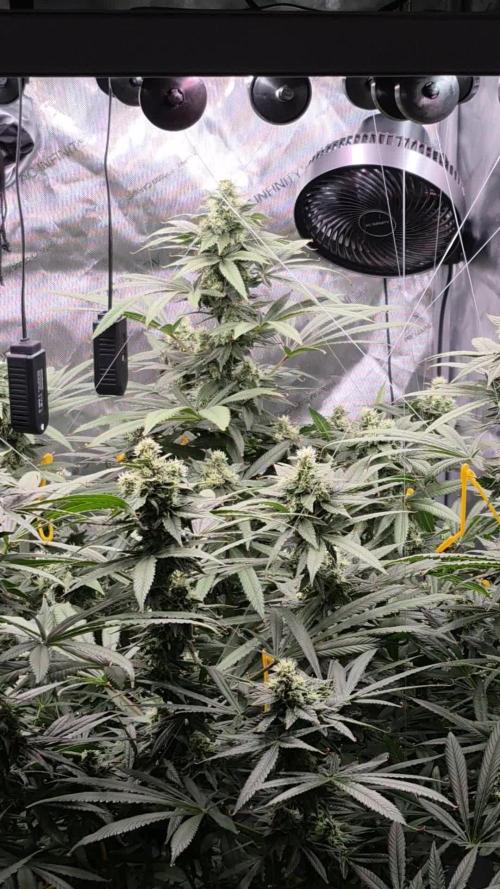
I started adding liquid KoolBloom to my reservoir at the start of week 6 after the switch to 12/12. The buds are starting to fill out. Looks like maybe another 2-3 weeks to finish.

Likes
37
Share


@XperencdGmanXG
Follow
had an issue with ph right after transplant, not sure if water was off or soil had a surge. im thinking fish tank water ph was way low. issue corrected. Removed some leaves for structure and airflow. LST and FIM. See what it looks like next week.
Likes
2
Share


@KEVS_BEST
Follow
Woche 4 - Weiteres Wachstum und kräftigere Blätter
In der vierten Woche setzte sich das beeindruckende Wachstum der Pflanzen fort. Die Nährstoffe blieben dieselben wie in der Vorwoche, mit der Zugabe von 30 ml Canna Terra pro 10 Liter Wasser. Das Licht wurde schrittweise weiter erhöht, bis es die maximale Leistung für die Vegetationsphase erreichte, mit einem PPFD-Wert von knapp 500.
Die Pflanzen wuchsen immer kräftiger und gesünder, und die Blätter waren mittlerweile größer als meine Hände – und ich habe wirklich große Hände! 😄 Die Luftfeuchtigkeit und Temperatur blieben konstant und bewegten sich weiterhin im optimalen Bereich wie in der Vorwoche.
Die Pflanzen zeigten eine merkbare Veränderung in ihrer Farbe: Sie wurden deutlich dunkler grün, ein Zeichen für eine optimale Versorgung mit Nährstoffen und ein gesundes Wachstum. Insgesamt war dies eine sehr erfolgreiche und erfreuliche Woche im Grow, mit weiterhin sichtbaren Fortschritten.
ENGLISH
Week 4 - Further Growth and Stronger Leaves
In the fourth week, the plants’ impressive growth continued. The nutrients remained the same as the previous week, with 30 ml of Canna Terra added per 10 liters of water. The light was gradually increased until it reached the maximum intensity for the vegetative phase, with a PPFD value of around 500.
The plants grew even stronger and healthier, and their leaves were now larger than my hands – and I have really big hands! 😄 Humidity and temperature remained stable, staying within the same optimal range as the previous week.
The plants also showed a noticeable change in color, becoming significantly darker green, indicating an optimal nutrient supply and healthy development. Overall, it was a highly successful and satisfying week, with clear progress visible.
Woche 4 - Weiteres Wachstum und kräftigere Blätter
In der vierten Woche setzte sich das beeindruckende Wachstum der Pflanzen fort. Die Nährstoffe blieben dieselben wie in der Vorwoche, mit der Zugabe von 30 ml Canna Terra pro 10 Liter Wasser. Das Licht wurde schrittweise weiter erhöht, bis es die maximale Leistung für die Vegetationsphase erreichte, mit einem PPFD-Wert von knapp 500.
Die Pflanzen wuchsen immer kräftiger und gesünder, und die Blätter waren mittlerweile größer als meine Hände – und ich habe wirklich große Hände! 😄 Die Luftfeuchtigkeit und Temperatur blieben konstant und bewegten sich weiterhin im optimalen Bereich wie in der Vorwoche.
Die Pflanzen zeigten eine merkbare Veränderung in ihrer Farbe: Sie wurden deutlich dunkler grün, ein Zeichen für eine optimale Versorgung mit Nährstoffen und ein gesundes Wachstum. Insgesamt war dies eine sehr erfolgreiche und erfreuliche Woche im Grow, mit weiterhin sichtbaren Fortschritten.
ENGLISH
Week 4 - Further Growth and Stronger Leaves
In the fourth week, the plants’ impressive growth continued. The nutrients remained the same as the previous week, with 30 ml of Canna Terra added per 10 liters of water. The light was gradually increased until it reached the maximum intensity for the vegetative phase, with a PPFD value of around 500.
The plants grew even stronger and healthier, and their leaves were now larger than my hands – and I have really big hands! 😄 Humidity and temperature remained stable, staying within the same optimal range as the previous week.
The plants also showed a noticeable change in color, becoming significantly darker green, indicating an optimal nutrient supply and healthy development. Overall, it was a highly successful and satisfying week, with clear progress visible.

Likes
2
Share


@GodZilla_Owner
Follow
Week 2 – Day 16
Looking back:
On day 12, Mimosa Evo #3 showed the first signs of a nutrient deficiency.
EC was around 0.9 at that point – probably not enough for her current size.
Mimosa Evo #2, which is smaller, didn’t show any symptoms. This likely means the issue was due to underfeeding the more developed plants.
To fix it, I added some salts (EC 0.4) plus a ready-mixed nutrient solution, bringing the total EC to 1.3.
The symptoms didn’t get worse after that, but the color still remains lighter than on the other plants.
Transplant & pruning:
Mimosa Evo #3 has been moved to the final tent. During the process, I removed the first pair of nodes.
Mimosa Evo #2 is still in her original pot – I’m currently figuring out the best way to place her due to limited space.

Likes
38
Share

@Ukfarmer420
Follow
Hi guys
So day 6 of the flip and the screen is nice and full I will now let the nodes and bud sites stretch up, connecting autopots up tomorrow with just water for a week, I had to wait as needed a new air pump for the resivour.
Blue cheese is a bit droopy also due to them needing water but have perked back up now.
I raised the lights as I noticed the purple stems so obviously to much wattage set on the light.
I am changing nutes to shogun for the autopot system, hence just the water for a week.
On the whole looking good but a long way to go.

Likes
13
Share


@420DeepGrow
Follow
Gracias al equipo de AnesiaSeeds, Marshydro, XpertNutrients y Trolmaster sin ellos esto no sería posible.
💐🍁 Oracle Octane:
Oracle Octane es una cepa altamente potente y con un alto contenido de THC elaborada a partir de una Blackberry Octane seleccionada, excepcionalmente rica en THC y aromática, y de la pesada Blackberry Oracle, inédita, de nuestro propio acervo genético. El desarrollo de esta carismática e impresionante variedad abarcó 8 generaciones y un enorme esfuerzo de cría.
La variedad tiene un sabor intenso e inolvidable que recuerda a bayas dulces y limones frescos.
Las plantas a partir de semillas crecen increíblemente hermosas y sus hojas y cogollos a menudo desarrollan tonos de rojo, morado intenso e incluso casi negro.
Esta cepa vigorosa y ligeramente índica dominante tiene un tiempo de floración de unas 9 semanas, produce hojas grandes y alcanza una altura de unos 120-130 cm en el interior.
🌻🚀 Consigue aqui tus semillas:
https://anesiaseeds.com/product/oracle-octane/
💡TS-3000 + TS-1000: se usaran dos de las lámparas de la serie TS de Marshydro, para cubrir todas las necesidades de las plantas durante el ciclo de cultivo, uso las dos lámparas en floracion para llegar a toda la carpa de 1.50 x 1.50 x 1.80.
https://marshydro.eu/products/mars-hydro-ts-3000-led-grow-light/
🏠 : Marshydro 1.50 x 1.50 x 1.80, carpa 100% estanca con ventanas laterales para llegar a todos los lugares durante el grow
https://marshydro.eu/products/diy-150x150x200cm-grow-tent-kit
🌬️💨 Marshydro 6inch + filtro carbon para evitar olores indeseables.
https://marshydro.eu/products/ifresh-smart-6inch-filter-kits/
💻 Trolmaster Tent-X TCS-1 como controlador de luz, optimiza tu cultivo con la última tecnología del mercado, desde donde puedes controlar todos los parametros.
https://www.trolmaster.com/Products/Details/TCS-1
🍣🍦🌴 Xpert Nutrients es una empresa especializada en la producción y comercialización de fertilizantes líquidos y tierras, que garantizan excelentes cosechas y un crecimiento activo para sus plantas durante todas las fases de cultivo.
Consigue aqui tus Nutrientes:
https://xpertnutrients.com/es/shop/
📆 Semana 3:
Muy buena semana, he aplicado un riego solamente con agua de manantial para reducir la cantidad de sales acumuladas en el sustrato y se ha notado una mejoria .
Creo que le quedan unas dos semanas por estirar, parece que va a ser una buena cosecha.
Se mantiene un buen control del cuarto de cultivo gracias a @marshydro y @trolmaster.
Mantengo las dosis de 1/3 de nutrientes recomendados por el fabricante.
Potencia del foco 80%

Likes
14
Share


@Cannibalgardens
Follow
Boy this plant has been going a slow and steady race so far I can't wait to see how reacts to bring put into a bigger pot. The growth is a great green colour and she hasn't been lacking anything . Looking forward to next week and seeing how the growth has come along .. cheers and thanks for checking out the grow..
Likes
11
Share

@BushDoctor740
Follow
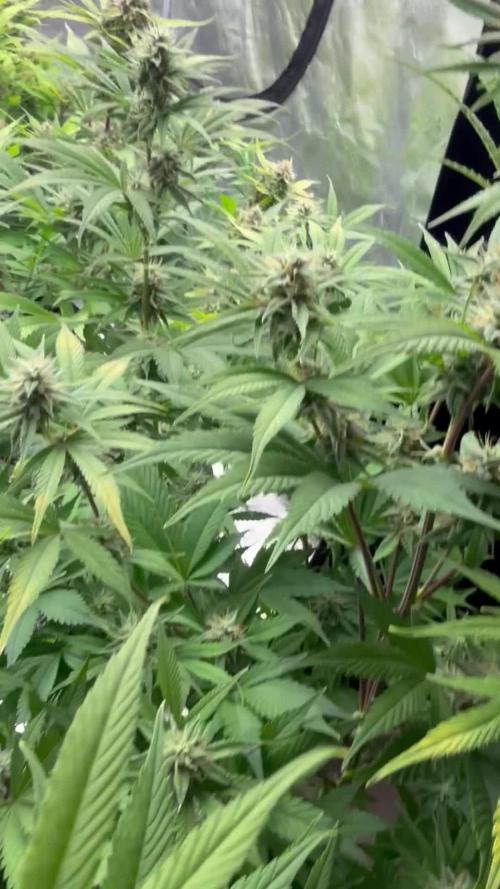
Really moving along well and she is getting sticky and smells amazing.Her pistols are turning a bright orange and with heavy frost she finish out in prob a few weeks.Light intensity set at 80 percent power and I have backed off the nutrients