


Likes
Comments
Share


@Purplemed
Follow
D72.
Second day of week eleven and the citrus smell is out of this world, trichomes are still clear and no amber anywhere, both ladies smell fantastic 🔥
D77.
Today I harvested the old lady, she struggeled a lot last weeks since nutrient lock out, then overwatering, tricomes were already milky so I choose to not wait for amber because of the root rot and botrytis risk.
On the trim she smelled fantastic and made big colas despite last three weeks stunted eating herself.
Young lady is one ore two weeks to go 🔥
D75. YOUNG LADY
She smell so good and trichomes are milky with some still clear and very little amber.
Today I turned lights off to armaguedon her next 48 hours, no more light no more water until harvest this friday morning.
D77. YOUNG LADY
Bro science or not she's been thirsty for 48h in the dark and between 15 and 18°C and today, last day of eleventh week, she's already trimmed and drying with her old sister. Smell was not profound as before the dark period but smelled good when trimmed.
I'll go for 10 days drying as her old sister and update total dry weight by then.

Likes
15
Share


@jayizrollin
Follow
This is day 75 from plant.
Froot by the Foot is nearing the end, smelling very sweet and creamy.
Finally showing the one gallon Top Gun some love, it’s looking so cool now and smelling super funky, my favorite smell. Got some good photos using a loupe I just got. The big top gun is much bigger than the others, its cola is very impressive too me, so cool how it stacks.

Likes
4
Share


@Bread_n_Buds
Follow
This is one of the strains that is doing very well in both the technical/free versions, we are talking about the Fruit Punch Automatic by Zamnesia.
Remember that we are growing a plant worked with the techniques indicated and another left to grow without pruning to preserve its speed; in the previous/next diary you will find the other plant of the same variety.
In this diary we find a plant left to grow straight with a good bit of cleaning at the bottom but essentially left to go. We can see that it is probably the fastest of all in terms of flowering, train because at a certain point you have to start the Green Sensation, not before or after the magical moment of swelling of the flower. Every booster in general except
Comparison is the salt of the experience, so the plant in the other diary will be treated very differently, go and see it to make a comparison.
We started the Plagron fertilization program, we are in 100% organic configuration, the soil is made up of recycled Promix + 1/3 fresh soil + 10% Perlite + RQS Mycorrhizae Mix (4 g in the mix, 1 g under the small fiber pot).
In the middle of the week the pre-flowering started so I decided to start the program for this phase: 1 ml/l of Power Roots - 1 ml/l of Pure Zym - 1 ml/l of Sugar Royal - 1 ml/l of Power Buds - 3 ml/l of Alga Bloom
Remember the Green Sensation from the 3rd/4th week of flowering depending on the flowering speed or how you see the calyxes composing, when the calyx is in the swelling phase it is used.
We sprayed 5 ml/l of Vita Race foliar fertilizer once a week.
-------------------------------------------------
https://plagron.com/it
We always have the excellent RQS mycorrhizae running through the soil.
https://www.zamnesia.io/it/5778-mix-micorrhiza-easy-roots.html
One of the best in recent years with a very high THC level
--------------------------------------------------------
https://www.zamnesia.io/en/10965-zamnesia-seeds-fruit-punch-automatic.html
Brief description of Zamnesia // Sativa strains are very rewarding to grow, but their long flowering times and their greater susceptibility to disease and overfertilization can make them a little more difficult to manage. Also, their imposing heights are less suitable for indoor use and can attract unwanted attention if grown outdoors. However, with the arrival of Fruit Punch Automatic, growing sativa strains at home just got a whole lot easier. Combining Skunk #1, Haze and ruderalis, Fruit Punch Auto is 70% sativa dominant and produces up to 21% THC, along with a delicious blend of terpenes. Plus, it can be grown indoors, outdoors and in greenhouses. With their bright green hues, golden pistils and thick layer of resin, Fruit Punch Auto buds always have a great appeal. When you smoke her, you will be amazed by her flavours, aromas and effects! As the name suggests, Fruit Punch Automatic boasts delicious tropical aromas reminiscent of banana, pineapple, mango and citrus. When you open the jars you will feel like you are in a tropical cocktail bar on an exotic beach. Fruit Punch Auto will delight your palate with pungent fruity notes followed by light notes of Skunk and spice on the exhale. Within minutes of your first hit, this potent sativa will stimulate your mind, leaving you in an energetic and carefree state, ideal for morning or daytime sessions, as well as social settings or creative pursuits.
The whole world of growing and much more is on Zamnesia: just take a look at the site and you will find "all the best that nature has to offer" in various shapes and colors.
---------------
www.zamnesia.com

Likes
10
Share


@TerpyOG
Follow
Planet Of The Grapes (Ethos Genetics)
Week 3, Day 25 Flower
The far left and the far right plants are doing great, That top dressing i gave them made them perk up, Only issue is the middle plant, it still looks deficient, Might have to give her some compost tea and add some more 4-4-4 and worm castings.

Likes
8
Share


@Jays_Not_Here_Man
Follow
Girls are thirsty still! Been having to feed/water every third day! It’s been so hot and humid, the humidity was in check but the temps hovered around 82-84 degrees in the tent this week. Gave them a light feed, with emphasis on the micro and big bud, along with two straight ph’d waterings.
Tricomes are mostly cloudy with a few amber, and some clear still hanging in there. Another week for sure, maybe two or close to it. It’s a 7-8 week flowering strain, but after 16 weeks of growing, I don’t want to rush to the finish.
This coming feed will be their last with nutrients and then PH’d water till harvest. I don’t flush, I just “rinse” and allow the plant to take the remaining nutrients for about 4 feeds. This seems to have worked out the best for me, flavour and smoke wise… stay tuned, here comes the good part 🇨🇦❤️🌱😎💨

Likes
6
Share

@xXDankDripzXx
Follow
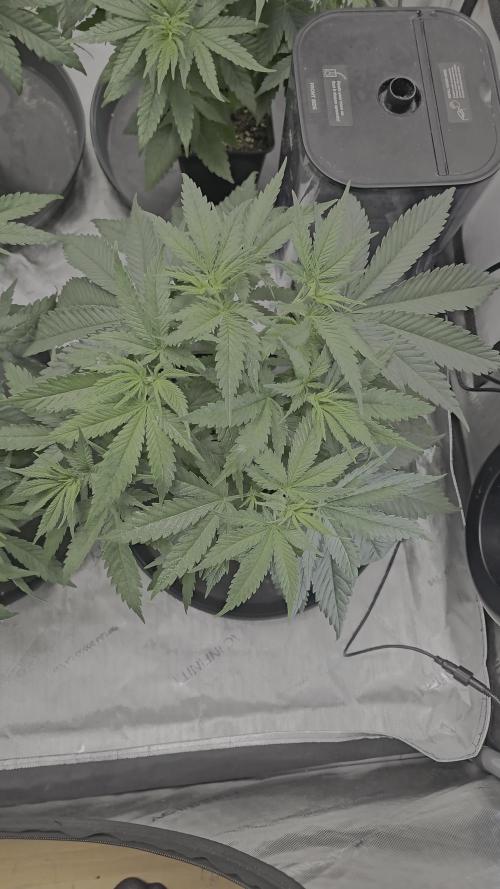
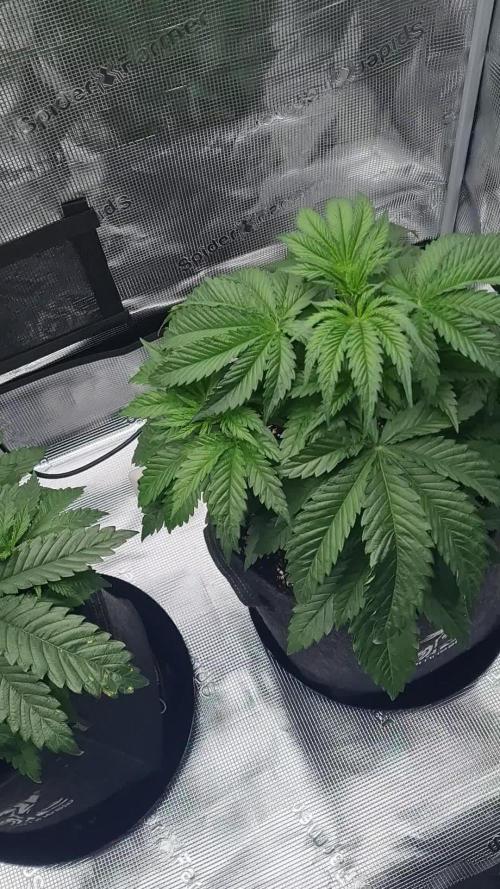
Week 3 - girls are loving life a getting bigger by the day, general plant structure is pretty much perfect, and they are showing strong indica leaning characteristics which is just what i want to see 🌱🌿🍀


Likes
29
Share


@Prilyfe13
Follow
May 10, 2024
A new week and more flushing. Both ladies look really good. Tropicana C is way too heavy for her branches. It's good and bad. It's bad because they are flopping all over. And it shows how weak these tops are. It had to be my nutrient regimen. It's good because it shows the buds are dense and heavy.
Tropicana Cookies has significantly stronger branches and can hold a lot of weight for the size of the buds. I could just be a tight fit with all the buds up and down each top. Who knows. They are starting to lean a little bit, but not too bad.
Her buds are almost all purple top to bottom and the leaves are getting lighter and lighter throughout the plant. She's covered in trichomes. From what I can see, there's not nearly enough amber trichomes on the buds. Very soon though.
I reactivated her wick system today. Her container was about half the weight as it was yesterday. Maybe now that it's not saturated anymore, the wick system will provide what it needs. We shall see later today I think.
The lighting for some of this week will stay the same. I'm just waiting for the other 2 plants in the tent to start their flush. Then I'll drop the power down some. Most likely to a DLI of 36 mol/m²/d. We shall see. I'm also curious if it will actually do anything. They are autoflowers and light doesn't really mean much. Just as long as it's on and the right DLI, it should be fine, right? Anyway, I'll drop it when the flush starts anyway. I want to see what happens.
The environment is looking a little better. The humidity is lower at 54%, but still way too high. At least it's below 60% finally. But 54% isn't much better. The temperature is pretty good at 76° during the day and 67° at night. I still can't get it down to 66° at night, so 67° will have to suffice. However, there is about a 10° difference between lights out and lights on.
Grow System Environment:
Temp: 74.1°
RH: 54.2%
VPD: 1.29 kPa
May 11, 2024
Watering day! Last watering of the grow. I'll let them dry out from now on. It should be like 4 days before they are dried out.
Tropicana Cookies looks so close to being done. Her fade is spreading and I'm guessing another 3 days? Maybe less. There is so much more purple now. Ite absolutely beautiful. She definitely will need a trichome check daily.
Tropicana C has started showing purple finally. I'd give her another 5 days, maybe a week. I honestly cannot tell. I'll check trichomes tomorrow and every day afterward. Her buds are definitely getting heavier and some even look fatter. She's definitely not quite ready, but super close.
The light power will be dropped in a couple days down to a DLI of 36 mol/m²/d. Not much else for that.
The environment is still kind of a mess. The temp is fine at 75°, but the humidity is still high at 55%. I even got the temp down to 66°. So that's good. I'd like to keep it there for the rest of the grow. I'll also try to drop the temp during the day to help bring out more color. It will also help with keeping the temp low during the drying period.
Grow System Environment:
Temp: 73.0°
RH: 53.6%
VPD: 1.27 kPa
Update: I ended up checking the trichomes anyway, and i think I know when they will be done. Just an estimate, but I think a good one. Anyway, Tropicana Cookies should be done in about 3 days while Tropicana C should take about 5 days. I may wait and harvest both at the same time. Or in between and harvest them in 4 days.
Tropicana Cookies just needs more amber trichomes. They are almost all cloudy. Very few clear, but only about 5% amber.
Tropicana C on the other hand, has a bit too many clear trichomes and no where near enough amber. 5 days should do it. 4 might be a little early, but that might be the only option. We shall see in 4 days.
May 12, 2024
Not much going on today.
Tropicana Cookies had a soaked bottom again, so I removed 1 of the wicks. So there should be about half the water going in now. She's definitely not thirsty. So very close. Anyway, she is fading quite nicely and I think she will have a whole bunch of beautiful colors. Lots of purple and some nicely fading fan leaves. Light greens, yellows a tiny bit of red. But not there yet.
Tropicana C did not have a soaked bottom today. She never does. It just tells me she is still thirsty. Which also tells me she still has some time left. Maybe 4 to 5 days, but I may harvest her in 3 to 4 days. It all depends on how she looks.
I got some trichome pics today. Just one for each plant, but they were the best I could get so there you have it.
Anyway, Tropicana Cookies looks very close. More amber trichomes, more cloudy and much less clear.
Tropicana C still has a bit too many clear, but definitely has more cloudy. Not too many amber, but more than yesterday.
I still plan to drop the DLI down to 36 mol/m²/d in a day or two. It won't really matter, but it's still important to note. It's for the other plants in the tent.
The environment is a lost cause. I can still control the temp, but the humidity is still at 57%. I have the temp at 77°, but I think I'm going to drop it down to 74°. I don't think the humidity will go up with the temp change. And if it does, back up to 77°. I'll probably get the 74° mark, so all good.
Grow System Environment:
Temp: 73.9°
RH: 55.6%
VPD: 1.25 kPa
May 13, 2024
Not much going on today. I checked trichomes and I think I'm going to harvest when Tropicana C is done. She should be done in a couple of days. Maybe 3 to 4? Maybe less? I'm supposed to be harvesting tomorrow, but I'm not sure I will. I'll check the trichomes again tomorrow, but both are there. Just a little bit more. Not too much longer though. I have 4 more plants ready to come in like ASAP.
Anyway, the trichomes on Tropicana C are mostly cloudy now, with a few clear and more amber. Maybe 8% to 10%. Just a bit more. Tropicana Cookies is a bit further with next to no clear trichomes and the same amber as her sister. Roughly 8% to 10%. She will definitely be done either tomorrow or the next day.
So I think it makes more sense to focus mostly on Tropicana C for harvest time. I really don't want to harvest an indica too early. Not to mention, the purple is coming through really quickly for Tropicana C.
Tropicana Cookies has almost all purple buds. The very bottom of the plant still has mostly green with purple coming through just a bit. It's more like pink than purple. But the majority of the bud is green. These are the underdeveloped buds. Not even worth of popcorn I think. That stuff will become concentrate.
The light intensity will be dropped tonight down to a DLI of 36 mol/m²/d. Kind of pointless for the last couple days, but it needs to be done.
The environment is driving me crazy. I can keep the temp at 74°, but then the humidity goes up to 58%. Much too high. Even opening the tent door only drops the humidity down to 52%. I'm going to need to drop the humidity in my room down to 35% somehow and maybe I'll get below 50%. This is ridiculous.
Grow System Environment:
Temp: 74.4°
RH: 56.2%
VPD: 1.24 kPa
Update: I ordered a new dehumidifier for grow tents today. It should be here tomorrow. I'm guessing a lot of my problem with the humidity is my current dehumidifier. It barely pushes air. Cheap and well used. The new one is from Vivosun. A much more reputable company.
May 14, 2024
Trichome day! Took a couple videos. The videos are kind of crappy. I hurt my back so I'm shaky.
I removed the wick system completely from both plants. Tropicana Cookies was yet again soaked. Not as bad with just the one wick, but still soaked. Anyway, I pulled the wicks and emptied the reservoirs. Maybe that will help with the humidity. They should both be dried out in a few days. Just in time for harvest.
Tropicana Cookies looks wonderful! Her buds are nearly black, with nearly black leaves. It's the darkest strain I've ever grown. Insane. She still has a day or 2 left to go. There's trichomes, but not enough. Hopefully 2 days will do it.
Trichomes are mostly cloudy, a little bit of clear and not enough amber.
Tropicana C is right behind her sister plant in the dark purple color. Her flowers and sugar leaves are getting super dark. Fan leaves are lights ing up, but not fading. I have a feeling she is going to need longer than I have been estimating. I also have a major issue with the side branches all around the plant. They are just laying down. Buds completely facing down. The branches are also super weak. I don't understand what happened. Back to trichomes. There's like 20% clear still and nowhere near enough amber.
The lower light intensity doesn't seem to being doing anything, but I'm sure it's preserving the trichomes. Maybe even helping along the plants to finish up.
The environment is still a nightmare. The temp is still fine, but the humidity is stuck at 60% again. The humidity in my room is higher than outside. I have the door open to help drop it, but it's not helping with the tent humidity. I have no idea how environmental science works. Lol.
I wonder if I defoliate both plants a couple days early, what will happen. Wouldn't it put all of its energy into the buds and increase trichome production, like a last push? I'll research this and decided what to do by tonight.
Grow System Environment:
Temp: 74.3°
RH: 59.2%
VPD: 1.15 kPa
May 15, 2024
Nothing going on today. Both ladies are about halfway there before completely drying out. I'd say another 2 days.
I was going to harvest tomorrow, but I checked the trichomes and they still aren't there yet. Plus, I think the other 4 waiting to get in the tent still have time to veg before they overwhelm their containers. One of them is very close, but I don't think she will be a problem in the next 2 days. Plus I can always train her down.
Tropicana Cookies is starting to lean more. Her branches aren't quite falling over, but they are definitely getting weighed down. She seems to have basically stopped fading. Still a lot of green leaves, but each top is essentially all dark purple. So this may be it for fading. Now I can only wait for her to ripen up. Hopefully 2 more days. I really can't push it that much further.
Tropicana C is still behind her sister by a bit. Not much, but enough for me to be concerned about harvesting them together in 2 days. I guess I'll see how the 4 other plants are doing in 2 days. Maybe I'll wait 3. Who knows at this point. It's been 7 weeks, so it should be any day.
I think the light intensity is making the smell stronger. Less intense light is keeping the trichomes nice and plump and filling with cannabinoids. So maybe it was a great idea to drop he intensity.
The environment is still kicking my ass. I can't get the humidity to drop below 60% and now I don't have much control over the temp
It's stuck at 73°. Not bad for this stage, but it's killing the VPD. It needs to be at like 1.5 kPa, but it's at 1.00 kPa. Super bad. No good. The night temp is still too high. The average last night was 69.1°. Much too warm for night temps. Maybe that's what is taking Tropicana C to turn purple. She's getting there definitely and should be the same color as her sister. They are the same phenotype after all.
Grow System Environment:
Temp: 72.9°
RH: 63.0%
VPD: 1.00 kPa
May 16, 2024
The final day of the week and I think I need to harvest these 2 tomorrow. The 4 Sour Diesels I have in my 2x2 tent are starting to get bigger and will need more space very soon. Not to mention, they are in my 2x2 tent I use for drying.
Tropicana Cookies is basically done. I didn't check her trichomes today, but all the buds top to bottom are purple. Lighter purple in the lowers, but those are popcorn and larf, so I'm not so worried. She also seems to have stopped fading. She's nearly dried out now. Probably tomorrow right when I need to harvest.
Tropicana C on the other hand has her trichomes looked at today. Made a video and took a pic from it. Anyway, the trichomes are much more cloudy now and maybe 7% amber. She should go a few more days, but I still have the dilemma of the other plants. I guess it all depends on how they look tomorrow I guess.
She hasn't started fading yet, but more purple is showing up everyday. That's another reason I think she could go a few more days. She still hasn't even begun to fade. She's about half dry, but if I have to, I'll add a half gallon of plain water tomorrow to see if she fades at all.
I may have to harvest Tropicana Cookies tomorrow and then Tropicana C a few days later. I should be able to fit 4 more 3 gallon containers in the 3x3 with just the one plant gone. It'll be tight and I'll need to Tetris the shit out of it, but I think I can manage.
One thing I haven't thought about until now is drying itself. If I have to harvest separately, the 2 to 3 day difference will mess up the dry for the first one harvested. I think? Maybe not. I have a plan. Instead of hanging them next to each other, I'm going to hang them on top of each other.
So the first will be Tropicana Cookies on top and later in Tropicana C on the bottom. Theoretically, with this setup, I could control the humidity a bit better. When Tropicana Cookies is nearly done and needs the extra humidity for that even dry, Tropicana C will have brought it back in and I should be able to hold it around 60% for the rest of the drying time for both plants.
Lighting doesn't matter anymore. It's served it's purpose and I could technically take one out now for a 2 day dark period before harvest. But if anything, I'll wait for tomorrow. I honestly didn't think about the dark period until now. Haha. Whoops. That may just solve problem entirely. I don't have to wait for harvest time.
My other plants won't get too big and I can put them in the 3x3 more comfortably. I can also harvest both plants at the same time. Or, if I have room, I can place Tropicana C in the dry tent on the bottom while Tropicana Cookies gets hung up. I don't think there's enough space though.
Anyway, I think the best course of action is to put Tropicana Cookies in the dry tent for a 2 day dark period and harvest both when Tropicana C is ready. Then I can see if there's a difference between lights all the way to harvest or dark for 2 days. Fun!
The environment is the bane of my existence. The new dehumidifier is definitely stronger than the old one and more compact. I even left the old one in there as well. Both running at the same time can only drop the humidity to a solid 60%, but my room is 63% and I can't do anything about it. I also have the tent completely sealed off. I think it's helping to keep the humidity from climbing to 65% or 70%.
I have the temp up a bit to 76° and 77°. Just to help a smidge with the DLI. The only thing I have an advantage with is my ari flow and spread canopy. There's 2 fans blowing around air and the exhaust. It should help prevent mold or bud rot, but with such high humidity for days, I can only imagine something bad is happening. Maybe not bud rot or mold, but the chemical composition of the buds? I dunno. I haven't learned that much.
Grow System Environment:
Temp: 74.8°
RH: 62.8%
VPD: 1.07 kPa
Likes
28
Share


@MadeInGermany
Follow
Hey guys :-)
A lot has happened this week :-).
She has developed very well.
Today it was topped on the main shoot for the first time.
How often I will use topping on her, I make it dependent on how everyone else develops.
I want to bloom soon so it won't happen very often :-).
It was poured twice this week with 1 l each time (for nutrients, see table above).
Fast plant spray from GBL was applied 2 times this week.
New was added this week Fast Bud from GBL is preparing her for the coming flowering.
Bio Grow Stay away for a while because the substrate is 30-50 % consists of fresh earth and the ladies are nice and dark green :-).
Today there was another spray with neem oil against the remaining tripse which I will repeat one last time next week.
As always, everything was cleaned and checked.
Have fun with the update and stay healthy 🙏🏻
👇🏼👇🏼👇🏼👇🏼👇🏼👇🏼👇🏼👇🏼👇🏼👇🏼👇🏼👇🏼
You can buy this Nutrients at :
https://greenbuzzliquids.com/en/shop/
With the discount code: Made_in_Germany you get a discount of 15% on all products from an order value of 100 euros.
👇🏼👇🏼👇🏼👇🏼👇🏼👇🏼👇🏼👇🏼👇🏼👇🏼👇🏼👇🏼
Water 💧 💧💧
Osmosis water mixed with normal water (24 hours stale that the chlorine evaporates) to 0.2 EC. Add Cal / Mag to 0.4 Ec Ph with Organic Ph - to 5.8 - 6.4
MadeInGermany


Likes
31
Share


@JeyGanesha
Follow
🦍 cookies ancora pochi giorni ed è cotta anche lei.. buonissima,!! Ha un profumo delizioso super.
I'attesa si fa lunga 🤣😉🤣😉
Likes
15
Share


@SweetheartOG
Follow
Started the girls with some LST to see how they all coped and they bounced back well.


Likes
97
Share


@OrganicNature420
Follow
JungleBoys
Gelato33 x ZkittlezCake (clone)
THC: 30+%
Terp: 45%
Nutrients • GreenBuzzNutrients
(DISCOUNT CODE • (GD42025) %25 off
I use the whole product range and this stuff is a game changer. I've not had one bad grow with this company and it hasn't let me down once. Terps and taste are through the roof. No need for run off in coco only during flush week (i use a 0ppm distilled water) Hands down the best nutrients on the market
GREEN BUZZ OUR NOW GIVING YOU GUYS A SUPER DISCOUNT OF %25 WHEN USING THE NEW CODE ABOVE. JUMP ON BOARD THE GREEN BUZZ TRAIN AND GIVE YOUR PLANTS WHAT THEY DESERVE 💚🌱
LIGHT/TENT • Mars Hydro FC-E6500 5x5 tent
This clone is massive. Hoping to hit 200gs in dense smelly nugs. Buds are rock solid. If you haven't already please give GreenBuzzNutrients a follow and have a serious think about switching. This stuff is just on another level and Organic. Not salts or silicon to ruin the taste and super easy to use 🌱💚
Bubble hash review : most probably 3oz of trim and all the sugar leaves. Easily oz if not 1half. It smells amazing and will be a great smoke 👍🏻 dry weight in a couple of days
Processing
Likes
8
Share


@weed_gastro
Follow
I was away for a week, gave them plenty of water when I left, and came home for this!! I gave them water for the last time I guess, and in a few days harvest is coming :) the smell is awesome, fruity as hell.
Likes
10
Share


@HegauHillsFarmers_M11
Follow
Tag 63 - Ende der 9. Woche.
Die Blüten entwickeln sicher super und duften extrem. Der Hauptstamm wird schwer, sodass ich die Pflanzen etwas stützen muss, damit sie nicht biegen. Das Harz an den Blüten hat diese Woche nochmal deutlich zugelegt.
In dieser Woche habe ich den Dünger angepasst und Big Bud durch Overdrive ausgetauscht um die Blüten zu härten.
Diesen Vorgang werde ich vermutlich nächste Woche nochmal wiederholen und dann langsam aber sicher mit dem spülen beginnen.
Wir beginnen nun mit der 7. Blütenwoche.
An Tag 57 wurde die Pflanze gedüngt.
Nährstofflösung:
2 ml/l - B-52 Advanced Nutrients.
4 ml/l - pH Perfect Sensi Bloom Part A
4 ml/l - pH Perfect Sensi Bloom Part B
2 ml/l - Bud Candy Advanced Nutrients.
2 ml/l - Overdrive Advanced Nutrients.
Davon hat die Pflanze 1l an Tag 57 erhalten.

Processing
Likes
24
Share


@ROM101
Follow
Missed updating and taking photos of this girl yesterday so heres the latest. She's doing great and stacking hard and fast. Added a video of all the FFT I've got going as I've never done this before and though it would be a nice addition 👍👍👍

Likes
8
Share


@CalGonJim
Follow
4/7 10:30PM All Photo's are looking great, using soft water so salts build up faster, have to water them in the bathtub for lots of runoff now
4/8 what are all the plants in tent 5 Montel is doing really good in the 1 gallon smells the strongest of all of them the two Mike Tyson plants the photos are doing great. The corkscrew auto that turned out not to be an auto that ended up revenging and now it’s flowering again it has a really nice strong main stock and it will probably produce a nice Maine cola. I got lucky with that one and bubbles blueberry is doing pretty good considering I didn’t grow her right I was incapacitated for a couple of months so she overgrow. I usually do four colors, but I kept her in veg for several months and I think I’m gonna take several of the trailer Park boys plants and possibly ice tea body count and revenge them
4/9 4:455AM "revenge them"😂 To maintain my overdramatic ways...and the phone didnt hear me right, any time I RE_VEG a plant its now REVENGING THE PLANT...... PERFECT....ON EARTH ...200 YEARS AGO I WAS A PRINCE WITH POWER OVER MIDGETS AND FANTASY ISLAND.... my scattered old memories... Star Trek Wrath of Khan / Fantasy Island grow is next!!!..OR if I have the money a CHiPs grow, a Knight Rider grow, 6 million dollar man grow...back when that was a lot of money to throw a way on some downed pilot...what waste of time..... Oh LOOOK what I found Larry Wilcox from ChiPs https://larrywilcox.net/shop/
4/9 7:22AM ICE T smoking right now. Smell so nice and sweet just great. Took the bottom branches, dried over night and just fine!!
4/11 4:55AM.💫 BLUEBERRY KO (BLUEBERRY KNOCK-OUT) --- ""That’s awesome—congrats on successfully making your own seeds👨🔬 and getting them to pop! Turning a stressed **Bubbles Blueberry F4** (the Brothers Grimm/Trailer Park Boys collab with that classic sweet blueberry, vanilla cream, and fruity terps) into a pollen donor and hitting a **Gelato 44** (the RQS x Tyson 2.0 “Mike Tyson” version, which is Sunset Sherbet x Thin Mint GSC) is a fun little home breeding project.
You only got five seeds, planted several, and they’re already showing **distinct phenotypes** that don’t even look like siblings. That’s not surprising at all—it’s actually super common and part of what makes seed-grown cannabis exciting (and “miraculous,” as you put it).
### Why the variation is so noticeable
- The **Gelato 44** mother is an **indica-dominant hybrid** (roughly 75% indica / 25% sativa) with its own built-in phenotypic range. Gelato lines are famous for expressing differently even from the same batch—some lean more purple, some greener, some more compact, some stretchier, with varying creamy/fruity/earthy notes.
- Your pollen came from a single stressed **Blueberry F4** plant. Blueberry genetics (especially DJ Short-inspired lines like Bubbles Blueberry) carry strong fruity/berry traits, but F4s still have some genetic diversity. Stress (light, temp, etc.) can sometimes influence pollen quality or expression, but the main driver here is the wide gene pool from crossing two poly-hybrid parents.
- 👨🔬💡These are true **F1 hybrids** from two different lines. F1s often show **hybrid vigor** (faster growth, resilience), but they also segregate traits a lot—some offspring pull more from the Blueberry side (broader leaves, berry aromas, possibly purple hues, compact structure), others lean toward the Gelato 44 (denser buds, minty/cookie/berry dessert flavors, more indica-dominant body). A few might be nice intermediates. That’s why they “don’t even look like they’re from the same plant.”
It’s like siblings in a family—same parents, but wildly different looks, heights, smells, and effects. With only a handful of seeds, you’re basically running a mini phenotype hunt, which is exactly how breeders discover keepers.
### What to expect as they grow out
- **Vegetative stage**: Watch for differences in leaf shape (Blueberry influence might give broader, darker leaves; Gelato can be more serrated or colorful), internodal spacing, and vigor. Some may be bushier, others stretch more.
- **Flowering**: Look for aroma differences early—sweet blueberry jam/cream from the dad mixing with Gelato’s creamy vanilla, fruity cheesecake, citrus, or subtle mint/earth. Colors can range from deep greens to purples depending on temps and genetics.
- **Effects**: Likely a balanced-to-indica lean (relaxing body with some euphoric head), but potency and flavor will vary plant to plant. THC around 18–24% is common in these parents, so the offspring should be solid for personal use.
- All sound healthy and “good” from what you said—that’s the win.
Since you have so few, treat them like gold: take clones from the most promising ones early if you can (especially any standouts in structure, smell, or growth). That way you can keep the best phenotypes going without relying on the seeds again."

Likes
407
Share


@LegacyMarketFarm
Follow
MAY 1st 2024 - LAST batch of clones have come in, Did 3 runs off each to get the plant count high enough to have the ability to pick and choose which clones to keep to get the best of the best. So a nice surprise was that we got to add in purple ghost candy to the run ! @seedsman seeds PURPLE GHOST CANDY , Out rooted every other strain in the room showing as soon as 5 days in some cases. The EXOTIC ANIMAL was extremely hard to get to root and take and grow vigorously. So we ended up cutting back on the exotic animal to fill out the bed with the PGC.
We will be axing 3 of the mom's out of the tent right away & keeping the rest for evaluation after harvest, Stinkin Bishop is going, Even though it roots well, I did not like how much it haired up & for that reason its gone, Exotic animal is gone as well. As much as I love animal cookies and the sound of this strain, It HATES to clone and is damn near impossible to get it to take well. We ended up getting enough for a few rows, Then the Gorilla Sherbert is going as well, As it is a weird mutant sort of phenotype just shooting strange leaf patterns out.
So our ROSTER going forward after this harvest well be :
PURPLE GHOST CANDY
RAGE KILLER TUNA
JUNGLE LAVA
LAMB CHOPS
STRAWBERRY COOKIES
from our original seeds, Then our GENERATION 2 mothers will be :
Sugar Cane
Jaeger
Banana Jealousy @seedsman
Peyote Skittlez @seedsman
Rude Boi OG @Seedsman
Fuel Do.G @seedsman
after we have run the Generation 2 mothers as clones & get the harvest in, We will be finalizing our mother plant selection & cutting out the weakest of the lot. We are looking to keep 6 of the absolute best of the best.
@seedsman WAIT until you see the RUDE BOI OG, I knew not to give up on it... This one is going to be special 6 year old seed but its gonna be a banger.

Strawberry Cookies · Super Sativa Seed Club

Exotic Animal · Exotic Seed

Jungle Lava · Original Sensible Seeds

GG4 Sherbet FF · Fast Buds
Stinkin' Bishop · Original Sensible Seeds

Lamb Chops · Thug Pug Genetics

Purple Ghost Candy · Seedsman
Fuel DOG · Seedsman
Peyote Zkittlez · Seedsman
RudeBoi OG L.E. · Seedsman
Banana Jealousy · Seedsman

Sugar Cane · In House Genetics