


Likes
Comments
Share


@Teamdirtbag2
Follow
Ok so I got this diary back. I decided to delete it, when this grow wasn't going to happen. But now it is. Thank you @Growdiaries 🤗.
So I'm guessing its week 8 here. I just took them out of the veg tent and transplanted them into Dutch buckets.
#2,3, and 4 are females #1 is undecided. Only one will come outside in the end, I think.

Likes
18
Share


@FatCobra
Follow
Great week!!! What a resilient plant, a few different times now I’ve come up with issues, I attempt to diagnose and compensate with my limited growing knowledge and the thing just keeps coming back better and healthier and stronger then before.
So far, I am very happy with this strain, Dresden Green Diamond from the Garden of Green seed company because it’s been so easy for a beginner like me and it’s going so well. Looks like they are either sold out or they discontinued the strain possibly I got them as freebies with my order on Seedsman but yea super happy with it.
So on to the meat and potatoes of this week. I realized the biggest issue that I have now is going to be controlling the heigh of the plant. It’s only a 4 foot tent. The pot takes at least a foot of height space away, the light is currently as high as the pulley system allows and is still hanging down a foot from the top. (I may have to end up just juryrigging a new attachment system for it to get more space. Also the plant is now about a foot tall and the light is 10 inches away. I’ve heard that they can double or more in height during flowering which would be a problem.
So what to do? I topped it this week for the first time. Hoping that will redirect some of the plants energy into developing the lower branches, of which I have a healthy number. So I’m hoping they will catch up with the top of the plant and I just have a bunch of top sites. There are also 2 new top branches starting to grow from the top site. As soon as they are big enough I will bend them at a 90 degree angle to try and prevent it from going any taller than this point. I haven’t got around to it yet but I will begin LST this week as well to spread the branches out a bit and have them more horizontal to fill up more of my space.
Overall, things are going great.


Likes
17
Share


@ChitownCannaChica
Follow
Chopped her. Full harvest report once dried! Smells are a beautiful lemon candy! Cannot wait! Resin is there, terps are there, and easy to grow! Loved the sun! Only issue was caterpillars! ✌️🏻💚🌿💨


Likes
4
Share


@GREENPHOENIX6262
Follow
This was a simple and easy girl, Everything ran smootly. If smell a visoion was real this would be a great candidate for it!! 😁,, I will be running another set of three soon. 😁

Likes
2
Share


@Sators
Follow
Day 9 – After the Clouds, the Sun Returns
Following a couple of cloudy, cooler days with unpredictable UK spring weather, today we’re back in business – full sunshine bathing the windowsill, and the seedling is clearly appreciating it. On day 9, she’s showing good upward momentum, with a healthy green tone and a nicely elongated, but not overly stretched, stem. The second set of serrated leaves is beginning to open up, and the seedling’s posture is strong and upright.
This morning I gave her 1 litre of clean, pH-balanced tap water. No added nutrients – the organic super soil and Biobizz All Mix are handling that just fine for now. I’m keeping to my minimal-intervention philosophy: no boosters, no chasing perfection – just observation, clean inputs, and natural sunlight.
Observations:
Although the last 48 hours brought overcast skies and some temperature swings (unmeasured near the window), the seedling remained stable – no signs of droop or stress.
Today’s sun is back in full force, with direct light from 07:00 to around 14:00, likely peaking again at ~1350 μmol/m²/s.
Still no supplemental light or artificial environment. Everything remains natural and low-effort.
Thoughts Moving Forward:
It’s always interesting to see how a young autoflower responds to dips in light and ambient temperature – they don’t have time to waste, and yet this one seems to have taken the brief grey spell in stride.
Looking ahead, if the weather holds steady, we should start to see noticeable structural development over the next few days.
She’s holding up well. Calm, steady progress – just the way I like it.
Day 11 – Holding Strong Indoors While the Outdoors Waits.
Here we are on Day 11, and the little CBD Auto 20:1 continues to develop steadily on the sunny windowsill. The first set of true leaves is broadening nicely, and the new growth in the centre is coming in with good symmetry and colour. Stem strength is improving as well, holding the plant upright with no signs of stretching or leaning – exactly what I like to see at this stage.
I’m continuing to water only with clean, pH-balanced tap water, no additives, no boosters. Just letting the super soil mix and Biobizz All Mix do their thing. This “less is more” approach seems to be paying off so far.
Weather notes:
The past few days have been moderately sunny, with occasional clouds, but the windowsill stays consistently warm – definitely warm enough to encourage strong vegetative growth. Outdoors, however, it’s a different story: cold air, unpredictable swings, and… snails. Lots of snails.
This seedling wouldn’t last a night outside right now – she’d be a gourmet treat for any passing mollusc. For now, she stays safe behind glass, soaking up the sun from dawn until early afternoon (~07:00–14:00), and building up strength for the future move outdoors – once the weather is right and the risks are low.
Final thoughts for today:
There’s something satisfying about watching a seedling thrive under low-tech, natural conditions. No grow tents, no supplemental lights – just sunlight, soil, and simple attention. She’s doing well, and the coming week should bring the next round of leaf growth and even more structure.
Slow, steady, and sun-fed – exactly how I imagined this grow would go.
Day 14 – Two Weeks Strong & Natural Salty Signs
Two weeks in, and the CBD Auto 20:1 is holding her own beautifully. After a slow and steady start on the windowsill, she’s now clearly entering a more active vegetative phase. The leaves are spreading wide, looking rich and healthy in colour, with that classic Fast Buds symmetry already taking shape. Stem structure is upright and solid, with no signs of stretching, which tells me she’s perfectly aligned with the available sunlight hours.
Watering & Environment Update:
She continues to receive pH-balanced, clean tap water only, and the pot remains well-drained and breathable thanks to the fabric construction.
Today, I noticed white patches on the fabric pot – a common and harmless sign of mineral salt deposits. This occurs when moisture evaporates through the fabric, leaving behind minerals from the water (mainly calcium and magnesium). It’s cosmetic only and doesn’t affect the plant or roots in any negative way.
Light Conditions:
After a few low-light days earlier this week (we recorded a light intensity drop down to ~30 μmol/m²/s during heavy cloud cover), today brought back that sweet UK sunshine. The plant is once again receiving its reliable 07:00–14:00 window of direct sun, which we’ve measured previously around 1350 μmol/m²/s at peak – ideal for a low-input indoor approach.
Final Thoughts:
She’s looking compact, balanced, and ready to stretch. No signs of stress, deficiency, or pest issues – and I’m really enjoying observing how this plant responds to minimal intervention in a realistic environment.
Not rushing anything, not chasing perfection – just letting nature and a well-prepped soil mix lead the way.
Next week should be an exciting one!
Processing
Likes
3
Share


@Sunday_Grower
Follow
Start of the week. Flushed both plants using Fox Farm Bush Doctor Sledgehammer. Flipped to 12/12 & turned on the 5 Watt bloom enhancers today. God's Vagina is a little smaller than the clone but that's to be expected seeing as the clone had such a large head start. They're really going to start stretching now! Each week they get hungrier and hungrier! Will be updating daily this week
Likes
5
Share

@3rnest
Follow
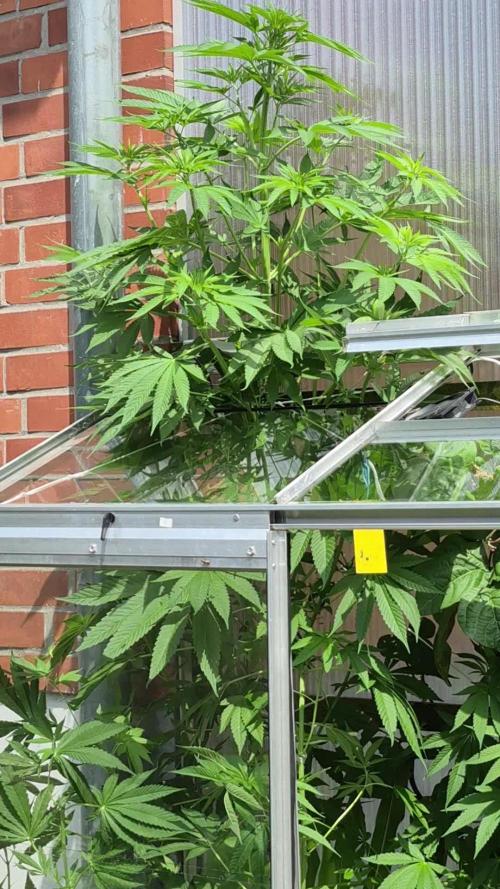
Die Pflanze wächst und wächst...
Ich musste jetzt mal ein paar Äste und Blätter abnehmen, damit wieder etwas Luft in das Gewächshaus kommt.
Likes
6
Share


@eldruida_lamota
Follow
Que pasa familia, vamos con la tercera semana de vida de estas Lemonpaya feminizada de fastbuds.
Vamos al lío, de las 3 plantas, me quedaré con 2 por espacio, siempre pongo alguna semilla de más por si no abriese alguna por no perder ese hueco del indoor.
También se trasplantaron a su maceta definitiva, en este caso de 7 litros.
El ph se controla en 6.2 , la temperatura la tenemos entre 20/22 grados y la humedad ronda el 50%.
Hasta aquí todo, Buenos humos 💨💨💨
Likes
17
Share


@Agrocann
Follow
After ~ 30 hours the small root emerged from the seed.
After 48 hours the small root become big and I managed to brake the tip of the root.
After 48 hours from seedling the new baby has emerged :)

Likes
Comments
Share

@DogDoctorOfficial
Follow
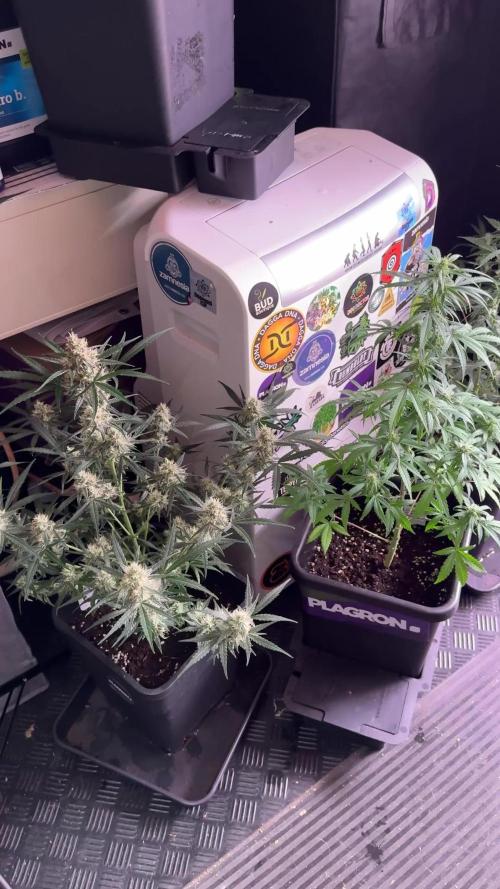
🌿 Frosted Guava Auto by Zamnesia | Pheno B | Week 8 (Flower Week 5) 🌿
Small Plant. Big Personality. And Now… A Little Less Green.
There are plants that follow the plan.
And then there are plants that write their own story.
Frosted Guava Pheno B has been doing the latter from the beginning.
She has never been the biggest plant in the room. She hasn't chased height, hasn't tried to dominate the canopy, and hasn't demanded much intervention.
Instead, she has quietly developed her own personality.
Compact.
Elegant.
Beautifully structured.
And increasingly covered in flowers.
Now, entering her fifth week of flowering, she has reached another important moment in her journey.
This week, she joined the group receiving a selective flowering defoliation.
Not because she was struggling.
Not because she was unhealthy.
And certainly not because every plant needs to be defoliated.
Quite the opposite.
She was looking fantastic.
But after looking carefully at her structure, her development, and the way light and airflow were moving through the plant, I felt that removing some unnecessary foliage was the right decision.
So we went in.
We cleaned her up.
And now we're going to see what she does with the extra space.
🌸 Week 5 Flower – Her Own Story
Frosted Guava Pheno B is currently around 108 cm tall.
That still makes her one of the more compact plants in the room.
But honestly?
I don't think she cares.
😂
She has found her own architecture and she's sticking with it.
The flowers continue developing beautifully, with increasingly visible frost and those characteristic white pistils reaching outward from the developing buds.
Her foliage has remained lush and healthy, with that beautiful deep green colour we've been following since the beginning.
The plant looks comfortable.
The flowers are developing.
And now we're starting to see more definition between the different parts of the plant.
This is exactly the kind of moment where stepping back and looking at the whole plant becomes important.
Because sometimes the question isn't:
"Can I remove this leaf?"
The better question is:
"Does this leaf still have a useful job to do here?"
And that's where this week's defoliation came from.
✂️ Defoliation – What We Actually Did
This wasn't a complete strip.
It wasn't a race to make the plant look naked.
And it wasn't about removing leaves simply because they were large.
The approach was selective.
I removed most of the fan leaves carrying their own petioles, particularly where they were contributing to unnecessary shading or creating congestion inside the plant.
I also cleaned the lower and interior portions of the plant where some flowering sites were positioned so far below the productive canopy that I didn't expect them to develop into meaningful flowers.
Those areas are what I would consider the true bottoms on a compact plant like Frosted Guava.
And that's an important distinction.
Because this plant is small.
Her lower sites really are lower.
Even with the Lumiflora under-canopy lighting helping bring additional photons into the lower canopy, the primary productive zone of the plant remains higher up.
So rather than allowing the plant to spend resources maintaining foliage and very low sites that are unlikely to contribute much, I decided to clean those areas selectively.
But I didn't remove everything.
Some lower flowering sites remain.
I want to see what they can actually do.
That's part of the experiment.
🌿 What Is Defoliation?
For anyone new to growing:
Defoliation is the intentional removal of selected leaves from a plant to alter the structure of the canopy.
The goal isn't simply to have fewer leaves.
The goal is to create a better balance between:
light penetration + airflow + canopy structure + productive flowering sites.
Leaves are extremely valuable.
They're the plant's solar panels.
So removing them should never be treated as something automatically beneficial.
Every leaf removed is a piece of photosynthetic machinery removed.
That's why I don't approach defoliation as:
"Flower started. Time to strip the plant."
Instead, I look at the plant in front of me.
Is the canopy becoming too dense?
Are leaves heavily shading developing flowers?
Are there congested areas where airflow is poor?
Are there leaves that are doing very little because they're buried underneath several layers of foliage?
Are there lower sites that realistically have very little opportunity to develop?
If the answer is yes, then selective defoliation can make sense.
If the answer is no...
Leave the plant alone.
🚫 What Defoliation Is NOT
This is probably even more important.
Defoliation is not:
❌ Removing every fan leaf
❌ Trying to expose every single flower to direct light
❌ A substitute for good plant structure
❌ A guaranteed way to increase yield
❌ Something every plant needs at the same time
❌ An excuse to strip a healthy plant simply because you can
The objective isn't to make the plant look clean for the sake of appearance.
The objective is to improve the functional canopy.
And there's a big difference.
A beautiful green leaf isn't a problem simply because it's a beautiful green leaf.
If it's healthy, receiving light, contributing to photosynthesis and helping the plant, I have no reason to remove it.
But when the canopy becomes crowded and certain leaves are contributing more obstruction than productivity, that's when selective removal becomes interesting.
✂️ How I Approach It
My approach is simple:
I observe first.
I don't start with a predetermined number of leaves that must disappear.
I start by looking at the structure.
Then I work from the outside toward the interior and from the top toward the lower portions, looking for unnecessary congestion.
Leaves that are heavily shading productive flowering sites can be candidates.
Leaves buried underneath several other leaves can be candidates.
Leaves occupying congested interior areas can be candidates.
And lower growth that is so far beneath the productive canopy that it has little realistic opportunity to develop can also be considered.
But I always keep the plant's overall health in mind.
The goal is balance, not maximum removal.
That's why Pheno B still has plenty of green.
She's not naked.
She's simply better organized.
💡 The Under-Canopy Question
This is particularly interesting with Frosted Guava Pheno B because we're running Lumiflora under-canopy lighting.
Someone might reasonably ask:
"If you have light underneath, why remove the lower growth?"
That's a very fair question.
And the answer is that under-canopy lighting doesn't magically make every lower flower equal to a top flower.
On a compact plant like this, the very lowest parts are still extremely low relative to the main productive canopy.
The under-canopy lighting is helping reinforce the lower and interior areas, but I still want to observe where the plant naturally allocates its energy.
That's why I deliberately left some lower flowering sites behind.
I don't want to assume.
I want to watch.
Will those remaining lower sites develop?
Will the extra light make a noticeable difference?
Will the upper flowers continue dominating?
That's exactly the kind of question this project allows us to explore.
And the harvest will eventually give us the answer.
☀️ More Light Where It Matters
The Future of Grow Black Series LED continues providing the primary light from above, with approximately 1,000 PPFD across the upper canopy.
Frosted Guava may be compact, but she certainly isn't short on photons.
She's been sitting underneath that light throughout flowering, converting those photons into leaves, flowers, structure and now increasingly visible resin.
And with the selective defoliation, we're changing how some of those photons move through her architecture.
We're not creating more photons.
We're simply trying to make better use of the ones already available.
That's the idea.
Don't waste energy chasing light.
Build a canopy where the available light can actually do its job.
❄️ And The Frost Is Getting Serious
The name Frosted Guava continues becoming more appropriate every week.
The flowers are developing beautifully, and the resin production is becoming increasingly visible.
Those white pistils are still everywhere, creating an incredible contrast against the deep green foliage.
And underneath all those hairs, the flowers are beginning to gain more structure and density.
This is the stage where I love looking at the same plant from week to week.
Because the change isn't always dramatic overnight.
But compare the plant to where she was a few weeks ago...
And suddenly you realize:
She's building.
She's filling out.
She's gaining flower volume.
She's becoming increasingly defined.
She's becoming Frosted Guava.
🌿 Small Plant. Big Character.
I've said this about her before, but this week makes it even more obvious.
Frosted Guava Pheno B doesn't need to be the tallest plant in the room.
She's already found something more interesting.
Character.
Her sister Pheno A has followed a different path.
And that's one of the beautiful things about running phenotypes together.
Same genetics.
Same room.
Same light.
Same nutrition.
Same philosophy.
Different personalities.
Pheno B has chosen to remain compact and elegant.
And now, as flowering progresses, she's showing us exactly what that compact structure can become.
💧 Nutrition & Hand Watering
We're continuing with hand watering throughout the room.
Current feeding remains centered around the Plagron flowering program:
Terra Bloom — 2.2 ml/L
Power Buds — 1 ml/L
Sugar Royal — 1 ml/L
Green Sensation — 1 ml/L
Lemon Kick — 0.03 ml/L
Current recorded parameters are around:
pH: 6.0
EC: approximately 2.0 mS/cm
Solution temperature: 21°C
Root-zone temperature: 21°C
Watering: approximately 1.2 L per 24 hours
Hand watering has also given me another opportunity to observe this plant closely.
Every time I water her, I get another chance to look at the flowers, inspect the leaves, check the structure and notice those tiny changes that are easy to miss when everything is automated.
It takes more work.
But it also brings you closer to the plants.
And sometimes that's where the best observations happen.
🌡️ Environment
The room continues running under stable conditions:
Day temperature: 29°C
Night temperature: 25°C
Relative humidity: approximately 72%
Solution temperature: 21°C
Root-zone temperature: 21°C
CO₂: approximately 639 ppm
With the canopy becoming increasingly dense, airflow and humidity management become even more important.
That's another reason selective defoliation can be useful at this stage.
Not because leaves are inherently bad.
But because a dense flowering canopy can create small pockets where air movement becomes less effective.
Opening selected areas gives the room a little more breathing space.
And that's particularly valuable as the flowers continue developing.
🔭 Looking Ahead
Now comes the interesting part.
We've changed the architecture.
We've removed some unnecessary foliage.
We've cleaned the lower sections.
We've opened some of the interior.
And now...
we wait and observe.
I want to see how quickly she responds.
I want to see how the flowers develop with the improved canopy structure.
I want to see what happens to those lower sites we deliberately left behind.
And most importantly, I want to see how Frosted Guava Pheno B continues writing her own story.
Because she's already made one thing very clear:
She doesn't need to follow anybody else's timetable.
❤️ Final Thoughts – Let Her Shine
Frosted Guava Pheno B has been one of those plants that quietly earns your attention.
She didn't arrive in the room demanding the spotlight.
She didn't become the tallest.
She didn't become the biggest.
She simply kept growing.
And week after week, she became more beautiful.
Now she's entered another chapter.
A little less foliage.
A little more breathing room.
A little more light moving through the canopy.
And plenty of flowers left behind to show us what she's capable of.
The important thing about this week's defoliation isn't how many leaves we removed.
It's why we removed them.
Because good cultivation isn't about following a recipe blindly.
It's about looking at the plant in front of you and making decisions based on what she's actually telling you.
And Frosted Guava Pheno B was telling me:
"I'm ready."
So we listened.
Now let's see what she does.
A huge thank you once again to Zamnesia for these beautiful genetics, Plagron for the nutrition, Future of Grow for the Black Series lighting, Lumiflora for helping illuminate the lower canopy, TrolMaster for environmental control and of course to everyone following this 8×8 Adventure on GrowDiaries.
Every week, every phenotype tells us something different.
And that's exactly why I love this project.
Until next week...
Let her shine. She has earned her spotlight. ✨🌿❄️
Growers love and happy growing! 🌱💚
Likes
2
Share


@Shefman93
Follow
Plant has doubled in size and has budlets growing all over. Top dressed at day 14 yo keep up with food and also did a heavy defoliation and removal of branches that was not to the top of canopy. Almost out of room vertically but I have faith I will squeak out this grow without light stress. No bugs, no wierd growth this run.

Likes
9
Share


@TheCultivator_Karlos
Follow
I’m facing with heat and humidity so high…and i am ordering dehumidifier on the wayyy🚗can’t wait for my babies let me hear your voice so comment me please anything you want

Likes
24
Share


@Canadian
Follow
Day 57 the plant has been growing healthy and fine but she is a slow grower .
I know that most of the growers in this platform and elsewhere do defoliate and trim down all the lower branches of the plant so that the plant can concentrate all its energy into the higher bigger and better buds .and I do not do this because I drive the plants very hard with nutrients and those lower branches with small buds always give me the first sign of anything going wrong with her and that's why I leave them as a buffer zone to protect the bigger buds and that way I can push her as hard as I want.
not much to mention about her thank you for reading I will continue to update have a happy grow

Likes
5
Share


@SirBudAlotts
Follow
She performs and performed exceptionally well!
First try with HST and she did not disappoint 👏 🙌.
An absolute joy 😊 ..
From start to finish she was not a mission at all..

Likes
Comments
Share



Likes
4
Share


@Albargina
Follow
Empiezo la semana 2 muy emocionado, pues las pequeñas ya estan todas fuera y preciosas, hoy despues de 7 dias desde que germinamos vamos a trasplantar las pequeñas a unas macetitas del mismo material que las que teniamos antes pero esta vez son de 1L, muy importante, cunado trasplanto siempre entierro el tallo hasta los cotiledones, de esta ,manera la damos mas fuerza a la planta.
La sorpresa viene cuandro al transplantar me quedo enamorado del sistema radicular de las Blue Elite Indica, pues parece que tengan pelo!😂
Estoy muy contento ya que estan todas muy sanas y con mucha fuerza para seguir adelante.

Processing
Likes
5
Share


@HERBBEANZ
Follow
Okay so I came up with this incredible method of training that I call "root lining".I figured this out years ago in outdoor season when a deer bulldozed through my med crop and knocked a sweet lady over, that started it all. The plant was completely parallel to the ground with roots growing out of the nodes where contact was made with the ground at the stock. Long story short she ended up being a 14 footer with 6 foot whale dicks! That gave me this little idea that's been non stop producing top quality fat resinous buds. This method increases nutrient uptake and makes a huge difference in quality and size. I essentially main line, really low to the ground, until the stock makes full contact with the ground. I then gently rub the downside of the stock with the back of a butter knife to speed things up and break down the chlorophyll layer. Then I add remo roots gel (see all videos). I then add a sprinkle of coco on top just to barely cover the stock (dont add to thick of a layer as this might "choke" and rot the stock) and mist that spot 2-3 times a day. 3 days later and boom! She'll be pumping out roots and go into full beast mode. Give it a try and you'll never go back!