


Likes
Comments
Share


@420DeepGrow
Follow
Gracias al equipo de Zamnesia, Marshydro, XpertNutrients y Trolmaster sin ellos esto no sería posible.
💐🍁MAC 1:
La MAC 1 es una variedad muy solicitada, creada originalmente por Capulator y distribuida solamente a determinados criadores y cultivadores. ¡Pero ahora ya puedes cultivar este tesoro en casa y disfrutar de sus cogollos densos, jugosos y potentes!
Gracias a su densa copa y vigor, la MAC 1 es una opción ideal para LST, poda apical y otras técnicas de entrenamiento (incluido el lollipopping). Cuando entra en floración, las plantas de la MAC 1 se estiran bastante y una vez maduras pueden alcanzar una altura de 160cm en interior y más de 180cm en exterior. De media, las plantas feminizadas de la MAC 1 necesitan un total de 9-10 semanas para terminar la floración, momento en el que estarán repletas de cogollos índica pequeños y compactos.
🌻🚀 Consigue aqui tus semillas:
https://www.zamnesia.es/10906-zamnesia-seeds-mac-1.html
Código Descuento 20%: ZAMMIGD2023
💡TS-3000 + TS-1000: se usaran dos de las lámparas de la serie TS de Marshydro, para cubrir todas las necesidades de las plantas durante el ciclo de cultivo, uso las dos lámparas en floracion para llegar a toda la carpa de 1.50 x 1.50 x 1.80.
https://marshydro.eu/products/mars-hydro-ts-3000-led-grow-light/
🏠 : Marshydro 1.50 x 1.50 x 1.80, carpa 100% estanca con ventanas laterales para llegar a todos los lugares durante el grow
https://marshydro.eu/products/diy-150x150x200cm-grow-tent-kit
🌬️💨 Marshydro 6inch + filtro carbon para evitar olores indeseables.
https://marshydro.eu/products/ifresh-smart-6inch-filter-kits/
💻 Trolmaster Tent-X TCS-1 como controlador de luz, optimiza tu cultivo con la última tecnología del mercado, desde donde puedes controlar todos los parametros.
https://www.trolmaster.com/Products/Details/TCS-1
🍣🍦🌴 Xpert Nutrients es una empresa especializada en la producción y comercialización de fertilizantes líquidos y tierras, que garantizan excelentes cosechas y un crecimiento activo para sus plantas durante todas las fases de cultivo.
Consigue aqui tus Nutrientes:
https://xpertnutrients.com/es/shop/
📆 Semana 2:
Fantástica semana, estan creciendo de una forma espectacular gracias a la ayuda de @marshydro, @xpertnutrients y @trolmaster.
Se puede apreciar un tercer nudo aunque la aplicación de cola de caballo y el estar en una maceta pequeña ha influido en el tamaño de ella, se recupera muy rápido 😁.
Esta semana espero trasplantar a la maceta definitiva.
Potencia de la lámpara: 50%

Likes
28
Share


@Pogosvk
Follow
ESTA SEMANA SOLO AGUA PARA IR METIENDO FLORACION Y LAS BACTERIAS DE BACTOHEMP PARA LA KRITICAL GB Y BACTOMATIK PARA LAS QUICK ONE MEDIA PASTILLA Y COJIDO UN TAMAÑO MUY BUENO DADO Q SON PLANTAS DE POCO TAMAÑO Y QUE E COMETIDO FALLOS DE PRINCIPIANTE EN LAS PRIMERAS SEMANAS DADO QUE EN MI CASA TENGO PROBLEMAS DE INTIMIDAD JAJAJAJ
HICE UN POQUITO DE DEFOLIACION Y POR PERRO Y NO MOVER LAS PLANTAS CORTE UNA RAMA LLENA DE FLORES DE LA PARTE DE ABAJO DE LA QUICK ONE 2 Q ESTABA CRECIENDO QUE FLIPAS ESPERO Q NO SE JODA....
EL DIA 26 YA Q VEO Q EMPIEZA A FLORECER E METIDO LAS BACTERIAS Y UN POCO DE CRECIMIENTO YA QUE LLEVABAN UNA SEMANA A AGUA DE MOMENTO VA TODO BIEN O ESO CREO POR QUE ES MI PRIMER GROW EJJEJE
dia 28 ultimo dia de la 4 semana preparando la floracion y creo q mi pequeño armario de 60x60x140 se me queda pequeño jajajjaja


Likes
14
Share
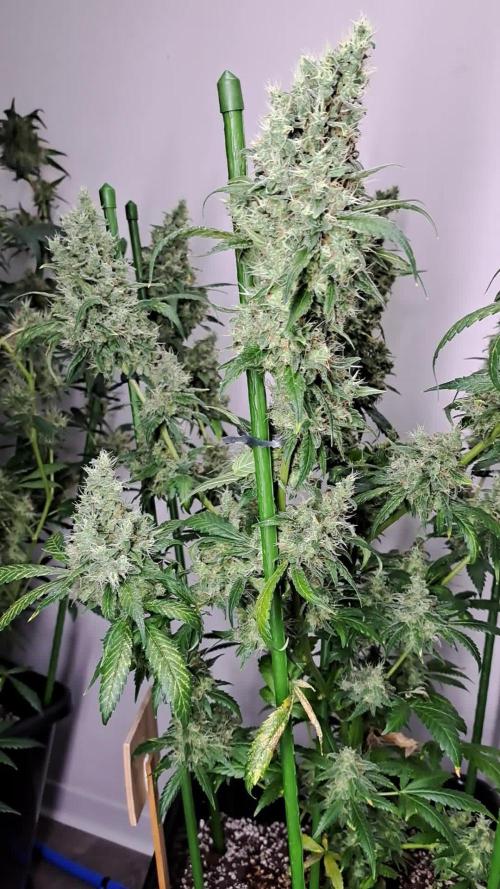

@Oyziphar
Follow
Plants are ripening. In one to two weeks they are solid and rockhard 💪💪💪 Harvest time in sight 😎👊
A : 56 days bloom 🌼
2x Pheno#1 A
2x Pheno#2 A
B : 51 days bloom 🌼
1x Pheno#5 B
1x Pheno#1 B
2x Pheno#2 B
Likes
17
Share


@HIAZ_urbanbudfarmer
Follow
Going well, have trained her horizontally! Now she has the desired shape & I will let her grow upwards to create some nice Cola's.

Likes
79
Share


@Roberts
Follow
Alien OG Autoflower grew great, and finished beautifully. Strong smell, frosty, and sticky. She grew great under the Mars Hydro FC4800 light. It was my first time using the Gen 1:11 nutrients. I really like them, and will use again till I run out or get more. She will hang dry 24 hours then be put into the cannatrol for a 8 day cycle. I got a great grow to try it out the first time. 🤞. Thank you Aeque Genetics, Gen1:11, and Mars Hydro. 🤜🤛🌱🌱🌱
Thank you grow diaries community for the 👇likes👇, follows, comments, and subscriptions on my YouTube channel👇. ❄️🌱🍻
Happy Growing 🌱🌱🌱
https://youtube.com/channel/UCAhN7yRzWLpcaRHhMIQ7X4g

Likes
23
Share
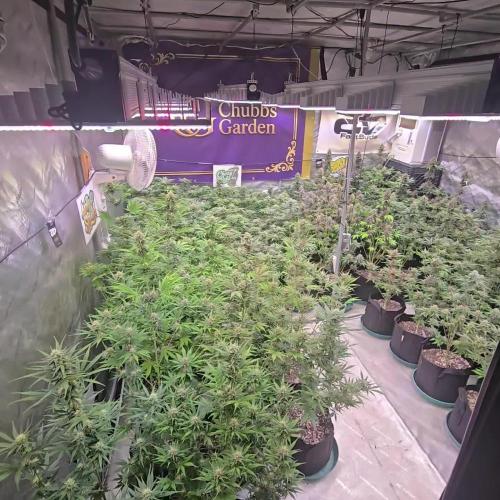

@Chubbs
Follow
Weekly up date on these gorgeous ladies. They are stacked and swelling amazing going through the flower stage. I really couldn't be happier with how these have grown as it's an easy one not being to temperamental. I've kept the ppm/ec around the same between 900-1100ppms. Still feeding 16oz daily and all in all Happy Growing.
Likes
1
Share
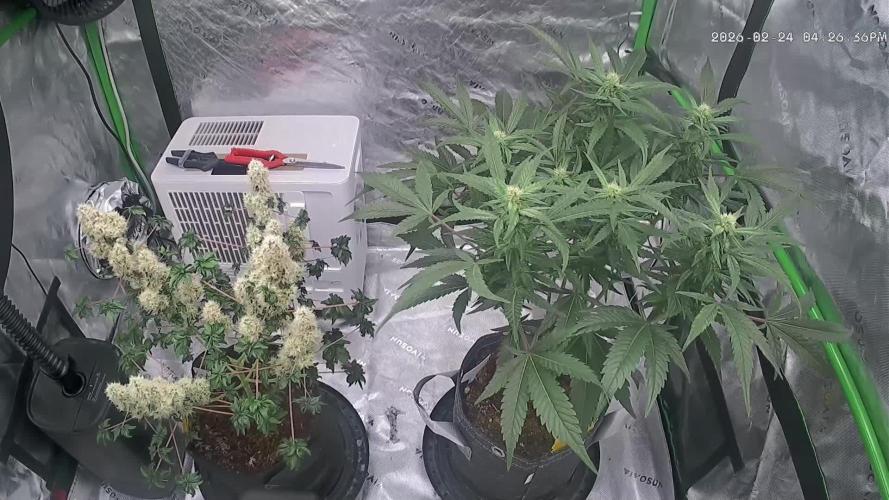

@Captain_Greenout
Follow
[2026-Feb-27 | Day 63] - She's really developing fast now, and drinking a ton. The estimated 60 day flowering time might just be accurate after all. she seems happy for the most part, and not showing any signs of overfeeding yet.
I've increased lighting to 38 DLI at present, and aside from a small amount of bleaching/burning on a couple of fan leaves, the rest are putting out lots of trichomes to compensate. I will try to increase lighting a little more in the coming week to help maximize energy production and bud development, then start to taper off after that as buds start to ripen.
If she continues to develop this fast, she might just end up getting harvested around the same time as the blueberry bastard nearby.
Likes
4
Share
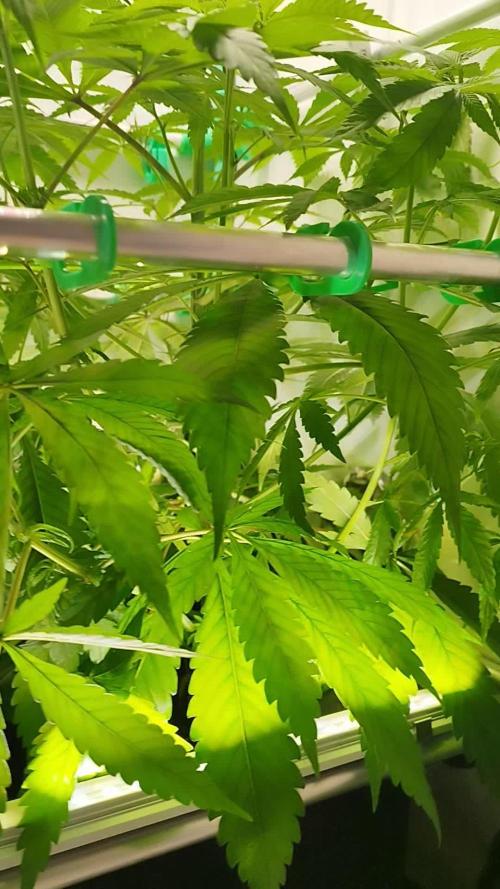

@Jabbamo
Follow
_______________________________________________________
Mi. 25.2.
- Pflanzenhöhe 73cm
- Toplight rechts (schräg) runter
- 3,0 Liter pro Pflanze gegossen (ca. 200 ml Drain)
0,8 ml / Liter "Calmag"
1,0 ml / Liter "Bio Grow"
2,0 ml / Liter "Bio Bloom"
1,0 ml / Liter "Top Max"
Ph 6,5 / 507 qqm
_______________________________________________________
Fr. 27.2.
- Pflanzenhöhe 78cm
- Toplight links (schräg) runter
- Abstand Mitte 40cm
_______________________________________________________
So. 1.3.
- Pflanzenhöhe 82cm
- Toplight gerade (40cm Abstand)
- Abluft Leistung auf Stufe 5 erhöht
- 3,0 Liter pro Pflanze gegossen (ca. 100 ml Drain)
0,8 ml / Liter "Calmag"
1,0 ml / Liter "Bio Grow"
2,0 ml / Liter "Bio Bloom"
1,0 ml / Liter "Top Max"
Ph 6,5 / 505 qqm
_______________________________________________________

Likes
2
Share

@Growfather1
Follow
Hello everyone.
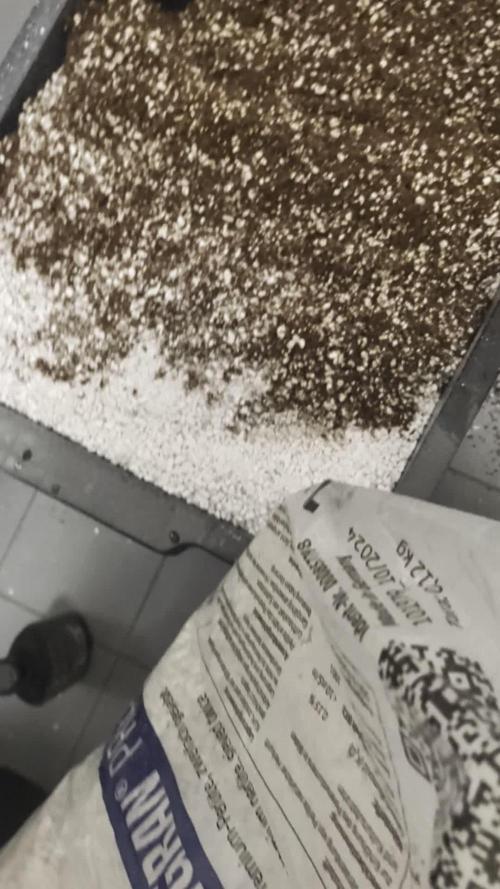
Starting week 5. I just finished transplanting three plants, including my Tangerine Dream by Zamnesia Seeds.
I mixed 60 percent coco with 40 percent perlite and topped it off with pure coco so the perlite stays put instead of trying to float away like a balloon at the roots!
I flushed her with 12 liter water ph 5.8 then with 4 liter of feeding 2ml canna coco a&b and 4ml Rhizotonic per liter water.
I’m placing them back in the tent now. Humidity is above 60 percent, nighttime temperatures are over 20 degrees Celsius, and daytime reaches 26 degrees Celsius. The lights are on 24/7.
I recently defoliated and topped her, so she needs some time to settle. Let's see how she looks next week.
Thank you for stopping by and have a nice day.
Best regards,
Growfather.
Likes
26
Share

@yan402
Follow
14.11.2025
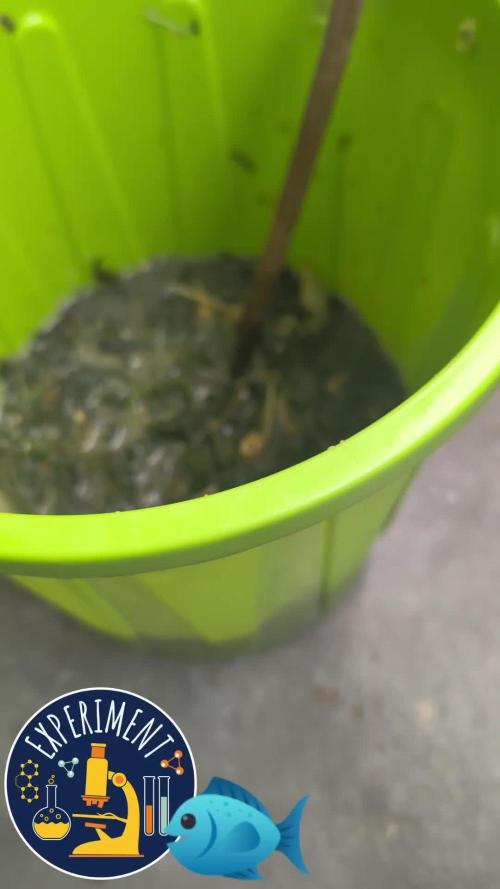
Was going to close the diary today but as it doesn't smell anymore I decided to close the diary this coming Tuesday, smell shifted from chemical fish ammonia to cooked fish with the additional Citric acid I sprayed in, rest in video 📸
🐟💀 FERMAKOR: The Dorade Incident – Spontaneous Batch Log
(Because the fish came with guts, and I don’t waste potential)
---
🍽️ How It Started
I ordered two big Dorades for dinner. Didn’t bother ticking the “cleaned” box.
They arrived whole — full organs, eyes staring, one of them with a stomach packed with broken seashells (free CaCO₃ bonus).
So instead of complaining, I just said:
“Alright, fine. Dinner first. Hydrolysis later.”
---
⚗️ Phase 1 — The Gut Start (Day 1)
Material: 160 g of fresh guts straight from the fish.
KOH: 20 g (yep, strong ratio, I know).
Water: ~250 mL warm.
Dissolved KOH → poured over → stirred → left to liquefy.
Within minutes it warmed up and foamed; by evening it was already turning into that deep brown, oil-slick mix I like.
---
Phase 2 — The Rest Goes In (Day 2)
After dinner, all the remaining parts go into the same container:
Heads, bones, fins, skin — roughly 500–600 g.
Add another 30–35 g KOH and ~0.5 L water.
Stir and let it digest for a week or two or three, until smooth.
The seashells stay in — they buffer the pH and slowly release Ca and trace minerals.
---
⚖️ Phase 3 — Neutralization
Once the mix settles, I’ll neutralize down to pH 6.2–6.4 using phosphoric acid.
Target ~40 mL of 59 % H₃PO₄ for the whole thing.
Then strain through cheesecloth / pillowcase (no coffee filter — that’s only for exports 😎).
---
Storage
Bottled in brown flip-top German beer bottles.
Label:
“FERMAKOR FISH BASE – DORADE INCIDENT – 2025-11-06”
Shake before use, store dark.
---
🌿 Application
10 mL per 30 L barrel mid-flower as amino + micro boost.
Clean N-P-Ca + enzymes, zero smell, instant uptake.
Likes
26
Share


@Ilovekush17
Follow
GMOs are still packing more on. Getting real thick. Its day 73 today. Gonna give it a few more days. I also forgot to add that i been using blackstrap molasses the last 3 weeks. 1 tablespoon per gallon in 2 of the 3 gallons.
So my schedule for the 3 GMOs worked like this. All mixed in 3 gallons
Day 1: 6ml of Fish Shit, PH 6.5
Day 2: None
Day 3: 6 ml of Fish Shit. 1.8 ml of Mammoth P, PH 6.5
Day 4: None
Day 5: 6 ml Fish Shit, 2 tablespoons Molasses, PH 6.5
Day 6:None
REPEAT
Likes
16
Share


@Sublyme_ness
Follow
at the start of the week i was dealimg with bugs.. i gor rid of them with tje sesame and cinnamon.. cinnamon WILL burn your leaves if you leave too much on; they turn black and die... that being said im a sadist, so i then gave them a drink of stewed cucumber skins... they havent died..
ps.. forgot i gave them a distilled water feed at 2.3 early on in the week.. thought it wasn't happy. shall revert to 2 after a late week half strength 1/4 top 3/4 bottom feed at a slightly higher ph for the root dem
Buds started to get legit this week..starting to get a frosty look now but decided to trim some of the shoddy bud sites regardless of being 20 days into flowering..
im away for a week. hopefully the setup will cope.. lights set to allow for movement.. fans will be on minimal.. and removed all other bug attracting tings. its been fun
Likes
25
Share


@Kakui
Follow
Flower4, día 4 desde que comenzó la floración, se regaron con 1.8 EC y pH 6.2, con los nutrientes puestos en la descripción, no me tienen muy convencido pero creo que van mejorando.
Flower9, defoliación y riego, está vez se agregó al riego Bud Candy, el cual seguirá siendo usado en toda la fase de floración.
Flower13, riego 2.0 EC y pH 6.2, se agregó Voodoo Juice, Tarantula y Piranha al agua de riego.

Likes
14
Share


@MG2009
Follow
03/20/2022
Biscotti Skunk looking lovely first four pictures.next up is lemon OG,followed by the three Grape Skunk girls middle one is my favorite so far (Middle in height)
I did a light feeding of fish and seaweed, a little extra something just incase they get hungry in final weeks.

Likes
20
Share


@reirrac1
Follow
Flower are still thickening up with each passing day. Trichomes are starting to look more and more milky, but there are still a considerable amount of clear trichomes. The densest trichome coverage I’ve seen on a plant in person. Ever cola had filled up nicely and it gives off the scent of grape candy and rubber. Some minor N and cal def symptoms here and there, but I’m feeding heavy, flushing, and giving microbes regularly so I’m not concerned at all. Overall the plant is very healthy. Feed pH 6.6, EC TBD.


Likes
10
Share


@RandomStreetMerchant
Follow
This is start of week 5, the girls have been grooving even with a heat wave hitting and a few days of 90 degrees or 32c
Thinking this week they will start to turn some what a red purple hue, they have also stopped stretching.
Starting to produce lots of trichomes and the smells are starting to come out, atm the middle one smells like Vicks lol, and the left one is smelling gas.
Will keep you updated with all the important info growmies until next time ✌️ 09/04/23

Likes
14
Share


@Unkraut
Follow
great strain, it has an awesome scent and taste, average yield but really great buds! it was a pleasure to grow it, i harvested a bit early but due to bad weather and high RH i had to harvest
Likes
2
Share


@CalGonJim
Follow
MONDAY 5/19 12AM Doing great, have to separate Cory and Trevor this week. 1130 pm
.🚨🚨🚨.STONED GENIE order..I got one broken 64 dollar land the 12 inch 19 dollar black double percolator was TOTAL GARBAGE!!!!! it had a fake 10 star review.... at least I got 2 4 inch down stems for 117 .....complete WASTE of money, should have just thrown the money in the garbage.......... so pissed....🚨🚨🚨
5/24 3 pm new light lots of godamned work why do I do this to myself??? 330pm what. a nightmare, I put the extra red and blue 20 cheap lights with this monster light, nice balance of color with the blue. I love this light, Mars Hydro...why do you do this to me. Totally worth it, best lights on the planet, so far.
5/25 230am NEW DESIGN NIGHT. USB FANS -- Small usb fans at the end of ducting are effective intake air filters. HOWEVER the fans are cumbersome the wires are a pan in the as. design 2 part clip gravity 4 inch wire. twists thru fan . ONE tlong up the tube for balance other to CLIP on to duct.
3am clips are good new designs emerging. fasting all night so I can work and get new ideas. fans are a go, we have a new design using clips, no external wires. the load bearing usb wire is safe, not load bearing to the connections just the cable, its perfect..
Mexicans and jew & white trash cops and their arzonz fed family and judges have been committing unimaginable property and financial crimes against me. If I am suicided. it was them. I am ready to die, unafraid of every one of you fucking bastard traitors and I mean it.
Likes
17
Share


