




Likes
35
Share


@Cannabeast40
Follow
Welcome back to yet another short update☺️
Transplanted and filled with tender care and love 🤗 A bit colder temperatures then inside the veg tent , but I’m not worried at all🤩
Videos show the process, hope you enjoy 💯💚
See you next week🤩
------------------------------------------------------------------------------------------
Light source:
Medicgrow SpectrumX
880W LED
Build in PPFD
4 controllable spectrums V1, F1, VS, FS
Visit https://medicgrow.com/ for more informaton.
Light measurement:
Apogee MQ-610 & Apogee DLI-600.
Fertiliser:
Organics Nutrients
https://www.organicsnutrients.com/en/
Green Buzz Nutrients
Discount Code: GD42025
Grants 25% with a minimum Order value at 75 Euro.
https://greenbuzzliquids.com/en/shop/

Likes
20
Share


@WeEdandGrowLover
Follow
The lil Big Bud is still growing really well😎.
I started to add master grower massive bloom from hydropassion since day 45.(0.3gr/L).
She really starts to smell good😊.

Likes
34
Share


@Le_Duc_Du_Bud
Follow
Salutations amis cultivateurs 🍁🌿
Aujourd'hui on débute la 5 semaines de floraison 🗓️
La pure Skunk et magnifique, je lui donne 2 litres de nutriments tous les 2 jours, aucun problème de carence.
On voit maintenant des belle banane ce formé, odeur et incroyable ❤️🍁
Merci Kannabia variétés fantastiques 💥
Merci xpertnutrients impressionnant 💥

Likes
3
Share


@CaliJ
Follow
Récolte de 70 grammes sec pour une plante en pot de 7 litres, magnifique. Royal Critical auto à refaire

Processing
Likes
7
Share


@Mr_nugs_lover_David
Follow
Looking very good, this ladies are breaking the shield within 48hs since planted as I was expecting, let's see how my beautiful queens develop on this "little run" on a 2x4! Growing with a tsl2000 by mars hydro! 👨🌾💯✌️ Stay tuned guys.
Likes
13
Share

@Organic473
Follow
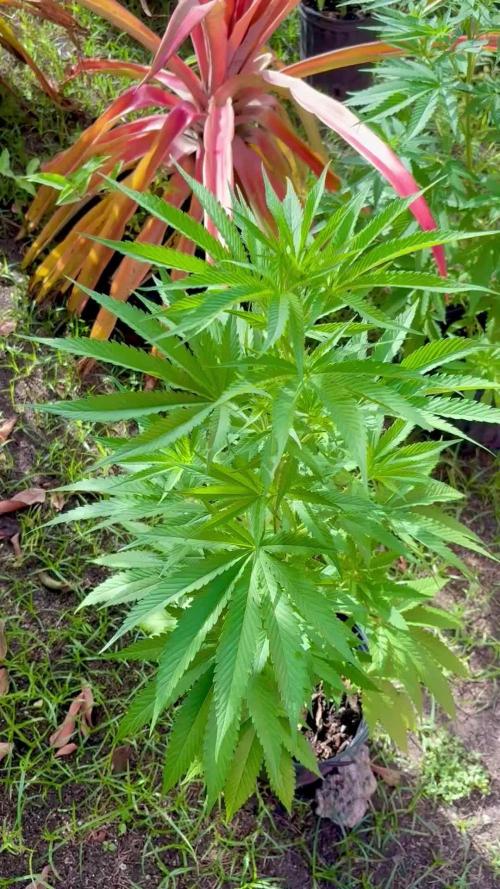
Loving their structure…she will soon be transferred to a 5 gallon pot.


Likes
6
Share


@Thckaos
Follow
Pongo a germinar 3 semillas en una servilleta durante 48 horas. Paralelamente estabilizó lana de roca en un PH 5,5 durante 24 horas.
Se pone las tres semillas en la lana de roca y estas en sistema mypot hidroponico. Se alimenta con 20l.

Likes
35
Share


@farahweed
Follow
From this week, I started giving plant growth fertilizer with a low concentration.
But I will do this only once this week. The plants have almost three leaves and are growing without any problems.
On the 14th day, I did topping and FIMing the plant (Barney's and Anesia).
I will also give you a video on how to do this technique


Likes
14
Share


@nonick123
Follow
Día 8 (20/01) Subo a DLI 20
Elimino la cúpula de humedad y oriento el ventilador para que les llegue una ligera brisa que fortalezca el tallo
Hago un riego de unos 30 ml en la maceta de 1 Litro
Día 9 (21/01) Se ve saludable y se empiezan a formar las primeras hojas reales!
Día 10 (22/01) Desarrollo esperado para el día 10
Día 11 (23/01) Sigue desarrollándose bien. Las raíces se asoman la parte inferior de la maceta
Riego con 100 ml H2O RO
Día 12 (24/01) Buen aspecto y desarrollo
Día 13 (25/01) Riego con 50 ml H2O RO
Día 14 (26/01) Hoy procedemos a trasplantar a las chicas a su maceta definitiva de 6 litros con la siguiente mezcla:
Substrato PRO-MIX HP BACILLUS + MYCORRHIZAE
BIOTABS estrategia de cultivo de "Solo agregar agua", donde todos los nutrientes están premezclados en la tierra:
SILICIUM FLASH 5 g/L de sustrato
STARTREX 5 g/L de sustrato
DOLOMITA 2 g/L de sustrato (ya que riego con H2O RO)
MYCOTREX 5 g en el agujero del trasplante
BIOTABS: 1 unidad a 10 cm de profundidad
Se llena la maceta con las manos (limpias) y rompiendo los trozos de sustrato más gruesos, para que el sustrato esté aireado y esponjoso, sin presionar
Se coloca una maceta vacía para que quede la forma perfecta de la maceta donde están las plántulas
Se llena hasta arriba, y se hace un 1er riego muy lentamente con 0,75 Litros de H20 Osmosis RO
Después de que el sustrato haya compactado y bajado de nivel (algo normal), se vuelve a rellenar con la mezcla de sustrato + nutrientes de BIOTABS hasta el borde
Se saca la plántula de su maceta actual (bonitas raíces 😍) y se coloca en la maceta final
Se vuelve a regar 0,5 L H2O Osmosis (RO) y se coloca en el armario ajustando la luz a DLI 25
El riego total es de 1,25 Litros H2O Osmosis (RO)
A ver como reacciona al trasplante!
Se aplica BoomBoom Spray 5 ml/L para ayudar con el estrés del trasplante!
Khalifa Genetics - https://khalifagenetics.com/product/lemon-blanco-v3/
💦 BioTabs 15% DISCOUNT code "GDBT420" biotabs.nl/en/shop/ @biotabs_official
🌱Substrate PRO-MIX HP BACILLUS + MYCORRHIZAE @promixmitch @promixgrowers_unfiltered
💡2 x Mars Hydro FC1500 EVO Led Grow Light (2024 NEW FC 1500-EVO Samsung LM301H 150W LED) - https://marshydro.eu/products/fc1500-evo-led-grow-lights/ - https://www.amazon.de/dp/B0CSSGN5D8?ref=myi_title_dp

Likes
18
Share


@Grower_Of_Persia
Follow
week intel:
its time to harvest some of plants the ones that is mature enough. indica dominant plants will done first always so we should harvest them first
because my base nutrients and one of boosters was salt based, i'll do flushing this week to get some relieve to plants in the last days
stresses :
flushing
Drought stress via watering only one time with flushing this week
feeding:
day 1 : i flushed them with Advanced Nutrients Flawless finish and adjusted ph
day 3 : no more feeding from now on
day 5 : no more feeding from now on
guide of the week :
i harvest in 2 parts : first i harvest top of the branches and will let the lower buds to ripe another week then ill harvest the second wave.
indica dominant plants will get done 1 or 2 weeks sooner than sativa dominant plants that will often takes more than 8 weeks so be aware to harvest them sooner.
my dry and cure style is this:
3 days of hanging upside down to get water activity lower to around 0.6 in 50% humidity and 26 C temp (i know its a little high but we are in a hot summer right now and i cant get it lower even with air conditioner) and then after 3 days of drying i remove leaves and stalks, trim buds and move them to jar for the rest of their life :D . and in the first 4 days of curing i open the jar door and let hem get some fresh air in the jar for about 5 minutes and close the jar door again, after 4 days of curing like that buds are smokable but they will get better as they getting cured about 1 month.
im happy as hell with this harvest :D.
Likes
37
Share


@NewbieLearner
Follow
This was a beautiful strain to grow. With her flowers getting big towards the end of harvest as well as the purple colours! I would definitely recommend that you try grow this strain. The buds are super dense and very well formed. An absolute treat to smoke and look at.


Likes
8
Share


@cnkice
Follow
Finally finished building my DWC tank this week. So far everything is working great.
Per the week 1 grow question suggestion I have added a water transfer pump to top off the 27-gallon reservoir.
2 seeds died during germination, will add another 2.

Likes
36
Share


@MadeInGermany
Follow
Hey everyone :-).
Today the flowering day is 28 since the time change to 12/12 h.
Both phenotypes continue to develop great 😍.
The flowers are getting thicker and thicker and are already heavily coated with resin 👌.
This week you will get 1 g of GHSC Powder Feeding Bio Bloom per gram of substrate, that should last until the end :-).
It was poured 3 times this week per pot with 1.2 l.
The tent was cleaned and the humidifier refilled :-).
Otherwise there is nothing to report this week and I wish you a lot of fun with the update 🙏🏻.
Stay healthy and let it grow 😄
You can buy this Strain at :
https://sweetseeds.es/de/sweet-skunk-f1-fast-version/
Type:
Sweet Skunk F1 Fast Version
☝️🏼
Genetics:
Sweet Skunk Auto (SWS34)
X
Early Skunk
👍
Vega lamp:
2 x Todogrow Led
Quantum Board 100 W
💡
Bloom Lamp :
2 x Todogrow Led
Cxb 3590 COB 3500 K 205W
💡💡☝️🏼
Soil :
Canna Coco Professional +
☝️🏼
Fertilizer:
Green House Powder Feeding
☝️🏼🌱
Water:
Osmosis water mixed with normal water (24 hours stale that the chlorine evaporates) to 0.2 EC. Add Cal / Mag to 0.4 Ec Ph with Organic Ph - to 5.5 - 5.8 .

Likes
29
Share


@TheGourmetWeed
Follow
Day 36
11/6 - General:
She keeps going up, and you can see more and more pistils everywhere.
Techniques:
Made some adjustments to the tallest and longest arms, tried to level everything and did what I thing is my last defoliation. Maybe another one a few days before I chop her down. But at this stage, I think we're done.
Feeding:
After last night feeding, she had a lot of water in the bottom of the pot, so I emptied it and today there's no food for her. One day abstinence, just a little mist before lights on.
Smell:
#3 still win the show and is 9 days behind. But she has a smell, very light/mild.
Temps and RH recorded today:
29c - 20c
88% - 41%
Pests and plagues:
Nothing to record, just took all out of the grow and cleaned the floor with a proper disinfectant I have home, and washed all plates from the pots, as I do every week.
Day 37
12/6 - General:
Accentuated growth of pistils overnight. She's growing steady and healthy, looks happy in the given conditions. With this warm days, I'm struggling again with higher temps and low RH. Even with an humidifier using 7 liters of water every 24h, the light 3/4 from the top of the tent, the extractor on - regulated for 25c max and full on.. I hope it doesn't get any worse s if this levels keeps or lowers, I'll definitely have problems in the grow.
Techniques:
Another few leaves were gone. She really likes to grow leaves and can't imagine her without lst and defoliation.
Feeding:
Gave her the week 5 schedule, according to biobizz schedule. Tomorrow will do the same and maybe from monday will start going over, depending on her response.
Smell:
With the development of all the pistils, she gained a new aroma. Very pleasant but still very 'green'. #3 still ahead on smell
Temps and RH recorded today:
30c - 18c
69% - 30%
Pests and plagues:
Nothing to record.
Day 38
13/6 - General:
She keeps stretching in a good rhythm! A lot of leaf growth lately, that made me broke my own promise of not defoliate her more. Well I did it again. Regarding the heating and RH problems, after a full morning and afternoon working inside the grow and outside, they're finally solved now. I didn't have the thermo-hygrometer in the right place, and made some adjustments in the setup that brought me back to desired values. Having the fans in the right place and speed and the same with extractor made all difference.
Techniques:
Another few leaves were gone. A handful. Move all the the plant around a little, to get more light and air around.
Feeding:
Gave her the week 6 schedule, according to biobizz schedule. Tomorrow will do the same and maybe from monday will start going over, depending on her response.
Smell:
With the development of all the pistils, she gained a new aroma. Very pleasant but still very 'green'. #3 still ahead on smell
Temps and RH recorded today:
30c - 18c
63% - 28%
Pests and plagues:
Nothing to record.
Day 39
14/6 - General:
Good general growth. Going to stop with the training, to let them go up. It's getting tight in there. Pistils are whiter and longer, lots of new foliage. On the temperatures, still not happy with overall temps, that can easily go up to 30c. And that's way too much. Happy with RH values at the moment, but not so much with temps. Start to think I have a nice couple plants to make a SCRoG, and will eventually consider it during the week, while the plant grows. May be a nice way to support the weight if needed.
Techniques:
Bent the tallest arms around, like an arch, to even it out. More foliage removed. I feel I could just strip off her fan leaves. It's dangerously addictive to cut this leaves and to try to make the best light-surface possible.
Feeding:
Reacting well to the nutes given so far. I've increased slowly the amounts, to avoid overfeeding and other related problems. Gave her the "week 6 biobizz schedule", with a 1ml/L extra of Top-Max. Tomorrow will do the same and maybe from Wednesday/Thursday will start going over, depending on her response.
Smell:
Nothing new since yesterday.
Temps and RH recorded today:
30c - 18c
87% - 30%
Pests and plagues:
Nothing to record.
Day 40
15/6 - General:
She's getting taller. Today didn't touch the plant at all, been just around the tent trying still to get the perfect environment, which is not being that easy task to accomplish. Got it going very well, steady temp and RH (25 celsius, 45%) until the afternoon when the high temperatures outside thrown the temperature values to the 30c for some minutes. She looks healthy, developing properly, and seems to react well to higher dosages of nutes.
Techniques:
Just checked everything out. Nothing done in this area.
Feeding:
The medium looks good enough to skip a day on the feeding. The pot feels heavy enough to wait at least 12+ hours.
Smell:
With the increase of the heat and RH going down, the smell got a bit more intense, but again, still all very light on the nose right now. Still behind #3
Temps and RH recorded today:
30c - 19c
71% - 36%
Pests and plagues:
Nothing to record.
Day 41
16/6 - General:
Pistils are growing evidently. The whole plant under the light looks very well. After 48h without watering, today was time to feed her again. Funny was expecting to be drinking more than a liter a day. It's the second day I don't touch the plants, and will keep this way until tomorrow, last day of this week.
Techniques:
Just checked everything out. Nothing done in this area.
Feeding:
Week 7 Biobizz Feeding schedule (as above).
Smell:
Nothing new to add. Still behind #3
Temps and RH recorded today:
29c - 21c
60% - 38%
Pests and plagues:
Nothing to record.
Day 42
17/6 - General:
Another day without touching her. I'll let her do her thing for a week and then I'll see what to do. Right now she looks so nice I won't touch. Overall she's getting bigger and pistils are getting bigger by the day, it's full flowering now. Finally get a hold on temps and RH, which makes me super happy. Today I'll delay the feeding for 12h, fastening her for 36h.
Techniques:
Just checked everything out. Nothing done in this area.
Feeding:
Nothing to record.
Smell:
Getting more intense, but still very subtle. Still behind #3
Temps and RH recorded today:
28c - 21c
64% - 36%
Pests and plagues:
Nothing to record.
Likes
28
Share


Likes
39
Share


@MyStery21
Follow
No nutrients burn, no problems at all. She's getting bigger every day. but i think its going to take more than 12 weeks ;(
Likes
8
Share

@NoHarry
Follow
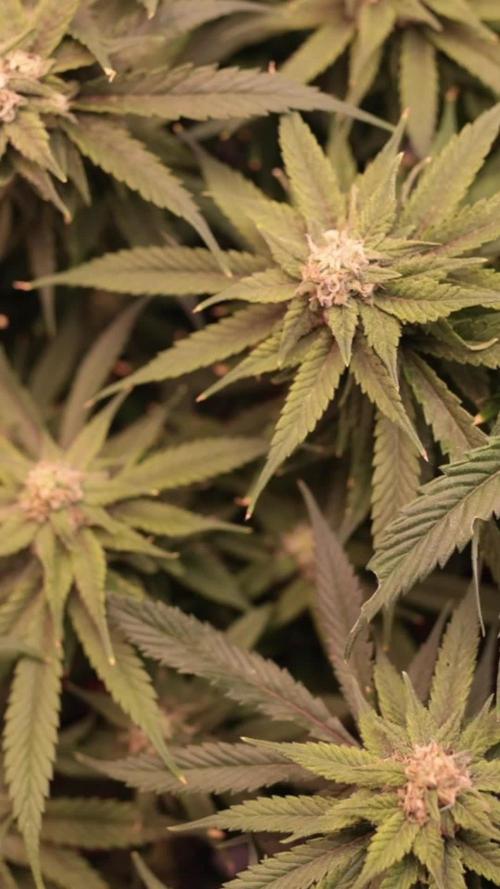
Past the halfway point of flowering! Everything is going according to plan, and the buds are really starting to bulk up. I’ve bumped up the PK a bit to support the weight. Still haven't pulled the trigger on cranking the lights to full power for the whole day yet -playing it safe for now. Overall, we’re just sitting tight and letting her do her thing. Hands off! :)

Likes
7
Share


@MrLahey
Follow
A pleasure to grow. I’ll have to grow her again in the future to grow her without deficiencies to really push the genetics maximum and compare the difference. Once I get a second tent I’ll definitely put a BBM in that tent.

Likes
1
Share

@burnbae420
Follow
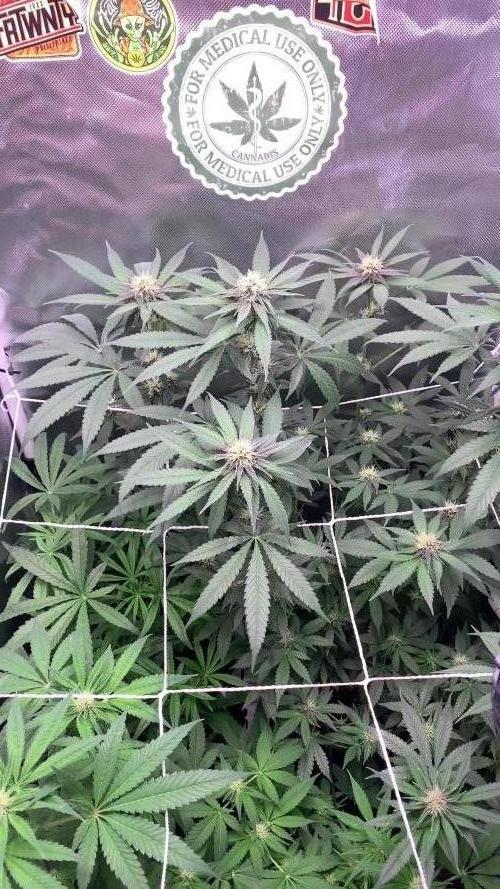
*🌸 Flip / Day 1 of 12/12: Sept 12, 2026
* 📅 Today: Oct 3, 2026
* 🔢 Day 22 from flip — Week 4, Day 1
* 🌱 Week 1: Sept 12–18
* 🌱 Week 2: Sept 19–25
* 🌱 Week 3: Sept 26–Oct 2
* 🌸 Week 4 starts: Oct 3 📌📌
* CP #1: bushier/taller; I did the major strip/defoliation at Day 21 (Oct 2).
* CP #2: smaller, but developing visible bud sites.
* 1× Purple Afghan
* Smaller/leafier and developing more slowly; still showing mostly pistils compared with the CPs.

