Check the winners The Grow Awards 2026 🏆
Likes
Comments
Share
Likes
28
Share
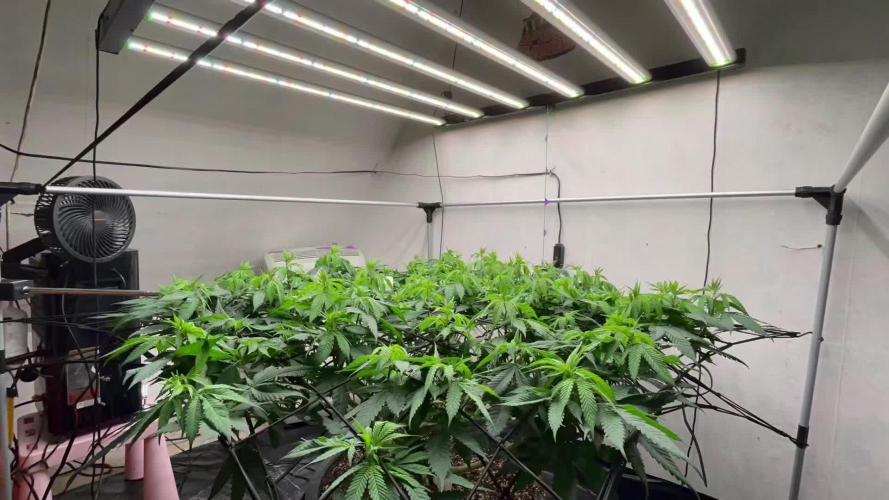
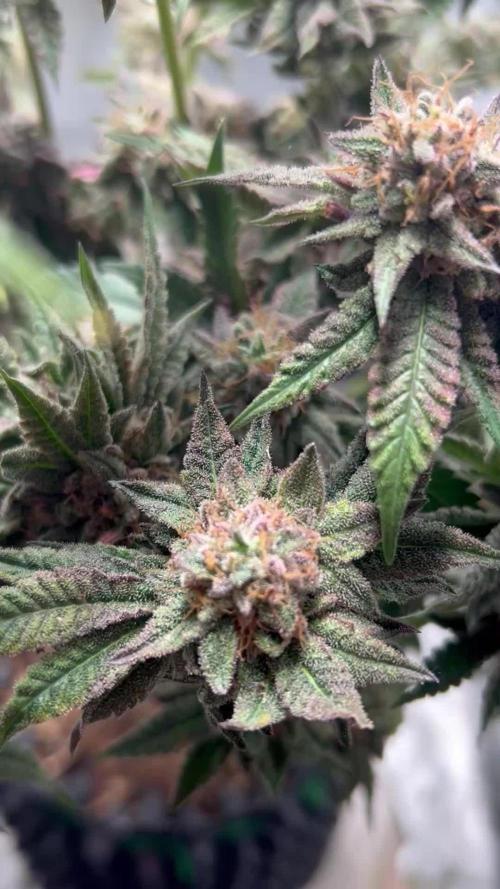
Bonjour à tous les padawans et maîtres jedis Je n'effectue pas de rempotage je décide que le pot de 11 litres sera son pot définitif car la plante mesure déjà 1 mètre et je n'ai malheureusement pas la place pour géré des plantes qui dépasse 150 centimètres Si j'effectue un rempotage dans un pot plus grand elle les dépassera allègrement Cette plante fera toute sa floraison sur mon balcon (elle y est depuis 15 jours) ce sera donc une véritable culture hybride Elle aura effectué la quasi totalité de sa croissance en chambre de culture
Likes
12
Share
The girl was hit with that intense light and just wants to go slow and steady right now . She was slowed in the beginning by the lights being to close . But now the girl is going good and starting to finally make its way towards being a big producing girl . The seedstockers genetics are very good and I'm happy to be running them strains ...cheers canna family ..
Likes
18
Share
We got the grow tent setup this week. Pretty impressed with the quality. At this point the 2nd plant had died and it was down to just the 2.I was out and about at Canadian tire and decided to check there plant foods. I found some future harvest easy grow +. I decided to buy it so I had some food before I managed to get out to a local store I was recommended to. I gave them the aggressive feeding of 1tbsp per gallon. I gave about 3L between the 2 plants. The next couple of days were amazing. They had grown more in 2-3 days then they had there entire life! I had the dimmer at 50% and figured that was fine for now. It was about 18 inches away. At this point I started realizing I was having a bit of humidity problems so I ordered a humidifier and that’s another week away. I got the humidity up to 45 after that picture and it has been between 43-45 since.
Likes
4
Share
Week 2 the girls are loving life and showing signs of flower
Likes
16
Share
@MUZ_Farms
Follow
Starting to produce THC and the top colas pistils are becoming Amber
Likes
2
Share
@Natrona
Follow
Tropicanna Poison XL Auto W4F2 7/20-26 The hot weather returned with humidity and days of scattered thunderstorms. I fertilized once this week with I49 and top dressed with worm castings since I saw some yellow leaves near the bottom. Thankfully with all the rain we’ve had this month she doesn’t show any deficiencies or bud or root rot. I fertilized with I49 grow 1 tbsp/gal & 2 tbsp I49 Flower. With the extreme heat and rain, my auto Tropicanna Poison XL Auto had a huge stretch a full 7 inches this week and now at 22 inches tall. There are no nutrient deficiencies and demonstrates resistance to fungal diseases. Thank you all for your continued support and encouragement. Your likes and comments motivate me to keep sharing my journey. Let’s continue to learn to grow together! Stay green, growers love 💚🌿 💫Natrona💫
Likes
29
Share
@nonick123
Follow
Día 6 (29/04) Spray solo agua el top del sustrato. DLI 13 Día 7 (30/04) Spray solo agua el top del sustrato. DLI 13 Día 8 (01/05) Spray solo agua el top del sustrato. Subo a DLI 17 Día 9 (02/05) Elimino la cúpula casera de humedad y empiezo a regar con 300 ml solo agua Día 10 (03/05) Empiezo a luchar con una ola de calor inesperada para esta época, que me trae temperaturas exteriores de 30 ºC y humedad relativa del 30%... Mantengo la cúpula casera de humedad Día 11 (04/05) Hace muchísimo calor.. 30 °C. A ver como lo llevan Hago un invento casero para aumentar la humedad Día 12 (05/05) Primera alimentación con Aptus! 300 ml H2O + Regulator 0,15 ml/l + CaMg-Boost 0,25 ml/l + Startbooster 0,25 ml/l - pH 6.2 Creo que las plantas se ven un poco pequeñas para tener 12 días... esperando por explosión de crecimiento en los próximos días.... 💦Nutrients by Aptus Holland - www.aptus-holland.com 🌱Substrate PRO-MIX HP BACILLUS + MYCORRHIZAE - www.pthorticulture.com/en/products/pro-mix-hp-biostimulant-plus-mycorrhizae
Likes
9
Share
Another week just passed. I have reduced the main flowering nutrient by 1ml, because I’ve introduced Plagron Green Sensation as an additional flowering nutrient. This thing increases your yield incredibly! If you start looking at bud formations starting this week, you will notice significant changes.
Likes
7
Share
Week 10 - The Plants has shown so much growth within a week those buds are really now starting to form and pack on a scent. I have cut out using the formulex.
Likes
35
Share
Vamos familia que ya actualizamos la cosecha de estas Frosted Guava de Zamnesia. Vaya flores que se han marcado repletas de tricomas, parecen escarcha y las flores se marcan aromas muy tropicales, la verdad que únicos. Es una variedad bastante fácil de cultivar pero al tener un periodo de floración algo más largo, hay que estar pendiente de alimentarlas bien, gracias Agrobeta en mi sala es posible. Temperaturas máximas en 24 y mínimas en 20 y una humedad estable en torno al 36%. Las mantuve 10 semanas pero facilmente si se quedan 11 tampoco estaría mal, yo las vi bien maduras y ya tenía tricomas ambar así que les di matarile. Os comento que tengo un descuento y para que compréis en la web de Zamnesia de un 20%, el código es ZAMMIGD2023 The discount 20% and the code is ZAMMIGD2023 https://www.zamnesia.com/ Agrobeta: https://www.agrobeta.com/agrobetatiendaonline/36-abonos-canamo Mars hydro: Code discount: EL420 https://www.mars-hydro.com/ Espero que disfruteis este diario, buenos humos 💨💨💨
Likes
4
Share
Likes
47
Share
Sep 7: what a great plant. Totally love how it’s going. Flowers keep getting fatter and heavier and she’ll be done before the end of September. Sep 8: there a tree root sticking up a bit in my yard which means the plant can be tilted toward the late afternoon sun. This is helpful because the sun is getting really low to the horizon already and we’re down to 13 h of daylight. Plus now direct sun is done in my yard by about 6 pm. Indirect light is okay but you really want direct sun at all times. Videos shows use of 730 nm far red light at dusk. Just a few seconds is all it takes to set the plant into dark mode two hours faster. It’s a bloom booster because you get two bonus hours of darkness or a 26 h day. Very effective but don’t miss a night and you have to adjust the timing each night. When starting this on July 20 Civil Twilight, as listed on timeanddate.com for my location, was at 9:45 and today it was at 8:40 pm. The red light at dusk is a highly recommended trick if you have daily access to your outdoor plants. Also works indoors, of course, and on autos too. Also I think it helps ‘stabilize’ the plant by emphatically putting it into dark mode, and therefore less susceptible to stray light to cause a hermie. Have not had hermie problems in four seasons of using the red light so that is my only ‘proof’ but it is true so far, even with taking flash pics before using the red light. Sep 9: getting heavier and now more branches are weighed down and slumping against the scrog net. Nice problem to have, I know, and without the scrog net some of the branches would be breaking off now. She’s now officially too big and too top heavy to keep moving around the yard in pursuit of direct sun. Sun is much lower to horizon now and direct sun hours are dropping too. Sep 10: getting close to done and getting very top heavy. Awesome. Sep 12: raining today. Has been cool last few nights and some purple colour is just starting to show. I don’t want to overdo fertilizer near the end, but I decided she is showing K deficiency. I’m out of malted barley but I still have potassium silicate, so I used that and some cal-mag. I’m avoiding kelp and molasses or using more P at this late stage because that can make the dried bud hard to burn and that really sucks. So, potassium silicate and cal-mag it is. The potassium silicate raises the pH and it takes about the same volume of vinegar to get the pH down. A good does of acetate is likely good for the bugs in the soil too. Then a squirt of Dr Bronners soap as a surfactant and that also supplies some biodegradable carbon for the bugs in the soil. Seems to work overall and is cheap. Apologies for the large number of pics, but she’s so photogenic. 😎 #seedsman420growoff #seedsmanseeds
Likes
11
Share
3 seeds from barneys farm : glue gelato auto. Diary : Day 1: I dug a pit and cleaned my dirt with metal grid and a wheelbarrow & Installed the greenhouse. Day 2 : I rotated my dirt and added universal soil. 4 x 70l to area of 6m2. I also planted seeds in universal soil without sprouting first. Day 3 : I gave water and checked for sprouts. Bought moist meter and dripping hose. Installed those and making the greenhouse more moisty now. Feeling : Verry happy for my first time. Lots to learn.. . Excited
Likes
32
Share
@EBPbyEVD
Follow
"Hey hey! Let's start with some exciting news, on the calendar it's day 91 of flowering. Phenotype number 1 finally matured on day 84 of flowering, I safely harvested, dried, and collected seeds, totaling approximately 1800 (no, I didn't count them). The goal was achieved, I gained a tremendous amount of experience, and now at least I have understanding. Lastly, I need to conduct a germination test to be sure. I already put a handful of seeds in a shot glass, next week I'll update on how it goes. Now, onto the not-so-great news, zelebob, aka number 3, refuses to give me its
Likes
7
Share
4ta semana de floración, muy buenos resultados hasta el momento obtenidos! Espero que les guste!
Likes
10
Share
Voltage, also known as electric pressure, electric tension, or (electric) potential difference, is the difference in electric potential between two points. In a static electric field, it corresponds to the work needed per unit of charge to move a test charge between the two points. In the International System of Units (SI), the derived unit for voltage is named volt. The voltage between points can be caused by the build-up of electric charge (e.g., a capacitor), and from an electromotive force (e.g., electromagnetic induction in generators, inductors, and transformers). On a macroscopic scale, a potential difference can be caused by electrochemical processes (e.g., cells and batteries), the pressure-induced piezoelectric effect, and the thermoelectric effect. Since it is the difference in electric potential, it is a physical scalar quantity. A voltmeter can be used to measure the voltage between two points in a system. Often a common reference potential such as the ground of the system is used as one of the points. A voltage can represent either a source of energy or the loss, dissipation, or storage of energy. Dropping the temps will slightly raise the humidity, air holds less % water the colder it is. Lights on 25-35rh% the same water content will spike to 50rh% + at night just by dropping the temps. At night all the juice photosynthesis has been storing up is mashed and mixed up to make all the goodies we need for bud, water is used to transport all these things everywhere, like little solvent transport devices, once a nutrient/protein has been delivered to destination the plant needs to get rid of all this excess water molecules it was using to transport. The only solution at night is to spit it back out into the air at night. During the peak of flower, this can catch a grower unaware, with a 4x4 full tent it can be a challenge to control all that moisture exhaust overnight especially if you're really pushing the limits. We live in a water world, above or below, our misconception is we live on dry land, we don't live in less watery conditions than above or below. We fit into a very narrow band of moisture that just so happens to be full of lots of air and everything else required for life. Got my first full whiff of the smell of purple lemonade, always surprises me how accurately the smell fits names, the dominant terpenes in the Purple Lemonade weed strain are carene, linalool, limonene, and myrcene. Carene gives this strain its sweet, citrus flavor and some woody notes, whereas the linalool I recognize so well from Granddaddy Purp. Myrcene has been shown to have sedative qualities while bringing musky, earthy elements to the flavor profile. Trichome production started to ramp up, and the plant that grew taller/closer to UV showed noticeably thicker coatings. The taller plant shows slight yellowing of lower leaves, and the smaller plant is green and lush but the buds are slightly less progressed, interesting. I super-cropped the main stem of the tall one just over a week ago (clean). I expected it to be the one slightly behind in development. The plant has roughly 10-15% "Total resources" that it keeps in case emergencies arise. Reserves if you will. My rationale behind breaking anything goes hand in hand with slowing things down as production is lost due to the time it takes to repair damage. I recall watching a YouTube video, where a curly hair gentleman would super crop in a manner to damage but not disrupt using a twisting method, using fingers and thumbs placing them close together one goes clockwise other counter clock this varies a lot depending on the thickness of stem but what you wait for is a tiny snap, it may take several rolls to weaken if walls are tough I found. No snapping or bending of the stem, you want just to fracture it but not puncture this way the xylem and phloem channels remain flowing,the damage is repaired almost instantly and the 10-15% is dispatched with very little repair time. Everything in the general vicinity of the stress will now grow stronger so as to prevent further similar damage. This is why I had expected the tall one to lag behind in development once I had cropped it but low and behold it worked and the tall one has slightly more developed buds. The effects of birdsong on plant life may at first glance be far-fetched. Nigh on ten years ago an article appeared in Nexus Magazine on the discovery or invention of a method of growing plants using bird sounds. Christopher Bird and Peter Tompkins describe the development of Dan Carlson’s Sonic Bloom in their book The Secret Life of Plants. Many others have, it seems, recognized the role of birdsong in the growth of plants, and influenced or directly helped Carlson to develop his invention. Dan Carlson’s desire to see that no one need be hungry through shortage of food sought to understand the optimum growth of plants. He discovered that plants also feed from ‘the top down’ as well as the roots. Underneath all leaves are pores called stomata which open to take in nutrients and moisture from the air. Carlson’s observation that the more bird life there is on the farm, the more abundant is plant life, has been echoed by farmers throughout history, except in modern times. Where there is little bird life, plants are stunted, and dwarfed. Nature has the birds sing at dawn and dusk, which dilates the stomata, and so feeds the plants. One can immediately see the importance of trees. The development of Sonic Bloom was to create birdsong, which is played to the plants, while a foliar nutrient is sprayed onto the plants at the same time as they are being stimulated by the sound, to enhance their growth. This method produced fantastic results in the amount of abundantly nutritious produce from one plant, often in poor soils and in drought conditions. Carlson showed that the breathing leaves of plants are the source of the nutrient intake for growth. This of course is also true for humans—the breath is food. We shall discourse on this on another occasion. Plants transfer nutrients to the soil via this breathing, and Carlson showed that his plants improved the soil and helped earthworms proliferate. The secret of Sonic Bloom was the development of the music of the same frequency as the dawn chorus of the birds. With the help of a Minneapolis music teacher, Michael Holtz, a cassette was prepared. It seems that both birds and plants found Indian melodies called ragas delightfully suitable. This is actually quite profound, although the American farmers, especially women, who had to endure this music whilst it was played to the plants, found it irritating. Holtz found the “Spring” movement of Vivaldi’s The Four Seasons appropriate and concludes: “I realized that Vivaldi, in his day, must have known all about birdsong, which he tried to imitate in his long violin passages. Holtz, it is related by the authors Bird and Tompkins, also realized that the violin music dominant in “Spring” reflected Johann Sebastian Bach’s violin sonatas broadcast by the Ottawa University researchers to a wheat field, which had obtained remarkable crops with 66 percent greater yield than average, with larger and heavier seeds. Accordingly, Holtz selected Bach’s E-major concerto for violin for inclusion on the tape. “I chose that particular concerto,” explained Holtz, “because it has many repetitions but varying notes. Bach was such a musical genius he could change his harmonic rhythm at nearly every other beat, with his chords going from E to B to G-sharp and so on, whereas Vivaldi would frequently keep to one chord for as long as four measures. That is why Bach is considered the greatest composer that ever lived. I chose Bach’s string concerto, rather than his more popular organ music, because the timbre of the violin, and its harmonic structure, is far richer than that of the organ. Birdsong has long been loved but also studied with reference to the musical scale and harmonics. As Holtz deepened his study he said, “I began to feel that God had created the birds for more than just freely flying about and warbling. Their very singing must somehow be intimately linked to the mysteries of seed germination and plant growth. The spring season down on the farms is much more silent than ever before. DDT killed off many birds and others never seem to have taken their place. Who knows what magical effect a bird like the wood thrush might have on its environment, singing three separate notes all at the same time, warbling two of them and sustaining the others. Tree and bird life are essential to Earth's existence, which Carlson, Holtz, and others have shown, but indeed others see and feel. “Plants”, says Steiner, “can only be understood when considered in connection with all that is circling, weaving, and living around them. In spring and autumn, when swallows produce vibrations as they flock in a body of air, causing currents with their wing beats, these and birdsong, have a powerful effect on the flowering and fruiting of plants. Remove the winged creatures, Steiner warns, and there would be stunting of vegetation. Nothing more needs to be added here. It has been said that you cannot hurt the humblest creature or disturb the smallest pebble without your action having a reaction upon something else...You cannot think of an evil thought, no matter how private, without it having an effect upon somebody else. Whatsoever you do in life sets up some form of resonance. When I say the morning chorus of the birds awakens the earth I mean that the characteristic song of the birds sets in motion a series of vibrations which react upon other forms of life. Remember, the soil of the earth is full of living microorganisms. The plants are also living organisms. You, yourselves, are living organisms. Now, this is the beauty and wonder of it all—when one aspect of nature has been moved into a state of resonance it immediately relays its vibrational motion to something else. So when I say the dawn chorus awakens the earth I literally mean what I say. I do not suggest that the earth would come to a standstill without the bird song, but I do mean that life on earth would be sluggish and ineffectual without that first instigating outburst of vibrational power poured forth at just the right pitch and tone to set off a chain effect. I know some of you will say, what happens in those parts of the world where there are no birds? Well, what does happen? Very little, I assure you. The hot deserts and the polar regions where there are few, if any, birds are not renowned for their wonders of nature. It is as though they are asleep. Nothing grows, few things live. Little resonates and there is a great stillness over everything. You see, that outburst of sound just before dawn is like the little lever that works the bigger lever which turns the wheel which moves the machine…and so on. Never underestimate small things. Animals are blessed with instantaneous and unthought-out wisdom. They are in direct contact with God and they act and live as though they are fully aware of it. Men are also in contact with God, but most of them act as though they have never heard of God because they are largely veiled from their divine center by their own thinking minds of which they are so proud.
Likes
1
Share
Likes
53
Share
Greetings, fellow cultivators! Week 5 unfurls like a verdant tapestry, and my Blackberry Auto continues to astonish with her relentless growth and burgeoning beauty. Join me in this chapter of botanical marvels, where every leaf and bud tells a tale of meticulous care and burgeoning potential. Unstoppable Growth and Insatiable Thirst: Blackberry Auto's growth knows no bounds as she reaches for the heavens, drinking voraciously from the AutoPot Aquavalve. The rhythm of her growth is like a symphony, each day bringing new heights and newfound vigor. It's a testament to her vitality and the nurturing environment she thrives in. Enormous Leafs and Branch Bending Mastery: The foliage has evolved into a canopy of gigantic leaves, each a masterpiece of photosynthetic prowess. As I continue to bend branches, opening her arms to the light, the canopy becomes a labyrinth of greenery, optimizing light penetration and promoting lateral growth. It's a dance with nature, where every bend is a stroke of horticultural artistry. Budding Beauty Unveiled: As the first week of flowering (or pre-flowering, depending on interpretation) dawns, Blackberry Auto reveals the promise of her floral bounty. The buds, adorned with an intricate structure, are a sight to behold – a precursor to the botanical masterpiece that awaits. It's a moment of anticipation, where each bud holds the potential for a harvest of unparalleled quality. Rapid Evolution and Community Gratitude: With each passing day, Blackberry Auto evolves into a botanical marvel, a testament to the magic of cultivation. A heartfelt thank you to @fastbuds_official for bestowing upon us this exquisite strain, a true gem in the world of cannabis genetics. To Aptus Holland, my main sponsor, your support fuels this green journey and enables the flourishing of Blackberry Auto's potential. Kudos to Grow Diaries for providing the platform to document and share this journey, and a shoutout to the community for the camaraderie and shared passion that enriches our collective cultivation experience. As the saga continues, I invite you to witness the unfolding chapters of Blackberry Auto's odyssey. Together, we cultivate not just plants, but a shared love for the botanical realm. Stay tuned for the forthcoming adventures in this GreenThumb Symphony! Genetics Blackberry Auto @Fast_Buds Food - @aptusholland @aptus_world As always thank you all for stopping by, for the love and for it all , this journey of mine wold just not be the same without you guys, the love and support is very much appreciated and i fell honored and blessed with you all in my life
Likes
5
Share
@Ninjabuds
Follow
Last week, my pound cake auto plant totally exploded with growth! It's insane how much it's changed. I swear it grew several inches overnight. The leaves are this gorgeous shade of green, and the whole thing looks super healthy and happy. I'm seriously so proud of my little plant baby.
Likes
39
Share
She was the Star of the Grow and My Best Yield yet. She was Easy to Grow but I'd suggest taking Care to not overdo the Nutrients. Ran into some early Signs of Burn but She was Fine once I went back to 1/2 Dosage. I Cut the 4 Main Colas to Hang n Clipped the rest at the Buds to Lay Out n Dry. I Barely have Room in My Drying Box. If I've found My Grower's Stride like I Hope I have I'll need to Construct a New Larger Box. By my Calculations She should Dry Out to about 60 Grams. I consider Her My First Successful Grow AND She'll be ready in Time for some Holiday Celebration. Hoping for more to come. Take a Moment to Check My Holiday Video Submission. Happy Growing n Happy Holidays... *Update* After 3 Days of Drying Weight's Down to 75g with a few more Days to Dry.00