


Likes
Comments
Share


Likes
41
Share


@PrairieFrostGrow
Follow
***Week 5 Flower - October 17 to 23, 2020, Days 29 to 35*********
New tent arrived this week. Finally getting into a 4 x 4......room for the girls. They were moved on day 33 to the new tent. Pulled the girls out and their stems are pretty strong so I am not going to stake these girls. Cut them out of the SCROG and will finish without the netting.
The girls look really good overall. Hoping for a swelling week and keeping them happy. The end is getting close and not many feedings left so will be working on getting the last nutrients in to them.
5 watering days this week, 3 were feed days. Microbes and enzymes again this week.
They are really frosty Sweet Seeds......hash making strain👍💪😃
Little more detail.........
Oct 17/20, Day 29
- 4L with Terpinator, Massive @ 3ml, Rezin, Sensi Bloom @ 2ml, B52 @ 1.5ml, CalMag, Liq. Wt @ 1ml
- 1165 ppm and 5.9pH.
- gave them a little Massive this feed to see if they will stretch a little more these last days.
Oct 18/20, Day 30
- 3L watering with Vitathrive and Rezin @ 2ml
- 65ppm and 6.0pH
- feeling like the girls are bit bigger today......could be phycological though as well.😀
- been battling pH issues so I am ignoring the runoff numbers and just giving them lots of water going in.
Oct 19/20, Day 31
- 3L with Enzymes Komplete and Microbial Mass both at 1ml/L
- 100ppm and 5.9pH going in.
- not going to flush them at this point so I am continuing to hit them with microbes.
Oct 20/20, Day 32
- 3L - Terpinator, Rezin, Sensi Bloom, Bid Bud @ 2ml, B52, Cal Mag, Liquid Wt. @ 1.5ml =
- 1000ppm and 5.7pH on this feed.
- full week 5 feed......base nutes upped to 2ml/l
Oct 22/20 -
- 3L - Sensi Bloom, Big Bud @ 2ml/L
- 445ppm and 5.4pH
- wanted to flush them today with a heavy amount of 4.5pH water but life didn't work that way.
Finished off the week at that. Will be watering again first day next week so didn't water that last day this week. They are looking very good.....darker but very good.

Likes
14
Share


@nonick123
Follow
Día 43 (24/02) Riego con 400 ml H2O EC 0,45
Está reaccionando muy bien al Lollipopping y poda de bajos 😁
Día 44 (25/02) Riego con 350 ml H2O EC 0,45
Se empieza a formar los tricomas! 😍
Día 45 (26/02) La altura está sobre 60 cm.
¿Debería haber reducido en 1 una semana el vegetativo? Yo quería plantas pequeñas en SOG 😂
Riego con 400 ml H2O EC 0,45
Elimino algunos brotes de la mitad inferior de la planta que no van a formar buenos cogollos
Día 46 (27/02) Riego con 350 ml H2O EC 0,45
Floración a todo tren formando los erizos 💥💨😁
Día 47 (28/02) Riego con 350 ml H2O EC 0,45
Día 48 (01/03) Riego con 350 ml H2O EC 0,45
Preparación del PK Booster Compost Tea
Día 49 (02/03) Damos el stretch por terminado ya que estamos en día 21 de floración
Lollipopping y defoliación del día 21 para potenciar la floración!
Aplicación de 0,5 Litros de PK Booster Compost Tea de nuestros increíbles amigos de BIOTABS
🚀 Khalifa Genetics - https://khalifagenetics.com/product/lemon-blanco-v3/ @khalifa.genetics
💦 BioTabs 15% DISCOUNT code "GDBT420" biotabs.nl/en/shop/ @biotabs_official
🌱Substrate PRO-MIX HP BACILLUS + MYCORRHIZAE @promixmitch @promixgrowers_unfiltered
💡2 x Mars Hydro FC1500 EVO Led Grow Light (2024 NEW FC 1500-EVO Samsung LM301H 150W LED) - https://marshydro.eu/products/fc1500-evo-led-grow-lights/ - https://www.amazon.de/dp/B0CSSGN5D8?ref=myi_title_dp

Likes
6
Share


@eldruida_lamota
Follow
Que pasa familia, vamos con la sexta semana de floración de estas Papaya sherbet feminizadas de fastbuds.
Vamos al lío, de las 3 plantas, me quede con 2 por espacio, siempre pongo alguna semilla de más por si no abriese alguna por no perder ese hueco del indoor.
También se trasplantaron a su maceta definitiva, en este caso de 7 litros, que el mismo trasplante provocó un shock, que también fue solucionado inmediatamente.
El ph se controla en 6.2 , la temperatura la tenemos entre 20/22 grados y la humedad ronda el 50%.
Las flores empezaron a formarse y progresan a buen ritmo.
Hasta aquí todo, Buenos humos 💨💨💨

Likes
19
Share

@Flavors
Follow
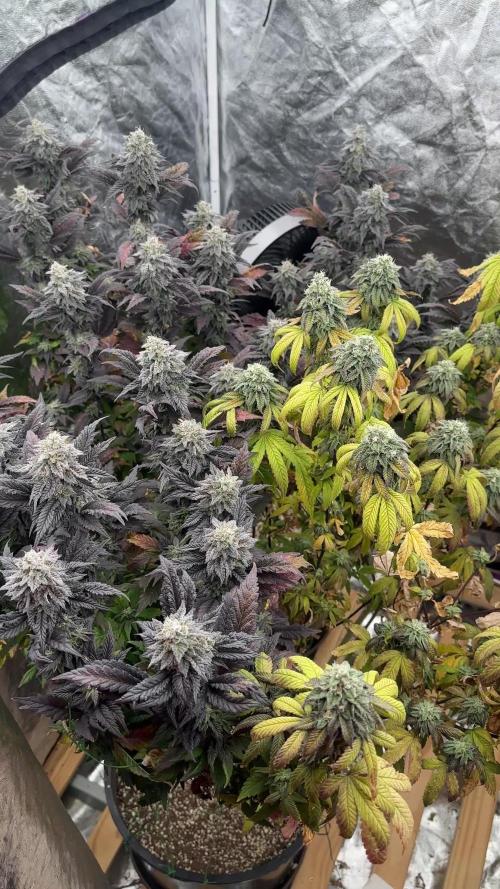
🌱 Week 24 Update (Early Flower / Flip Week)
Everything is looking real good this week 🙌🔥. The flip is officially underway, and both ladies are responding exactly how you want during early flower.Red Hot Violet is stretching just right — not too crazy, but enough to tell she’s gearing up for some thick bud sites 💜🌱. Her structure from veg is paying off now.Amaretto Sour is holding strong, still pushing that lemon-blueberry aroma 🍋

Likes
7
Share


@FlavoursUk
Follow
So, very first run with the new set up which I'm excited for. Currently just getting the environment dialled in. Running a RDWC system, along with LEDs, the recipe for success.
Running some great genetics from seed stockers (purple punch).
Will be back with an update soon, for now enjoy the pictures and videos I upload. FlavoursUK
Day 6. Girls doing well. Roots hit the water so expecting some nice growth now. pH fluxing between 5.9/6.0 which is good as that's where I want it, especially for veg. Cant wait to see what I can do with this. Stay tuned.

Likes
10
Share


@TiRobotProds
Follow
Les plantes sont totalement givré,une forte odeur se dégage de la tente je ne serais dire ce que c'est. Une tige c'est brisé sous l'effet de la chaleur par conséquent changement d'ambiance pour ces dames.
- cette semaine j'ai enlevé les petites têtes qui n'allait pas gonflée pour permettre à la plante de rédiger l'énergie vers les colas principaux. Pour finir une des gorilla sherbet a des teintes rougeâtre violet a voir.
Likes
32
Share


@Compassionate_Gardener
Follow
This cycle was all along a great pleasure. The plants developed MUCH BETTER THAN EXPECTED, the result under the Q6W-Gen. 2 LED lamps from SANlight is FANTASTIC. I have NEVER harvested more from plants of the same strain under HPS and the quality of the bud (trichomes, taste aroma) is MUCH BETTER when grown under LED, my decision is definitely made, I will continue to solemnly grow with LED-lights in the future. I harvested 2250 gram of Shiva Skunk and 3009 gram of Serious Kush, that a total amount of 5259 gram. In relation to the 3000 Watts (incl. dimmed part!) power of the LED-lights thats an AMAZING 1,753 gram per Watt.


Likes
37
Share


@PapaNugs
Follow
Another good week generally speaking. The girls are drinking a lot but nothing crazy. Things are wrapping up here in this tent shortly.
This girl is almost done. She's finishing up over this week and will see how she goes. Some smell from her but not that fat.
Dimmed to 80%
Here are the lights details:
Medic Grow Mini Sun-2 150W LED
Model: MN150-022
Spectrum mode: V1
Efficacy: 2.8 umol/J
Thanks for stopping by!
You can find the light on Grow Diaries:
https://growdiaries.com/grow-lights/medic-grow/mini-sun-2-150-watts
You can find the light on Medic Grow's website:
https://medicgrow.com/


Processing
Likes
19
Share


@Yayayatoure
Follow
She purpling
Day 64 she looks very hungry going to up the dosage
Likes
70
Share


@Fatnastyz
Follow
Day 50 - Day 3 - 9/2
- Moved up to 3/4 strength of Plagron today, no extras, just about 5ml of cal mag. 850ppm @ 5.8ph.
- 9" tall today still
Day 51 - Day 4 - 9/3
- 9.5" tall! woohoo!!
- Gave 4 liters today, wash her out a bit but kept ppm same.
- Runoff coming out about 1000 ppm.
Day 52 - Day 5 - 9/4
- 10" Tall
- Gave another 4 liters today, but added in some power buds for some fun!
Day 53 - Day 6 - 9/5
- 10" tall still
- Accidently added my additives before my bloom today....I mean I'm just using one additive i guess, LOL the Power Buds. Well....I'm not remaking, she can yell at me if she doesn't like it LOL
- Still giving 3/4 strength at about 850 ppm
Day 54 - Day 7 - 9/6
- 10.5"
- Went a little under today, gave only about 710 ppm at 6.1 ph. 4 liters.
- Noticed a couple of tips today, will bring her back down, probably go back to 1/2 strength over the next few feedings.
- Still on 5ml of cal mag.
Day 55 - Day 8 - 9/7
- Lowered her today, Gave about 13ml of bloom, no additives. 15ml/gal is 3/4 strength btw LOL. 660ppm @ 5.8ph.
- First runoff was in the 900s, so gave full 4 liters to lower a bit, but only made it to the 800s.
- Went ahead and just made a small cal mag rinse of about 250ppm and a bit of SLF real quick to bring her ppm down some more. Gave her 2 liters. Got her to 720ppm @ 5.7ph runoff.
- 10.5"
- Will go to normal feed tomorrow at 1/2 strength (10ml/gal).
Day 56 - Day 9 - 9/8
- IT'S MY 24TH ANIVERARY TODAY!!! 24 years, 2 beautiful boy that are all grown up now, and 12 wonderful cats. It's been an amazing journey!
- Week 2 of Flower starts today!
- 11" tall
- Normal feed, but at 1/2 strength now, about 636 ppm @ 6.0 ph. Added some power buds too today. Gave 2 liters.
- Runoff was 700ppm @ 6.1. Perfect!
- Think I found her sweet spot, 1/2 strength at about 650 ppm for now....at least till next week LOL
**Happy Anniversary, Babe!
Well, she started to hold on to some salts after her flip into flower. She liked that small flush I gave. I will keep her low on the ppm side. She'll be dropping that cal mag soon too! Don't want to forget that, I forgot to drop it in Trillianz and got some orange leaves.
I swear, I have to rely on Alexa to remind me of EVERYTHING! Maybe I smoke too much....
Slushie is gorgeous! Loving those bushy leaves and the cats are too! Nice pretty color too. She should start stretching more soon. Can't wait.

Likes
9
Share


@Jofflepov
Follow
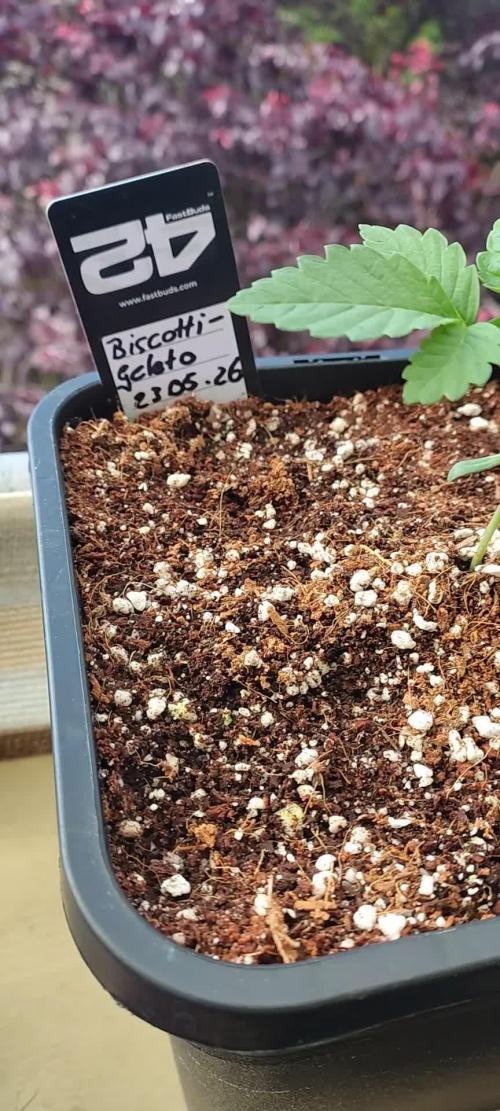
Looking for optimal led height.
RQS' Northern Lights auto and Diesel auto look very sophisticated and detailed. They are standing in the middle. Rest of the plants are auto lemon Hazes and they have may varieties. Two are growing very fast and two are stunted.
At least one more week of indoor growing before going outside in a bigger pot.



Likes
48
Share


@Yeswehavenobananas
Follow
It's really hard for a first time grower to grow without the input of others, particularly if you aren't a science type person. Grow diaries and the users who've commented have really helped me make decisions about how to handle the girls. What I've learnt is there's never a right or wrong way of doing something and a lot of your success is based on intuition! This my very first grow. I can't normally keep herbs alive and I had my fair share of disasters with this plant, from stem breakages (fixed with a tape and a ruler) and calculating nutes incorrectly. I LSTd and topped (accidentally initially) and left 2 alone. The ones left alone had the biggest yeild. I harvested at different stages, but within days. The trics were probably at 1% amber, 80% cloudy and the rest clear. A test smoke of a dry bud in a pipe which had been cured for a few days gave me a fun, giggly high that lasted a long time with rolling body effects that left me feeling reallllly good. I made butter out of the fresh wet trim of one plant (2oz of trim) and made 113g of knock out butter. Just a teaspoon had my flying for 24 hours.
I was growing these 4 ladies, along with 4 non-auto skunk 1# which have been in veg mode for the whole time. They are beasts right now and I will start a diary for them to document the progress.
Likes
Comments
Share

@NAG420
Follow
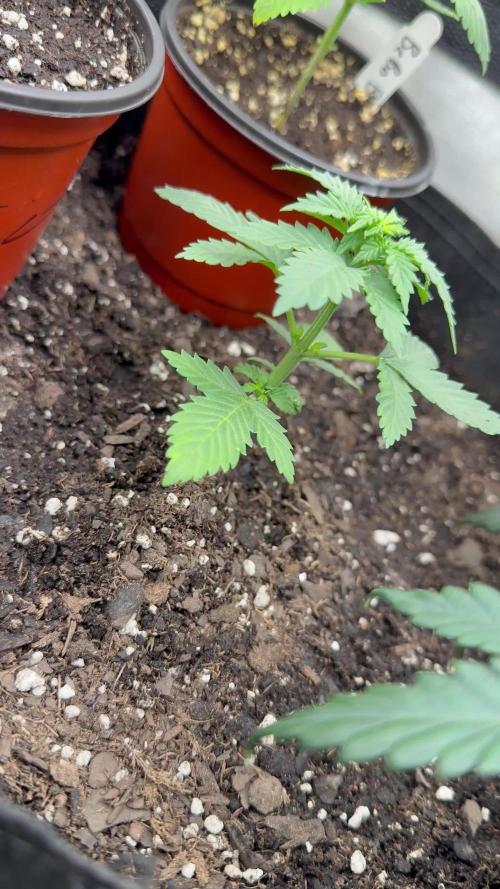
This week I transferred it into a 5 gallon pod cheese on the third note and taking water every 24 hours the root systems didn’t look that great but I think she’ll thrive in a New pot. Watered are at 6.5 pH. Will be transferring once she’s 2 feet tall into the flower.
Likes
2
Share


@StickyBlack
Follow
Super happy with this. Strong tropical citrus nose. Dense, frosty nugs. Definitely recommend trying tropicana cookies in your garden
Likes
23
Share

@DevelGrow
Follow
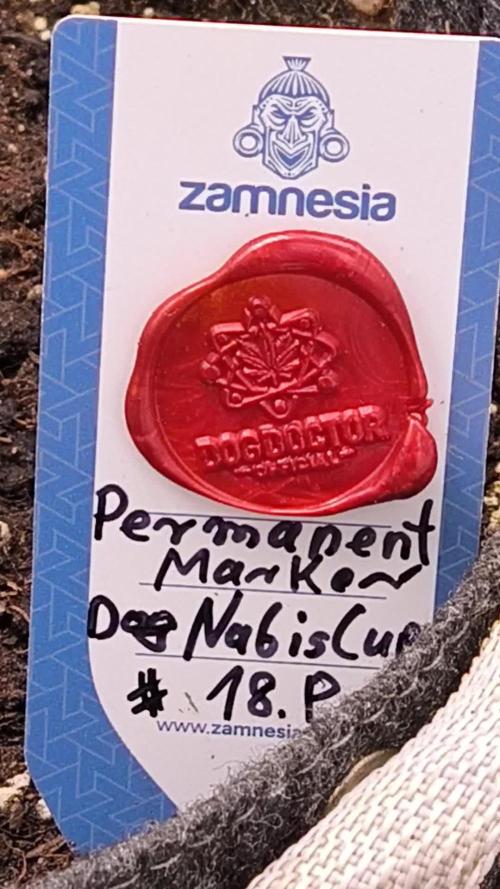
Hallo Freunde 👋 permanent marker von zamnesia ,ist 21 Tage Alt! Sie wächst und gedeiht prächtig ! ✌️🍀💚🍀

Likes
32
Share


@eezeegrow
Follow
Plants still growing. Amnesia #1 is just a bit smaller then #2 but I'm happy about my scrog... 😀


