


Likes
Comments
Share


@AsNoriu
Follow
Day 115 since seed touched soil. Twins are done. Was very nice plants to grow, waiting for results ...
Happy Growing !!!

Likes
9
Share


@Headies
Follow
fantastic smells coming out of the tent! The purple punch smells delicious. The sour diesel smells dank. The girl scout cookies smells like GSC

Likes
22
Share


@TightNugs
Follow
2 BlackBerry well into flower now,1green pheno,1 purp.Around 14 days since first pistils so packing on the weight.Green pheno the stronger plant but lovely colours on the purp 👊🤞🍁
Likes
14
Share


@BushDoctor740
Follow
Almost to the finish line for most of these girls.Everytime I get near the tent it just smells so great and wow are they building up some trichomes.The buds are chunky and super dense now and finishing up in the coming days except for one plant that has been lagging along the whole grow.It is smaller with a massive center cola so I’ll let her grow as long as needed.
Day 66 placing two of the Papaya cookies in the dark in another tent for 24-48 hours before I cut and hang them.
Likes
81
Share


@UnorthadoxDude
Follow
Transplanted to 40l container on week 4 day 1. Container has approx 30l in it.
Also added a photo of the setup for size reference.
Let me explain my thinking behind the repotting strategy. Firstly I should say that I am quite an old school kind of grower, although I've never grown cannabis before I have grown hundreds of other plants. Due to my experience with other plants, I understand the value of well planned and executed transplants, they can have an absolutely transformative effect upon root systems when done properly, as far as I know it's the main reason why they are done at all. It is fair to say I have never grown any auto-flowering plant indoors before, and I have read all about how you should not transplant autos, and all the good reasons why not. Ultimately though, as I am not called UnorthadoxDude for nothing, I believe that I can make it work with an auto, and get the benefit of improved root growth pattern, without delaying or interrupting the growth. I want to have my cake and eat it, as it were.
So the strategy is to avoid transplant shock, which admittedly I have already failed in the first unplanned transplant, but in my hopeful naivety I still believe I can make the second one work! I'm using coco, and I have had the larger pot prepared and have been watering and feeding them as well as the plant. If I am careful not to disturb the plant at all, and move the entire contents of the pot gently into the larger pot (which is exactly the same medium in broadly the same state), then I may be able to avoid shocking the plant and just let it crack on. We will find out in a few days! If it stops growing or slows at all then I failed, otherwise it worked!
A note about my use of organic nutes with coco. I have read a lot about coco and nutes and microbes and PH and TDS and what have you, and I know that the overwhelming majority of people believe that you can't or at least shouldn't use organic nutes with coco. The thing is, I like organic gardening, I prefer to cultivate a beneficial microbiota and keep it healthy. I recycle, and reuse all my compost except where a plant is diseased and this has worked well for me for a long time. I've never grown with coco before though, I always used soil. I wanted to gain the benefits of coco (better drainage, more air to roots, lighter, less inviting to pests, etc) - but I wanted to use a method of nutrition that I was already familiar with. I think I've mentioned that I am not called UnorthadoxDude for nothing, so I am using BioBizz and coco. By adding bacterial, mycorrhizal, and trichoderma inoculants and having the unplanted coco in the tent being fed and watered I hope to have cultivated a nice microbiota which will feed my plant. That's the theory. However just in case, I have a trick up my sleeve.
Now, I do not know if you are aware of this, but there is a fiery debate raging on the internet about using BioBizz organic nutes with coco for cannabis. Some people try it, most people shout it down, and I have not found much in the way of solid evidence of it being a good idea. Except one! I found a commercial grower that has used biobizz nutes, and he said that as long as you are using "Acti-Vera" you can use anything from the BioBizz organic range. Apparently the enzymes in the mix break down nutes chemically in a similar way to what the theoretically missing microbes do.
So I have ordered a bottle of that, and if my microbial cultivation attempts don't work out, I at least know I have a fallback that should work.
Those are my thoughts on it, let's see how it pans out.
Oh I should also probably point out that I am growing some companion plants, specifically alfalfa (nitrogen fixing), basil (improved flavour), and German Chamomile (increased essential oil production).
Update week 4 day 2 dropped PH to 5.8 after advice from a grow question. Look! It's carried on growing... maybe there was no transplant shock?
Update week 4 day 3: Growth continues, interveinal chlorosis lessening. Plant is pushing out node five at the moment.
Update week 4 day 4: Growth continues, interveinal chlorosis further lessening. Apologies for the poor quality photos for the last few days, I was lazy and didn't want to move everything out to photograph. Today I have done that and the pic is better. I am declaring the second transplant a complete success. I do not believe that plant was in any way shocked.
Update week 4 say 5: I think I've finally managed to overwater. Going to skip watering today.
Update week 4 day 6: Photo taken just before lights on hence wilting. Growth continues to accelerate. I believe the alfalfa has been raising the PH so I've removed it. Today I will flush through with PH lowered water and then fertigate. The colour is still too pale but the growth and overall look and feel of the plant screams to me that it's happy and about to explode.
Day 27.5 flushed with 30l of PH lowered water then fertigated with 5l.
Day 28: Height 12cm Width: 28cm Nodes: 6
Weekly growth data:
From 5cm Height to 12cm +140%
From 12cm Width to 28cm +133%
From 4 primary nodes to 6 +50%
Summary: Wow, wow. Wow. What else can I say. What a crazy week, amazing and unexpected given the problems. I am really excited to see what happens over the next seven days!!
It looks like it has quite severe chlorosis, but otherwise seems robust and is seriously stretching. Almost unbelievable growth. Pre-flowers appeared a few days ago, so I guess this was the final week of veg. Let's see how the first week of flowering stretch goes!
Update 7/2/23: My instincts about this plant on week 4 day 6 were absolutely correct, she was happy and, she was about to explode. Since my early attempts at transplanting, I practiced multiple times with Citronella (a photoperiod plant) and then I did it again with an auto (Polly) - this one went flawlessly and further demonstrates that you can transplant an auto without shocking it. Time will tell, because I can compare Polly to both Misty and Nesia both of whom were sown directly in their final pots.

Likes
10
Share


@thevalar007
Follow
First week of flower, going well in the SCROG. Nothing fancy, just a 4x4 AC Infinity trellis. Will add a custom 2nd trellis if needed. She stunted in veg due to a bit of overcrowding causing less than ideal environment in her spot, but I fixed that by raising her, creating more space for her, and light defoliating. Other strains in this grow- Skywalker OG, Bruce Banner, Apple Betty, and Runtz. Check out my other diaries for those.

Likes
15
Share


@superskunkyfunk
Follow
Canopy has began to fill in very nice, actually a little surprised given how lanky the one pheno was looking. My bag seed plant I was holding out hope of being female has let me down, she or should I say HE, showed his first little plant nuts a day or two ago. SMH 🤦♂️. Oh well, that's what we got the feminized seeds for anyway 😂. Hopefully we have some little flowers to show you guys in the next week or so! Thanks for dropping by, and will update pics again later in the week : )
HAPPY GROWING EVERYONE!!! 😃

Processing
Likes
26
Share


@LongJohn420
Follow
Lots of pics not much to report. Flushing and starting to yellowing nicely. Trichomes are in check so I plugged light out and left these two girls in darkness for 36-48h. These yielded clearly most in this round. Nice job Barney's with this one 👌 Can't wait to smoke this one out once cured couple weeks 👊😍

Likes
1
Share

@ohcibi
Follow
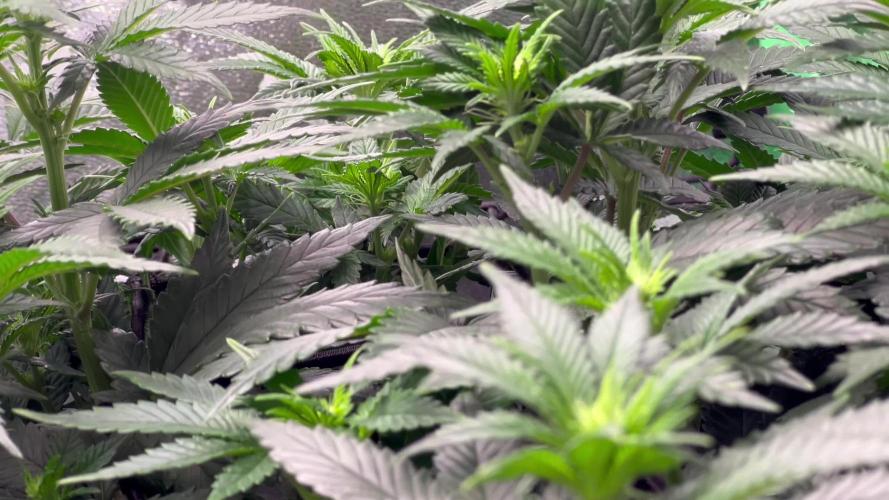
Update June 16th
3 liters fed with another week of fertilizer schedule skipped because why. the fuck. not! I know the can handle it. They’re battle rappers!
Still found 4 new bugs on them yellow cards. Guess those are survived larvae from previous mating. But still no invasion.
Update June 14th
SFW - Second Flower Week. Fungus gnats seem to be defeated. First set of cards caught 5-7 bugs, second set is clean so far. Fingers double-u’d that’s the end of it.
Samy handled the watering pause much better than Takti and had no drooping at all.
Dynamite Diesel continues to be a much easier and more enjoyable strain to train. Not nearly as bushy, which makes handling and shaping a lot more straightforward.

Likes
25
Share


@Roberts
Follow
I am cutting G13 autoflower down today. She has run her course, and is ready to be harvested. She has a strong layer of resin with a woody, skunk, sweet, and fruity aroma. She grew well considering the issue I had early, especially after the mite treatments. We beat them, and she finished well. She will hang dry for 24 hours then get a mild wet trimming. From there She will go in the cannatrol for 8 days. Then I will final trim it, and do a smoke report. I want to thank Medic Grow, Athena, and Weed Seeds Express. 🤜🏻🤛🏻💪🏼❄️🌱
Thank you grow diaries community for the 👇likes👇, follows, comments, and subscriptions on my YouTube channel👇. ❄️🌱🍻
Happy Growing 🌱🌱🌱
https://youtube.com/channel/UCAhN7yRzWLpcaRHhMIQ7X4g

Likes
31
Share


@The_Doctor_Green
Follow
Semana 10 de floración: Los valores en el drenaje del riego, siguen altos, la EC midió 1650 ppm y el ph me dio 6.1,( bajo el valor del ph pero no tanto las ppm )
Los cogollos se siguen cargando de resina y aumentando en tamaño , el aroma es rico dulce, afrutado.
El camino que queda es largo, pero la planta va respondiendo relativamente bien.

Likes
9
Share

@Headies
Follow
So this week after I gave it under nutrients I apparently gave it too much nitrogen while having a potassium deficiency. Shiney dark leaves, So i fixed that, but some didn't bounce back, and I tried nitrogen. I think they are doing pretty good considering everything I've put them through SO FAR. lol. Nutrients are NPK Raw's total lineup, follow their instructions at first, Fastbuds adjustments as of this week.
Likes
1
Share

@Ninjabuds
Follow
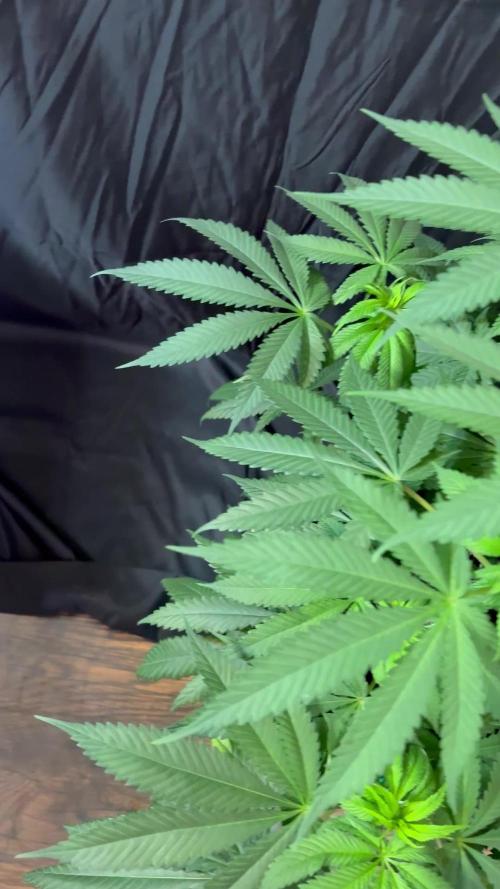
This plant definitely could have used a little longer in veg but the bigger plants were ready to flip it will still be a great plant it just needs a long veg to reach full potential. The plant is nice it has a skunk smell and the leaves are growing well and good color. The plant is starting to get some strech going on. Not sure if it’s the cold weather but they don’t seem to be flipping to flower as fast as my last grow. The leaves are starting to be perked up all the time and it looks really healthy
Likes
14
Share

@CampaCavallo
Follow
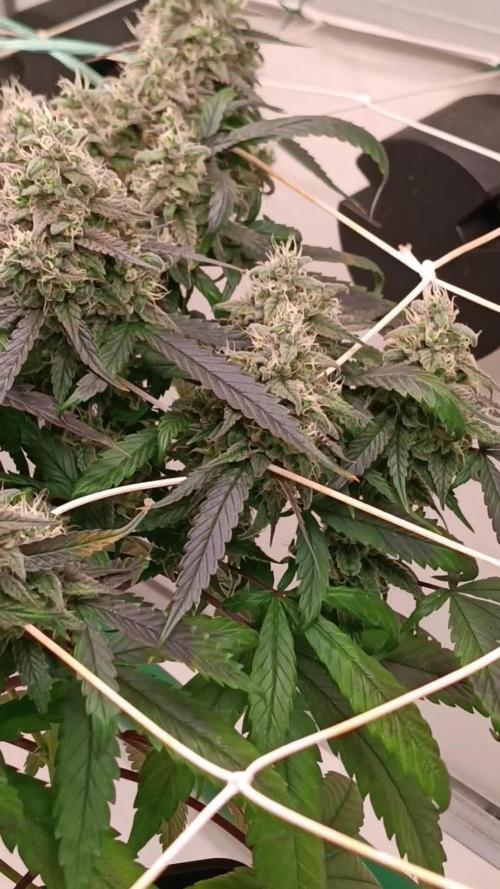
8ª Settimana di Fioritura 💐💐💐💐💐💐💐💐
Buongiorno amici 💚! Guardate com'è diventata bella la nostra Mimosa Shot 🌼🎇

Likes
Comments
Share


@colla69
Follow
I had to prune a lot of roots that were rotting before the holiday.
Probably due to heat and bad hygiene from not being able to completely wash the earth out of the root complex.
But it survived 2 weeks on its own and ist putting out new roots...
It sure is willing to survive 😅😅
I will wait and see if I can get some true foliage out of it 🤷♂️

Likes
58
Share


@GreenHouseLab
Follow
Girls are looking stunning, first round with the cropsalt nothing else PH 5.8, no fluctuations, DTW. It been a slow transition to flower but this could also be due to flippin’ early, in a weeks time when I see more pistils and flower development I’ll be switching over to Bloom nutes. Temps/RH are on point 80/60 has been my range for this one.
Likes
5
Share


@Mr_nugs_lover_David
Follow
Amazing citric terps. Very very lemony and gassy, can't even believe it didn't expect that type of smell at all I thought she was gonna be very sweet, the aroma is so powerful but she smells very citric and gassy, can't wait to try her smoke ❄️🤤 let's see how she performs at the end! Let's keep on working. 💚👨🌾🌱❤️💛

Likes
58
Share

@AsNoriu
Follow
Day 25. Slowly, but they are starting to grow. Weather is perfect, mostly showers, warm, no too intence sun, so i believe they should kick in.
Girls got BioBizz Leaf Coat shower.
Everytime i go to my spot this year i meet this fellow ;)))
Happy Growing !!!

Processing
Likes
7
Share


@Kushizlez
Follow
Day 70-77
(Day 71) Not exactly sure why but node spacing on bbb 6&7 is super tight still. Their stems are also harder and less bendy, almost like they’re root bound.
Bbb #5 in my veg tent is looking bizarre and I’m at a loss for what to do. I’ve been looking up and asking around about the leaf crinkle and no one seems to know what’s wrong. Trashing a pheno of this would hurt. It could be a keeper too as I don’t think the problem is genetic. It’s definitely root bound but that doesn’t cause contorted new growth like that. I’ve concluded that it’s my dense soil coupled with root bound issues, overwatering and high RH.
(Day 72) Later tonight I’m going to give bbb 5 a bath tub flush until it’s reading 200ppms, drain it well and then transplant into a 3g pot with lightly amended soil. I’m also going to give it a light defoliation. I don’t mind stressing the shit out of this plant right now because I won’t be flipping for another week at least. With the small container it will run out of amended nutes mid flower so I will hit it with a few synthetic feedings around then to test out the smokabilty and taste compared to organic nutrients.
I might as well give the rest a good defoliation on the rest of the plants too. I will try to get most of what is under the trellis.
(Day 73) I definitely defoliated #7 waaay too much. Since it’s tucked away in the corner and a really bushy plant I can’t train it as well as the others. I cut most of the sucker branches and the majority of the lower fans. This should prevent the need to defoliate at all until week 3 of flower.
(Day 74) I’ve been reading that higher temperatures with a high RH can affect growth big time. It could be what’s causing all the crinkling and twisting. And now that the plants are in very late veg they could probably benefit from a lower RH. When I was running my temps around 74-78F and 70% RH I was in the perfect range. Now that I’m around 82-86F with the same 70% RH that could be what’s causing it. Hotter air holds more moisture than cooler air and proper vpd at 84F is around 75-80%. I’m going to turn up the speed on my carbon filter and set my controller to 75%. If I don’t see a difference or it gets worse I will drop to 65 and go from there.
(Day 76) I finally got the lights raised up another 4 inches or so. It’s not much but it should help reduce the intensity and stretch the nodes more.
I’m starting to think the super tight node spacing and droopy/contorted growth has more to do with something I’ve been reading about called ‘soil compaction’. Apparently farmers often deal with compacted soil in fields from running tractors over it all day. When I potted the plants I gave them a good little jiggle to compact the soil down further so I could fit a bit more in the container. I think this could be the culprit as they don’t seem to be drying out evenly. Even the plants in my other room are not drying out like they should and it’s probably from compacting too. With the addition of rock dust and dry amendments the soil can become sandy/clay like and retain a lot more moisture. Wish I would have added a few more liters of perlite and packed the soil a bit looser. Either way I need to get this problem sorted ASAP before I get root rot.
Earlier in the season when I overwatered, I stuck a fish tank air pump into the soil and it aerated the soil enough to prevent overwatering. The only reason I discontinued it is because it didn’t have much effect in the 1.7g pots. I just ordered a 36w 6 way fish tank pump that is way more powerful. It was 50 bucks and I’m willing to take a gamble on it. It seems to be my only option at the moment because I can’t just repot. Worst case scenario I can use it for brewing compost teas if it doesn’t work. I’m not sure how well this will work in a giant fabric pot but it’s worth a shot. I’ve heard of people supplementing additional air into raised garden beds with great results.
I’m picking off some of the new auxiliary branches to try and widen the node spacing. Growth is definitely slow and stunted but no signs of deficiencies.
I just thought of another theory on the node spacing... and the more I think about it, the more I think it’s the mystery problem. I’ve been foliar spraying with 1-1-1 VeloKelp at pretty high concentrations 2-3 times per week. I have heard in passing that kelp and seaweed can somehow reduce stretch. A quick google search reveals that Ascophyllum Nodosum Seaweed and other marine algae extracts contain large amounts of hormones and auxins that reduce plant height and stretch. *facepalm*
Guess I’ll stop that for the rest of the cycle. As far as I know there is nothing I can really do but wait for the plant to use up all those excess hormones and nutes. The recent 0-0-15 seaweed extract and 1-0-3 kelp meal I bought is derived from the same kind as the velokelp. I guess I won’t use it again until week 3 or 4 in flower. Tight nodes are very useful in flower but aren’t desirable at all in when trying to scrog in veg. Especially when they’re like a half inch apart. It slows the shit out of a grow. Vietnamese and biker gangs in my area used to grow SOG style and use a synthetic PGR hormone (meant for bonsai trees) called ‘paclobutrazol’ that would make the weed rock hard dense so they wouldn’t have to pay people as much to trim it. I’ve heard that in recent years they have made the switch to using kelp extracts because paclo is getting harder find and is not meant for food crops let alone smokeable crops. I’m ashamed of it but I have smoked pounds of PGR weed long before I knew what a PGR was. 🤷♂️
(Day 77) One more theory. Ever since raising up the plants up onto that shelf the root zone is probably significantly warmer and the bottom of the pot (where most of the roots are) drys out way quicker. It’s possible that the warmer root zone could not be holding dissolved oxygen at the proper rate resulting in that over/underwatered look. Or it could be that I’m not watering enough at once to reach the bottom of the pot where the roots are and it’s indeed under watered. I’m going to water in a gallon when I get my new air pump and see if that makes any positive change. If I see the new air pump making a difference, I will flip on the 21st of April. If I don’t see a difference, I will carefully untangle the plants from the scrog net and remove the shelf. That extra foot should make a massive difference with ppfd and will cool down the roots significantly too. I’m thinking about grabbing a simple soil/compost thermometer to check the temp of the medium. Better safe than sorry.
Rough week. Hopefully everything get smoothed out in the next little while before I flip.


Likes
2
Share


@brown_tattooz
Follow
Week 4 plants have made alot growth with dark rich green leaves.. have not had any nutrient deficiency pop up, these plants are amazing Im impressed with the resilience of it… defoliated 2x once at the start of week 4 an end of week 4 they quickly had new growth… I accidentally snapped a stem while lst barely holding on on one side an within 24hrs it had completely healed with a small scar.. probably gonna veg for one week … excited for this progress!!!