


Likes
Comments
Share


@Ultraviolet
Follow
I gave Isopropyl alcohol 70% equal parts water, 1 tsp cayenne, and kept enough for multiday application, what little population of aphids is left I shall catch them the next morning, opening the tent 10 min before lights on the clovers have yet to open, all the aphids hiding on the undersides are easily visible, still none ever went near cannabis plant. Clovers are far tastier it seems.
The alcohol kills on contact, the idea was to saturate the leaves with a light foliar application, and once I was done I ran it through the canopy with my hands, making sure as much of the clover surface came in contact with the iso, once done, I turned on the fans and evaporated it quickly. The beautiful thing about Isopropyl is that it evaporates rapidly at room temperature, way below boiling point leaving behind zero residual so nothing seeps its way into root zones unless you spill it there.
It is a magical solvent that leaves no trace that it was ever there.
Resonant Frequency:
A resonant frequency is the natural vibrating frequency of an object and is denoted as ‘f’ with a subscript zero (f0). When an object is in equilibrium with acting forces and can keep vibrating for a long time under perfect conditions, this phenomenon is resonance.
In our daily life example of a resonant frequency is a pendulum. If we pull back the pendulum and leave, it will swing out and return at its resonant frequency. Objects combine to form a system, this system can have more than one resonance frequency. The resonant frequency is termed as the resonance frequency.
The phenomena of resonant frequency used in the series circuit when the inductive reactance (XL) is equal to the capacitive reactance (XC). If the value of supply frequency is changed, we can observe that the value inductive reactance (XL) and capacitive reactance (XC) is also changed.
Inductive reactance (XL) and capacitive reactance (XC) are inversely proportional to each other. When we increase the frequency, the value of XL increases, whereas the value of XC decreases. When we decrease the frequency, the value of XL decreases whereas the value of XC increases.
At series resonance, when XL = XC. The mathematical equation of resonant frequency is:
XL = 2πfL; XC = 1/2πfC
XL = XC
2π f0L = 1/ 2πf0C ; f0=1/2π sqrt{LC}
Where f0 is the resonant frequency, L is the inductance, C is the capacitance
How to Calculate the Resonant Frequency of an Object?
An object exposed to its resonant frequency can vibrate in symphony with the sound. The wavefronts pushing on the object will arrive at just the right time to push the object with greater and greater amplitude in each cycle.
To get a clear idea of this concept one of the best examples is pushing a friend on a swing. If you push the swing randomly, the swing will not move very well but if you push the swing at a specific time, the swing will get higher and higher.
Another example to find the resonant frequencies is to place the object next to a speaker and place a microphone attached to an oscilloscope next to the object. Then play the sound in the speaker at a given volume, and then without changing the volume slowly change the frequency.
Now observe the oscilloscope, you will observe that at certain frequencies the amplitude of the wave, is proportional to the volume of the sound that the microphone is able to pick up.
The frequency that is caught by the microphone will be greater than at surrounding frequencies. These are the resonant frequencies and are detectable as the sound energy absorbed by the object is re-emitted more efficiently at these frequencies. The precise moment that constructive interference happens the amplitude of the wave will spike at the precise frequency emitted.
Q: Compute the resonant frequency of a circuit whose inductance is 25mH and capacitance is 5mu F?
A: Known values are,
L = 25mH = 25 x 10-3 H
C = 5mu F = 5 x 10⁻⁶ F
Formula for resonant frequency is,
f0= 1/2π sqrt{LC}1/2π√L
f0=1/2 ͯ 3.14√ (25 ͯ 10-3 ͯ 5 ͯ 10-6)
= 450.384Hz
Why Neodymium?
Ferromagnetism is an exciting phenomenon observed in certain materials, known as ferromagnetic materials, that can retain their magnetization even after removing an external magnetic field. Ferromagnetic materials can become ferromagnets and interact strongly with other magnets and magnetic fields. A characteristic of ferromagnetic materials is their magnetization ability, distinguishing them from paramagnetic and diamagnetic materials, where weak magnetism exists temporarily.
This unique property allows for making permanent magnets widely used in various applications such as motors, generators, speakers, and data storage devices. The ability to generate and maintain a magnetic field without the need for a constant external source of power makes ferromagnets highly valuable.
An alloy of neodymium, iron, and boron discovered in the 1980s is ferromagnetic, yielding permanent magnets over 1000 times stronger than anything ever seen before.
The name neodymium comes from the Greek neos didumous, which means "new twin."
Neodymium magnets are made of an alloy of neodymium, boron, and iron. This allows them to simultaneously store impressive amounts of magnetic energy while being highly resistant to demagnetization.
Because iron oxidizes quickly, neodymium magnets are coated to prevent rust from accumulating.
The attraction between two neodymium magnets is so strong that if placed close enough together, they can collide and shatter.
Neodymium magnets have an unusually high-temperature resistance, and they can even withstand heat exceeding 200 degrees Celsius.
N50UH 1-1/2"OD x 1.065"ID x 3/8"

Processing
Likes
7
Share


@PoshGrow
Follow
Welcome to LSD-25 grow by PoshGrow!
✴️ Germination week 2020.10.26 - 11.04
Comment
Hey guys and girls and welcome back! ✌️ Happy to announce about my new grow! This time I will try legendary LSD-25 by @FastBuds ☺️
2020.10.26 Started garmination in paper towel method, wrapped with transparent food film and placed in warm dark place.
2020.10.28 all 5 seeds sprouted and wolaah, we got TWINS! Never happend before, 2 healthy tap roots from one seed! I guess it means 120% Success rate? 🤔😆 Google it and dont know what to do, maybe try to split them? Any suggestions?
2020.10.29 Manage to safely separate twins! One left in a 5 gallon pot and other moved to small solo cup, Ill keep an close eye on it and if she bounce back in a couple of days, Ill transplant her to 5 gallon fabric pot.
2020.11.02 The little one of twins few days ago transplanted to 5 gallon pot and seems to be ok and bouncing back. They poped out of soil at 2020.10.28 so Ill wait 7 days to 2020.11.04 to officialy start vegetation stage.
Stay tuned & happy growing! ✌️

Likes
7
Share


@Darthblaza
Follow
I'm no master photographer.... more to come though i will take more photos with the lights off soon

Likes
3
Share


@CalGonJim
Follow
7/14 12am MONDAY. THEY ARE STILL SLEEPING BUT I HAVE BEEN HAVING THE BEST RESULTS. will continue with aminos, mblue , enzyme. 3am ADDED TRIBBLES TO THE DOCTOR PROP, BIG BIG DAY, AND MAGNETIC FACES..... SHOULD INCREASE MY AMINOFUNUPTAKE. LOOK AT THIS!!!!!!!
🚨WHY DOES TMG POWDER WORK SO GOOD ON ME?
from search """"AI Overview
You're experiencing positive effects from TMG powder, which is likely due to its diverse roles in supporting crucial bodily functions.
Here's a breakdown of the key reasons why TMG (trimethylglycine or betaine) might be working well for you:
Methylation Support: TMG is a methyl donor, meaning it provides methyl groups (a carbon atom with three hydrogen atoms) that are vital for a process called methylation. Methylation is involved in numerous bodily functions, including DNA repair, gene expression regulation, detoxification, and the production of neurotransmitters (chemicals that influence mood and cognition). If your body's methylation process was inefficient before supplementing with TMG, the addition of these methyl groups could be enhancing many aspects of your health and well-being.
Homocysteine Reduction: TMG helps convert homocysteine, an amino acid that can be damaging at high levels, into methionine. Elevated homocysteine is associated with an increased risk of heart disease, stroke, and other health issues. By supporting healthy homocysteine levels, TMG helps maintain cardiovascular health and blood vessel integrity.
Liver Health: TMG plays a role in liver function and detoxification by aiding in fat processing and supporting the body's natural detoxification pathways. Research suggests that TMG may help protect the liver from alcohol damage and be beneficial for nonalcoholic fatty liver disease.
Cognitive Function and Mood: TMG supports the production of neurotransmitters like serotonin and dopamine, which are crucial for mood regulation and mental clarity. Some research suggests TMG may enhance the effectiveness of antidepressants and help alleviate symptoms of depression and anxiety, potentially by lowering homocysteine levels.
Cellular Health: TMG is an osmolyte, meaning it helps regulate cell volume and maintain fluid and chemical balance within cells. It also acts as an antioxidant, protecting cells from damage caused by oxidative stress.
Athletic Performance: Some studies suggest that TMG may improve muscle strength, power, and endurance, potentially by influencing creatine synthesis and reducing fatigue.
Important considerations
While TMG offers potential benefits, research is still ongoing, and some studies have shown mixed results regarding certain benefits, particularly related to athletic performance.
It's always recommended to consult with a healthcare professional before starting any new supplement, including TMG, especially if you have existing medical conditions or are taking other medications.
High doses of TMG may cause digestive issues in some individuals.
In summary, TMG's positive effects are likely due to its ability to support essential methylation processes, help regulate homocysteine levels, promote liver health, and potentially contribute to cognitive function, mood, cellular health, and athletic performance. If you're experiencing positive results, it's a good indication that your body is benefiting from TMG's multifaceted actions. """"""""
7/ 14 1145PM STILL MONDAY. WATERING TODAY WITH THE SYSTEM AND TAMI INSTEAD OF ADVANCED NUTES/ FOR SUPPLEMTNS. TAMI SMELLS LIKE CLEAN FRESH CLAY SO NICE, SO ALL THE PLANTS SMELL LIKE THAT. ONE MORE TIME WITH TAMMY.
🚨 NO ENERGY SHOTS TODAY!!!! JUST COFFEE. ITS THE QUICK SORB AMINOS, NITRIC BOOST, METHELYENE BLUE, TMG POWDER, METHYL FOLATE PLUS, WOW!!! WHAT WORKS ON ME WORKS ON THE PLANTS, JUST ABSOLUTELY AMAZING!!!!!!!!!!!
7/15 Tuesday 424am. All plants are doing great water today with the System and TAMI today, 1pm Tammy is a little bit strong even at a half a milliliter per liter with the exception of the Tyson 2.0 goats. These are just incredible. I can’t begin to describe how strong and how different these are from any other plant I’ve ever grown.🚨🚨🚨👍👍👍👍💥💥🌿
7/16 430am smoking GC Auto I trimmed yesterday, very nice. II love Autos for this. nice smoke right off the plant, no 2 weeks to dry and 4 weeks to cure, nice right away!!! Not perfect some chlorophyll, but bong filters that enough and a nine not too strong feeling.
7/17 330am they are all doing good. I felt it was time to try a higher wattage on the lights. I hope it’s not a mistake, but I have the cooling system worked up so it should help exit the hot air directly off of the driver on the light, they seem very strong and able to handle the extra light we’ll see.🚨🚨👍


Processing
Likes
58
Share


@Dahoola
Follow
---------------
Start week 3
--------------
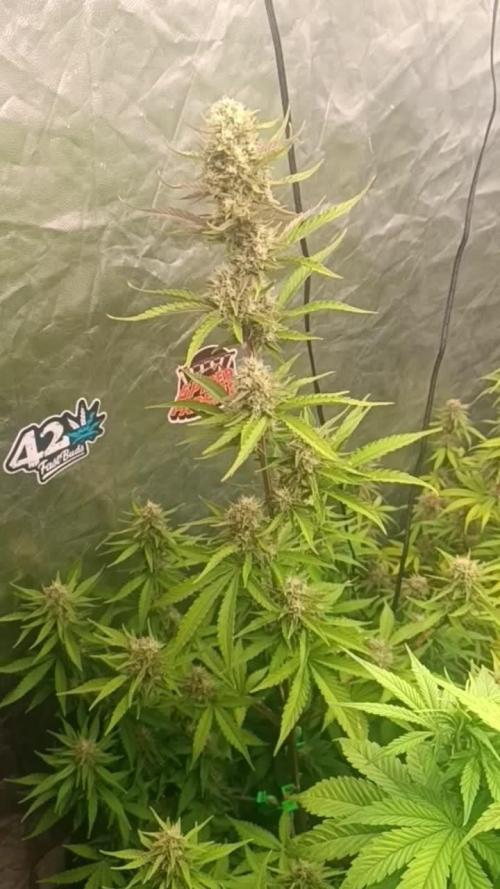
We started week 3 as we ended week 2, which is great. She continues strongly at the beginning of this week and seems almost unstoppable. She clearly enjoys her surroundings and looks very healthy. She has started preflowering and seems to be gearing up for another explosion in growth. She is very good at leaftucking and has already developed a good number of shoots. On to more! A new update at the end of this week.
-----------------
Update Week 3:
-----------------
End of another fantastic week for MBAP. This week was all about pre-flowering and you can see that she is preparing for an explosive bloom. She has benefited enormously from the LST that I applied and has a good number of shoots ready to explode during flowering. In addition to leaftucking, have also removed the lower shoots so that she can concentrate her energy on the upper shoots. I also did the biotabs in the ground in the middle of the week. We have opted for 3 biotabs in 20-25l soil. Have waited several weeks before putting the tabs in the ground because we work here with aitoflowers. And they prefer a light feeding regiment for the first few weeks. We are going to gradually lower the humidity and get ready for flowering and week 4! Until next update




Likes
36
Share


@nonick123
Follow
Día 101 (09/09) Riego con 500 / 1000 ml H2O pH 6,5
Parece que se ha parado un poco el amarilleamiento que subía tan rápidamente por las plantas!
Día 102 (10/09) Riego con 500 / 1000 ml H2O pH 6,5
Excepto LemonPaya, todas las plantas empiezan a llenarse de tricomas! 😍
Día 103 (11/09) Riego con 500 / 1000 ml H2O pH 6,5
Estoy emparanoiado con que la floración va lenta...
Día 104 (12/09) Los cogollos no se están formado correctamente... Algo pasa... Los pistilos tienen un extraño color verde y no engordan...
OnionOG #1 es la única que tiene un ritmo normal...
Riego con 250 / 500 ml porque las temperaturas empiezan a bajar a 25 ºC diurnos / 22 ºC nocturnos y está bajando el consumo de agua...
Día 105 (13/09) La deficiencia empeora... Solo se salvan OnionOG #1 y KS1 #2...
Día 106 (14/09) La deficiencia sigue empeorando... Solo se salvan OnionOG #1 y KS1 #2...
Día 107 (15/09) La floración se ha ido al traste! (Excepto OnionOG #1 y KS1 #2)
Tras preguntar a Lurpe, GD e IG concluyo que el super soil tiene un bloqueo de nutrientes
Debido al bloqueo, se ha detenido la floración en 4 de las 6 plantas
Siguiendo las recomendaciones de Lurpe, hago flush hasta que el agua de escorrentía tiene una EC 2,5 (1250 PPMs)
A ver si les da tiempo a recuperarse...
💦Nutrients by Lurpe Solutions - www.lurpenaturalsolutions.com
🌱Substrate PRO-MIX HP BACILLUS + MYCORRHIZAE - www.pthorticulture.com/en/products/pro-mix-hp-biostimulant-plus-mycorrhizae


Processing
Likes
3
Share


@Ogbangbang2981
Follow
I'm impressed with this C4 Auto, from fastbuds this is one of two plants I grew. This plant is a real indoor plant she grows lovely. The other plant is an outdoor plant it's pretty too don't get me wrong but where i thought the outdoors would produce a bigger plant i got the opposite of that, I got a Mutated plant, nice colored bud on here but she continues to mutate even in flowering stage my indoor plant is twice her height and size but love both my C4 Auto from fastbuds. Even if they broke my heart by changing payment policy, I'll never be able to get seeds from fastbuds again so I decided to spray my runt on the outdoors with tiresias mist feminized seed spray..... hopefully I get some pollen and able to pollinate my indoor C4 Auto..
Likes
25
Share


@cheetah844
Follow
Growing nicely, I'm hopeful she will be colorful later on in her life. She will be going outside, I have wind blowing to strengthen the stems up to prepare for mother nature.
Likes
56
Share


@Prof_Weed
Follow
9.Vegetationswoche, nun 50 cm hoch und 85 cm breit.
Bis 15.3.hoffe ich auf 60 cm Höhe und dann wird auf 12/12 umgestellt.
Musste nun schon das 5.Mal entlauben, das wächst wie Unkraut.
Seit 3 Tagen benutze ich den WaterTrim, Osmose Wasser.


Likes
99
Share


@BudXs
Follow
GHL STRAIN REVIEW!!!!!!!
Shout out to @GreenHouseLab for sending me an amazing package!
Return package on the way!!!!
So stoked to have six shooter AND 2 fkn new untried cheeses to fuck with in 2021!!
See vids


Likes
6
Share


@Guinha_s2
Follow
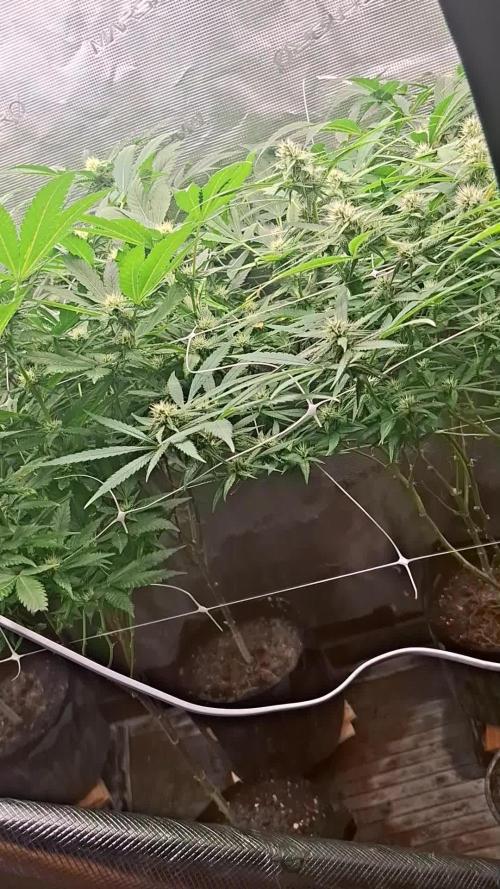
No fim da semana ela já começou a ter um pouco de cheiro, terminou a semana com 24 x 24 x 22 cm, fiz uma amarra

Likes
Comments
Share


Likes
1
Share


@Therbalist
Follow
Sad to lose one but three good looking plants very excited about this cross breed. Hopefully they show sex soon so I know what I've got!
Have a look at my Kalini Asia's and I might get a decent phone to take some better pics 😉
Hopefully have some more seeds with the next crop!
Likes
2
Share


@OldSchoolT
Follow
Been a while been busy with life nearly ready for flipping
Decided to get a different light 🚨
Likes
19
Share


@adam_pawloski87
Follow
Let’s Go Day day 61 from seed !!! This week went real well! As you can see all these girls are starting to stack very well! Everything is pretty much the same, we have switched to fully bloom an these ladies are just Looking super healthy , we are getting a nice smell of grapes on these Ogreberrys ! Bruce Banner is packing crystals like a Mofo too an super stanky , all very happy about this run ! Still got a nice few more weeks of bloom to go let’s watch em stack ! Lets grow lil ladies let’s grow !! Hope you all enjoy an have an amazing productive day ! Peace love an positive vibes to all you Growmies out there Cheers 😶🌫️💨💨💨💨💨🤙🏻 If there’s any questions please just ask I’ll be glad to help !!
