


Likes
Comments
Share


@cyberaktiv
Follow
Everything is chopped and hanging in the tent to dry. Looks like it should be a nice yield. Updates to come with dry weight.

Likes
24
Share


@nonick123
Follow
Día 101 (09/09) Riego con 500 / 1000 ml H2O pH 6,5
Parece que se ha parado un poco el amarilleamiento que subía tan rápidamente por las plantas!
Día 102 (10/09) Riego con 500 / 1000 ml H2O pH 6,5
Excepto LemonPaya, todas las plantas empiezan a llenarse de tricomas! 😍
Día 103 (11/09) Riego con 500 / 1000 ml H2O pH 6,5
Estoy emparanoiado con que la floración va lenta...
Día 104 (12/09) Los cogollos no se están formado correctamente... Algo pasa... Los pistilos tienen un extraño color verde y no engordan...
OnionOG #1 es la única que tiene un ritmo normal...
Riego con 250 / 500 ml porque las temperaturas empiezan a bajar a 25 ºC diurnos / 22 ºC nocturnos y está bajando el consumo de agua...
Día 105 (13/09) La deficiencia empeora... Solo se salvan OnionOG #1 y KS1 #2...
Día 106 (14/09) La deficiencia sigue empeorando... Solo se salvan OnionOG #1 y KS1 #2...
Día 107 (15/09) La floración se ha ido al traste! (Excepto OnionOG #1 y KS1 #2)
Tras preguntar a Lurpe, GD e IG concluyo que el super soil tiene un bloqueo de nutrientes
Debido al bloqueo, se ha detenido la floración en 4 de las 6 plantas
Siguiendo las recomendaciones de Lurpe, hago flush hasta que el agua de escorrentía tiene una EC 2,5 (1250 PPMs)
A ver si les da tiempo a recuperarse...
💦Nutrients by Lurpe Solutions - www.lurpenaturalsolutions.com
🌱Substrate PRO-MIX HP BACILLUS + MYCORRHIZAE - www.pthorticulture.com/en/products/pro-mix-hp-biostimulant-plus-mycorrhizae

Likes
55
Share


@blazin_skywalker
Follow
Tangie'matic showed me that she was in it for the long haul right from the start. This was my first time topping an autoflower and I wasn't sure how it was going to turn out - but each time she took on stress, she pushed back even stronger.
I topped her once at the 5th node, and then used some low stress training to create this beautiful canopy. She really grew like a dream!
Partway through flower I had to move my grow tent from my second-floor bedroom to my not quite warm enough basement. I had assumed that the heat from the grow lights would have compensated, but it didn't take me long to realize how wrong I was. This poor plant had her reservoir and atmospheric temperatures dropped with no warning.
She held in there while I figured out how to get the environment closer to desirable and less feeling like a frozen tundra. In the mish mash of environmental flux, some of her buds began to foxtail. This was my first time seeing this happen; so despite the fact that it's not desirable, seeing foxtailing happen with my own buds for the first time was actually kind of cool.
After the environmental woes were corrected, she stacked even more. Her buds nice and dense with a citrus fragrance complimented by some subtle skunky undertones.
Before harvest I changed out her reservoir and gave her a 4 day flush along with 48 hours of darkness. When I opened the tent on harvest day I was punched in the face with a beautiful fragrance of mandarin that instantly lifted the corners of my mouth into a sweet smile of satisfaction.
I cut her down and hung her to dry in my climate controlled closet holding a perfect 69.8°F and 55% RH. Six days later her buds were ready for the jars.
Her dry buds gave me 8.8oz/250g of quality bud and an additional 2.9oz/82g of popcorn buds. Just being in jars for 24 hours has REALLY brought out even a stronger citrus aroma that is just a true pleasure to take in.
Will update with more after the cure and first smoke experience. ✌️💜🌱0000

Likes
2
Share


@TheBudTender
Follow
Added a few more to the lineup and they are growing healthy in the sun. Will be soon time for them to go in the tent
Likes
13
Share


@smokeycropping
Follow
Ahora le dí un inoculo de papa y humato las nenas cmo comen el. Micelio proliferan excelente y se ven sanas y con unos terpenos increíbles nunca tuve problemas plagas ni nada

Likes
8
Share


@Weedganja420
Follow
Pues asi va esta preciosa cepa con 26 dias a 12/12 horas de luz, ya estoy aplicando el Green Sensation para que engorden esas flores.
Me encanta la estructura compacta que tiene esta cepa sin ningún tipo de poda.

Likes
49
Share


@Secretflower
Follow
Hello my friends,
...June 24, 2022....Day N°104..
...Flowering day N°49...
My three Feminized Watermelon Candy are fine, the buds are very gud, the mutant got the biggest ones.
I feed them with the Hybrid powder and some Boster from Green House Feeding Nutrients. I gave them some CalGreen from Metrop, the best Cal-Mag of the market.
They are under a MarsHydro TSW 3000 at 80% of power and at 20cm of the canopy.
www.zamnesia.com
www.mars-hydro.com
www.marshydro.eu
Thank you very much for passing by.
Wish you only the best with your green projects, peace.
See you soon 💨💨💨

Likes
3
Share


@Canaryweed_tf
Follow
Ya tenemos la cuarta semana de la HellfireOG del banco de Kannabiaseeds. En está semana las he trasplantado ha macetas de 7L. Tienen buen color, siguen creciendo muy bien y espero que sigan así. Pronto nuevas noticias 😘

Likes
21
Share


@BudsBanditUK
Follow
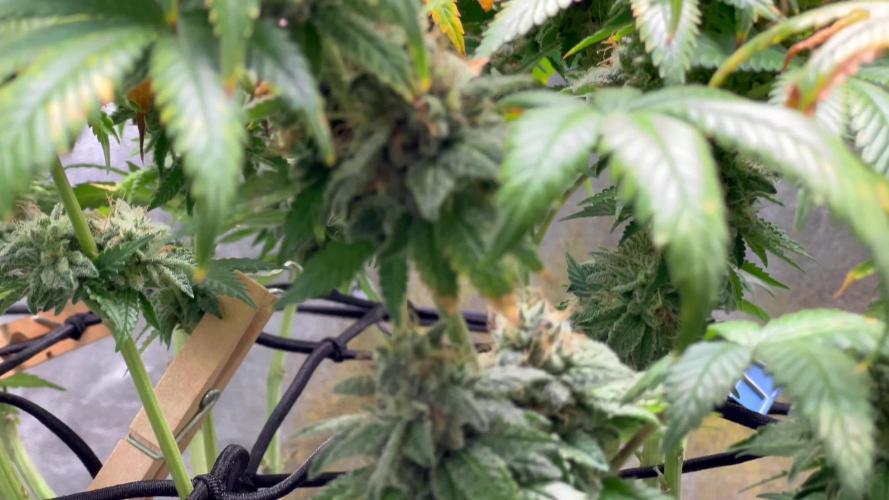
Week 1 of veg, fast growth and plant is looking healthy. Will start feed in a few weeks along with some training. I am excited about this one. Cant wait to see the end result.

Likes
8
Share

@ohcibi
Follow
Please don’t forget to hit the like button in the diary and follow me for more updates.
Update August 2nd
VERY last week started. Decided to let it go a few days more but harvest will be this week.
Everything looks pretty great. Dense fat buds. Humidity is always low. Temperature is okish and them damn gnats seem to be gone for good now. I don’t even see them on my other plants anymore.
So like always fingers double-u'd for the final days to be good.
Likes
11
Share


@MadeInGermany
Follow
Info:
Unfortunately, I had to find out that my account is used for fake pages in social media.
I am only active here on growdiaries.
I am not on facebook instagram twitter etc All accounts except this one are fake.
Have fun with the update.
Flowering day 47
since time change
to 12/12 h.
Hey everyone 😃.
The lady looks beautiful 😍.
The buds get thicker and thicker 👍.
They smell incredibly delicious 😬.
It was poured twice with 1.4 l.
The tent was cleaned and the humidifier refilled.
I wish you a lot of fun and all the best 👍
You can buy This Strain at :
www.Zamnesia.com
☝️🏼☝️🏼☝️🏼☝️🏼☝️🏼☝️🏼
Strain
Gelato clone from mother (Zamnesia )
☝️
Genetics: Wedding Cake x Gelato x Gelato 33
Vega lamp:
2 x Todogrow Led
Quantum Board 100 W
💡
Bloom Lamp :
2 x Todogrow Led
Cxb 3590 COB 3500 K 205W
💡💡☝️🏼
Soil :
Canna Coco Professional +
☝️🏼
Fertilizer:
Green House Powder Feeding
☝️🏼🌱
Water:
Osmosis water mixed with normal water (24 hours stale that the chlorine evaporates) to 0.2 EC. Add Cal / Mag to 0.4 Ec Ph with Organic Ph - to 5.5 - 5.8 .
Likes
14
Share


@TheGourmetWeed
Follow
Hey guys!
New week, here we are!
As always, every Sunday is cleaning day. Took everything again from the tent, washed the saucers.
Was also time to cut down some leaves as it was starting to look very bushy and hard for the light to get through it.
During that time, came across with some bugs under the foliage, which isn't a great sign for sure. Not to mention the fruit flies that moved in and are making my life a little chaos. On top of that it seems that this little one is getting some deficiencies. Gonna ask for help in the right section to clear it out
Reducing now the RH a bit, and watering now on every 72h instead of 48h to keep the grow as dry as possible. Increasing the ventilator speed was another attempt, it so much air circulating should be hard for them to make a living inside. Just put now more of those fly traps and will add a couple glasses of cider vinegar here and there, as it attracts most of the flying things with success.
Note that some plants are yellowing and that's never a good sign.
Though for few weeks it was Nitrogen deficiency, but after increasing it and the CalMag values, the problem persists, so I'm inclined for something bug related.
Besides that, temps are still very stable, RH was changed, now to 40% tops, and the light went a little lower to get it closer to the plants - always with the light burn effect in mind. 40cm is the line between the tops and the lamp.
Flowering is looking good, buds are forming well and seems that's gonna be a good ending if I can keep the bugs under control.
Oh, I forgot. She has a weird smell, like a rotten mango. Not sure if that's the skunk in it coming up, or if I should actually dig and look for root rot. I don't believe in the latter one as my feedings are never abundant/excessive, use fabric pots, have great ventilation. But, the fact I don't believe in it doesn't mean I'm right. Probably I'm wrong.
First signs of trichomes are here, you can see it with the naked eye.
That's all folks, have a great week

Likes
20
Share


@Dunk_Junk
Follow
She's looking lovely this week. Buds fattening up nicely. Pistils slowly changing colours, still many white though.


Likes
Comments
Share

@GoodTimesOrganics
Follow
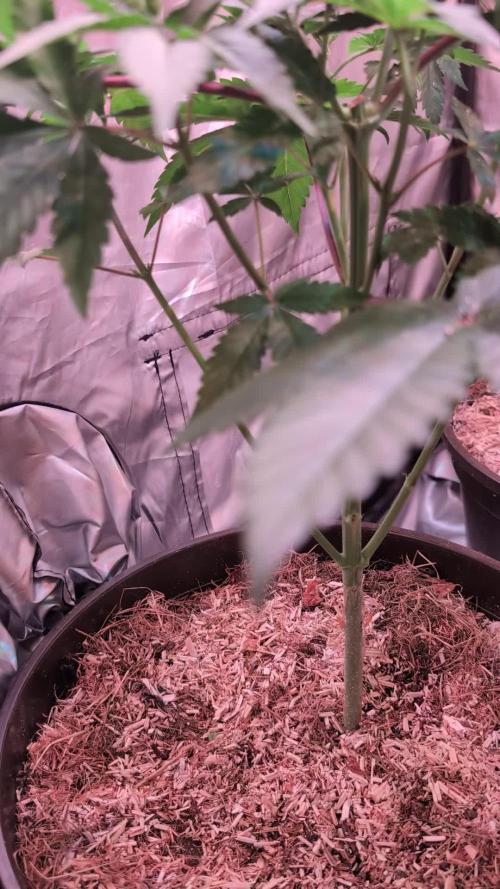
So Leute, in meinem Experiment sind nun zwei Weibchen ausgesucht worden, welche den stärksten Wuchs ausgeformt haben.
Eine davon (rechts an der Zeltwand) wirkt besonders Homogen. Nach dem Topping wachsen die Triebe nun Recht gleichmäßig.
Bei der anderen, dauert es noch ein bisschen länger, da Sie an sich zwei Tage Jünger ist (vermute ich einmal.) Sie war auch im Höhenwachstum etwas kleiner, da sie auch in einem kleineren Topf war.
Die Pflanzen wachsen sehr schön und gleichmäßig.
Und der Dünger von Weedefix legt auch ordentlich was hin.
Ich werde diesen jetzt zusätzlich zur Anwendung einer Livingsoil hinzufügen um das Potenzial der Erde um ein weiteres zu erhöhen. Den die ganzen Bio Stimulanzien und Bakterien unterstützen die Livingsoil zusätzlich.
Ab nächster Woche kommen die Ladys unter das Scrognetz. 🥦💚
Likes
Comments
Share

@MyLittleGarden
Follow
Vegetationswoche 8 - 08.06. – 15.06.2026
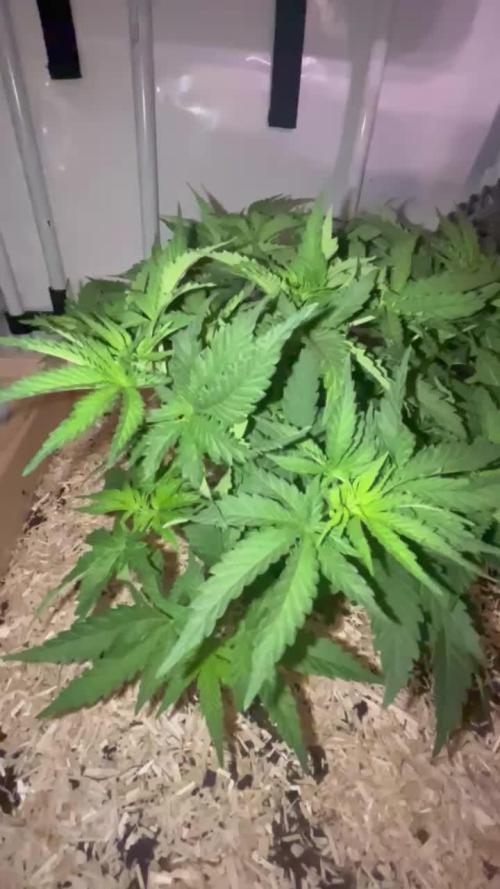
In der achten und gleichzeitig letzten Vegetationswoche wurde nur noch wenig an der Blue Sunset Sherbert gearbeitet. Ziel war es, die Pflanze möglichst stressfrei wachsen zu lassen und ihre natürliche Entwicklung zu beobachten.
Im Verlauf der Woche wurde sie einmal mit etwa fünf Litern Wasser gegossen. Zusätzlich kam leichtes Low-Stress-Training zum Einsatz und einige größere Blätter wurden entfernt, um die Pflanze etwas auszulichten und den unteren Trieben mehr Licht zugänglich zu machen.
Die Blue Sunset Sherbert entwickelte sich in dieser Woche ausgesprochen gut. Sie blieb zwar weiterhin eher kompakt, baute dabei jedoch eine sehr schöne und gleichmäßige Struktur auf. Besonders auffällig war die runde, buschige Wuchsform mit zahlreichen Seitentrieben und einer dichten Verzweigung. Insgesamt wirkt die Pflanze gesund, vital und sehr ausgewogen aufgebaut.
Ursprünglich war geplant, die Pflanze über ein SCROG-Netz weiter zu trainieren. Im Laufe der Vegetationsphase fiel jedoch die Entscheidung, auf das SCROG zu verzichten und stattdessen den Grow etwas kompakter und schneller abzuschließen. Da die Pflanze bereits eine schöne Form entwickelt hatte und die verfügbare Fläche zunehmend einnahm, erschien der Zeitpunkt für die Umstellung passend.
Am 15.06.2026 wurde schließlich der Lichtzyklus von 18/6 auf 12/12 Stunden umgestellt, um die Blüte einzuleiten.
Damit endet die Vegetationsphase nach insgesamt acht Wochen und die Blue Sunset Sherbert startet in ihre erste Blütewoche. Nun wird sich in den kommenden Wochen zeigen, wie sie auf die Umstellung reagiert und welchen Stretch sowie welche Blütenstruktur sie entwickeln wird

Likes
2
Share

@Selkot
Follow
.
YEAR 5 - 3rd quarter
-----------------------
In the 3rd quarter, I start 3 Strawberry Banana from FB and 1 Royal AK from RQS.
But I allow myself a small upgrade: I replace the two TS 600 (100 W) with two TS 1000 (150 W).
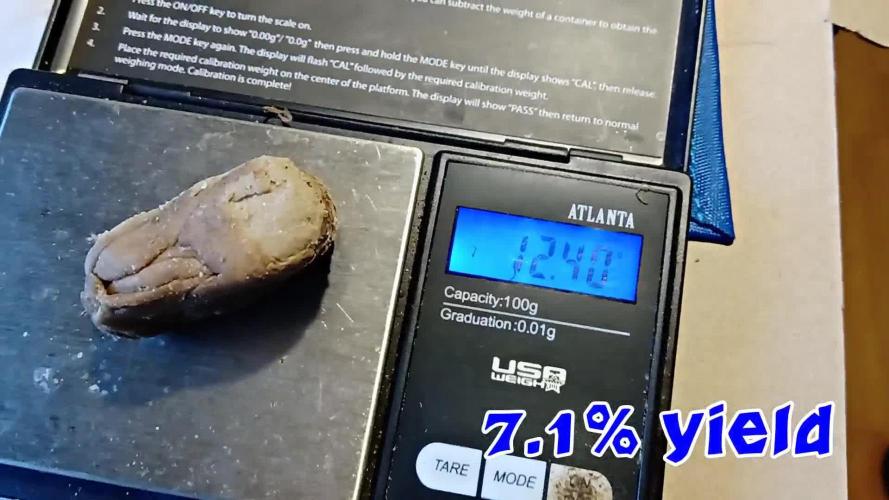
The four plants give me 247 g, my best harvest so far,
With an average of 62 g per plant.
I also made a bit of bubble hash 😏
Likes
142
Share

@MadeInGermany
Follow
Hi everyone 🤗
This week the two Kosher Tangie Kush were harvested by Amsterdam Genetics 😍.
extremely good phenotypes. The blue cheese pheno 2 and 3 were placed in the darkroom according to the video.
These were harvested yesterday, from which the pictures will come in the next update :-).
All others need 2-3 weeks.
I wish you lots of fun with the diary, stay healthy 🙏🏻 and let it grow 🌱


Likes
3
Share

@Grow4ever
Follow
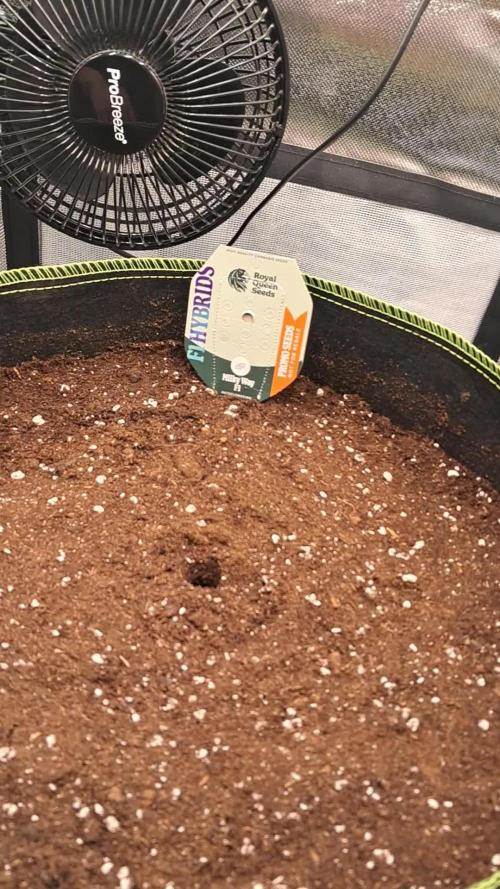
Wikrlich schöner Start bei der Milkyway F1.
Habe in der Mitte ausschließlich light mix, außen ist light / allmix und etwas wurmhumus gemischt. Außerdem habe ich bei 40litern insgesamt 20g dolomitkalk drin. Wird später noch wichtig
Likes
18
Share


@KEGrow
Follow
Into flower we go and so far she looks really damn fine! I keep her very low whit lst because my grow space doesn’t allow high plants right now 😂 But I love lst, it gives me time to sit beside my tent and just play with my girls 😂