Likes
Comments
Share
Likes
12
Share
@Bryankush
Follow
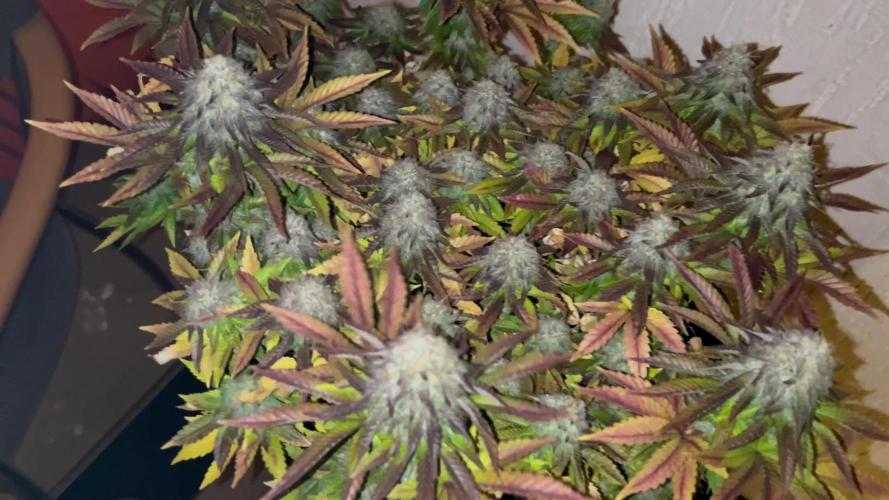
Giorno 6 Lei sembra matura ed è molto profumata In tutto ci ha messo 9 settimane a maturare niente male. Le cime a causa del freddo a settembre non si sono espanse molto ma sono sicuramente gelide e profumate
Likes
13
Share
@Drawer
Follow
Its been pretty smooth this week, only mistake was that the light was to close so I got lightburn and bleaching on 2 tops, lesson learned. The SF4000 is still put at 85% and im still slowly cutting down the nitrogen, im currently feeding 2:1:1 ratio of (4-18-38/magnesium sulphate/calcium nitrate)
Likes
3
Share
Processing
Likes
7
Share
@Kushizlez
Follow
Day 10F-17F (Day 10F) Everything is looking on point. I’m going to soak in a gallon of lite compost tea diluted to 400ppms on each plant except for #5. I’m still a little worried I won’t make it through the stretch but at the same time I fear N toxicity just as much. I will give one more lite tea before the end of stretch, most likely at the end of this week. (Day 12F) Ladies responded nicely to the tea except for BBB#1. It just isn’t looking as vigorous as it was last week. It’s the only one without an air hose so I guess it couldn’t hurt to grab one. The air hose does without a doubt prevent overwatering in soil and I’m surprised I don’t see more people using it. It’s cheap, effective and gives me similar results to growing in pure coco. I’m going to give one more light foliar spray of 3ml of calmag, 3ml of kelp and 2.5ml of insect frass. (Day 14) Got the air hose hooked up to all 5 plants now. I hate that I’ve been forced to defoliate so much in early flower and it is definitely reducing bud size. Last round my bbb’s had pistil clumps twice the size at this time and they were dealing with severe deficiencies. I’m hoping it’s just genetics or the fact they are larger plants. (Day 15) I’m starting to see signs of N toxicity on the some of the new growth and overall growth on all plants except #1 has slowed. It was most likely caused by the foliar spray/tea combo. No more feeding anything for the next 12 days at least. Luckily it’s still pretty early in flower but I know that N tox can hit really hard after the stretch stops. I would be pretty upset if I vegged for 80 days only to get severe N tox in mid flower. Since it’s not breaking down in the soil, I should be fine. I’m going to defoliate some more of the large bottom fan leaves as they hold large reserves of extra nutes I don’t need. Hopefully these small defoliations aren’t stressing them at all. Next round I plan to do a big strip one week before flower, at transplant and a second big strip on day 21. (Day 17) I think I was over-worrying about the seriousness of the N tox. I’ve seen it hit very hard in mid flower and can’t be too careful. It’s almost always caused by water soluble nitrogen so I’ll try to stay away from that unless I absolutely need it. My case does not look to alarming just yet. I noticed the stunting on #3 right after that last tea so I am going to stop giving the last liter of compost tea because of how unbalanced and separated at the bottom it is. It sure helped out the other 4 plants that didn’t get the granulars from the bottom of the bucket. I‘m planning to give a bloom tea around day 26 and a final top dress a few days later. #1 has now out stretched everything else in the tent. I honestly was not expecting that. If #3 didn’t get stunted this whole week I think it would be the taller/heavier plant.
Likes
52
Share
You don't become confident by shouting affirmations in the mirror, but by having a stack of undeniable proof that you are who you say you are, outwork your self-doubt. Nitrogen fixation is a chemical process by which molecular nitrogen (N2), which has a strong triple covalent bond, is converted into ammonia (NH3) or related nitrogenous compounds, typically in soil or aquatic systems but also in industry. The nitrogen in air is molecular dinitrogen, a relatively nonreactive molecule that is metabolically useless to all but a few microorganisms. Biological nitrogen fixation or diazotrophy is an important microbe-mediated process that converts dinitrogen (N2) gas to ammonia (NH3) using the nitrogenase protein complex (Nif).[2][3] Nitrogen fixation is essential to life because fixed inorganic nitrogen compounds are required for the biosynthesis of all nitrogen-containing organic compounds, such as amino acids and proteins, nucleoside triphosphates and nucleic acids. As part of the nitrogen cycle, it is essential for agriculture and the manufacture of fertilizer. It is also, indirectly, relevant to the manufacture of all nitrogen chemical compounds, which include some explosives, pharmaceuticals, and dyes. Nitrogen fixation is carried out naturally in soil by microorganisms termed diazotrophs that include bacteria, such as Azotobacter, and archaea. Some nitrogen-fixing bacteria have symbiotic relationships with plant groups, especially legumes.[4] Looser non-symbiotic relationships between diazotrophs and plants are often referred to as associative, as seen in nitrogen fixation on rice roots. Nitrogen fixation occurs between some termites and fungi.[5] It occurs naturally in the air by means of NOx production by lightning.[6][7] All biological reactions involving the process of nitrogen fixation are catalyzed by enzymes called nitrogenases.[8] These enzymes contain iron, often with a second metal, usually molybdenum but sometimes vanadium. Green clover (Fixation) White clover (Fixation) Red Clover. (Fixation) Yellow Clover. (Fixation, deeper roots) Sweet Thai Basil. (Terpenes) Italian Basil. (Terpenes) Chamomile.(Oil production) Borage.(Pest attraction taste) Lavender.(Pest attraction smell) Marigold(Pest attraction visual) Mycorrhizae are beneficial associations between mycorrhizal fungi and a plant’s root system. Mycorrhizal fungi spores germinate in the soil, creating filaments (hyphae) that penetrate the root cells, thus establishing a symbiotic relationship. This collaboration leads to the development of both intra-radical and extra-radical networks of filaments, enabling efficient exploration of the soil for enhanced access to nutrients and water. Consequently, these vital resources are transferred to the plant, resulting in numerous benefits for crop cultivation. Various mycorrhizal products are available in diverse formulations (powder, granular, and liquid), concentrations, and qualities. Ongoing advancements in products, technologies, and research are reshaping our understanding of mycorrhizae. Despite these positive developments, certain misconceptions persist. In the following discussion, we aim to clarify the truths and dispel the myths surrounding mycorrhizae products. MYTH #1 A HIGHER NUMBER OF MYCORRHIZAE SPECIES MEANS BETTER RESULTS. Contrary to common belief, having a higher number of mycorrhizae species in a product does not translate to better results; in fact, it often yields the opposite outcome. A plant can sustain only one association with a particular mycorrhizal fungi species. Introducing multiple species creates competition among them, which is not advantageous for the plant. The initial colonizer does not ensure the highest success; instead, it gains precedence. It is recommended to select a product with a concentrated presence of a single mycorrhizae species known for its effective performance, rather than opting for a product with multiple species at lower concentrations. MYTH #2 ECTOMYCORRHIZAE ARE EFFECTIVE FOR CANNABIS PLANTS. Although ectomycorrhizae can colonize five to ten percent of plant species, cannabis is not among them. Ectomycorrhizae do not penetrate the root cells; instead, they develop around the roots and on the exterior. For cannabis plants, it is essential to seek out endomycorrhizae. Endomycorrhizae are capable of colonizing 70% to 90% of plant species, including cannabis. Unlike ectomycorrhizae, endomycorrhizae penetrate the root cells, forming structures like arbuscules for the exchange of nutrients and water with the plant. MYTH #3 WHOLE INOCULANT (PROPAGULES) PERFORM BETTER THAN ONLY VIABLE SPORES. The propagule count specified on most mycorrhizae products indicates the presence of spores (viable and unviable), hyphae, and root fragments. However, it is crucial to note that only viable spores, those with the capacity to germinate, can successfully colonize a plant’s root system. Spores are to mycorrhizal fungi what seeds are to cannabis plants—a fundamental component enabling fungi reproduction. Consequently, even if a mycorrhizal product boasts millions of propagules, its effectiveness hinges on the presence of viable spores. Without viable spores, the product will not contribute to plant development. Therefore, the genuine value of a mycorrhizal inoculant lies in the quantity of viable spores it contains, as only viable spores can efficiently initiate symbiosis. MYTH #4 ALL METHODS OF APPLICATION YIELD IDENTICAL RESULTS. To establish the symbiosis, mycorrhizal fungi spores must be close to the plant roots. The optimal recommendation is to directly apply mycorrhizal inoculant to the roots, either in powder, granular or slurry form. This method ensures maximum proximity between the spores and the roots, facilitating a rapid establishment of symbiosis. Particularly with crops like cannabis, which have a short growing cycle, employing this technique is the most effective way to obtain optimal benefits. Alternatively, techniques such as blending the inoculant with the soil are effective, but there may be a delay in the establishment of symbiosis. This is because the roots need to grow and come into contact with the dispersed spores throughout the growing media. MYTH #5 MYCORRHIZAE CAN ONLY BE GROWN ON LIVING PLANTS. While the predominant method for commercially producing mycorrhizae involves growing them on the root systems of living plants (in vivo production), it is not the exclusive nor the optimal technique. In fact, this production approach has notable drawbacks that the “root organ culture” method just does not have (in vitro production). In vitro production occurs in meticulously controlled, aseptic laboratory conditions, allowing for the consistent generation of products that are viable, highly concentrated, species-specific, and free from pathogens. Achieving such precision and quality is impossible when relying on the cultivation of mycorrhizal fungi on plants exposed to external conditions. In conclusion, it is crucial to take all these factors into consideration when choosing the appropriate product for your crop to fully harness the wide array of benefits provided by a high-quality mycorrhizal product. STRONGER PLANT – Stress resistance. FASTER GROWTH – Improve plant structure and shorter veg time. INCREASE YIELD – Overall more biomass. IMPROVED QUALITY – Increase cannabinoids and terpenes content.
Likes
38
Share
So my struggles are finally paying off my girls went into flower!!! Northern lights- did some low stress training to bring main cola down away from light. Added some vinegar in bowls and shot glasses to grow tent to control these flying knats(which bite). Pineapple auto- she's in flower I'm just concerned with all the lower leaf issue's that it's going to affect buds. I've over watered this plant which started the leaf issue's at like 3 weeks. At week 4 I trimmed all the fan leaves off which put it in stress almost haulting all growth for a week. Oh and the knats! I will never use walmart soil again for my grows or house plants. The neem oil has really knocked alot of them out. So the leaf burn and star leaves began at week 5 and it was the only feeding i gave my plants with cal mag and within 2 days the throwing star leaves and burning began.. not sure if it was the cal mag or the knats being so bad at that time. But thru all of it this plant has been a fighter!! You can see in pics the new growth and bud sights are healthy so I hope she fights all the way to the end! I would like to thank Growdiaires and it's community for the opportunity to help and share with others. I appreciate all help, views, likes, comments and support. We all share a common interest and knowledge is power! Thanks again till next week.
Likes
2
Share
@nickeri
Follow
9.7.2k24✅ 💚 Flowering 🌸👌 Nutri: Plagron Alga Bloom = 4 ml/l Plagron PK 13-14 = 1,5 ml/l Plagron Sugar Royal = 1 ml/l 🌹🌹🌹 Fan adjusted and large leaves torn off 🌿 13.7.2k24 + Biobizz Alg-a-Mic = 4 ml/l
Likes
30
Share
This week was a rush of growth! A great last of the lst, did some more training today using bud clips! Loveing the growth, headed into flower soooon!!!
Likes
4
Share
I have my Electric Sky 180v2 now in instead of the cheap 40$ for 4 lights i bought on facebook. Which were growing but nothing like this thing has been doing the past week. Im still blown away by the light but back to the plants. Doimg great i took some clones. First time ever so hopefully they root. I been sprayin em 4 -6 times a day. My 3rd g6jetfuel i took out of my tent with es180v2 and put in closet by itself with the 40$ cheap leds. It hasnt grown a whole lot compared to the tent plants g61 and 2...i thought maybe it may of had a male or hermi part but honestly i dont think it did bc i cant find it now. But its still in there bc i decided to throw it on 12-12 in closet to find out sex forsure. Ive been foliar spraying in my tent 3 timez a day. And 2 times a week i get 2 little drops of fox farm grow bif in my 10oz spray bottle of water.
Likes
6
Share
Hello everyone, The girls are finally outside in 20 gallon fabric pots. This season I have a greenhouse for them and I hope it goes good. Still have to build the first cages around them and start stretching them. 🎊🎉 finally, summer is here 🎉🎊 See you guys next week 🤞🤞🤘🤘👊👊👊
Likes
6
Share
Week 6 For Space Panda by Atlasseeds, End of week 6 for this cultivar, after the transplant the new growth fixed right up👌 This Strain has got some crazy root vigour was only 3 days since being transplanted.
Likes
56
Share
@Aedaone
Follow
The temperatures, humidity, height, and watering volume(if measured) in grow conditions are all averaged for the week. The pH is soil pH. Any watering done by me is well water which is 7.6 pH and 50° F. Coop Poop, Feather Meal, and Soluble Kelp are ml/gallon of soil top dressed. Everything else listed in nutrients is ml/gallon of water fed to plants without checking the solution Ph. Day 1 we had a high temperature of 79°F. We missed the rain, but had a big dew and it was 90+ humidity. I watered about 5 gallons each. Day 2 we had a high temperature of 78°F. It was mostly cloudy and super humid, but again no rain. I watered about 5 gallons each. I fed coop poop at 75ml top dressed and Soluble Kelp 50ml top dressed. Day 3 we had a high temperature of 89° with clear sunny skies. Humidity is still up. I watered about 5 gallons each pot. Day 4 we had a high temperature of 88°F with mostly sunny skies. I watered about 5 gallons. Day 5 we had a high temperature of 91. Skies were clear during the day. I watered about 5 gallons of well water Day 6 we had a high temperature of 91°F with mostly sunny skies. I added 160ml of molasses to top of pot and washed it in with my watering wand. I watered about 5 gallons. Run off isn't an issue. The girls are rooted through the pots into the ground and the loved the K in the molasses. Day 7 we had a high temperature of 87°F. We had over cast skies, some gusty wind, and rain. Luckily the thunderstorms missed is. We did get enough wind to blow one of landrace crossed over the wch3- which requires some attention. The rain did the watering for me. This week was a success. Buds are filling out she's super loud and frosty. She's really trying to finish.
Likes
6
Share
She doing great frosty as fuck still producing new pistilis so ima hoping for the 15th to harvest still no amber tri May harvest end of
Likes
2
Share
Our friends at Zamnesia have been working on strains for years and although they are great lovers of experimentation, novelties and know how to keep up with the times like few others, they also know the value of traditions and historical pieces, Blue Dream is one of these, great quality in genetics and stability in fact the plants started very well. In this diary you will find the plant worked with the techniques in this case the first topping was carried out, we cleaned everything else creating the Mainfold and we are going to work everything with the main lining. We are at the first topping and we have two mini branches growing. The other one you can find in the diary alongside worked without the application of techniques that involve cuts to preserve its speed. Comparison is the salt of experience. We have started the Plagron fertilization program, we are in 100% organic configuration, the soil is recycled Promix + 1/3 fresh soil + 10% Perlite + RQS Mycorrhiza Mix (4gr in the mix, 1 gr under the small fiber pot). We are administering // 1 ml/l of Power Roots - 1 ml/l of Pure Zym - 1 ml/l of Sugar Royal - 3 ml/l of Alga Grow I have doubts about the compatibility of Pure Zym with mycorrhizae. If in doubt, ask the experts, do not mix too much at random. https://plagron.com/en Doubts about Pure Zym / Mycorrhizae compatibility have been dispelled, they can go well together according to Plagron experts. If someone tells you that enzymes eat mycorrhizae, which in principle may seem possible, explain to them that it is not true. https://www.royalqueenseeds.it/growing/452-easy-roots-mix-di-micorrhize.html Try this strain it promises more than good ---- // https://www.zamnesia.io/en/3271-zamnesia-seeds-blue-dream-feminized.html Short Description Zamnesia // Exceptionally tasty and potent, Blue Dream by Zamnesia Seeds is a hybrid with a distinctive and sophisticated character. A blend of Haze and Blueberry strains that manages to bring out the best of both worlds. Its short flowering time of just 9 weeks far surpasses other Haze strains! You can find the whole world of growing at Zamnesia and much more take a tour of the site and you will find "all the best that nature has to offer" in various shapes and colors. The new strains are exceptional and the old ones are no different... p.s. for now zero Hermaphrodites, growers can you say the same? ---- // www.zamnesia.com
Likes
5
Share
@Fuzzel
Follow
Great development. Good smelling too, pine and sweet lemon. Nothing out of the ordinary, but very nice and strong. Stretch sems to slow down now. Major defoliation on day 94. There still is a lot left since I am a stern believer in cutting off rather less than more. Over the next few weeks I will only take a select few leaves here and there blocking light to budsites up top and everything sickly looking down below.👍 Another few scoops of megaworm and Guanokalong added on top of the soil. No change in feeding, she looks like close to the max she can take and I already feed her a lot.
Likes
6
Share
@Comfrey
Follow
She reacts quit good at defoliation last week and at the low stress training, too. I water my plants twice if it‘s sunny and hot. Actually I don‘t measure it. The weight of the pot before and after watering… So I got more relaxed, try not to do too much and we‘ll see how they react. I don‘t have rainwater anymore. That‘s not so good.