


Likes
Comments
Share


@BigUncGotGaz
Follow
Day 56 Veg from Seed
Crazy what a scrog method could do in just 1 week 🔥
Definitely going to preform this method again in my future grows.
Today was the last day of veg I prep my reservoir for flowering stage (nutrients mix with 5Gal spring water) and flip my lights to 12/12
Also collected a few clones from each plant giving me the opportunity for a mother plant or 2 then have a full run in the near future ⛽️

Likes
12
Share


@Ctbest2023
Follow
So two of them are close to being done I’m adding overdrive next feeding which will be tomorrow the other 3 are like 4 weeks about from being done it looks like to me which is insane but I’m not mad about it week went good they have a gassy fruity smell that just fills your nostrils soon as u walk in house and I love it not a thing I’d do different except make watering easier with auto feeders and run to waste not recirculating im hyped to get Some of this done and try it happy growing all

Likes
31
Share


@Joni2017
Follow
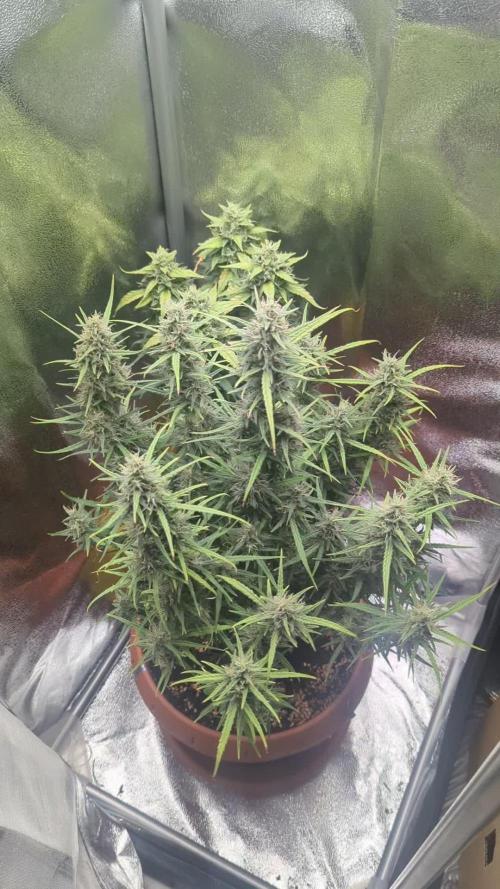
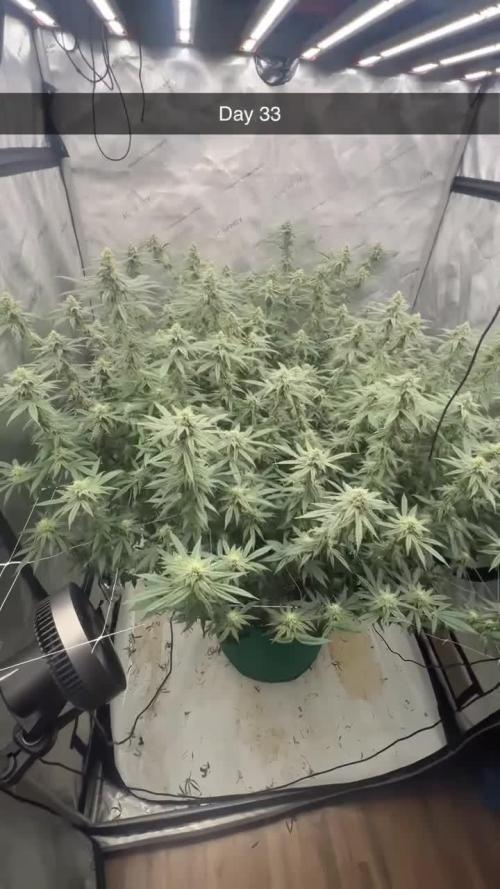
The princesses follow their rhythm 54 cm😄 i have rotated them to grow uniformly😁, temperature 26º C ☀️, humidity 65% 💧, irrigation 500ml/plant, water one day with nutrients and another day without nutrients💦💦😋 binaural sounds 60min/day🎼😋👍



Likes
72
Share


@Green_Mountains
Follow
I started these Pyramid Auto Anesthesia seeds on 5/14/2021. The first one popped up on 5/19/2021. The other should be standing tall by tomorrow morning (5/20). I will update with another photo once it has fully popped.
I am off and running on an other grow. Cheers!!

Likes
21
Share


@KrautFabrik
Follow
Day 60: flush 💦
Pictures are taken on day 62📸
---------------------------------------------
She is doing great ✌️💦
Happy growing 🕷️🌱

Likes
7
Share


@HookahCli
Follow
d71
Se han cosechado 3 plantas de las 8, se han regado 3 que están mas avanzadas con kleanse y las 2 KOK que van más atrasadas en la floración, se les ha regado como la semana anterior nos quedan 5 plantas, pronto quedarán menos hasta terminar con este seguimiento.
He cosechado KOK1, luego LK y para terminar con el día KAK3, han sacado buen cogollo central, la LK esta super dura y se siente pesada., se ha pesado en húmedo, cuando se seque todo añadiré información sobre la cosecha de LK. KOK y KAK me esperaré hasta cosecharlas todas.
d74
Se han regado con igual, con Kleanse las que estan por terminar y las dos KOK que van mas lentas con TricoPlus, SugaRush y EnzymBoom.
Likes
69
Share


@Hempy_The_Kid
Follow
5/26/21 Week 3 of flower. PH 5.96 tds 735. Going to have to figure out how to lower canopy. Plant has grown way more then expected.
5/27/21 PH 5.8 TDS 760. Plant seems to have stopped her stretch thank goodness 😅. Seems to have drank alot of water, reserves depleted by half. She missed her foliar feeding, recharge, and water change yesterday as I was away. She will get all that later this evening. After next Saturday I will discontinue the canopy boost. Look at the size of that stalk!
Changed nutrient water PH 6.02 tds 750 recieved recharge and foliar feed.
5/29/21 PH 5.98 TDS 740
Gave last foliar feeding. Gave 2 quarts recharge. Tied branches down.
5/30/21 PH 5.86 TDS 740
Added water to reserves PH 5.96 TDS 780. Plant has drank half. Readjusted some of the ties. Added a third fan for circulation. Trimmed some suckers that I missed.
6/1/21 filled reserves PH 5.98 TDS 780

Likes
18
Share


@Bread_n_Buds
Follow
The photoperiodic Blue Dream gave us this magnificent main cola which is the most exciting visual part but guys, you should smell what this beauty has. A real marvel I am very happy with her. Also here excellent resin and resistance to the first heat.
** Remember that we have two plants per strain one left to grow straight and one worked with the techniques.
Description // This plant was simply left to grow straight, free and beautiful and the result was really excellent. The scent is its hidden strength, great fragrance in the room and soon in the jars. It did not give us particular problems and was very fast to flower.
Trichomes and maturation // We did a thorough microscopic analysis 10x (and 10x x 1.6) and noticed a good percentage of milky/lumpy trichomes; The percentage of amber trichomes was also excellent and still a bit transparent, but that's fine for us as we're not crazy about THC oxidation and hyper indica effects around here.
Fertilizers and soil // We used the Plagron organic fertilizer range, all the recommended additives and Pro Mix soil, both unfertilized and organic. Calculate the dosage according to your needs on the website
------ https://plagron.com/
The nutrients are available in convenient packs on the Zamnesia website
--------- https://www.zamnesia.io/en/11457-plagron-easy-pack-natural.html
Try this strain, it's more than promising ---- // https://www.zamnesia.io/en/3271-zamnesia-seeds-blue-dream-feminized.html
Zamnesia Short Description // Exceptionally tasty and potent, Blue Dream by Zamnesia Seeds is a distinctive and sophisticated hybrid. A blend of Haze and Blueberry strains, it manages to bring out the best of both worlds. Its short flowering time of just 9 weeks far surpasses that of other Haze strains!
From the moment you take your first toke of Blue Dream your taste buds will be intoxicated by a delicious blend of berry, citrus and sweet flavours. As for the experience, Blue Dream induces an incredible uplifting and euphoric high. But be careful, if you consume large quantities you will quickly be swept away to dreamland. This overwhelming potency not only makes Blue Dream particularly attractive to recreational users, but also to medical marijuana users. Those suffering from anxiety, stress, insomnia, depression, pain and lack of appetite will find this plant particularly effective in reducing symptoms.
The whole world of growing and more is at Zamnesia, just take a look at the site and you'll find "the best that nature has to offer" in various shapes and colors.
The new strains are fantastic and the old ones are no exception...
-- // www.zamnesia.com

Likes
54
Share


@Roberts
Follow
Gorilla Cookies is starting her first week. She sprouted on the first try. I have been using nutrition to get my coco ph in range. She is getting acclimated now, and should start growing soon. She is under the Spider Farmer G3000 light. Thank you Spider Farmer, and Pure Instinto. 🤜🏻🤛🏻🌱🌱🌱
Thank you grow diaries community for the 👇likes👇, follows, comments, and subscriptions on my YouTube channel👇. ❄️🌱🍻
Happy Growing 🌱🌱🌱
https://youtube.com/channel/UCAhN7yRzWLpcaRHhMIQ7X4g
Spider Farmer G300w: https://amzn.to/3S2zvsd
Spider Farmer 10X20 Heat Mat Kit - https://amz.fun/lsa0J
Spider Farmer Amazon Store: https://www.amazon.com/spiderfarmer
Spider Farmer Official Site: https://spider-farmer.com
Discount code: saveurcash (stackable)


Likes
1
Share

@Trichoma
Follow
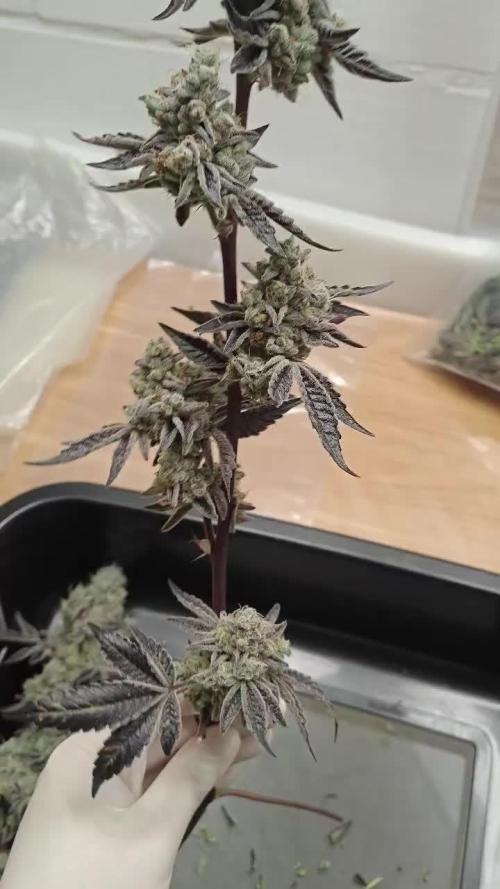
Had good dense buds was also easy to trimm, will update this after I am done with the dry / fresh-frozen.


Likes
8
Share

@DogDoctorOfficial
Follow
🌸 Week 5 Flower – Gelonade Journey
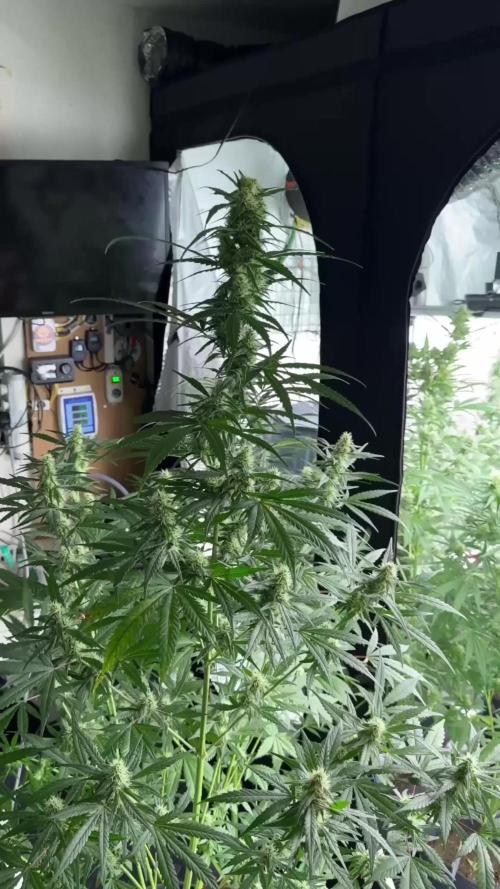
What a week! The Gelonade girls are now stepping fully into their flower form, and it’s breathtaking to witness. The evolution is clear: their structure is leaning beautifully toward the sativa side, with long, elegant branches reaching outward and bud formations stretching gracefully. Even though Gelonade carries a 60% sativa / 40% indica balance, the girls are clearly showcasing their sativa influence, airy yet strong, expressive, and absolutely stunning.
✨ Sativa Stretch & Structure
The branching is art in motion, every node working like a painter’s brushstroke on a living canvas. The main colas are elongating, and even the funky pheno is showing its own charm in how the leaves and flowers express themselves. It’s one of those weeks where you just stand back and admire.
⚙️ Smart Growing with Sensors
The WCS2 substrate sensor from TrolMaster has been invaluable this week. It constantly reads moisture, EC, and temperature directly from the soil, helping to decide exactly when to feed and when to hold back. Instead of guessing, we’re guided by real data, a powerful ally for keeping the roots in balance.
💧 Nutrient Recipe Update
This week we reintroduced Aptus All-In-One Liquid at 1 ml per liter, complementing the standing mix of Aptus Regulator, CalMag Boost, and Plagron Power Buds, Sugar Royal, and Green Sensation. The reasoning is simple: as the flowers demand more, a little extra balanced nutrition ensures the canopy stays lush while the energy shifts toward bud production.
💡 Inner Canopy Lighting
One of the biggest joys this run is the extra canopy lighting. The Future of Grow and ThinkGrow LEDs shine from above, but the added under-canopy strips are filling gaps and ensuring photons penetrate deeply. Instead of shadowy corners, the girls are glowing top to bottom, every leaf touched by light.
🌿 Recap & What’s Next
From seed to now — germination, veg, stretch, and into this fifth week of flower — the Gelonades have shown resilience and individuality. Pheno #2, with her unicorn leaves, continues to amaze, while both are stacking into tall, elegant forms.
For next week, we expect more density building, pistils shifting color, and the first whispers of resin glands sparkling under the LEDs. The journey forward promises more fragrance, more structure, and more beauty still to come.
💚 Closing Thought
This week, the Gelonades remind us of the elegance of balance, between sativa and indica, between stretch and strength, between data and instinct. Every leaf, every branch, every bud is a note in a song that is only just beginning to play.
May the branches stretch without fear,
may the buds swell with light,
and may each day bring us closer
to the harvest of dreams.
📲 Don’t forget to Subscribe and follow me on Instagram and YouTube @DogDoctorOfficial for exclusive content, real-time updates, and behind-the-scenes magic. We’ve got so much more coming, including transplanting and all the amazing techniques that go along with it. You won’t want to miss it.
•GrowDiaries Journal: https://growdiaries.com/grower/dogdoctorofficial
•Instagram: https://www.instagram.com/dogdoctorofficial/
•YouTube: https://www.youtube.com/@dogdoctorofficial
⸻
Explore the Gear that Powers My Grow
If you’re curious about the tech I’m using, check out these links:
• Genetics, gear, nutrients, and more – Zamnesia: https://www.zamnesia.com/
• Environmental control & automation – TrolMaster: https://www.trolmaster.eu/
• Advanced LED lighting – Future of Grow: https://www.futureofgrow.com/
• Root and growth nutrition – Aptus Holland: https://aptus-holland.com/
• Nutrient systems & boosters – Plagron: https://plagron.com/en/
• Soil & substrate excellence – PRO-MIX BX: https://www.pthorticulture.com/en-us/products/pro-mix-bx-mycorrhizae
• Curing and storage – Grove Bags: https://grovebags.com/
⸻
We’ve got much more coming as we move through the grow cycles. Trust me, you won’t want to miss the next steps, let’s push the boundaries of indoor horticulture together!
As always, this is shared for educational purposes, aiming to spread understanding and appreciation for this plant. Let’s celebrate it responsibly and continue to learn and grow together.
With true love comes happiness. Always believe in yourself, and always do things expecting nothing and with an open heart. Be a giver, and the universe will give back in ways you could never imagine.
💚 Growers love to all 💚
Likes
22
Share


@Sativagrad
Follow
the week went well, it bends very well, does not break, despite the fact that it is not tall, it is very wide)
Processing
Likes
4
Share


@ReelEyezEnt
Follow
Welp she started dying in her 2 gal pot so I moved the light back up and put her in a new 5 gal pot then she went into flower mode lol
the lights will stay 18 hrs on for another week to let some of the other plants catch up
Likes
5
Share

@Chubbs
Follow
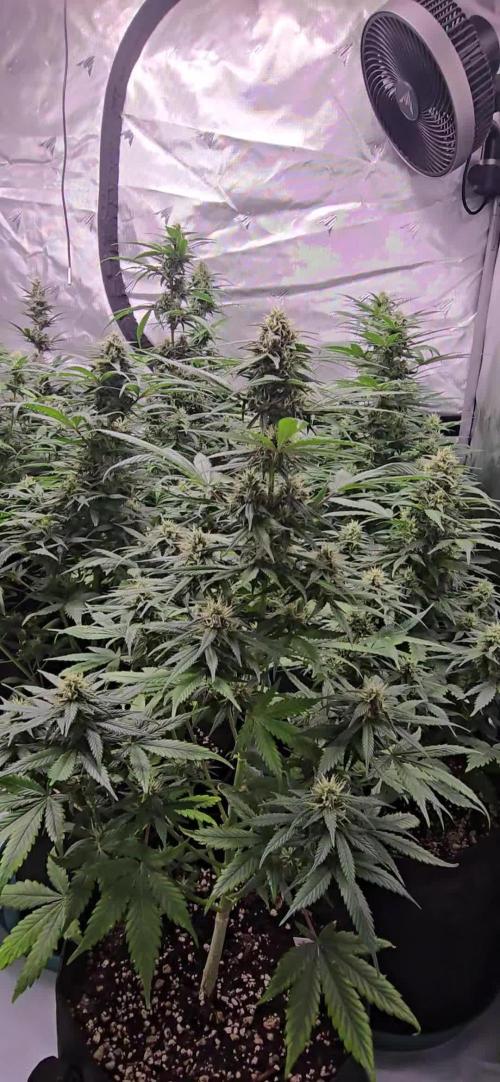
What up Fam, weekly updates on these lovely ladies. This week it's been warm and such a bad time for my AC to go out but overall temps been in the mid it's inside the tent and the plants seem to not mind at all. They're still getting fed 16oz daily. I'd say from the looks, maybe 2-3 more weeks until harvest. Happy Growing
Likes
74
Share


@SlowpokeFuegobud
Follow
Eight, nine, it's boring we say,
we're sleeping all day.
Frequently the tiny leaves we count,
while the real show happens underground.
DAY 8
(actually day 7 for Mimmy, but you know.. Kids.. :rolleyes: )
She's growing like she should. I love her already.
Still watered her 0.5L water with Enhancer today, forgot to add to the soil. :) Pot was quite heavy.
Lights are at 55% approx.
DAY 12
Needed to water, so she got her first Booster Tab alongside Easy Plus Micronutrients, dissolved in lukewarm water + added compost tea.
The tabs dissolved well, now let's see what they can do! 🚬
I also added nematodes for fungus gnats, saw some of them bloody critters flying around. :argh:
Watered 4L.
Musik in Video: Cactus by Jeff Kaale
Thanks for stopping by and sharing the love! <3
____________________________________________________________________________
Setup:
LED Dualwell 240W Full Spectrum + 630nm + 770nm + 380nm Switches – dimmable
PK 125 400/220cm³ exhaust fan
Carbon Active Homeline 360cm³ 125
2x 5W Fans
50W oscillating Fan
Zelsius 80x80x180
RQS 2022 Growers Pack (Soil Plugs, Easy Nutrients pack, fabric pots 15L)
biobizz Lightmix
tab water EC 0,3 pH 7,5
Likes
17
Share


@HeartStrong_Garden
Follow
She's doing ok but all the leaves tips are curling including the small est ones and sugar leaves. I'm hoping she survives and does better than the first one. She also has mites I'm in a battle with. I'm going to do a whole tent clean down after she's done.
Likes
80
Share

@Roberts
Follow
I did some defoliation and lst on the clone today. Everything has been looking good. She started develop normally. I have no set agenda for this plant. It may be In a vegging stage for some time. I dunno yet. Thank you Pure Instinto Seeds. 🤜🏻🤛🏻🌱🌱🌱
Thank you grow diaries community for the 👇likes👇, follows, comments, and subscriptions on my YouTube channel👇. ❄️🌱🍻
Happy Growing 🌱🌱🌱
https://youtube.com/channel/UCAhN7yRzWLpcaRHhMIQ7X4g