


Likes
Comments
Share


@Ultraviolet
Follow
FISH SH!T THE ORGANIC SOIL CONDITIONER (used twice before and always noticed instantly)
Fish Shit is a living product! It provides a complex Microbial profile that includes thousands of different species of bacteria, fungi, and protozoa. This profile is closer to a natural ecosystem than anything you will find on the market. Fish Shit helps release essential oils and terpenes which contribute to the building of a myriad of flavonoids. Flavanoids play a key role in the development of the most potent aromas and tasteful flavors of a plant and its fruit. Fish Shit contains beneficial microorganisms that help plants maximize nutrient uptake. It does this by transforming nutrients into more usable forms and keeping these nutrients in the soil longer. During photosynthesis plants naturally produce exudates (chemicals that are secreted through their roots). Through these exudates, plants can attract the types of good bacteria that are beneficial to them at different points in their growing cycle. These good bacteria cover the roots and act as a barrier to the invasion of disease-causing organisms that may harm the plant.
What Are Enzymes?
Before we dive headfirst into how, exactly, enzymes can benefit cannabis plants, it helps to understand a little about what these microscopic proteins do. Essentially, enzymes facilitate chemical reactions. They do so by binding with a substrate and forming or breaking molecular bonds. In this context, the substrate is the molecule upon which an enzyme acts to boost the efficiency of a reaction.
•substrate /sŭb′strāt″/
•noun
•The material or substance on which an enzyme acts. A surface on which an organism grows or is attached. An underlying layer; a substratum.
Enzymes are proteins with complex 3D shapes that feature regions called active sites. When the substrate binds to these active sites, it forms an enzyme-substrate complex that causes a chemical reaction to take place, temporarily changing the structure of the enzyme and ultimately causing molecules to either come together or break apart. As a result, molecular products are released, and the enzyme returns to its original shape.
Specific enzymes are capable of binding with certain substrates, as the substrate fits into the active site more or less via a lock-and-key principle. Although, new research suggests a more accurate theory of "induced fit", in which enzymes and substrates undergo structural changes to facilitate the reaction.
If you take the human body as an example, we have an abundance of enzymes in our saliva and digestive system. These molecules bind with substrates in these regions (food particles), working to break down the food we eat into usable parts before converting them to energy.
Enzymes in cannabis work in a similar way to the example highlighted above. Typically, enzymes occur in soil naturally, but if your soil mix is lacking organic material, or you're growing hydroponically, then adding enzymes directly to the substrate is crucial.
By using them in cannabis growing, enzymes not only help break down essential nutrients into smaller, more readily available pieces, but they also support the digestion of dead root cells, clearing a direct path for nutrients.
Overall, enzymes make it easier for your cannabis plants to absorb all the elements they need to reach their full potential. For growers, a plant that reaches its full potential means a bucketload of juicy buds come harvest. This is essential if you want to reuse a pot with old systems left over like mine.
Common plant enzymes include:
•Cellulase
•Xylanase
•Beta-glucosidase
•Hemicellulase
•Amidase
Amino acids are a crucial, yet basic unit of protein, and they contain an amino group and a carboxylic group. They play an extensive role in the gene expression process, which includes an adjustment of protein functions that facilitate messenger RNA
Nitrogen, phosphorus, and potassium are the three main pillars of nutrient solutions and fertilizers, but there are countless other nutrients that your cannabis plants need to produce the best possible harvest. Amino acids are one of them.
You may have noticed that amino acids get a lot of attention from bodybuilders and other athletes. That’s because they play a key role in the synthesis of protein, which, as you probably know, is super important for sports recovery and muscle growth. Amino acids are the building blocks of protein and the foundation of both plant and animal life.
But what do amino acids do for cannabis?
WHY IS PROTEIN IMPORTANT FOR CANNABIS?
Just like proteins are important for the human body, they are equally important for the growth and development of plants.
For example, proteins help plants:
•Facilitate the growth of intracellular plant structures
•Promote energy generation
•Stimulate metabolic processes
•Facilitate the absorption and transportation of nutrients
So, where do plants get these vital proteins from? Well, unlike humans, plants can’t source proteins or amino acids from other organisms. Instead, they need to create their own amino acids, and then use these to build protein. That's why gardeners, much like athletes, go wild for amino acid supplements.
Amino acids help plants by…
• Increasing their production of chlorophyll, which ultimately improves their ability to photosynthesize
• Serving as an easily absorbable form of nitrogen
• Stimulating the synthesis of key vitamins
• Improving their resistance to pests and diseases
• Boosting the strength of their cells
Amino acids also serve as the precursors to auxins, a group of plant hormones produced in the meristems—the apex of the stems where new leaves and stems are born.
Auxins play a key role in the plant, activating genes for plant growth and development by triggering a multitude of vital plant functions. In other words, they determine what its size and architecture will look like. Auxins influence the development of branches, flowers, and roots, and even help to regulate the photoperiod response of the plant.
Some amino acids, like cysteine, also work together with antioxidants like glutathione to help cannabis plants deal with oxidative stress, which can be caused by high-intensity lighting, some nutrient solutions, and high levels of CO₂.
Unlike humans, plants can synthesize all the amino acids they need to survive and develop properly. Unfortunately, however, amino acid synthesis is a really high-energy process, and plants may struggle to produce enough amino acids when exposed to stress.
WHAT FACTORS AFFECT A PLANT’S ABILITY TO SYNTHESISE AMINO ACIDS?
Any kind of stress can affect a plant’s ability to produce enough amino acids.
This includes:
• Drought
• Temperature extremes
• Poor soil health
• Pests
• Diseases
• Poor lighting
• Lack of space
• Poor root health
WHAT DOES ALL OF THIS MEAN FOR WEED PLANTS?
If you want to push your plants to their extreme in terms of floral growth and resin production, you should look into amino acid fertilizers. By making amino acids readily available to your plants, they’ll be able to use crucial energy to grow and bloom, rather than focusing on synthesizing amino acids themselves. Game of Inches, this is another Plants can absorb amino acids via their roots and leaves. They can also benefit from amino acids during both their vegetative and flowering phases. The fastest way for plants to absorb amino acids is via their leaves. The foliar application of amino acids is believed to improve the transportation of nutrients, increase transpiration, and boost photosynthesis. Hence, I recommend feeding your plants with foliar amino acid fertilizers. When doing so, however, carefully measure the amount of fertilizer you use, as—like with any nutrient—overfeeding can damage your plants.
FOLIAR FEED AND SOIL SOAK
• 1 crushed queen anne carrot
• 20ml h2o2
• 1 crushed radish
• 0.25 tsp NPK Enzymes
• 0.25 tsp NPK Amino Acids
• 50ml coconut water ( nature's own amniotic fluid packed with amino, enzymes )
+ The sound of songbirds.
Onto the predators
1250 -Green Lacewings
Lacewings are extremely voracious predatory insects that feed on several pests. In adulthood, it feeds on pollen and nectar. In the larval stage, it feeds on aphids, thrips, and mealybugs at all stages of growth. It can also attack spider mites in moderate quantities. It is initially an aphid predator, but very effectively controls thrips and mealybugs infestations. It is so voracious that in the absence of prey, it will feed on its congeners. Lacewings are cannibalistic if there is no food available for them. It is therefore important to introduce them into an infestation situation, and not just preventively.
•congener /kŏn′jə-nər/
•noun
•A member of the same kind, class, or group.
•An organism belonging to the same taxonomic genus as another organism.
•A thing of the same kind as. or nearly allied to, another; specifically, in botany and zoology, a plant or an animal belonging to the same genus as another or to one nearly allied.
Ideal temperature 20°C – 26°C
Ideal humidity 60% – 70%
Predatory stage life cycle 21 days
Introduction rate 4 weeks
Storage Refrigerator
Use Immediately
Are there any specific instructions on how to use this predator?
Lacewings are available on small paper cards that you can hang to plant stems. On the cards are dozens of eggs ready to hatch. There are also sterile eggs they can feed on once they have hatched before they are ready to disperse in the foliage. It is important to use them quickly upon receipt to avoid cannibalism. If you don't use them right away, you can store the cards in the refrigerator for 24 to 48 hours to prevent the eggs from hatching too quickly. Avoid storing them for longer than this or you risk losing eggs. 1250 eggs are divided into 7.5 cards, 2500 eggs on 15 cards, and 5000 on 30 cards. The application rate is one card per square meter of growing surface.
Is this predator best used for preventive or curative treatments?
Lacewings are used as a curative solution.
Anything else I should know?
Lacewing eggs hatch approximately 24-72 hours after the cards are exposed to room temperature. When they emerge, the lacewings are just 1.5-2 mm long. They are very small so they are difficult to see. Once hatched, they will stay on the cards for a few hours and then disperse in the foliage. You quickly lose sight of them if you have not witnessed the hatching.
They then live in the foliage for about 3 weeks. Often, you will see them towards the end of their larval cycle. After feeding for 3 weeks, they will triple and even quadruple in size. At that point, they are easier to see. But they remain very discreet insects, it is not abnormal not to see them.
Egg carcasses left behind on the cards do not disappear after the hatching has happened. It's normal to see eggs still on the cards. Visually it is very similar before and after hatching.
Also, on the boxes, there are sterile ephestia eggs which are used to feed the lacewings once hatched. Not all lacewing eggs are viable either. Only a certain percentage of lacewing eggs will hatch. Once hatched, the eggs are white. You can observe this using a magnifying glass.
With,
5000 Stratiolaelaps Scimitus
It is used to prevent or control thrips pupae, fungus gnats larvae, and root mealybugs in the soil. It can also be used for red mites in bird farms or hen houses. The adult is about 1 mm long and is medium brown with a beige triangle on its back. Another fun fact about them is they can survive without prey. They can eat algae and plant debris. This is why they can reproduce and stay in plants for long periods.
Ideal temperature 15°C – 23°C
Predatory stage life cycle 18 days
Introduction rate 2 weeks
Storage Room temperature
Use Within one week
Are there any specific instructions on how to use this predator?
Sprinkle directly on the growing media. They can live in all types of substrates like potting soil, coconut fiber, rock wool, cedar mulch, etc. Stratiolaelaps establish easily so they are permanently fighting pests. One introduction is generally enough unless you have an infestation. In this case, introduce them at least twice at a 2-week interval for best results. If you grow your plants in a 100% mineral substrate, it will have to be released more often since there is less organic matter than in traditional soil.
Do I need to take any specific precautions?
Stratiolaelaps breed in the top layer of the soil. So it is important not to disturb them in the first days following their introduction. They don't like temperatures below 8 ° C. So be sure not to introduce them in a water-saturated or cold environment. Release them 24-48 hours after your last watering. They are very sensitive to chemical acaricides and diatomaceous earth. These methods are incompatible with their use.

Likes
17
Share


Likes
27
Share


@I_Identify_As_A_Dan
Follow
Start of week 6 of flower for Kalini Asia
Gave her another defoliation just stuff that was covering bud sights.
Still getting fed everyday with bottom feeding, this week i did banana peel water with extra cal-mag added too.
Going back to water only after she gets another feed of Bio Enhancer.

Likes
23
Share


@Kakui
Follow
V8, supuestamente hoy haría transplante a los maceteros definitivos, pero, hace 3 días que las plantas están presentando hojas débiles y dobladas hacia abajo, en un principio pensé en que podría ser exceso de agua, pero creo que es exceso de nutrientes, básicamente exceso de nitrógeno, ya que las hojas están con un verde muy oscuro y algunas están presentando manchas color café.
Así que hoy les hice lavado de raíz, con agua EC 0, hasta que el drenaje fue de cercano a 4 EC. Esperaré unos días a ver si se recuperan, si no, simplemente las eliminaré y empezaré de nuevo, ojalá se recuperen.
V9, al final si era exceso de nutrientes/nitrógeno, menos mal que se recuperaron con el lavado de raíces, pensé que morirían, ahora veré como siguen para decidir si hago transplante hoy mismo.
V10, se realizó trasplante a macetas definitivas y un riego suave. Las plantas están todavía en recuperación, esperaré unos días más para empezar el LST.
V12, riego.
V13, se realizó una pequeña defoliación y LST.

Likes
167
Share


@DeepWaterGrower
Follow
🗓️ 4° WEEK FLO // DAY 22-28 (from switch) // DAY 99-105 (from dry seed)
⚡- Light: 30 cm / 250 watt;
⌛- Schedule: 12/12;
🌡️- 22.5° C - 65% RH average;
📑- PH 5.8 - EC 2.2;
💧- 6° DWC change;
🍔- Flowering blend: tap water EC 0.4 + Silic 0.5 ml/l + CalMag 1 ml/l + Hydro A-B 1.6 ml/l + Oligo Spectrum 2 ml/l + Green Sensation 1 ml/l;
🥅- Still bending the branches trough the ScrOG-net. That was the last week, branches are stiffening;
🌱- I did my best to flat that canopy, next week I'll remove some leaves and some branches.
Likes
39
Share


@Hempcules
Follow
I harvested on the last day of week 13. I didn't water for 3 days before harvesting and hung the branches to dry without trimming. I let them hang for 5 days, then trimmed them and am now curing the buds for another 4 weeks.
Processing
Likes
13
Share


@Agentweed
Follow
So 28 days in flower everything is going good plants at 3 foot I don't think she will grow in height was hoping she would tho any suggestions would be helpful guys and girls

Likes
4
Share


@HighOhioAn
Follow
Has been A adventure truly, one of the funniest plants I’ve ever grown monster genetics cannot wait to see the fade on this one💪🔥


Processing
Likes
1
Share


@Ganjagrandaddy
Follow
Week 7 and all is going very well with their transition to the tanks. They have begun to weave roots into the matting now so are well anchored.
The C Banana has been streching out well and I am continuing the bends and squashing her stem to create a decent knot to hold her down where she is quaded. It always looks so rough but the end results can be amazing for repair strength. The monster zkittelz is a little.more busy and robust. She has some nice thick and hardy stems building and i expect she knows her fruit weight to come . Using the squashing and bending does add a little more recovery time each session but the punishment is no worse than nature would throw their way if wild. Always worth remembering a little stress can work wonders. Dont be afraid to control your grows , YOU put a lot into them , you deserve a reward for the comittment.
Be safe and civilised Growmies, one love.
WWG1WGA
Likes
10
Share


@Da-weed
Follow
Čau Growers 💚 Další týden je pryč a holky mají za sebou první týden KVĚTU. Zvednutý světelný výkon jim absolutně svědčí, aktuálně dostávají 584W z možných 730W, (Doteď jsem svítil max 465W Lumatek Zeus). Postupně budu zvedat výkon a sledovat, jak holky reagují. Jinak dostaly poslední GROW krmení, přecházím na BLOOM. Power Roots ještě nechám do třetího týdne květu a po něm přidám Green Sensation. BonBoni jedou parádně, výškové rozdíly minimální. O týden mladší Almond Milk x Fizzy Bubblegum je nejvyšší 65cm a daří se jí taky dobře. FULLHOUSE a zábava začíná 💚Ať se daří, ať to roste, konec hlášení.
Likes
15
Share

@Kirsten
Follow
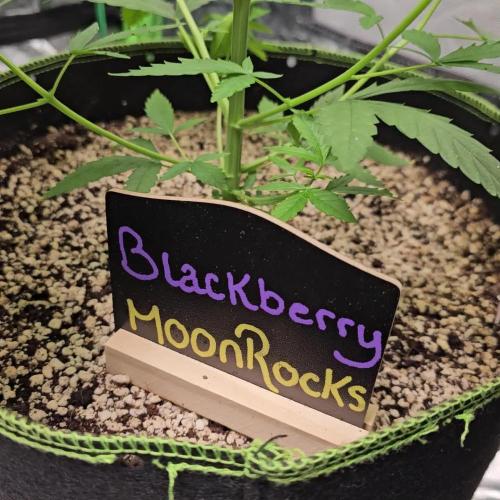
This week has produced some decent growth, and I plan to begin some light LST on Blackberry Moonrocks here soon.
The plant has taken very well to being topped, especially considering the short bushy structure of the plant.
Here is what I did this week.
16.7.25:
I watered with 2ltrs of dechlorinated water PH'd to 6.6 containing;
💜 2ml Ecothrive Trace
💜 1/4 TSP Ecothrive Biosys
PH: 6.6
PPM: 340
19.7.25:
I watered with 1.5L of dechlorinated water PH'd to 6.5 containing:
💜 1ml Ecothrive Trace
PH: 6.5
PPM: 350
Thanks for checking in this week, and hanging out 💚 ✌️ 🍃 😊 🌱
💜





Likes
Comments
Share

@420abbybox
Follow
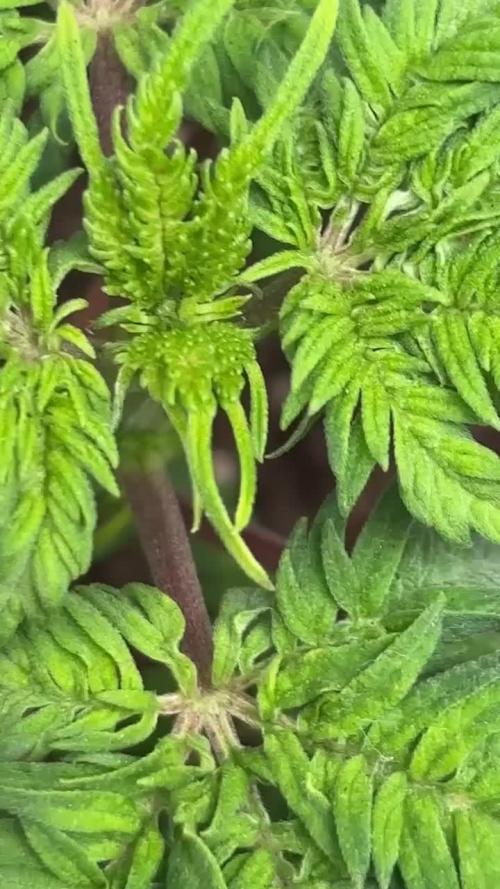
On week 7 of the vegetative stage the plant is stretching more & the root system seems to be expanding in the 14L pot nicely along with some side branches coming from the lower nodes and on the 8th-10th set of leaves

Processing
Likes
1
Share


@BonusPackage
Follow
Day 8 - She has sprouted and looking healthy and great. Really excited for this grow.
Day 12
She got her first soak today, she's the strongest of the set
I turned off the inside fan, I'm worried it was blowing them over. Just running the extraction fan at the moment
Day 13
She has outgrown the balacnce I placed for her and is looking great
Day 14
She is the biggest at the end of week 2

Processing
Likes
6
Share


Likes
23
Share


@elementhc
Follow
A few of the autos have mostly milky trichomes but no amber yet. Maybe another two weeks.

Likes
12
Share


@Hex444
Follow
As I finally took a stab at LST, I noticed all the fine white hairs growing... is this the precursor to flowering? Very excited to see how this continues to grow!
Likes
18
Share


@Chubbs
Follow
420Fastbuds-Week 11
GelatoAuto
What up grow fam. Weekly update on these heavy girls. They'll be getting the chop,trimmed and hung up to dry in the next couple days. The smell and stickiness to them is out of this world. Over all another amazing week. Happy Growing
Likes
20
Share


@eldruida_lamota
Follow
Que pasa familia, vamos a añadir la tercera semana de vida de estas Apple Fritter de RoyalQueenSeeds, empezamos con la temperatura que la tenemos entre los 21/24 grados, la humedad está entorno al 60%, el ph está en 6.2 , el foco actualmente lo tengo encendido 18 horas y la potencia es al 50% de lo que da el foco.
También añado la gama de nutrientes de Agrobeta, que no falla, sin duda de la mejor alimentación que hay para tus plantas.
Trasplantamos a macetas definitivas, 7 litros en este caso, se ven algo amarillas las hojas más antiguas pero es porque pedían ya un trasplante en nada recuperan.
Mars hydro:
Code discount: EL420
https://www.mars-hydro.com/
Agrobeta:
https://www.agrobeta.com/agrobetatiendaonline/36-abonos-canamo
Hasta aquí todo, Buenos humos 💨💨💨
