


Likes
Comments
Share


@BakingBaked
Follow
This week was all about letting her recover from the cloning. Sadly most clones I took did not made it. Just 2 survived my inexperience hands.
The good news is that miss Daisy it's doing so well I may be able to give it another try before flipping to flower. I have no rush for this harvest so will probably give it a try.
After the cloning and some extra pruning she recovered in no time. The roots look good, just wish the nutrients did not stained them, that way would be easier to sight any root rot if present.
🗓️ Day - 28
⏰ Hour - 8:30 am / 10:00 pm
🌬️Air Temp. - 74 / 77
💦Humidity - % 50 / 54
⛽️ TDC (ppm) - 630 / 650
⚱️Reservoir Tmp. - 73 / 72
⚗️PH - 6.1 / 6.1
🌿 Looks perky and happy after pruning. She’s is recovering very well. Her roots are showing new white hairs so seams she’s liking the higher nutrients levels.
🗓️ Day - 29
⏰ Hour - 9:00 am /
🌬️Air Temp. - 76 /
💦Humidity - % 54 /
⛽️ TDC (ppm) - 680 /
⚱️Reservoir Tmp. - 73 /
⚗️ PH - 6.1 / 6.1
📝 Added 4 Gallons of tap water starting feed for week #5 with higher nutrient concentration so ppm should stay around 600. Also added 10 ml of hydrogen peroxide to the reservoir.
🗓️ Day - 30
⏰ Hour - 8:00 am /
🌬️Air Temp. - 76 /
💦Humidity - % 54 /
⛽️ TDC (ppm) - 680 /
⚱️Reservoir Tmp. - 73 /
⚗️PH - 6.2 /
🌿 Bouncing back very well and has nice new roots coming out.
🗓️ Day - 31
⏰ Hour - 8:15 am / 9:00 pm
🌬️Air Temp. - 75 / 76
💦Humidity - % 61 / 60
⛽️ TDC (ppm) - 680 / 710
⚱️Reservoir Tmp. - 72 / 73
⚗️PH - 6.2 / 6.2
🌱 Two clones left of Sour Diesel show small signs of root development. Other samples did not made it.
🗓️ Day - 32
⏰ Hour - 8:10 am / 11:30 pm
🌬️Air Temp. - 75 / 76
💦Humidity - % 61 / 57
⛽️ TDC (ppm) - 710 / 740
⚱️Reservoir Tmp. - 72 / 72
⚗️PH - 6.2 / 6.2
🗓️ Day - 33
⏰ Hour - 8:10 am / 11:00 pm
🌬️Air Temp. - 73 / 74
💦Humidity - % 49 /
⛽️ TDC (ppm) - 770 / 800
⚱️Reservoir Tmp. - 72 / 72
⚗️PH - 6.2 / 6.2
🗓️ Day - 34
⏰ Hour - 7:30 am / 10:00 pm
🌬️Air Temp. - 74 / 74
💦Humidity - % 52 / 53
⛽️ TDC (ppm) - 820 / 880
⚱️Reservoir Tmp. - 72 / 72
⚗️PH - 6.2 / 6.2
🗓️ Day - 35
⏰ Hour - 7:30 am / 9:00 pm
🌬️Air Temp. - 73 / 74
💦Humidity - % 55 / 52
⛽️ TDC (ppm) - 910 / 960
⚱️Reservoir Tmp. - 71 / 71
⚗️PH - 6.1 / 6.1

Likes
10
Share


@HegauHillsFarmers_M11
Follow
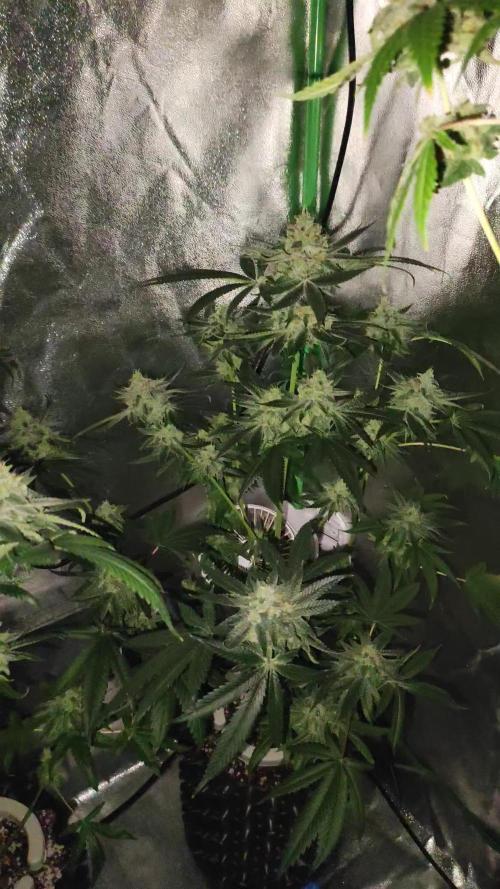
Tag 42 - Ende der 6. Woche.
Der Stretch ist beendet und die Pflanze konzentriert sich auf die Buds. Deshalb habe ich in dieser Woche den Dünger etwas erhöht und die Menge an Litern die ich gieße.
Ich bin gespannt wie sie sich in der nächsten Woche entwickelt.
An Tag 36 wurde die Pflanze gedüngt.
Nährstofflösung:
2 ml/l - Voodoo Juice Advanced Nutrients.
4 ml/l - pH Perfect Sensi Bloom Part A
4 ml/l - pH Perfect Sensi Bloom Part B
2 ml/l - Bud Candy Advanced Nutrients.
2 ml/l - Big Bud Advanced Nutrients.
Davon hat die Pflanze 1l an Tag 36 erhalten.


Likes
8
Share


@eldruida_lamota
Follow
Que pasa familia, vamos con la cuarta semana de crecimiento de estas Papayton feminizadas de fastbuds.
Vamos al lío ,se trasplantaron en macetas de 7 litros definitivamente.
El ph se controla en 6.0 , la temperatura la tenemos entre 24/20 grados y la humedad ronda el 50%.
El ciclo de crecimiento puse 16h de luz, el foco está al 50% de potencia.
De momento van creciendo a buen ritmo y tienen un buen color, estaban muy bien enraizadas al realizarle el trasplante se notaba la abundancia radicular.
Agradecer a Agrobeta por el kit Gold series que mandaron, siempre os portáis, unos maestros.
- os dejo por aquí un CÓDIGO: Eldruida
Descuento para la tienda de MARS HYDRO.
https://www.mars-hydro.com
Hasta aquí todo, Buenos humos 💨💨💨

Likes
25
Share

@squalino
Follow
Journal de Culture : Frost 1 (Semaine 5)
Génétique : Frostbanger (F2 Perso) | Système : Autopot 20L
📣 Remerciements
Un immense merci à toutes les personnes qui suivent ce journal depuis le début ! Un merci tout particulier à @MIA_BIOTABS et à Mrs_Larimar pour leurs précieux conseils qui m'aident à mener cette session au mieux. Merci à tous pour votre soutien constant !
🛠️ Configuration Technique
Éclairage : Lumatek ATS 300W Pro (réglé à 75%)
Distance lampe/canopée : 55 cm
Climat : Jour : 25°C / Nuit : 21°C
Humidité (HR) : 50%
Tente : 1m80 de hauteur
📅 Évolution & Floraison : La phase sérieuse commence !
État de la plante :
jour +35
La structure est maintenant bien établie. La phase de stretch semble se stabiliser, laissant place au développement des sites de floraison.
Hauteur actuelle : 68 cm (+22 cm)
Stade : Floraison confirmée. Les pompons commencent à se former et la plante change d'allure pour se concentrer sur la production.
Travail sur la plante :
Entretien :
Je n'ai pas touché à la plante depuis une semaine. Après le travail d'aération et de palissage précédent, j'ai choisi de la laisser tranquille pour ne pas la stresser lors de son passage en floraison. Elle s'épanouit d'elle-même.
Structure :
Le palissage à la ficelle fait toujours son office, maintenant une canopée ouverte où l'air circule parfaitement.
Gestion du système Autopot :
le 12/05 Nutrition :
Fidèle à la méthode Biotabs, la plante n'a reçu que de l'eau claire via le système Autopot. Sa couleur vert foncé et sa vigueur prouvent que le substrat est parfaitement équilibré pour cette phase de transition.
le 14/05
apport de 50 cl de tea compost
preparation tea compost :
LE MELANGE :
15 grammes tea compost avec 5 ml d'orgatrex pour 1 litre d'eau ( 4 plantes donc ×2. 50cl par plante ) .
mélanger le tous dans un sceaux.
LA PREPARATION
materiel :
1 sceau
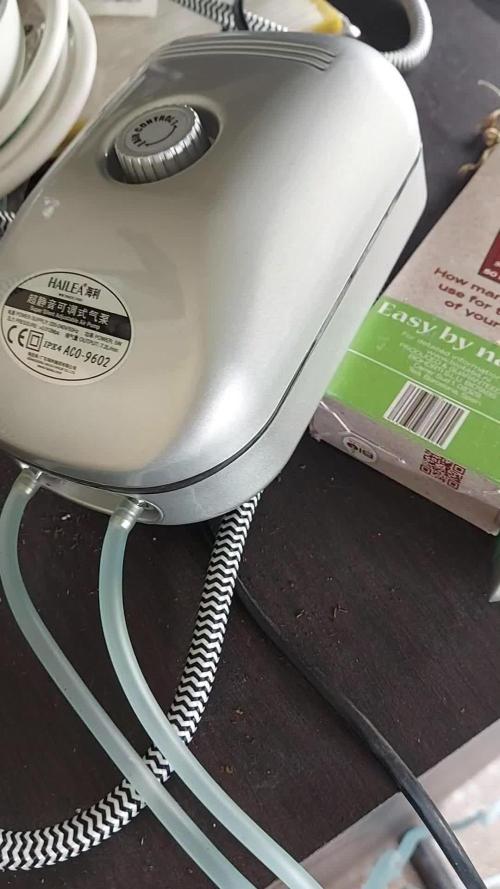
1 pompe à air pour aquarium. ( 15 euro ).
je vais utiliser pour 18h00 la pompe de mon aire dôme de l'autopots. j'ai acheté aussi 2 petit diffuseur d'air à 4 euros . ustensil utiles pour aérer le tea compost .
mettre les diffuseur dedans allumé la pompe et laisser pendant 18h00.
normalement le température idéal pour que les micro-organismes se développent est entre 18 degrés et 22 degrés.
pour ma part le mélange était dans ma salle de culture à enciron 24 , 25 degrés.
voir video et photos ajouter
18h00 après
filtrer le mélange pour éviter touts dépôts susceptible de moisir et ramener des champignons.
donner au plante 50 centilitres .
Le tea compost se garde mal donné dans l'heure qui suis le stop de l'aération
Résumé :
On arrive à un moment charnière. Avec 68 cm de hauteur, elle occupe l'espace de manière idéale. Les fleurs commencent à se dessiner nettement sur chaque sommet dégagé lors du dernier LST. La plante est sereine, le cultivateur aussi !
À bientôt pour la suite de la floraison !


Likes
2
Share


@amazingautoflowers
Follow
Hey all,
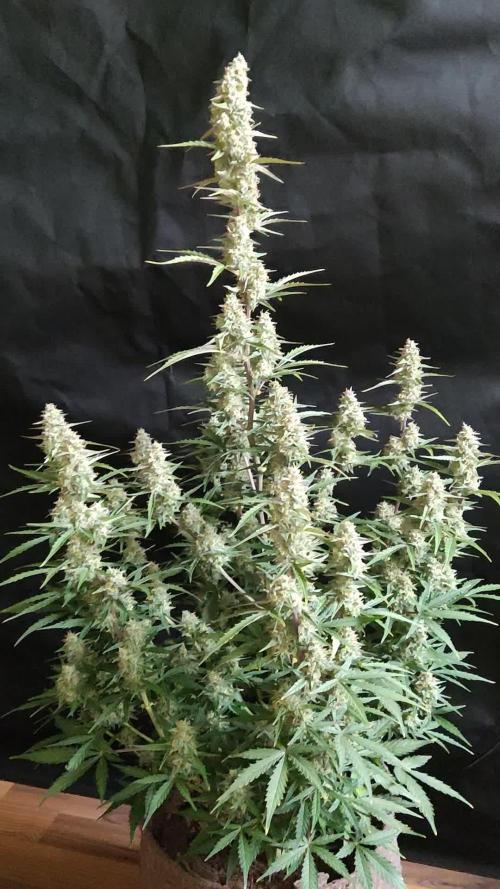
These were taken on June 7th and as you can see we have made a lot of progress. They have put on a lot of bud in the last 10 days. Trichomes are thick as you can see in the Pics. They smell pretty strong. Really happy with them.
Still just staying with my normal feeding. Will need to start to flush soon.
Maybe 2 weeks to go or so!
Likes
31
Share


@Endriu
Follow
Hi Bros&Sis!
I've been a little bit lazy, indeed, but there's a lot of works to do here, on my girls and as a father of a big family.
Enjoy the videos, I decide to put a single short for every strain, to see the beauty in full screen :D


Likes
3
Share


@123Grow
Follow
1. LABS - I suggest using distilled water for the entire process ( no chlorine or chloramine). I also suggest the type of rice product shown ( 1/2 cup), it has red, brown, white, and black rice blended together. You get the benefits of each type.
2. Take the rice that was used in making the rice rinse for labs and boil it in 3 cups of water for 30 mins. Strain the rice out. Add 1 TBSP molasses per 300 mls.
Use 300 mls of the above mixture during your watering cycles. It contains starches, b vitamins, aminos, trace minerals, calcium, magnesium, iron, phosphorus, potassium, and some nitrogen. The ppm’s are not higher than 200 ( if using distilled water). This is ONLY used if your plants are healthy. If your plants are sick…this will NOT help them. It will make stuff worse!!!
The Hulk-Berry got a new home. 1 tsp 7-3-1, 1/2 tsp 0-12-0, 1/2 tsp Langbeinite, 1 TBSP 2-2-2, 3 TBSP 4-3-3, worm castings, recharge (1/32 tsp) into the soil ( Mother Earth).
The 3 RuntZ are coming back from slow growth at the outset. I added LABS, Lentil SST, Photosynthesis Plus to the media. I did a foliar spray with recharge. 24-36 hours later the leaves exploded with growth and height. I added ZERO nutrients!!! I only used natural inputs and bacteria to get the root zone back in order.
11-3. Things are all in check! The LABS, SST’s and Rice wash have gotten the 3 RuntZ back on track. The Hulkberry is in full swing. I think I can get to 3 feet by flower time with the Hulkberry
11-5 All is well today!!! Everyone is very happy after the cal-mag, Photosynthesis Plus, kelp bath
Likes
7
Share


@Isle_of_dank
Follow
All have started flower just under 2foot tall light adjusted and pH corrected at start of week hopefully bounch BKK 19june


Likes
4
Share


@LittleBigTrees
Follow
So we're in week 3 veg , they've mostly outgrown their mutated leaves now and looking strong.

Processing
Likes
Comments
Share


Likes
13
Share


@GrowGuy97
Follow
Overall happy with this solo cup grow, wish I could have got a little more but I ended with 6.3 grams dry weight, bud looks amazing. Post more of a update after I smoke it in a few days! Thanks for following & happy growing friends!
Likes
5
Share


@Herbz_Unkraut
Follow
Harvest time! 😁
everything looking good so far, plants are quite healthy
check www.sr-organics.com and get a 10% discount on this great 5in1 fertilizer with "UNKRAUT10"

Processing
Likes
43
Share


@Eyeduno
Follow
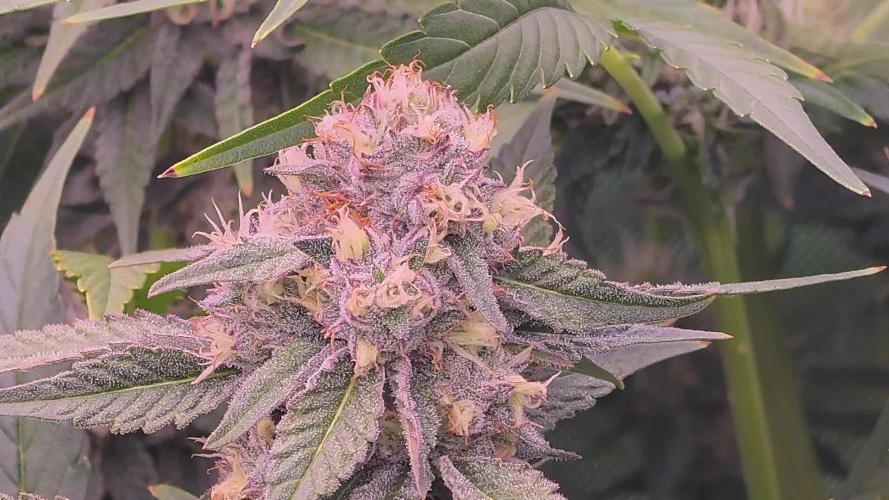
Went abit over the top with the defoliation but first time for everything think people call it mainlining or something and looks like the cuttings have took there’s new green growth








Processing
Likes
8
Share


@4F1M6
Follow
I started germination of 1 Gorilla Zkittlez bean on 29/12/2020. I pre moistened my rockwool cubes with ph balanced water to 6.4. Made sure the plug was just damp and not soaked. Using a small wooden dowel I increased the size of the plugs pre made hole. Than I sowed my bean into the hole. Ripped off a small piece of rockwool and mulched it up. Lightly filled the hole in with the mulched rockwool. Than stuck the plug into a misted humidity dome, to complete germination.
Shouldn't take anymore than 4-5 days to see a sprout. Once I see some cotlydon leaves bursting to the surface. I will get the plug planted into some 1 gallon pots. Plus get this lady situated into her home. Cant wait!
Some Background information on my experience with Gorilla Zkittlez. I've grown this variety out twice so far. Once in a 15 gallon container which became a super branchy beast. That yielded a large amount and filled up it's own 4x4 tent with a little training. The second and most recent time was in a 1 gallon SOG grow. She also flourished in a fast flip SOG grow banging off a fat head frosty main cola, with a few satellite buds. Very adaptive strain and seems to flourish in any environment and any size space. Looking forward too my 3rd adventure with Barneys farms masterpiece.
Likes
42
Share


@Ultraviolet
Follow
Thank you. Gave her a cocktail to help with stress. Added 1st net for lateral support, not so much now, but for later. Blue light is absorbed by photoreceptor proteins called phototropins, which trigger a hormonal response that causes cells on the shaded side to elongate, making the plant bend toward the light. Try and fill this side a little. She is quite big already, just needs to find her stride again after the undue torture.
The mind is constantly working and producing, just like a factory. It's not just a passive recipient of information but an active producer of ideas, attitudes, and beliefs. The "ingredients" in this factory are the information you consume, such as books, conversations, and the media you engage with. The "products" are your thoughts, beliefs, and actions. The quality of the ingredients directly influences the quality of the output. To guard the door of your mind means to be selective about what you allow in. It involves actively choosing to consume positive and constructive information while filtering out negativity and harmful influences. If you don't guard your mind, others can "dump" whatever they want into it, leading to undesirable results in your life. You must take responsibility for the inputs to ensure you produce the outcomes you desire.
5 apex stems with 20-30 mini cola, let them develop a little, with the apical dominance shattered, all those 20-30 will all compete with each other as soon as that stretch is initiated. Key to a good stretch is making sure the plant is cycling efficiently, with large ATP conversions occurring lights out.
For now, I'm keeping light intensity high. A plant will slow its vertical growth in very high light intensities, leading to a more compact form with thicker stems and leaves. This response is a protective mechanism against light stress, which can damage the photosynthetic apparatus and lead to symptoms like leaf scorching, yellowing, and brittleness. Instead of growing taller, the plant invests its energy into creating a more robust, stress-tolerant structure.
Providing plants with necessary antioxidants helps protect the photosynthetic apparatus by scavenging reactive oxygen species (ROS) that cause damage from excess light.
UV light exposure can impact the xanthophyll cycle by either enhancing its photoprotective role or causing damage, depending on the intensity and type of UV radiation. UV exposure can trigger the synthesis of more xanthophyll cycle pigments to increase the plant's capacity to dissipate excess energy, but it can also cause direct damage, particularly to Photosystem II, and may lead to a decrease in the de-epoxidation state (DEPS ratio) which indicates a reduced capacity to dissipate excess energy.
Plants can respond to UV stress by increasing the synthesis of xanthophyll cycle pigments, such as violaxanthin and zeaxanthin, to improve their photoprotective capacity. UV-induced changes in xanthophyll cycle pigments can be linked to a plant's overall tolerance to high radiation stress. The xanthophyll cycle helps protect against photoinhibition, which is especially important when the plant is exposed to high levels of both UV and visible light. High doses of UV radiation can directly damage photosynthetic components, including the proteins, lipids, and pigments in the thylakoid membranes. Exposure to UV radiation can have a mixed effect on the de-epoxidation state (DEPS ratio) of the xanthophyll cycle pigments. In some cases, UV can inhibit the conversion of violaxanthin to zeaxanthin, resulting in a lower DEPS ratio and a reduced capacity for energy dissipation. However, the total pool of xanthophyll cycle pigments may increase, and this enhanced pool size could provide a greater potential for photoprotection despite a lower DEPS ratio.
The xanthophyll cycle works alongside other mechanisms, such as the accumulation of flavonoids (UV screens), to protect the plant from UV-induced damage.
Blue light repairs 100% UV-induced damage in plants through a process called photoreactivation, which uses a light-dependent enzyme called photolyase. This enzyme uses energy from blue and UV-A light to directly reverse the damaging pyrimidine dimers in the DNA caused by UV-B radiation, a key mechanism for maintaining the plant's genetic integrity.
After carbon, light, water, temperature, and nutrients, the limiting factor of a plant's growth is often its own internal factors or the amount of a key ingredient. Chlorophyll concentration is one such factor, as the amount of this pigment limits how much light can be captured for photosynthesis. Other factors include chloroplast number, respiration rate, and the concentration of carbon dioxide in the atmosphere, as plants are often in a CO2-deficient condition.
60x60x18=64800seconds x 700 = 45,360,000moles. 45DLI
Exposure to 165 µW/cm² of ultraviolet-B (UV-B) light for 3600 seconds = 1 hour, a extremely high, acute dose triggering stress responses and protective mechanisms.
.
The plant's photoreceptor protein, UVR8, senses the UV-B radiation. This triggers a signaling cascade that activates specific genes to protect the plant from damage. In response to the UV-B signal, the plant ramps up the biosynthesis of protective compounds like flavonoids, phenolic acids, and anthocyanins. These compounds absorb UV radiation and accumulate in the epidermal layers of leaves to shield inner photosynthetic tissues. The plant may increase leaf thickness or deposit more cuticular wax, creating a physical barrier to the radiation. The plant will produce more enzymatic and non-enzymatic antioxidants to neutralize the reactive oxygen species (ROS) produced by the UV-B radiation. The plant activates enzymes, including photolyases, to repair DNA damage caused by the UV-B. These repair mechanisms are critical for preventing permanent genetic mutations.
While protective measures are activated, a high dose delivered over a short period can cause stress that overwhelms the plant's defenses.
Photosynthesis is highly sensitive to UV-B. A high dose can inactivate Photosystem II (PSII), damage thylakoid membranes within the chloroplasts, and reduce chlorophyll content, which lowers the plant's overall photosynthetic capacity. Despite repair mechanisms, high UV-B doses can inflict persistent damage on the plant's DNA. The overproduction of reactive oxygen species can cause oxidative stress, leading to the oxidation of lipids and proteins and disrupting cellular function.
I am playing in the enchanted forest.