


Likes
Comments
Share


@Tropicannibis_Todd
Follow
Alrighty My Friend
well this was one hell of a grow , i had a blast , the SugarLarry exceeded my expectations in everyway ....
I would definitely recommend 👌
👉Soil Provided by ProMix.ca
👉Nutrients Provided by Agrogardens
👉Lighting Provided by MarsHydro.ca
Thanks my friends for the great support over the years 🙏 Happy Growing

Likes
11
Share


@Fullmeltalchemist
Follow
D71/F23 - 11.29 - Maybe didn't love the defoliation, but looking ok. No discoloration or anything, just a little slower to start chunking up than its neighbors. <3
D73/F26 - 12.1 - The 3x3 9lb seems to have done better with the defoliation, but after I fed with a bit of molasses, found some fungus gnats flying around. Have traps and diatomaceous earth down, so we should nip this pretty quickly.
D74/F27 - 12.2 - A little concerned about this one cola whose top pistils seem curled compared to the other on the plant. Take a look and let me know if this is normal or not. All my mature fungus gnats have been trapped, not seeing anymore buzzing around. I suppose the larva could still do a little damage for now?
D76/F29 - 12.4 - Doing fine in the 4x5 tent :)

Likes
17
Share


@Mr_nugs_lover_David
Follow
My beautiful prince's is looking even better now that she's not having to deal with those freaking fungus gnats that were eating all the roots of my plant, I've got rid of them just by watering with a nematode called steinernema feltiae if you're having or have had the same infestation just apply predator nematodes like steinernema feltiae guys!

Likes
14
Share


@9LittleGrow
Follow
This is the first day of vegetation week 4 (day 28). I’m so glad to see their growth but I think Sugar Cane is growing a little slower than the other two. In these three girls, 91 Octane is the biggest growing and Banana Daddy has so many nodes and new leaves.


Likes
25
Share

@Nedizzle
Follow
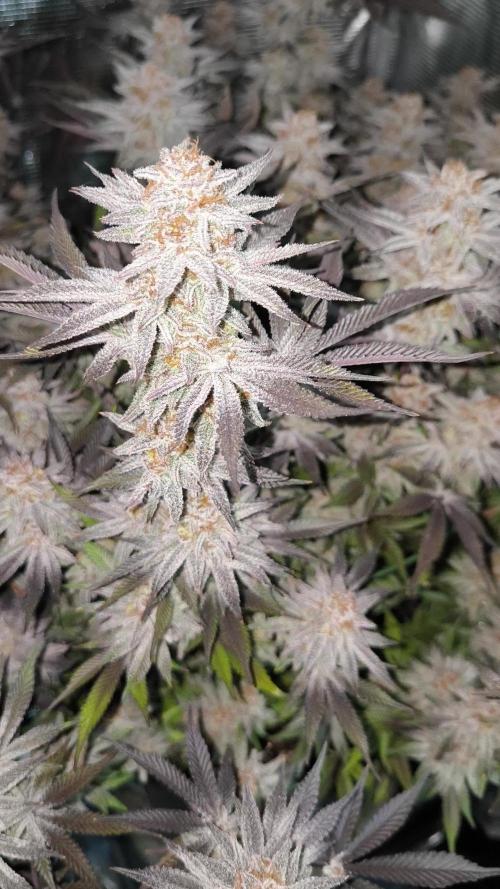
Overall a very nice growing strain. I really like the open structure. I would give her 70 days of flowering. This pheno is mid on the taste and she needs more time to unfold flavors, but i would grow her again, just to have a different exhale experience. The effect is nice for focusing on whatever is in front of you. 8.5/10.
A lot of sugar leaves btw, but i didnt weight it yet. I expect 40% trim of whole dried plant. Its a lot imo.
The yield is on the upper XL range (100-150g range). XXL begins at 150g for me.
My next grow is already running on DWC(hype). Its Lemon Cherry Gelato and Jealousy. I will mainline it too and try to sharpen my skills. Cya 😀 soon

Processing
Likes
4
Share


@DrewbieDoobieNoobie
Follow
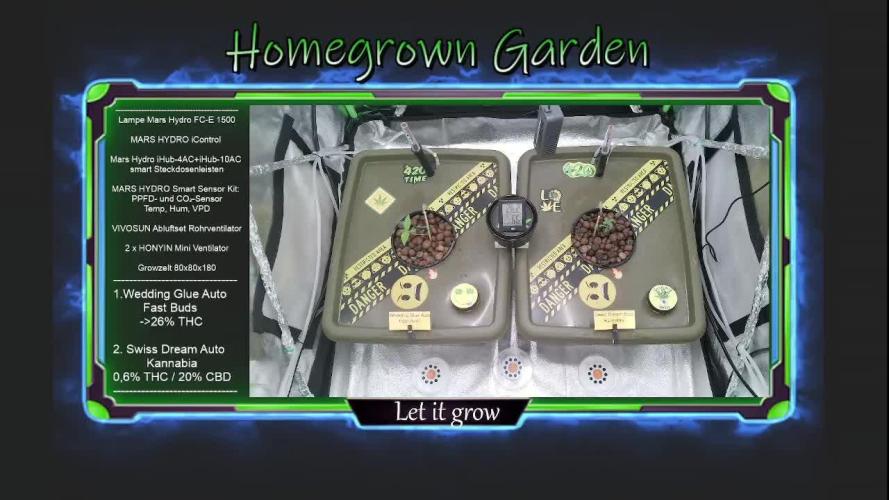
Hello again, hope you are all well and safe, Week 8 was a good week. The ladies are showing there hairs and the CS MILF is going balls out "literally" The clones are moving along I am looking forward to seeing what comes of them I'm on the fence about how much to pollenate just get a few or leave MILF (A) in the tent and just hit everything, the clones are a week behind in flower so depending how soon the (A) MILF Pollen takes to pop I should have a two week window on the pollination... Anyway The Mom's are drinking a lot 1.5 gallons each. This weeks feeding was just water with the last of the Mammoth P and a small dose of Rock Super Charger I forgot to add this in the week one photos I got this the same time I got the Beans same Show ROCK vender free sample, I am using it as my PK booster. that and all the topdressing form last week its all about Bud and Pollen production so I will be keeping an eye on MILF A in the next 7-14 days and I hope I can Catch it before it Shoots its wad in the tent. P.S. The time-lapse got corrupts and I only got 1 or 2 days😡 Peace Ya'll



Likes
15
Share


@glenk222
Follow
A little defoliation, water only yet about 1/2 to 3/4 of gal every 2 to 3 days, no problems noticed.
Starting to show signs of flowering.
Likes
42
Share


@MrJoint
Follow
🧟♀️ My little monster looks very happy with tent only for her. On next week I'll to make scrog and switch to 12/12☀️✌️🎃 Thank you for checking my cultivation.

Likes
35
Share


@SAC87
Follow
Day 14 flower
Hey Growers
So day 14 of flower, I decided to defoliate as the tent was getting so overgrown. They are drying out quickly and the media is dense with roots. They are going to require daily watering very shortly. They seem quite happy and doing well. You can see in one of the pictures, the leaf edge is raised, which idk exactly what that is. I’ve decreased the light to 70% until I know how they’ll react.
Other than that just put in the trellis to support the tops.
Happy Growing 🌱


Likes
5
Share

@CalGonJim
Follow
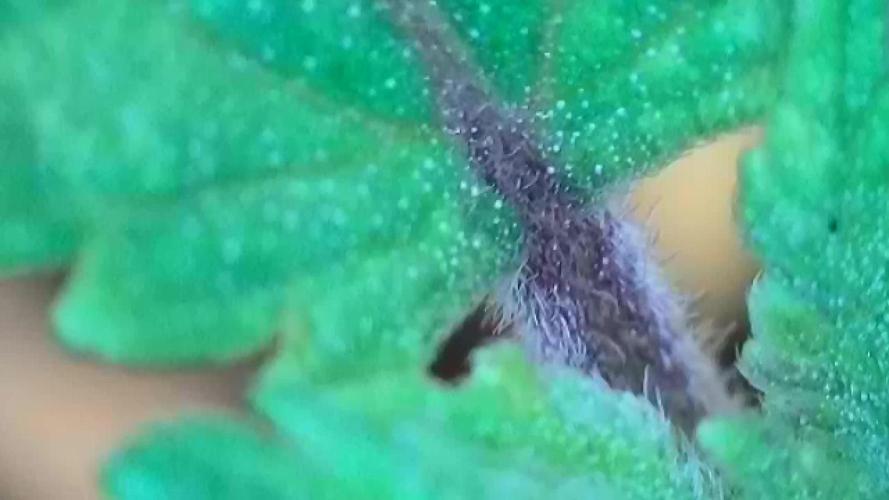
9/15 12AM MONDAY!!! THEY ARE ALL DOING GREAT!!! VERY HEAVY AMINOS YESTERDAY, NO DAMAGE.
9/15 11:24PM. In plant cells, glutathione S-transferases (GSTs) act as transporters, facilitating the movement of anthocyanins from the endoplasmic reticulum (ER) to the vacuole for storage, though their exact mechanism is still being studied. The synthesis of glutathione (GSH) itself occurs in the cytosol of mammalian cells through two ATP-requiring enzymatic steps, while anthocyanins are synthesized via a separate phenylpropanoid pathway
9/15 11:42PM glutathione metabolism glutathione S-transferases plantsThinkingKicking off 5 searchesLooking at 71 sitesPutting it all together In plants, glutathione S-transferases (GSTs) are a diverse family of enzymes integral to glutathione (GSH) metabolism, primarily functioning in detoxification and stress response. The core of this process involves GSTs catalyzing the conjugation of the tripeptide GSH with various toxic compounds, or xenobiotics, making them less harmful and easier to sequester or transport. Glutathione (GSH) metabolism in plants GSH metabolism is a tightly regulated process that maintains cellular redox balance and protects against stress. Biosynthesis: GSH is synthesized in two adenosine triphosphate (ATP)-dependent steps:(gamma )-Glutamylcysteine synthetase (GSH1) joins L-glutamate and L-cysteine to form (gamma )-glutamylcysteine. In Arabidopsis, this enzyme is located exclusively in the chloroplasts.Glutathione synthetase (GSH2) adds glycine to (gamma )-glutamylcysteine to produce GSH. This enzyme is found in both the cytosol and the chloroplasts.Oxidation and reduction: GSH exists in two forms: a reduced monomer (GSH) and an oxidized disulfide dimer (GSSG).Oxidation: In the process of scavenging reactive oxygen species (ROS), GSH is oxidized to GSSG.Reduction: Glutathione reductase (GR) uses NADPH to reduce GSSG back into active GSH, which is essential for maintaining a high GSH-to-GSSG ratio inside the cell.Degradation: Glutathione can be degraded in the cytosol, apoplast, and vacuoles by (gamma )-glutamyltransferases (GGTs) and other peptidases, allowing for recycling of its amino acid components.Transport and compartmentalization: While synthesis occurs in the chloroplasts and cytosol, transporters move GSH and its conjugates throughout the cell, including to the mitochondria, peroxisomes, and vacuoles. Functions of glutathione S-transferases (GSTs) GSTs are a large, ancient gene family with diverse roles that extend beyond detoxification. The primary functions involving GSH are: Detoxification of xenobiotics and heavy metals: GSTs catalyze the conjugation of the thiol group of GSH to a wide range of electrophilic and hydrophobic substrates, including herbicides, pesticides, and heavy metals. The resulting GSH-conjugates are then recognized by ATP-binding cassette (ABC) transporters and sequestered in the vacuole, reducing their cellular toxicity.Protection from oxidative stress: Stress conditions like drought, salinity, and high light increase levels of ROS, which cause lipid peroxidation. 🚨Some GST isoforms have glutathione peroxidase (GPOX) activity, using GSH to reduce toxic lipid hydroperoxides to less damaging alcohols, thereby protecting cell membranes.Defense against pathogens: During pathogen attacks, GST activity increases to detoxify microbial toxins and secondary defense-related compounds. This helps to bolster the plant's resistance response.Metabolism of endogenous compounds: GSTs play roles beyond immediate stress response by participating in the normal metabolic processes of plants. Examples include:Hormone transport: Some GSTs act as binding proteins (ligandins) that transport plant hormones like auxins within the cell.Metabolite transport: Specific GSTs facilitate the transport of important compounds like flavonoids and anthocyanin pigments into the vacuole.Tyrosine degradation: The zeta GST class (GSTZ) catalyzes a critical step in the breakdown of the amino acid tyrosine.Redox signaling: By influencing the GSH/GSSG ratio and interacting with plant hormones, GSTs can regulate cellular signaling pathways that control growth and stress response. 🚨GSTs and plant stress response The expression of many GST genes is highly inducible by various environmental and endogenous cues, making them key players in a plant's ability to adapt to adverse conditions. Abiotic stress: Drought, salinity, heavy metals, and extreme temperatures all trigger increased GST expression, which helps plants manage resulting oxidative damage. Overexpression of specific GST genes has been shown to enhance stress tolerance in transgenic plants.Herbicide resistance: The ability of crops and weeds to detoxify herbicides through GST-catalyzed conjugation is a well-studied example of GSTs in stress adaptation. Herbicide safeners, chemical agents that protect crops from herbicide injury, work by boosting the activity of these GST enzymes.Developmental processes: Studies have linked the expression of certain GST genes to specific stages of plant development, such as fruit ripening, root and stem development, and flower formation. ""
9/16 12:32am
AI Overview
In plants, phenylalanine is the precursor for anthocyanin synthesis, a process that involves a multistep pathway in which glutathione (GSH) plays a critical role in the transport of the final pigment to the cell vacuole.
Phenylalanine initiates anthocyanin synthesis
The biosynthesis of anthocyanins begins with the amino acid phenylalanine, which is produced via the shikimate pathway. The conversion process, known as the phenylpropanoid pathway, involves a series of enzymatic reactions:
1. Phenylalanine ammonia-lyase (PAL): This enzyme catalyzes the first committed step of the pathway, converting L-phenylalanine into trans-cinnamic acid.
2. Downstream enzymatic reactions: A series of additional enzymes, such as chalcone synthase and chalcone isomerase, convert the intermediate compounds into unstable anthocyanidins.
3. Glycosylation: Glycosyltransferase enzymes stabilize the anthocyanidins by adding sugar molecules, creating the final, stable anthocyanin pigments.
4.
Glutathione is crucial for anthocyanin transport
After synthesis, glutathione is essential for transporting anthocyanins for storage.
* Glutathione S-transferases (GSTs): These enzymes bind to the newly formed anthocyanins in the cytoplasm. This binding is a key step that facilitates the transport of the anthocyanin-GST complex across the tonoplast (the vacuolar membrane) and into the vacuole.
* Vacuolar storage: Once inside the vacuole, the anthocyanins accumulate and provide color to plant parts, such as flowers, fruits, and leaves.
* Catalytic role: Recent research has also found that certain GSTs have a catalytic role in anthocyanin synthesis. They can catalyze a dehydration step to form specific anthocyanidins, significantly boosting production in engineered systems.
*
The process in summary
The synthesis and accumulation of anthocyanins involve a coordinated process of multiple steps:
1. Production from phenylalanine: The amino acid phenylalanine enters the phenylpropanoid pathway, where enzymes convert it into the basic flavonoid structures.
2. Formation of anthocyanidins: Further enzymatic modifications produce the colored but unstable anthocyanidins.
3. Stabilization and transport with glutathione: These anthocyanidins are stabilized by glycosylation and then bound by GSTs (which use glutathione). This binding enables their transport into the vacuole for storage and visible pigmentation.
9/15 12:46AM https://pmc.ncbi.nlm.nih.gov/articles/PMC7238016/
9/16 1:30AM BKO is looking great!!!
Conclusion
The “butter frosting” resin on Cookie Apple F1, healthy yellow-green fusiform, and Blueberry KO’s pigmented cotyledons show your anthocyanin-glutathione-phenylalanine strategy is working—phenylalanine drives synthesis, glutathione ensures transport. Tweak amino acids to 100–150 mg/L to reduce tip burn.
9/16 3:34am
9/16 4:31AM Anthocyanin glutathione synthesis phenylalanine proline tmg powder relating current project:
* Phenylalanine is a precursor: Phenylalanine is an amino acid and the starting point for the phenylpropanoid pathway in plants.
* Anthocyanin synthesis: This pathway creates various secondary metabolites, including the flavonoid pigments known as anthocyanins, which give plants their red, purple, and blue colors.
* Pathway activation: Multiple enzymes, such as phenylalanine ammonia-lyase (PAL), catalyze the conversion of phenylalanine into the building blocks for anthocyanin.
*
Anthocyanin and glutathione synthesis
* Glutathione S-transferase (GST): This enzyme is crucial for synthesizing anthocyanins in plants. It transports anthocyanins into the cell's vacuole for storage.
* Glutathione (GSH) production: Anthocyanins can promote glutathione synthesis in certain cells. For instance, the anthocyanin cyanidin-3-O-β-glucoside (C3G) has been shown to increase the expression of glutamate-cysteine ligase (Gclc), a key enzyme in GSH synthesis.
* Antioxidant effect: By upregulating GSH production, anthocyanins contribute to the antioxidant defense system, protecting cells from oxidative stress.
*
Proline and glutathione synthesis
* Shared precursor: In some organisms, the synthesis pathways for proline and glutathione share a precursor molecule called γ-glutamyl phosphate.
* Alternative pathway: Research on bacteria and yeast has revealed an alternative, trace pathway where γ-glutamyl phosphate from the proline synthesis pathway can be diverted to produce the glutathione precursor γ-glutamylcysteine.
* Oxidative stress response: Studies in mouse oocytes show that supplementing with proline upregulates genes related to glutathione synthesis (Gclc and Gclm), increases glutathione levels, and reduces oxidative stress.
*
TMG powder, methylation, and homocysteine
* Methyl donor: Trimethylglycine (TMG), or betaine, is a potent methyl donor, meaning it provides methyl groups needed for various biochemical processes in the body, including the methylation cycle.
* Homocysteine regulation: One of TMG's primary functions is to convert the amino acid homocysteine into methionine. This helps regulate homocysteine levels, which is important for cardiovascular health.
* TMG and proline interaction: In plants and some organisms, TMG and proline act as compatible solutes or osmoprotectants, helping cells stabilize against osmotic stress like drought or salinity. However, in human biology, TMG mainly functions through methylation, while proline is involved in different metabolic and antioxidant roles.
*
How they all relate
The listed components are connected through several overlapping metabolic and regulatory pathways:
* Anthocyanin synthesis starts with phenylalanine.
* Anthocyanins can promote glutathione synthesis via upregulation of key enzymes like Gclc.
* Glutathione synthesis can be influenced by the proline synthesis pathway, as they share an intermediate in some contexts.
* TMG powder supports the methylation cycle, which helps regulate homocysteine levels. While TMG and proline serve similar protective roles in some organisms, their primary human metabolic functions differ, with TMG focusing on methylation and proline having distinct roles in antioxidant response and metabolism
9/17 217am Die Hard Christmas Grow
9/18, 11:34 AM. I ordered some square saucers that were cartoonishly too small but they fit inside the AC infinity germination kit and they fit with the Bud Cups perfectly really nice so it’s not a total loss.
9/18 11:45AM mix. Foliar Spray, the rest of the mix ec 0.46
Mixed up Aminos first and separate and use 16 oz for foliar spray. Then mixed up:
Root: 1 mL/L Connoisseur A & B GROW,
.2 mL/L CaliMagic,
.2 mL/L Purpinator.
Setria Glutathione: 150 mg/L(Brand: Emerald 250mg capsule.)
TMG: 150 mg/L = (Brand Nutricost)
Phenylalanine: 150 mg/L (Brand Nutricost)
Proline: 150 mg/L (Brand Nutricost).
9/18 228PM AI Overview
Glutathione influences plant colors by regulating the accumulation of pigmented compounds, primarily anthocyanins. The tripeptide accomplishes this through its role in transporting pigments within plant cells and in protecting against environmental stresses like UV radiation that can cause oxidative damage.
Transporting pigments into plant cell vacuoles
Glutathione works with a class of enzymes called Glutathione S-transferases (GSTs) to transport pigments like anthocyanins into the vacuole for storage.
Anthocyanin transport: In plants with pigmented tissues, such as purple grapes or red flowers, glutathione-conjugated pigments are transported by GSTs across the tonoplast membrane into the vacuole. This process is crucial for the stable accumulation of pigments.
Genetic manipulation: Research shows that manipulating specific GST genes can alter a plant's pigmentation. For instance, silencing a particular GST gene in purple grape hyacinths caused their petal color to shift to a lighter shade of purple. Similarly, defective GST genes in carnations resulted in pale-colored flowers.
Protecting against UV light and stress
Glutathione helps regulate plant pigmentation in response to environmental factors, especially UV-B radiation.
Activating flavonoid production: When plants are exposed to UV light, a surge in glutathione triggers the expression of genes involved in producing flavonoids. Flavonoids, including anthocyanins, can act as protective sunscreens for the plant, and their increased synthesis and accumulation can alter visible coloration.
Balancing oxidative stress: Intense UV-B radiation increases reactive oxygen species (ROS) in plants, which can cause oxidative damage. Glutathione is a master antioxidant that helps detoxify these ROS, preventing cellular damage that can affect a plant's pigment-producing mechanisms.
Indirectly influencing plant colors
By regulating cellular redox status and interacting with other molecules, glutathione also affects pigment expression in more indirect ways.
The xanthophyll cycle: As part of a plant's antioxidant system, glutathione helps maintain the reduced state of other protective antioxidants like tocopherol and zeaxanthin. Zeaxanthin is a carotenoid pigment involved in the xanthophyll cycle, which helps dissipate excess light energy.
Redox signaling: The balance between reduced glutathione (GSH) and oxidized glutathione (GSSG) is a key cellular signal for stress response. A shift in this ratio during environmental stress can influence the production of secondary metabolites like pigments, allowing the plant to adapt. "
9/19 1:41AM AI Overview
The key difference is that anthocyanins are the sugar-containing form (glycosides) of pigments, while anthocyanidins are the sugar-free form (aglycones). Anthocyanidins are the foundational molecules, and when a sugar molecule attaches to them, they become anthocyanins, which are more stable and water-soluble, making them the forms found naturally in plants, such as berries and purple vegetables.
Anthocyanidin (Aglycone)
Structure: The basic, sugar-free molecule of the anthocyanin structure.
Location: Not found freely in nature but is the core component that is then glycosylated.
Properties: Color changes with pH, being visible in acidic conditions but colorless in basic conditions.
Examples: Cyanidin, delphinidin, pelargonidin, peonidin, petunidin, and malvidin.
Anthocyanin (Glycoside)
Structure: Consists of an anthocyanidin linked to one or more sugar molecules.
Location: Found in the vacuoles of plant cells.
Properties: Water-soluble and are the pigments responsible for the red, purple, and blue colors in plants.
Function: The sugar attached provides stability, allowing for accumulation in plants and providing antioxidant properties.
Examples: Cyanidin-3-glucoside and other derivatives like acylated anthocyanins. "
9/19 2:43AM I also saw a good mans immediate accent into Heaven, that perspective matters too. no less angry about it though.
9/19 10AM Heavy Amino spray 250mg each in 1L of Setria Glutathione and Phenylalanine
9/19 10:10PM The sons and daughters of americas real terror organization carried out the last horror show, and the one before that and before that. It's not a foreign country, it's always the anti white anti human black sheets and badges that did this.
9/19 10:43PM AI Overview
Phenylalanine and glutathione contribute to plant colors through different biochemical pathways
. Phenylalanine is a precursor for the pigments themselves, primarily anthocyanins, while glutathione is involved in the transport and stabilization of these pigments within the plant cell.
Phenylalanine: The pigment precursor
The source of aromatic compounds: Phenylalanine is an aromatic amino acid and the starting compound for the phenylpropanoid pathway in plants. This pathway produces a vast number of secondary metabolites, including anthocyanins, which give many plants their red, purple, and blue colors.
Color enhancement: Research has shown that increasing the amount of available phenylalanine can lead to more intense red coloration in some fruits, such as mangoes and apples.
Pathway stimulation: Phenylalanine ammonia-lyase (PAL) is a key enzyme in this pathway that converts phenylalanine into precursors for anthocyanin biosynthesis. An increase in phenylalanine levels stimulates this entire process.
Glutathione: The pigment transporter
Anthocyanin transport: After anthocyanin pigments are synthesized in the cell's cytoplasm, they must be transported into the central vacuole for storage. Glutathione S-transferases (GSTs) are a family of enzymes that facilitate this process.
Color intensity: A functional GST is essential for proper anthocyanin accumulation. Mutations in GST genes can result in a significant decrease in color intensity, as seen in the pale or white flowers of certain gentian mutants.
Mechanism of action: The GST binds to the anthocyanin pigment and moves it from the cytoplasm into the vacuole. If the GST is defective, the pigment cannot be transported correctly, leading to a loss of coloration.
Summary of interactions
The roles of phenylalanine and glutathione are distinct but cooperative in producing plant colors:
Phenylalanine provides the essential building blocks for creating the colored compounds (anthocyanins).
Glutathione, with the help of GSTs, ensures these colored compounds are correctly moved to their storage location (the vacuole).
This cooperative system explains why mutations or deficiencies in either process can lead to reduced or altered coloration in plants."
9/19 10:51PM AI Overview.
Trimethylglycine (TMG) supports the production of glutathione, a vital antioxidant
. However, there is no evidence to suggest a direct relationship between these supplements, the amino acid phenylalanine, and the colors of plants. The concepts are linked indirectly via complex biological processes.
Trimethylglycine (TMG) and glutathione
TMG and glutathione are connected through the body's methylation cycle.
TMG as a methyl donor: TMG plays a critical role in the methylation process by donating a methyl group, which helps convert the harmful amino acid homocysteine back into methionine.
Support for glutathione production: This methylation cycle, which is supported by TMG, is essential for producing glutathione. Glutathione is a powerful antioxidant that protects against cellular damage and is crucial for detoxification.
Supplementation considerations: TMG supplements are sometimes taken alongside other supplements to support health, though consultation with a healthcare provider is recommended.
Phenylalanine and the methylation cycle
Phenylalanine is an essential amino acid, but its role is distinct from the TMG-glutathione process.
Essential nutrient: Phenylalanine is a key nutrient for cellular metabolism.
Potential interactions: A separate medical study on experimental hyperphenylalaninemia (abnormally high phenylalanine levels) in chicks observed a decrease in other amino acids in the brain, including those involved in the glutathione pathway. This demonstrates how excessive levels of one amino acid can potentially influence others, though this does not represent a typical interaction.
Plant colors
The connection between the supplements and plant colors is purely conceptual, as the colors are determined by completely different biological processes.
Anthocyanins: The colors of many plants, including red, purple, and blue flowers, come from pigments called anthocyanins.
Glutathione in plants: While plants contain glutathione as an antioxidant to combat stress, it influences color by regulating the transport and accumulation of anthocyanin pigments, not by being a pigment itself.
TMG and phenylalanine in plants: Plants contain TMG, which functions as an osmoprotectant (protecting against osmotic stress). They also contain phenylalanine, but these substances do not directly determine the plant's visible color."
9/19 11:21PM. !!!!!! this was pointless and im dumber for having read it. !!! Light intensity and spectrum affect metabolism of glutathione and amino acids at transcriptional level: https://pmc.ncbi.nlm.nih.gov/articles/PMC6938384/
9/20 11:08 AM the seedlings and the four autos are doing just great. The amino spray with phenylene and glutathione really had nice effects no burning nice solid growth even seedlings from basil lavender various lettuce all are perfect.🚨🚨🚨👍👍👍👍👍
9/21 2AM I AM BECOME ANTHOCYANID!!! ITS WORKING AND ON A SEEDLING I SEE THE GELATO COLLORS IN BLUEBERRY KO AND THE LEAF SHAPE OF BUBBLES BLUEBERRY,!!!


Likes
59
Share


@Secretflower
Follow
😘.Hello My Friends.. 😘
📰 ... March 4, 2021... 📰
🌿 Day N°31 🌿
We are in the middle of the 5th week of growth for my three Feminized Amnesiac from Spliff Seeds..🚬
The plants are beautiful, after two weeks under my lamp @TSW2000 from Marshydro, they look so cute.🍀
📰 March 2nd
I transplanted my plants into 3.4 liter pots with All-Mix soil from Biobizz.
I topped two Amnesiac and the third one is with LST. I could have done it sooner, but last week I was on vacation in the mountains.. 🏔️
I have a bit of experience with Topping, but the LST I never test. I hope I did everything well as it should and that the plant will react well.. 😷
💉 Nutrients 💉
I incorporated 16 grams of Easy-Boost granules from Royal Queen Seeds into 3.4 litres of Biobizz All-Mix soil.
🔦 Light 🔦
I increased the power of my #MarshydroTsw2000 from 25% to 40%.
🐛 PEST 🐜
The treatment by the leaves of TEC FORT last week (1ml/l) worked very well, on 14 plants I saw only one thrips. On the blue stripes there is nothing..💀
That's all for now my friends.
Take care of yourself and your loved ones.. 😷
I wish you only happiness with your plants.. 🌻
... 🕊️ PEACE & LOVE 🕊️ ...

Likes
5
Share


@SamDoze
Follow
Y diganme
que problema tienen con la yerba del Rey
no me dejan fumar y me persiguen con su "ley"
El Rasta solo quiere fumarse un "may"
A su-play, everyday
Castiguenme
si hago daño a alguien y si no dejenme
se lo digo claro no lo repetire
El Ganja esta bendito por el Dios de Moises
persigan asesinos y no creyentes.
Read more: Morodo - La Yerba Del Rey Lyrics | MetroLyrics
Likes
18
Share


@dalemac
Follow
October 1 > Harvest morning.
New trick... get up before dawn... cut your plant down and hang her upside down... then go back to bed.
Hehe... I like this retirement stuff. We get smarter as we age. 😎
I did a fair job of plucking fan leaves before harvest morning so there wasn't that much work for me to do anyway on this girl compared to some of the other monsters she grew up with. Took me only about 90 minutes to complete my normal processing and washing. She developed into a wonderful purple color at the end there.
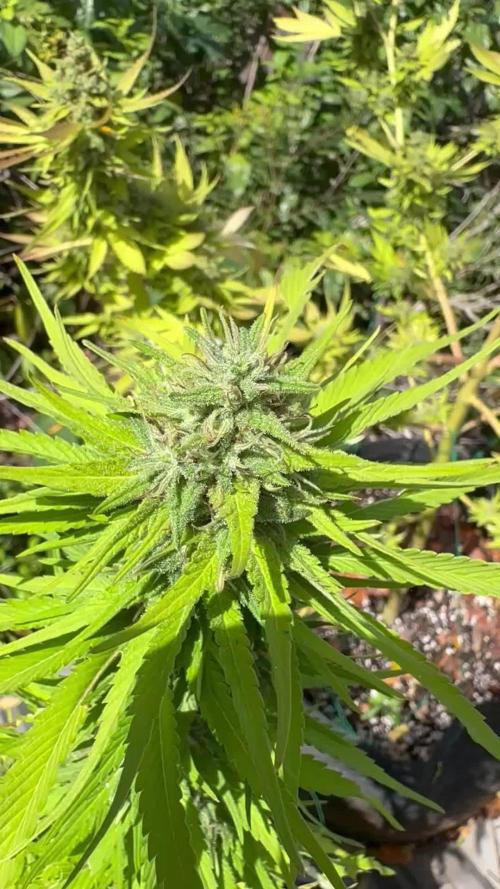
The unique feature of this grow for me was that I never topped this girl. Subsequently she developed a huge single top cola that grew about a foot taller than the rest of the plant. Served as a demonstration of why we top plants in general. Hard for me to imagine what a bunch of these in the wild looks like but this is what WILD looks like.
Diary note > I'll come back later and add weights and things. I threw in a weight of 100 grams as a marker to appease the gods. Total guess.
========================================================================
October 7 > Guess I underestimated my yield a tad... love when that happens. 😁 Ended up coming in at 212 grams buds and 181 grams trim. Woohoo. Another growing season officially comes to a close today. 👌✊
Initially I wasn't sure I wanted to use the Trimbag on this baby... because she was my last plant to harvest this year and I had plenty of time to hand trim her... and I harbored various possibly incorrect assumptions about the Trimbag originally which I have now shed. More on that later.
Let me lay out my personal Trimbag history here as a learning experience for the community...
========================================================================
Originally I won this tool as part of my September 2018 diary winnings... and I looked at it strictly as a tool for fairly large scale growers.. of which I did not consider myself at that time. I grew an amazingingly oversized Durban Poison for a 5 gallon pot and I got lucky I thought. ... Then I took a look at how much herb I processed this summer and I said THANK YOU Trimbag! It saved me more than enough hours of hand trimming to demonstrate it’s usefulness.
(October 12) >> Already slowing down in post-harvest mode hehe... so it looks like I did the same thing as last year diary-wise. Now I have another Trimbag on my hands but all I need is another magnet actually (hehe)... the zippers show no signs of sticking up at this point after me throwing about 2-3 pounds of herb threw the mill, and the overall bag has only lightly been used at this point IMHO. I'm a little surprised I lost that magnet and it's not a great sign for the longevity of the embroidery - so to speak, but other than that it's solid construction. And simple. I’ll be contacting Trimbag to see if I can acquire a new magnet and we’ll see how that goes.
Back to my expectations... I only used this device on stuff I grew outdoors... of which I had enough... more than twice what I grew last summer - but that was by design. If I was to set out a general rule… I would say that I expect the weight of buds to be roughly equal to the weight of trim. This is AFTER I have thrown away any fan leaves plucked on the morning of harvest which are not saved as trim. I stop plucking when buds start to get ripped up if I don’t.
Round 1 >> The first go was the early Amnesia 7 batch (Little Girl flowered early), and honestly, I was unimpressed. I looked at it as maybe I didn't let it dry long enough. I have a ritual of washing all my outdoor grown herb which has generally tended to cause things to dry a tad quicker than what one would expect in the field. I walked away from this initial experience like boy I hope I screwed that up and it works better on round 2.
Round 2 >> Cream & Cheese CBD ... I think this girl did more to confuse me than anything else. The buds were not oversized but she seemed to take forever to dry. Part of this is probably attributable to excess humidity in the first few days - a weird week - we actually had some rain which is very unusual. But even after a week of drying I only managed 63g of shake on this batch (via the Trimbag). I'm going WTF?
Ahem.... I ended up with 269 grams of buds for my Cream & Cheese. After that 63 g shake by bag I added 165 g trim by hand... and I was seriously wondering why this bag thang existed. Turns out C&C was not a good example.... so don't let the bad things weigh you down.
Round 3 >> Next came Northern Lights - and my attitude changed completely. I harvested 319g buds, but the initial run with Trimbag generated 144g trim which I followed with 186g hand trim. NL had very dense buds and large internodal spacing which made trimming EZ. She was a monster… but at the same time I had her trimmed in under 4 hours. Of all the beasties I grew outdoors this summer, this was the largest yield for a single plant - but trimming her was a relative breeze, and it felt like it. I thought I hit the sweet spot for maybe how dry the herb needed to be for the product to work well… but probably only partially correct. Plant structure is significant.
Round 4 >> Next came round 2 with Amnesia. As I noted in my diary I knew I was going to end up with a pound of herb on this particular strain so I tried to beat this particular batch up to minimize my hand trimming and see what the effect was. The end result of this was that I generated a smaller amount of buds from the larger sized pot (Little Girl was in a 10 gallon container and generated 235g buds/ 360g trim and Big Girl was in a 15 gallon container that generated 223g buds/ 493g trim).
Round 5 >> Next came where we’re at in this here diary…Purple Berry Kush. Now originally I wasn’t sure I wanted to run this baby thru the mill. I THOUGHT that maybe because I hadn’t topped this girl and I didn’t put her in a pot bigger than 7 gallons which put her at a direct disadvantage vs my other outdoor girls that the yield would be substantially smaller, but I’ll be damned she ended up with 212g buds. Very satisfied there… and this stuff smells great when I let her get some air.
The key here on trimming for this round was twofold. I let the buds dry longer than I normally would have by a few days… because I had nothing pushing me to make space for reason A… and because stuff was intervening for reason B… golf tournament… Hardly Strictly Bluegrass in SF (Robert Plant was awesome - we share the same birthday and he was 71 in August - I can only hope I’m still rockin’ that hard in 9 years)…you know - stuff.
PBK ended up working out the best of all. 212g buds vs 181g trim. That’s the ONLY variant that ended up with more buds than trim. Part of that was how easy PBK was to maintain. I only did ONE major pruning of internal growth - probably later than I should have - I was trying hard to let her grow as wild as possible. But she was very easy to prune fan leaves off when that purple time came.
It’s seems clear at this point that indica’s are easier to trim than sativa’s with a Trimbag…. but I’m not sure that’s going to be a revelation to anyone. As far as I’m concerned, anything that grows with an inter-nodal spacing that allows you to neatly separate your buds will work better with the Trimbag. DRY is a necessary ingredient for using this device. Probably drier than I am accustomed to… but that’s why somebody invented Boveda packs right?
Anyway… I’m a VERY SATISFIED Trimbag customer at this point. It takes a little work to determine how dry your herb needs to be but even if you have to experiment, the number of hours you save from hand trimming will eventually make it worth your while… and as a newly minted senior citizen I can say that while my time might be free - anything that helps reduce pain - including time spent trimming - becomes quite significant.
NOW —> The other side of this coin is that I will probably NOT use the Trimbag when I get back to indoor growing in early December… because I expect to be growing much smaller plants. Most of the things I’ve grown indoors top out at less than a couple ounces so it’s not clear to me that Trimbag is necessary with a yield that small… but I can test that theory later this winter.
=================================================
hehe… I kinda promised myself “no more winter crops” after last summers bounty but I found that making edibles consumes a significant quantity of herb, and I really like my brownies. So now that I’ve stocked up to solve that problem, I plan to get back to some indoor growing (because growing is FUN)… mainly autoflowers. I actually have better control of temperature for things that I grow in winter as opposed to summer… but I have to add the heat to make that happen. That compares with the difficulty of adequate cooling if I run my lights during daytime in summer - even with night lights summer temps can be a problem with no AC. I don’t have AC in my house. It’s a function of California microclimates. If I lived 15 miles east of here - we’d BAKE with no AC (air conditioning). If it weren’t for coastal fog - this whole place would be a desert. With climate change - we’re heading that way even WITH the fog. We roll the dice here every winter and hope we get enough snow in the Sierra to hold off the firestorms that will come in the fall. We went thru a period of “drought” here in California a relatively short while back but even though we are officially out of our drought phase the fall firestorm intensity seems to be getting worse every year. But this is a clear sign I’ve consumed too much indica for one evening and I’m starting to lose track of.... just about everything.
Anyhow… I think I’m about diaried out for this year. I have a pretty freaking serious vacation planned to celebrate my retirement for late next month…
Las Vegas golf > Joshua Tree National Park camping > Palm Desert resort golf > Beach camping South Carlsbad > Torrey Pines golf > Laguna Beach > Pismo Beach camping > Monterey. It’s been about 30 years since I did anything this crazy (and that was a Grateful Dead tour in 1987 thru Arizona/Utah/California for my 30th birthday). Big difference this time around? Cannabis is LEGAL for the entire trip. I will be well stocked enough to sedate anything that gets near me. See y’all in December.
😎


Likes
Comments
Share

@MrHazeAmaze
Follow
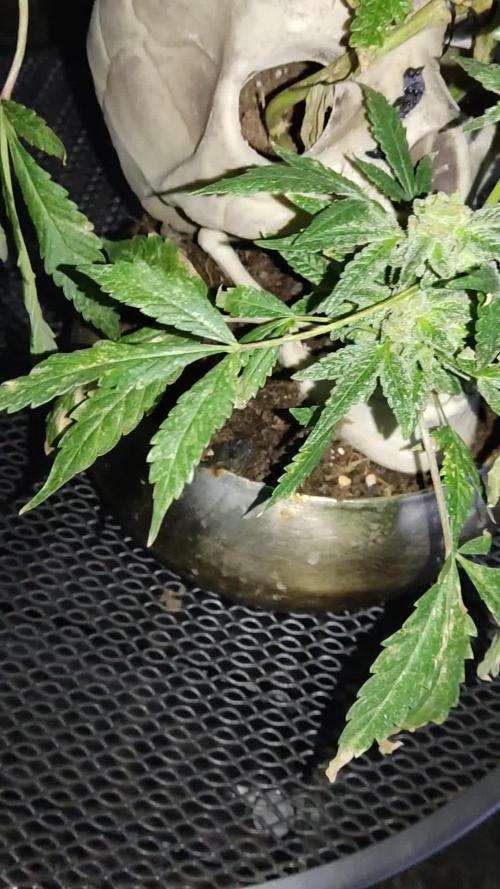
Since that day I treated her soooo bad: just sometimes water, nearly no fertilizer, placed her inside a tent, in a glass house and sometimes even outside for days...
I totally forgot when she started to bloom or how long she was even growing.


Likes
11
Share


@HegauHillsFarmers_M11
Follow
Tag 70 - Ende der 10. Woche.
Die Pflanze duftet mittlerweile extrem. Die Blüten duften cremig mit kushigen und fruchtigen Untertönen. Ich kann es kaum erwarten zu ernten.
In dieser Woche habe ich nochmal gedüngt, werde aber die Tage mit dem spülen beginnen und die Pflanze auf die Ernte vorbereiten. Die Trichome sind fast komplett trüb und milchig.
Wir beginnen nun mit der 8. Blütenwoche.
An Tag 64 wurde die Pflanze gedüngt.
Nährstofflösung:
2 ml/l - B-52 Advanced Nutrients.
4 ml/l - pH Perfect Sensi Bloom Part A
4 ml/l - pH Perfect Sensi Bloom Part B
2 ml/l - Bud Candy Advanced Nutrients.
2 ml/l - Overdrive Advanced Nutrients.
Davon hat die Pflanze 1l an Tag 64 erhalten.

Likes
3
Share

@Mr_nugs_lover_David
Follow
Excellent strain this black cherry punch by Pyramid, super sweet and fruity strain, very nice smell, powerful effect, very good for relaxing and sleeping at night after a nice dinner. High quality strain, my all 5 plants of black cherry punch smell exactly the same I'm glad I've grown this strain this year 🍒👊💯💎🇺🇲


