


Likes
Comments
Share


@Ultraviolet
Follow
You don't become confident by shouting affirmations in the mirror, but by having a stack of undeniable proof that you are who you say you are, outwork your self-doubt.
Nitrogen fixation is a chemical process by which molecular nitrogen (N2), which has a strong triple covalent bond, is converted into ammonia (NH3) or related nitrogenous compounds, typically in soil or aquatic systems but also in industry. The nitrogen in air is molecular dinitrogen, a relatively nonreactive molecule that is metabolically useless to all but a few microorganisms. Biological nitrogen fixation or diazotrophy is an important microbe-mediated process that converts dinitrogen (N2) gas to ammonia (NH3) using the nitrogenase protein complex (Nif).[2][3]
Nitrogen fixation is essential to life because fixed inorganic nitrogen compounds are required for the biosynthesis of all nitrogen-containing organic compounds, such as amino acids and proteins, nucleoside triphosphates and nucleic acids. As part of the nitrogen cycle, it is essential for agriculture and the manufacture of fertilizer. It is also, indirectly, relevant to the manufacture of all nitrogen chemical compounds, which include some explosives, pharmaceuticals, and dyes.
Nitrogen fixation is carried out naturally in soil by microorganisms termed diazotrophs that include bacteria, such as Azotobacter, and archaea. Some nitrogen-fixing bacteria have symbiotic relationships with plant groups, especially legumes.[4] Looser non-symbiotic relationships between diazotrophs and plants are often referred to as associative, as seen in nitrogen fixation on rice roots. Nitrogen fixation occurs between some termites and fungi.[5] It occurs naturally in the air by means of NOx production by lightning.[6][7]
All biological reactions involving the process of nitrogen fixation are catalyzed by enzymes called nitrogenases.[8] These enzymes contain iron, often with a second metal, usually molybdenum but sometimes vanadium.
Green clover (Fixation)
White clover (Fixation)
Red Clover. (Fixation)
Yellow Clover. (Fixation, deeper roots)
Sweet Thai Basil. (Terpenes)
Italian Basil. (Terpenes)
Chamomile.(Oil production)
Borage.(Pest attraction taste)
Lavender.(Pest attraction smell)
Marigold(Pest attraction visual)
Mycorrhizae are beneficial associations between mycorrhizal fungi and a plant’s root system. Mycorrhizal fungi spores germinate in the soil, creating filaments (hyphae) that penetrate the root cells, thus establishing a symbiotic relationship. This collaboration leads to the development of both intra-radical and extra-radical networks of filaments, enabling efficient exploration of the soil for enhanced access to nutrients and water. Consequently, these vital resources are transferred to the plant, resulting in numerous benefits for crop cultivation.
Various mycorrhizal products are available in diverse formulations (powder, granular, and liquid), concentrations, and qualities. Ongoing advancements in products, technologies, and research are reshaping our understanding of mycorrhizae. Despite these positive developments, certain misconceptions persist. In the following discussion, we aim to clarify the truths and dispel the myths surrounding mycorrhizae products.
MYTH #1
A HIGHER NUMBER OF MYCORRHIZAE SPECIES MEANS BETTER RESULTS.
Contrary to common belief, having a higher number of mycorrhizae species in a product does not translate to better results; in fact, it often yields the opposite outcome. A plant can sustain only one association with a particular mycorrhizal fungi species. Introducing multiple species creates competition among them, which is not advantageous for the plant. The initial colonizer does not ensure the highest success; instead, it gains precedence. It is recommended to select a product with a concentrated presence of a single mycorrhizae species known for its effective performance, rather than opting for a product with multiple species at lower concentrations.
MYTH #2
ECTOMYCORRHIZAE ARE EFFECTIVE FOR CANNABIS PLANTS.
Although ectomycorrhizae can colonize five to ten percent of plant species, cannabis is not among them. Ectomycorrhizae do not penetrate the root cells; instead, they develop around the roots and on the exterior. For cannabis plants, it is essential to seek out endomycorrhizae. Endomycorrhizae are capable of colonizing 70% to 90% of plant species, including cannabis. Unlike ectomycorrhizae, endomycorrhizae penetrate the root cells, forming structures like arbuscules for the exchange of nutrients and water with the plant.
MYTH #3
WHOLE INOCULANT (PROPAGULES) PERFORM BETTER THAN ONLY VIABLE SPORES.
The propagule count specified on most mycorrhizae products indicates the presence of spores (viable and unviable), hyphae, and root fragments. However, it is crucial to note that only viable spores, those with the capacity to germinate, can successfully colonize a plant’s root system. Spores are to mycorrhizal fungi what seeds are to cannabis plants—a fundamental component enabling fungi reproduction. Consequently, even if a mycorrhizal product boasts millions of propagules, its effectiveness hinges on the presence of viable spores. Without viable spores, the product will not contribute to plant development. Therefore, the genuine value of a mycorrhizal inoculant lies in the quantity of viable spores it contains, as only viable spores can efficiently initiate symbiosis.
MYTH #4
ALL METHODS OF APPLICATION YIELD IDENTICAL RESULTS.
To establish the symbiosis, mycorrhizal fungi spores must be close to the plant roots. The optimal recommendation is to directly apply mycorrhizal inoculant to the roots, either in powder, granular or slurry form. This method ensures maximum proximity between the spores and the roots, facilitating a rapid establishment of symbiosis. Particularly with crops like cannabis, which have a short growing cycle, employing this technique is the most effective way to obtain optimal benefits. Alternatively, techniques such as blending the inoculant with the soil are effective, but there may be a delay in the establishment of symbiosis. This is because the roots need to grow and come into contact with the dispersed spores throughout the growing media.
MYTH #5
MYCORRHIZAE CAN ONLY BE GROWN ON LIVING PLANTS.
While the predominant method for commercially producing mycorrhizae involves growing them on the root systems of living plants (in vivo production), it is not the exclusive nor the optimal technique. In fact, this production approach has notable drawbacks that the “root organ culture” method just does not have (in vitro production). In vitro production occurs in meticulously controlled, aseptic laboratory conditions, allowing for the consistent generation of products that are viable, highly concentrated, species-specific, and free from pathogens. Achieving such precision and quality is impossible when relying on the cultivation of mycorrhizal fungi on plants exposed to external conditions.
In conclusion, it is crucial to take all these factors into consideration when choosing the appropriate product for your crop to fully harness the wide array of benefits provided by a high-quality mycorrhizal product.
STRONGER PLANT – Stress resistance.
FASTER GROWTH – Improve plant structure and shorter veg time.
INCREASE YIELD – Overall more biomass.
IMPROVED QUALITY – Increase cannabinoids and terpenes content.


Likes
4
Share

@Canda
Follow
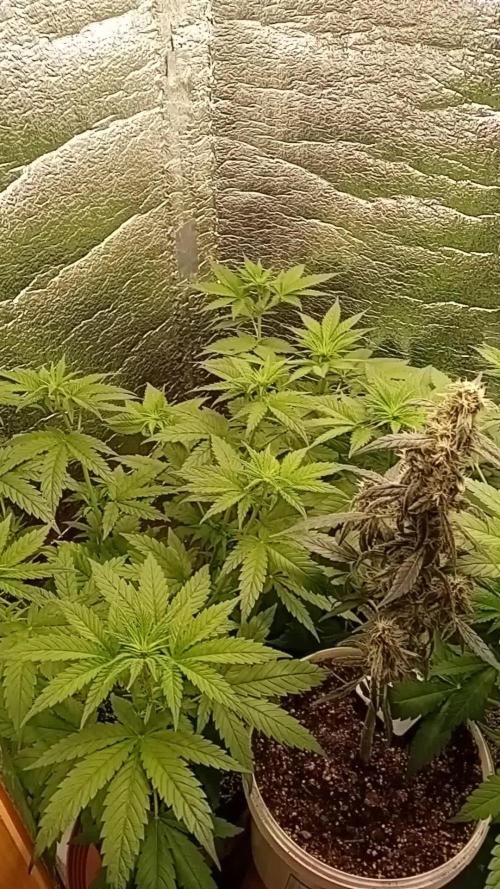
Holkám se daří dobře, vypadají zdravé a vitální, co se týče stretch,. tak vystrelili ze do 300% moc nechybi
Guano odvádí spolecne s vodou dobrou práci a v jidelnicku mame kdyztak biobizz bloom ,jestli bude potřeba tak uvidíme. .jedna z holek ukázala lehce bile spicky listu ale nesiri se to, nemění to barvu tak mam zato ze jde o projev toho ze substrat je nabitéj a chce jenom vodu ..uvidime jak to pujde dal ...
At vám to roste Hombres..Dasvidáňa :D

Likes
4
Share


@PolezGardn
Follow
day 60 flower, ladies look very good, the blueberry has developed nanas... i cut her directly :( but the ChemDog recovered quickly in 12h light!


Likes
16
Share


@Love420bluedream
Follow
Hello, I will start the harvest on June 5th, a purple punch brings a week longer. 🔥💚🔥

Likes
20
Share


@scooter112
Follow
It's been a good week for the girls they're stretching into flower real nice. Plant height is 14 to 20 inches.
I just got the dripper setup going at the end of the week and will be fussing with it till I'm happy. I will be watching the ph and ppm's in the res to make sure they're on point and topping off when needed.
Thanks for looking😊


Likes
3
Share


@ScouseCityLX
Follow
Week 5 we seen a very fast entrance into flower. We have it it's first feeding of supercharged flower feed at a small dose.
I took a good amount of leafs but not too many as don't want to stress her out too much
Likes
2
Share


@HIAZ_urbanbudfarmer
Follow
Plant at the front #3 has had slowed growth but buds are filling out pretty well now, pretty sure she is a Orange sherbet. Back 2 are on week 3 day 17!!! & Are going Awesome, buds stacking up & down every branch! Going to get some really good Cola's of them! They are loving the 730watts!’ of light, back left plant looks like a Tropicana Cookies, going to do some defoliation on her & tie branches down a bit to open up middle of plant to allow more light & air to lower bud sites.
Likes
82
Share


@BigBadLion
Follow
Another fast update! 😃
Hey guys! I hope everything is going well for everyone. This is the 2nd week of flower and I'm here again to share what happened last week!
My babies now get thirsty really easy, nothing like how it used to be (and you can actually see them stressing over it in my photos) but gladly nothing that some water can't fix. The main colas are also starting to grow more and they are full of small developing flowers (they look super pretty! 😍)
Some side stems are also outgrowing the main branches... and I'm kinda unsure what I want to do (or if I should do anything). Maybe LST or supercrop them? (I might screw things up by doing it in flower and I have never done it before 😭) I don't know. I also want to trim some leaves away since the foliage is very dense but I fear I might end stressing them! I will probably make a grow question to know what others think.
I'm back on a normal nutrient schedule. I'm no longer "overfeeding" them and I water them 4 times a week (but with little water). Next week I'll try doing 3 but with more water and see if they like it more that way.
So far I love how the plants are developing! The small flowers look great and they look bigger everyday! 😃
Thanks everyone! See you all next week! 👋
Likes
2
Share

@BackdoorMan
Follow
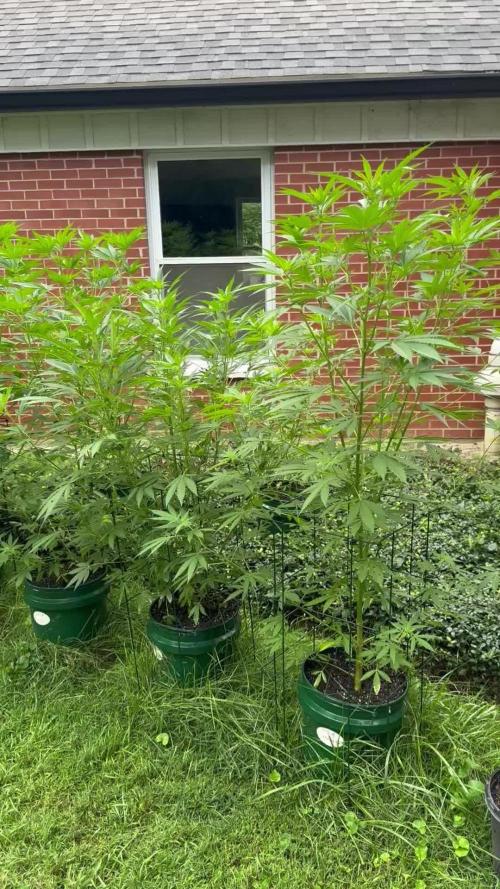
Tenth week of Veg for most of the girls. Start of second week of flower for Purple Punch. The Sour Diesels are now beginning to flower. Changed Purple Punch to Super Thrive nutes for flowering and will do so next week for the Sour Diesels. Thanks for looking in. See you next week. Let me know what you think.


Likes
5
Share


@Lowkey_Doc
Follow
I joined Grow diaries late in my growing career... I wish I would have found this site sooner..
Enjoy!
I personally enjoy growing mephisto genetics. I was very happy with the toof decay grow and end result. I ended up letting this cure for 2 months. It is number 2 in my book so far for my adventure with Mephisto seeds. Walter white is #1.
I grew this in colder conditions through the winter of 2019.
Super dense buds loaded trichs, very loud smell, and great appeal! I have more of these seeds so I will do a start to finish eventually.
Happy growing✌️🏽

Likes
27
Share


@TheCannaProphet
Follow
-----------------------------------------
~BARNEYS FARM DOS SI DOS 33™️~
-----------------------------------------
This strain from 'Barneys Farm’s Cali Collection gets another jolt of super power with this explosive collection of terpenes fused together from some of the world’s most astounding US cannabis phenotypes.
Dos Si Dos was developed from OG Kush Breath, a knockout Girl Scout Cookies pheno crossed with Face Off OG, then crossed again with their legendary Cookies Kush (OG Kush pheno x GSC) AND THAT’S ONLY HALF OF THE STORY.
Add in a subtle blend of Gelato #33 to the pot with its star struck Sunset Sherbet x Thin Mint GSC heritage and boom! A new champion was born: a sativa burst of euphoric energy is followed by tranquility with sedative properties capable of happily tranquilizing an elephant, if you’re overzealous or uninitiated!
DOS SI DOS 33™️ Cannabis Seeds Strain Specifications
~Type: Feminized
~Photoperiod: Normal
~Genetics: Dos Si Dos x Gelato #33
~Effect: Relaxed, Sedative, Happy
~Outdoor Yield (g): up to 2000
~Indoor Yield (g):up to 700 gr/m²
~Flowering Time (days): 60 - 65
~Feminized Outdoor Harvest Month: October
~Feminized Outdoor Harvest Month Week: 1st-2nd week
~Height Indoor (cm): 90cm
~Height: Short
~Indica %: 60%
~Sativa %: 40%
~Indica/Sativa: Mostly Indica
~Taste: Mint, Lime, Spice
~Aroma: Cookies, Sherbet, Lime
*Above information credit to Barneys Farm
__________________________________________________________________________________________________________________________________________________________________________________________________________________________________________________________________________________________________________________________________________________________________________________________________________________________________________________
THE SETUP:
~Planted into Jiffy Peat Pellets that were hydrated with de-chlorinated water with SuperThrive added then ph'd to 6.0 @ 80℉
~Grown 100% organic in 10g fabric pots with Mother Earth 70/30 Coco/Perlite medium amended with 2tbs/g of Down To Earth 4-4-4 / 2 cups/g of Earthworm Castings / 1tbs/g of Dr. Earth Flower Girl 3-9-4, 1tbs/g of Dr. Earth Bat Guano, 3/4 cup of Down To Earth Azomite and 1 tsp/g Down To Earth Fish Bone Meal.
~24hr light cycle during Germination / 19/5 light cycle for Vegetation and 12/12 for Flower
~Straight water ph'd @ 6.2-6.8 when needed and weekly Compost Tea's.
__________________________________________________________________________________________________________________________________________________________________________________________________________________________________________________________________________________________________________________________________________________________________________________________________________________________________________________
Weekly Updates:
10/11- Week Nine! Here we go on our way to sticking a fork in this run!
She hasn't really showed any signs of a fade and she's putting out trichomes like crazy and I'll let them indicate when it's time to put her in the dark before she's harvested! I'm hopeful that possibly by the end of this week she'll be hanging after she spends a couple of nights in the dark.
I watered today using straight water that's ph'd to 6.5-6.7 @ 72℉. I gave her a little over 1.5g to keep her flush going and then turned her pot.
Trichome status: 80% milky / 20% clear
10/13- I watered today with 1.5g of straight water that was ph'd to 6.5-6.7 @ 72℉ and gave her pot a turn.
Her trichomes are almost where I like them and more than likely she'll be going in the dark by the weekend! What a beautiful cultivar she is! 🤩💚
10/15- My routine of watering every other day continues. Yesterday I watered her with her usual 1.5g of straight de-chlorinated water that was ph'd to 6.5-6.7 @ 72℉ and gave her pot a turn. Today was just spent checking her over, turning her pot and doing a quick check of her trichomes which are close, but not quite ripe enough yet!
10/17- Wow!... Nine weeks of flower DONE! 😎👍
Now my sights are set on getting this girl finished up and on her way to 48 hours in the dark before she's hung to begin drying.
I went ahead and watered her with her usual 1.5g of straight de-chlorinated water that was ph'd to 6.7 @ 72℉ and checked her trichomes, which are looking just about right!
This journey is coming to a close in the next couple of weeks with her harvest, drying and trimming up. I so appreciate you following along with me , it's been a blast sharing with you all! 😎🙏
~Thanks so much for checking out my diary! This epic run is in the home stretch with harvest fast approaching...Stay lifted and be Blessed! 😎🙏~

Likes
4
Share

@Michijardinero
Follow
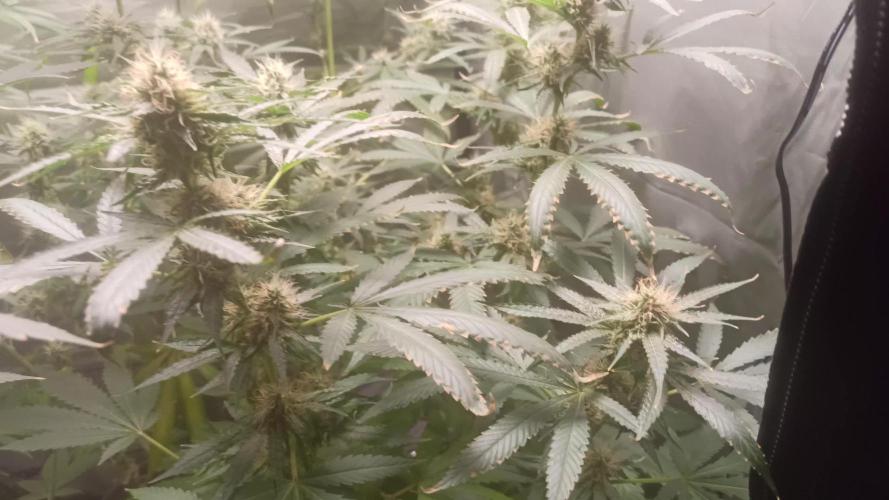
Muy buenas familia terminamos la 7° semana ya sólo nos quedan 2 semanas que nervios y que ganas de probarla a ver que tal salió ya dejaré de ponerle líquidos sólo las regare con agua estas dos últimas semanas echarme la mano en cosas que vean que estén mal para mejorar me despido un abrazo muy fuerte familia buenos humos paz

Processing
Likes
11
Share


@ganjaman24
Follow
My apologies have been away for a bit but the pics are from the last 2 1/2 weeks! Other plant that was the same age turned out to be a male which its unfortunate because it was an accidental cross lol anyway she’s been growing vigourously ever since I made the switch..3 weeks almost complete and she’s a beast! Can’t wait to see the buds form, will try to post more frequently since my scheduled has cleared up some. Thanks for stopping by! Good luck with your own projects!...oh n it may look like I use a lot of nutes but those don’t get used every watering, I often forget to mix or purposely don’t mix one of the supplements but ALWAYS add the 3 base:gro, bloom and micro.

Processing
Likes
15
Share


@HisHope
Follow
9/6 Week 8 And she is doing very well
No signs of any problems nuets doing a great job
Added another light, custom 90w LED
Stretch is slowing
9/8
Buds beginning to form tent is VERY full doing what we can to alleviate some crowding
9/10
Pics Vid
Looks like stretch has stopped more or less
Stretch may have ended
9/9
Nah its aint ended was just teasing us
Increased nuets due to purplish stems seen on the indicas. CocoTek to 10ml/gal A&B
Just trying to get things to behave in the tent its really full humidity is very low so thats helping
Took longer for things to get into full flower than we wanted, have to work on that.
9/10
Pics Vid
Looks like stretch has stopped more or less lights did not need raising


Processing
Likes
4
Share


@BangLaadje
Follow
Ph 6,8 and 1 liter a day, sometimes 0,8l then 1,2l depending on the weight of the soil. Yesterday I gave them each 1,4l with enhancer.
Every 2 days I give 2 gr Great White on 3liter as the Purple Punch is in his last 2 weeks. I got some Green House Booster that I wa't to try on the Amnesia Skunk, what do you think? Or keep it bio aswell? Greetings

Likes
Comments
Share


@eldruida_lamota
Follow
Vamos familia, actualizamos la quinta y última semana de crecimiento de estas Forbidden Mochi fast de Seedstockers, salieron las 5 de 5, 100% ratio éxito.
Aplicamos varios productos de Agrobeta, que son increíbles para aportar una buena alimentación a las plantas.
Temperatura y humedad dentro de los rangos correctos dentro de la etapa de crecimiento.
La tierra utilizada es al mix top crop, por cambiar.
De 5 ejemplares seleccioné 4 para completar el indoor y trasplanté directamente a macetas de 7 litros y aplique de manera foliar el tetra 9, cambie el fotoperiodo a 12/12 y aplique una buena poda de bajos, se ven bien sanas las plantas tienen un buen color y progresan a muy buen ritmo.
Agrobeta:
https://www.agrobeta.com/agrobetatiendaonline/36-abonos-canamo
Hasta aquí todo, Buenos humos 💨💨💨


