


Likes
Comments
Share


@Ultraviolet
Follow
You don't become confident by shouting affirmations in the mirror, but by having a stack of undeniable proof that you are who you say you are, outwork your self-doubt.
Nitrogen fixation is a chemical process by which molecular nitrogen (N2), which has a strong triple covalent bond, is converted into ammonia (NH3) or related nitrogenous compounds, typically in soil or aquatic systems but also in industry. The nitrogen in air is molecular dinitrogen, a relatively nonreactive molecule that is metabolically useless to all but a few microorganisms. Biological nitrogen fixation or diazotrophy is an important microbe-mediated process that converts dinitrogen (N2) gas to ammonia (NH3) using the nitrogenase protein complex (Nif).[2][3]
Nitrogen fixation is essential to life because fixed inorganic nitrogen compounds are required for the biosynthesis of all nitrogen-containing organic compounds, such as amino acids and proteins, nucleoside triphosphates and nucleic acids. As part of the nitrogen cycle, it is essential for agriculture and the manufacture of fertilizer. It is also, indirectly, relevant to the manufacture of all nitrogen chemical compounds, which include some explosives, pharmaceuticals, and dyes.
Nitrogen fixation is carried out naturally in soil by microorganisms termed diazotrophs that include bacteria, such as Azotobacter, and archaea. Some nitrogen-fixing bacteria have symbiotic relationships with plant groups, especially legumes.[4] Looser non-symbiotic relationships between diazotrophs and plants are often referred to as associative, as seen in nitrogen fixation on rice roots. Nitrogen fixation occurs between some termites and fungi.[5] It occurs naturally in the air by means of NOx production by lightning.[6][7]
All biological reactions involving the process of nitrogen fixation are catalyzed by enzymes called nitrogenases.[8] These enzymes contain iron, often with a second metal, usually molybdenum but sometimes vanadium.
Green clover (Fixation)
White clover (Fixation)
Red Clover. (Fixation)
Yellow Clover. (Fixation, deeper roots)
Sweet Thai Basil. (Terpenes)
Italian Basil. (Terpenes)
Chamomile.(Oil production)
Borage.(Pest attraction taste)
Lavender.(Pest attraction smell)
Marigold(Pest attraction visual)
Mycorrhizae are beneficial associations between mycorrhizal fungi and a plant’s root system. Mycorrhizal fungi spores germinate in the soil, creating filaments (hyphae) that penetrate the root cells, thus establishing a symbiotic relationship. This collaboration leads to the development of both intra-radical and extra-radical networks of filaments, enabling efficient exploration of the soil for enhanced access to nutrients and water. Consequently, these vital resources are transferred to the plant, resulting in numerous benefits for crop cultivation.
Various mycorrhizal products are available in diverse formulations (powder, granular, and liquid), concentrations, and qualities. Ongoing advancements in products, technologies, and research are reshaping our understanding of mycorrhizae. Despite these positive developments, certain misconceptions persist. In the following discussion, we aim to clarify the truths and dispel the myths surrounding mycorrhizae products.
MYTH #1
A HIGHER NUMBER OF MYCORRHIZAE SPECIES MEANS BETTER RESULTS.
Contrary to common belief, having a higher number of mycorrhizae species in a product does not translate to better results; in fact, it often yields the opposite outcome. A plant can sustain only one association with a particular mycorrhizal fungi species. Introducing multiple species creates competition among them, which is not advantageous for the plant. The initial colonizer does not ensure the highest success; instead, it gains precedence. It is recommended to select a product with a concentrated presence of a single mycorrhizae species known for its effective performance, rather than opting for a product with multiple species at lower concentrations.
MYTH #2
ECTOMYCORRHIZAE ARE EFFECTIVE FOR CANNABIS PLANTS.
Although ectomycorrhizae can colonize five to ten percent of plant species, cannabis is not among them. Ectomycorrhizae do not penetrate the root cells; instead, they develop around the roots and on the exterior. For cannabis plants, it is essential to seek out endomycorrhizae. Endomycorrhizae are capable of colonizing 70% to 90% of plant species, including cannabis. Unlike ectomycorrhizae, endomycorrhizae penetrate the root cells, forming structures like arbuscules for the exchange of nutrients and water with the plant.
MYTH #3
WHOLE INOCULANT (PROPAGULES) PERFORM BETTER THAN ONLY VIABLE SPORES.
The propagule count specified on most mycorrhizae products indicates the presence of spores (viable and unviable), hyphae, and root fragments. However, it is crucial to note that only viable spores, those with the capacity to germinate, can successfully colonize a plant’s root system. Spores are to mycorrhizal fungi what seeds are to cannabis plants—a fundamental component enabling fungi reproduction. Consequently, even if a mycorrhizal product boasts millions of propagules, its effectiveness hinges on the presence of viable spores. Without viable spores, the product will not contribute to plant development. Therefore, the genuine value of a mycorrhizal inoculant lies in the quantity of viable spores it contains, as only viable spores can efficiently initiate symbiosis.
MYTH #4
ALL METHODS OF APPLICATION YIELD IDENTICAL RESULTS.
To establish the symbiosis, mycorrhizal fungi spores must be close to the plant roots. The optimal recommendation is to directly apply mycorrhizal inoculant to the roots, either in powder, granular or slurry form. This method ensures maximum proximity between the spores and the roots, facilitating a rapid establishment of symbiosis. Particularly with crops like cannabis, which have a short growing cycle, employing this technique is the most effective way to obtain optimal benefits. Alternatively, techniques such as blending the inoculant with the soil are effective, but there may be a delay in the establishment of symbiosis. This is because the roots need to grow and come into contact with the dispersed spores throughout the growing media.
MYTH #5
MYCORRHIZAE CAN ONLY BE GROWN ON LIVING PLANTS.
While the predominant method for commercially producing mycorrhizae involves growing them on the root systems of living plants (in vivo production), it is not the exclusive nor the optimal technique. In fact, this production approach has notable drawbacks that the “root organ culture” method just does not have (in vitro production). In vitro production occurs in meticulously controlled, aseptic laboratory conditions, allowing for the consistent generation of products that are viable, highly concentrated, species-specific, and free from pathogens. Achieving such precision and quality is impossible when relying on the cultivation of mycorrhizal fungi on plants exposed to external conditions.
In conclusion, it is crucial to take all these factors into consideration when choosing the appropriate product for your crop to fully harness the wide array of benefits provided by a high-quality mycorrhizal product.
STRONGER PLANT – Stress resistance.
FASTER GROWTH – Improve plant structure and shorter veg time.
INCREASE YIELD – Overall more biomass.
IMPROVED QUALITY – Increase cannabinoids and terpenes content.

Likes
8
Share


@Aldo90
Follow
I was going to upload the process, but the wiser side of me said no. So I've edited it out and some of the evaporation process can be seen. Bho/wax/honey whatever we care to call it


Likes
15
Share


@BruWeed
Follow
Desde el momento uno fue fácil de cultivar, no tuve ningún problema en todo su desarrolló.
Como planta supero todas mis expectativas, se encuentran densos y muy pegajosos los cocos. En algunos hay partes de color violeta/lila.
Y por ultimo recomiendo mucho cultivar esta genética por lo sencillo que fue cultivarla y sus resultados finales, todo de diez.


Likes
4
Share


@Olduffybastard88
Follow
Selection of plants i have at different stages i need to get around making diarys for everyone of these seeds just hit the ground running and haven't stopped growing hopefully flowering next

Likes
12
Share


@Cheeba_Inu
Follow
This grow is going to be testing my coco based auto watering setup. The plants will eventually be going into 2.5 gallon airpots which I cut to be very tall and narrow which I hope will give great performance for this grow style. Nutrient solution will be pumped from a 5 gallon bucket to halo-style drip emitters 6 times a day for 5-10 second intervals. I am going to try to use inline flow control knobs to dial in the watering and allow for slight runoff every fertigation.
For lighting I am using my HLG 100 watt lights, one per plant. I am a big fan of these quantum boards, they have given great performance in the past!
Thanks for reading! 🌱👍
May 13 day 1: the Blackberry breached after germinating in a rapid rooter for 2 days. I am impressed with how quickly this seed popped! It had no issues with stuck seed casings, which I find is the main downside of germinating in rapid rooters. I am excited about this one!
May 16 day 3: Auto watering drip emitters are set up, and I am testing them to dial in the amount of runoff it produces. I also planted the seedlings/rapid rooters into 1 litre grow bags and began feeding nutrients. They are still under the humidity dome for now for the time being and seem to be doing well.
Day 4: seedlings doing well, they are staying under the dome untill they grow their next set of leaves, then I will take them out and run a humidifier.

Processing
Likes
1
Share


@Espiritu
Follow
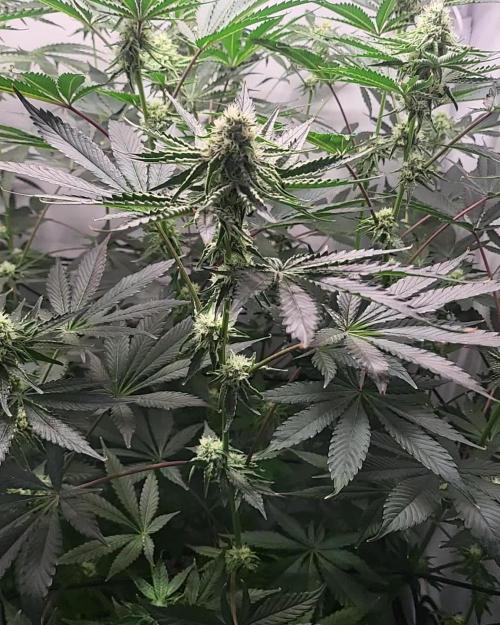
Continua la época de lluvia de verano, los nutrientes y abonos son los mismos. Le sigo haciendo podas ya que aunque tiene muchas puntas, tiende a elegir 2 o 3 del centro y se estira, no quiero que tome altura.


Likes
4
Share


@smoking_hills9
Follow
These cali genetics are blowing my mind 🤯 super sticky, very frosty rock dence buds with extra strong smells. All 3 strains are 10 out of 10, very impressed. Done last defoliation few days ago, preparing for the harvest so it's much easier. Stalks are super fat, same as buds.
Got big surprise from Atami, plant food, and many extras. Crazy. Thanks a lot guys. 💚 Start adding you Bloombastic food already. They love it. Smell is mad. I think most of plants ready in week or so.

Likes
15
Share


@MR_FLEXOPONIC
Follow
Week 15 in 2 days(Day 41 today Saturday June 18, 2022 @11pm)
Running a high ppm for entire grow so last 2 -3 week dropping to zero(0) ppm to drain plant real good


Likes
12
Share


@most_dope
Follow
most of the buds look to be turning darker and about 60-70% of the hairs are turning orange now and only some lower buds still have white hairs standingup. very close to chop day ! :) im trying to be patient on starting my next ones so i can use the tent to dry first but its hard !!! i started to get worried about the green stuff on the stem thinking it was algae or something so i started leaving the light on 24/7 to finish her off, wondering if i should harvest the done parts and leave the bottom 25%(ish) to finish maturing. any advice or comments are welcome and very appreciated! i have 2 bubba kush photoperiod seeds, and the rest are autoflowers so i think i will save the photos until i get a few more grows under my belt or another tent. i have 1 purple punch, 4 bloody skunk, 1 forbidden runtz, and 1 gorilla cookies that i have to choose from for my next grow. what do yall think i should pick? since i have 4 bloody skunk i may just do 1 of those and 1 of the fastbuds.
Likes
12
Share


@DoDrugs420
Follow
This is a giant autoflower that reaches 150cm and produces massive yields of up to 600gr/m2, a modern Cali strain that offers what a top-quality Indica-dominant hybrid should; nugs capped in resin with the density you would expect from Indica-dominant strains and that bag appeal that will surprise even the most experienced growers. Expect beautiful purple and magenta hues that come along with a sweet almost pastry-like taste and, thanks to the 24% THC, a very pleasant and potent effect that surprisingly starts as a motivating high and in no time relaxes you completely, taking a bit of the energetic edge off.
Tech Specs
Taste
Blueberry Muffins, Cherry, Spicy
THC
Up to 24%
CBD
< 1%
Size
XXL
Height
90 – 150 cm
Flowering
9 weeks
Genes
Sativa 15%/Indica 85%
---------------------------------------------------------------------------------------------------------------
Grow Sponsored by MARSHYDRO
HIGH EFFICIENCY WHITE LED LIGHT: Newest SMD LED technology provide highest PAR/LUMEN output(743umol@18"), designed to replace a single-ended 250watt HPS; MARS HYDRO TS 1000W Plants Growing lamp makes you get 30% higher yield compare OLD blurple led lights, Max 2.0g yield per wattage (power draw)
LOW ENERGY CONSUMPTION GROW LIGHTING : Consuming only 150W with 342 LEDS! It saves up to 50% energy than other led grow lights. Perfect for 2.5x2.5ft,Max coverage 3x3ft. Over 90% light energy can be absorbed by plants; higher intensity and more even coverage in a MARS HYDRO grow tent, reflective area, or by crossing over using multiple TS1000
SUNLIKE FULL SPECTRUM LED INDOOR GROWING: 660-665nm Red IR/3200-4200Knm/5200-6800Knm, infinite close to natural light, best for all plants all stages growing, rapid plant response from seed to flower and increase yield & crop quality
HIGH REFLECTIVE & NOISE FREE-Fanless LED GROW SYSTEM design will make your growing life easy and quiet, quickly heat dispersing material aluminum reducing light lost to aisles and walls, increase the light intensity up to 20%, allowing your plants receive more energy and without burning your plants for maximum headroom
Get your own at https://www.amazon.de/dp/B07ZVFBR34
Likes
7
Share

@GREENPHOENIX6262
Follow
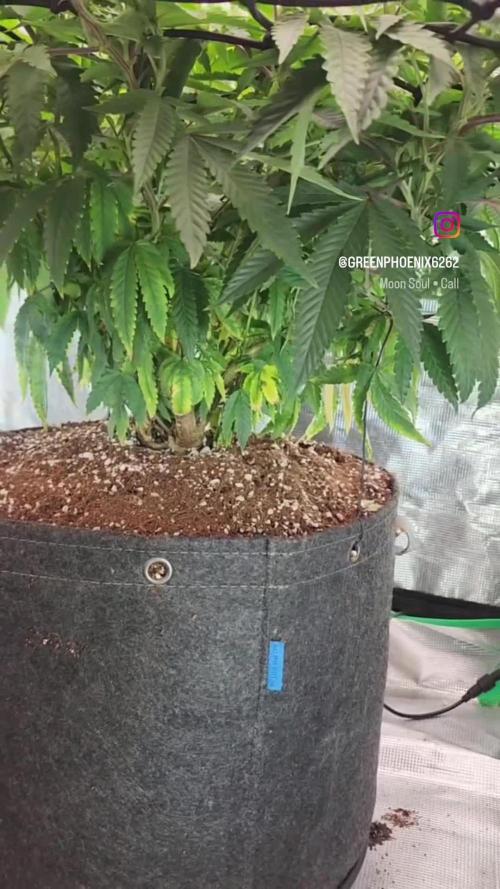
01/31 - HST SOG completed - rebounding accordingly - increased feeds to every other day between clean water and nute feeds - Lights have been picked up to make soon for SOG - looking to pluck clones in about 2/3 weeks
02/04 - Deep into week 13 veg running without any issues - Uptake in Silica and Nitro feeds - HST is coming along accordingly - Clones will be pulled in the next coming weeks - Water feeds have increased to about 1.75 galls every other day.

Likes
16
Share


@Sethstover
Follow
Always used the least amount of calmag if this specific plant and it was always darker green than I'd like but that's jus the picky plant


Likes
1
Share


@BlaBlaGrower
Follow
Flowering occurs without problems. After 9-10 days, the last one is another removal of foliage and unripe inflorescences. The flowers are starting to gain volume.

Likes
15
Share


@DRO420
Follow
Upgraded to a Spider Farmer se5000 rail light. After just a few days I notice the difference. I highly recommend this light . I choose to keep the the driver outside the tent. The plants are all doing great with some small buds showing up.

Likes
184
Share


@Still_Smoq
Follow
#seedsman420growoff and #SeedsmanSeeds
Week 11, 6-12 July 2024
6-12 July - Observed and let the plant grow.
This has been another good week for the Pineapple OG! She continues to swell and stack on flowers. I can’t get over the smell, it is almost addictive it is so intense. It seems there has been some great genetics put together for this variety. She still has about 4 more weeks to go!
🍶 8 July nutrient solution changed
🍽️ 8 July feeding schedule updated
💧 Using reverse osmosis water with EC/TDS at 0
🐉 Nutrient Solution EC 2.4 at 74 degree F
🔆 Light power at 75%, DLI 45 canopy coverage at 12hrs
😤 Using General Hydroponics, HGC728040, Dual Diaphragm Air Pump, 320 GPH
That is it for this week. Thanks for the look, read and stopping by.


