


Likes
Comments
Share


@TechDCo
Follow
In the seventh week, I am preparing a detailed essay to explain my training method. I plan to increase the nutrient solution dosage to 35ml, including Warmcasts, seaweed, and a flower mix I concocted. Additionally, I will introduce 100% Gaba powder at half a teaspoon, mixed with water, to be administered at nighttime for the next two weeks. This natural chemical compound can help the plant relax and alleviate stress as it transitions into the pre-flowering stage and starts producing flowers. On the 11th of January, I completed the last defoliation procedure before the plant enters the pre-flowering stage in three days. I observed that the DLI (Daily Light Integral) reading is a bit high, and the light is positioned at the top. Therefore, I aim to adjust the light to achieve an ideal DLI range between 20-30. There is currently no CO2 supplementation in place. On the 12th of January, I eagerly await the pre-flowering stage and anticipate its onset in a few more days. It's time to initiate a 3-day mid-drying period.
A notable event on the 12th of January was the arrival and easy installation of the Spectrum King Sk600. The brightness of this new light is noticeably superior compared to the Budmasters. On the 13th of January, the plants experienced the first half-day under the SK600, and everything appears to be in good condition. Furthermore, I decided to move one of the vegetative plants, "Mango Skunk," into the flower tent on the same day. Additionally, there was a rearrangement of the lights in the flower tent, with the Spectrum King SK600 and Cropmaster Pro 1000 DIY being utilized. The readings for both lights were documented as follows: DLI - 197 u/mols, PPFD (Photosynthetic Photon Flux Density) - 3000 and up at 23 inches from the canopy, PPFD 2942 at 24 inches from the canopy.
I also applied blood fish and bone on topsoil and worked it in, using 2 cups of the mixture on the 14th of January. It was a relatively quiet day, and to lighten the growing mood, I took a quick video and uploaded some pictures of my dog Martina, showcasing her journey from a puppy. The bottom node leaves are significantly large, leading me to anticipate massive buds in the future. Late-night observations revealed that Pablo, a plant in the tent, may not have fully stretched to fill the available space, suggesting that it could be male. On the other hand, the forgotten haze cakes strain occupies a substantial portion of the tent, showcasing positive training outcomes.
On January 15, 2024, I removed the twist ties from the cola stalks to allow for better airflow and to support the unrestricted growth of the plants.
The following day, I took some photos to document the progress of the plants. It's always fascinating to visually track their development over time.
Also on January 16, a plant named "Freaky Pablo" displayed unusual characteristics, signaling that it might be a male plant. To prevent any potential pollination issues, I decided to remove "Freaky Pablo" from the grow space.
On the same day, I observed the presence of pre-flowers, indicating the beginning of the flowering stage. This marks an exciting phase in the growing process as the plants transition to a crucial stage of their life cycle.
During this time, I made some adjustments to the positioning of the "Mango Skunk" plant, initially moving it up to the top bed and then deciding to move it back to the bottom.
On January 18, I noted that the lights were turned on, marking the start of the flowering phase. This is a significant milestone in the plant's development as it shifts its focus from vegetative growth to flower production.
Additionally, I relocated a plant named "Spicy Temp" to the flower tent. This move ensures that all plants in the flowering stage are in the optimal environment for the next phase of their growth.
Overall, it appears that the grow operation is progressing well, and I am looking forward to witnessing how the plants continue to develop.
And finally, here's a joke for you: What did one plant say to the other? "Hey bud, how's it growing?"
I am not, because i am dead!

Likes
7
Share


@iLoveGoodWeed
Follow
She has stretch very nicely and at the end of week I can see that she will start flowering next week .

Likes
2
Share

@IceGenetics
Follow
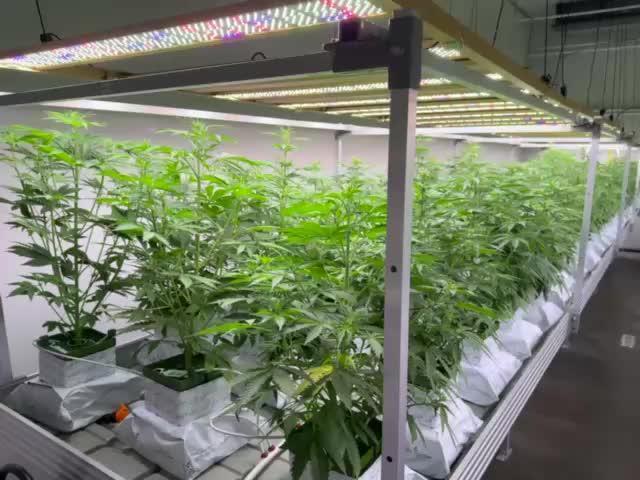
Today, on day 36, the plants have noticeably grown, with heights now ranging from approximately 45–55 cm.
We increased the nutrient concentration to 650 ppm, maintaining daytime room temperature at 26°C and nighttime at 22°C, CO2 concentration at around 600 ppm, and humidity at 65%. The light schedule is 18 hours of light and 6 hours of darkness, with a PPFD of 600.
We raised the nutrient concentration by 100 ppm, increased the light intensity by 100 PPFD, and lowered the humidity to 65%.
The plants have grown significantly, primarily stretching upward with their main colas and side branches.
Visually, there are no signs of nutrient deficiencies or toxicities; the plants are absorbing their 650 ppm well, with no salt buildup or burn.
Likes
47
Share


@Northern_Ent
Follow
4202024 or backwards, it’s 4202024.
I’m sure there will be other palindromic dates in future, but this is the one and only stoner palindrome date that can happen in our lifetimes.
Thanks to Seedsman for the idea of a 420 grow-off and the chance to try some of the latest and greatest.
Anyway, started some Blueberry Pie F1 Fast seeds from Seedsman today. Very promising sounding genetics, and I’m very keen to see how she goes. Hopefully we won’t get as much wildfire smoke as we did last year.
The plan for this plant is a 16 cola manifold with force flowering (12 h darkness) starting in late July for a couple of weeks.
Starting in a glass of water on a heat mat at 25 C. Kept in dark using foil. I’ve decided to avoid plastic for the seed starting. Also, based on a science paper I saw this winter, I’m leaving a ripe apple in the dark with the seeds. Apparently the ethylene gas helps, but only in the dark before light is applied. Tried it with tomato and pepper plants and seems to work. First time trying with my cannabis seeds. Will add the reference to the paper some day.
Apr 22: moved into soil. Starting three seeds but I only have room for one plant. Will adopt out the other two.
Apr 25: removed foil cover (and apple) and set the plants beside the light that is going for tomatoes and peppers. The seedlings need minimal light at this stage so taking it easy.
Seems likely we’ll be past last potential frost day soon. 👍
#seedsman420growoff
#seedsmanseeds

Likes
Comments
Share


@Nobody1991
Follow
It is a vigorous plant with very uniform branching, high resinous and high yield, if you grow from seed there are a few different phenos that I got, equally as good

Likes
10
Share


@GoArmyBeatNavy
Follow
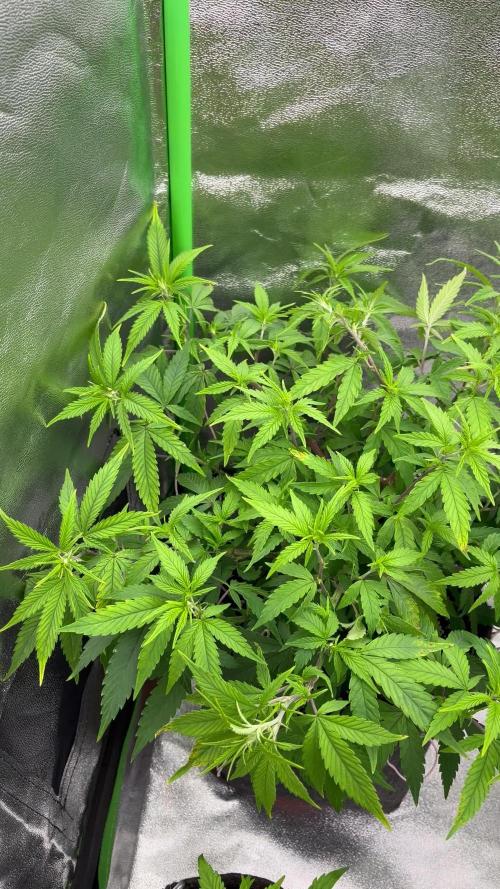
LST'd all of my plants this week. The growth is getting quite amazing! I also trimmed a lot of fan leaves to give the lower growth more light. I'm not really concerned about extending the timeline as I'm going more for quantity more than speed.
In total the LST, Trimming and watering took about an hour each, I really enjoyed it though.
The third plant that dried out last week seems to have bounced back quickly. I trimmed the leaves that were dried out since they were only going to be a drain.


Likes
1
Share

@Lvnsource
Follow
Feed Log:
#1 D:52 - 5.5L - Si,[0],Vega[18ml],Ca/Mg,[2g & 1.5g],INPUT: [pH 6.1],[1.684 EC], OUTPUT: [1.892EC], pH [5.9] 2.1L ,Previous irrigation: D:46
#2 D:52 - 5.5L - Si,[0],Vega[18ml],Ca/Mg,[2g & 1.5g],INPUT: [pH 6.2],[1.654 EC], OUTPUT: [1.74EC], pH [5.9] 2.2L ,Previous irrigation: D:46
———————————————————————————
Around day 50, the plants began showing nutrient deficiencies: likely potassium and magnesium, due to the soil having lost its nutrient charge. Two days after their first feeding, they are already looking healthier


Processing
Likes
60
Share


@Rezdestroyer
Follow
Going so well! Gave her a heavy feed a few days ago and she loved it! Defoliated last night. Long overdue. Now more light and air getting through. The smell is literally like garbage. Hope that's a good thing. Can't wait for next week! Cheers!

Likes
49
Share


@masterofsmeagol
Follow
6/1 I'm anxious to get my plants in their final homes. Another 90 degree day today and then it will be cooling off with some showers. I plan to take advantage and utilize that to make the transition. I have some small burns on a couple plants bit considering the weather we've had its nothing. Temperature swings 50 degrees. I hope these girls do OK outside. I was tired and stoned last night and I accidently topped a plant I had already FIMed. Oh well. Transplants soon. Supports screwed in after the heat. Plants have been handling this weather like a champ. Big thick healthy stalks.
UPDATE PUT THE PLANTS IN AROUND 730. Cutting down on light hours I'm poverty close to where we are. It was 95 today. Plants have suprisingly little burning. My fan was taken so they go without that tonight too. In the next few days it's going to cool down and that's when I'll transplant. Only thing left before transplant is sanitizing trellis and supports. Easy peezy. Especially if it's supposed to be in the 50s. And people dent climate change lol. I'm hoping that all this adversity makes my flower a higher quality. I'm glad to have the quantity to pick the best phenos for the BIG POTS. Im trying to stay excited but it's just so dumb hot. Oh well. If the plants can do it so can I. I'm planning to give them some kelp me kelp you next watering and may start some light organic nutes.
6/2 Phone doesn't like uploading my videos. Broke record high temp yesterday 95 and tomorrow we will break the record low 50. Plants withstood the heat well and are doing great. Transplant soon. They were a little light but I held off on the water. Plan on it tomorrow. May transplant tomorrow. I have several videos that haven't uploaded. I thought they did but I was wrong. Oh well.
UPDATE: Forgot to water. Some were light and others could've held off. Did the half a powerade bottle ahain. A litt ke less on the heavier ones. However I'm looking to transplant into final homes tonight and into this weekend. I sanitized a fifty and a forty so my bags and two pots are sanitized. Cage is sanitized and ready and pallets are sanktized and in place. The 40 and 60 fit PERFECT in the small space left from the pallets. Plus the plants always lean the opposite direction so things should go smooth. Only thingvleft is sanitizing stakes, bamboo, plastic garden stakes and all the other plastic training stuff. I'll just soak it while I transplant. Gotta mix the soil first too though.
UPDATE. Heat went higher than expected and hit 90. I figured I'd go back around three and screw in suppirt stakes and begin getting everything ready for transplant (i.e. supports, mix soil, sanitize trellis) before I transplanted tomorrow MORNING was what I had planned. Unfortunately we got a huge thunderstorm with a shot ton of rain and it's gonna continue throughout the night. I think this is God's way of telling me to take a break. I can get up early and get those support stakes screwed in. Then when I get back from the wife's doctor's I can do the transplants. I'm trying to break the labor up into manageable chunks. Looking at my other diaries I can see that my plantscare fine in their three gallon homes. It'd a little disheartening seeing such big clones that I started so much earlier on the other diaries. However I always was fighting SOMETHING (usually more than one thing) and last year was a shit show. At least this year I stay away from anyone else's cannabis any clones and I'm extremely cautious. I've seen my cousin out perform me multiple times with healthy plants like this I'm excited to see how it goes. I really needed the break anyway but tomorrow morning the stakes will be in. Hopefully they'll be outside.
6/3 Broke the record for low days after breaking record for highs. I saw it 94 yesterday and the day before. On the way to my grow at 6am it was 44 degrees and it's not warming up much. Fifties at best. Rainy. I left the door closed. The big door on the otherside got opened as the other end of the garage neededcto he used. If the rain let's up I'm going to set up the grade stakes so I can transplant in the morning and throughout the day. I think I'm going to light dep a couple of them and leave them in the 3's. We'll see.
UPDATE: At 12:30 the temp today was 44. Yesterday it was 94. I can't believe this. Plants are doing great though and are in the garage under lights for the day. The BIG door was open part of the day. Didn't take any pictures (or even enter the grow area) as I sanitized the last 40 gallon pot and a bunch of grade stakes. I drilled the grade stakes to the pallets in the front. The first row is done. Just need to sanitize the plastic trellis itself and finish attaching the other grade stakes. I don't need the fill trellis up by transplant. I just need the bags to not knock over and have SOME support. I'll be back over there either to tonight to put more supports in or tomorrow when I actually plan to start transplanting. I'm getting excited. After dealing witb the stiff that I sanitized I didn't dare go fuck with my plants so I looked through the window. I'll finish sanitizing the net tomorrow. These plants look great. I'm wondering if doing the two diagonal I poles with zipties actually works. It would save me some kone for sure. I'll definitely update in the morning.
6/4 It's warmed up to a balmy 44 degrees. My plantsxare in the garage still. Weather sucks this whole week but after this heavy rain it should be perfect weather to transplant these girls. A little to chilly but it will warm up and I need to get this shit done. I'm trying to do to much at once. I need to just out dirt in bags and get them outside. I'm glad I waited until after this craziness. Breaking temp records for high one day then breaking it for low the next can't be good for the plants. I'll update what gets done today. I may mix soil or I might wait until tomorrow. It will let up some then. Plants still look fabulous 👌
6/5 50 degrees still raining like hell. Rain until Friday. Plants are inside under the onecworking light. Lots of indirect light through the massive windows though. I'm planning on mixing soil today and tomorrow and getting bags and pots half filled. Just trying to break the labor up into manageable pieces. It's probably a good thing I didn't put them in their huge containers before all this rain.
UPDATE: MIXED SOIL 1/3 of each (FOX FARM OCEAN FOREST, HAPPY FROG, AND ROOTS ORGANIC 707). I prepared I believe 11 containers for transplant. I need to sanitize two more containers and I'm good. I got a lot done. Might go back over. Set up extra cams too. I'm excited. Talked to my commercial buddy amd he motivated me. No reason my plants can't handle this shit. I've just had massive personal shit going on. Friday is the next GOOD day but these girls might go out earlier. I'm checking the forecast. I'll sanitize the other containers in the morning and fill them.
6/5 Today is usually my watering day but shit still seems heavy so I'm going to hold off. Despite that i need to transplant. I think they're wet enough. I could do it today. Plants are looking good and weather takes a better turn Friday. It's not raining hard though. It's just sprinkle right now. I may transplant some today depending on how things go. I'll keep the diary updated.
UPDATE: I went back over with the intent to just mix soil and let it acclimate. I decided to try to transplant one. I grabbed a 10th planet and started to go. I had done a bunch of manual labor already so i wasn't thinking. Of course the fucker was dry and didn't wanna come out ofcthe pot and the root ball pretty much decintigrated in my hand so I'm not sure how that will go. Tried again with the Blueberry Cheese Cake. I thought the roots just might not have been rootbound abdcthat could've been the case. After having another rough transplant I recognized I was tired, all the hard stuff is done and it's gonna keep raining until Friday. I wanted to transplant three and put them outside but with the wind and rain and the difficult transplant I let them sit under the light in the garage in indirect light. I had the doors open for a while. Should be open now but i don't want to have to go back over and shut it. Plus I'm not to keen on getting water on my light. Let's hope for a better day tomorrow. This was the only thing I had going good. Phrple punches are still behind. I've decided I'm oing to light dep ttwo of the plants in the 3 gallon pots. The two shittiest or smallest plants (probably purple punch will be light deped.
WENT BACK OVER AT FIVE AND IT APPEARS EVERYTHING IS ALRIGHT. WILL HAVE CHECK IN MORNING. Vid won't upload. Tried multiple times. I'll try again tomm.
6/6 Waiting for a doctor's appointment when I should be transplanting buy whatever. Everything is looking really good. Despite me disint9grating the rootball in my hands the two transplants look great! When I get back I'm planning to get some more work done. It's still lightly raining off and on but the door is up. I'm lettingvthe soil mix acclimate a little bit too. Hard labor is mostly done. Now the intricate part. Wish me luck. Not sure if it will be today bit I'm hoping.
WENT BACK OVER CAUSE IT WASNT RAINING BUT AS SOON AS I WAS CLOSE IT STARTED POURING SO THE PLANTS ARE UNDER THE ONE WORKING 150HPS AND THE AMBIENT LIGHTING FROM THE WINDOWS. TOMORROW IS TRANSPLANT DAY. I WONT HAVE A VEHICKE SO IT WILL BE TRICKY BUT IM GONNA MAKE IT HAPPEN. Opened doors at 530. Video still didn't upload
6/7 Still raining. It's off and on and a nice rain though. It's 53 degrees at noon. I transplanted two 10th planet's into 20 gallon pots. I transplanted these two a little differently. I put the bags in there final spot I side my cage andctransplanted in the misting rain. The first one came out and seemed to be heavier on the bottom and broke off. I tend to "throw" them in the hole before they collapse. With my anxiety I suck at transplanting. Plus these plants haven't filled the 3 gallon pots with roots yet but i want hem in their final homes and its time to go outside. I transplanted the other two plants indoors and let them have days in the garage with the door open and the light on then protection from the elements at night. I've been doing this for awhile. They would all be outside if the weather wasn't so shitty. This rain is supposed to stop. I'm curious as to what will be the fate of the two plantsci transplanted and left outside. I'm praying and hoping for the best. I also put my back tarp up so I have a wind break between rhe buildings. I stopped working because I didn't want to fuck anything up. Anxiety disorders suck. TOOK A BUNCH OF VIDS BUT THEY WONT UPLOAD. GOES FROM 9% TO 65% BUT ALWA7S TURNS RED "FILE FAILED TO LOAD". I'LL KEEP THE DIARY UPDATED. ESPECIALLY IF I GO BACK OVER. WAS ABLE TO LOAD A COUPLE VIDEOS. I GUESS ITS NOT AS BAD AS I THOUGHT. AT LEAST I HOPE. WENT BACK OVER AT 3 AND CHECKED THINGS OUT. THE TWO REXENT TRANSPLANTS I LEFT OUTSIDE SEEMED TO BE IMPROVING. DESPITE THE FACT I DUMPED A SHIT TON OF SOIL ALL OVER ONE OF THEM. IT SNAPPED A LITTLE BRANCH CLOSEST TO THE SURFACE. ITS STUFF I'LL REMOVE ANYWAY BUT STILL. IM REALLY CROSSING MY FINGWRS AND PRAYING THESE GIROS WILL MAKE IT. With everything i have going on tjis is my respite.IM GOING TO TRY TO SEE WHAT I CAN ACCOmplish TOMORROW. SOME OF THE PURPLE PUNCHES ARENT READY FOR TRANSPLANTING THOUGH. I ALSO ADDED TEO TARPS TO THE CAGECTO COVER THE WIND TOWER BETWEEN THE TWO BUILDINGS. THIS IS GOING TO BE A GOOD YEAR! Shut the door at seven. For some reason the two 10th planet's I transplanted (that fell all over the plant and I thought mightve broke it) look awesome lol. Despite the ridiculous pouring rain. It's going to let up soon and we are do fir some good weather. I'm trying to get everything (that isn't getting light depoed) into the cage. Four transplanted. Ten (I mean 8 more) to go.

Likes
45
Share

@masterofsmeagol
Follow
9/3 Shook the plants off this morning and took a few pics and did a video. Let's see if it uploads. Plants are doing good. Toasted toffy is due for another plant doctor application tonight. It seems like I'm losing lots of leaves. Looking back on my other diaries I guess it's normal. BUT I could've had pest/pathogen problems then. I'm over thinking it. Toasted toffy only needs a few more weeks. It will definitely outvrun the disease. The nugs are super dense too. The plant in the 50 is loosing leaves faster than I'd like. It is also one of the furthest along. The big leaves that turn yellow look like it's a calcium/magnesium issue. The stalk and branches are all bright green and healthy looking. So are the flowers. It could be something below the soil. I couldve been overwatering but last time I waited until it drooped. It will be fine though. I'm happy with my results so far. Not my best or biggest year but I'm going to put in the work and Mae these plants produce the best quality cannabis that im able too. Also I think plant doctor may kill insects. K bicarb with dawn does too. I've found a few dead bugs like flies and pillars. Pillars actually seem to be gone. Not many moths either. Unless I see them I'm not going to treat them for it. This is that magical time where you get to watch the plant produce those beautiful flowers. Despite some small problems I'm very grateful for what I have. I've worked hard for it.
9/4 Watered everything but the sherb pie which was still heavy with leaves yellowing. It's tied for the furthest behind in flower with the seed in the 10. I treated the toasted toffy with 1/4 gallon (4tsp/gallon) of plant doctor. I avoided flowers as much as possible and tried to just get a few leaves. I used the rest on the soil. I just wanted it to absorb a little faster. That's why I sprayed the foliage. It's not 4 days it's 14 days when tje plant doctor just leaves behind a bunch of potassium and phosphorus after it's done its job. Can't be used in a 14 day interval with copper and I think that's what treats septoria best. I dontvknow if I can use that in flower. Doesn't really matter. Things are looking good. Plant Doctor and the K bicarb seem to be doing there job effectively as long as i stick to the application times. I made a short video but didn't upload. I'll try again but I may have some medical emergencies that need to be dealt with. If not I should defoliate and tie down some event horizon branches. I thought about treating the other event horizon as well. I'm not positive it has septoria but it wouldn't hurt anything to be practice. It AT LEAST has a couple suspucuous spots. I smelled a skunk as soon as I got out of my car. It can't get in my grow but I might put out traps to catch it. We'll see how it goes. Video seems to be uploading. It's at 31% so I'll wait for it. I think I've got like four or five weeks on my toasted toffy and one event horizon and the one in the 50 that I THINK is red runtz. That's good that I'll have different plants to harvest at different times. It's seeds from here on out though. It was hard to find info on some of the strains I'm growing but they all have ONE thing in common. They are EXOTIC and they are at least MODERATELY DIFFICULT to grow. AT LEAST lol. Last year I picked the right seefs and strains and it greatly helped. Still, if these are difficult strains to grow, then I'm doing a good job.
EDIT: I WAS STONED BUT IM PRETTY SURE I TREATED THE PLANT IN THE 50 WITH PLANT DOCTOR. DIDNT SPRAY BUDS. TRIED TO GET THE LEAVES THEN USED THE REST ON THE SOIL. I REMEMBER BECAUSE A STREAM ACCIDENTLY HIT A COUPLE LEAVES ON THE HUGE PLANT IN THE 10.
9/5 Sherb Pie was light and drooping. It's not to far in flower and still seemed moist yesterday with a little bit of weight. I watered it a gallon. I defoliated a little but I need to go through that plant. I have a bunch of plants that need a little work. The 50 gal seed is losing lots of leaves. I must not be feeding it enough, overwatering or maybe theres some sort of lock out. The plant looks nice and healthy. Leaves just turn yellow and die. Looked like a calcium or magnesium deficiency but i saw a septoria spot. I wouldn't think I've over feed or locked out using the small amounts of nutes I've used. It will be time to feed again soon. It's in the middle of flowering and still has leaves. I'm hoping things work out. I just have an anxiety disorder and worry too much. I'm GOING To have a great harve! I just need to keep moving forward and putting in the work.
9/6 What a fucking shitty morning. I did research on how to keep skunks out of your garden. Because I smelled it and the neighbors shot a few. Dad put traps out and it caught one. It wasn't a no spray trap so I approached it with him. Both had tarps. I kept telling him to throw it while I was distracting it bur he got a cramp and only got it over half. The half away from my garden. It's pretty far and down in a field but still. We had talked all morning about how to release it. I offered to drive their dog to take it for a walk so his alcoholic girlfriend wouldn't spiteful put the dog on its run. It wouldn't be sprayed but I made it out like it would ruin my plants. Picked dad up and got him to the bathroom. In that 30 seconds the stupid bitch grabbed the dog and brought it outside despite me YELLING "Can't you wait 5 minutes!? We've been dealing with this all morning. I heard fuck you in my head and she did it anyway. Dog ran at the skunk barking and it sprayed. Not a lot but I was fucking pissed. She's a full blown alcoholic and doesn't like me around early or the fact that my old man's 80 and house is mine. Anyway I got back and there was NO SKUNK SMELL. AT ALL! I WATERED EVERYTHING BUT SHERB PIE AND FED EVERYTHING BUT SHERB PIE. ILL FEED AND WATER THAT TOMORROW. WATERED A GALLON WITH A QUART OF FEED. Researched my strains found out they were all "difficult" to grow. One year ago to the Day I cut my first tenth planet. I got a couple close to a few weeks but the others will be later. If I can pull this off though I'll have some crazy quality! Grateful for what I have that's for sure! I doubled beastie bloom this time. We'll see how it goes.nothings uploading. I did some vids a pictures but I'll have to upload today.
9/7 I think it rained last night. I forgot to water and feed the sherb pie but I'll do it when I get back. I shook off the plants the best I could. I need to get the leaf blower out now and put it to use. Buds are swelling like crazy. GMOs are very tight flowers. Same with the event horizon. Rock hard nugs. With the gmo's I'm not worried. The were monster cropped so they have enough leaves even if some do die off. The toasted toffy only has like four weeks left. Same with the event horizon. The plant in the ten is the furthest behind but it's extremely healthy. I removed some leaves from the bottom and large fan leaves. The plant in the 50 I hope finishes before it loses all its leaves. I treated it with plant doctor and SOME people strip their plants but I don't. I'm grateful for what I've got. Won't be the biggest harvest but WHEN I make it to the finish line I will have some incredibly potent strains. I'm proud of myself to even get these to finish seeingvthe level of difficulty on cultivation. I'm trying to upload some stuff. We'll see.
9/8 Apparently it rained pretty hard last night. Took forever to go through and shake everything off and defoliate what needs it. Sherb pie is praying to the sky and almost totally purple. It's flowering so much more in the last couple days. Everything has. Even the one in the ten is stacking up! I defoliated most of what needed it and I was soaked. I noticed a branch on the middle gmo that was getting heavy and starting to break away from the trunk. It wad wobbly but I don't think there was a break un the Cambrian. I made a sling with rope (couldn't find zip ties) and I pulled it tight amd secured that branch to the tomato cage. GMO buds are hard as rocks. Everything is in overdrive. They liked that beastie bloom. I have cha ching but nothings ready for that yet I don't think. We'll the event horizon and toasted toffy might be I'll have to check. It's been beautiful today but not too hot. Lots of wind which is good. I'll upgrade supports as needed. Flowers are progressing at an amazing rate. Weather is supposed to be great the next few days. I'll keep this updated.
9/9 Had to shake the plants off. WATERED EVERYTHING BUT THE SHERB PIE WHICH WAS REALLY HEAVY. It's also lost a lot of leaves and the majority of leaves have turned purple. Toasted toffy and event horizon and red runts are pretty far into flower. I tried to take some pictures. Even the ten is blowing up! That looks like I'm going to switch to cha ching when flower gets further. Trichs are developing nicely on the ones further in flower. This year it's going to be quality over quantity. All these strains are ranked HARD to grow but have insane cannabinoid profiles and high THC %'s. So if I can keep it together for another month I'll be golden. Looking forward to it. This is the fun part. It's also the anxiety provoking part. I've learned a lot just since joining grow diaries.


Likes
2
Share


@Keep_it_Cleannabis
Follow
HEAVY in flush, looks absolutely beautiful, smells sooo gassy with that back hint of fruit runtz. But mostly all gass. Only around 10 days left getting pritty excited
Likes
4
Share
@kevxyn
Follow
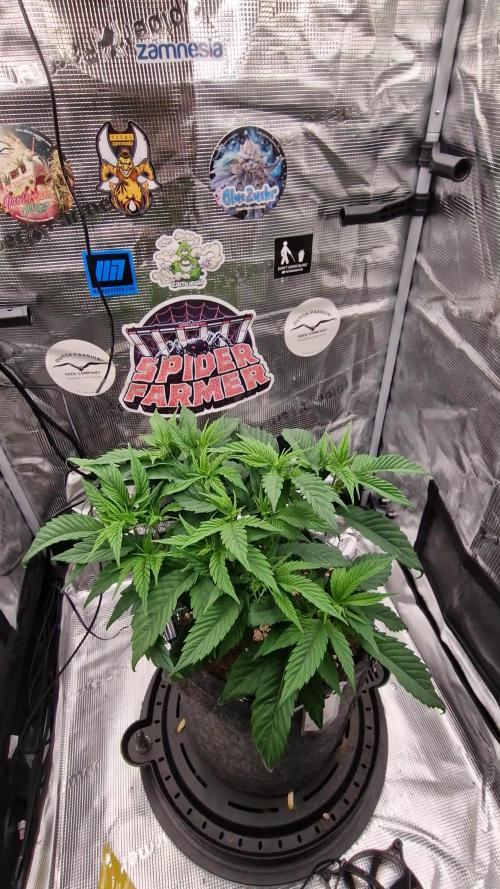
Sie wächst 😁
Die Drähte hab ich auch noch mal angezogen damit sie schön in die Breite geht. Jetzt bin ich am überlegen ob ich mir noch ein Netzt spanne. Aber da hab ich mich noch nicht entschieden mal sehen.
Processing
Likes
8
Share


@Bossman
Follow
I'm just winging it out to see what's going to happen but so far so good I think.

Likes
47
Share


@terpproducer
Follow
👇 This week:
---
Watering 1l-1.5l every day.
PPFD at canopy height approximately 900 (increase slowly), VPD ~1.3
Big defoliation, lollipopped some plants at day 21, will wait for the last 2 till day 28
Ladys got 500ml compost tea each (biotabs recipe from kees) from now on every week - Recipe: 15gr compost PK/L, 5ml orgatrex/L, 1gr bactrex/L - brew for 24-36h)
---
Happy growing and thanks for checking out my report! I really appreciate you! 😁💪🙏

Likes
6
Share

@Grow_for_Happiness
Follow
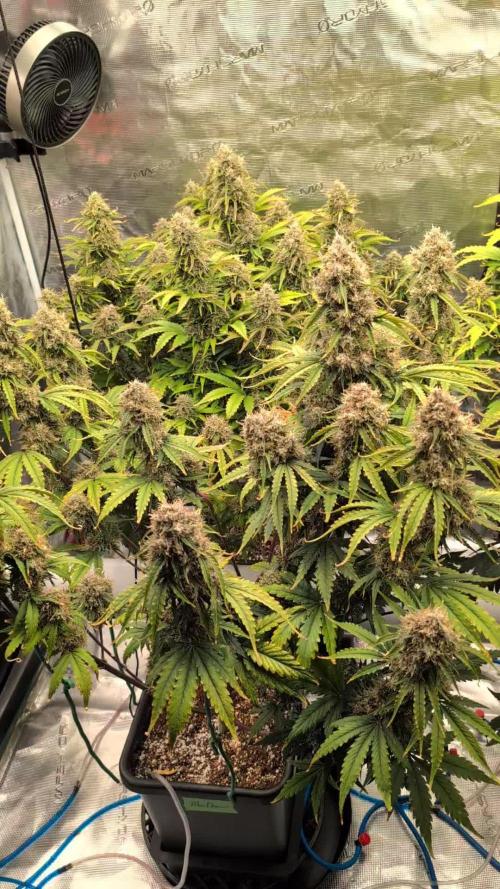
Another hands off week with the Christmas festivities taking up most of my time, shouting praise to the Autopots and automated controls for keeping the girls happy and fed while I was on and off away over the week. Nice to settle down for a week of vacation, and to start it by opening the tent to see big ol' shiny buds staring back at me!
They seem to just keep swelling and packing on the trichomes. Smell in the tent is strong sweet berry with skunk.
Did switch up the nutrients a bit, ran out of B52 and Bud Candy so am supplementing with some Nutes Nutrients Microbooster. Very similar composition and so far the plants don't seem to be complaining. Just cruising these girls to the finish line, will break out the magnifier this week and take a good look at the trichomes to try and guestimate a timeline.
Likes
49
Share


@AsNoriu
Follow
Day 71. Two girls left and my no feed gives sighns, pH imbalance and thrips damaged leaves really hard and when fading - girls look like shit, just not the buds ;)))
All grow returned to normal life, see less and less bugs and girls started to drink fast again. I almost missed watering, some girls looks droopy in video.
Two more waterings for Gorilla and think 3 weeks for Girl Scout Cookies Auto still, she is flowering nice and adds up some buds ;)
Happy Growing !

Processing
Likes
39
Share


@Vincenzo
Follow
Il profumo è inebriante e forte, la resina aumenta di gg in gg. Il raccolto lo farò Venerdì o Sabato✌️🏻😉🌞✌️🏻