


Processing
Likes
Comments
Share


@jessevasquez94
Follow
Alright alright alright wiill have dry cured pics up soon one plant got 40 grams one got 65 both very differnent almost as though thre different strains everyone whos smoked it said its amazing and better than 99.99 percent of buds super happy

Processing
Likes
17
Share


@Doobiefumes
Follow
ok i finally pinpointed the problem with my plants it was wind burn the 3 plant closest to the fan where moving a lot i thought i was helping them but leaf where curling like crazy i moved the fan away and now they are recovering also i added a humidifier before using it humidity was a 35% now its at 60% since i flushed system yesterday ill be waiting till next week for next flush lets cross finger and hope everything goes well this week prolly lost a week trying to find problem i thought it was a nutrient deficiency at first since wind burn was pretty bad and some leaves had spot from too much wind.full system flush today gonna run reverse osmosis ph water for 1 hour into rdwc then flush again and add nutrient.sometime less is better i went smooth on nutes for this week.switched to 600 watts 6100k plants are much more happy.

Likes
44
Share


@Prototype0181
Follow
The lady's are a bit shocked after the ✂️ decapitation (topping) on 10-05. going for 6/8 cola's per plant👌
Stay tuned growmies 💚

Likes
7
Share


@darb35
Follow
This will be a bit of a challenge, one of the LCC is 45cm while the others are 25cm.
I gave them little ramps to keep canopy even and all 3 are still looking healthy.


Likes
7
Share


@GoodFeel420
Follow
Topping 04/03/2023 18.00 (DD/MM/YYYY HH.MM)
Strength of light 12000-15000 Lux


Likes
21
Share


@Sweetspot88
Follow
Looking good late updating this week creeping the p and l as mid flower comes. Other than that this week coming in will see a light defoliation to help fatten bud sights


Likes
33
Share


@MrFink
Follow
Last leg of the race for some of these girls! Excited to harvest and trim and cure them. Everything went fairly smoothly this week, looks like some serious burn on the one, but she is towards the end anyways. I started flushing some of them a week ago, and the one furthest along about 2 weeks ago. I’m glad because I’ll save on nutrients as a bonus! I’m excited for my next run, I think things have gone really well with this first grow despite all of the complications. Anyways I should have some harvest pictures next week, thanks for following my grow!

Likes
4
Share

@allfish
Follow
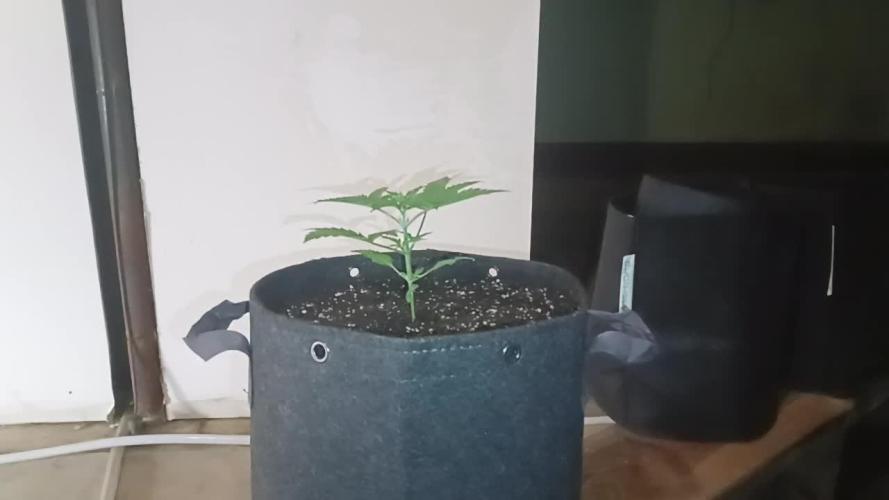
I was wanting to wait till next week to transplant, but I'm glad I didn't! I think she's going to be a rockstar!
Likes
25
Share


@GODSGIFT_2005_JM
Follow
🍼Greenhouse Feeding BioGrow
⛺️MARSHYDRO
The ⛺️ has a small door 🚪 on the sides which is useful for mid section groom room work. 🤩
☀️ by VIPARSPECTRA (models: P2000 & XS 2000)


Likes
31
Share


@The_Bearded_Grower
Follow
Day 11 of veg 10/9 : Welcome to week 3 and as you can see she is doing very well. I have micro toped her and now i wait to see how fast she recovers. more updates to come as the days move on.
Happy growing and keep your stick on the ice


Likes
6
Share


@DogDoctorOfficial
Follow
💎 8×8 Adventure – Week 14
Black Diamond Auto by Zamnesia – Pheno A
👑 Part 1: The Queen Has Spoken… Harvest Me, DogDoctor! 💎✂️🌸📸
Hello everyone, and welcome back to another chapter of the 8×8 Adventure! 🌱💚
Well, my friends…
Our not-so-humble plant.
Our not-so-humble cultivar.
Our beautiful Black Diamond.
💎👑✨
After weeks of watching her grow, build, stack, frost up, and make herself noticed in the room, she finally gave me the message I'd been expecting.
"DogDoctor…
PLEASE HARVEST ME."
😂😂😂💎
And you know what?
That's exactly what we did.
But not before giving this girl one last opportunity to shine in front of the camera.
Because if there's one thing Black Diamond Pheno A has earned throughout this adventure, it's a proper goodbye to the tent.
And when I say goodbye, I don't mean we're finished documenting her.
Not even close!
This is simply the end of her flowering chapter inside the tent.
There's still trimming, drying, weighing, curing, and eventually a proper smoke review to come.
So consider this Part 1 of her harvest story: the last day in the tent, the photography, the breakdown, and the beginning of her drying journey.
💎🌿📸
And before we get started, a small explanation for everyone following the diary.
────────────────────────
📢 WHY ARE WE STILL POSTING THIS UNDER A FLOWERING WEEK?
First things first!
Yes, this update is still being published as a flowering-week report, even though Black Diamond has now been harvested.
And there's a very simple reason for that.
GrowDiaries has a limit of 30 photos per update, and between the harvest, studio photography, photo stacking, trimming, drying, and eventual smoke report, we have far more material to share than we can comfortably fit into one harvest entry.
😂📸💎
I don't want to throw everything into one report, squeeze the story until it barely makes sense, or leave out photographs and details that deserve to be seen.
So we're splitting the journey into separate chapters.
This first part covers her final day in the tent, the last photographs of the living plant, the photo-stacking session, the breakdown, and the start of drying.
The next chapters will continue with the rest of her harvest journey, including the trimming and drying updates, the final results, and the smoke review when we get there.
That way, we can give this girl the attention she deserves without trying to squeeze an entire harvest into a single update.
And honestly?
After following her for so many weeks, I think she deserves more than one final goodbye.
💚🌿
So, for anyone wondering why a harvested plant is appearing in a flowering-week update…
That's the reason!
We're keeping the diary moving while giving her harvest story the space it needs.
────────────────────────
💎 THE LAST DAY IN THE TENT
Let's take a moment to appreciate how we got here.
Black Diamond Auto Pheno A was part of our 8×8 Adventure, where twelve plants shared the same general environment, lighting schedule, and overall growing conditions.
One room.
One shared stage.
Twelve different stories.
And this girl?
She decided to make hers unforgettable.
😂👑💎
From the early stages, she developed into a magnificent plant with a beautiful structure and an impressive collection of flowering sites.
As the weeks progressed, we watched her build.
We watched the flowers develop.
We watched the frost become more apparent.
We watched those colas become increasingly impressive.
And, of course, we watched that main cola claim its place in the spotlight while the rest of the plant seemed determined to remind us that it wasn't the only one worth photographing.
😂🌸
Remember the song?
"Shining bright like a diamond…"
Well, I think we can officially retire that joke now.
Actually, no.
Let's not get carried away.
😂😂😂💎
She's still Black Diamond, and I'm probably going to keep humming that song every time I look at her photographs.
But the important thing is that this beautiful phenotype has now reached the end of her time in the tent.
The flowering chapter is complete.
And today, we get to appreciate the result of that journey before moving into the next stage.
────────────────────────
🌸 ONE LAST LOOK BEFORE SAYING GOODBYE
Before taking her out of the tent, I wanted to capture her beauty one last time.
The colours.
The flowers.
The overall structure.
The individual colas.
The details that make this particular phenotype so special.
And I'm really happy we did.
Because once the plant is taken down and broken apart, we can still photograph individual flowers, but we can never recreate that exact moment when the whole living plant is standing there in her environment.
That's why I wanted those final photographs.
I wanted to remember her as she was.
Standing in the tent.
Surrounded by the equipment and lights that had been part of her journey.
Looking absolutely beautiful.
💎🌿📸
And then came the next part.
Taking her out of the tent and into the studio.
Because apparently, even after growing a beautiful plant for weeks, I'm still not finished taking photographs of her.
😂😂😂
────────────────────────
📸 THE PHOTO-STACKING SESSION — PATIENCE, LIGHTS AND A LOT OF PHOTOGRAPHS
Now, this is where things get particularly interesting for me.
Because some of you might look at a final macro photograph and think:
"Beautiful picture!"
And that's exactly the reaction I hope to get.
But there's a whole process behind that final image.
Photo stacking is not simply pointing the camera at a flower, pressing the shutter once, and calling it a day.
It's a process that takes time, patience, attention, and a little bit of stubbornness.
😂📸🔬
For this session, I took Black Diamond into the studio and worked with my lighting setup to get the look I wanted.
I'm using three or four LED lights from SmallRig, positioning and adjusting the light to bring out the details while keeping the final image as close as possible to the visual result I'm looking for.
Light makes an enormous difference in macro photography.
The angle.
The intensity.
The shadows.
The highlights.
The way the surface details catch the light.
All of it changes how the final photograph looks.
And because I want to show the flowers in as much detail as possible, I spend time getting the lighting right before and during the process.
It's not just about making the image bright.
It's about making the details visible.
💡📸💎
Then comes the stacking itself.
Instead of relying on a single photograph to show the entire subject in focus, I take a sequence of images with different focus positions.
Those images are then merged into one final photograph, combining the sharp areas from across the sequence.
The result can show far more of the subject in focus than a single frame would normally capture at this magnification.
But the process takes time.
A lot of time.
And sometimes…
A LOT of photographs.
😂😂😂
────────────────────────
🔬 321 PHOTOS… 347… 365… 399… 596… 599!
Let's talk numbers, because the photographs we're sharing tell their own story.
The smallest stack in this selection contains 321 photographs merged into one image.
And the largest?
599 photographs merged into one final stack.
Five hundred and ninety-nine.
😂😂😂💎
At that point, I think we can safely call it a 600-photo stack.
One photograph short, but I'm not going to lose sleep over it.
😂📸
The other stacks include sequences of 347, 365, 399, and 596 photographs, among others.
Every stack represents a series of individual frames that have to be captured and processed to create the final result.
And when you see the finished image, it's easy to forget how much work went into it.
That's why I also shared a video of me actually doing the photo stacking.
I wanted to give everyone a better idea of what happens behind the scenes.
You can see the process.
You can see how the work progresses.
And you can get a sense of how much patience goes into creating these images.
It's not necessarily as slow as it might sound, and we managed to photograph a lot of material during the session.
But it certainly isn't instant.
😂🔬📸
And honestly?
I love it.
I love the process.
I love the challenge.
I love watching all those individual frames come together.
And I love seeing the final result when the details become visible in a way that a single photograph simply couldn't reproduce.
────────────────────────
💎 WHY I LOVE PHOTO STACKING
For me, photo stacking is another way of appreciating the plant.
We spend weeks watching the whole plant develop.
We look at the canopy.
We follow the branches.
We compare the colas.
We watch the flowers change.
But when you move into macro photography, you enter another world entirely.
Suddenly, the details become the subject.
You can explore the textures, the shapes, the colours, and the intricate surface of an individual flower.
You can take something you've been looking at for weeks and appreciate it from a completely different perspective.
And that's what makes this process so enjoyable for me.
It's not just about taking a pretty photograph.
It's about looking closer.
It's about curiosity.
It's about patience.
And it's about the satisfaction of creating an image that represents the subject the way I want to show it.
💚📸🔬
Some people enjoy growing.
Some people enjoy photography.
Some people enjoy both.
And apparently, I enjoy growing a plant for weeks and then spending even more time photographing the hell out of it.
😂😂😂💎
But that's part of the fun.
And if the final photographs make somebody stop scrolling for a moment and appreciate the details, then all that time was worth it.
────────────────────────
🎥 A LITTLE BEHIND-THE-SCENES VIDEO
Alongside the photographs, I also shared a video of me working through the photo-stacking process.
I wanted to show the reality behind the finished images.
Because a finished macro photograph can look simple when you see it on a screen.
But behind that final result are the individual frames, the focus changes, the lighting decisions, and the time spent bringing everything together.
The video gives you a glimpse of that process.
It's a little reminder that the photograph isn't always just one photograph.
Sometimes it's hundreds of them.
😂📸
And when you're looking at a 599-image stack, you can appreciate why patience is such a big part of the process.
I hope you enjoy seeing a little of the work that happens outside the tent, because documenting this adventure isn't just about the plants.
It's also about the photography, the equipment, the experiments, and the things I enjoy learning along the way.
────────────────────────
✂️ FROM THE TENT TO THE BREAKDOWN
Once the photography was done, it was time to move on.
Black Diamond was taken out of the tent, and we began breaking the plant down for drying.
This is where the story changes.
We move away from the living plant and into the post-harvest stage.
I removed the fan leaves and the larger leaves that I didn't want to keep with the flowers during drying.
Then I broke the plant down into smaller sections rather than leaving the whole plant intact.
It's not what I'd call a full wet trim.
It's closer to a light, partial trim before drying.
The aim here was to remove the larger unwanted foliage and prepare the flowers for the next stage, while leaving the detailed trimming work for later.
And yes…
those beautiful big buds we spent weeks admiring?
They were broken down into smaller sections for the drying process.
😂✂️🌸
I know.
I know.
We spent all those weeks talking about her beautiful colas, her impressive flowers, and how she was shining like a diamond.
And then I came along with the scissors.
😂😂😂
But that's part of the process.
The plant has reached the end of her time in the tent, and now we're preparing her for the next stage of the journey.
The flowering chapter is over.
The drying chapter begins.
────────────────────────
🧤 THE GLOVE TELLS A STORY — LOOK AT THAT RESIN!
Now, this is one of those little details I really wanted to include.
While bucking the plant down and handling the flowers, resin started accumulating on my glove.
And when I looked at it…
well…
I had to take a photograph.
😂💎🧤
Look at that!
This girl has been building resin throughout her flowering journey, and the glove gives us a very visual reminder of just how sticky things became during the breakdown.
The plant was still fresh at this point, so the resin on the glove was collected from handling the living, freshly harvested material.
That's why I jokingly call it a little bit of charas in the context of the harvest.
Strictly speaking, resin collected on a glove isn't automatically the same thing as finished charas, but you get the idea.
😂🌿💎
It's a lovely little behind-the-scenes detail, and I think the photograph makes the point beautifully.
We can talk about frost.
We can talk about resin.
We can take hundreds of macro photographs.
But sometimes all it takes is one glove covered in sticky resin to make you stop and say:
"Okay, Black Diamond… I see you!"
😂😂😂💎
She certainly left her mark.
────────────────────────
🌬️ THE DRYING CHAPTER BEGINS
After the breakdown and initial preparation, we placed the flowers on the drying rack and moved her into a separate drying tent.
The rest of the 8×8 Adventure is continuing in the original room, with the other plants still growing and following their own timelines.
Black Diamond has moved into a different space for this next stage.
And, of course, that space is kept completely dark for drying.
Her time under the flowering lights is over.
Now it's time for a different environment and a different kind of patience.
🌑🌸
For the initial drying period, our intended environmental starting point is approximately:
🌡️ Temperature: 20–21°C
💧 Relative humidity: around 45% initially, with the intention of moving toward approximately 60% as the drying environment is adjusted.
These are the intended starting conditions for this stage, rather than a claim that the environment has already remained at those values continuously.
The initial lower humidity is part of the plan to help manage the moisture still present in the freshly harvested flowers. We'll be watching how the drying environment behaves and adjusting our approach as the process progresses.
The longer-term aim is to maintain a stable, suitable drying environment rather than chase numbers without considering the actual conditions.
And this is important:
The drying process is not finished just because the plant has been harvested and placed on a rack.
This is the beginning of another stage that deserves its own attention.
The flowers still contain substantial moisture, and the way they dry will influence the quality of the final result.
So now we wait, observe, and document.
🌬️🌸💚
────────────────────────
⏳ HOW LONG WILL SHE DRY?
Normally, the drying period in my experience can fall somewhere around one to two weeks, but that is a general expectation, not a deadline.
It can vary depending on the temperature, relative humidity, airflow, the size and density of the material, and how the conditions behave over time.
Two harvests don't necessarily dry at the same speed.
Even within the same harvest, different sections can behave differently.
So we're not going to decide in advance that Black Diamond must be ready on a particular day.
We'll monitor the process and see how she progresses.
The next report will give us an opportunity to discuss how long she's been drying, how stable the conditions have been, and what we're observing as the process continues.
For now, she's resting.
The lights are off.
The flowers are on the rack.
And the camera work continues.
😂📸🌸
We'll let time tell us when the next chapter is ready.
────────────────────────
💡 FROM FLOWERING LIGHTS TO THE DARKROOM
One of the interesting things about this transition is how quickly the environment around the plant changes.
For weeks, we've been talking about the flowering room.
The Future of Grow Black Series 600W fixtures.
The additional lighting capability.
The approximate 1,500 PPFD reference across the upper canopy.
The shared 12/12 schedule.
The Lumiflora lighting deeper in the canopy.
The TrolMaster equipment helping us monitor and manage the environment.
And now?
Black Diamond has left all of that behind.
😂💎
She's no longer part of the active flowering canopy.
She's in a separate drying space, in darkness, beginning a completely different stage.
The rest of the room is still going.
The other plants haven't suddenly decided to follow her.
They're continuing their own journeys, and we'll keep documenting them individually.
That's another important part of the 8×8 Adventure.
Not every plant reaches the same point at the same time.
Each one has her own timeline.
Black Diamond has told us she's ready to leave the tent.
And now we're giving her the next chapter.
────────────────────────
🌿 A QUICK LOOK BACK — FROM SEED TO HARVEST
Before we close this first part, I want to look back at the journey.
Black Diamond Auto Pheno A was grown from seed under a 12/12 light schedule from the beginning.
That was part of the wider 8×8 Adventure, where we followed different plants and phenotypes sharing the same general environment.
From the early stages, she behaved beautifully.
She developed into a magnificent plant.
She built an impressive structure.
She produced a beautiful collection of flowers.
She gave us those colas that kept making me stop and take another look.
And as the weeks progressed, she became one of the plants in the room that was impossible to ignore.
💎👑🌸
Her main cola was beautiful, but the rest of the plant wasn't interested in taking a supporting role.
The other flowering sites kept developing, and the whole plant became a beautiful example of her own individual expression.
That's what made her so much fun to follow.
We weren't trying to make her behave like the other plants.
We were observing what she did under the same general conditions.
And she gave us her own answer.
A beautiful Black Diamond Auto phenotype, grown from seed under 12/12, now ready to leave the tent and begin the post-harvest journey.
From seed to a magnificent plant.
From flowering to harvest.
And now, from harvest into drying.
One chapter closes.
Another begins.
💚🌱💎
────────────────────────
🔬 THE 8×8 ADVENTURE — SAME ROOM, DIFFERENT STORIES
Black Diamond's harvest also reminds us of the original idea behind this entire project.
Twelve plants sharing one room.
The same general environmental framework.
The same lighting schedule.
The same overall approach to nutrition and care.
And then we observe what each plant does.
Some grow taller.
Some remain more compact.
Some develop particular flower structures.
Some move faster.
Some take longer.
And eventually, they reach their own milestones.
Black Diamond has now reached hers.
But the 8×8 Adventure continues.
The other plants are still in the room, still developing, and still writing their own stories.
We'll continue giving each phenotype her own report, because every plant deserves to be documented as an individual rather than simply becoming one photograph in a group.
And Black Diamond?
She's earned her own harvest series.
😂💎👑
────────────────────────
💎 PART 1 COMPLETE — BUT HER STORY IS FAR FROM OVER
So, my friends, this is the end of the first part of Black Diamond Auto Pheno A's harvest journey.
We said goodbye to her in the tent.
We took her into the studio.
We photographed her.
We created photo stacks containing hundreds of individual frames.
We shared a glimpse of the process in a behind-the-scenes video.
We broke her down.
We removed the larger unwanted leaves.
We prepared the flowers for drying.
And we discovered that she was more than happy to leave a little resin behind on the glove.
😂🧤💎
She's now resting in the drying tent, in darkness, while the rest of the 8×8 Adventure continues in the flowering room.
But don't worry.
This isn't the final report.
We still have more to share.
The drying process deserves its own update.
The trimming deserves its own attention.
The final results deserve their moment.
And, when the time comes, we'll sit down for the smoke review and talk about the experience of the finished product.
We're not going to rush those chapters just to close the diary.
We'll document them as they happen.
For now, we're simply marking the end of her time in the tent and the beginning of everything that follows.
💎🌸🌬️
────────────────────────
💭 FINAL THOUGHTS — THE QUEEN HAS LEFT THE TENT
Black Diamond Auto Pheno A.
Our not-so-humble girl.
Our beautiful diamond.
Our queen of the 8×8.
👑💎🌿
After weeks of growing, stacking, developing, and shining, she finally gave me the message:
"Please harvest me."
And that's what we did.
Not before giving her one last photographic session.
Not before taking her into the studio.
Not before creating stacks containing 321, 347, 365, 399, 596, and 599 photographs.
😂📸💎
Not before breaking her down and seeing the resin collecting on the glove.
And not before making sure that her next chapter was ready to begin.
She's now in the drying tent, in darkness, resting on the rack.
The next stage will take the time it takes.
We'll observe.
We'll document.
We'll see how the conditions behave.
And we'll share the results in the next chapters.
I'm incredibly happy with how this journey has unfolded.
Not just because of the beautiful plant we've harvested, but because of everything we've been able to document along the way.
The growth.
The differences between phenotypes.
The photography.
The experiments.
The unexpected lessons.
And now, the harvest.
That's what this adventure is about.
It's about growing, learning, observing, and sharing the journey honestly.
And Black Diamond has given us a beautiful story from beginning to end of flowering.
So, my precious diamond…
Thank you for the show.
Thank you for the photographs.
Thank you for the resin-covered glove.
😂💎🧤
And thank you for making me hum that damn song every time I walked into the room.
"Shining bright like a diamond…"
Of course you were.
💎✨👑
Your time in the tent is over.
But your story isn't finished.
Rest well, beautiful girl.
We'll see you in the next chapter.
────────────────────────
🙏 THANK YOU — TO EVERYONE WHO HELPED MAKE THIS JOURNEY POSSIBLE
A massive thank you to GrowDiaries for giving us the platform to document this adventure, share our observations, and keep the individual stories of these plants alive from seed to harvest.
Thank you to Zamnesia for the Black Diamond Auto genetics and for giving us the opportunity to follow this beautiful phenotype throughout her journey.
Thank you to Plagron for supporting the garden with the growing media and nutrition used throughout the run.
A huge thank you to Future of Grow for supplying the additional Black Series 600W fixtures and allowing us to explore the expanded lighting setup in the 8×8.
Thank you to Lumiflora for helping illuminate the deeper areas of the canopy.
Thank you to TrolMaster for helping monitor and manage the room behind the scenes.
And a special shoutout to SmallRig for the LED lighting equipment helping me create the studio setup I use for my photography. Getting the light where I want it is a big part of the process, and those lights are part of how I work toward the images I want to produce.
💡📸💚
Finally, thank you to everyone following along.
Every comment.
Every question.
Every photograph you stop to look at.
Every bit of support.
It genuinely means a lot.
And thank you to Black Diamond herself for giving us such a beautiful plant to document.
💎🌿👑
24 cultivars.
One room.
Different genetics.
Different stories.
And one beautiful Black Diamond who has now moved from the flowering tent into the drying tent.
The next chapter is already underway.
We'll keep documenting.
We'll keep learning.
We'll keep sharing the process.
And we'll give her the time she needs.
Growers Love, my friends. 💚🌱
Happy growing, take care everyone…
And remember:
This is Part 1 of the harvest story. The Queen has left the tent, but the final chapters are still to come.
💎👑🌸🌬️
See you in the next update! 📸💚



Likes
9
Share


@Drtomb
Follow
The hairs have really started to stretch out. As this is a strain ive grown, i expect to see some good results. We will see. We are about 2 weeks from completing this grow.


Likes
6
Share


@gr3g4l
Follow
Esta semana parece ser que empieza a notarse el engorde de los cogollos. Felicidad, xd.
