


Likes
Comments
Share


@Weird_Jimmy
Follow
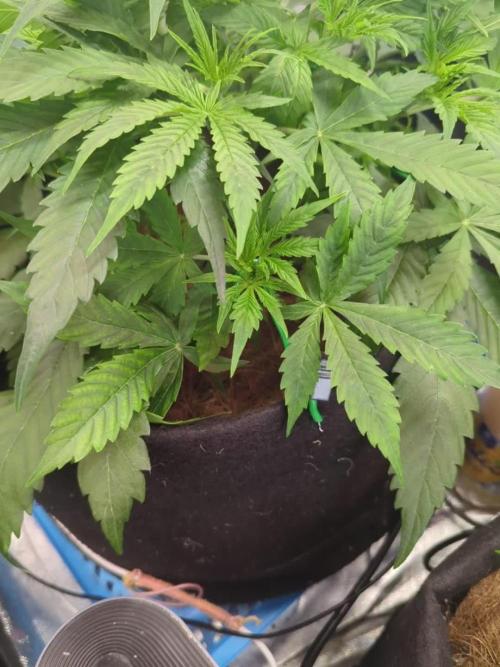
👉I used the seedling solution 3-4 days too long and the plant looked like it was starting to have issues. I mixed some early growth solution and amost immediatly the plant looked happier and started to take off. It got no stretch so I anticipate the plant will be another short bush.

Likes
64
Share


@Natrona
Follow
Sponsored grow 👉Weed Seed Express👈
Love Potion Auto Week 5 2/9-15
Love Potion Automatic is just starting flower. Delay in flowering due to topping week 3 of veg.
She grew about 3 inches this week maybe more but I’ve pinned her limbs out as much as possible. At the beginning of the week, she was 11 inches tall, 2/13 she is14 inches tall.
I’ve moved the pins out to the edge of the pot. For future training, I must add some wires through the pot holes to keep the branches lower. I’ve spread the top out and a few limbs are taller than the others.
I reduced nutrients to half strength in the feed solution and will continue the same formula thru til flush. I added Green Sensation this week then read the instructions said add in 4th week flower. Love Potion Auto is an auto to be an 11 week flower from seed to harvest. If I wait till the 4th week, it will only be used for 2 maybe 3 weeks. Would that benefit the plant? So I think I will add some each time but a 25% strength. Calls for 4ml/g I will use 1ml. They are autos and I should be lowering the nutes anyway. Pinned more branches and lightly defoliatied. I didn’t want to take too many leaves off this time. I add 2 gallons of water to the T700 humidifier daily to keep the VPD in line.
2/9 & 11 4 gal fed 2 liter each nutrients added at ½ of recommended amount. Making 4 gallons since I have 2 pots of carrots and a Dill in the back.
Bloom Juice 45ml
Plant Juice 75 ml
Royal Rush 15 ml
Power bud 15ml
Green sensation 7.5ml
Recharge 2.5ml/gal
4 ml
Cal Mag
5
Ppm 333
Ph 7.02
Temp 66
2/13 5 gal
Bloom Juice 60ml
Plant Juice 60 ml
Royal Rush 20 ml
Power bud 20ml
Green sensation 10ml
Recharge 2.5ml/gal
4 ml
Cal Mag
25
Ppm 538
Ph 6.6
Temp 66
Your likes and comments are appreciated. Thanks for stopping by.
Growers love 💚🌿
💫Natrona💫



Likes
9
Share


@Colo420
Follow
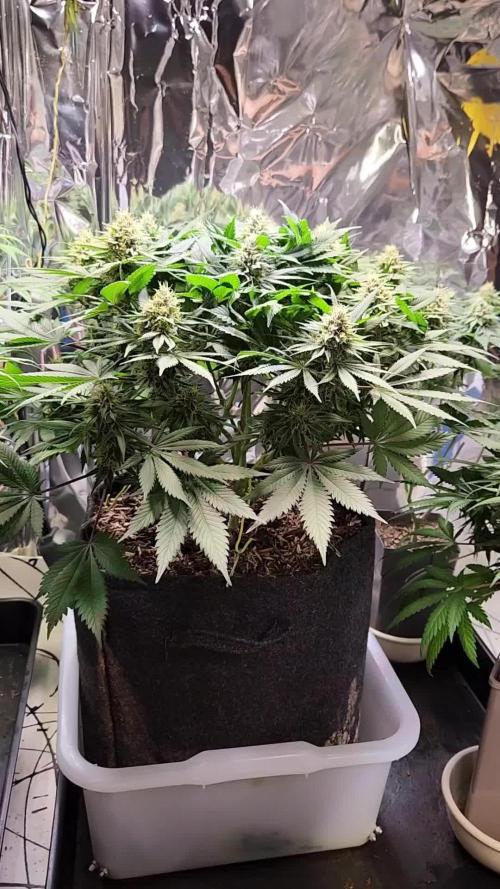
25/12 se realizo fertirriego.
27/12 riego con agua.
Se observa un crecimiento vigoroso tanto de parte aerea como radicular.
Hoy se realizaran transplantes a masetas de 10L
El dia 30 se regará con agua


Likes
89
Share


@Traduhh
Follow
Day 41: WATER: 900ppm Diluted to 400ppm / PH: 6.6 RUNNOF: 480ppm / PH: 6.0
Day 43: Did a bit of training using some bending clips I found on Aliexpress. Also raised the PPFD to 600. Plants are looking good, almost time to flip.
Day 45. Almost flipping. Im starting to do some time lapses for the flowering stage, today I posted a test. Gonna fflipe them on day 49.

Likes
1
Share

@kdifiori_
Follow
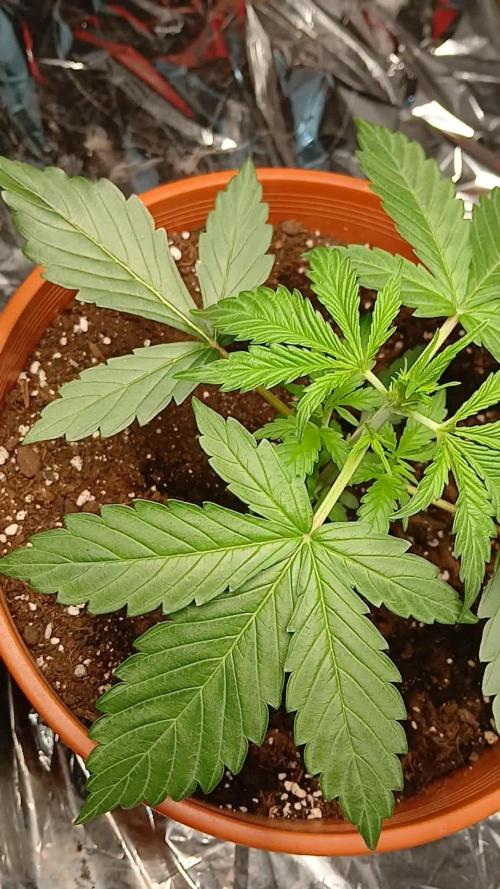
The third week is over for this little one. She has grown considerably in these seven days. I gave her a total of 1 liter of water with nutrients. No signs of burning. The lamp is dimmed to 75% at a distance of 40 cm. As soon as the soil is dry again, I think I'll defoliate. Ready for week four?
Likes
9
Share

@majklsoft
Follow
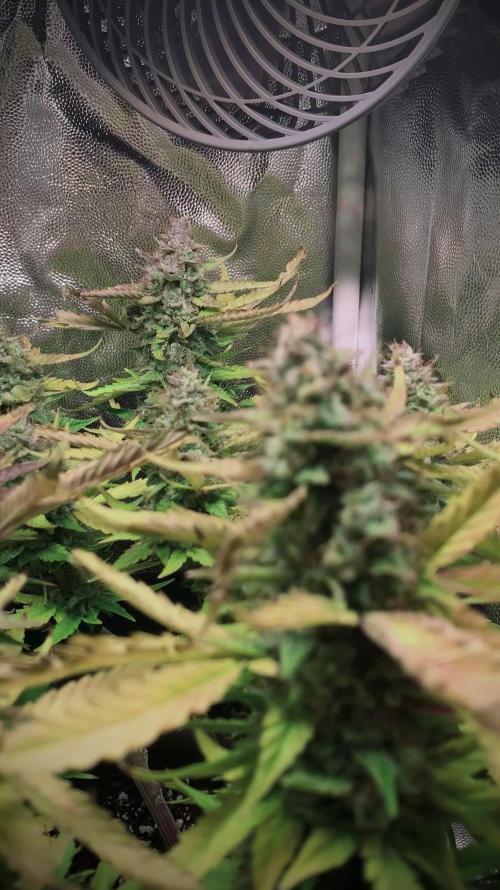
high temps in central
europe!!! help! I guess I cant throw the girls into the swimming pool .. or can I? cca 1 or max 2 weeks till the harvest 🤩

Likes
29
Share


@Drgreenthumb627
Follow
so far its looking healthy and bushy! did some slight bending on branches in order to get more light thru to the bottom budsites. i can’t quite pin down her terpene profile yet, i’m getting pine, citrus and possibly fuel but its not strong

Likes
2
Share


@FarmerJons12
Follow
Leaves are getting more yellow. Light burn?
Turning the light down to 18 hours soon

Likes
4
Share

@MrLahey
Follow
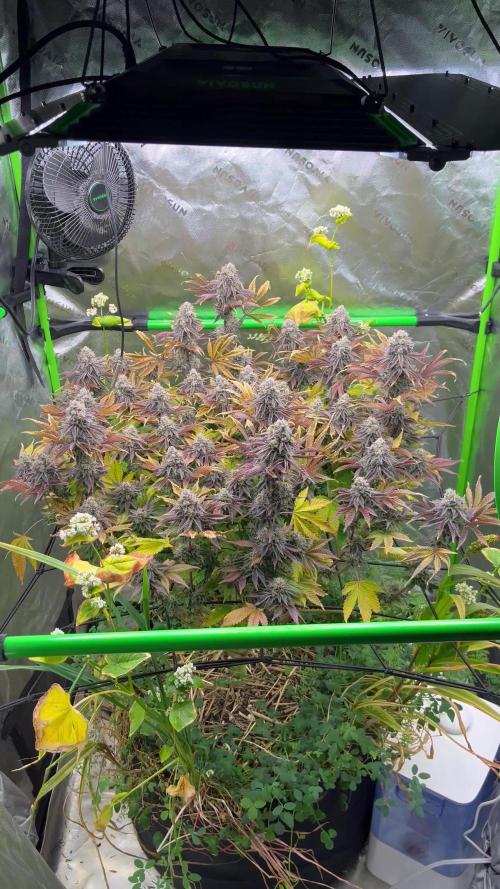
I’m definitely in the harvest window and will probably chop her any time now. Today is day 59 and tomorrow day 60.
The smell is wonderful. Kind of pungent and earthy lemon type smell.
The fan leaves never did recover from I guess heat stress maybe. Not sure what caused them to taco. Maybe heat or light stress. I’d let the plant go longer if the fan and sugar leaves were healthier. I don’t want to risk any dead leaves causing bud rot to take hold unless I’m overthinking it.
I’m very exited to dry her soon! Will be putting my VCure to the test with its 14 day craft cycle. Very curious to see how the end product comes out through the VCure vs my previous tent dries. I suspect the finished product will be great. 😀

Likes
16
Share


@Northern_Ent
Follow
Aug 31: Overdose is doing fine and is now five weeks into flowering (or a week behind my two big photoperiods). I broke one of the main stems about a week after topping so it has a weird shape but there are lots of good bud sites so she’ll be fine.
Shorter veg time than my two big photoperiod plants and only topped once because I was expecting an auto not a photoperiod plant. If it’s Overdose Fast I’m cool with that as I’ve decided that I prefer fast photos to autos which are more sensitive to setbacks and generally trickier to deal with at large scale.
Sep 2: strong plant with lots of buds.
Sep 4: adding some potassium silicate every couple days lately while watering.

Likes
3
Share


@TS_Greens23
Follow
This week was another week of keeping up her food intake,,and well hydrated ,,every branch is filling top to bottom so she’s still screaming for more food and plenty of h20,,,,,
The old saying,,, what you put in ,,you get out,,so all the defoliation and training for this girl to fit Snugly in her 2x2,,has definitely paid off,,,
Great Genetics by 420 Fastbuds,,👌🙏👍👍👍👍👍💚💚💚💚💚💚💚
Likes
7
Share


@Fat_Olsh_Farms
Follow
Day 29. Taking very well to training.
Day 33. Growing at a nice pace. Taking well to anything I throw at her.


Likes
5
Share


@KannaGrowing
Follow
Esta semana realizamos la tercera y última poda baja.
Subimos la potencia de las luminarias Lazerlite Pro 720w by The Pure Factory al 100%.
Conectamos a tope la extracción durante el foto periodo nocturno.
Y conectamos el aire acondicionado durante el periodo diurno, cortando la extracción.
Seguimos con los riegos según la tabla de JUJU Royal by BioBizz.

Likes
5
Share

@Miketama
Follow
Phase: Late Vegetative / Pre-Flower Transition
Lighting & DLI: 22.5h Photoperiod (22h @ 400 PPFD + 30 min sunrise/sunset ramp) | DLI ~32 mol/m²/day
Environment: DIY CO2 Gel/Yeast reactor active, stable VPD and temperature control
💧 Substrate, Nutrition & Foliar Care
Dry Back Management: Executed a controlled ~15% dry back to enhance root zone oxygenation before the next watering.
Penultimate Foliar Application: Performed the penultimate Vita Race foliar treatment using a fine side-spray mist strictly on fan leaves to boost foliage vigor prior to bloom.
✂️ Canopy Maintenance & Strategy
Selective Central Defoliation: Plucked 3–4 large central fan leaves to open up her dense inner core and eliminate micro-humidity pockets.
Finger Trimming: Nipped off minor shading leaf tips in high-density areas to maintain clean airflow throughout the canopy.
Natural Structure & Stretch Plan: Currently allowing natural growth with no LST clips or stem bending applied. Awaiting the impending flowering stretch to strategically perform super cropping or apply LST clips as needed.
📈 Overall Status
Big Demon is building a massive, compact vegetative base with no formed pre-flowers yet. The central leaf removal opened her tight core significantly. She displays vibrant green foliage with strong "praying" leaf posture under 400 PPFD.
Likes
26
Share


@CapeGrows
Follow
This week I did a final bit of defoliation just to channel the energy to the buds. I upped the EC to 2.1. I got a well priced pkm boost powder from my local hydro shop, wich I added to get the EC levels a bit higher. I will start flushing at the end of this week with a flushing solution. I have also been making use of a dehumidifier to reach optimal RH.


Likes
1
Share

@LokalGrenz
Follow
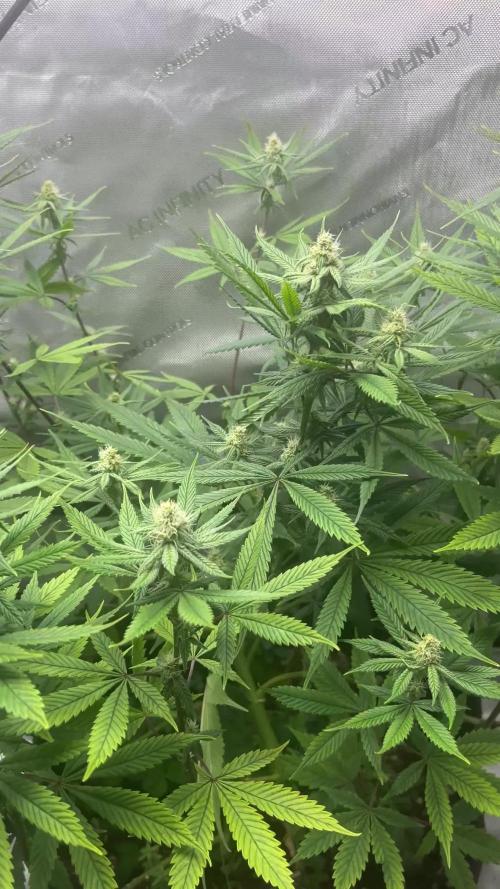
7/28 some light lead pulling removing bottom area and sites that I fill be waste of time taking energy from the tops still RO water and tea every other week
Likes
30
Share


@LeafTucker
Follow
Well, she is 70 days today. She has started to fade. Leaves are yellowing, and showing some red. She is still producing white pistols, and new flower growth daily. Her Trichromes are mostly cloudy with very little Amber on the flower. She has swollen a great deal through the week. I gently pulled her secondary branches away from the primaries to allow more light penetration. I check her maturity about every 60 hours. She was watered with pH'd water last week, and she is getting tap water this week. She should be completely flushed before harvest. Got my humidity packs, humidity sensors, jars, and drying closet ready. It just up to her now. Not so much impatient as I am excited for my first harvest. With her, and a Bubba Kush getting ready to finish together, I am so stoked. Will have a video uploaded later. Thanks for stopping by, much love, and happy farming.