


Likes
Comments
Share


@Roberts
Follow
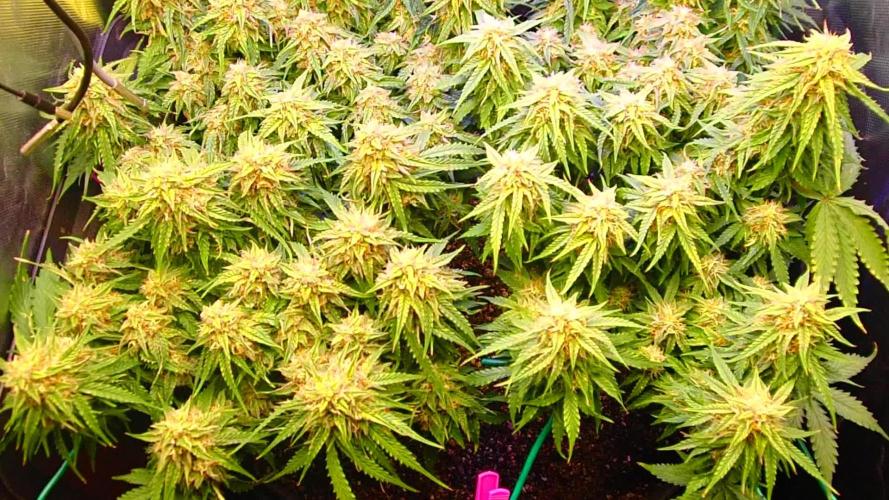
Big Fat Wedding Cake is growing good under the Spider Farmer G5000/UVR40 lights, In the Athena blended line nutrition. She is bulking now and has a aroma that is developing. She has a nice layer if frost going as well. Everything is looking good. Thank you Spider Farmer, Athena, and DutchFem Seeds. 🤜🏻🤛🏻🌱🌱🌱
Thank you grow diaries community for the 👇likes👇, follows, comments, and subscriptions on my YouTube channel👇. ❄️🌱🍻
Happy Growing 🌱🌱🌱
https://youtube.com/channel/UCAhN7yRzWLpcaRHhMIQ7X4g
Spider Farmer Official Website Links:
US&Worldwide: https://www.spider-farmer.com
CA: https://spiderfarmer.ca
UK: https://spiderfarmer.co.uk
EU: https://spiderfarmer.eu
AU: https://spiderfarmer.com.au
G5000 Light Amazon Link:
amzn.to/4643esa
UVR 40:
https://www.amazon.com/dp/B0BR7SGTHS
Discount code: saveurcash (Stackable)

Likes
5
Share


@DemonDabsSolventless
Follow
Hello dear confreres,
Today I start a completely new journey for me, which is indoor cultivation.
- Goals
Germinate 10 seeds and create an environment with good crops
- Method chosen
Hydrated Jiffys with 400ml of water + 0.4ml of VodooJuice + 0.4ml of CalMag
After hydration, we place the seeds on the discs and give them 24/0 light and wait.

Likes
10
Share

@trelopoulos
Follow
Ladys are ready! they look and smell delicious.. started drying them.

Processing
Likes
14
Share


@BillMonroe
Follow
It's about week 6 I guess, I don't know.
Pheno 1: 2 short ones with great smelling medium sized buds. Fast
Pheno 2: looks like a nice producer, very frosty, nice growth, keeping an eye on this one. Slowest of the bunch but not a slow plant by any means
Pheno 3: woah, THC bomb! The frostiest plant in the house. Also seems like a fast one
Great smells
Quite excited for these awesome plants from Zambeza!
Catch you before harvest time for some nicer pictures

Likes
75
Share

@RockoCalenberg
Follow
🌱 Tag 88 | 🌸 Blütetag 44
Drei Pflanzen, drei Persönlichkeiten
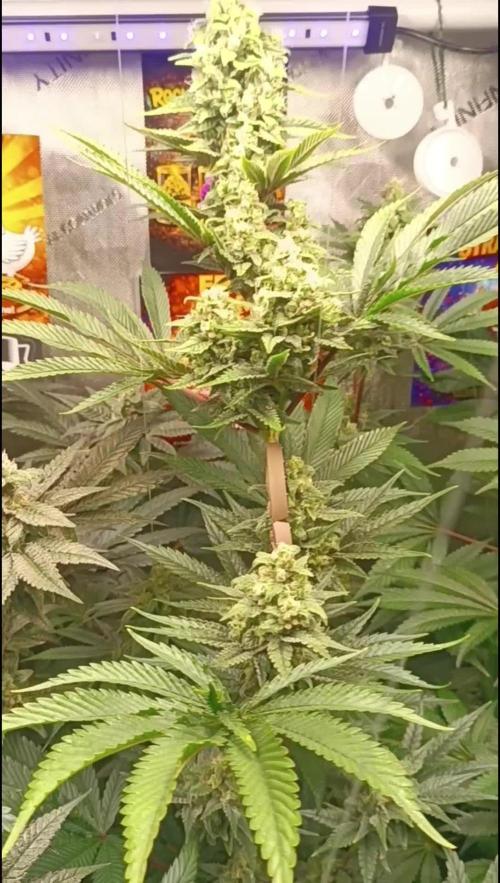
Während Strawberry AK und Chicken & Waffles zunehmend kompakte Blütenstrukturen ausbilden, bleibt die Fruit Bomb Punch ihrem sativalastigen Erscheinungsbild treu. Ihre Colas wachsen eher länglich und speerförmig heran und wirken deutlich unruhiger aufgebaut als die der beiden Konkurrentinnen.
Die Fruit Bomb Punch ist sozusagen der Struwwelpeter im Feld und zeigt am deutlichsten, dass sie ordentlich frühstückt. Als größte Verbraucherin im Grow hinterlassen die ständig wechselnden Bedingungen bei ihr auch die sichtbarsten Spuren. Trotzdem arbeitet sie unbeirrt weiter an ihren XXL-Buds und legt Woche für Woche an Blütenmasse zu.
Die Strawberry AK bleibt der ruhige Vermittler zwischen den Extremen und zieht ihr Programm ohne großes Drama durch. Sie entwickelt ihre Blüten kontinuierlich weiter und hält sich dabei angenehm aus jeder Diskussion heraus.
Die Chicken & Waffles hingegen steht weiterhin tiefgrün im Zelt und wirkt, als würde sie sich über das ganze Klima-Chaos der letzten Woche eher amüsieren. Frech grinst sie in die Kamera, als hätte sie von all den Schwankungen überhaupt nichts mitbekommen. Während die anderen beiden hier und da kleine Spuren der wechselnden Bedingungen zeigen, macht sie einfach stoisch ihr Ding und sieht dabei aus, als wäre alles exakt nach Plan gelaufen. 😄?🌱
Auch beim Klima gibt es Neuigkeiten: Der lange erwartete Luftentfeuchter ist endlich angekommen und wurde direkt ins Setup integriert. Nach den feuchten Wochen zuletzt war es höchste Zeit für Verstärkung. Ob er am Ende der erhoffte Gamechanger wird, muss sich allerdings erst noch zeigen. Für den Moment heißt es beobachten, Daten sammeln und schauen, was der neue Mitspieler im Team tatsächlich leisten kann.
Auch wenn die Bedingungen zuletzt nicht immer ideal waren, stehen die drei Damen insgesamt besser da, als man es nach einer Woche Wetter-Achterbahn erwarten würde. Die Buds stacken weiter, die Harzproduktion nimmt sichtbar zu und beim Öffnen des Zelts wird man inzwischen von einer ordentlichen Terpen-Wand begrüßt. 🍓💥?🌱
Day 88 | 🌸 Flower Day 44
Three Plants, Three Personalities
While Strawberry AK and Chicken & Waffles continue to develop increasingly compact flower structures, Fruit Bomb Punch remains true to her more sativa-leaning appearance. Her colas are growing longer and more spear-shaped, appearing noticeably less uniform than those of her two competitors.
Fruit Bomb Punch is somewhat the wild child of the field and makes it most obvious that she enjoys a hearty breakfast. As the hungriest plant in the grow, she also carries the most visible marks of the constantly changing conditions. Nevertheless, she keeps pushing forward, working relentlessly on her XXL buds and adding more flower mass week after week.
Strawberry AK remains the calm mediator between the extremes. She quietly goes about her business, steadily developing her flowers without creating much drama along the way.
Chicken & Waffles, on the other hand, is still standing deep green in the tent and looks as if she's rather amused by all the climate chaos of the past week. She keeps grinning cheekily at the camera as though she hasn't noticed any of the fluctuations at all. While the other two occasionally show small signs of the changing conditions, she simply carries on as if everything is going exactly according to plan. 😄?🌱
There is also some news on the environmental front: the long-awaited dehumidifier has finally arrived and has been integrated into the setup. After the persistently humid weeks, reinforcements were long overdue. Whether it will turn out to be the game changer I'm hoping for remains to be seen. For now, it's time to observe, collect data and see what the newest member of the team can actually bring to the table.
Even though conditions haven't always been ideal lately, all three ladies are looking better than one might expect after a week of weather-related ups and downs. The buds keep stacking, resin production is visibly increasing, and opening the tent now comes with a proper wall of terpenes. 🍓💥?🌱



Likes
59
Share


@Ezzjaybruh
Follow
————-DAY 22 of flower—————-
Alright stretch is all wrapped at this point. Did a little bit of defol just cuz things were getting cramped on the interior of the plants.
Having to really watch run off on these girls.
Couple signs of mildew 🤦♂️
Ugh - been months since I’ve had a lick of mildew and it starts up now. Lots of reasons probably - weather and shit outside. Just turned furnace on for the first time it’s kicking up all types of shit from inside the ducts.
Upped ArmorSi cuz silica is supposed to help with WPM.
Pheno 1 & 4 are largest two.
Pheno 1 has more lateral branching into even canopy.
2 is middle child as far as size.
3 caught up actually after some late stretching.
All are about the same nutrient wise except for 1 - she’s the odd one out as far as morphology in some respects. Also as I started saying is showing different needs as far as nutrients. Showing some calcium deficiency in the last week.
Overall so impressed with these genetics and results thus far.
——————- Day 26 ——————-
Stacking and putting weight on.
PK boosted
3 first to show some purps in buds. Littttle tiny bit in 1 as well.
Frosty as hell
WPM seems at bay

Likes
47
Share


@Salokin
Follow
Hello Growmies,
We’ve entered week 12 with our Auto Bruce Lemon Diesel plants, and the journey towards harvest continues to amaze. The past week has been marked by the plants' steadfast maturation, with no significant changes in their growth pattern except for one stunning development: the emergence of beautiful purple hues across the buds and leaves.
Plants #1 and #3 remain the stars of the show, maintaining their impressive size and dense bud formations. The decision to optimize the light spectrum early on continues to pay dividends, ensuring the plants receive precisely what they need for robust flowering. The grow lights remain carefully positioned to avoid any heat stress, maintaining a perfect balance of intensity and distance.
The foliage retains its vibrant green color, a clear indication of the plants' excellent health and nutrient uptake. The support grid continues to provide essential structural support, crucial as the buds gain weight and density with each passing day.
Root systems remain strong and resilient, anchoring the plants securely and facilitating efficient nutrient absorption. This strong foundation has been pivotal in sustaining the plants through their final stages of development.
As we progress through week 12, the excitement for harvest is palpable. The trichomes have continued to mature, now prominently coating the buds in a glistening layer of resin. The buds themselves are swelling with potency, promising a rich and aromatic yield.
With the flushing process completed, we’ve optimized the final weeks to enhance flavor and smoothness, ensuring a premium harvest. The plants are now in their prime, showcasing not only their robust health but also their striking visual appeal with those alluring purple hues.
Stay tuned for the upcoming harvest updates as we prepare to reap the rewards of this journey. Keep nurturing your plants with care and dedication.
Stay lifted!
Salokin

Likes
2
Share

@Junior1900
Follow
Happy GrowingHarvested at 15 weeks and the royal runtz will be a staple in my tent from here on exactly what I like to smoke the taste the buzz is perfect high and I'm a Head 💯 since birth so. The plant was a bit hollow didn't produce much all my errors I'm pretty positive but damn It is good . I also ran a sherbet queen . It is the opposite of what I really like I don't care for that cookie lemon mild high on the other hand it produced double and is still good smoke just for my preferences lacking ice got it hanging in a dark closet ac blasting and small fan circulating air . Then I'll jar it and maybe if let it cure a week or two if I can . Maybe also sherb top was 100 gs fresh and Runtz top was 60 gs fresh cut also I think I really did damage more than good in the flush process


Likes
21
Share


@Fullmeltalchemist
Follow
5.23 F60
5.27 F65 - Everything has been going well this week. The plants went through a feed cycle that should carry them through flower no problemo. Started with the AACT Tea, then a bokashi drench with Fish Shit from Fishheadfarms and plain water from here on out. They are drinking quite a bit. 1.5-2 gallons a plant every 3ish days. The terps in my tents smell out of this world. The ScrOG and 3x3 are like a candy store. Passion Berry has mango/guava citrus terps while Deadstar v2 has strawberry watermelon terps. The 4x5 is much more varied, but in general the sweet pink dominates with it's grape candy terps and the dread bread cuts through with it stanky gassy lemon while the prayer pupil smells like moth balls and a bit of GMO. Very lucky to get to experience this much variety.
5.29 F67


Likes
119
Share


@Rangaku
Follow
70 days in for these girls and they are progressing the way they should be and getting fatter , there are a few dried up taco leaves from a bit of heat pumping out of the HPS so I changed the air flow to be more directly blowing the cold air up and the hot away from the buds and out the exhaust.
I had to recalibrate the ph meter also , luckily I did as it was about .8 out of calibration but I haven’t seen any signs of abuse on the plant yet hopefully I caught it in time .
I harvested a top bud off one of the smaller bud arms off the pineapple as we haven’t had fresh bud in over a year and honestly you can’t even tell where it’s missing , weighed 12g wet so hopefully we get an eighth or something to chop up .
Maybe two weeks left for the pineapple and 4 for the GZ .


Likes
7
Share


@Herbz_Unkraut
Follow
everything looking good so far, plants are quite healthy
check www.sr-organics.com and get a 10% discount on this great 5in1 fertilizer with "UNKRAUT10"

Likes
3
Share


@growwise
Follow
Dream Queen #1 tallest @ 5.5". Been a struggle this week trying to dial in humidity.
Had ranges between 20-80%.
Hope to get a humidity controller this week. Watering with leftover fish fertilizer from last feeding. Added 8 oz of worm juice from my worm farm totes. 20% runoff with 6.2 ph and 2900ppm. Crazy high I think. Watching to see how the react before I make any adjustments.
1/13 everything going as planned 2 dream queen and 2 g.s.c transplanted to 1 gallon pots
Likes
1
Share


@BigDawg127
Follow
Looks like some foxtailing going on but other than that waiting on her to finish up.
Likes
18
Share


@Ultraviolet
Follow
Green light is radiation with wavelengths between 520 and 560 nm and it affects photosynthesis, plant height, and flowering. Plants reflect green light and this is why they appear green to our eyes. As a result, some growers think that plants don’t use green wavelengths, but they actually do!
In fact, only around 5 – 10% of green light is reflected from leaves and the rest (90 – 95 %) is absorbed or transmitted to lower leaves [1].
Green wavelengths get used in photosynthesis. Chlorophyll pigments absorb small amounts of green wavelengths. Light that doesn’t get absorbed is transmitted to leaves that are shaded out from direct light. This means that leaves at the bottom of the canopy get more green light than leaves at the top. A high proportion of green wavelengths compared to other colors tells lower leaves that they are being shaded out, so they are able to react accordingly. Lower leaves may react by opening or closing their stomata or growing longer stems that help the leaves reach brighter light [1, 2, 3].
When it comes to growing cannabis, many cultivators are interested in the quality of light used for the flowering stage. In many plants, flowering is regulated by two main photoreceptors: cryptochrome and phytochrome. Both photoreceptors primarily respond to blue light but can also respond to green, although to a lesser extent. Green can accelerate the start of flowering in several species (although cannabis has yet to be tested) [1, 4, 5]. However, once flowering has begun, it’s important to provide plants with a “full spectrum” light that has high amounts of blue and red light, and moderate amounts of green, in order for photosynthesis to be optimized.
Green light mediates seed germination in some species. Seeds use green wavelengths to decide whether the environment is good for germination. Shade environments are enriched in green relative to red and blue light, so a plant can tell if it is shady or sunny. A seed that senses a shaded environment may stay dormant to avoid poor growing conditions [1]. Some examples of plant species where researchers have documented this response are: ryegrass (a grass that grows in tufts) and Chondrilla (a plant related to dandelion) [1, 6].
Although green wavelengths generally tell plants NOT to germinate, there are some exceptions! Surprisingly, green wavelengths can stimulate seed germination in some species like Aeschynomene, Tephrosia, Solidago, Cyrtopodium, and Atriplex [1, 6, 7].
Of course, light is not the only factor affecting seed germination – it’s a combination of many factors, such as soil moisture, soil type, temperature, photoperiod, and light quality.
When combined with red and blue light, green can really enhance plant growth [1, 8]. However, too much green light (more than 50% of the total light) can actually reduce plant growth [8]. Based on the most current research, the ideal ratio of green, red, and blue light is thought to be around 1:2:1 for green:blue:red [9]. When choosing a horticultural light, choose one that has high amounts of blue and red light and moderate amounts of green and other colors of light.
Not many studies can be found about the effect of green light on cannabis growth or metabolism. However, if one reads carefully, there are clues and data available even from the very early papers.
Mahlberg and Hemphill (1983) used colored filters in their study to alter the sunlight spectrum and study green light among others. They concluded that the green filter, which makes the environment green by cutting other wavelengths out, reduced the THC concentration significantly compared to the daylight control treatment. It has been demonstrated that green color can reduce secondary metabolite activity with other species as well. For example, the addition of green to a light spectrum decreases anthocyanin concentration in lettuce (Zhang and Folta 2012).
If green light only reverses the biosynthesis of some secondary metabolites, then why put green light into a growth spectrum at all? Well, there are a couple of good reasons. One is that green penetrates leaf layers effectively. Conversely red and blue light is almost completely absorbed by the first leaf layer.
Green travels through the first, second, and even third layers effectively (Figure 2). Lower leaf layers can utilize green light in photosynthesis and therefore produce yields as well.
Even though a green light-specific photoreceptor has not yet been found, it is known that green light has effects independent from the cryptochrome but then again, also cryptochrome-dependent ones, just like blue light. It is known that green light in low light intensity conditions can enhance far red stimulating secondary metabolite production in microgreens and then again, counteracts the production of these compounds in high-intensity light conditions (Kim et al. 2004). In many cases, green light promoted physiological changes in plants that are opposite to the actions of blue light. In the study by Kim et al. blue light-induced anthocyanin accumulation was inhibited by green light. In another study it has been found that blue light promotes stomatal opening whereas green light promotes stomatal closure (Frechilla et al. 2000). Blue light inhibits the early stem elongation in the seedling stage whereas green light promotes it (Folta 2004). Also, blue light results in flowering induction, and green light inhibits it (Banerjee et al., 2007). As you can see, green light works very closely with blue light, and therefore not only the amount of these two wavelengths separately is important but also the ratio (Blue: Green) between these two in the designed spectrum. Furthermore, green light has been found to affect the elongation of petioles and upward leaf reorientation with the model plant Arabidopsis thaliana both of which are a sign of shade avoidance symptoms (Zhang et al. 2011) and also gene expression in the same plant (Dhingra et al. 2006).
As mentioned before, green light produces shade avoidance symptoms which are quite intuitive if you consider the natural conditions where the plants grow. Not all the green light is reflected from the highest canopy leaves in nature but a lot of it (50-90%) has been estimated to penetrate the upper leaves at the plant level ((Terashima et al., 2009; Nishio, 2000). For the plant growing in the understory of the forest green light is a signal for the plant of being in the shade of a bigger plant. Then again, the plants growing under unobstructed sunlight can take advantage of the green photons that can more easily penetrate the upper leaves than the red and blue photons. From the photosynthetic pigments in higher plants, chlorophyll is crucial for plant growth. Dissolved chlorophyll and absorb maximally in the red (λ600–700 nm) and blue (λ400–500 nm) regions of the spectrum and not as easily in the green (λ500–600 nm) regions. Up to 80% of all green light is thought to be transmitted through the chloroplast (Terashima et al., 2009) and this allows more green photons to pass deeper into the leaf mesophyll layer than red and blue photons. When the green light is scattered in the vertical leaf profile its journey is lengthened and therefore photons have a higher chance of hitting and being absorbed by chloroplasts on their passage through the leaf to the lower leaves of the plant.
Photons of PPFD (photosynthetic photon flux density) are captured by chlorophyll causing an excitation of an electron to enter a higher energy state in which the energy is immediately passed on to the neighboring chlorophyll molecule by resonance transfer or released to the electron transport chain (PSII and PSI). Despite the low extinction coefficient of chlorophyll in the green 500–600 nm region it needs to be noted that the absorbance can be significant if the pigment (chlorophyll) concentration in the leaf is high enough.
The research available clearly shows that plants use green wavelengths to promote higher biomass and yield (photosynthetic activity), and that it is a crucial signal for long-term developmental and short-term dynamic acclimation (Blue:Green ratio) to the environment. It should not be dismissed but studied more because it brings more opportunities to control plant gene expression and physiology in plant production.
REFERENCES
Banerjee R., Schleicher E., Meier S. Viana R. M., Pokorny R., Ahmad M., Bittl R., Batschauer. 2007. The signaling state of Arabidopsis cryptochrome 2 contains flavin semiquinone. The Journal of Biological Chemistry 282, 14916–14922.
Dhingra, A., Bies, D. H., Lehner, K. R., and Folta, K. M. 2006. Green light adjusts the plastic transcriptome during early photomorphogenic development. Plant Physiol. 142, 1256-1266.
Folta, K. M. 2004. Green light stimulates early stem elongation, antagonizing light-mediated growth inhibition. Plant Physiol. 135, 1407-1416.
Frechilla, S., Talbott, L. D., Bogomolmi, R. A., and Zeiger, E. 2000. Reversal of blue light -stimulated stomatal opening by green light. Plant Cell Physiol. 41, 171-176.
Kim, H.H., Goins, G. D., Wheeler, R. M., and Sager, J. C. 2004.Green-light supplementation for enhanced lettuce growth under red- and blue-light emitting diodes. HortScience 39, 1617-1622.
Nishio, J.N. 2000. Why are higher plants green? Evolution of the higher plant photosynthetic pigment complement. Plant Cell and Environment 23, 539–548.
Terashima I., Fujita T., Inoue T., Chow W.S., Oguchi R. 2009. Green light drives leaf photosynthesis more efficiently than red light in strong white light: revisiting the enigmatic question of why leaves are green. Plant & Cell Physiology 50, 684–697.
Zhang, T., Maruhnich, S. A., and Folta, K. M. 2011. Green light induces shade avoidance symptoms. Plant Physiol. 157, 1528-156.
Wang, Y. & Folta, K. M. Contributions of green light to plant growth and development. Am. J. Bot. 100, 70–78 (2013).
Zhang, T. & Folta, K. M. Green light signaling and adaptive response. Plant Signal. Behav. 7, 75–78 (2012).
Johkan, M. et al. Blue light-emitting diode light irradiation of seedlings improves seedling quality and growth after transplanting in red leaf lettuce. HortScience 45, 1809–1814 (2010).
Kasajima, S., et al. Effect of Light Quality on Developmental Rate of Wheat under Continuous Light at a Constant Temperature. Plant Prod. Sci. 10, 286–291 (2007).
Banerjee, R. et al. The signaling state of Arabidopsis cryptochrome 2 contains flavin semiquinone. J. Biol. Chem. 282, 14916–14922 (2007).
Goggin, D. E. & Steadman, K. J. Blue and green are frequently seen: responses of seeds to short- and mid-wavelength light. Seed Sci. Res. 22, 27–35 (2012).
Mandák, B. & Pyšek, P. The effects of light quality, nitrate concentration and presence of bracteoles on germination of different fruit types in the heterocarpous Atriplex sagittata. J. Ecol. 89, 149–158 (2001).
Darko, E. et al. Photosynthesis under artificial light: the shift in primary and secondary metabolism. Philos. Trans. R. Soc. B Biol. Sci. 369 (2014).
Lu, N. et al. Effects of Supplemental Lighting with Light-Emitting Diodes (LEDs) on Tomato Yield and Quality of Single-Truss Tomato Plants Grown at High Planting Density. Environ. Control Biol. 50, 63–74 (2012).

Likes
112
Share


@Tropicannibis_Todd
Follow
ALRIGHTY THEN
REMINDER I DO 2 UPDATES PER WEEK 👉WEEKLYROUNDUP👈👉MIDWEEKLY UPDATE👈
We just hit week 6 and all is well , have to admit she been a little bit of the runt of the litter ,But not any longer she's really coming in well starting to fill the pot and has exploded into flower mode 😃 .......
So just waiting on that stretch, she's already producing some nice frost 👈......
I've been doing LST on her baby Sister and it's coming along very well , I plan to do a little defolation later in the week 😏
rain water to be used entire growth
Her little sister is about 4 weeks now at 28 days from seed ...👈
Lights being readjusted and chart updated .........👍
I GOT MULTIPLE DIARIES ON THE GO 😱 please check them out 😎
👉IF ANYONE IS LOOKING FOR A PLACE TO HANGOUT VIA GROWDIARIES AND TALK GROWING AND JUST CHILL AND WHATEVER .....👈
👉I CREATED GROWDIARIES DISCORD SERVER !!!!!!!!!!!👈
LINK IS 👉
https://discord.gg/zQmTHkbejs
AND SEE HOW IT PLAYS OUT !!!!!!!

Likes
1
Share


@PalmaGrow
Follow
12 - 18 noviembre
Realizamos poda apical y dejamos crecer libremente quitamos únicamente hojas grandes

Likes
147
Share


@MrJones
Follow
MrJones Black Berry OG
🔹🔹🔹🔹🔹🔹GOALS🔹🔹🔹🔹🔹🔹
🌞Flowering Environment - 75/80℉ and 50% Humidity
💧 Feeding - Advanced Nutrients Bloom Regiment - Great APP!
🍃Training / Letting ladies stretch then heavy defoliation under the trellis and cleaning above to open up the airflow.
🕷️ IPM - Will be using Green Cleaner" 1 OZ per Gallon, and CannControl from Mammoth alternating between product each month for Integrated Pest Management.
💡Mars Hydro LED / Veg TS-1000 / Flower 480W FC 4800, this light is just performing very well!
🔹🔹🔹🔹🔹🔹🔹🔹🔹🔹🔹🔹🔹🔹🔹🔹🔹🔹
📜 Rambling - With week 9 here, the ladies are about 2.5 weeks into flower, they are stretching nicely.
🔹🔹🔹🔹🔹🔹🔹🔹🔹🔹🔹🔹🔹🔹🔹🔹🔹🔹
▶️ Friday - 03.05.21 / These are some thirsty ladies and they are drinking about 40 ounces of nutrients/water per day.
▶️ Saturday - 03.06.21 / Just feeding the ladies a 40 ounce every day!
▶️ Sunday - 03.07.21 / Just feeding the ladies a 40 ounce every day!
▶️ Monday - 03.08.21 / Fed the ladies tonight, I am just blown anyway - I will have o get in there and defoliate these girls in the morning! They are super stretching!
▶️ Tuesday - 03.09.21 / Started the defoliation - this will take parts of 2 maybe 3 days, once completed I will add another SCROG net and spray with Green Cleaner. Fed the plants each with 40 ounces of Advanced Nutrients,
▶️ Wednesday - 03.10.21 / Finished the defoliating tonight - fed the girls 40 Oz each - will add the second SCROG tomorrow.
▶️ Thursday - 03.11.21 / Checked on the girls this morning the day after defoliation was completed they are loving life - praying 🙏 up and just looking awesome! - This was a very busy week, a lot of work has been done, should be fairly maintenance-free, for the next 6 weeks!
🔹🔹🔹🔹🔹🔹🔹🔹🔹🔹🔹🔹🔹🔹🔹🔹🔹🔹
📜 Cultivar Information - We have created this strain by crossing the best Black Domina available with Very Berry and our own Lost Coast OG Kush, this plant produces large colas with a super intense sweet berry flavor with a sweet-smelling aroma that varies from fruit and berries to sweet candy. This lady offers tight internal stacking giving a perfect structure for those super heavy colas, which is perfect for growth both indoors and out, if grown outside she is fairly resistant to mold and powdery mildew which is a real bonus with such large colas.
🔹🔹🔹🔹🔹🔹🔹🔹🔹🔹🔹🔹🔹🔹🔹🔹🔹🔹

Likes
18
Share


@TitanRage420
Follow
Explosive growth this week... They are all looking healthy and strong. I still can't see if they are male or female but I'm hoping one of them are female... Holding thumbs....