


Likes
Comments
Share


@PapaNugs
Follow
Another strong week here. The blumats are working well at this point so the girls get adequate water intake. They continue to develop and the fade has now started. Will be looking to chop some of them next week.


Likes
24
Share


@Frank_cultiva
Follow
Las 4 nenas del scrog iniciaron con el ciclo 12/12 el día 05/11/2021: están siendo alimentadas con advanced nutrients(dosis indicadas en la foto de la tabla)
-micro
-blom
-grow
-b52
-rhino skin
-big bue
-bud ignitor
-bud candy
-sensi cal mag xtra
Las 2 nenas en macetas de 30LT 18/6:
por el momento están siendo alimentadas con advanced nutrients(dosis indicadas en la foto de la tabla)
-micro
-grow
-blom
-b52

Likes
20
Share


@Elysian_gardens710
Follow
AK-47 Goxuak Autoflower by Genehtik is a truly awesome plant and really really fun to grow! My 1st thought was I wish I had know more when I ordered the seeds. I only bought 1 from the single seed centre .com 🤦♂️ Of all the plants our house sitters watched for us back in week 7, this is the only one they regularly ask about and want to know when its finished. Even they loved growing it! And they only spent a week with her and aren't gardeners 😄
Ashoka started in a Jiffy tomato pod and was transplanted almost as an afterthought. In fact we ran out of containers and had to improvise with the water pitcher. (We didn't have high hopes) Oops. The pitcher turned out to be a big benefit in that I could see the roots and diagnose and potential issues.
She has been in the same Fox Farms; Happy Frog soil ever since planting the pod into the pitcher. The soil held up good too. Ashoka didn't start showing any deficiencies until the end of week 6, around the middle of her stretch. Correcting this was very easy, we added the recharge at first but it didn't quite do it. We had to feed her Advanced Nutrients Bloom and Grow for about 2.5 weeks. But this Goxuak really never complained : 1:😎
Low Stress Training (LST) for Ashoka was a breeze! At 14 days she was 4" tall and too short to train. She doubled in height in a week and we started training around day 24. Just in the nick of time too! She entered flower about a week after that and stretched like crazy!🤪 the AK-47 gave us about 3 full weeks of nice flexible branches to train before hardening up. We ended up with a pretty even canopy and some solid colas too
I wanted to touch on the lighting as there isn't a lot of options on this platform. Ashoka spent her life under 2 different lights. 1st, she sprouted and spent the first 4 weeks vegging under 2x Viparspectra 600w(250 true watts) LEDs at an 18/6 light cycle. She finished her flower and fade under A Optic 8 (500 true watts) LED. At 18/6
At around day 60 I started flushing her.(well my house sitter Sam did the first time) We used Cyco Kleanse and flushed 5 Gallons thru her until the ppm was down to 350ish, I did the next 2 flushes. The 2nd I used Kleanse again getting the runoff ppm to ~120. Her final week I stopped ph-ing the water and just watered tap. I also gave her the 3rd and final flush with straight Ice cold tap water. She really showed a great fade!! Some buds definitely colored up too!!
Finally the Harevst:
I put her in a 5Gal bucket of ice in complete darkness for 4 days.😈 This was done with the intent to help her produce more resin and frost up. I can't say if it truly worked. She absolutely doubled the trichome production in those 4 days, but idk if it was the time or the darkness and ice. 🤷♂️🤷♂️ I kept her in a sealed closet with a oscillating fan and humidifier at 75°and 63%RH. On the 3rd day I lowered the RH to 50%. She got trimmed and put into jars on the 5th day after harvest. I am monitoring the humidity and burping regularly (8-10x a day)
Smoke Report:
Creamy pepper with a cherry syrup aftertaste.🤣🤪 I've only smoked a bowl so haven't tested the ashes. But she is curing nice. A bit harsh yet I expect will go away after a couple more days. The high is perfect tho! Just what we wanted. It creeps up on u. But you will be confused by the time you finish the bowl. A very cerebral high(I chopped her whole trichomes were only 10% amber) that was great with good company. My girl andI are both veteran smokers, but this bud still made us both giggly(a rarity). It's a good social smoke and was fun to be on around others. The only downsides were it caused a mild confusion and paranoia. Like I would forget what I was talking about then worry ppl were laughing at me for it(they were though) 🤣🤣
I plan to report more feedback after it had cured a couple weeks. I'll invite others people's opinions as well. Right now I can definitely say the AK-47 Goxuak from Genehtik it an autoflower I would recommend to anyone, but especially new auto growers. I will be ordering more next season if they ate available. Genehtik has won me over. They genetics were extremely stable and safe. No herms no deficiencies nothing but greatness!
🌱🌱🌱
I had to share! I was looking on the breeder Instagram page( @Genehtik_chile) and they used a few of my pictures of Ashoka to represent their AK-47 Goxuak auto. I really feel honored by this. I have only been growing for 5 months and know I'm not good, but it's inspiring and motivating when the breeder of the strain give you an attaboy like this. Thanks Genehtik! Stay tuned for my next autoflower run!!

Likes
3
Share


@Mimbra
Follow
Podéis ayudarme sabríais decir si es hermafrodita la Green posion antes de que me machee la melón gum

Likes
10
Share

@Oyziphar
Follow
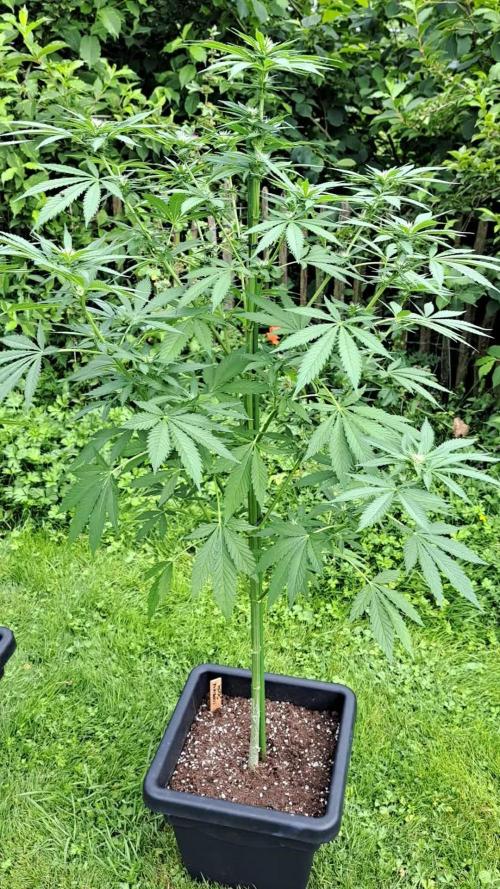
Glorious summer sunny days 🌞🌞🌞 The plants has now started blooming well 🌷🌷🌷
Third week of Light Deprivation
👉👉👉👉Every morning at 8:30 am I move the plants in the greenhouse.
👉👉👉👉Every evening at 8:30 pm I move the plants (together with some other strains) inside the growroom (which I don't use in the summer)
Before I placed the plant in the growroom, I took these photos outside on the lawn
A few days ago I noticed some little insects running around on plant #3. I think they are some members of the Heteroptera family... 😕 They are not harmfull 😇 (See last photo)
👉 Once a week I give the plants a liquid booster with OPF 4:2:8 ; Fulvic 25 ; Yuccah ; Biovin liquid ; Earthworm compost extract.
Big Thanks to Luc from Plant Health Solutions / Bioplantenvoeding dot nl 🙏🙏🙏
Plant #1 ; height : 140 cm
Plant #2 ; height : 128 cm
Plant #3 ; height : 111 cm



Processing
Likes
16
Share


@Andres
Follow
they are 2 purple afghan kush and it shows the difference .. the second one measures 130 cm and started its flowering process ... they always feed organically .. as well as only with fish tank water...

Likes
1
Share


@BruWeed
Follow
Esta semana ya realice la poda. Se encuentra en estos momentos en etapa de secado dentro de una caja especial para secados de flores que uso siempre y nunca me falla.
En humedo hay 195g y utilice una lampara led de 150w en todas sus etapas.
Próximamente estaré publicando cuando este en curado.

Likes
15
Share

@Northern_Ent
Follow
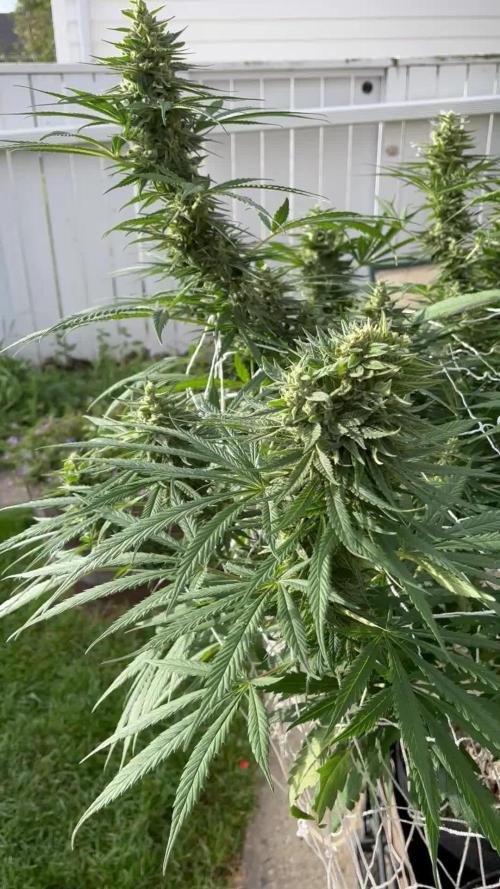
Sep 12: Purple Ghost Candy is still going strong. Another few weeks I would think, ideally. Other plants are getting bud rot so I’m doing going to call it a season soon. This is the ninth week of flowering so she’ll be ready soon. Final Flush uses citric acid to chelate nutrients and salts away from the plant roots. I started doing a chemical flush last year and it’s better - no risk of over-fertilized buds that don’t burn. After flushing (I used 9 L to flush about 27 L of soil) they say 7-10 days before harvest so this timing sounds good.

Likes
33
Share


@Caukygrow
Follow
Wow, coming along. The girls are really getting smelly. I actually added a second carbon filter on the exhaust & have invested in a dehumidifier, keeping the humidity levels at 50% for the rest of the grow. It is running 24/7 draining into a bucket outside of the tent. I will use the water from the dehumidifier to feed my girls.
I also managed to get some cal mag to help my burnt edges. Other things I have changed for this week as we are preflowering is switching the schedule from 24 hours of light to 18/6. I think this has helped the plants get some much needed rest after vegging.
12th of August. I think I can see it starting to flower!!
* Minor defoliation to remove leaves that are damaged from watering at the bottom of the plant
16/08/22 Grow question
ADAM BASE A - NPK 3-0-1 (3 ml/l)
EVE BASE B - NPK 0-4-3 (3 ml/l)
LUSH - NPK 5-0-0.5 (1 ml/l)
RAPTURE - NPK 0.7-3-3 (1.5 ml/l)
Herbi Cal mag NPK: 4 – 0 – 0 (1.8ml/l)
1L ADAM & EVE: Your base Nutrient, used from start to finish.
1L LUSH: Veg stage focused nutrient additive.
1L Rapture: Applied in early Bloom/Flowering.
I water around 1.5 liters of mixed water PH'd to 5.8 to each plant, giving me about 20-30% run off. Am I overwatering my plants?
Update! 17/08/22
I flushed the plants with 4 liters of water each using half the nutrients I was using before
13ml to 9l Adam
13ml to 9l Eve
6ml to 9l Lush
8ml to 9l Cal mag
Left out the bloom - I'll add it again for the next feed.
The canoeing I had on the smaller plant already seems less intense - hopefully see some good changes as we head into the next week for flowering.
Today I will do a more invasive defoliation on the big plant, removing all of the fan leaves on the bottom - stay tuned for week 5 starting tomorrow. A few more weeks and hopefully we get some nice juicy buds!!!
Likes
19
Share


@nonick123
Follow
Día 13 (06/05) Nos acercamos al final de la fase plántula. A ver si ahora empiezan a crecer de forma explosiva!
He sido muy estricto con los riegos, dejando que el top hasta el nudillo se seque completamente!
Día 14 (07/05) Hago una mejora en la tienda. Hasta ahora tenia intracción pasiva, pero ahora he instalado una turbina para que impulse aire fresco dentro de la tienda
Día 15 (08/05) Con el calor que hace me sorprende que las macetas sigan aguantando la humedad, pero al hundir el nudillo sigue húmeda. Mañana haré un riego de nuevo
Día 16 (09/05) Relleno el top con sustrato para compensar la compactación y dar mas soporte a las plantas
Riego con 300 ml solo H20 - pH 6,2
Día 17 (10/05) Baño de sol de dos horas.
Día 18 (11/05) Baño de sol de dos horas
Día 19 (12/05) Riego 750 ml H2O + Regulator 0,15 ml/l + CaMg-Boost 0,25 ml/l + Startbooster 0,25 ml/l - pH 6.2
💦Nutrients by Aptus Holland - www.aptus-holland.com
🌱Substrate PRO-MIX HP BACILLUS + MYCORRHIZAE - www.pthorticulture.com/en/products/pro-mix-hp-biostimulant-plus-mycorrhizae
Likes
16
Share


@GYOweed
Follow
I got one Amnesia Lemon Haze seed cross fem pollen for now and looking for more. would make a killer sativa.
I messed up with PK Boost but the plant was pretty lanky weak stems will need support. I think the cross will be a bit better like my pev ALH grow.
100G is not bad. Mostly mids though not hard Ill upload a video. 😬
I used 100w led total (200w shared w/ another big plant) on the sour diesel it wont let me copy from veg and save it :(
I notice its much easier to wait and do this shit on a computer.
2021 and still can't multi select pics on mobile.
You should see the rates growdiaries charges the breeders and only huge companies can afford.
Someday I will make my own platform then. 😆
@growdiaries


Processing
Likes
45
Share


@SupaDank
Follow
End of day 41 flower and will be flushing both girls on day 42 flower. Overall the buds don’t seem as fat as it should be but hopefully during the flush they should gain some weight. I took a bunch of clones so those will be going to flower soon and now I have a better understanding of how to treat these girls during the flowering stage. Also popped two Blueberry seeds so I will have a journal on that soon.

Likes
11
Share


@Bread_n_Buds
Follow
Our Green Crack F1 Hybrid Autoflowering from Zamnesia are really in great shape, better yet there is a small one born recently and one that has arrived so well to grow that I have already done topping
to go and make two plants this time: one worked with the techniques and one left to go also to compare the difference in yield and advise you well based on the strain. If it is very true that the technique always gives a good result, the response times can be greatly extended or if the plant remains too dwarf I prefer to grow the autoflowering straight.
Applied Techniques - Given the numerous requests from growers, we decided to show you what happens by applying topping + Lst to autoflowering plants. It is very important to anticipate it as much as possible, autoflowering plants go into flowering at about the 5th intenodo, you must anticipate that moment to give the plant the chance to vegetate as much as possible. In general, when you see that there are two good side branches, you can do topping, they will go into veg as much as possible and you will have a split plant, I have seen very nice results, especially in warm periods when the plant tends to vegetate a lot, in winter we could have a bit of dwarfism but with a lot of resin for sure.
So I cleaned everything and cut at the top leaving only the main growth line, called Main Lining, the florets will be lowered during growth and the plant will eventually be like "split" in the main line with the various branches.
On photoperiodic plants, however, we will do topping repeatedly, which is not recommended with autoflowering plants so as not to lengthen the times of plants born to finish in 10 weeks.
The second week (including a few days of germination) we gave Power Roots 1 ml/l, Pure Zym 1 ml/l, Sugar Royal 1 ml/l, Alga Grow 3 ml/l -
Plagron nutrients are available at Zamnesia in convenient pack formats for all growing styles. I used this one with a simple search you can find the other products.
---- https://www.zamnesia.io/it/12119-plagron-top-grow-box-100-naturale.html
Try a seed of this strain that drives us crazy...
---- https://www.zamnesia.io/en/10677-zamnesia-seeds-green-crack-f1-automatic.html
Zamnesia Description // Forget what you think you know about cannabis. Green Crack F1 Automatic by Zamnesia Seeds is here to shake up the whole industry. Using F1 genetics, growing cannabis has never been easier. These plants offer uniform and abundant yields. Get ready to harvest high-quality buds, full of flavor and amazing effects.
Growbox and Air System - Secret Jardin DS120w + fans + exhaust fans and DF16 filters kit ---- https://www.secretjardin.com
All the best that mother nature has to offer is at ----www.zamnesia.com


Likes
2
Share


@Herbangardener671
Follow
Vaped some lower buds and the taste is as advertised like tropical fruit or fruity pebbles

Likes
16
Share


@Wizardgreen317
Follow
I feed light the first week then I bring the ppm up to about 1050 to 1200 slowly cause we all knw that these nutrients can burn and will
