


Processing
Likes
Comments
Share


@Majormolasses
Follow
This Dinamex from Dinafem is starting to really bud and is very stunted so I took a chance and transplanted her to a little bit more soil. The last of what’s I had because one of my other plants was a male. So flipped her over and she is kicking ass to say the least. Can’t wait to still see what I get out of his “solo Cup”grow

Likes
17
Share


@420DeepGrow
Follow
Gracias al equipo de Zamnesia, Marshydro, XpertNutrients y Trolmaster sin ellos esto no sería posible.
💐🍁 Frosted Guava:
La Frosted Guava es una cepa índica dominante y súper resinosa, que es un cruce de la Guava y la Frosted Skywalker. Con unas características de cultivo muy versátiles, un aroma exótico y afrutado, y un subidón relajante y lúcido, la Frosted Guava es ideal para cualquier plantación de marihuana.
🌻🚀 Consigue aqui tus semillas:
Código Descuento 20%: ZAMMIGD2023
💡TS-3000 + TS-1000: se usaran dos de las lámparas de la serie TS de Marshydro, para cubrir todas las necesidades de las plantas durante el ciclo de cultivo, uso las dos lámparas en floracion para llegar a toda la carpa de 1.50 x 1.50 x 1.80.
https://marshydro.eu/products/mars-hydro-ts-3000-led-grow-light/
🏠 : Marshydro 1.50 x 1.50 x 1.80, carpa 100% estanca con ventanas laterales para llegar a todos los lugares durante el grow
https://marshydro.eu/products/diy-150x150x200cm-grow-tent-kit
🌬️💨 Marshydro 6inch + filtro carbon para evitar olores indeseables.
https://marshydro.eu/products/ifresh-smart-6inch-filter-kits/
🍣🍦🌴 Xpert Nutrients es una empresa especializada en la producción y comercialización de fertilizantes líquidos y tierras, que garantizan excelentes cosechas y un crecimiento activo para sus plantas durante todas las fases de cultivo.
Consigue aqui tus Nutrientes:
https://xpertnutrients.com/es/shop/
💻 Trolmaster Tent-X TCS-1 como controlador de luz, optimiza tu cultivo con la última tecnología del mercado, desde donde puedes controlar todos los parametros.
https://www.trolmaster.com/Products/Details/TCS-1
📆 Semana 3:
Ha sido una buena semana, ella ha dado un gran cambio en su lugar definitivo 😎.
Se le ha aplicado un tratamiento insecticida con agua + tierra de diatomeas ( 1 cucharadita por litro de agua), también se le aplica un tratamiento fungicida con una infusión de cola de caballo para evitar futuro moho.
A partir de ahora se riega manualmente con las dosis recomendadas por el fabricante.

Likes
12
Share

@ohcibi
Follow
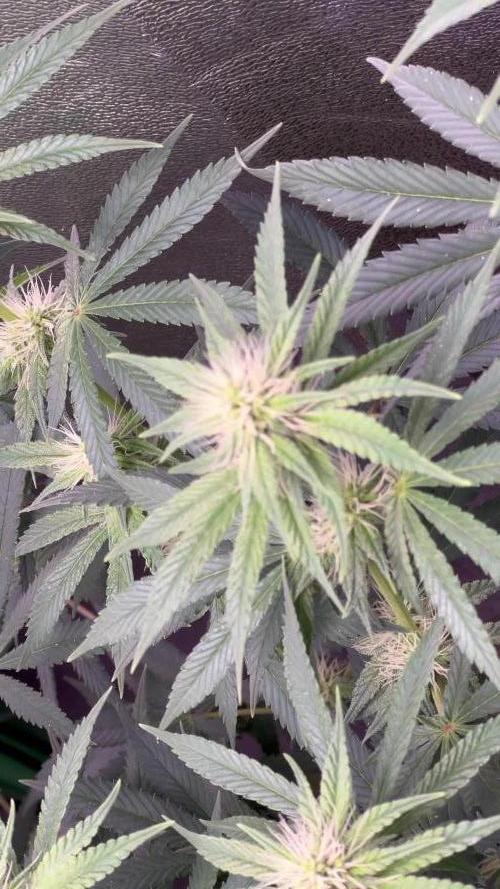
Approaching the finish line. Fertilizer is now at its final dose. Both plants stopped growing now and started to build thick buds. Ken in fact is way ahead in terms of buds but it might be because he Hase a little bit less in number. It’s possible that I trained Ryu too much for his pot size 😆😆. But let’s see. Both looking very good and a lot more powerful than in my first grow.
Water intake is still massive. The top soil is rock solid while draining water super fast which must mean the pots are filled with massive roots. The erected teeth came down a bit but they were never that severe in the first place so I’m still not worried about that. I skipped one day of watering to account for possible slight overfeeding but I mean, today’s watering then was with the increased dose of fert 😆😆. I know I’m pushing it a little bit but that’s deliberate. I have high demands both in mass and quality so my approach is riding the edge as good as possible from the beginning 😆

Likes
19
Share


@GrownwithLED
Follow
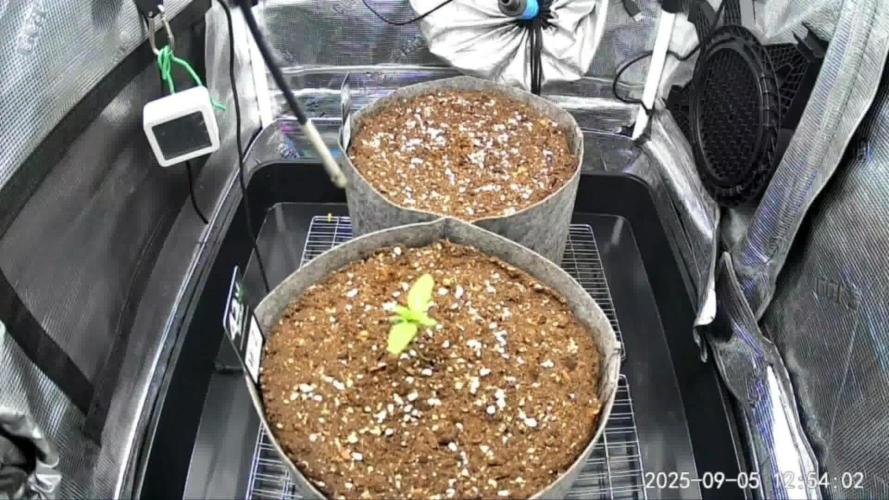
Unfortunately I had to harvest the BADAZZ-CHEESE (=BADAZZ-KUSH x CHEESE) from BIG BUDDHA SEEDS early, because of looking bud-rot. The plant needed at least another 10 days to finish, she still had plenty of white pistils and would have gained in harvest weight and also produced more trichomes, if given more time. The final harvest weight of 31 gram dried bud, was still a VERY GOOD RESULT seen the circumstances. The buds are dank and have lots of trichomes, all in all a VERY NICE KUSH/CHEESE VARIETY!

Likes
24
Share

@Hashy
Follow
********************************************
Week 19 Finishing lowers (week 14 flower)
********************************************
Light cycle=12/12
Light Power=147w 61%
Extractor controller settings (during lights on).
High temp= 25c
High Rh= 45%
Speed max=9
Speed min=1
Extractor controller settings (during lights off).
High temp= 23c
High Rh= 50%
Speed max=9
Speed min=1
Smart controller settings (during lights on).
Lights on=9.00am
Radiator on= less than 22.0c
Radiator off= greater than 22.0c
Smart controller settings (during lights off).
Lights off=9.00pm
Radiator on= less than 18.5c
Radiator off= greater than 19c
VPD aim=1.0-1.5
DLI aim=40-45
EC aim=1.0-1.8
PH aim=6.0-6.5
********************************************
********************************************
📅11/1/26 Sun (Day 127)
📋 Tops dry day 4
📅12/1/26 Mon (Day 128)
📋 📸
📅13/1/26 Tue (Day 129)
📋 Harvest remainder of plant.
********************************************
Weekly roundup.
📋The remainder got chopped on the 13th Jan, 26th Jan day 13 dry. trimmed some more 23g only a bit left to trim. 94g so far for this plant.
27th Jan, trimmed remaining got 15g, total for plant 109g.
Back soon.
Take it easy.
********************************************
********************************************


Likes
5
Share


@Zeaiache
Follow
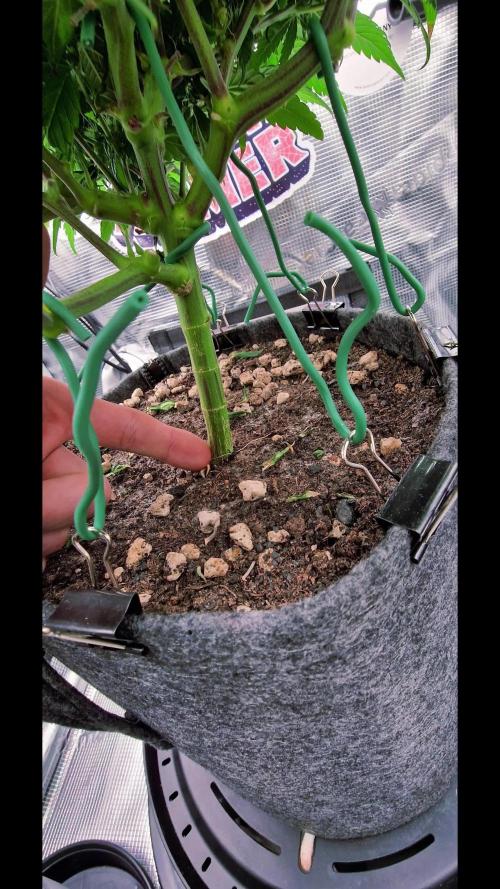
En su Nuevo suelo y con los microbios ganaron vigorosidad, las hojas están frondosas, y sus tallos engordaron, la verdad siento que prometen mucho 😈


Likes
13
Share


@IQuSX
Follow
Hi, topman!
Its first day of second weeks and yesterday was change 0,05 l on 0,5 l pot.
For our plants we are using smart components, one of all its:
Bio Enhancer
Humic Aicds & Seaweed Extract
BioEnhancer can be used as a multi purpose tool for every organic cultivator. Its main purpose is to enhance the uptake of nutrients and to act as a soil conditioner but it can also be used very effective for rooting of cuttings, germination of seeds and as a foliar spray to stimulate plant growth.
Humic and Fulvic Acids
Humic and Fulvic Acids are sourced from leonardite, which acts as a soil conditioner, biocatalyst and bio stimulant. They also help chelate nutrient compounds, thus enhance the uptake of nutrients by the plant. Especially iron uptake is potentiated, which results in higher chlorophyll and sugar production and improves flavor and nutritional values.
Seaweed extract
Seaweed extract (kelp) contains 62 trace elements, amino acids and natural phytohormones. It works as a soil conditioner, promotes stronger and vigorous development of roots and improves the germination rate of seeds. Additionally it enhances the uptake of nutrients and water, conditioning plants to better handle stress. (C)
Also We using Advanced Nutrients, because it’s the best original nutrients!
Shall, follow the report for more learn
See you.
Likes
3
Share


@mistaminista420
Follow
So I had to cut all leaves, and also some of the smaller leaves due to mold. It was only a little bit mold but I cut away every part that seemed to white for me in the end. It probably would habe worked out growing her 2-3 weeks longer but I decided to chop/save her.
Likes
58
Share


@GreenHouseLab
Follow
These are going to be some pretty in a month from now. The tallest is at approx 6” from the light at approx 380w so we’ll see so far no sign of light or heat stress.
Likes
17
Share


@MoneyGrowup
Follow
Everything is pretty much the same this week the purple punch is doing up numbers, the zkittles is rite behind it with the gelato struggling. Already germinated some seeds for the summer grow hope the gelato grows better out doors

Likes
49
Share

@Hashy
Follow
Week 9 5th week of flower.
Light settings
12/12 on at 9.00am off 9.00pm
Light power= 75% 184w
Radiator settings
LIghts on
Turn on if temp drops below 23c
Turn off if temp goes above 23c
Lights off
Turn on if temp drops below 18.5c
Turn off if temp goes above 18.5c
Dehumidifier settings
LIghts on
Turn off if humidity drops below 60%
Turn on if humidity goes above 60%
LIghts off
Turn off if humidity drops below 62%
Turn on if humidity goes above 62%
Extractor settings
temperature 25c with 1c steps
Humidity 50% with 2% steps
Max speed 10
Min speed 7
VPD aim 0.8-1.2
DLI aim 30
Wednesday 22/3/23 Day 57 (Day 29 flower)
Nothing
Thursday 23/3/23 Day 58 (Day 30 flower)
Autofeed 4 20 minute runs
(last weeks nute schedule)
Feed 12L Ec=1.93 Ph=6.6/6.5
4.5L left
Roughly 2.5L each.
#2 run 0L Ec= Ph=
Pump wasn't submerge properly.
Friday 24/3/23 Day 59 (Day 31 flower)
Moved light more over towards the cheesecake.
Big defoliation
Saturday 25/3/23 Day 60 (Day 32 flower)
Autofeed 4 20 minute runs
Slightly less powerful pump
Calmag 0.5ml/L
4 drops ph d
Feed 10L Ec=0.4 Ph=6.1/6.2
1.5L left
Roughly 2.2L each.
#2 run 0.4L Ec=2.6 Ph=5.9
#2 Height= 49CM Dist= 45CM DLI=25.6
Sunday 26/3/23 Day 61 (Day 33 flower)
Nothing
Monday 27/3/23 Day 62 (Day 34 flower)
1.00pm alter heater settings to 22.5c
6.00pm
Extractor settings
temperature 24c with 1c steps
Humidity 50% with 0% steps
Max speed 10
Min speed 4
Tuesday 28/3/23 Day 63 (Day 35 flower)
Feed
(This weeks schedule)
Autofeed 4 15 minute runs
Normal pump
4 drops ph d
Feed 15L Ec=1.75 Ph=6.4
8.75L left
Roughly 2.08L each.
#2 run L Ec= Ph=
#2 Height= 50CM Dist= 44CM DLI=26
Another week done for the grow. Things are going great.
#2 Tropicana Cookies FF is doing great, the way she grows really reminds me of pineapple express, I'm thinking she is going to produce some nice sized buds.
Power used for week
Light
(2.22+2.21+2.21+2.21+2.22+2.21+2.22)=15.5Kw
Extractor
(0.57+0.57+0.57+0.54+0.57+0.53+0.54)=3.89Kw
Fans
(0.5+0.53+0.52+0.69+0.9+1.08+1.06)=5.28Kw
Dehumidifier
(1.49+0.34+0.71+1.48+0.0+0.0+0.0)=4.02Kw
Radiator
(2.42+2.47+2.74+3.62+5.24+2.1+1.45)=20.04Kw
Water pump.
(0.0+0.01+0.0+0.01+0.0+0.0+0.01)=0.03Kw
Total for the week=48.76Kw
Back in a week.
Thanks for stopping by.

Likes
17
Share


@Elpicor
Follow
D57
Ninth week humidity problems, I added a fan in total 3, added an additional extractor that introduces fresh air, I constantly keep the growbox open, so the risk of mold seems to have been avoided. stop PK 13 14 and big bud, now only biobizz for my fat.
Processing
Likes
142
Share


@MadeInGermany
Follow
Hey everyone :-).
There is not much to tell this week :) A few came to the flowering tent, 2 are still in the vegi phase for 2 days and then come last to the flowering tent :-)
The Blue Cheese and the Kosher Tangie Kush smell very good and how they should 😍👍
It will be difficult to choose 2 mums :-).
I wish everyone a nice week 👌 Let it grow


Likes
18
Share


@blendmedmedman
Follow
this is @fastbuds entry for tik tok contest, a constant loop or longer?

Likes
10
Share


@Thibaut
Follow
i am a straight newbie first summer grow. but this strains are absolutely the most beautiful i have seen the colors are out of this world i lost 2 girls on the road, but i am totally fine with the outcome they stood in a homemade grow house only feed them tap water once in a while, they stood in a storm by accident but is all good fam! when its dry i will take some nice bud pics , thanks Sweet Seeds for this amazing seed 🙏 see you all next summer
Likes
9
Share


@TiRobotProds
Follow
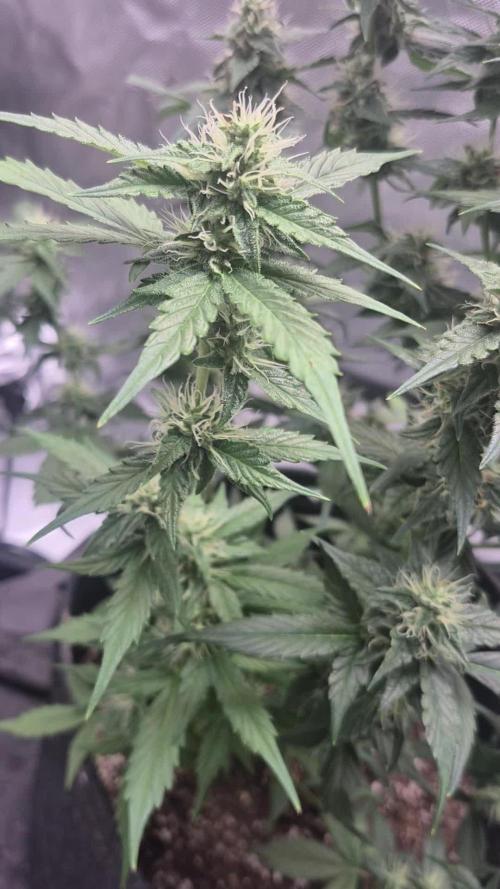
Les pompoms commencent a se former belle structure de cette plante. Boit énormément. Les engrais se mettre en marche et cela fait une énorme différence.


Likes
104
Share


@Schnabeldino
Follow
_____ Week 10 | Day 71 - 77 | 3rd week of Flower ______
Day 71 🌞
- I mounted a fan below the net for more air circulation i need more defoliation 😅
Day 72 🌞💧
- 24 liters were mixed and distributed among the 8 plants / each plant 3 liter, at the moment I can water them every 4 days
Day 76 🌞💧
- It remains every 4 days 3 liters of water each plant
____________________________________________________________________________________________
Light - 12/12 h - 560 Watt
- 2x 200 Watt Toplight
- 4 x 40 Watt Lightbars
PPFD - 900 - 1000 µmol
Temp. avg. - 22,9°
Hum. avg. - 61 % RLH