


Likes
7
Share

@NoProbation4Weed
Follow
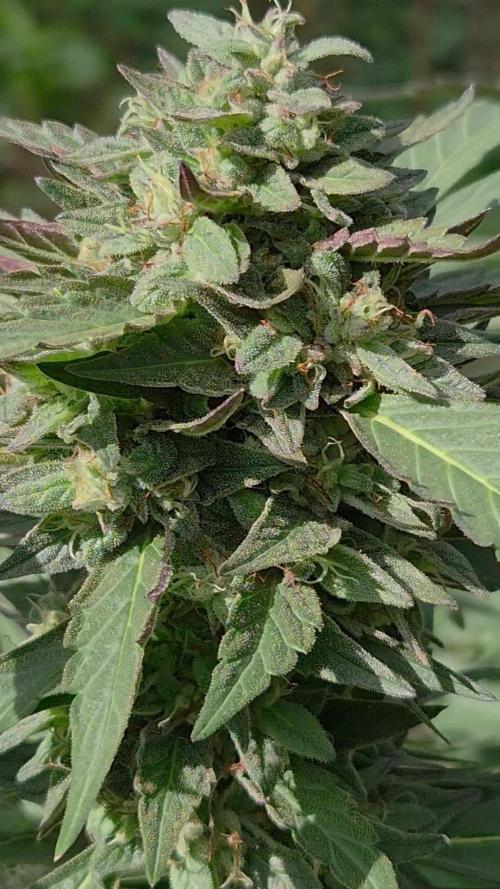
It was approximately week 7 of flowering, and it was time to harvest the plant as the first signs of bud rot had already appeared on the larger buds. I had to discard approximately 10% of the harvest due to mold, but despite this, the guerilla grow was still a successful one.
The harvested buds were immediately placed in the freezer and will be processed into bubble hash in the autumn.
In terms of terpenes, it has a slightly fruity aroma with a hop-like finish.
Likes
13
Share


@Sadhus
Follow
Belle reprise, 16 colas sur les 4 plantes, j'ai rien fait cette semaine apart arroser, semaine prochaine defoliation,rempotage
Pour les clones sa grandi en hydro avec seulement de l'eau ph 5,5 pour le moment et elles se porte très bien

Likes
52
Share


@Ultraviolet
Follow
I gave Isopropyl alcohol 70% equal parts water, 1 tsp cayenne, and kept enough for multiday application, what little population of aphids is left I shall catch them the next morning, opening the tent 10 min before lights on the clovers have yet to open, all the aphids hiding on undersides are easily visible, still none ever went near cannabis plant. Clovers are far tastier it seems.
The alcohol kills on contact, the idea was to saturate the leaves with a light foliar application, and once I was done I ran it through the canopy with my hands making sure as much of the clover surface came in contact with the iso, once done turned on the fans and evaporate it quickly.
Beautiful thing about Isopropyl is that it evaporates rapidly at room temperature way below boiling point leaving behind zero residual so nothing seeps its way into rootzones unless you spill it there.
It is a magical solvent that leaves no trace that it was ever there.
Resonant Frequency:
A resonant frequency is the natural vibrating frequency of an object and is denoted as ‘f’ with a subscript zero (f0). When an object is in equilibrium with acting forces and can keep vibrating for a long time under perfect conditions, this phenomenon is resonance.
In our daily life example of a resonant frequency is a pendulum. If we pull back the pendulum and leave, it will swing out and return at its resonant frequency. Objects combine to form a system, this system can have more than one resonance frequency. The resonant frequency is termed as the resonance frequency.
The phenomena of resonant frequency used in the series circuit when the inductive reactance (XL) is equal to the capacitive reactance (XC). If the value of supply frequency is changed, we can observe that the value inductive reactance (XL) and capacitive reactance (XC) is also changed.
Inductive reactance (XL) and capacitive reactance (XC) are inversely proportional to each other. When we increase the frequency, the value of XL increases, whereas the value of XC decreases. When we decrease the frequency, the value of XL decreases whereas the value of XC increases.
At series resonance, when XL = XC. The mathematical equation of resonant frequency is:
XL = 2πfL; XC = 1/2πfC
XL = XC
2π f0L = 1/ 2πf0C ; f0=1/2π sqrt{LC}
Where f0 is the resonant frequency, L is the inductance, C is the capacitance
How to Calculate the Resonant Frequency of an Object?
An object exposed to its resonant frequency can vibrate in symphony with the sound. The wavefronts pushing on the object will arrive at just the right time to push the object with greater and greater amplitude in each cycle.
To get a clear idea of this concept one of the best examples is pushing a friend on a swing. If you push the swing randomly, the swing will not move very well but if you push the swing at a specific time, the swing will get higher and higher.
Another example to find the resonant frequencies is to place the object next to a speaker and place a microphone attached to an oscilloscope next to the object. Then play the sound in the speaker at a given volume, and then without changing the volume slowly change the frequency.
Now observe the oscilloscope, you will observe that at certain frequencies the amplitude of the wave, is proportional to the volume of the sound that the microphone is able to pick up.
The frequency that is caught by the microphone will be greater than at surrounding frequencies. These are the resonant frequencies and are detectable as the sound energy absorbed by the object is re-emitted more efficiently at these frequencies. The precise moment that constructive interference happens the amplitude of the wave will spike at the precise frequency emitted.
Q: Compute the resonant frequency of a circuit whose inductance is 25mH and capacitance is 5mu F?
A: Known values are,
L = 25mH = 25 x 10-3 H
C = 5mu F = 5 x 10⁻⁶ F
Formula for resonant frequency is,
f0= 1/2π sqrt{LC}1/2π√L
f0=1/2 ͯ 3.14√ (25 ͯ 10-3 ͯ 5 ͯ 10-6)
= 450.384Hz
Why Neodymium?
Ferromagnetism is an exciting phenomenon observed in certain materials, known as ferromagnetic materials, that can retain their magnetization even after removing an external magnetic field. Ferromagnetic materials can become ferromagnets and interact strongly with other magnets and magnetic fields. A characteristic of ferromagnetic materials is their magnetization ability, distinguishing them from paramagnetic and diamagnetic materials, where weak magnetism exists temporarily.
This unique property allows for making permanent magnets widely used in various applications such as motors, generators, speakers, and data storage devices. The ability to generate and maintain a magnetic field without the need for a constant external source of power makes ferromagnets highly valuable.
An alloy of neodymium, iron, and boron discovered in the 1980s is ferromagnetic, yielding permanent magnets over 1000 times stronger than anything ever seen before.
The name neodymium comes from the Greek neos didumous, which means "new twin."
Neodymium magnets are made of an alloy of neodymium, boron, and iron. This allows them to simultaneously store impressive amounts of magnetic energy while being highly resistant to demagnetization.
Because iron oxidizes quickly, neodymium magnets are coated to prevent rust from accumulating.
The attraction between two neodymium magnets is so strong that if placed close enough together, they can collide and shatter.
Neodymium magnets have an unusually high-temperature resistance, and they can even withstand heat exceeding 200 degrees Celsius.
N50UH 1-1/2"OD x 1.065"ID x 3/8"

Likes
1
Share

@NAG420
Follow
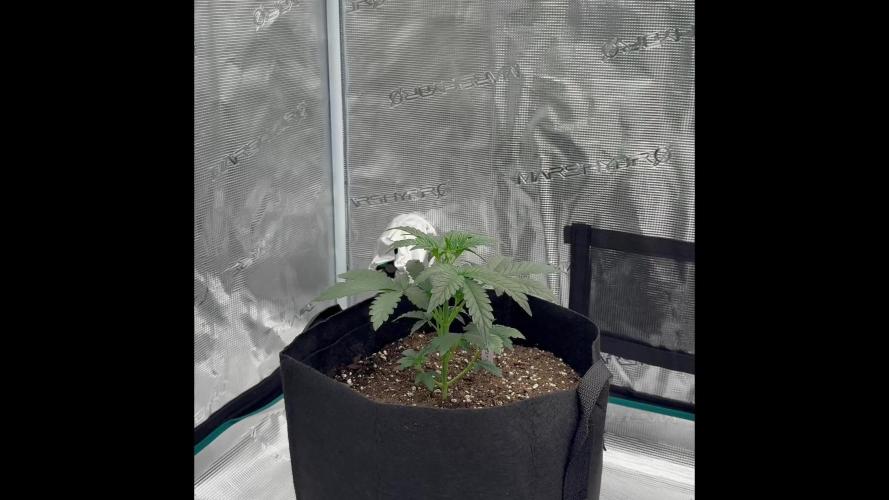
Today she got put in my 4x4 tent under FCE4800 light @MarsHydroLED she is in a 5 gallon pot temp was 79F 58%RH water 3 Weeks feeding schedule all nutrients are @Foxfarm she has surprised me greatly growth is great took transplanting very well for a auto. Next will be regular water 6.5PH reverse osmosis.


Likes
Comments
Share



Likes
10
Share


@Cocogrow1234
Follow
Week 8 flower : still flushing with ph water everyday the run off ec is 0.5 gonna keep flushing for another week . Finishing on 9 weeks
The blue cheese I have 2 different phenos . 1 is very blue and weird shaped leaves and is nearly ready gonna give it till end of the week and do 48hrs on dark before harvest
The other blue cheese is more green but has grown a lot bigger the colas are amazing it definitely needs another 7-10 days .
Sunset sherbet this will be flushed for a few more days and left in dark for 48 hrs
This is the first time using led lights and all the bad stuff I heard about mars hydro . I have to say I’m very impressed with what it’s done .
Processing
Likes
34
Share


@LockDownGrow
Follow
My first time making alcohol tintcure
Using the c1 ,
Hold on tight gonna be a trip

Processing
Likes
12
Share


@w33dhawk
Follow
Bin soweit zufrieden werde die Tage mal die Äste leicht an schrägen durch anbinden am scrog netz mehr licht und luftstrom für die buds einrichten die erste Sapphire scout wächst echt dicht die brauch das unbedingt bin aber sonnst ganz zufrieden mit meinem Ergebnis bis jetzt falls einer von den Profis Anregungen oder Verbesserungs vorschläge hat würde ich mich freuen eure Meinung und Rat zu hören bilder und videos folgen jetzt in regelmäßigen Abständen ab jetzt wird ja erst interessant bis die Tage ihr grow Götter


Likes
15
Share


@SelfCultivationGrower
Follow
I think we are almost at it. Maybe one more week until harvest.
Processing
Likes
3
Share


@mr_smooke
Follow
we pass 6 weeks of flowers. buds are getting fulled and the smell is so so beautiful. Here on pics is day 35 of flowering. On feeding menu is again Iguana Juice Bloom, I spend all Mother earth. it is awesome nutrients. will buy it again.

Likes
17
Share

@DapperDabber
Follow
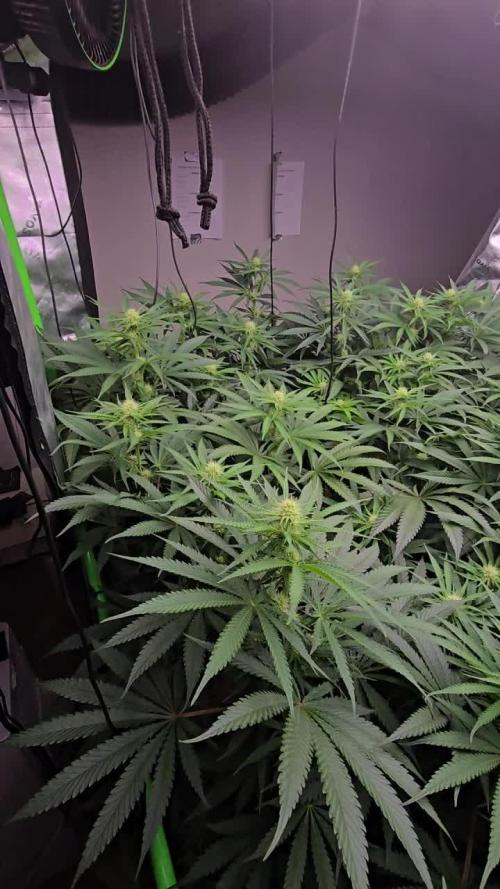
The second week of flowering and they're absolutely still stretching, hopefully it comes to a stop before the tops reach a 55 DLI level - height 😅
They've been so thirsty and blooming wonderfully!
Even the two pots with my pollen chucking Do-Si-Do/Blue Blizzard cross have been doing well 😎
Even though they haven't been top dressed or had direct light in a month! It's almost as if they grow like weeds 😆
It's been a pretty easy time so far, I think I might even be done tucking branches as I've got a canopy that's even enough for me.
Thanks for the read and take care!

Likes
Comments
Share

@Elguacho420
Follow
Holaaa holaa muy buenos humos a tod@s…
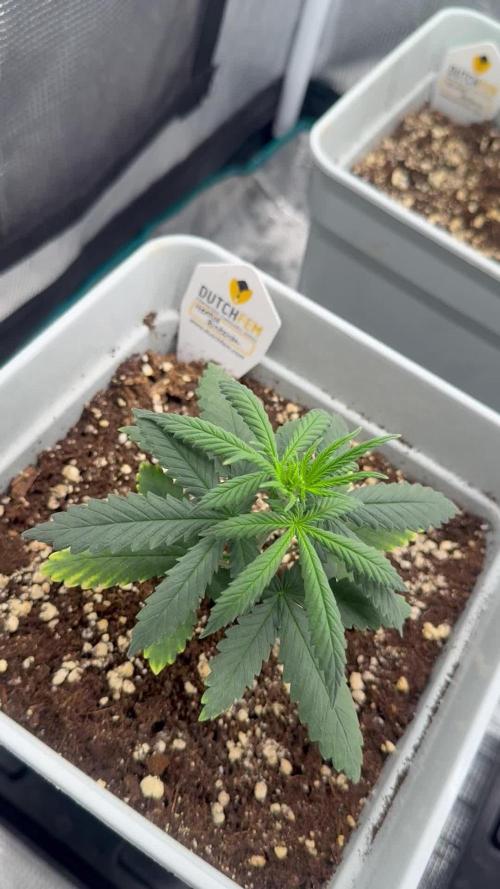
Aquí estamos una semana más con nuestro cultivo.
Las plantas van bastante bien, aunque alguna nos está dando algún problemilla por falta de agua o algun nutriente, eso creemos, ya q no nos queremos pasar x malas experiencias pasadas, entonces vamos de a poco y si falta algo ya se le da y listo.
En el último riego hemos aumentado un poco los nutrientes para intentar mejorar su estado y ver cómo responden. Tambien hemos añadido nutrientes que ya hemos usado en cultivos anteriores para poder ayudar a la planta para tener un buen crecimiento, ya q hay una que está como cogollando y eso es curioso, una fast de sweet seed, pero bueno, a su marcha, no somos expertos solo queremos ver crecer las plantas y es algo que nos gusta mucho pero cada planta es un mundo y reacciona de distinta manera aunque llevemos el control de riegos y de más, cada una es diferente, y eso es muy bueno… 😎
Los riegos están siendo estables y hemos aumentado la cantidad de agua, pasando de 150 ml a 300 ml, debido a la demanda de las plantas. El agua la estamos manteniendo siempre a un pH de 6,0.
En general estamos contentos con la evolución. Sabemos que todavía tenemos bastante margen para mejorar, pero también tenemos tiempo y ganas de seguir trabajando y dedicándole lo necesario para conseguirlo.
Nos vemos la semana que viene con más avances ( dudas y problemas 😜)
SALUDOS PARA TOD@S🌱💀💨

Likes
16
Share

@aldewo
Follow
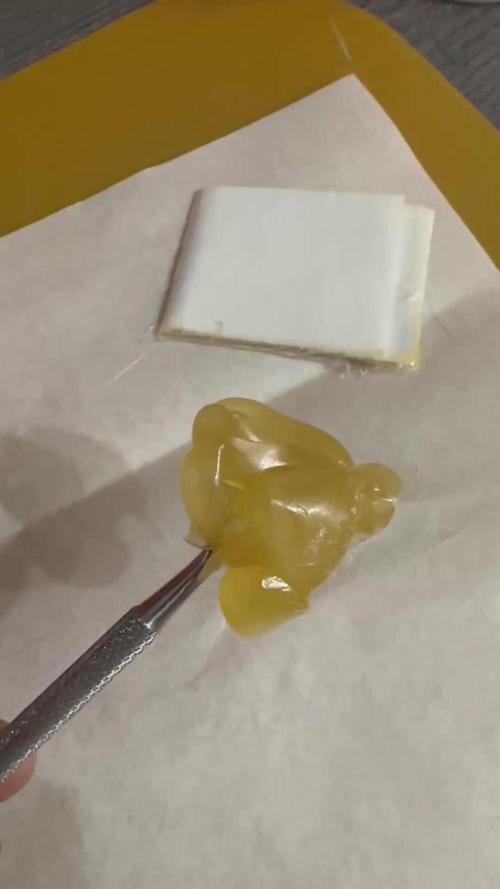
Heute geerntet Blütetag 56, da fast alle Trichome milchig sind und die ersten sind auch schon Bernstein im oberen Bereich. Bei der Ernte kam ein sehr starker citrus Geruch 🍋.
Bitte das Video anschauen, da sieht man gut den Frost .
Heute ist sie noch in der gefriere und morgen wird gewaschen 💪🏻🥦.
Update 1
Heute gewaschen mit der Hash Vac Methode 💪🏻

Likes
6
Share


@D1hunned
Follow
Took advantage of their fast grow and top the 5th node and defoliated the first and all baby leaves below it. I've got very good results out of autoflower by doing this throughout my learning experience. Plant #5 wasn't ready for toppin for some reasons.

Likes
2
Share


@Ninjabuds
Follow
Skunk apple runtz both are still short and stockie. They look exactly the same I'm surprised being some random seeds I made. I hope they end up smelling like skunk
Last grow I overwatered and had to toss them because growth got stunted and a bunch if fungus knats got to the soil. This time I'm trying promix potting soil wish I had tried promix hp but the store close by isn't a hudro store and that's what they had. So this time I'm being very cautious with the watering I'm only useing a spray bottle I'm currently giving 45 spray per solo cup every few days when it dries out. This promix soil seems to hold water decent so the 45 spray there is 0 water coming out the bottom the cup yet. Here soon I think I'm going to double the amount of spray to 90 and start letting the soil get dry dry before watering again. Probably will hold off on any nutes quite yet.
I'm going from 24/0 to 20/4 light schedule this week. There getting to the point they won't strech as much is 4 hrs of darkness and I'm rasing the light intensity a little it's been around 150 I'm upping it to around 175. Most likely by the end of the week I'll probably be pushing 200 or close. Hopefully I can get them into the big tent soon
At this stage I like to alternate having the fan blowing on them I feel it gives them time to recover and get stronger instead of wind stress. Also every few days I will turn the plants so they are facing away from the light making them grow back towards the light I fell it makes them stronger
Processing
Likes
41
Share


@JacareGrows
Follow
Hey guys.
For this week i upload some videos 1 video per plant.
I am not giving any more the bio nova autoflower supermix, i m thinking on let them going only with water until the end, but lets see.
Plant 5 is close to harvest i think on the end of this week.
Plant 1 and 4 are doing good on flowering.
Plant 2 is slowly flowering
Plant 3 is still in middle of the transition to flowering, is going very slow. I think she probably is blocked because of the size of the pot and light .
When i harvest plant 5 the others will have more space, and i can bend some branches to increase the bud quality.
The big question is, when harvest? its the first time im doing this and i am afraid of doing that wrong.
Hope the videos can help someone to help me :D
I have also made a video of plant 5 on a more close look, not to much quality but for now its what i can get , sorry
28/05 day 69
small trichome update of plant 3,4 and 5. Plant 1 and 2 still on pre flowering
analysing the trichomes, i would say,
Plant 3 and 4 need almost 2 more weeks
Plant 5 - probably only 1 week more, so up to almost week 12
plant 1 and 2 - will take much time as fotoperiodic LOL
Likes
6
Share

@ojulhao
Follow
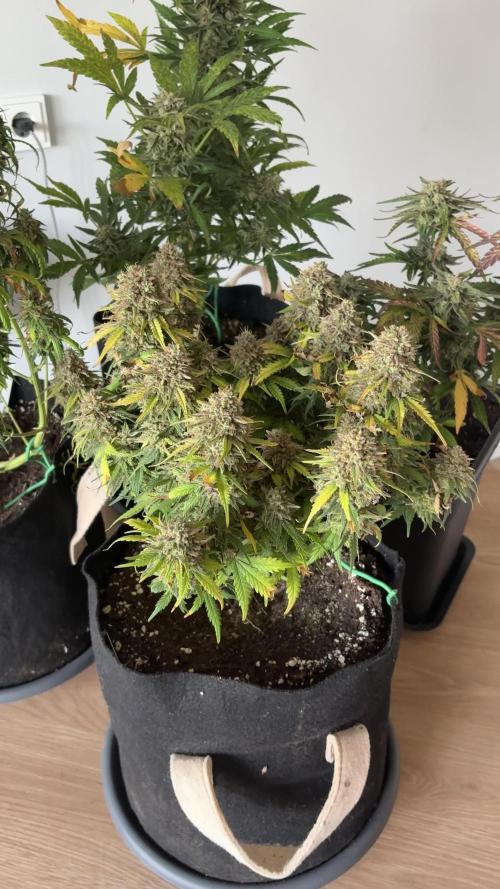
The Jack Herer is dense and frosty colas, covered in trichomes with a nice mix of cloudy heads. Compared to the Northern Lights, it clearly had more weight and resin, making the harvest very satisfying.
For the last days, I only gave CalMag and plain water adjusted to pH 6.3

Likes
7
Share

@HomeToGrow
Follow
Moin,
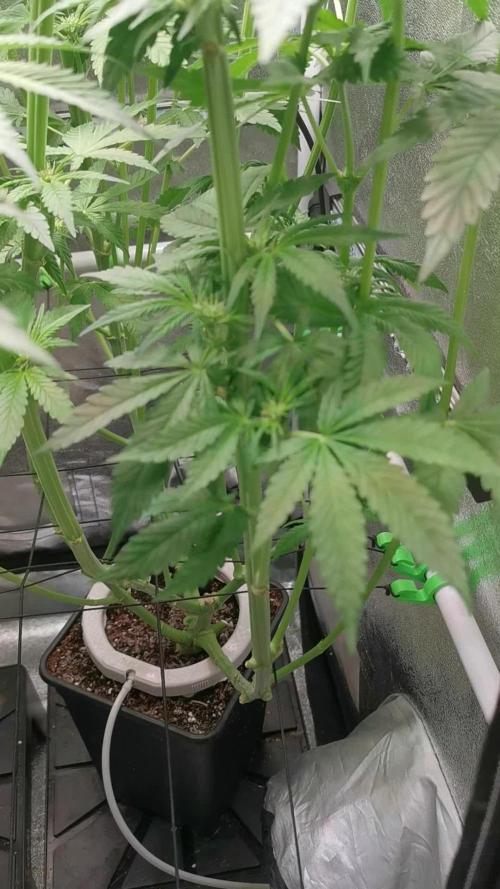
Blütetag 18 ist fast vorbei und die Tiger Style macht einen guten Eindruck, es sind kleine Mängel oder Anzeichen einer Überdüngung zu sehen sodass die Pflanze sehr vital wirkt.
Der Stretch scheint mittlerweile auch vorbei zu sein und die ersten richtigen Blütenansetzte bilden sich klar aus. Aufgrund des Buschigenwachstums und der sehr hohen Luftfeuchtigkeit von 65-80% habe ich das Lollipoping und Entlauben einige Tage vorgeschoben. Bereits am 16. BT wurde die Tiger Style sehr großzügig entlaubt und Triebe entfernt die entweder zu tief an der Pflanze waren oder die zu dich an anderen Trieben wuchsen. Mittlerweile ist die Luftfeuchtigkeit auch wieder im guten Bereich von 50-60 %. Während des entlaubens habe ich einige Anzeichen für männliche Blüten an den unteren Trieben entdeckt. Ich habe alles was verdächtig aussah entfernt und werde die Tiger Style weiter im Auge behalten.
Likes
4
Share

@Organic_G
Follow
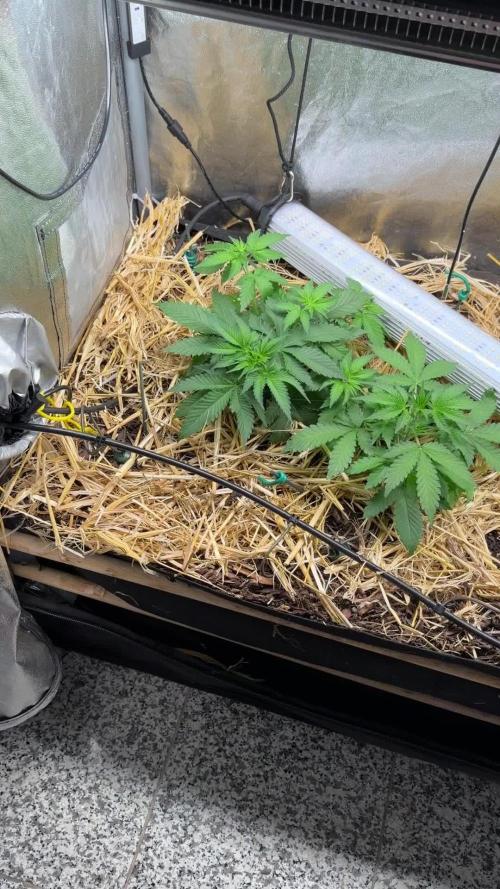
Wachsen aber gehen an mir vorbei hahaha muss nicht wässern, muss nichts machen einfach wachsen lassen und vergessen das ist immer das beste ;)
Werden heute oder morgen auf 12/12 wegen der Photoperiodischen umgestellt, zeigen erste Vorblüteerscheinungen, zumindest die Autos, daher muss die Purple Mango Kush nachziehen
