


Likes
Comments
Share


@Madman2020
Follow
Day 8 flower
Plants look like they will end up small. This was a short veg. This is a great time to train plants.
_____________
Day 9Flower
Plants need to be tied down to have wide arms by day 7
Day 11 flo
18.5inches tall
12inches from light
1300ppm
_____________
Day 13
Aggressive defoliation and Lollipop
___________
Day 14
Secret sauce microbe blend .7/gal


Likes
3
Share


@Winston_Newport
Follow
Calyxes are starting to fatten up. Trichomes are building nicely on all 3 plants this week. The aroma in the tent is getting stronger daily. Switching to a lighter nutrient feed this next week before flushing. Really pleased with how flowering is progressing in all 3 plants.

Likes
148
Share


@BioBuds
Follow
Gorilla gorilla... my problem child. It has a mind of its own, doesn't want to fit the scrog, seems way behind on her roommates, and is so far a little bit of a disappointment. We will see where she will go, something smokable might come of it.
So I defoliated a little, amended with solid nutes: worm castings, bone meal and some extra micro life. Over this, I poured feed, see the liquid feed schedule above.
Overal this plant is cramping my stylo a little. Again enforcing my resolution to only grow top genetics, it costs a lot of time and I have only so much space within the legal framework, why bother with inferior strains?
We shall see where she takes us... For now, still not impressed much.
See you next week!!
Hug Bud

Likes
58
Share


@MadeInGermany
Follow
Info:
Unfortunately, I had to find out that my account is used for fake pages in social media.
I am only active here on growdiaries.
I am not on facebook instagram twitter etc All accounts except this one are fake.
Flowering day 1
since time change
to 12/12 h.
Hi guys :-) .
The time has finally come 👍
You have been switched to 12/12 hrs and are ready to flower.
Of course, cuttings were cut beforehand to keep the genetics.
For 4 days now she has also been getting Fast Buds from GreenBuzzLiquids.
They were also sprayed again with GBL Fast Plant spray.
She is very healthy and I am excited to see how she gets going again in bloom :-).
This week it was poured twice with 1.2 l each time (for nutrients, see nutrient table above).
Then I filled canisters with fresh osmosis water for the next few weeks 👍.
The tent was cleaned and every plant was checked for health.
At the moment I am tinkering with the ventilation because there are currently 4 fans with 4 activated carbon filters running, which I want to make more efficient by putting a hose through 2 tents.
These are the things about which you desperately at the beginning but learned from them in the end.
I wish you all a nice week.
Stay healthy 🙏🏻
You can buy this Nutrients at :
https://greenbuzzliquids.com/en/shop/
With the discount code: Made_in_Germany you get a discount of 15% on all products from an order value of 100 euros.
You can buy this Strain at :
www.Zamnesia.com
Type:
Banana
☝️🏼
Genetics:
OG Kush x unkown
👍
Vega lamp:
2 x Todogrow Led
Quantum Board 100 W
💡
Bloom Lamp :
2 x Todogrow Led
Cxb 3590 COB 3500 K 205W
💡💡☝️🏼
Soil :
Canna Coco Professional +
☝️🏼
Nutrients :
Green Buzz Liquids :
Organic Grow Liquid
Organic Bloom Liquid
Organic more PK
More Roots
Fast Buds
Humic Acid Plus
Growzyme Big Fruits
Clean Fruits
Cal / Mag
Organic Ph - Pulver
☝️🏼🌱
Water:
Osmosis water mixed with normal water (24 hours stale that the chlorine evaporates) to 0.2 EC. Add Cal / Mag to 0.4 Ec Ph with Organic Ph - to 5.5 - 5.8 .

Likes
8
Share

@GERGrowDesigns
Follow
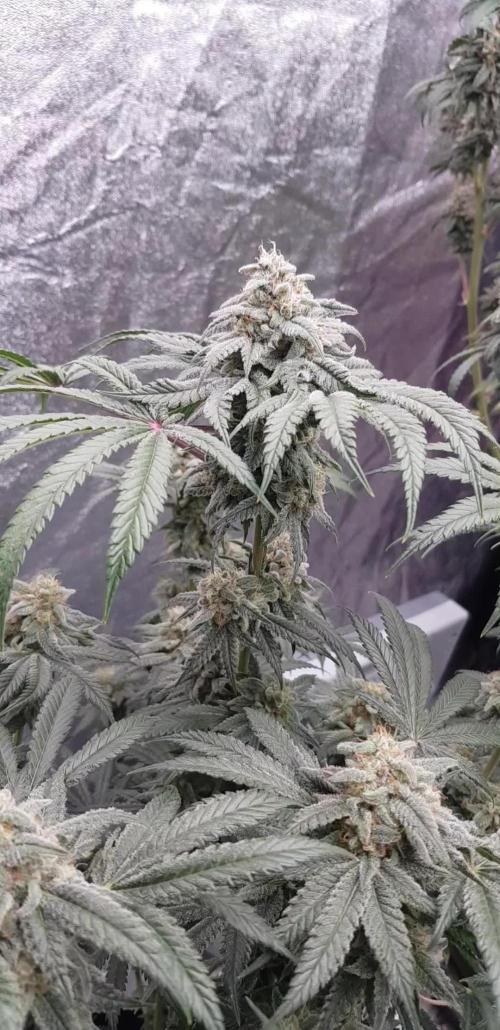
Welcome to Flower week 8 of Fast Buds LemonPaya
I'm excited to share my grow journey with you from my
FastBuds Project . It's going to be an incredible ride, full of learning, growing, and connecting with fellow growers from all around the world!
For this Project , I’ve chosen the Feminized Photo strain Lemonpaya :
Here’s what I’m working with:
• 🌱 Tent: 120x60x80
• 🧑🌾 Breeder Company: Fast buds
• 💧 Humidity Range: 35
• ⏳ Flowering Time: 58 Days
• Strain Info: 30%THC
• 🌡️ Temperature: 26
• 🍵 Pot Size: 16l
• Nutrient Brand: Narcos
• ⚡ Lights : 600W x 2
A huge thank you to Fast Buds for allowing me to try my Best with this amazing collection from Automatic and Photo Strains they managed to Sponsore . Big thanks for supporting the grower community worldwide! Your genetics and passion speak for themselves!
I would truly appreciate every bit of feedback, help, questions, or discussions – and of course, your likes and interactions mean the world to me as I try to stand out in this exciting competition!
Let’s grow together – and don’t forget to stop by again to see the latest updates!
Happy growing!
Stay lifted and stay curious!
Peace & Buds!

Likes
9
Share


@DoctorCannas
Follow
Una ceppa meravigliosa, expert seeds fa un lavoro incredibile e magnifico.
Dalla germinazione fino al raccolto le piante sono cresciute sane e forti.
Purtroppo non potrò assaggiare il risultato, perché non potrò risultare positivo al thc per molto tempo.
Infatti mi butterò sulla cbd.
sono davvero molto soddisfatto.
Likes
151
Share

@BioBuds
Follow
Well, what we feared, became a reality, one of the regular XTrakush plants is a male. This is why I planted two and I'm happy it seems to be only the one. But with the canopy going nice and full it hurt to get it out. Of course, I hoped to have two females but nature went its course. Considered leaving it in, to pollinate the others, or keeping it somewhere, but I do not have the space or light for it.
Thus with pain in my gut, I went about getting her out. I notice a nice developed root system, very healthy, which was very hard to get loose. After shaking the soil off I have a rootball the same size as after my whole grow last time. I could lift the whole 57 ltr bag by lifting the plant. Sturdy stem, thick solid branches. This is what I was aiming for and it works. The soil again is proving itself to be a winner.
The light this low gives some higher temps as expected, but manageable within ranges. The SP-3000 is performing really well and I cant wait to see the bud development coming weeks. I'm sure it will deliver a great amount of bigger buds looking at all the flower sites and the thick branches that support them.
Remember to check in on www.mars-hydro.com, they have awesome deals now for Black Friday!
I'm giving more water now, once in two days instead of three. They seem to need it with the higher temps. The plants seem to take the light well on only 45 cm.
I've started adding the BAC Organic Bloom Nutrition. It is designed to work with the microorganisms I added with the micro life. With this I do a little bit of Calmag, but not so much, since I don't see any evidence of shortages, again proving my soil is dialed in for growing under LED perfectly.
All in all, even with a minor setback, all is ready to pull in a mega harvest.
Thanks for checking in again!! Hug Bud & Sunshine.
Processing
Likes
27
Share


@Dunk_Junk
Follow
I'm so excited! This week she entered flowering!
Almost doubled her height! Grew 22cm this week!
I have transplanted her into a 10 Litre fabric pot.
I've never used these before, but they look promising. Different to airpots. I'd say more extreme tbh. Oxygen to the root zone is never a bad thing 😎

Likes
4
Share


@LittleBigTrees
Follow
I've been pulling the top fan leaves to stop the main stem growing any taller and repotted them into 4L pots, once they show roots I'll flip them over to flower.
They've all outgrown their mutations but the apple fritter has a slight varigation.


Likes
14
Share


@Kakui
Follow
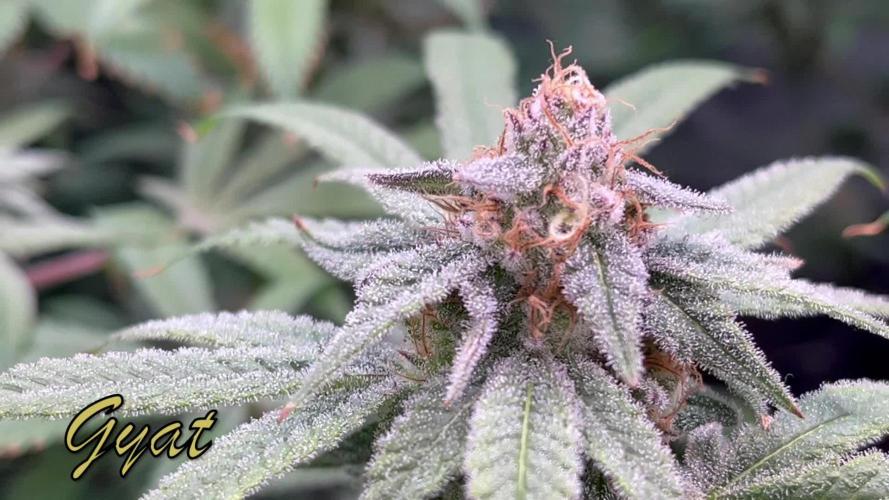
11 Noviembre: Primer riego con 2.5EC y 5.9pH, runoff de 2.9EC y 6.2pH, en una semana más ya deberían estar recibiendo 3.0EC y seguir con esa concentración por todo el cultivo. Alturas están entre 15cm y 20cm.
13 Noviembre: Riego 2.5EC y 5.9pH, runoff de 3.3EC y 6.2pH. Hoy se removieron los primeros nodos de cada planta y se les hizo poda apical.
14 Noviembre: Riego 2.5EC y 5.9pH, runoff de 3.3EC y 6.2pH en la mañana. En la tarde se realizó transplante a maceteros definitivos de 5 litros con 4 litros de sustrato aprox. el cual fue pre cargado hasta la capacidad de campo, con 3.0EC y 5.8pH, desde este punto se debe esperar un par de días hasta que el dryback(secado) del sustrato sea de un 35-40%, lo cual vendría siendo el primer P3 del cultivo, una vez se alcance ese porcentaje de secado, se comenzará con los primeros riegos de precisión llamados P1.



Likes
7
Share

Likes
2
Share


@CuriosityWebster
Follow
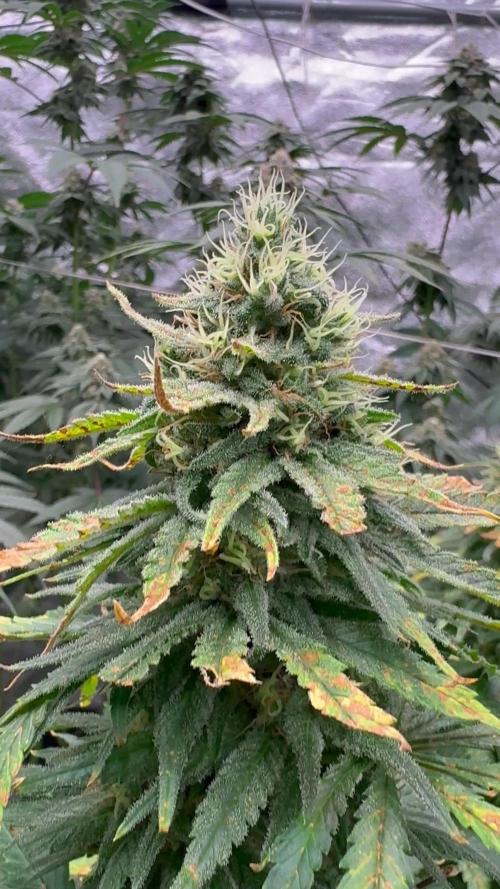
Higher humidity forced me to harvest early with Some bud rot
Very sweet almost sour tangerine smell
Got in my room drying in a brown paper bag in about 73 degrees and 52% humidity

Likes
15
Share

@Z420Organics
Follow
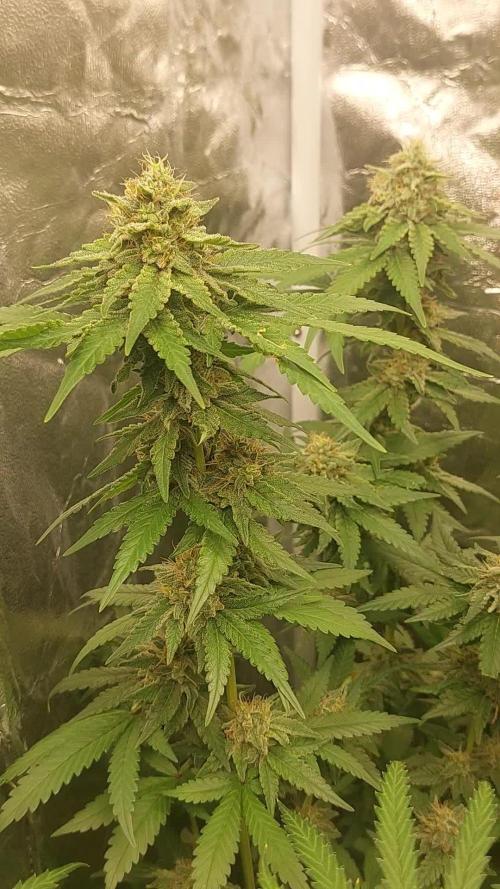
Everything is moving along beautifully! 🌱
Sticky plants, packed with trichomes, and the smells are starting to burst out! 😍💨
RS11 — OMG, the phenos each have slightly different aromas! The fast pheno… if I had more space, that one would be a keeper for sure 💎🔥
Production? ✅
Smell? ✅
Size and resistance? ✅
Totally problem-free — a beast of a plant! 💪🌿 Definitely planning to do some phenohunting in the future!
Now, about the smells… one pheno smells like a fruit salad, another like rose water, also one of then a unique nostalgic smell wotxh i can not really tell what is it🍓🌸🍹 — wow, just wow!
Monkey Grease — Such a unique smell! Still can’t describe it fully, but on one of the plants I clearly get that gasoline note ⛽️😳
I rubbed my fingers after touching a bud, and it was like a drop of real gas on my hand — my first true gas strain experience, and it’s fascinating! 🔥
Apples and Bananas — Both are doing great, really beautiful plants 🍎🍌💚
Amnesi-K Lemon — One of them is a bit behind the others 🍋⌛️ It might be the last one to finish this grow — maybe even a bit early harvest if the timing gets tight, but hopefully it will catch up in time! 🙏🌿
Cherry Dreams — Finally filling up nicely! 🍒✨ Starting to catch up with the rest, and thankfully it recovered fast after the earlier issues.
---
What a ride this grow has been so far! 🌿💫 Sticky, frosty, and full of character — can’t wait to see how they’ll finish! ✂️🔥!

Likes
1
Share

@Dendegrow
Follow
🍬 Sweet Mandarine Skittles (Sweet Seeds) – Week 7 | Flowering Day 1 🌸
Here we go! 🚀 Yesterday I flipped her to bloom, so today is officially Day 1 of flowering. She’s growing in Sonnenerde (yes, real “sun soil” 🌞🌱) and has already stretched like crazy. Honestly, she smells phenomenal – a strong sweet citrus candy vibe in the air 🍊🍬.
I’m a bit worried she might turn into a giant later on, but that’s part of the fun 😅. I didn’t catch the moment right after transplanting to see how she reacted, but hey – it’s all part of the experiment. Luckily I’ve got a few more seeds of her in the stash, so we’ll see what this one can teach me 🌿.
Stick around, follow along, and let’s see how big this Sweet Mandarine Skittles rainbow will shine 🌈🔥.
---
🍬 Sweet Mandarine Skittles (Sweet Seeds) – Woche 7 | Blütetag 1 🌸
Jetzt geht’s los! 🚀 Gestern habe ich auf Blüte umgestellt, also ist heute offiziell Tag 1 der Blüte. Sie wächst in Sonnenerde 🌞🌱 und hat sich vorher schon ordentlich gestretched. Der Duft ist jetzt schon phänomenal – süß, fruchtig, richtig nach Citrus-Bonbons 🍊🍬.
Ein bisschen Sorge hab ich schon, dass sie nachher ein richtiger Riese wird 😅. Leider hab ich den Moment nach dem Umtopfen nicht getappt, um zu sehen, wie sie reagiert hat – aber egal, ist ja ein Experiment. Zum Glück habe ich noch ein paar Samen auf Lager, also mal sehen, was dabei rauskommt 🌿.
Bleibt dran und vergesst nicht zu folgen – das hier könnte ein richtig süßer Ananas-Rainbow werden 🌈🔥.
Likes
7
Share

@ThatsmyGrow
Follow
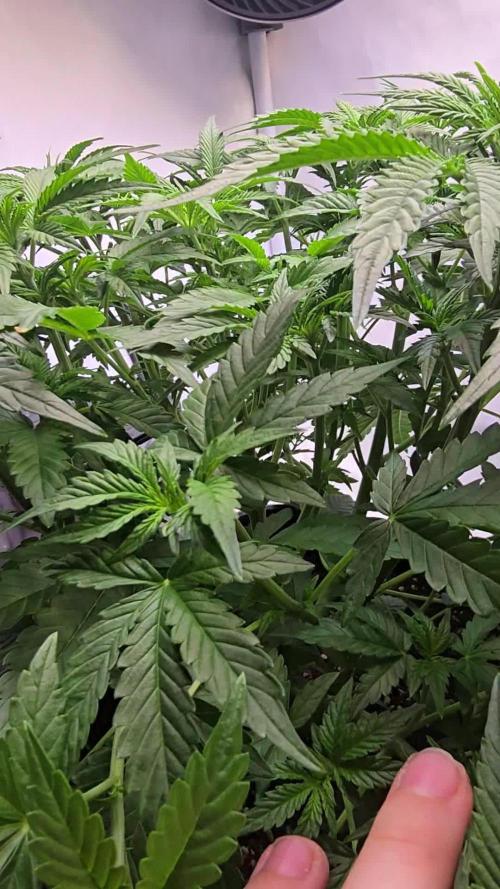
She is getting soo wide, like i topped her and use lst, but nope.
Its the nature grow of the super lemon haze, i love it.
We will see how big she is getting.

Likes
11
Share


@bada_boof
Follow
Went away for a few days so missed some photos but they’re looking good


Likes
139
Share


@Inganjawetrust
Follow
The girls are doing well they took 64oz each on the last watering and I will continue to increase as we go along. I am very pleased with the progress so far and have my fingers crossed that it will continue 👍☮️

Likes
2
Share


@Aleks555
Follow
Everything is going great! On the 48th day of vegetation, we switched the light cycle to 12/12, and for the second week now, our beautiful Golden Sands - 1 has started flowering. She’s been growing rapidly and noticeably increasing in height. We continue to feed her with fertilizers from Xpert Nutrients, and the results are impressive.
A huge thank you to Xpert Nutrients for their high-quality fertilizer, which is not only effective but also very easy to use. With such a reliable product, we’re confident that everything will turn out perfectly!