







Likes
34
Share


@Hempface86
Follow
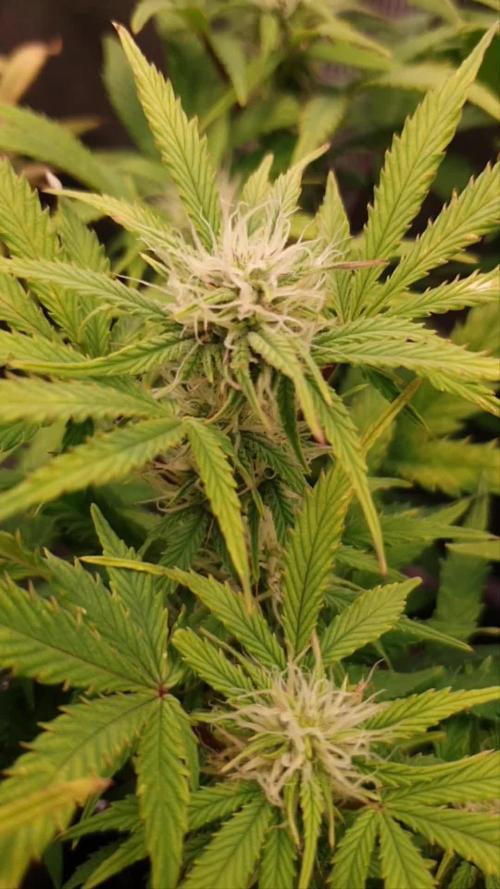
Ladies and gentlemen today is day 49 for our Kannabia runtz and she is looking good... It's nice to grow a plant without any training sometimes they get done so much faster.. this girl, I think is done stretching and is now going to start producing buds which she has already begun doing... Thank you and big shout out to Kannabia seeds for making this grow possible.. Thank you to everyone that stops by.I hope everyone is doing well.God bless and happy growing ✌️.
PS.. i'm using also maxibloom .5 tsp with general hydroponics Silica. 5 tsp ..

Likes
1
Share


@tigerbomb
Follow
forse potrei ancora dargli un piccolo boost di fert se mancano altre 3 settimane ma non saprei

Likes
3
Share


@Enki_Weed
Follow
..... Rückblick der letzten zwei Wochen – Cannabis-Tagebuch: Turbulenter Start und wichtige Lektionen
Die letzten zwei Wochen waren alles andere als ein Spaziergang, aber meine Pflanzen haben sich tapfer geschlagen, und ich habe eine Menge dabei gelernt. Der Start war holprig, hauptsächlich wegen einer defekten Luftpumpe, meiner langen Arbeitszeiten und der notwendigen Grundreinigung der Anlage.
Die erste Woche: Der Kampf ums Überleben und die große Reinigung
Die erste Woche war echt kritisch. Ich war viel in der Arbeit, und genau da ist meine Luftpumpe ausgefallen. Diese Pumpe ist eigentlich dafür da, meine Nährlösung mit Sauerstoff zu versorgen – lebenswichtig für die Wurzeln! Ohne sie bestand die Gefahr von Wurzelfäule. Die Pflanzen sahen gestresst aus, ein paar Blätter waren welk oder leicht gelblich. Das war ein klarer Hinweis auf den Sauerstoffmangel.
Aufgrund dieser Probleme und um sicherzustellen, dass keine weiteren Komplikationen auftreten, habe ich die gesamte Bewässerungsanlage grundgereinigt. Das war zwar zeitaufwendig, aber absolut notwendig, um alte Nährstoffreste oder Ablagerungen zu entfernen, die die Funktion beeinträchtigen könnten. Das hat mir gezeigt, wie wichtig es ist, die Technik immer im Blick zu haben und regelmäßig zu warten.
Dazu kam, dass ich durch die Arbeit kaum Zeit hatte, die Beleuchtung optimal einzustellen. Das hat anfangs auch zu etwas ungleichmäßigem Wachstum geführt.
Die zweite Woche: Erholung und Stabilisierung – mit Klimaanlage!
In der zweiten Woche konnte ich endlich eingreifen. Nachdem die Luftpumpe repariert und die Lichtverhältnisse angepasst waren, haben sich die Pflanzen sichtbar erholt. Das Wachstum nahm wieder Fahrt auf, und die Blätter wurden wieder kräftig grün. Es war eine Erleichterung zu sehen, wie widerstandsfähig sie sind!
Aufgrund der aktuellen Hitze verwende ich jetzt zusätzlich eine Klimaanlage. Damit halte ich die Raumtemperatur konstant bei etwa 27 Grad Celsius, was für die Pflanzen im Moment optimal ist. Das hilft enorm, ein stabiles Klima zu gewährleisten und Stress durch hohe Temperaturen zu vermeiden.
Ich habe gelernt, dass man auch bei Zeitdruck die wichtigsten Kontrollen nicht vernachlässigen darf und schnell auf Probleme reagieren muss. Die gründliche Reinigung war hier ein entscheidender Schritt.
Trotz des holprigen Starts bin ich optimistisch für die Zukunft. Die Pflanzen haben sich trotz der Widrigkeiten gut erholt und entwickeln sich jetzt stabil. Die anfänglichen Schwierigkeiten haben mich definitiv aufmerksamer und proaktiver gemacht.

Likes
12
Share


@HIAZ_urbanbudfarmer
Follow
Going really well, getting big colas! Had to do a lot of defoliation as they were really bushy, blocking air & light & also starting to rub up against each other &
also sweating leaves.
Removed a lot of popcorn growth & lower growth that wasn't getting enough light, this created more space for air& light around the colas. Super sticky & very smelly.
Gorilla cookies is getting close to finishing up.
Want Quality genetics to grow? If so you can't go past Fast Buds! Enter the code GROWEED when purchasing for a 15% discount.
Likes
44
Share


@XperencdGmanXG
Follow
lots of work went into moving these girls outside. They are in a nice sunny and protected spot now. Can't wait to see these girls grow up. Gave them the best start I could. Season is a bit late here this year too.
Likes
11
Share


@Divs_darkroom
Follow
This girl grew up to be 77 days old. She grew short and without training, focused most of her energy to her main top cola. Even with the cheap Chinese leds shes got dense and really does pack a punch with a strong aroma and flavor. I'm thinking I should probably get more of these beans while they're are still available because she could easily be end up being added to the favorites list. I'll probably put a few nugs away for a long term cure. She was a pleasure to grow.

Likes
31
Share


@Reaper
Follow
week 3 veg
doing some lst, branches should grow a bit more instead of the middle stem so far its going well

Likes
3
Share


@Fruitgrower
Follow
5.01.23
Thursday
Day 81
Well first things first, happy new year and apologies for minimal updates in December.
Switched to 12 12 on Monday and scrogging it out this time round.
The Runtz, seem to grow more than the cookies during veg and take up more nitrogen than then for sure, they're green as fuck. One of them (top left) has to be there greenest green I've ever seen on any plant ever.
Hopefully they're gonna stretch nicely, I may have to remove some more lowers in a couple of weeks.

Likes
62
Share


@Secretflower
Follow
Hello my friends,
🌱 June 6, 2021.. Day 36 🌱
6th week of growth for my Feminised Wedding Cake.
She grew up very well, the leaves are big, nothing to report..👍
💉 : BioGrow at 1ml/l and CalGreen at 0.1ml/l.
🔦 : LED lamp Hainning New light 320 watts at 50% power and 50 cm canopy, this lamp working very well when you know how use it..👍
Go to Ali Baba website and search Hainning New Light Company, they are very serious in Led Technology.
www.originalsensible.com
📻 You like Reggae Riddims 📻
Listen/download/share my new mix :
www.soundcloud.com/secretflower
That's all for now my friends, thank you very much for coming to see my plants, feel free to Sub and I will follow you back.. 👍
Take care of yourself and your loved ones.
I wish you only happiness with your darling..
Peace & Love..🌿

Processing
Likes
23
Share


Likes
8
Share


@eldruida_lamota
Follow
Que pasa familia, vamos con la tercera semana de crecimiento de estás Zkittelz de Seeds Mafia.
Pedían el trasplante desde hace unos días y yo dejado de mi las aguante para cortar las últimas del antiguo proyecto.
Ya han sido colocadas en macetas de 7 L
La humedad está alta la mantengo entorno al 55%,y la temperatura la tengo entre los 22/24 grados.
Controlamos en ph en cada riego a 6.2.
Y el agua que utilizo de riego suele estar estancada entre 24 / 36 horas.
El tetra 9 que añadí esta semana fue vía foliar.
Mars hydro:
Code discount: EL420
https://www.mars-hydro.com/
Agrobeta:
https://www.agrobeta.com/agrobetatiendaonline/36-abonos-canamo
Hasta aquí todo, Buenos humos 💨💨💨

Likes
4
Share


@ChiloteAnonimo
Follow
DÍA 1 - CUARTA SEMANA DE VEGETA (26-05-2022)
*Se sigue con el LST
(28-05-2022)
* Se le aplica una poda selectiva a todas
* Tuve un problema de riego con varias
* En su día 31 desde q salió del sustrato, de las 6, hay 3 ya que van bien y han sufrido soportaron mejor el estrés, de las otras 3; hay una Banana y una AK que vienen más bajas que todas, de ramas más cortas y distancia internodal corta a comparación de las otras. Después esta la lemon que se viene recuperando muy bien de estrés y fue la que siempre vino más grande y ramificada :)
DÍA 7 ÚLTIMA SEMANA VEGETA (01-06-2022)
* Último día de la semana de vegetación, ya mañana es su día 1 de flora.
* El día de ayer se le regó lo último con Vegalquimia, y se le añadió 1ml de Alquisweet de LAAOS.
* Estos últimos 2 días he tenido problema de temperaturas muuuy bajas donde vivo, con luz encendida llegan 20 grados con suerte y luz apagada a 12-13 grados. Estoy tratando de jugar con bajar la humedad pero no la puedo bajar a menos de 55% aprox. Espero ya mañana arreglar ese problema de bajas temperaturas.
* Lo que es el cultivo se ve bien dentro de todo. Hay dos enanas que se estresaron en la semana 2 y quedaron pequeñas. A todas se le aplicaron LST, unas resistieron mejor los distintos estrés ya mencionados en semanas anteriores. Pero va bien.
* Hay 3 en pre flora, una de ellas en pre flora avanzada y es una de las más enanas.



Likes
30
Share


@GYOweed
Follow
Here it is.
Vpd doin ok.
Should transplant hopefully in 2 weeks and flower two weeks after.
Using Unit farm uf2000 led.
Likes
2
Share


@Altitonans_Fulmen
Follow
For most crops, a slightly acidic soil pH between 6.0 and 6.8 is ideal because it optimizes nutrient availability. When soil pH rises above 7.0 (alkaline), the concentration of hydrogen ions H+ drops significantly, and they are replaced by calcium, magnesium, or sodium ions on the clay colloid exchange sites. To naturally lower alkaline soil pH, you can add organic matter (carbon-rich materials), which produces weak organic acids as it decomposes. Maintaining this slightly acidic range stimulates a highly active, diverse microbial community; these microbes decompose organic matter and release carbon dioxide CO2, which plants absorb through their roots and leaves to boost photosynthesis and sugar production. Furthermore, the added organic carbon acts like a sponge, drastically improving the soil's water-holding capacity.
While soil biological activity does involve cellular electron transport, electrical conductivity (EC) in soil is actually a measure of dissolved mineral salts, not a voltage carried by individual microbes. Soil microorganisms secrete organic acids and chelate metallic and non-metallic minerals, transforming locked-up inorganic compounds into bioavailable organic complexes. Unlike harsh synthetic fertilizers that can dehydrate soil life in high concentrations, these naturally chelated nutrients safely nourish the plant, creating a thriving, self-sustaining ecosystem where plants can efficiently synthesize their own food.
Metal-based: Could include elements like iron, manganese, copper, or zinc, which are essential nutrients for plants but can exist in forms not readily accessible.
Non-metal-based: Examples like calcium carbonate, phosphate, or sulfur are also important for plant growth and potentially serve as building blocks for the organic salt.
Chelation in a plant medium is a chemical process where a chelating agent, a negatively charged organic compound, binds to positively charged metal ions, like iron, zinc, and manganese. This forms a stable, soluble complex that protects the micronutrient from becoming unavailable to the plant in the soil or solution. The chelate complex is then more easily absorbed by the plant's roots, preventing nutrient deficiency, improving nutrient uptake, and enhancing plant growth. Chelation is similar to how microorganisms create organic salts, as both involve using organic molecules to bind with metal ions, but chelation specifically forms ring-like structures, or chelates, while the "organic salts" of microorganisms primarily refer to metal-complexed low molecular weight organic acids like gluconic acid. Microorganisms use this process to solubilize soil phosphates by chelating cations such as iron (Fe) and calcium (Ca), increasing their availability.
Added sugars stimulate soil microbial activity, but directly applying sugar, especially in viscous form, can be tricky to dilute. Adding to the soil is generally not a beneficial practice for the plant itself and is not a substitute for fertilizer. While beneficial microbes can be encouraged by the sugar, harmful ones may also be stimulated, and the added sugar is a poor source of essential plant nutrients. Sugar in soil acts as a food source for microbes, but its effects on plants vary significantly with the sugar's form and concentration: simple sugars like glucose can quickly boost microbial activity and nutrient release. But scavenge A LOT of oxygen in the process, precious oxygen. Overly high concentrations of any sugar can attract pests, cause root rot by disrupting osmotic balance, and lead to detrimental fungal growth. If you are one who likes warm tropical high rh, dead already. Beneficial, absolutely, but only to those who don't run out of oxygen. Blackstrap is mostly glucose, iirc regular molasses is mostly sucrose. Sugars, especially sucrose, act as signaling molecules that interact with plant hormones and regulate gene expression, which are critical for triggering the floral transition. When sucrose is added to the growth medium significantly influences its effect on floral transition.
Probably wouldn't bother with blackstrap given its higher glucose content. Microbes in the soil consume the sugar and, in the process, draw nitrogen from the soil, which is the same nutrient the plant needs. Glucose is not an oxygen scavenger itself, but it acts as a substrate for the glucose oxidase (GOx) enzyme, effectively removing oxygen from a system. Regular molasses (powdered if you can), as soon as she flips to flower or a week before, the wrong form of sugar can delay flower, or worse. Wrong quantity, not great either. The timing of sucrose application is crucial. It was more complicated than I gave it credit for, that's for sure. When a medium's carbon-to-nitrogen (C:N) ratio reaches 24:1, it signifies an optimal balance for soil microbes to thrive, leading to efficient decomposition and nutrient cycling. At this ratio, soil microorganisms have enough nitrogen for their metabolic needs, allowing them to break down organic matter and release vital nutrients like phosphorus and zinc for plants. Exceeding this ratio results in slower decomposition and nitrogen immobilization, while a ratio below 24:1 leads to faster breakdown and excess nitrogen availability.
Carbon and nitrogen are two elements in soils and are required by most biology for energy. Carbon and nitrogen occur in the soil as both organic and inorganic forms. The inorganic carbon in the soil has minimal effect on soil biochemical activity, whereas the organic forms of carbon are essential for biological activity. Inorganic carbon in the soil is primarily present as carbonates, whereas organic carbon is present in many forms, including live and dead plant materials and microorganisms; some are more labile and therefore can be easily decomposed, such as sugars, amino acids, and root exudates, while others are more recalcitrant, such as lignin, humin, and humic acids. Soil nitrogen is mostly present in organic forms (usually more than 95 % of the total soil nitrogen), but also in inorganic forms, such as nitrate and ammonium. Soil biology prefers a certain ratio of carbon to nitrogen (C:N). Amino acids make up proteins and are one of the nitrogen-containing compounds in the soil that are essential for biological energy. The C:N ratio of soil microbes is about 10:1, whereas the preferred C:N ratio of their food is 24:1 (USDA Natural Resource Conservation Service 2011). Soil bacteria (3-10:1 C:N ratio) generally have a lower C:N ratio than soil fungi (4-18:1 C:N ratio) (Hoorman & Islam 2010; Zhang and Elser 2017). It is also important to mention that the ratio of carbon to other nutrients, such as sulfur (S) and phosphorous (P) also are relevant to determine net mineralization/immobilization. For example, plant material with C:S ratio smaller than 200:1 will promote mineralization of sulfate, while C:S ratio higher than 400:1 will promote immobilization (Scherer 2001).
In soil science and microbiology, the C:S ratio helps determine whether sulfur will be released (mineralized) or tied up (immobilized) by microorganisms.
A carbon-to-sulfur (C:S) ratio smaller than 200:1 promotes the mineralization of sulfate, when the C:S ratio is low, it indicates that the organic matter decomposing in the soil is rich in sulfur relative to carbon. Microorganisms require both carbon and sulfur for their metabolic processes. With an excess of sulfur, microbes take what they need and release the surplus sulfur into the soil as plant-available sulfate
A carbon-to-sulfur (C:S) ratio higher than 400:1 will promote the immobilization of sulfur from the soil. This occurs because when high-carbon, low-sulfur materials (like sawdust) are added to soil, microbes consume the carbon and pull sulfur from the soil to meet their nutritional needs, temporarily making it unavailable to plants.
200:1 C:S 400:1: In this range, both mineralization and immobilization can occur simultaneously, making the net availability of sulfur less predictable.
This dynamic is similar to how the carbon-to-nitrogen (C:N) ratio regulates the availability of nitrogen in soil. Just as microbes need a certain amount of nitrogen to process carbon, they also require a balanced amount of sulfur. Both mineralization and immobilization are driven by the metabolic needs of the soil's microbial population.
Sulfur is crucial for protein synthesis. A balanced ratio is particularly important in relation to nitrogen (N), as plants need adequate sulfur to efficiently use nitrogen. A severely imbalanced C:S ratio can hinder the efficient use of nitrogen, as seen in trials where adding nitrogen without balancing sulfur levels actually lowered crop yields.
Maintaining a balanced carbon-to-sulfur (C:S) ratio is highly beneficial for plant growth, but this happens indirectly by regulating soil microbial activity. Unlike the C:N ratio, which is widely discussed for its direct effect on nutrient availability, the C:S ratio determines whether sulfur in the soil's organic matter is released (mineralized) or temporarily locked up (immobilized).
Glucose will hinder oxygenation more than sucrose in a solution because glucose is consumed faster and has a higher oxygen demand, leading to a more rapid decrease in oxygen levels. When cells respire, they use oxygen to break down glucose, and this process requires more oxygen for glucose than for sucrose because sucrose must first be broken down into glucose and fructose before it can be metabolized.
In a growth medium, glucose is a more immediate and universal signaling molecule for unicellular and multicellular organisms because it is directly used for energy and triggers a rapid gene expression response. In contrast, sucrose primarily acts as a signaling molecule in plants to regulate specific developmental processes by being transported or broken down, which can be a more complex and slower signaling process.
Critical stuff.
Likes
33
Share


@MadeInGermany
Follow
Hey guys :-)
The ladies are developing really well 😊.
I'll decide spontaneously whether I'll do topping again because I hardly have any space in the flower tent and I'll soon have to set it to 12 / 12 h due to time constraints :-( .
But this week they will definitely get the veggie phase.
Was poured 2 times with 1 l each (groundwater see description at the bottom)
Everything was made clean.
Fresh osmosis water is applied and the plants are sprayed and checked.
Stay healthy 💚🙏🏻
👇🏼👇🏼👇🏼👇🏼👇🏼👇🏼👇🏼👇🏼👇🏼👇🏼👇🏼👇🏼
You can buy this Nutrients at :
https://shop.greenhousefeeding.com/us/
👇🏼👇🏼👇🏼👇🏼👇🏼👇🏼👇🏼👇🏼👇🏼👇🏼👇🏼👇🏼
You can buy this strain at :
https://www.amsterdamgenetics.com/product/choco-cheesecake/
Water 💧 💧💧
Osmosis water mixed with normal water (24 hours stale that the chlorine evaporates) to 0.2 EC. Add Cal / Mag to 0.4 Ec Ph with Organic Ph - to 5.8 - 6.4
MadeInGermany

Likes
4
Share

@Durango
Follow
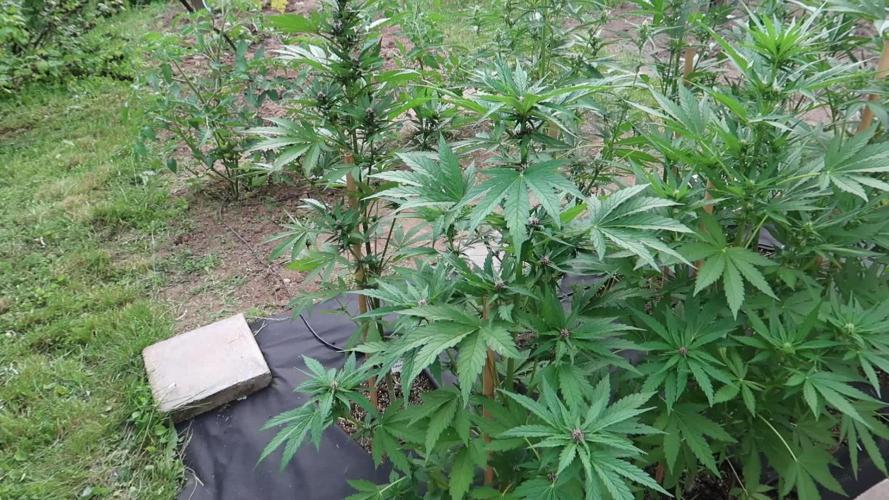
Hi growers, Update from 13.6 2026.
This week has been quite cold. At night around 10°C and during the day 20°C. but for next week it is already reporting 35°C. So I increased the irrigation to level 5. This is max. Some of the leaves seemed to be lighter so I added a little Alga grow to replenish the nitrogen. Lemon Cherry Cookies
grew to almost the same height. It measures from 110 to 115 cm. Strawberry Gorilla measures from 128 cm to 136 cm.
I apologize for the quality of the photos and video, but it was quite windy and my camera wouldn't focus :)