


Likes
Comments
Share


@ReeferRiz
Follow
Lights 16 inches away at 50% dimming humidity low (30-50%) will be adding humidifier next week. Seed successfully sprouted out at day 4. Temperature has been maintained between 70-75 degrees.

Likes
24
Share


@Jays_Not_Here_Man
Follow
The Apple Betty babies had some good growth this week. Days 14-21. The girls have been dialed in at about 63-65% RH and 76-79 degrees F.
On day 18 I dialed up my BP2500 to about 165 watts at the wall, and kept my small tent heater in place for the time being, nights have gotten cooler. The girls seem to be ❤️ the extra light, without causing any harm.
Switched from distilled water to tap water that has been dechlorinated for 24 hours mid way through the week, no issues shown. Added 1 ml of Micro, and 1 ml of Cal/Mag to 1/2 gallon of water, PH’d to 6.2 and watered approx. 1/2cup of water per x2 throughout the week, and about 1 cup once transplanted.
On day 19 they were all looking so healthy, with some roots coming from the bottom of my starter pots, I decided to transplant into 2 gallon nursery pots. My final pot will be a mix of 5 and 7 gallon fabric pots.
Next week the LST begins! Happy Gardening 🇨🇦❤️🌱😎💨

Likes
17
Share


@ganzigunnu
Follow
it was a quite rewarding process. not many things to say. I enjoyed every second with the plants.

Likes
71
Share


@xmackobox
Follow
Hola que tal? yo me he levantado en domingo a las 08:30 me he tomado un café y me pegado un bongazo de aúpa jaja después, musica y hacerles una sesión de fotos a las plantitas 😇👌🏽
Pues hoy es el último día de la 7ª semana de floración, veo a 3-4 plantas listas para cosecha. Esta semana en los directos de twitch usaremos la lupa para ver el punto de maduracion de los tricomas.
Deciros que estoy muy sorprendido con las Harlequin CBD ya que están sacando unas porras muy interesantes con aromas súper inciensados, son plantas mega compactas ideales para espacios pequeños y súper productivas!! vaya tela! Una de ellas está súper oscura y tiene mitad planta color verde mitad morada/negra de locos.
Sobre las mimosa pues más de lo mismo, más resina, más cogollos, más aroma y plantas muy fáciles de llevar sinceramente... Los colores morados rojizos y naranjas que están sacando me encantan
Que deciros de la Mimosa GB que mutó y desarrolló Fasciacion en una de sus ramas satélite. Da cierto miedo ver el cogollo parece que me vaya a engullir jjajjjaja
90 dias desde que se empezaron a germinar son semillas de gbstrains bajo los leds de gblightning y abonadas con boom nutrients todo gracias a @gbthegreenbrand @growbarato

Likes
93
Share


@DreamIT
Follow
Purple Berry Kush by Spliff Seeds
🏜️22.8 Today a small video, tomorrow I start with the new fertilizers
🏜️23.8 I hope to see an enlargement of the flowers soon, I'm tired of seeing it like this
🏜️24.8 💪💪💪💪💪💪💪💪🤘🤘🤘🦄🦄🦄
🏜️25.8 🤘🤘🤘🦄supeeeer
🏜️26.8 it is starting to grow again
🏜️27.8 here we are! Soon I'll start with trichome macros, yuppyyy
🏜️28.8
__________________________________________
❓ Are you new to the world of the cultivation and don't know where to safely buy your seeds?
🦄Fast and anonymous shipping. Take a look at their very nice graphics
✅https://www.spliffseeds.nl
______________________________________________
👀 Are you looking for a good lamp to start with? 👀
🌞Viparspectra has something more than the others, take a look at their site.
⏩ Use "GDVIP" for an extra discount or "ViparDreamIT" for an extra 5 %% discount
👀 Search for it on Amazon
✅Amazon US: https://amzn.to/30xSTVq
✅Amazon Canada: https://amzn.to/38udUVe
✅Viparspectra UE: bit.ly/ViparspectraUE
👀 Watch my ViparSpectra XS1000 unboxing on YouTube, leave a like and write to the channel 🦄
✅http://bit.ly/UnboxingViparSpectraDreamIT
______________________________________________
📷🥇 Follow the best photos on Instagram 🥇📷
https://www.instagram.com/dreamit420/
🔻🔻Leave a comment with your opinion if you pass by here🔻🔻
🤟🦄💚 Thank you and enjoy the growth 💚🦄🤟

Likes
5
Share

@Jayscott1992
Follow
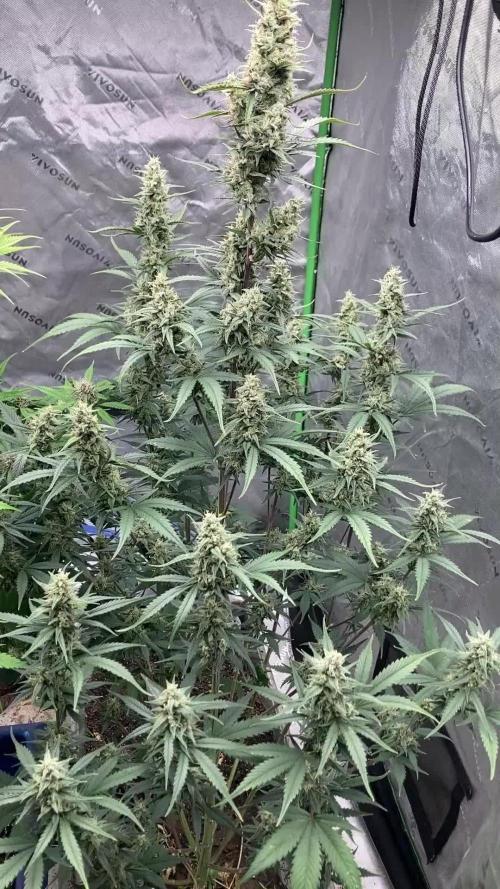
Shes in the bulking phase and man is she stinky too the max she vary impressive now all to do is on cruise mode until the chop in about 2 weeks I’d say if I had to guys but not set in stone will keep a monitor on the trics ..bye this auto is 5and a half foot tall

Processing
Likes
20
Share


@eldruida_lamota
Follow
Buenas noches familia, finalizamos el primer mes de esta farm cheese, esta variedad está colocada básicamente por gusto de mi paladar, me encanta el sabor de la cheese y a sido un capricho.
Volviendo a esta genética, vemos cómo la cheese a tirado unas preflores majas y unos brazos curiosos, es de las variedades que más huele de lo que e cultivado así que ojito gente que recuerdos tengo bastantes en cuanto a el tema olor-cheese.
Ph controlado en 6.0 humedad por debajo de 50% temperatura siempre por debajo de los 27 grados.
Poco más os dejo unas fotos y vídeos para que podáis comprobar que la farm cheese esta más que viva 💨💨💨 buenos humos.

Likes
229
Share


@OrganicNature420
Follow
Germination date 🌱 12/07/2021
Day 50 02/09/2021
Strain 🍁 SinCity seeds Frosted Biscotti
(Biscotti Sundae x Whitenightmare)
THC% • Unknown
💡 Mars Hydro FC4800
• Power draw 480W + 5%
• Max coverage 5 x 5
• LED 2070pcsSamsungLM30B1&Osram660nm
• Max Yield 2.5g / watt
• Noise level 0 DB
• Removable Driver +2m cable
• Daisy chain (multiple lights)
https://marshydroled.co.uk/products/mars-hydro-fc-4800-led-grow-light-samsunglm301b-commercial-greenhouse-medical-indoor-kit 🇬🇧
https://www.mars-hydro.com/buy-fc-4800-480w-4x4-energy-saving-full-spectrum-commercial-led-grow-light-mars-hydro-for-sale 🇺🇸
PROMO CODE • (ORG420) DISCOUNT 👍🏻 marshydroled.com
⛺ Mars Hydro 120 x 120 x 200cm
📤📥 AC infinity 6inch
💧 10lt dehumidifier
❄️ 3.1kw air con system
💉 Nutrients GreenBuzzLiquids
Organic Grow Liquid • 1-4ml until 2wk flower
Organic Bloom Liquid • 2-4ml flower stage
Organic More PK • 2-4ml +wk3 of flower
Organic Calmag • 1-2ml/lt whole grow
Fast Plants Spray • first 3days at night lights off
More Roots • 2-5ml veg +2wks flower
Fast Buds • 5ml +wk2 of veg until 1wk flower
Humic Acid Plus • 2-5ml whole grow
Growzyme • 2-5ml whole grow
Big Fruits • 2-5ml flower stage
Clean Fruits • 5ml flush 1wk
Ph powder
Root Gel
Living Organics
https://greenbuzzliquids.com/
PROMO CODE • organicnature420 15% off ✌️🏼
🥥 Growing Media • Coco Coir
Notes 📝
Plants have had a trim up. Not done a full job but all the undergrowth has gone. Given them a top feed of wormcastings as they are now on flower. Look forward to results with both Mars Hydro and GreenBuzzLiquids 💡💚 really can't fault these company's 🙌🏻
Happy growing fam ❤️🌱🍁👍🏻
Discount codes in bio for Mars and GreenBuzzLiquids 👍🏻

Likes
4
Share


@Cogollo_eu
Follow
Well, well, well, well, for being my very first exprerience in indoors i've seen it very easy, the results were not spectacular, but they are /- what i was expecting. For being the first i think it ended up very well and i have learned too much. I'm happy with de decision of growing auto strains and 1 euro seeds to do my incursion to indoors. For initiating, auto strains are an excelent choice as they don't need too many care to grow them. If you leave them, you will have a good plant, if you expend a bit of time on them (just a bit), they can became awesome plants. Now i'm going to test with photo-period strains, yesterday night the cotyledeons of 2 Dinafem Gorilla Glue and 1 Strain Hunters Money Maker were out, the other Money is still in. Soon i will start this Gorilla Vs. Money Diary (with better photo equipment and lights) . Green Cheers to everyone!!!!! ***** Bueno para ser mi primera experiencia con un armario en indoor lo he visto bastante sencillo, los resultados no son espectaculares, pero si están dentro de mis cábalas. Para haber sido la primera yo diría que ha ido bastante bien y he aprendido un montón. Me alegro haber escogido una genética auto y unas semillas de 1 euro para haber hecho la primera prueba. Para iniciarse las genéticas auto son excelente pues no necesitan de cuidados ni control de tiempos. Si las dejas, te saldrán como el breeder haya decidido desarrollar su genética, si las cuidas un poco (no mucho) te darán mejores resultados. Para mi ha sido una buena iniciación, ahora voy a probar con foto-dependientes, ayer noche salieron los cotiledones de 2 Gorilla Glue de Dinafem y 1 de una Money Maker de Strain Hunters, la otra money aún no ha salido. Pronto iniciaré el diario Gorilla Vs Money (con mejor equipo de fotografía e iluminación) - Saludos a todos!!000
Likes
17
Share


@CanadianFillmore
Follow
Week 8 begins for mandarin dreams and divine storm. All four ladies are frosty, sticky and the mandarin smell is incredibly strong.
I love how these girls look and are growing under the TSW2000, they look better than round 1, grown under my own custom Samsung strip's.
Thank you Mars-Hydro for the light!
Thanks for stopping by growfessors 👽🌳💚


Likes
5
Share

@Jays_Not_Here_Man
Follow
These girls are exploding! Flower came so fast, they are all showing need for more phosphorus and potassium, while at the same time showing nutrient burn at the tips, Jebus, save me! Lol . Overall, no complaints. A few more weeks to go!


Likes
7
Share


@Gram_Solo
Follow
Week 2 - Eternity Grow Cup! 🔥
Doing well so far the Runtz ! 24hrs light Humid 80%
Watering every 2 days and spraying around solo cup to get a little run off.
Just plain water for now until the bigger pots. Will be transplanting this week into 5 gallon pots 👌 and start feeding nutrients
👊

Likes
96
Share


@Hawkbo
Follow
Fun one to grow even in veg its exciting because the foliage is fuckin Jurassic like it's a beautiful thing. Had some high ph towards the end so I would say theres plenty of room for improvement but all around this was a decent grow and this strain is a classic


Likes
3
Share

@PhinolaGreen
Follow
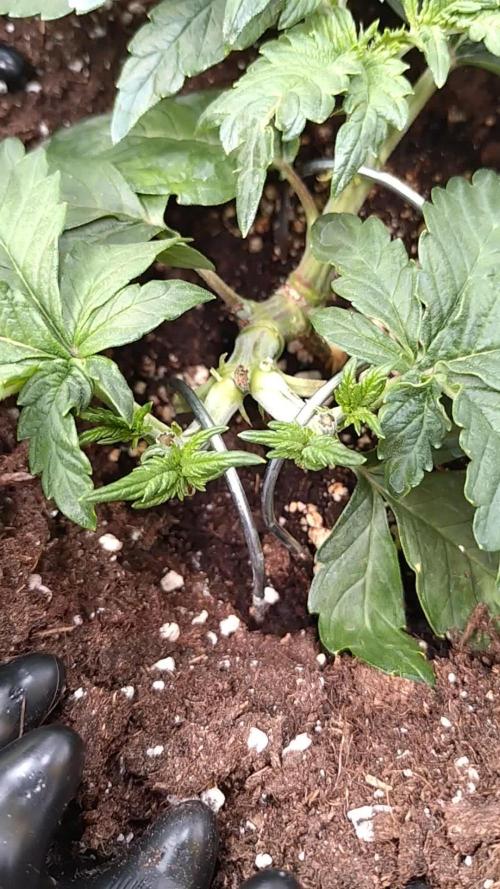
5. Woche
Hab sie letzte Woche nomma getoppt und jetzt darf sie sich erstmal bisschen erholen.
Update von Tag 40: Topping nr. 4 ist durch und jetzt darf sie sich erstmal erholen 😊
Likes
Comments
Share


@AlexGrowder
Follow
Tuve problemas de raíz al tener poco drenaje con las botellas y tube que trasplantar antes de tiempo, de los errores se aprende.


Likes
10
Share

@DogDoctorOfficial
Follow
# LSD Zamnesia Tripping 🙂 | Drying, Trimming & Final Numbers — Week 15 From Seed
First of all…
Yes 😄
We are once again dividing the harvest into multiple parts, and we sincerely apologize for that. But honestly, there was simply no realistic way to fit everything properly into a single GrowDiaries update.
Between:
- harvest photos,
- trimming sessions,
- macro stacks,
- drying process,
- preservation methods,
- extraction preparation,
- washing content,
- smoke review material,
- and all the little behind-the-scenes moments…
…the amount of data collected during this run became massive.
And instead of rushing through everything or leaving important parts unexplained, we decided to split the final stages into multiple chapters so every step gets the attention it deserves.
Because harvest is not just “cut plant, dry plant, smoke plant.”
The final weeks are honestly an entire process on their own.
And this week?
This week was all about:
- drying,
- trimming,
- preservation,
- resin collection,
- and finally seeing what these girls truly delivered.
For everyone joining now, quick recap:
These LSD girls were grown under 12/12 from seed from the very beginning.
Minimal intervention.
Almost no traditional training.
Mostly leaf tucking and gentle bending when needed.
The plants grew naturally toward the light while we focused mainly on environmental balance and observation instead of aggressive manipulation.
The goal was never maximum optimization.
The goal was understanding.
And honestly?
These girls became absolute monsters anyway.
After harvest, the plants that were not frozen for future washing were dried mostly whole instead of being aggressively broken down immediately. We wanted the drying process to happen slowly and naturally to help preserve:
- terpenes,
- resin quality,
- smoothness,
- and final flower texture.
Drying conditions stayed around:
- 18–20°C
- approximately 60% humidity
And after around 10 days…
That beautiful little branch “click” finally arrived.
Growers know the sound 😄
Not fully snapping into dust…
not bending wet anymore…
…that perfect middle point where you know trimming time has officially arrived.
And honestly?
This is where the room became chaos again 😄
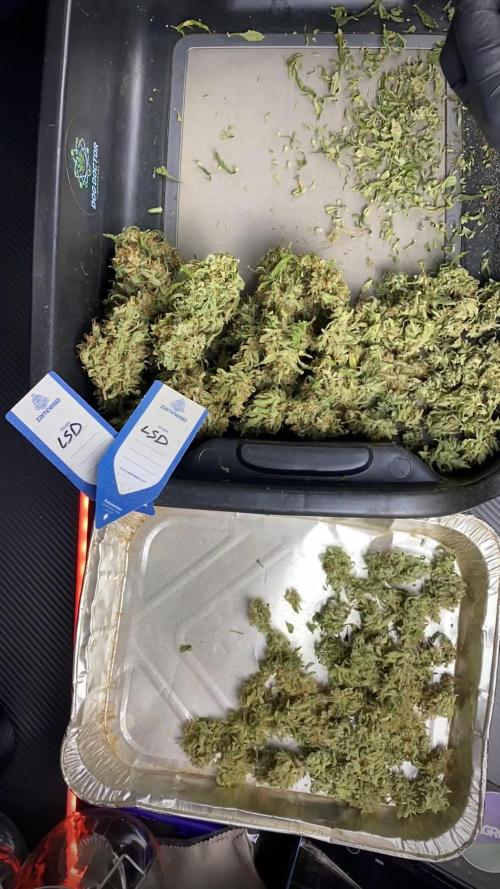
Trim bin ready.
Gloves on.
Scissors prepared.
Mr. Baggy supervising operations as usual.
We even gave him a trimming cap so his imaginary hairs would not contaminate the flowers 😄
Safety first.
One branch at a time, we slowly started breaking everything down by hand:
- separating flowers,
- removing excess leaf material,
- preserving structure,
- checking density,
- and admiring the insane amount of frost these girls developed.
And wow…
These flowers are ridiculously resinous.
Not just visually frosty.
Sticky frosty.
The type where:
- scissors stop cooperating,
- gloves become glued together,
- fingers turn black with resin,
- and every few minutes you accidentally create little hash sculptures while trimming.
The Zamnesia curved trimming scissors honestly became one of my favorite tools during this process. The pointed curved tips make it incredibly easy to reach deep inside dense flowers without damaging structure too aggressively.
And these flowers definitely deserved precision.
Dense.
Heavy.
Compact.
Extremely resinous.
Some buds honestly felt closer to small rocks than flowers 😄
While trimming, the trim bin also started collecting beautiful material underneath:
- tiny trichome heads,
- broken resin glands,
- small fragments,
- and all the golden dusty goodness growers love seeing accumulate slowly over time.
And once enough collected…
Of course we hand-pressed it 😄
Nothing fancy.
No giant machinery.
No complicated setup.
Just warmth from the hands, gentle pressure, patience, and resin slowly transforming itself into beautiful soft hash.
The color came out gorgeous too:
light golden,
slightly creamy,
soft,
sticky,
and incredibly fragrant.
Simple.
Traditional.
Beautiful.
Exactly the kind of small moments that make harvest season special.
Now for the final dry numbers so far:
Plant A:
287g dry flower
Plant B:
107.3g dry flower
And it is important to mention:
the second plant was NOT harvested fully for flower because a significant portion had already been separated and frozen for future ice-water extraction work.
So these numbers do not represent the total biomass produced by that plant.
And honestly?
We are extremely happy with the results.
Especially considering:
- the 12/12-from-seed approach,
- minimal intervention,
- the massive resin production,
- the flower density,
- and the overall quality expression these girls delivered.
The aroma during trimming was unbelievable too.
The entire studio became saturated with terpenes:
- loud,
- greasy,
- sweet,
- sharp,
- complex,
- almost offensive in the best possible way 😄
Every movement released more aroma into the room.
Every branch smelled alive.
And even now during curing, these girls continue evolving beautifully.
For preservation, we decided to divide storage between:
- Grove Bags,
- glass jars,
- and a few additional preservation containers.
And honestly, this is something we always enjoy testing because curing is never just “put flower somewhere and forget about it.”
Different storage methods can slightly influence:
- moisture stabilization,
- terpene retention,
- aroma evolution,
- texture,
- and long-term aging behavior.
Glass jars remain classics for a reason.
But Grove Bags are also extremely interesting because they are specifically designed to help stabilize humidity exchange internally without constant burping routines.
And over time, comparing these methods becomes part of the fun too.
Of course, this is still not the end of the story.
Far from it 😄
The next chapters will cover:
- frozen material washing,
- ice-water extraction,
- separation,
- resin collection,
- drying techniques,
- curing updates,
- smoke review,
- terpene analysis,
- and final concentrate results.
And honestly…
These girls already gave us some absolutely beautiful medicine during washing tests 👀
But we will save those details for the proper extraction update.
Mr. Baggy stayed with us through the entire trimming process as always, emotionally supporting operations and probably stealing quality control samples when nobody was looking 😄
And finally…
Thank you.
To Zamnesia for the genetics.
To Plagron.
To F.O.G.
To all the LEDs, gear, and equipment involved.
To GrowDiaries.
To the community.
To the longtime followers.
To the new followers.
To the silent supporters.
To the curious visitors.
To the skeptics.
To the lovers and the haters 😄
To everyone spending even a few minutes following this strange beautiful plant journey with us.
And next week?
Things get icy 🌊❄️
Fresh frozen material.
Washing.
Extraction.
Resin separation.
And another entire side of this plant still waiting to be explored.
Stay safe everyone.
Stay curious.
And may your scissors always stay sticky 🌱
Likes
86
Share


@Tropicannibis_Todd
Follow
ALRIGHTY THEN
At this very moment , hint of Grape Crush Soda smells 😛 Which is awsome
56 days into flowering
We just hit week 11 and all is well , for the most part , I'm sure I'd be further ahead if it wasn't for the cal/Mag issues early in its development 😃 .......
👉 Baby Sister Plant #2 Is 9 weeks and coming along great 👈
👉 NutriNPK NUTRIENTS IS USED FOR FEEDINGS 👈 Fresh rain water to be used 👈
Lights being readjusted and chart updated .........👍
I GOT MULTIPLE DIARIES ON THE GO 😱 please check them out 😎
👉IF ANYONE IS LOOKING FOR A PLACE TO HANGOUT VIA GROWDIARIES AND TALK GROWING AND JUST CHILL AND WHATEVER .....👈
👉I CREATED GROWDIARIES DISCORD SERVER !!!!!!!!!!!👈
LINK IS 👉
https://discord.gg/zQmTHkbejs
AND SEE HOW IT PLAYS OUT !!!!!!!