


Likes
Comments
Share


@AERO_Grower
Follow
8° Semana- Aeroponía - Están muy bellas las raíces, están 100% sanas. Sólo crecimiento de los cogollos, muy contento con el crecimiento actual.
---------------------------------------------------------------------------------------------------------------------------------------------------------------------------------------------------------------------
8th Week- Aeroponics - The roots are very beautiful, they are 100% healthy. Just growth of the buds, very happy with the current growth.





Likes
10
Share


@MrCogoyo
Follow
Buenos días gente linda, la planta se recuperó muy bien de los malos cuida qué tuvo cuándo me toco salir de viaje, paso con agua sin medir el PH 3 riegos por mi vecina, pero, por ser una genética muy fuerte y resistente ya esta recuperanda por completo, estoy considerando pasarla a floración al finalizar este mes de julio, pero veremos que tal esta de aquí a esa fecha, saludos a todos, buenos humos 💚

Likes
14
Share


@Fullmeltalchemist
Follow
D64/F12 - 11.18 - Been a really incredible week for these ladies. All of them are thriving with lovely prebuds <3
D67/F15 - 11.21 - Lovely progress. Even the least beautiful plant in the garden is reaching above the peony rings :)
D70/F18 - 11.24 - Pretty aggressive defoliation on these ladies today. They responded great last round, so I expect to see the start to put a lot of weight on soon. The black sugars (second column of three from the left) we way more leafy than the fast white widows

Likes
Comments
Share

@MrH20
Follow
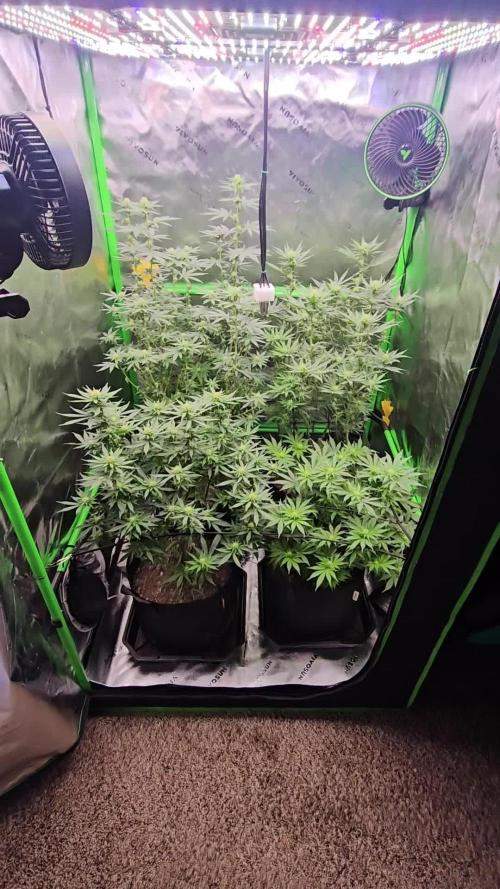
Day 98 , Week 14 Grow.
* Flower Stage week 4.
* Feed Chart Week 9.
* 2 Gallon's H20.
* Cal-Mag 5ml.
* Micro 10ml.
* Bloom 20ml.
* Bembe 30ml.
* Big Bloom 50ml.
* Cha Ching 2.5ml.
* Nutrient's PPM 1418.
* Ec 2.8
* Ph Up to 6.1

Likes
20
Share


@Frank_cultiva
Follow
A pesar de que es una cepa automática, soportó transplante, podas y LST... Ninguna queja con la cepa ni los productos utilizados... Sí hago una autocrítica hacía mi persona, sé que con más atención al cultivo hubiesen sido mejores resultados.
PD: No pude hacer un seguimiento adecuado por problemas con la aplicación en el celu

Likes
93
Share


@Roberts
Follow
Auto Opium is growing good. She just had a solution change today. She looks like she might be starting to bulk. It's definitely time she starts. Everything has been going good. Thank you Divine Seeds, and Medic Grow. 🤜🏻🤛🏻🌱🌱🌱
Thank you grow diaries community for the 👇likes👇, follows, comments, and subscriptions on my YouTube channel👇. ❄️🌱🍻
Happy Growing 🌱🌱🌱
https://youtube.com/channel/UCAhN7yRzWLpcaRHhMIQ7X4g


Likes
1
Share

@PhinolaGreen
Follow
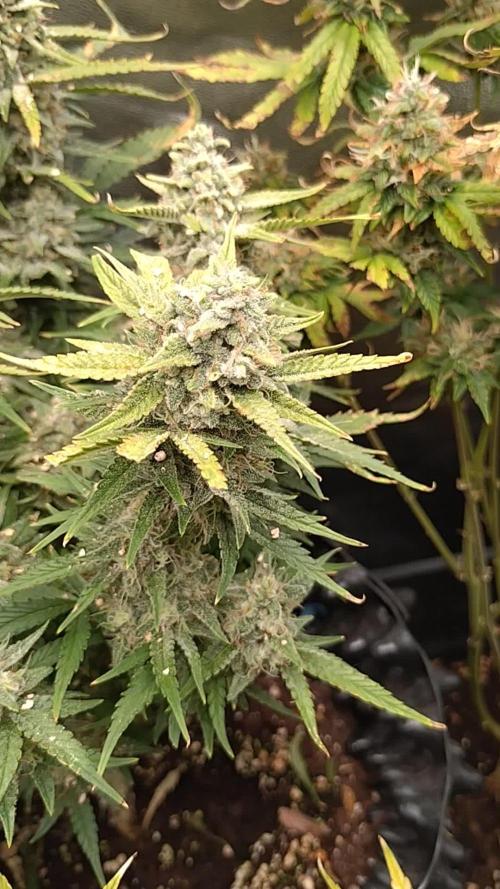
10. Woche Es geht auf die letzten 2 Wochen zu. ChatGPT meinte, es handelt sich bei der Pflanze um den Bonsai-Pheno von Guava Auto Fastbuds. Und sie sieht wirklich wunderschön aus, es lässt sich nur erahnen, wie schwer die fetten Buds am Ende werden. Ist irgendwie schwer einzuschätzen 😄
Likes
9
Share


@SubliminalSociety
Follow
I’m super excited to grow Purple Haze. It’s been on my wishlist a long time.


Likes
3
Share


@Chuckwaggon420
Follow
These girls are all doing great. The one that topped itself is going great looks so fat already. 1 has a weird top and 1 took on like a sideways growth. But they are all doing perfect. Going to take clones soon since they about a month old then will be getting flower tent ready. Time to choose what genotype is the best out of this strain. Atleast in this first half of beans. Still no smell yet but prolly soon b coming. Way excited about all I got going rite now.
Stay tuned, much love

Likes
148
Share


@CrazyHorse
Follow
So far so hairy... 🙏
Hello everyone, another week of flowering, you can already see how the white hair begins to grow beautifully and slowly turn into buds. I think I screwed up the description of which day it is, but when I finally find some time, I will try to verify it for you.
All the best, You Lovely Girls Growers 😇


Likes
104
Share


@SmokingTiki
Follow
Good growth this week, the roots have already reached the pots! The Blackberry Cake seems to develop nicely but it's still smaller than the two others. I topped the plants and started to apply some LST and they responded very well. This is the first time I try to do some LST without bending the main stem, let's see how it goes.
I increased the light power to 75%. I moved the fan to be further away from the Blackberry Cake because it seems that it suffered from the wind, the leaves look and feel dry.
During watering, only a small quantity of water ran down in the saucer and I poured 2l in each pot. The Blackberry Cake and the Cashew Kush looked a bit droopy, I think I should have watered a bit sooner.
It starts to smell in the room 😏
Plants heights at the end of the week :
-------------------------------------------
Blackberry Cake : 12,5cm
Jack Herer : 18cm
Cashew Kush : 19,5cm

Likes
10
Share


@Ktims420
Follow
All the ladies are comming along nicely going to start the flush, might try chopping a few tops and letting the bottoms fill out a little longer. Very excited. ✌️🏻💚
Likes
141
Share


@1Right_Angle
Follow
July 4th
*** PurpsBerry is in Flower ***
- calling this week-2 Flower because her Branches are covered in them. Yes it brings questions into the genetics… here in week 14 of Veg… at least we will have something to smoke while Harvesting the rest
- on July 2 purpsberry had the soil amended to Bloom Fertilizers, Compost, worm castings etc and her next meal is Bloom nutes
- rOOF95, CloudWalker will drink on some Root Boost when they are next thirsty (6th, fed)
8th
- PurpsBerry was fed 2 gallons and Bloom Microbes were used for the first time. Diet change here we go

Likes
18
Share


@Coopmc
Follow
Hear we go test growing the new batch of seeds!! So far nice split going on!
7 out of 10 split and planted!!
7 heads popping up!


Likes
42
Share


@Ultraviolet
Follow
Thank you. Gave her a cocktail to help with stress. Added 1st net for lateral support, not so much now, but for later. Blue light is absorbed by photoreceptor proteins called phototropins, which trigger a hormonal response that causes cells on the shaded side to elongate, making the plant bend toward the light. Try and fill this side a little. She is quite big already, just needs to find her stride again after the undue torture.
5 apex stems with 20-30 mini cola, let them develop a little, with the apical dominance shattered, all those 20-30 will all compete with each other as soon as that stretch is initiated. Key to a good stretch is making sure the plant is cycling efficiently, with large ATP conversions occurring lights out.
For now, I'm keeping light intensity high. A plant will slow its vertical growth in very high light intensities, leading to a more compact form with thicker stems and leaves. This response is a protective mechanism against light stress, which can damage the photosynthetic apparatus and lead to symptoms like leaf scorching, yellowing, and brittleness. Instead of growing taller, the plant invests its energy into creating a more robust, stress-tolerant structure.
Providing plants with necessary antioxidants helps protect the photosynthetic apparatus by scavenging reactive oxygen species (ROS) that cause damage from excess light.
UV light exposure can impact the xanthophyll cycle by either enhancing its photoprotective role or causing damage, depending on the intensity and type of UV radiation. UV exposure can trigger the synthesis of more xanthophyll cycle pigments to increase the plant's capacity to dissipate excess energy, but it can also cause direct damage, particularly to Photosystem II, and may lead to a decrease in the de-epoxidation state (DEPS ratio) which indicates a reduced capacity to dissipate excess energy.
Plants can respond to UV stress by increasing the synthesis of xanthophyll cycle pigments, such as violaxanthin and zeaxanthin, to improve their photoprotective capacity. UV-induced changes in xanthophyll cycle pigments can be linked to a plant's overall tolerance to high radiation stress. The xanthophyll cycle helps protect against photoinhibition, which is especially important when the plant is exposed to high levels of both UV and visible light. High doses of UV radiation can directly damage photosynthetic components, including the proteins, lipids, and pigments in the thylakoid membranes. Exposure to UV radiation can have a mixed effect on the de-epoxidation state (DEPS ratio) of the xanthophyll cycle pigments. In some cases, UV can inhibit the conversion of violaxanthin to zeaxanthin, resulting in a lower DEPS ratio and a reduced capacity for energy dissipation. However, the total pool of xanthophyll cycle pigments may increase, and this enhanced pool size could provide a greater potential for photoprotection despite a lower DEPS ratio.
The xanthophyll cycle works alongside other mechanisms, such as the accumulation of flavonoids (UV screens), to protect the plant from UV-induced damage.
Blue light repairs 100% UV-induced damage in plants through a process called photoreactivation, which uses a light-dependent enzyme called photolyase. This enzyme uses energy from blue and UV-A light to directly reverse the damaging pyrimidine dimers in the DNA caused by UV-B radiation, a key mechanism for maintaining the plant's genetic integrity.
After carbon, light, water, temperature, and nutrients, the limiting factor of a plant's growth is often its own internal factors or the amount of a key ingredient. Chlorophyll concentration is one such factor, as the amount of this pigment limits how much light can be captured for photosynthesis. Other factors include chloroplast number, respiration rate, and the concentration of carbon dioxide in the atmosphere, as plants are often in a CO2-deficient condition.
60x60x18=64800seconds x 700 = 45,360,000moles. 45DLI
Exposure to 165 µW/cm² of ultraviolet-B (UV-B) light for 3600 seconds = 1 hour, a extremely high, acute dose triggering stress responses and protective mechanisms.
.
The plant's photoreceptor protein, UVR8, senses the UV-B radiation. This triggers a signaling cascade that activates specific genes to protect the plant from damage. In response to the UV-B signal, the plant ramps up the biosynthesis of protective compounds like flavonoids, phenolic acids, and anthocyanins. These compounds absorb UV radiation and accumulate in the epidermal layers of leaves to shield inner photosynthetic tissues. The plant may increase leaf thickness or deposit more cuticular wax, creating a physical barrier to the radiation. The plant will produce more enzymatic and non-enzymatic antioxidants to neutralize the reactive oxygen species (ROS) produced by the UV-B radiation. The plant activates enzymes, including photolyases, to repair DNA damage caused by the UV-B. These repair mechanisms are critical for preventing permanent genetic mutations.
While protective measures are activated, a high dose delivered over a short period can cause stress that overwhelms the plant's defenses.
Photosynthesis is highly sensitive to UV-B. A high dose can inactivate Photosystem II (PSII), damage thylakoid membranes within the chloroplasts, and reduce chlorophyll content, which lowers the plant's overall photosynthetic capacity. Despite repair mechanisms, high UV-B doses can inflict persistent damage on the plant's DNA. One study found that acute, high-dose UV-B had a greater effect on genome stability than chronic, low-dose exposure. The overproduction of reactive oxygen species can cause oxidative stress, leading to the oxidation of lipids and proteins and disrupting cellular function.
Likes
12
Share


@Jerry101
Follow
I didn't get to this until midweek. Humidity was higher than I like and soil moisture was low. Rotated this plant 90 degrees clockwise to ensure even light. Added 36 oz of water on top of what the drippers are delivering. Drippers were also moved 90 degrees to ensure even soil moisture. Humidity was lowered to 45%.
Starting flush this week. Began with pH'ed water only in the dripper. Will be adding water only with no nutrients for the rest of the week. Pistils are about 50% brown and the trichomes are getting cloudy. Buds are looking good. This plant still has about a week until harvest.
By the end of the week the buds are filled out. The pistils have mostly turned brown. The trichomes are clear, milky, AND amber... in the same view. Many shots are both clear and amber. I want a more active high so this plant is coming down next week. I think it is ready. It is very confusing seeing so many clear and amber trichomes on the same bud.

Likes
Comments
Share


@Exotic_Cultivars
Follow
These grew really well stacked weight evenly, and flushed like a champ. Throw back to the first indoor scrog.
