Likes
Comments
Share


@AsNoriu
Follow
Day 73 since seed touched soil.
Sparkles as THC BOMB should be by name ;)))
See few foxtails starting. Girl started to gain weight, but buds will be small, VERY small ;))) hopefully dense !!!
Tried to wave biggest top to feel how heavy it is - air ;))) BUT , OMG OMG OMG , how lovely she smells , gassy stinks and have few more aromas, mix of Kalini Asia and some good Girl Scout Cookie maybe ... anyways, even if she will be in 50g area - i will still LOVE HER, can guarantee it NOW !!!
Would love to push her at least 14 days more,but looks like she has less in her ...
Mars TSL2000 blasting them really nice, i liked that light, if good air movement and temp control is in , she will deliver LOADS ;)))
Happy Growing !!!

Likes
13
Share

@eldruida_lamota
Follow
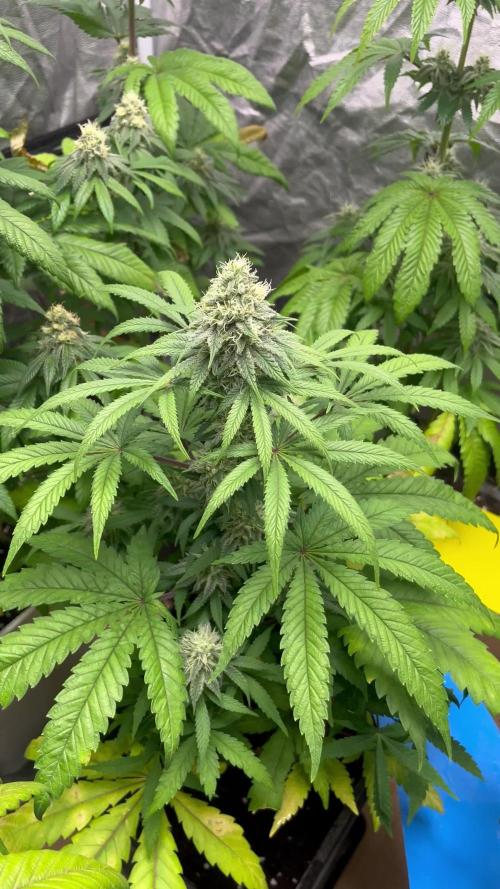
Que pasa familia, vamos con la quinta semana de floración de estas Gomu Gomu Mango feminizadas de HighBreed.
Vamos al lío ,se colocaron en macetas de 7 litros definitivamente.
El ph se controla en 6.0 , la temperatura la tenemos entre 24/20 grados y la humedad ronda el 50%.
El ciclo de Floración puse 12 horas de luz, el foco está al 80% de potencia.
De momento va creciendo, tiene buen color y va progresando.
Comentar que superaron el estrés hídrico porque subí par de grados por la noche y va volvió a comer normal .
Gracias a Agrobeta por el kit para la temporada, unos jefes, siempre apoyando 💪.
- os dejo por aquí un CÓDIGO: Eldruida
Descuento para la tienda de MARS HYDRO.
https://www.mars-hydro.com
Hasta aquí todo, Buenos humos 💨💨💨
Likes
27
Share


@ButterfliesLittleFarm
Follow
Hello Diary.
We reached the end of the fifth farm, along with two Haze Berries, there was another Fat Banana plant that ended its journey a week earlier than the Haze Berries.
Haze Berries have become record holders in terms of yield. A total of 185 g, with the larger Haze Berry # 1 yielding 105 g and the smaller Haze Berry # 2 yielding 80g. Definitely a record yield.
I think I wrote and described more or less all the information, the amount of photos shows the whole cycle of plant development during each week so I wouldn’t spend too many words on it anymore.
Here's how it all went since the last call.
05/12/2020 - Day 72.
Harvest. I checked with a microscope and when most of the trichomes are milky and about 5% have turned brown it’s time to harvest, at least that’s the case in my case. After the last photo shoot, I cut off both plants at the very bottom of the stalk and hung upside down in a growbox to dry.
Temp / Humidity on the farm - 23.4 degrees and 38% humidity.
17/12/2020 - Day 84.
After 12 days of drying, I took the plants out and pruned the rest of the dry leaves. I put the dried flowers in jars, put in moisture fighters for better moisture regulation and for better curing.
31/12/2020 - Day 98.
Tasting. Great smoke, fruity tropical flavor. Happy New Year
Haze Berry Auto (Royal Queen Sees) - 17/09/2020 - Sprouted - 05/12/2020 - Harvest - Total 80 days.
Haze Berry Auto # 1 - 105g
Haze Berry Auto # 2 - 80g
Finally, I would like to thank James from the Royal Queen Seeds, for his support, seeds and nutrients. And I would like to thank all of you who support me and give advice with the help of which I also grow along with my plants. Many thanks to everyone and see you soon with the new diaries.🙌

Likes
24
Share


@Pierrougarou21
Follow
bonjour les Growmies .merci de venir voir mon journal de culture.Cette semaine j' ai commencé a rincer la demoiselle en attendant que ces trichromes soient près

Likes
55
Share


@MadeInGermany
Follow
Info:
Unfortunately, I had to find out that my account is used for fake pages in social media.
I am only active here on growdiaries.
I am not on facebook instagram twitter etc All accounts except this one are fake.
Hi everyone :-) .
This week she continued to develop very well 😊.
It was poured twice with 1 l each time.
She got training again (topping) and will get it a few more times so that she becomes a real bush :-).
Otherwise everything was cleaned and checked.
Until then, have fun and stay healthy 🙏🏻
You can buy this Nutrients at :
https://greenbuzzliquids.com/en/shop/
With the discount code: Made_in_Germany you get a discount of 15% on all products from an order value of 100 euros.
You can buy This Strain at :
www.Zamnesia.com
☝️🏼☝️🏼☝️🏼☝️🏼☝️🏼☝️🏼
Strain
Gelato clone from mother (Zamnesia )
☝️
Genetics: Wedding Cake x Gelato x Gelato 33
Vega lamp:
2 x Todogrow Led
Quantum Board 100 W
💡
Bloom Lamp :
2 x Todogrow Led
Cxb 3590 COB 3500 K 205W
💡💡☝️🏼
Soil :
Canna Coco Professional +
☝️🏼
Nutrients :
Green Buzz Liquids :
Organic Grow Liquid
Organic Bloom Liquid
Organic more PK
More Roots
Fast Buds
Humic Acid Plus
Growzyme Big Fruits
Clean Fruits
Cal / Mag
Organic Ph - Pulver
☝️🏼🌱
Water: Osmosis water mixed with normal water (24 hours stale that the chlorine evaporates) to 0.2 EC. Add Cal / Mag to 0.4 Ec Ph with Organic Ph - to 5.8


Likes
8
Share


@Salokin
Follow
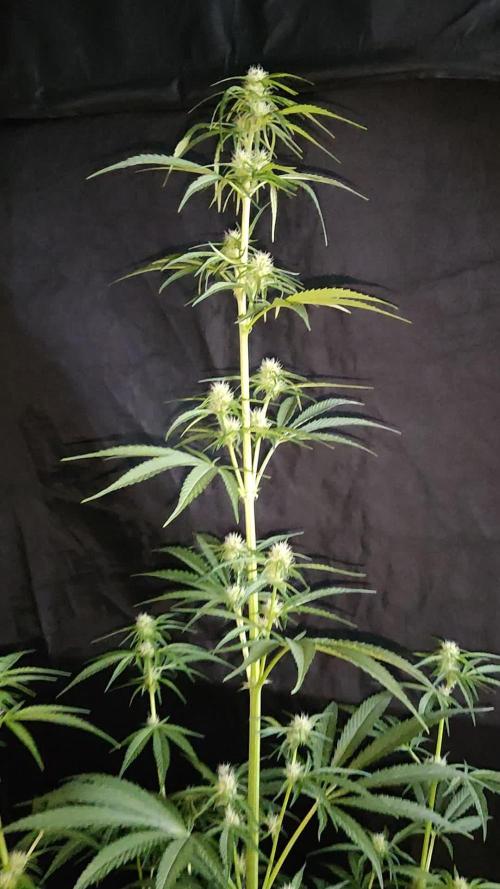
All went very well this week. She is drinking like crazy and reservoir needs to be changed almost every 4 - 5 days. he buds slowly start getting frosty and I hope that they will fill up the internodal spacing nicely.

Processing
Likes
19
Share


@CannabisAprendiz
Follow
Hola .
traemos un avance del seguimiento , no hemos tenido mucho tiempo para subir el contenido por un tema laboral pero ya empieza a relajar la cosa y podre estar mas activo con la subida de seguimientos .
dejamos algunas fotos diarias de como va la floración.-

Likes
3
Share


@greencity11
Follow
cut on the 41st day from the first flower. it resisted 99% humidity without water or light for a week.
it went into overfertilization 3 times up to 2.8 of ec the plant reacts great above this data the plant stops. I used Biobizz organic products not following the table. The plant was never drained until harvesting, by watering with little water and rich in salts the run off was 8.4 brought to 1.9 as the final harvesting figure.
the plant smells like big babol, smoking it fresh incense flavor hits the nose like monk and strawberry candies
Processing
Likes
14
Share


@Irishvirus
Follow
Switched her to 12/12. I trimmed away some of the growth I deemed not worthy. She's got amazing roots and is already starting to grow a lot every day.

Likes
Comments
Share

@Walachiangrowindiary
Follow
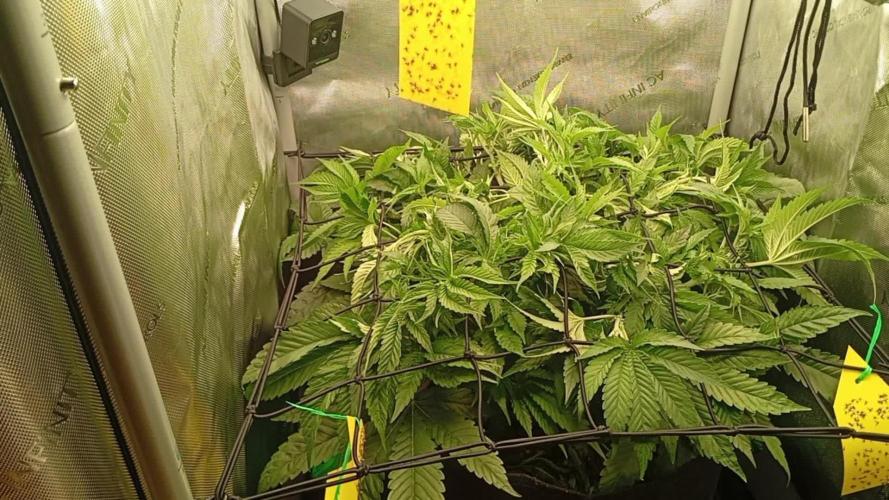
Flipped to 12/12. At start of flowering im using GHF Bio Bloom top dress 3g/l of substrate mixed with wormhumus by biobizz and watered by compost Tea with bioenhancer


Processing
Likes
4
Share


@DRO420
Follow
Doing great. Leaves are perfect , plants are very happy. Growth is tall enough for trellis in this space very soon.
Likes
198
Share


@DevilsBud
Follow
WEEK 3 OF FLOWERING
@Spliffseeds and @Anesiaseeds
In the marshydro set-up
4'x4' tent
FC-4800 lamp
Absolutely awesome grow all strains have there own uniqueness to them some need more then other the Afghani Gold + hyper glue are drinkers 🍹
The rest around same but i am definitely very happy with grow so far.👌🏻 Not really a lot to say but only from what I can see and observe is that the difference between my first grow and this is that they are exploding 🤯.
There in beginning of week 3 but they look like when first grow was in week 4 and half lol . Soil the same nutrients the same but what makes this grow explode is the beast that is the FC-4800 and it's no promotion talk it's just plain truth this marshydro lamps are no joke 🤘🏻
I am gone refill the pots with some extra plagron batmix but will add a additional rqs bat guano to the top


Likes
3
Share


@NocturnalGardner44
Follow
Caught up... things are going well, Bruce stretched like crazy and has evened up its canopy to the others idk if it's that big bud in it or what. Lilac has looked a solid week and half ahead of the others since flower, she looks wicked though, trichromes are starting to build. I've done my last training, I usually go hard on thinning but I'm trying to be conservative and only uncover buds under leaves. Still same feeding routine.. looking forward to the finish line but know this is an important time with terms and trichromes beginning to resonate... I sick at this guy's but I want to get better at chronicling my grows.. so hourly I will improve in the process of Journaling.


Processing
Likes
16
Share


@GRow_M8s
Follow
* Progressing the LST every day, working the canopy with defoliation where needed.
* No food until day 28.
* 25gr/plant organic dry NPK ( 6 - 3 - 18 + 3Mg0) mix 6 from DCM. ~》3 weeks after Transplanting... Will feed the plants one week after the first watering.
~Week 4~
* Drying period before waterings.
* temps : 20 - 29c°.🔅
*HR : 55% - 70%. 💦
* Lights 20/24h/day.
off --> (12:00-14:00) &
(00:00-02:00)
*No defficients or problems this week, even the stunted Stomper starting to develop.

Likes
49
Share

@RockoCalenberg
Follow
Tag 35 – gut eingegroovt, jetzt wird Struktur sichtbar
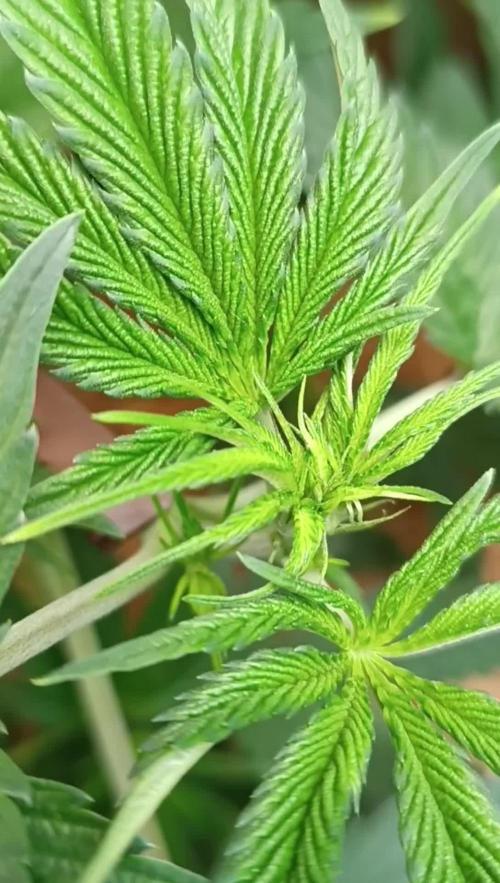
Nach dem Umtopfen haben sich inzwischen alle drei gut gefangen und merklich stabilisiert. Der Wechsel in die großen Töpfe wurde insgesamt ordentlich verkraftet, gerade auch in Kombination mit der Mikrobengabe nach dem Umtopfen. Man sieht, dass sie das gut angenommen haben und jetzt wieder sauber durchstarten.
Größenmäßig liegen wir aktuell so bei rund 29–30 cm, wobei Chicken & Waffles klar die Nase vorn hat und aktuell den Spitzenreiter stellt.
Chicken & Waffles geht im Moment am meisten ab. Sehr robust, wächst zügig weiter und zeigt eine kompakte, aber gleichzeitig angenehm luftige Struktur mit guten Internodienabständen. Macht insgesamt den stabilsten Eindruck im Feld.
Fruit Bomb Punch bleibt dagegen die empfindlichste. Das Toppen und die „heiße“ Erde wirken immer noch leicht nach, auch wenn sie natürlich weiterläuft. Sie braucht einfach länger, um sich komplett einzugrooven. Auch auf Training reagiert sie aktuell eher zurückhaltend und wirkt insgesamt sensibler als die anderen.
Strawberry AK läuft dafür unauffällig, aber auf einem richtig starken Niveau mit. Sehr kompakt, schöne Struktur und insgesamt ein sehr sauberer, stabiler Wuchs. Bin ich aktuell echt zufrieden mit.
Unterm Strich wird jetzt immer deutlicher, wie unterschiedlich die drei Kandidaten ticken: von sensibel bis robust, von kompakt bis luftig. Genau das macht den Run gerade spannend.
Der Terp-Test läuft – am Ende entscheidet das Glas. 🌱
🇬🇧 Day 35 – settling in, structure is starting to show
After the transplant, all three plants have recovered well and clearly stabilized. Moving into the bigger pots was handled nicely overall, especially in combination with the microbial watering afterwards. You can see they responded well and are now picking up momentum again.
Height-wise, they’re currently around 29–30 cm, with Chicken & Waffles clearly taking the lead as the current front runner.
Chicken & Waffles is pushing the hardest right now. Very robust, growing fast, with a compact yet nicely airy structure and good internodal spacing. Overall, it looks like the strongest and most stable plant in the run at the moment.
Fruit Bomb Punch remains the most sensitive one. The topping and the “hot” soil are still slightly affecting her, even though she keeps progressing. She just needs a bit more time to fully settle in. She’s also reacting more cautiously to training and overall feels more delicate compared to the others.
Strawberry AK is running quietly but on a very strong level. Very compact, great structure, and overall a clean, stable growth pattern. Really happy with her at this stage.
All in all, the differences between the three are becoming more and more obvious: from sensitive to robust, from compact to airy. That’s exactly what makes this run interesting.
The terp test is on – in the end, the jar decides. 🌱


Likes
11
Share


@Teezkiee
Follow
Biggest Autoflower Ever - Pineapple Express was the GOAT.
479 Grams Dry Weight,
78 Days from seed to Harvest
Was a big surprise having almost a HALF KILOGRAM FROM AUTOFLOWER,
Always thought 500 grams per square meter description was a legend but no, IT CAN BE TRUE
Good luck to all my grower fellas, I will not stop on growing in hydro, even tho half of this run was in handmade hydro.
It was my third hydro Grow and I see the Improvement
Last one was only 300 Grams dry weight Strawberry Banana from FB
Pinepple Express itself is a 10/10 strain, it says mostly Indica but feels like the best Sativa I have ever tried, great pineapple smell and taste, hits like Mike Tyson, perfect strain and YUMMY as hell, loved it, will grow it again probably as it's not only mine favorite strain.
Cheers Fellas, good grows and big yields to everyone!


Likes
49
Share
@Salokin
Follow
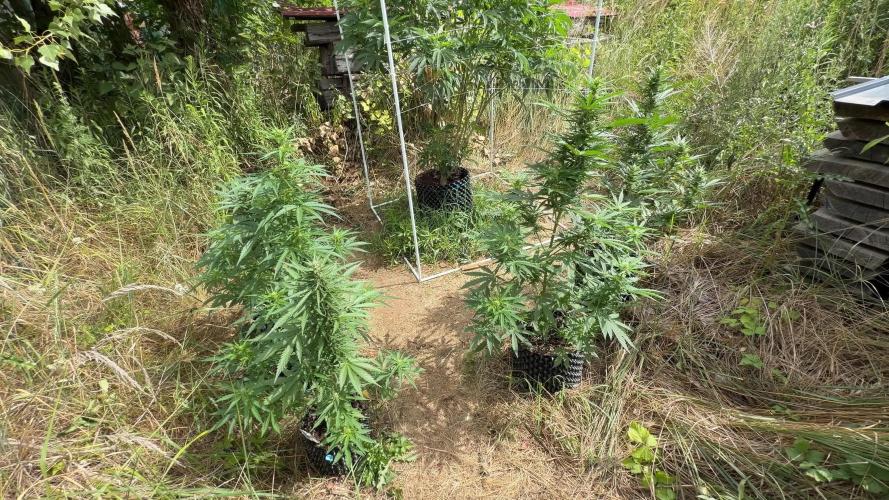
GMO × Triangle Mints BX – Week 20 Veg | ScrOG Installed, Stripped and Ready
Big week. The lower canopy got stripped right back — everything below the net level cleared out to focus all energy upward into the tops. Looking at the stems from underneath is genuinely impressive: thick, woody trunks with real bark texture and heavy branch junctions that show exactly how much biomass this plant has built over the past five months. She looks more like a small tree than a cannabis plant at this point.
A ScrOG frame has been built around her and the tops are being worked through the net. At 165cm she's already pushing through it and there's still time left before transition to fill the frame evenly. Once she flips, every shoot sitting in that net is a potential main cola.
Daylight has dropped to 16 hours — down from the solstice peak and slowly ticking in the right direction. Transition shouldn't be far off now.
Nutrient schedule unchanged: CANNA Aqua Vega 3ml/l, CalMag Agent 1.1ml/l, Aptus Regulator 0.1ml/l, EC 1.2 mS/cm, pH 6.2. Watering holding at 25L per feed. Day temps 25°C, nights 18°C.
The coming week looks mostly dry and warm — up to 29°C, nights around 15–16°C, winds light throughout. Good conditions for her to settle into the net after this week's work.
Updates every Sunday. Stay tuned. 🌿
Likes
4
Share


@AestheticGenetix
Follow
Scrogs doing well. Snapped a branch or 2.
Been in 12/12 for about 5 days.
I keep weaving mains through the the netting