


Likes
Comments
Share


Likes
7
Share


@MatimaisterWeed
Follow
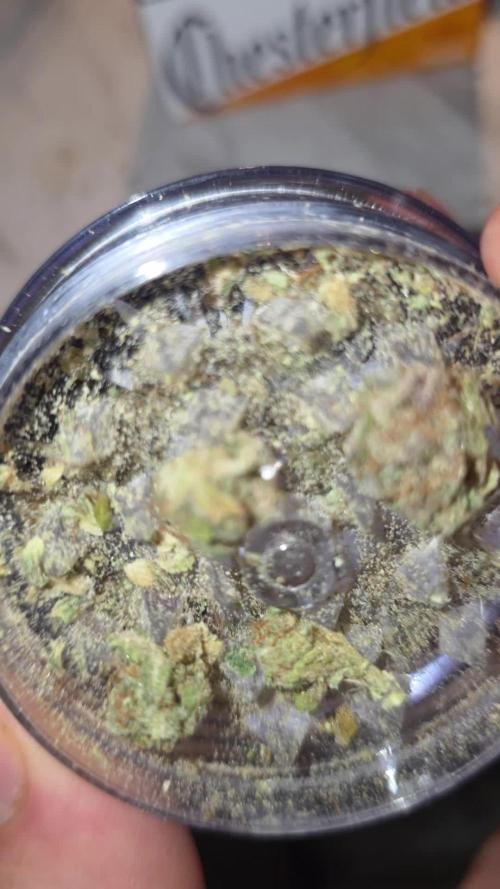
En este periodo de la planta me preocupe de agregarle los nutrientes faltantes a la planta con Gold Sunshine e hice poda Apical



Likes
4
Share

@Jabbamo
Follow
_______________________________________________________
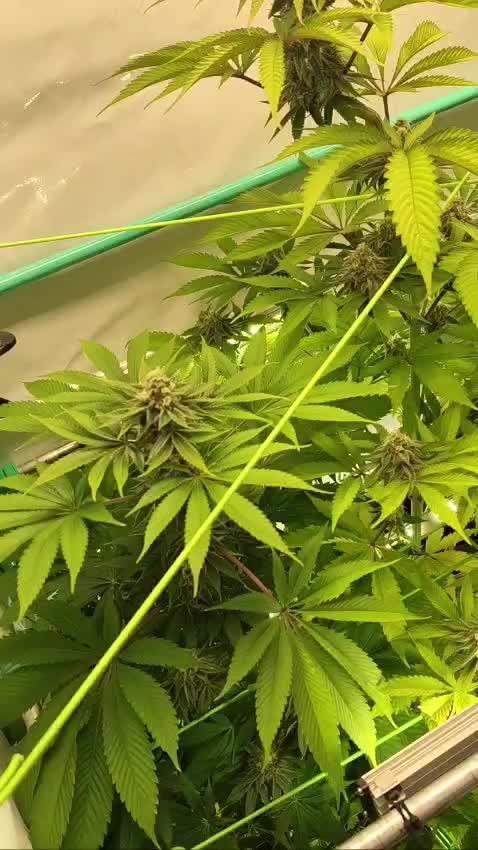
Mi. 25.3.
- 3,5 Liter pro Pflanze gegossen (ca. 200ml Drain)
- Rainpoint Bewässerungssystem eingesetzt
- 1L auf 3 Pflanzen Nährlösung per Hand angegossen
- Programm: 3min. ON / 3min. PAUSE / 3min. ON
- 2L pro Zyklus.
- 1L klar spülen zur Systemreinigung
1,2 ml / Liter "Calmag"
1,5 ml / Liter "Bio Grow"
4,0 ml / Liter "Bio Bloom"
4,0 ml / Liter "Top Max"
Ph 6,2 / 790 ppm
_______________________________________________________

Likes
23
Share

@Nillenium
Follow
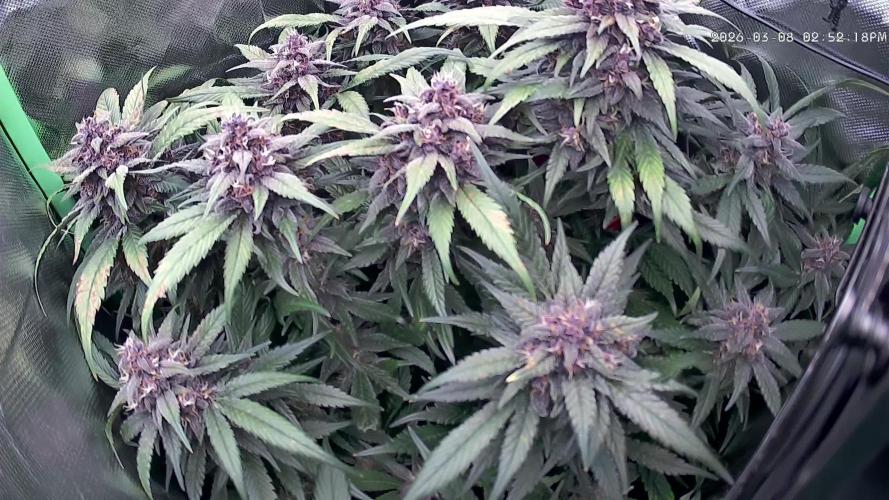
Woche 11 und wir befinden uns so langsam auf der Zielgeraden. Die Trichome sind noch nicht ganz so wie ich sie haben möchte. Deshalb bekommt sie noch ein paar weitere Tage.
Likes
2
Share

@phenohunterx
Follow
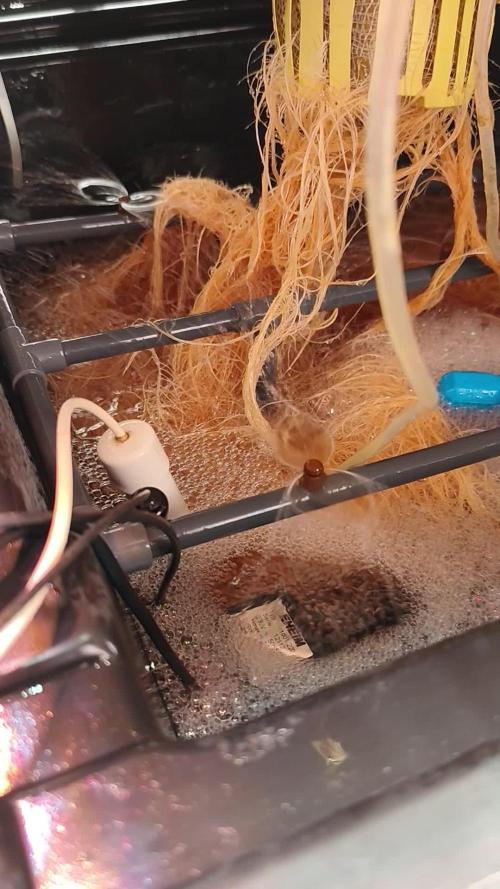
BT5 und alles im grünen Bereich...ab jetzt gibt's volle Last Power 400w + 2x 215wSanlight ...
Netz wurde verbaut und fürs erste eingefädelt...

Processing
Likes
28
Share


@Budcrack
Follow
New update for week 12, concluding week 8 of flowering:
Hi(gh) Folks! Thanks everyone for your input on my second grow question. I’m going for HighTV’s answer, the SOG with 9x4 main buds. Very nice to get everyone’s input on this, appreciate it!
So another week done! They got their last nutrients Tuesday and on Thursday the 5 early ladies from Hempire got their first round of plain acidulated water. I flushed them a bit on Friday and Saturday to. Now they can dry out for a couple of days. I will flush them for the upcoming week and let them dry out before harvest next weekend. Im counting on them to swell up even further during this week.
As for the rest of the 4 plants from Hempire, 4 from Royal Queen Seeds and 3 from Hy-Seeds, I will treat them as if this is another week 8, and they will get another dose of Flowering nutrients and PK. Then next week I will start to flush them also. I will have 2 full weeks to flush and let them dry out until my planned harvest on Saturday 5 January. I’m not even sure that will be early enough for the 4 RQS’s since they look like they have even more bud-growing to do, before they can start swelling! I will keep an eye on that.
The 5 tall ladies, 2 from Hempire and 3 from Hy-Seeds show the nice thick Kushy buds i’m craving for, can’t wait to see the becoming nice and heavy! On the photos you see the slight diverence between the pheno’s, the left 2 plants grew the popcorn-buds on a stem, and the right ones have nice thick popcornbuds against the stem’s. The other to remaining Hempire plants also show these, apart from the early ladies offcourse. The early birds show a little stretching buds and nice purple colours.
So next week will see the early ladies harvested, I hope?
Look out for my next update and don’t forget to like!
Thanks and see you!


Processing
Likes
13
Share


@Ferenc
Follow
It was easy to harvest she was very small jut cut it quickly without stalks the wet weight is 17 g of the buds, nicely coated with THC and it was approx 70% milky and 40% amber trichomes. Hopefully good time to be harvested. This site has changed can not update and edit the comment section. The smoke is nice it is kind of relax and strong high. Not the best but not bad at all. I like it.

Likes
5
Share


@MG2009
Follow
03/08/2021
2nd transplant for Blue Dream, roots growing fast, might use her for a multiple strain clone mom, her sativa like root system I think would be ideal for this project.
Reppoting GSC in am and will post some pics these are before Reppoting,
Likes
2
Share


@Comfrey
Follow
Die Ernte ist zwar lange her, aber ich wollte das Album noch abschließen. Leckere Blüten.

Likes
2
Share


@Ninjabuds
Follow
The Bubble OG plants are looking really good. They're all pretty big and have a similar structure. It'll be fun to see how they develop their own personalities as they keep growing.
Well, another year has come and gone. Yesterday was New Year's Eve, and I want to wish all of you a happy and healthy 2025. May this year bring you all the things you've been wishing for. Let's make this the best year yet!

Likes
11
Share


@Mazgoth
Follow
Really resistance to anything that is causing her stress and as always really good yields even in worst case scenarios.


Likes
52
Share


@Ultraviolet
Follow
You don't become confident by shouting affirmations in the mirror, but by having a stack of undeniable proof that you are who you say you are, outwork your self-doubt.
Nitrogen fixation is a chemical process by which molecular nitrogen (N2), which has a strong triple covalent bond, is converted into ammonia (NH3) or related nitrogenous compounds, typically in soil or aquatic systems but also in industry. The nitrogen in air is molecular dinitrogen, a relatively nonreactive molecule that is metabolically useless to all but a few microorganisms. Biological nitrogen fixation or diazotrophy is an important microbe-mediated process that converts dinitrogen (N2) gas to ammonia (NH3) using the nitrogenase protein complex (Nif).[2][3]
Nitrogen fixation is essential to life because fixed inorganic nitrogen compounds are required for the biosynthesis of all nitrogen-containing organic compounds, such as amino acids and proteins, nucleoside triphosphates and nucleic acids. As part of the nitrogen cycle, it is essential for agriculture and the manufacture of fertilizer. It is also, indirectly, relevant to the manufacture of all nitrogen chemical compounds, which include some explosives, pharmaceuticals, and dyes.
Nitrogen fixation is carried out naturally in soil by microorganisms termed diazotrophs that include bacteria, such as Azotobacter, and archaea. Some nitrogen-fixing bacteria have symbiotic relationships with plant groups, especially legumes.[4] Looser non-symbiotic relationships between diazotrophs and plants are often referred to as associative, as seen in nitrogen fixation on rice roots. Nitrogen fixation occurs between some termites and fungi.[5] It occurs naturally in the air by means of NOx production by lightning.[6][7]
All biological reactions involving the process of nitrogen fixation are catalyzed by enzymes called nitrogenases.[8] These enzymes contain iron, often with a second metal, usually molybdenum but sometimes vanadium.
Green clover (Fixation)
White clover (Fixation)
Red Clover. (Fixation)
Yellow Clover. (Fixation, deeper roots)
Sweet Thai Basil. (Terpenes)
Italian Basil. (Terpenes)
Chamomile.(Oil production)
Borage.(Pest attraction taste)
Lavender.(Pest attraction smell)
Marigold(Pest attraction visual)
Mycorrhizae are beneficial associations between mycorrhizal fungi and a plant’s root system. Mycorrhizal fungi spores germinate in the soil, creating filaments (hyphae) that penetrate the root cells, thus establishing a symbiotic relationship. This collaboration leads to the development of both intra-radical and extra-radical networks of filaments, enabling efficient exploration of the soil for enhanced access to nutrients and water. Consequently, these vital resources are transferred to the plant, resulting in numerous benefits for crop cultivation.
Various mycorrhizal products are available in diverse formulations (powder, granular, and liquid), concentrations, and qualities. Ongoing advancements in products, technologies, and research are reshaping our understanding of mycorrhizae. Despite these positive developments, certain misconceptions persist. In the following discussion, we aim to clarify the truths and dispel the myths surrounding mycorrhizae products.
MYTH #1
A HIGHER NUMBER OF MYCORRHIZAE SPECIES MEANS BETTER RESULTS.
Contrary to common belief, having a higher number of mycorrhizae species in a product does not translate to better results; in fact, it often yields the opposite outcome. A plant can sustain only one association with a particular mycorrhizal fungi species. Introducing multiple species creates competition among them, which is not advantageous for the plant. The initial colonizer does not ensure the highest success; instead, it gains precedence. It is recommended to select a product with a concentrated presence of a single mycorrhizae species known for its effective performance, rather than opting for a product with multiple species at lower concentrations.
MYTH #2
ECTOMYCORRHIZAE ARE EFFECTIVE FOR CANNABIS PLANTS.
Although ectomycorrhizae can colonize five to ten percent of plant species, cannabis is not among them. Ectomycorrhizae do not penetrate the root cells; instead, they develop around the roots and on the exterior. For cannabis plants, it is essential to seek out endomycorrhizae. Endomycorrhizae are capable of colonizing 70% to 90% of plant species, including cannabis. Unlike ectomycorrhizae, endomycorrhizae penetrate the root cells, forming structures like arbuscules for the exchange of nutrients and water with the plant.
MYTH #3
WHOLE INOCULANT (PROPAGULES) PERFORM BETTER THAN ONLY VIABLE SPORES.
The propagule count specified on most mycorrhizae products indicates the presence of spores (viable and unviable), hyphae, and root fragments. However, it is crucial to note that only viable spores, those with the capacity to germinate, can successfully colonize a plant’s root system. Spores are to mycorrhizal fungi what seeds are to cannabis plants—a fundamental component enabling fungi reproduction. Consequently, even if a mycorrhizal product boasts millions of propagules, its effectiveness hinges on the presence of viable spores. Without viable spores, the product will not contribute to plant development. Therefore, the genuine value of a mycorrhizal inoculant lies in the quantity of viable spores it contains, as only viable spores can efficiently initiate symbiosis.
MYTH #4
ALL METHODS OF APPLICATION YIELD IDENTICAL RESULTS.
To establish the symbiosis, mycorrhizal fungi spores must be close to the plant roots. The optimal recommendation is to directly apply mycorrhizal inoculant to the roots, either in powder, granular or slurry form. This method ensures maximum proximity between the spores and the roots, facilitating a rapid establishment of symbiosis. Particularly with crops like cannabis, which have a short growing cycle, employing this technique is the most effective way to obtain optimal benefits. Alternatively, techniques such as blending the inoculant with the soil are effective, but there may be a delay in the establishment of symbiosis. This is because the roots need to grow and come into contact with the dispersed spores throughout the growing media.
MYTH #5
MYCORRHIZAE CAN ONLY BE GROWN ON LIVING PLANTS.
While the predominant method for commercially producing mycorrhizae involves growing them on the root systems of living plants (in vivo production), it is not the exclusive nor the optimal technique. In fact, this production approach has notable drawbacks that the “root organ culture” method just does not have (in vitro production). In vitro production occurs in meticulously controlled, aseptic laboratory conditions, allowing for the consistent generation of products that are viable, highly concentrated, species-specific, and free from pathogens. Achieving such precision and quality is impossible when relying on the cultivation of mycorrhizal fungi on plants exposed to external conditions.
In conclusion, it is crucial to take all these factors into consideration when choosing the appropriate product for your crop to fully harness the wide array of benefits provided by a high-quality mycorrhizal product.
STRONGER PLANT – Stress resistance.
FASTER GROWTH – Improve plant structure and shorter veg time.
INCREASE YIELD – Overall more biomass.
IMPROVED QUALITY – Increase cannabinoids and terpenes content.


Likes
17
Share


@RakonGrow
Follow
**** HAARVEST ZOE ****
Nice Strain ,
My little Zoe really made all the mistakes you could possibly make. No matter when I give light or want water or fertilizer. It grows and grows and grows, the main thing is that there is light. It was one of my free seeds from Zamnesia. So far all seeds have germinated. I store my seeds in a dark, airtight container at 6°C. Tastes kind of sweet after curing.
Greenhouse Feeding is a really easy fertilizer to use. I used the BioEnhancer again and again. My little Zoe thanked me. The BioGrow was used as topdressing and is doing its job. The BioBloom also does its job at the right time.
And that's really great and easy if you don't have an autoflower. Of course there is a corresponding product. But I was happy to get anything here at all. Legalization has wiped out the market. But for next time I have an appropriate soluble fertilizer for fast-flowering plants. It doesn't work for 8 weeks :))
I use a Sanlight Evo 3-60 1.5 with Bluetooth dimmer. There's nothing to complain about there. Set daily cycle via app. Helpful if the weather or environment is so bad that you have to regulate the light intensity.
33g after 5 days dry . 24.5 °C to 22°C with 50%-60% .
curing in a vaccum box at 18°C .
It looks like I'm drying too long. // It tastes a bit crunchy.
Day 79:
trim , slow vacuum box to cure 22°C and 61%rH .
Day 76:
videostuff: been drying for 4 days (res 640x480) ( optical zoom x200 - x250 )
Day 72:
DLI usage total this Plant : 2236.6 DLI in 70 Days .
wet trimmed, cut off, hung upside down. see you after 14 days
Day 71:
preparing for harvest . 24h long night session .
DLI : 0
Day 70:
- Sanlight DaylightCycle
- + ON 200PPFD (00:00) - 800PPFD (03:30) - 800PPFD (16:30) - 200PPFD (18:00) OFF
video and photo tryouts with the digimicro mobil x300 optical zoom , mostly freehand
Day 69:
- Sanlight DaylightCycle
- + ON 200PPFD (00:00) - 1000PPFD (03:30) - 1000PPFD (14:30) - 200PPFD (18:00) OFF
incredibly hot and rain. lost some terpene :)) Well, summer is coming,
Day 68:
- Sanlight DaylightCycle
- + ON 200PPFD (00:00) - 600PPFD (00:30) - 800PPFD (03:30) - 800PPFD (14:30) - 600PPFD (17:30) - 200PPFD (18:00) OFF
- Added 1L bottle of water
It's hot, hot, hot, Zoe would like more water.
changed daylight cycle so it match the weather problems. tent is open until my real night comes.
103 flowers (including popcorn) counted, due to an accident about 15 flowers are missing.
Day 67:
- Sanlight DaylightCycle
- + ON 200PPFD (00:00) - 600PPFD (00:30) - 900PPFD (03:30) - 900PPFD (14:30) - 600PPFD (17:30) - 200PPFD (18:00) OFF
- watering bottle water 1.75L
weather to hot , changed daylight start time and daylight cycle so it match the weather problems.
I'm lucky, buds are still growing :)))
Day 66 (we are on the road with maximum sanlight )
- analyse some trichome .
- make some Zoom Pics and Video stuff .
- Sanlight DaylightCycle :
- + ON 200PPFD (00:00) - 1000PPFD (00:30) - 1000PPFD (13:30) - 800PPFD (17:30) - 200PPFD (18:00) OFF
- DLI will stress alot ...
Anyway, it's too hot in my room... I open the tent and now everything is fine with the temperatures and I increase the Sanlight to 100% for the first time. May Zoe love it or leave it :)) We'll see what happens
Day 65 :
Sanlight DaylightCycle : ON 200PPFD (00:00) - 800PPFD (00:30) - 850PPFD (13:30) - 800PPFD (17:30) - 200PPFD (18:00) OFF
It will soon be ready for harvest.

Likes
20
Share


@Basementganja
Follow
Day 35 - Light defoliation for this girl!
I'm thinking i'll put a bucket under her pot, to get the canopy closer to the light!
She's trained out nice and flat, and won't be getting much taller... I think she will benefit from being closer to the 1000PAR mark at this stage of flower!

Likes
13
Share


@Greenthumb84
Follow
Had to isolate one of the ladies due to being a week+ behind the other which involve putting in her own resvoir other four are starting flush. Also had to remove and clean the connection "T" as the roots were plugging up the "T" and restricting flow back to the res. The buds look amazing and am really looking forward to the pay off.
Likes
38
Share


@PolishFarmer
Follow
Hello again :) it’s day 58 for my girls. I get rid of scrog net yesterday, I was taking every single one out and then I cut some leaves to make more space in grow box :) I spend around 6h with them last night but in my opinion is well done :) bag of leaves gone. I planning harvest around day 85 but we will see what time shown :) take care guys and see you soon :)


Likes
37
Share


@Wrongholn519
Follow
Happy 4/20 all...
Still on auto pilot. I've made very few changes this week.
Process/Environment changes:
-turned one of my ts1000s down after chopping my cheese auto.. it wasn't needed as much and it helped cool down my tent around 2 degrees Celsius.
- humidity is set between 45- 55 percent. (45 lights off, 55 lights on)
- rotating each plant in the tent so they they can get even light coverage
I'm going to do a trichome check on Saturday. They are both pretty much close to being finished at 62 days post germination.
Both have heavy trichome production
Both smell very sweet