


Likes
Comments
Share


@MarighellaGrower21
Follow
Iniciei o flush pré colheita. Regando todos os dias com 900 ml


Likes
55
Share


@blazin_skywalker
Follow
Moved the grow to the basement which caused my plants to have to readjust to the new environmental norm. It's quite a bit colder down there so I used a flood light to bring up the heat outside of the tent and had a few days of 24 hour light cycle to warm up the tent's interior environment.
Once the air and reservoir warmed up enough, the plants started happily eating and showing me how much they love their new home. ✌️❤️🏡

Likes
5
Share


@Losgreengos
Follow
Starting my grow diary From a 3 week of Bloom.
Everything is going well apart that i feel this first 3 weeks of flower i could do a little better on control the environment and the plant feeding..
But all good till now.. let's see....

Likes
2
Share

@Chucky324
Follow
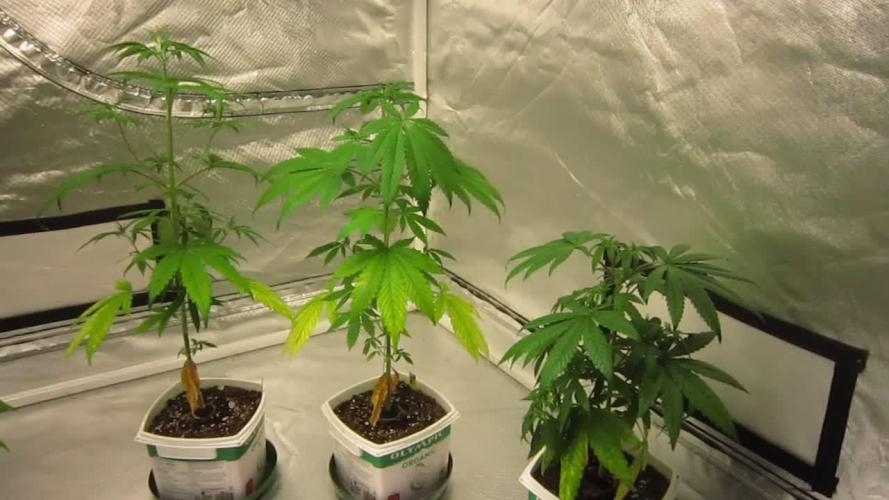
Hello This is the end of week 4 and the beginning of week 5 of veg.
Things are going good. They have gotten over their transplanting shock and topping shock are growing upwards now.
Got a small one and a tall one and one in-between.
Another couple of week and I'll repot them again into their final pots and put in a tomato cage to spread the branches out.
The spiders are getting big in the fall around here. You can hear the web snap and pop when you walk into one.
Found a winter project. Got for free a 240 bottle wine insulated wine cabinet with a double pane glass window.
I'll put 3 thermoelectric motors in for cooling and a small dehumidifier for the moisture. There's a video on you tube I'll follow.
I was in the grow store looking for the frequency altered water that I use on the powdery mildew. They were lout of it.
So the clerk told me about this. He said it's a safe cure all for pests and mold and fungus. Check out the web site.
The Safer Soap Insecticide Co owner sold his Co. and did research with some of the money and started a new Co.
I like that's essential oils being used.
OK. Be Great.
Chuck.

Processing
Likes
52
Share


@CBD_Sweden
Follow
2017-09-11. Kl 12.00. Week 3 starts. I have cleaned the whole room for the new week and gave the girls water and nutes. Added videos and pics. Girl is 10 cm high.
--------------------------------------------------------------------------------------------------------------------
2017-09-12. Kl 10.00. New pic and video.
---------------------------------------------------------------------------
2017-09-13. Kl 22.00. Added new video.
---------------------------------------------------------------------------------------
2017-09-15. KL 10.00. New pics and video. The girl is 14 cm high.
---------------------------------------------------------------------------
2017-09-16. Kl 10.00. The girl is starting to grow little better now and i hope she is picking up the pace. Added new videos.

Likes
37
Share


@Cremo
Follow
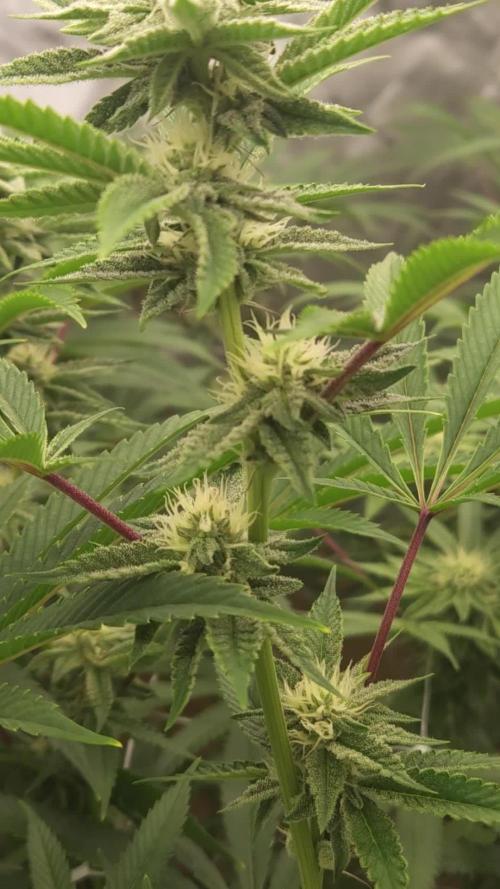
So here we are, at the end, a few months later. I was so happy that I'll finally grow a plant without any training at all, just to see the full and uninterrupted genetic expression. It was a blast to grow her, I can't wait for the plant to dry and give it a few weeks of curing but she smells great already.
I also wanted to thank Divine Seeds for the contest strain and Bio Tabs for great Bio fertilizer. You can judge for yourself because I'll let the photographs speak for themselves.
Speaking of photography, I went with a moody style this time, because she has a great structure. I've trimmed her a little bit here and there and I've left a few big fan leaves on both sides for better looks.
The big fan leaves reflect the light so well, it make the whole plant shine. Okay now head to the gallery and let all that sink in ;)
XOXO
Cremo



Processing
Likes
9
Share


@JohnnyGrower
Follow
Día 29
Esta semana se ha seguido con una fertilización con una aumentando la dosis de 2 ml a 3ml.. la dosis indicada por el fabricante es de 5ml por litro, la en unos días subiremos la dosis según lo indiquen nuestras nenas. Se ve buena respuesta de las plantas a la poda apical, dentro de la semana instalare la malla scrog kanovi para guiar los brotes de manera uniforme y llenar la carpa.
Fecha: 26 de marzo

Likes
Comments
Share


@Barzenegger
Follow
Overall I am happy with the result and looking forward to the next one.
Likes
9
Share


@HUMO_Cultiva
Follow
Update week 1 day 4 of bloom , this week we put the net to make the technique that calls scrog we see next week what is the resul

Likes
10
Share


@SAC87
Follow
Hey Growers.
With the Gaia Green all I have to do is water for the first 3-4 weeks, then top dress. So I’m already on auto pilot. Love it!! When I introduced the fan one did slump over. I propped her up out of the mud on a bambo X and she found her way back free standing.
Just watering with cal pow water and watching for light stress. This XS2000 is a powerful unit and I’m sure would rock a 3x3 perfectly.
Happy Growing 🌱
Likes
27
Share


@adam_pawloski87
Follow
This week went really well ! Today we are at day 79 from seed an looking beautiful! One Forbiddin Runtz got chopped an hung to dry out an the rest are still flushing out through the rest of this week! Very nice looking fades coming along on the fan leafs from purple to green , so beautiful ! So happy with these genetics from @fastbuds_genetics! Super sticky an smell is so amazing, room full of purple punch’s an Forbiddin Runtz the smell you can’t beat, so many berries!!! Well stay tuned for next week! Cheers y’all
Likes
16
Share


@eldruida_lamota
Follow
Vamos familia, actualizamos la novena semana de floración de estas Panty Punch de Seedstockers, salieron 3, temperatura y humedad dentro de los rangos correctos.
Vamos viendo si tajamos ya o esperamos una semana, veremos al final.
Agrobeta:
https://www.agrobeta.com/agrobetatiendaonline/36-abonos-canamo
Hasta aquí todo, Buenos humos 💨💨💨


Likes
14
Share


@Phurlax
Follow
Took 2 days to germinate
Day 1: planted in soil 1/4 inch deep or so.
Day 2: Had to replant because the root was growing horizontally just below the surface after doing so the stem turned a purplish color.
Day 3: starting 3rd set of leafs also set out water to raise humidity in the tent.
Day 4: looming good nothing new
Day 5: looking good regularly misting, definitely growing but I think she's focusing on her roots.
Day 6: looking great going to give her a good watering probably about .75 gallon
Likes
6
Share

@CheeRz
Follow
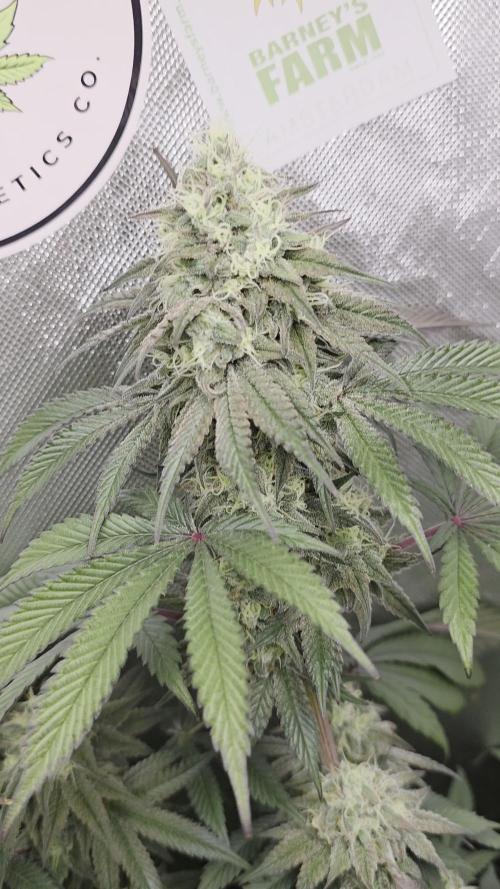
WEEK 10 - FLOWERING: Tropical Maturation
🌼 FLOWERING PROGRESS
We are now in the 10th week (6th week of flowering), and the Papayton is showing impressive development. The buds are visibly gaining weight and density every day. The resin production is in full swing, covering the flowers in a thick, sticky layer of crystals. It’s great to see how the plant is putting all its energy into the final flower formation. ❄️
👃 TERPENES & AROMA
The tropical scent is becoming much more defined this week. There is a strong, sweet papaya aroma that dominates the tent, perfectly complemented by a creamy finish. The Top-Max is clearly doing its job in bringing out these exotic fruit notes as the plant matures. 🍦
💧 NUTRIENT FEEDING & WATERING
The feeding schedule remains at a high level to provide all the necessary building blocks for the final ripening process. The focus is on maximizing terpene development and resin output.
Current Feeding Schedule:
Calmag: 1.5 ml/l
Acti-Vera: 5 ml/l
Bio-Heaven: 5 ml/l
Bio-Bloom: 4 ml/l
Top-Max: 5 ml/l
Bio-Grow: 1 ml/l
Likes
17
Share


@AfroBlooming420
Follow
I got a week and a half notice that I had to go on a work trip out of country for 10 days, so the clown show continued.
I was definitely overwatering them. Thanks @shinsimilla, I saw the difference after waiting a few extra days. Also, I definitely should have started LST at least a week earlier than I did.
Now for work issues: I found an old security camera that the cats had knocked over a million times and damaged. With a lot of tape, I got it working again and set up in the tent so I could see what’s going on while gone. Be warned, the photos are NOT good quality. I also looked up DIY self-watering systems. I needed it as simple as possible to reduce the risk of something breaking while I was thousands of miles away.
I found one where it wicks water up a cotton or wool string. Here's the link: https://youtu.be/P0hn5cKZ0Z0 I cut up an old 10K shirt that was made of cotton. I had just broken down my balcony garden since it’s already getting cold here. I took two long planters, lined them with a construction garbage bag to be the reservoirs. Even though the floor of the grow tent is waterproof and I put plastic between the floor and outside of the grow tent, I didn’t want to risk any water getting out while I was away. I was nervous y’all.
Basically, you wet the fabric then use a chopstick to run the it through the plant from bottom to top. It needs to be long enough to have a few inches sitting in the bottom of the reservoir. I filled each with 3L of water with the BioBizz nutrients mixed in and ph’d to 6.1.
More info in week 5.

Likes
2
Share

@PurpleBeen
Follow
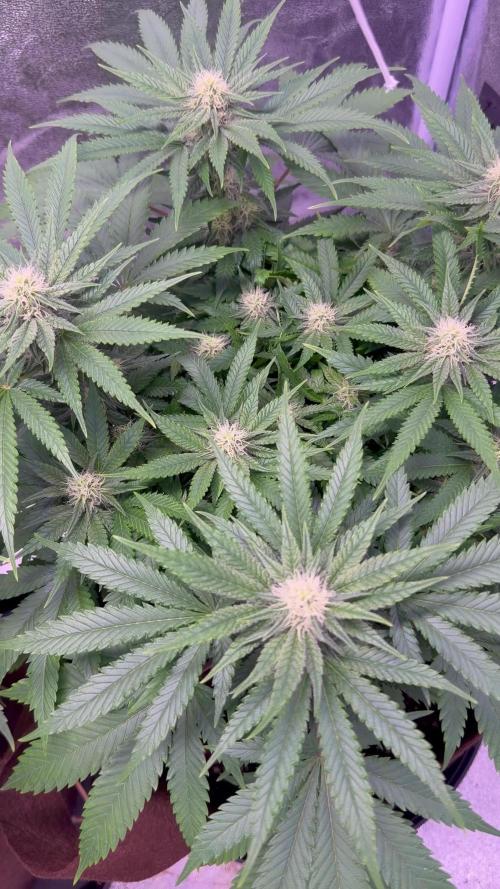
Week 4/ Flo
The Critical Widow is also in week 4 of flowering and developing really well. Her structure is a little different, and she has a noticeably earthier terpene profile. We’re following the same feeding schedule, alternating Resin Plus and Sugar Diamond, with a light introduction of Monster PK as long as she doesn’t show signs of overfeeding. She already has a beautiful earthy aroma.
2.5 L maximum, around 2 L on average.


Likes
5
Share

@Marijuanaut
Follow
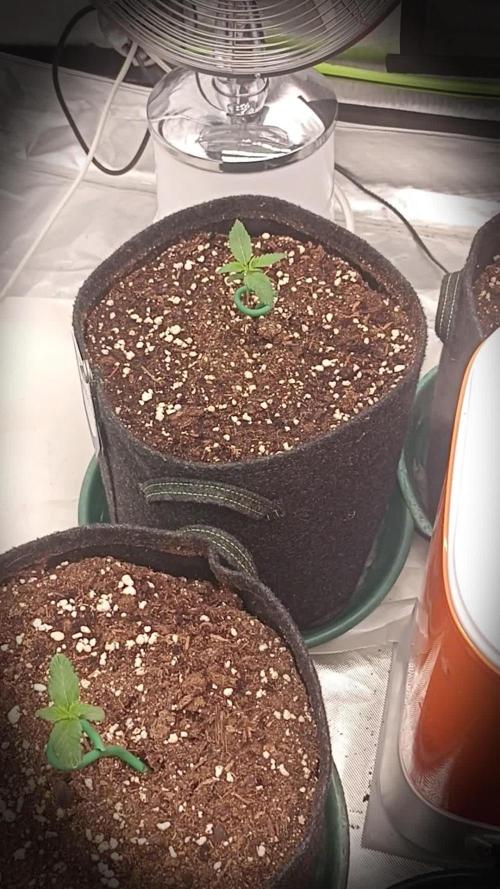
The stressful events from the previous week not only affected me but also my lovely ladies. 😔
Leggy seedlings that I´m now trying to compensate with extra care and detail to settings in my setup in order to mitigate the damage/stress! 😉
But the gals seem to fighting for a chance. ✊
