Likes
Comments
Share
No more silica! ~~~~~~~~~~ Questions & Feedback are welcomed, feel free to message me! Thanks for stopping by growmies! 🤙🤙🤙🙏🙏🙏
Likes
34
Share
@RFarm21
Follow
Semana 13: 31dez - 6janeiro Quase perto do fim!
Likes
15
Share
They been doing good this past week some I cut off some water leafs and they started booming the 3 cuts are good one seems like it rooted roots caught on to the cube already hoping they get better waiting for funds to get the fish shit start using that as soon as possible
Likes
2
Share
Wakíŋyaŋ, I am who I am, the salt of the earth. Thunderbird is an allegory; his conflicts with other forces in nature are then an attempt to allegorize relationships observed in the natural order, such as the changing of the weather. He is essentially an attempt to represent the patterns of activity of a powerful, mysterious force in a way that can be understood simply and easily – sort of the way in which a weather map functions today. Moving from18x60x60 = 64,800 seconds in 18 hours. 64800x860(ppfd) = 55,728,000 umol per daylight. Into Flower 12x60x60 = 43,200 seconds in 12 hours. 43200x1145(ppfd) = 49,464,000 umol per daylight. It's asking a lot of Rubisco regeneration to maintain 50 DLI in the 12 instead of 18. Raised the ambient CO2 to 1200 to 1500 ppm to achieve efficient gas exchange. Not particularly recommended, but adding sugar to an indoor growing medium is a highly effective way to stimulate microbial activity, which rapidly breaks down the sugars and releases CO2 through cellular respiration. You can safely capture this CO2 to fertilize indoor crops and boost photosynthesis. While this process works, the setup requires precise understanding and management to avoid common indoor growing hazards. The plant Carbon to Nitrogen C:N ratio defines the balance between structural carbon (sugars/cellulose) and nitrogen (proteins/enzymes). It acts as a master regulator of plant health, growth, and metabolism. Rubisco (Ribulose-1,5-bisphosphate carboxylase/oxygenase) is the engine of photosynthesis responsible for fixing atmospheric CO2 into sugars. It is intimately tied to the C:N ratio for three primary reasons. It is the Plant’s Biggest Nitrogen Sink, Drives the Carbon Side, and it is the Nitrogen Control Knob. Understanding this relationship allows you to predict how plants respond to environmental stress or fertilizer. Rubisco acts as the primary storage sink for leaf nitrogen, accounting for up to 30% to 50% of a C3 plant's soluble protein. Deep Green Leaves signal a rich abundance of both chlorophyll and Rubisco proteins. The plant possesses the heavy enzymatic machinery required to handle 1145 PPFD. Pale or yellowing leaves indicate a nitrogen deficiency. The plant is actively breaking down its own Rubisco to salvage nitrogen for newer growth, drastically reducing its light-tolerance threshold. Subtle difference, but understanding is important in order to be able to judge when to dial light intensity up and light intensity down, when to push, and when to back off. An extra dose of magnesium is vital if a plant is going to push through the growing pains of high-intensity lighting. Foliar application of magnesium is an excellent and rapid way to assist with Rubisco regeneration within a plant, so long as it is applied correctly. Spray strictly in the early morning or late evening, mixing your magnesium with a little fulvic acid or chelator, but only when she gets a little limey on top. This, for me, is the experience of growing, akin to "riding the surf" maintaining efficient Rubisco regeneration through visual identification of the shade of green. Surf a razor-thin wave when balancing light intensity, nutrient availability, and transpiration to maximize Rubisco enzyme efficiency. Keeping the Calvin cycle fully charged without tipping into nutrient toxicity, light stress, or the dreaded chlorosis requires paying close attention to the visual cues the plant provides. By monitoring these subtle shifts in color, turgor pressure, and leaf posture, you adjust your environmental controls and surf that exact razor-thin wave. Nute recycling acts as the vital execution mechanism for autophagy, which defines senescence. Natural senescence is a genetically programmed developmental stage aimed at nutrient recycling, whereas triggered autophagy is a rapid survival response activated by environmental stress. While both processes utilize the vacuole to break down cellular material, their triggers, selectivity, and overall goals are entirely different. Cannabis plant senescence is not separate from nutrient recycling protocols; rather, nutrient recycling is the primary physiological purpose of senescence, and autophagy serves as the core switch mechanism executing both processes. Takes about 24 to 48 hours to notice visible changes once the signals have initiated the autophagic response. Not too late at all. A little bit of fade from senescence 2 weeks from harvest is normal and genetically expected. Send the C:N 32:1 signal 1 week from harvest for the best effect in your organic grow. Understanding what makes leaves fade is not always senescence, but also strongly linked to Rubisco regeneration. That's a whole other subject. Vital to understand the differences if you want a correct diagnosis and to transition from hobby grower to master stoner, differentiating between a true genetic fade and a decline in photosynthetic proteins. Nitrate is nitrate, whether it oxidizes or not is not up for debate. If it's not sunk by the plant you are smoking some if not all of, it's regardless of what your feelings are on the matter. Senescence is highly critical. It is the natural end-of-life stage where the plant redirects energy to ripen flowers. Properly managed, it breaks down harsh chlorophyll, allowing the terpenes (which provide taste and aroma) to peak. Harvesting outside this window leads to an "unripe" or degraded flavor comparable to going without. To initiate the response you seek, you can trigger it multiple ways, when growing synthetically its triggered by nutrient starvation, generally when the entire medium is flushed. This is more to do with N starvation than being entirely empty. Nonetheless. PK boosters are N starvation through maximizing P and K. (Generally only works for synthetic grows) Normally, a medium only holds 10-30% of its nitrogen as ammoniacal ta part boosts this to 50% as it triggers the "ripen" signal, but you don't want to keep ammoniacal above 30% for more than 7-10 days if you can help it. Its a trigger mechanism no more. PK BOOST with 50% ammoniacal N signals floral maturation. PK BOOST with N starvation signals nutrient recycling/sinking. Because you are using organic nutes and you want to maintain the rhizosphere, what you want to do is add carbon in the form of sugars (powdered molasses). It's almost impossible to empty a medium enough when microorganisms are constantly releasing nutrients into the direct EC. Very difficult to initiate starvation responses with ammoniacal nitrogen. Manipulating the C:N ratio is the key to triggering an autophagic response and resulting nutrient recycling in the last days using organic nutes and without having to flush. Generally not recommended for new growers. So do what you want. But if you don't trigger the plant to dump its nitrates into root zones, you will smoke nitrates as NO3- does not oxidize during the dry and cure no matter what you do or how long you dry or cure. Doesn't matter what anyone "feels" about it, how many grows they had with no fade. "Clover steals valuable nutrients." Crop and drop the clover come flipping to flower, its benefit comes from creating an airy and porous rootzone. I don't need to crop and drop once the plant fills the canopy, she blotches out the light, and the clovers die. This is the nitrogen the microorganisms use to convert carbon for respiration throughout the flowering stage.
Likes
3
Share
@Satica_G
Follow
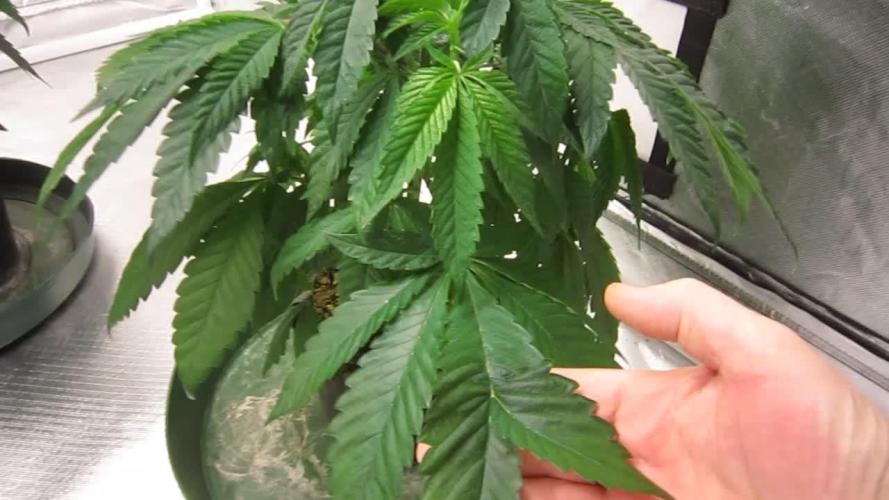
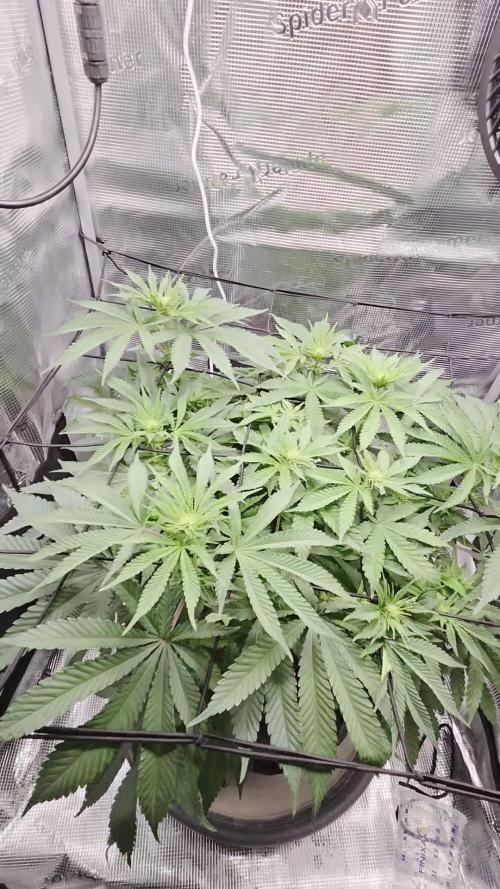
Der Samen kam aus der Erde, und damit er sich nicht streched hab ich das licht etwas herunter gelassen. Die Luftfeuchtigkeit war bei 35%, dass habe ich aber wieder im griff da ich eine Sprühflasche habe und eine Kuppel über den Setzling hatte. Bewässern brauch ich kaum da die Pflanzen wenig Wasser brauchen. Da die TS600 bei 60% Leistung nicht allzu heiß wird es ist aber auch Winter. Montag habe ich meine Spuckpalme dazu gestellt da die vielleicht etwas die Luftfeuchtigkeit reguliert ich hab keine Ahnung ob das stimmt ich wills auch nicht googlen wird schon funktionieren und wenn nicht sprühe ich sowieso regelmäßig mit einer Sprühflasche. Die Spuckpalme sah mir sowieso zu traurig am Fenster aus. Die Temperaturen waren am Wochenende im Zelt sehr hoch Sonntag Nacht hatte ich 5 Stunden lang circa 30°C-32°C. Trotzdem haben beide Pflanzen es super bestanden. Ich habe zum Umtopfen nächste woche einen 8L Topf, Mykorhiza und Wurmhumus gekauft. Dazu noch den Biobizz Indoor Dünger.
Likes
54
Share
@Hou_Stone
Follow
I'm happy for a first time, I obviously made a lot of mistakes but above all I learned a lot 👌😎 ------------------------------------------------------ Looking for MarsHydro equipment for your crop? 🔥 You can use my promo codes! 🙏😻 "houstone3" for: TS LED Grow Light, Tent, Ventilation for 3% off "houstone5" for: FC&FC-E&SP LED Grow Lights; Grow Tent Kits for 5% off https://www.mars-hydro.com/?acc=hou-stone
Likes
69
Share
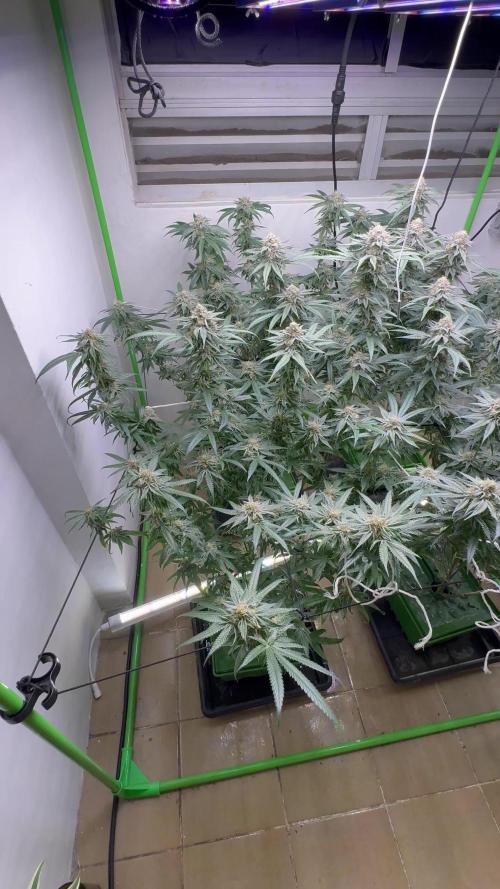
Week 14 from Seed – Week 3 of Flower – Full Bloom Ahead The garden is shifting, and so are the vibes — we’re now stepping into the serious stages of the Eternity Grow Cup. Week 3 of flower, and what a beautiful time it is. The girls are officially locked into bloom mode and starting to show their power, stretching with grace and stacking flowers that promise magic. They’ve filled up the SCROG like it was meant for them — one look, and you can feel the energy radiating off the canopy. We started this week a little on the chilly side, with temps dropping down to 16°C, but we found the rhythm. By the end of the week, we had it all dialed in: 24°C with 60% humidity, giving us a clean and steady VPD of 1.22 kPa. CO₂ is rolling at 1107 ppm, and let me tell you, the girls are loving every part of it. They’re responding like pros — strong, healthy, compact, with early signs of dense flower sites setting in all over the canopy. The ICL 300s are fully in play now, and they’re doing a spectacular job. Light penetration is even, and the plants are soaking it up. We’re still holding off on UV, just letting the full spectrum and reds do their thing for now. We’ve updated our feeding too — we’re now into Week 4 of the Aptus Holland Clean Program, and we are about to introduce Plagron Green Sensation into the mix. A little booster to spice up the bloom and get those flower stacks rising to the challenge. The water temps were a struggle — stuck at 14°C — so we dropped in a classic aquarium water heater, and now we’re sitting at a comfy 20°C. Small changes, big impacts. You can see it in the leaves, in the way they pray up toward the light. This week’s visuals? Shot with both the Nikon and Sony setups, featuring different lenses and filters to capture the layers of depth, light, and mood in the garden. The difference between them is clear — two different worlds coming together to tell one story. You’ll feel the vibe through the lens, I promise. Also, it’s veggie season outside — and in the middle of the flower hustle, I’ve been grounding myself with the babies in the outdoor garden. You’ll find some shots of the onions, peppers, and early green life joining the party. Nature always balances herself. Looking forward, Day 21 defoliation is just around the corner — we’ll be opening up the canopy, making way for the light to reach deeper, and helping these compact queens shine even brighter in the weeks to come. We’re just getting started. Massive love and gratitude to Zamnesia, Plagron, and Grow Diaries for building this amazing platform for us to grow, share, and celebrate this journey together. And to my beloved sponsors — Aptus Holland, Grove Bags, TrolMaster, ThinkGrow LEDs, Promix, Cannakan, and Ziggy Papers — thank you for the love, the gear, and the belief. And to all of you — lovers, haters, OGs, first-timers, and curious wanderers — thank you for being here. For showing up. For feeling the garden. This journey is for all of us. Let’s keep blooming. More magic coming in the next chapter. 🌸💨 Genetics - Runtz https://www.zamnesia.com/6000-zamnesia-seeds-runtz-feminized.html Nutrients - Plagron https://plagron.com/en/hobby - Aptus Holland https://aptus-holland.com/ Controls - Trol Master https://www.trolmaster.eu/ LED - https://www.futureofgrow.com/en LED - https://www.thinkgrowled.com Soil - https://www.promixgardening.com/en Germination - Cannakan https://cannakan.com/?srsltid=AfmBOopXr-inLXajXu3QFgKXCXXos4F1oEvScjMKIB5MR5dk8-GJ-F49 DOGDOCTOR 15% off Smoking Papers - https://ziggioriginal.com/ Terpene saver - https://grovebags.com/ As always thank you all for stopping by, for the love and for it all , this journey of mine wold just not be the same without you guys, the love and support is very much appreciloved and i fell honored with you all in my life With true love comes happiness Always believe in your self and always do things expecting nothing and with an open heart , be a giver and the universe will give back to you in ways you could not even imagine so As always, this is shared for educational purposes, aiming to spread understanding and appreciation for this plant. The journey with nature is one of discovery, creativity, and respect. Let’s celebrate it responsibly and continue to learn and grow together! Growers Love To you All 💚 #EternityGrowCup #RuntzHunt #GrowersLove #CannabisCommunity #AptusHolland #ProMixSoil #TrolMaster #Zamnesia #Plagron #ZiggiPapers #Grovebags
Likes
13
Share
2000 ml alle 2 Tage pH-Wert: 6,1 EC-Wert: 1,2 Temperatur: 22ºC Luftfeuchtigkeit 62% Schädlingsbekämpfung: PPFD: 500 µmol/m²/s DLI: 33 Düngemittel: Mineralischer Dünger 3.5-6-6 PK 13/14 Besonderheiten: Wurden direkt in die erde gepflanzt in einer Kokos-Quelltabletten. -Tag 65 Heute haben wir ihr wieder Wasser und Mikroorganismen gegeben. Wir haben sie auch wieder stark entlaubt damit die luft besser zirkulieren kann und sich kein Schimmel bildet. -Tag 67 Heute haben wir sie mit 2000 ml Wasser gegossen, versetzt mit 1,5 ml Calmag, 5 ml Canna PK 13/14, 1 ml Plagron Green Sensation und 1 ml Plagron Power Buds. Der EC-Wert lag bei 1.460 mS/cm und der pH-Wert bei 6,2. 👽 -Tag 69 Heute haben wir sie mit 2000 ml Wasser gegossen, angereichert mit 1,5 ml Calmag, 6,5 ml Canna PK 13/14, 1 ml HY-PRO Epic Blast sowie 0,32 ml HY-PRO Generator. Der EC-Wert betrug 1,480 mS/cm und der pH-Wert lag bei 6,2. 😎
Likes
78
Share
@ClubRiot
Follow
Week 10 , pH Perfect Connoisseur Bloom Part A ( 1 ml/L ) pH Perfect Connoisseur Bloom Part B ( 1 ml/L ) CarboLoad Liquid ( 2 ml/L ) Sensi Cal-Mag Xtra ( 2 ml/L ) Sensizym ( 2 ml/L ) Bio-Heaven ( 2 ml/L ) Overdrive ( 2 ml/L) Nirvana (2 ml/L)
Likes
24
Share
I ran into a mold and bug problem around this week, so I started harvesting branches in an emergency to save what i could
Likes
13
Share
@Erratico
Follow
Día 35: Se ven fuertes y creciendo bien, aparecen algunas hojas amarillas, especialmente las más grandes y las cercanas a la base de la planta. Se riega con 1.7 Lt. de agua, día por medio. Día 39: Se trasplantan a maceta definitiva de 11 Lts. No se ve un gran desarrollo radicular, se agregan micorrizas de Great White en forma espolvoreada y vía riego. Se utiliza sustrato All Mix para este último trasplante, el cual fue activado hace unos días y se le agrego micorrizas granulares de Great White.
Likes
3
Share
@CBDLord
Follow
Levágtuk az alsó hajtásokat. Átrendeztük a növényeket, hogy egyenletesen kapják a fényt.
Likes
1
Share
Hasta ahora muy bien mis planta aunque muy resistente presenta unos cuantos acaro aunque ya no puedo aplicar preventivos en el punto de floración en el que se encuentra ya solo qued a mirar el desarrollo de la planta
Likes
18
Share
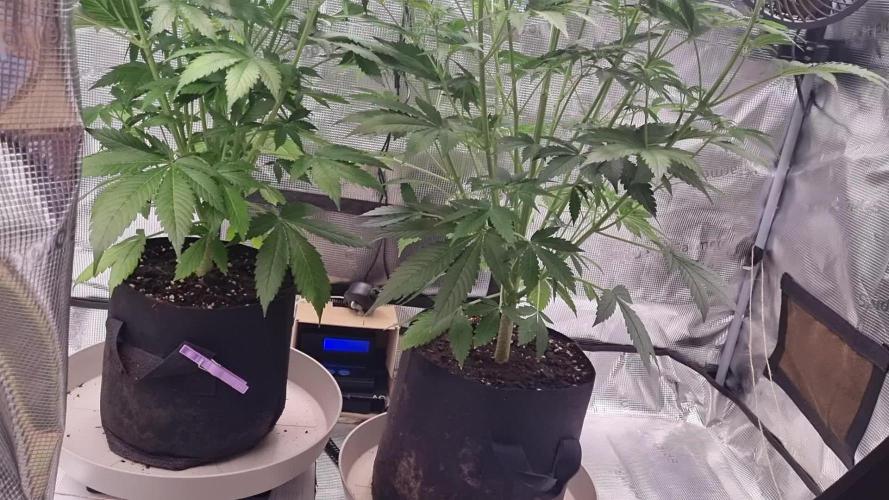
26/09 The second week of vegetation has begun, the sprout feels super great, I buried it 2-3 cm, so it looks a little shorter. I will start fertilizing from about the 15th day, until that moment I just pour water with the addition of Piranha 2ml / l, today I poured 10ml from a syringe around the sprout and today it stood all day without a cup under full light Tonight I added to the AD Piranha solution more nutrition for these mycorrhiza fungus in the form of Bud Candy. And carefully poured 5 ml of the solution 2-3 cm from the sprout on one side. Perhaps this will immediately help develop an excellent root system. I continue to occasionally wet the ground for it so that it would be more humid around it, since I have a fairly strong lamp for such a grow box, I think that it can be hot, although other plants felt great at this stage 30/09 Last night I poured her compote with Piranha and BudCandy 2 ml / l each, poured about 500 ml into her eye and lo and behold, she responded with rapid growth, she adds very much every day. I will try to alternate watering with ordinary water so as not to overfeed. And super genetics, she is gaining the thickness of the trunk already!
Processing
Likes
15
Share
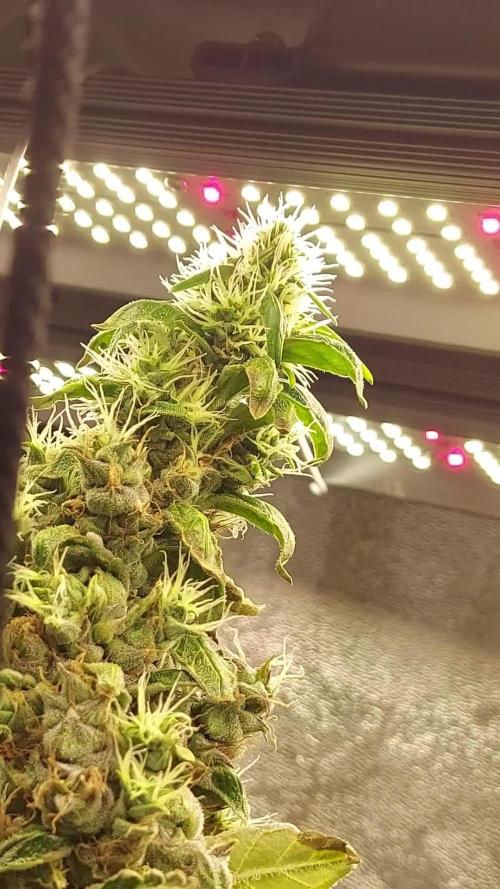
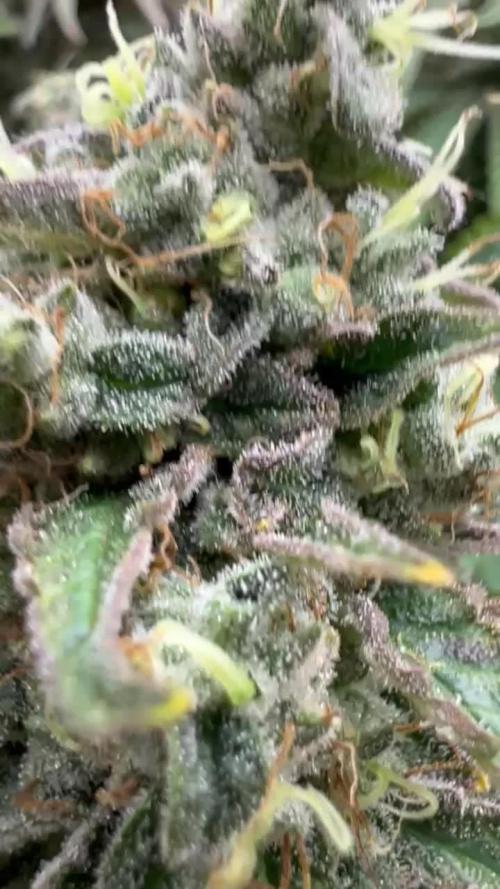
Finishing out week 5 of flower and continuing my daily treatment for PM. Using Athena Mildew Control, an organic reactive treatment spray that you can use on the entire plant up to harvest. Realizing PM is systemic and is like herpes...it never goes away! All you can do is spot treat on a daily basis, the outward symptom of PM, which is the white patches/spots. Treating primarily Mimosa, but also parts of the Bling as well. Napali Pink - As usual, is impervious to this type of PM and is thriving, with huge fat buds that still continue to get fatter and tighter by the day. They haven't even fully swollen up yet either. If the smoke is great, which I am sure it will be, this is a strain that I highly recommend growing. It has excellent branching structure with upward growth with very little help. Takes nutrients well and not too fussy or needy with any of variations of NPK or micros. I would say based on the looks of the buds and trichs, she will be a last to finish, but well worth the wait, as I have so. Many. Fat. Ass. Buds!! Mimosa - such an amazing daytime strain that I would loove to always keep on hand, as this strain is on of my All Time Favorites! However, with such prized buds and terp profile, she is vulnerable to PM. She has had it the worst, and always continue to spot treat it daily. She is gaining this cool hue of purple along the outer edges of the leaves, as well as what I thought was PM, but surprisingly turned out to be a shit ton of trichs! Buds are fattening up nicely and think she will be the 2nd to finish out of the bunch. If I could grow her again, I will, but will be sure and do a preventative treatment for PM during her entire life cycle. The Bling - she has been a trip growing, as she is very viney and lanky, but her branches firm up nice and strong. Practiced some Kushman Chiropractic on some of the stems with success. Had to spot spray, but not as bad as Mimosa's PM. Since I defoliated all leaves covering bud sites, along with huge fans, the buds have actually grown in height and girth! This one never ceases to amaze as she has come back from a bad HST. She is so heavy with trichs, it looks like it snowed on the buds. I am hoping to get a good yield but between the three ladies, she will come in last for that. Used bamboo stakes to secure all branches/bud heads; used zip tie and paracord to secure to bamboo. Now every single bud gets light! Also testing out a Diminishing Light Schedule and now down to 11 hrs of daylight this week. Will continue to reduce by 1/2 hr each week until I hit 9 hrs of daylight. I will hold at that. Otherwise, patiently waiting for harvest!