


Likes
Comments
Share


@Roberts
Follow
Cali crasher is coming down next update. She is under the Hortibloom Solux 350 at 50 percent right now. She is waiting her turn in the cannatrol. Everything is looking good. She has some nice big frosty colas on her. See you in a week for the harvest. Thank you Hortibloom, and Doctor's Choice Seeds. 🤜🏻🤛🏻💪🏻❄️🌱
Thank you grow diaries community for the 👇likes👇, follows, comments, and subscriptions on my YouTube channel👇. ❄️🌱🍻
Happy Growing 🌱🌱🌱
https://youtube.com/channel/UCAhN7yRzWLpcaRHhMIQ7X4g

Likes
2
Share


@C_More_Budz
Follow
Things are goin by smoothly started to give them some calimagic in low doses so they can get use to it. The upper 4 more so towards the left I believe are white Runtz because they all have similarities, and the bottom three in a triangle are all mac and jacks because again they all have similarities, the last two smaller ones I believe may be gelato but I still don’t know. Goin to start giving them low dose feeds and gradually increase it. I’m gone try my best to upload every Thursday and make a YouTube video as well I will provide all links once things are set in stone. Any input is appreciated happy growings growmies


Likes
9
Share


@grower1212
Follow
Dia de riego, claramente una no se ve tan saludable como la otra, ya que bebe mas agua y necesita mas dosis de nitrógeno. Comenzare a regarlas con dosis por separado para reforzar a la mas débil.


Likes
7
Share


@StonedandSteady
Follow
3rd w/ Flower: Buds Action and Everything is Supreme and Savory at thier 3rd week of Flower!
3rd Week of Flower: 3rd Flower Feed of #HumboldtCountysOwn and the Ladies Love the Bloom portion of Nutrients! They're Stacking Up Great and Filling Out thier Mighty Branches with Giant Gorgeous Budz! 5 Confirmed Females!!!
It's been a few days since I gave the Ladies thier 3rd Feed of #HumboldtCountysOwn Nutrients and they look Fantastically Divine!!! We'll definitely Grow back to everything here soon! 11th w/ Veg and Flowers Update #Pre-Sexed🚺 #SuperCropped #Defoliated #Lollipoped
Good Day and Happy Growing Everyone! These Ladies were Growing into thier 11th Week of Veg and Looking Totally Tight and Phenomenally *Femed* from the Right!
#Pre-Sexed 4/9/21 #Opium/#PabloEscobar *Fems* breed by Team #DivineSeeds #DivineSeedsSquad #DivineSeedsBreedingCompany and #SuperCropping continued! I'm Very Excited and Extremely Gracious!!!
Heck Yeah Growmies and Growmets!!! Check Out these Confirmed Females with thier Wild Pistol Hairs popping and I'm still Training and Widening them Out with #SuperCropping Everything looks Expanded and Growing Great!
After #SuperCropping the plant will Grow Bushier, Produce More Buds, and possibly even Produce More THC! This is how the plant naturally responses to danger and protects itself! Growers take advantage of this technique to get Bigger Yields and More Potent Buds than would be produced otherwise!
Getting Trained out into thier 11th Week of Veg and Looking Mighty Fine!!! Thier getting Humongous and Hearty in thier 10 gallon Grow Bag from Broski #www.as420.ca These Cannabis plants are Camping out in the Closet for a week or so! Lol
This is my 2nd run using the Osree.Light QB1000w and Everything is Mesmerizing!!!
My #Opium and #PabloEscobar *Fems* from #DivineSeeds Regs: SalamiLegF3's×2 and FireAlienRomulan look$ Outstandingly Awesome and Growing Up Phenomenally Fine into thier 11th week of Veg in our 2- 10 gallon The Grow Bags from Broski #www.as420.ca and also 2- 5 gallons as Well! Our others are Super and Breed by #thehumancannabiniod #AlienBloodGenetix #TNBNaturals #Foop
Yo!!! Thanks Again for All the Love and Support my fellow Growmies and Growmets!!! These Magnificent and Magical Ladies were Growing in our 48×24×60 ViparSpectra Official Club 🌿 ®️ Grow Tent and under our #Osree QB1000w and #GrowStarStore Kokokala QB1000w and our Purple Rose Cutting×2, Aloe Vera Cutting, Maters×3, Morel Mushroom, Lavender×3, Sunflowers×5 and The 5 Brand New and Fresh Starts are Wonderful with a Huge Hint of Fantastical Fire is my #SalamiLegF3×2 by Broski #thehumancannabiniod #DankFlowGenetics #EastCoastSeedBank #FireAlienRomulan by Broski #AlienBloodGenetix my #PabloEscobar and #Opium by Team #DivineSeeds #DivineSeedsBreedingCompany We Grow with #Growatt 600w with #FoopOrangicBioSciences and #TNBNaturals The Enhancer Co2 Despersal canister and ph'd them w/ Declorinated watering w/ TNB ph Up and Down! Totally Top Quality Topz all Around! Thanks Again #GallowGlas420 #HarleyGrower #thehumancannabiniod #AlienBloodGenetix #TNBNATURALS #FoopOrangicBioSciences #www.as420.ca #divineseeds #divineseedssquad #divineseedsbreedingcompany #BioFlux Family's and Teams!!! Your Genetics are Merry Magnificent, Mega Marvelous and Mighty Medical! Love um!!! I really Can't stress enough how Thankful and Grateful I am of All of you and what you've Shared with Us! Means the World!!! It's definitely a Pleasure being able to Grow with these Phenomenal Grow Lights! Please Enjoy! BudBrothers4-Life! Cheers Famz!!! Much Props and Much Topz!💯🔥 #Osree #GrowStarStore #Growatt #TNBNaturals #TNBTeam #FoopOrangics #GrowYourOwn #Bliss
HumboldtCounty'sOwn:
Email: info@humboldtbottling.com
Phone: (707) 725-4119
Toll free: (866) 872-9434
Humboldt Bottling
Po Box 429 · Fortuna, CA 95540
HumboldtCounty'sOwn Website Link: https://humboldtcountysown.com/
HumboldtCounty'sOwn Instagram Link: https://instagram.com/humboldtcountysown?igshid=1qj809qkkwych
https://instagram.com/osree.light?igshid=1vrsbdyhzg2h8
https://instagram.com/growstarstore?igshid=2yjn0r00r6ru
https://instagram.com/divine.seeds?igshid=1r90iwe9xiwz8
https://instagram.com/thehumancannabinoid?igshid=17k159pumklkq
https://www.instagram.com/alienblood_genetix_official/
https://instagram.com/as420.ca?igshid=1f116alw054wp
The Grow Bags: https://www.as420

Processing
Likes
6
Share


@Mr_nugs_lover_David
Follow
Hello everybody!! I topped my princess on day 29 since she was born,she's in a 30l tex pro pot,I'm using dry amendments by guanokalong, veg pearls,sea weed powder and bat guano.she looks very very healthy looks like she's enjoying it right now let's see how she develops

Processing
Likes
15
Share


@No_Clout
Follow
27/02/19 - Cant wait for these to be done as I’ve never had gelato before so I feel like I’m missing out 😂 but yeah other than I let them stretch abit taller than I usually prefer it’s all going well, new genetics/nutrients/medium seem to be doing the job.
02/03/19 - Just transplanted all into their final pot, just in time I think as it looked like the roots were starting to circle at the bottoms of the pot, sprinkled half a tea spoon of Mykos on each hole prior to the transplant & fed them 2.5 litres each. I was going to saturate the whole pot but I’ll do that next feeding.

Likes
30
Share


@Mazgoth
Follow
Going little bit slower but will see,(UPDATE D51)i put an CFL 200W lamp at day 48 until harvest,the older lamp was a waste of time and waste of money,hope the plant will get a lot bigger with this light
Likes
33
Share


@Wicked_Stix
Follow
A few days late on the update for this one. She is the shortest plant in the bunch and looking like she is going to put on some nice buds. Gave them a pinch of beastie bloomz today so they have plenty of feed to build those buds

Likes
12
Share

@GoodTimesOrganics
Follow
Welcome Back!💚
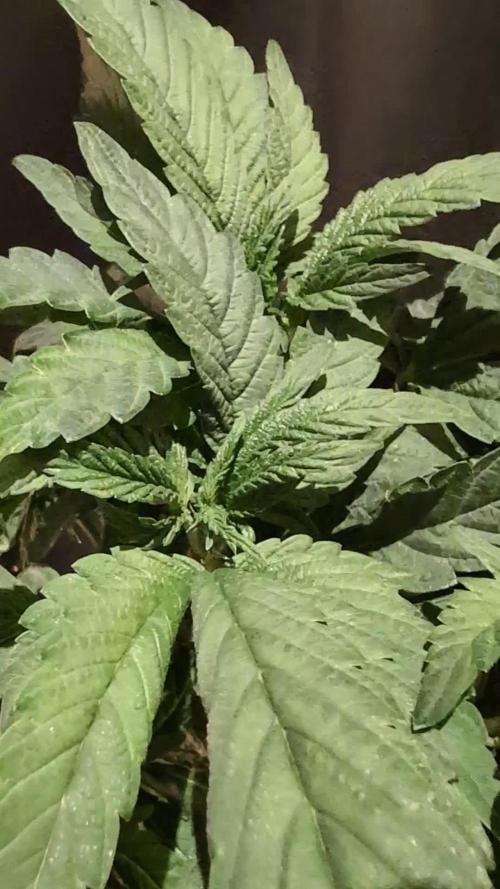
Nach der sechsten Woche des Wachstums entwickelt sich die Snapple Apple weiterhin nur spärlich
Scheint so, als hätte sie das topping nicht so gut vertragen / eine mögliche Überwasserung wäre inzwischen auch relativiert.
Allmählich ist eine reguläre Triebform erkennbar, dennoch bilden sich die Triebe sehr langsam und eng anliegend aus.
Daher habe ich ein paar Beugungselemente an die Seitentriebe angebracht.
Es ist nach dieser Woche Zeit für gute ebenfalls in die Blüte überzuleiten, den an Wachstum erwarte ich nicht mehr viel.
Mal schauen, was dann passiert🙈
Ich bin gespannt, wie sich die Pflanze entwickelt.
Die Umgebungsgegebenheiten sind OK:
—————
🌞 Temp: 21°C
🌚 Temp: 18°C bis 19°C
💨 RH: 54%
VPD: 0,85 kPa
—————
Viele Grüße 👋
Likes
55
Share


@Hempy_The_Kid
Follow
02/09/22 changed nutrient water PH 5.93 TDS 890. Gave 2 quarts recharge. Will give foliar feeding at lights out.
02/10/22 PH 6.15 TDS 863. Removed a couple small suckers.
02/11/22 Ph 6.19 TDS 920
02/12/22 PH 6.22 TDS 924
02/13/22 PH 6.15 TDS 916 gave 2 quarts recharge. will give foliar feeding tonight at lights out. This is final foliar feeding.
02/14/22 PH 6.15 TDS 942
02/15/22 PH 6.15 TDS 902 tomorrow morning will start feeding 2x day.

Likes
3
Share

@grimm420
Follow
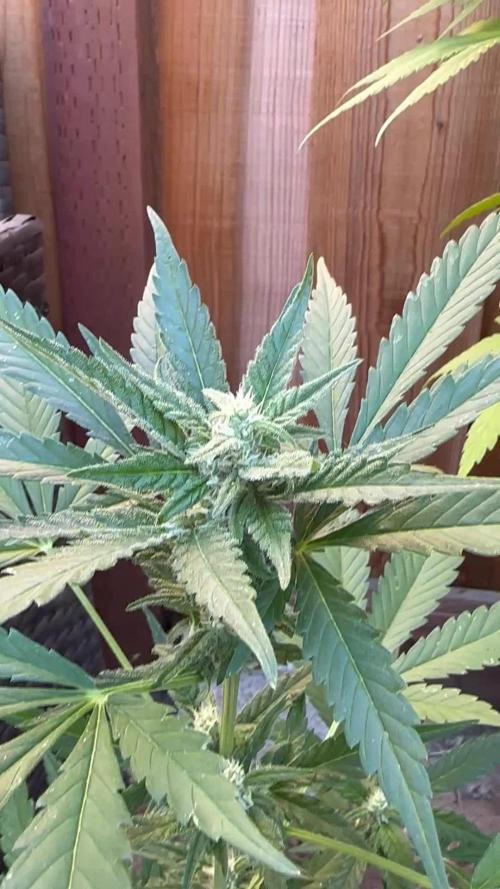
Dude this thing smells amazing, got a creamy/sweet/citrus smell when I got some sap on my hand. Looks like someone dropped coke on my plant 😂 all these new strains amaze me one way or another! Would like to learn how to stretch autos outdoors in the future.
Likes
18
Share


@xtchill
Follow
Well the end has come to this beautiful strain
What can I say it was fun to grow even considering the early problems I had with the yellowing it turned out amazing
The smell and taste are out of this world.
Tastes very citrucy and sweet.
With a super heavy high.
Looking forward to curing this one.
Onto the next and big up the followers

Likes
18
Share


@Canadian
Follow
The plant it's ready for harvest it had reach it's Highest THC point but I will wait a little bit more to allow the other plants in my garden to catch up it looks really nice smell very pleasant.
Well be harvesting very soon but depends on how the Amber trichomes goes in my other plant but it seems to be no more than 4 days but definitely don't want to rush it.
I will continue to update have a happy grow

Likes
7
Share


@Big0zGrower420
Follow
Hey everyone
These two have been doing great so far. 14 days from seed and they are growing very nicely. Earlier this week I topped dressed with earthworm castings and dr earths organic all purpose fertilizer
Likes
36
Share


@Grey_Wolf
Follow
High Level again 👍
Eva seeds high level
7th March 2022
She is looking great as she moves further into her blooming stage .
Gave her a small amount of Monsta bud to help those pistils develop 👌
The change from Summer to Autumn is probably the best time of the year here weather wise and all of my plants are soaking up the
warm sunshine without that horrible heat to contend with.
I have noticed they are all requiring a bit less to drink each day as well , which would be in part due to the soil not drying out as quickly as it was .
I am not sure what is happening with Grow diaries and all of the glitches lately but it has made me decide to take a break once all of my current
diaries are harvested . Maybe the site will improve we'll see.
Thanks once again for stopping by 👍
R.I.P Warnie 👊

Likes
Comments
Share


Likes
10
Share


@Froggman
Follow
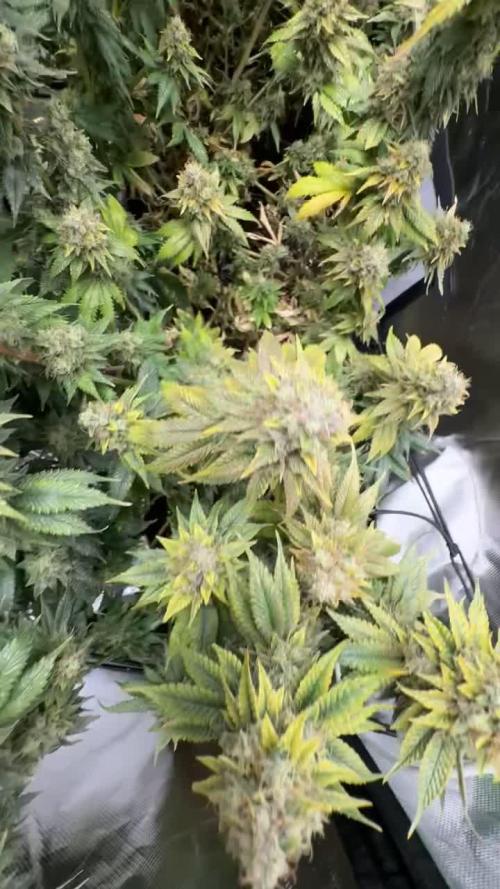
Love how these are looking. Did defoliation and have also fed cal/mag, recharge, and epsom salt.
