




Likes
8
Share


@Growin_Ish
Follow
Day 63
What a turn around! Got my watering issues manageable.
Last watering for Candace I added Mykos and Azos to my water. Switched from SimPro to Terp Tea. #GIRTH # FROST #AROMA
Sheryl got that same recipe tonight. Candace didn't need water, but I splashed about 8oz in her dish for the bottom roots.
Take Away? It's a weed so it's resilient. Have patience, don't panic, let the plants tell you what they need.
Came back from out of town and the girls were looking famished. I put 1Tbl of Terp Tea Bloom in a gallon of rain water with Mykos, Azos, and Fish Sh!t. Fed both plants half gallon each.

Likes
3
Share


@Ogbangbang2981
Follow
still spraying tiresias mist Sunday gonna be my last day of the mist and sit back and wait for pollen sacks (or as I like to say nut sacks )

Likes
5
Share


@BigGGrows
Follow
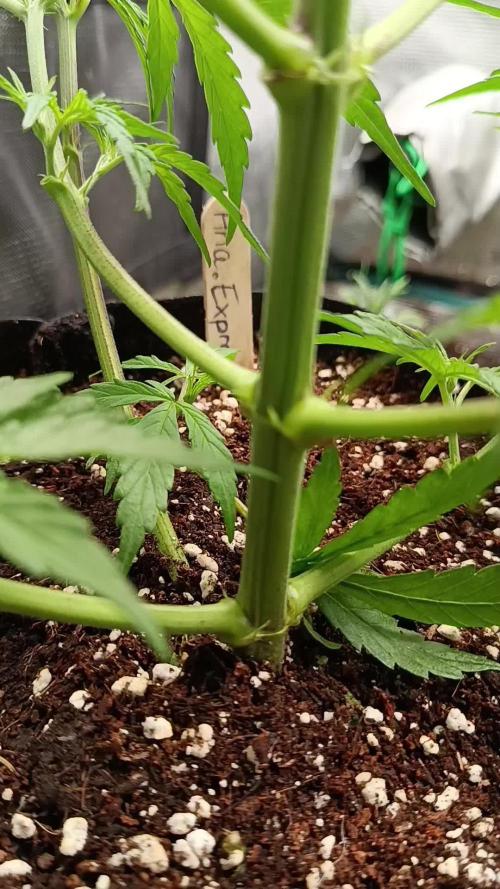
This week was good for the Cream auto. I performed some defoliation and undid the LST for a couple days as well as raised the lights to 24" to induce some stretching. I did selectively begin LST on the Cream towards the end of week 5. She has been getting 1/4 strength flower nutes and recieved a fresh top dressing of hot soil coco coir mix; as her roots were surfacing. So far so good. Atleast 20 budsites are visible and she has responded well to all the training and is coming into her stretch period. Now all we are waiting on is them white pistols to start shooting at the budsites. Hopefully week 6 will entail this! She should be at about half of her life span at this point. 4-5 weeks more of flower is expected before harvest.


Likes
3
Share

@IlseImWeedland
Follow
Die Wurzel hat Platz bekommen & die Pflanze ist gewachsen. Große Blätter weiterhin. Bisher ein Blüte Ansatz sichtbar. Weiterhin alle 2 - 3 mal innerhalb von 7 Tagen gedüngt mit BioBizz Grow. Milliliter angepasst. Compression Sprayer wird benutzt für klares Wasser.

Processing
Likes
12
Share


@Adam420
Follow
Finally, she has flowered. 😫
15 weeks and to think I almost didn’t keep her.
Complete stop in growth and last leaves forming with pistils.
She’s showing her colors
Likes
92
Share


@DogDoctorOfficial
Follow
Week 7 Flower Report – The Masterpiece Garden Unfolds
🌱 Introduction
Welcome back to the most thrilling chapter of our journey yet! Week 7 of flower is here, and the garden has transformed into a paradise of unique beauty and diversity. Every plant has its own personality, showcasing the results of all the hard work, dedication, and love poured into this run. Let’s dive into the details and celebrate these girls like never before—because they deserve it!
🌸 Plant-by-Plant Breakdown
Papaya Zoap
The rebel queen of the garden, aiming for the stars with her towering structure. Her dense, frosty white nugs sparkle like diamonds, and her leaves are fading to a stunning yellow hue—a clear sign she’s ready to shine. Her aroma is captivating, leaving no doubt she’s going to be a showstopper.
Gorilla Melon
Standing tall as the second in command, this beauty is all strength and vigor. Her vibrant green foliage cradles thick, frosty buds that exude a fragrance worthy of her name. A true contender for the title of MVP.
RS11
This one’s a frost factory! Long, elegant buds dripping in trichomes, with leaves gracefully fading to yellow as she transitions toward the finish line. Her balanced stature and impeccable structure make her a dream to cultivate.
Green Papaya
The frostiest of them all, her sugar leaves are curling under the weight of so much resin. Every glance reveals a shimmering coat of trichomes that’s hard to believe. If frost were a competition, she’d already have the gold medal!
Mandarin Squeeze
Dark and mysterious, this beauty stands out with her rich, deep green tones and impressively dense buds. Her flowers feel like rocks, and her aroma hints at a citrusy explosion waiting to happen.
Punch Pie
What can we say about this heavyweight? Her large, dense buds are jaw-dropping, and her presence in the tent is commanding. She’s proving to be a genetic masterpiece, delivering beyond expectations.
🌞 Environmental Mastery
This week, we’ve begun the slow decline of PPFD to 750, keeping reds and UVs strong while easing back on whites—a calculated move to guide these girls into the final stages. The room’s stats speak volumes:
• Temps: 27.8°C with RH at 64.8%.
• CO2: 800 ppm for consistent growth energy.
• Reservoir: PH 6.16, TDS 791, temp 21°C.
• Soil Stats: TDS 669, temp 22°C.
Even the fun facts are worth noting: leaf temps are ranging between 26.6°C and 24.2°C, while the LED bars are holding steady at 38°C, and the ICL-300 at 35.6°C. Aero Fan at 23°C and the filter output at 24.7°C highlight the precision and control in this room, all thanks to the incredible TrolMaster ecosystem.
💧 Feeding and Nutrient Update
Our transition from organic minerals to a solo mineral approach has been a game-changer. These girls are thriving! Here’s the recipe this week:
• System Clean: 0.25 ml/L.
• RO Water Conditioner: 0.8 ml/L.
• All-in-One Liquid: 1.75 ml/L.
• K-Boost: 0.5 ml/L.
• Regulator: 0.15 ml/L.
This blend is bringing out the best in each plant, delivering unparalleled frost, density, and aroma. The stability of the pH, thanks to minerals, has made life simpler while pushing the plants toward peak performance.
🌟 Reflecting on Progress
It’s a joy to walk into this room and witness the results of months of effort. Each plant is delivering on its promise, and the smells, colors, and trichome production are truly next-level. The journey has been demanding, but the rewards are sweeter than ever. The curiosity to see how they finish is at an all-time high!
💬 Shoutouts and Community Love
As always, massive gratitude to the sponsors that make this possible:
• TrolMaster for precise environmental control.
• Aptus Holland for top-tier nutrients.
• Cannakan for their unwavering support.
• Pro-Mix Soil for a robust foundation.
• Seed Banks for the incredible genetics.
To the Grow Diaries community, our followers, lovers, haters, and everyone in between—thank you for being part of this journey. Your engagement fuels the passion to keep growing, learning, and sharing.
📣 Call to Action
If you haven’t already, check out our YouTube and Instagram for exclusive content and updates. Don’t forget to hit that like button, subscribe, and ring the bell so you never miss a beat. Join us for the next episode, where we’ll dive into super-cropping and give the room another round of defoliation as these girls keep reaching for the finish line.
Let’s keep growing, learning, and celebrating this beautiful process. 🌱✨
Growers Love,
Your Grateful Gardener
Discount Codes so you can save big on your next check out 💚💚💚
Kannabia - DOGDOCTOR 30% off
SeedsmanSeeds - DOGDOCTOR 10% off
CannaKan- DOGDOCTOR 15% off
terpyz.eu - DOCTOR 15% off
The Neutralizer - PORKIT5-DOG 15% off
Fast Buds - DOGDOCT 15% off
As always thank you all for stopping by, for the love and for it all , this journey of mine wold just not be the same without you guys, the love and support is very much appreciated and i fell honored and so joyful with you all in my life 🙏
With true love comes happiness 💚🙏 Always believe in your self and always do things expecting nothing and with an open heart , be a giver and the universe will give back to you in ways you could not even imagine so 💚
Friendly reminder all you see here is pure research and for educational purposes only
Growers Love to you all 💚💚💚


Likes
12
Share


@Mysterdo420
Follow
Hello tomorrow gonna start week 13 one from those is almost reaady to chop it is a Tropicana Cookies i start to flush last week today it was second time with pure water 1.5l ,probably i make one more flush this week and į thinking to strat to dry in next weekend other gonna be Orange Sherbet and Gorilla Cookies will see this week and maybe i start to flush those in next week or after 2 weeks time will show , about Purple Lemonade she gona be a latest ladie one week with nutr ant rest for flushig gonna be something like that in my opinion have nice evening and happy Growing
Likes
92
Share

@DogDoctorOfficial
Follow
Harvest Notes ✂️
• Harvest Timing: Papaya Zoap was harvested at day 63, with select buds taken earlier at day 56 due to mold concerns.
• Drying: After careful trimming, the buds were dried for 12 days. The quality and aroma during drying hinted at the stellar smoke to come.
• Density & Yield: Buds were rock-solid, delivering an excellent yield with perfect density for storage and enjoyment.
Terpene Profile & Aromas 🍋
• Primary Aromas: A tropical explosion with sweet papaya upfront, complemented by creamy, soapy undertones that make her truly unique.
• Complexity: As the buds cure, a hint of citrus zest and exotic fruit emerges, creating a full-bodied terpene profile that’s simply irresistible.
Cultivation Experience 💡
• Highlights: Her uniform growth, heavy trichome production, and response to super cropping made her a delight to grow. She thrived under careful spectrum adjustments and defoliation, showcasing her adaptability and vigor.
• Challenges: The dense bud structure made her more prone to mold, especially in a high-humidity environment. However, proactive monitoring and swift action mitigated the spread.
Verdict: 🌟🌟🌟🌟🌟🌟🌟🌟🌟🌟 (9.8/10)
Papaya Zoap is a strain that commands attention with her beauty, aroma, and unstoppable growth. While her susceptibility to mold required extra care, her overall performance, yield, and quality were nothing short of exceptional. A grower’s dream and a frosty masterpiece!
Stay tuned for their individual harvest reports, smoke reviews, and more as we wrap up this epic series!
Discount Codes so you can save big on your next check out 💚💚💚
Kannabia - DOGDOCTOR 30% off
SeedsmanSeeds - DOGDOCTOR 10% off
CannaKan- DOGDOCTOR 15% off
terpyz.eu - DOCTOR 15% off
The Neutralizer - PORKIT5-DOG 15% off
Fast Buds - DOGDOCT 15% off
As always thank you all for stopping by, for the love and for it all , this journey of mine wold just not be the same without you guys, the love and support is very much appreciated and i fell honored and so joyful with you all in my life 🙏
With true love comes happiness 💚🙏 Always believe in your self and always do things expecting nothing and with an open heart , be a giver and the universe will give back to you in ways you could not even imagine so 💚
Friendly reminder all you see here is pure research and for educational purposes only
Growers Love to you all 💚💚💚
Likes
23
Share


@eldruida_lamota
Follow
Buenos días familia, nos acabamos de levantar y como buen viernes , actualizamos la 4 semana de floración.
Las lemon kush en este caso, empiezan a desprender un aroma cítrico y a pino bastante agradable, las flores están formándose sin problema alguno.
El Ph lo regulamos a 6.5 siempre, está semana que viene retiramos big bud y aportamos OVERDRIVE de advanced nutrients.

Likes
10
Share


@wheedtobeus420
Follow
Day 57 she’s beautiful happy loving life. I can’t wait for her to be done. Mhhhhh my
Favorite.
Likes
Comments
Share


@Backyardnewbie
Follow
Hand Watering still EC 2.0 canna coco A&B pH. 5.5-5.8 light is 24 inch above 100% added 1ml/L of calmag on day 12.
Day 13 - raised lights to 36 inches. At 100% PPFD of around 400. Plants started reacting very well. Turned Autopots on as well.

Likes
12
Share


@Boomer911
Follow
Growth Overview:
Vegetative Stage: Auto Critical Orange Punch developed into a thick and bushy plant with vigorous growth. It filled out its space well, creating a dense canopy of healthy, deep green leaves.
Flowering Stage: The plant maintained its bushy structure, with buds developing steadily and gaining significant mass. By the time of harvest, the buds were thick and plentiful, displaying a beautiful orange hue typical of this strain.
Harvest Details:
Timing: Harvested at the peak of maturity, with the trichomes reaching the desired level of cloudiness and amber.
Yield: The plant produced a substantial amount of dense, resinous buds, thanks to its bushy nature and strong branching.

Likes
15
Share


@Waveform
Follow
Instead of pictures showing a dying lady: A timelapse video of their whole life.
Had lady #2 run under continuous light for the last days. Probably went one day too far, which caused her buds to become somewhat fluffy too, but full of resin as well.


Likes
24
Share


@Newbiegrower420
Follow
UPDATE: Day 2 of week 9 Saturday 17th October:
Nutes in today and more LST. Defo running out of space, so LST is proving more tricky and stems are less bendy now and much easier to crease! I’m tempted to not try too much more teasing of the plant and purely work on light height from here on in.. I don’t wanna mess up all my hard work by trying to force the plants too hard, damage them and stress them out.
Other than that all looking great and pistils coming through lovely 😊
UPDATE- Day 4 of week 9: Monday 19th October
Nutes in again. Increased the BioBizz Top Max this week to 3ml/l so let’s see how they respond. One girl looks like she’s a little slower than the others but other than that happy days. Oh and the crease I made in the main stem on one of my ladies last watering, doesn’t seems to have suffered any for it thankfully..
UPDATE: Day 6 of week 9 Wednesday 21st October;
Nutes in and a little defoliation. Have a mild case of thrips, so I’m concerned about what products to use as I’m now in the 3rd week of flower and don’t want to spoil the buds or taste.. Argh! Since putting in the dehumidifier temps have soared which is what’s causing the thrips.. Gonna use the cardboard box method for the dehumidifier to get it out the tent, just need to pickup an aluminium hose and ducting tape. Pretty pissed as I’ve had such a smooth ride up till now. Really don’t wanna spoil my first grow. Thinking some Neem oil may help but worried about spoiling the buds ☹️
Happy growing peeps! 💚✌️🏼
Likes
21
Share


@PeterSage
Follow
last week was a stormy like one... it even occurred some hail at one point, as you can see the damages in the pics.
since it was frequently and heavy raining I have not watered, and haven't give any nutrients, except a little bloom disc by royal queen seeds at the start of the week, but one day later it started changing the weather, so I don't know how much of effect it gave...
Likes
4
Share

@Brotan1ker
Follow
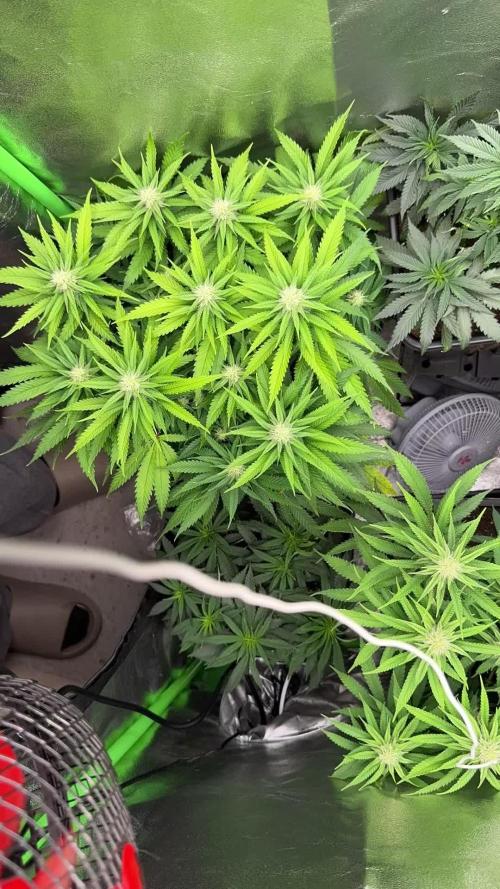
I started to notice that my leaves started to turn yellow. Maybe my led was to bright.
So I turned it down a bit.

Likes
38
Share


@GMSgrows
Follow
The Ak2.0 are flowering up nice. Cycle nutrients seem to be feeding them nice. Girls are large, will give them more wattage next run. Cmd lights were just not cutting it. Will use the hid for vegging like I always did.
