


Likes
Comments
Share


Likes
1
Share


@Kushfarm1
Follow
Some plants getting near to harvest, some can't even hold the weight auf they own buds anymore.

Likes
13
Share


@FlavoursUk
Follow
So, eventful week.
Prior to putting my seeds into my system, my light and rdwc system was left on as I was dialling in the growing environment before placing the seeds as a final home. My only issue was I had a light leak BEFORE putting the foil top covers on the clay pebbles. Long story short, I got algae which ended up turning to root rot.
I spotted it very swiftly and did a res change adding beneficial bacteria to the system along with the base products of remo nutrients. A few days later new growth and recovery is taking place.
Day 16- Fully back on track, new roots shooting out into the water and the growth rate has picked up as it should.
Foliar feeding twice a day for a little boost until the root system establishes a bit more. Huge changes in just a day. Can't wait to see what a week's growth looks like.
Really loving the sunset/sunrise feature on the trolmaster, something I got to experience watching recently!
Watching by closely to make sure everything stays in track.
Stay tuned for the next one 😉


Likes
21
Share


@Excalibur
Follow
09 October 2018 -
Day 106
Crystal was trimmed and nugs left for a week to fill out.
10 October 2018 -
Day 107
pH good
11 October - 2018 -
Day 108
Kolas are dense and thick
12 October 2018 -
Day 109
Removed from Tent and hung.
13 October 2018 -
Day 110
Drying nicely , Humidifier added .
14 October 2018 -
Day 111
Further trimmed and added to discs for overall ventilation
15 October 2018
Day 112
Rotating Tiers to make sure we dry evenly

Processing
Likes
4
Share


@Hisknibbs935
Follow
day 7 first time and first time using set up so had a few problems getting environment right,seems to be okay now they are coming on,eager to see how the take in the next few weeks gonna start terra vega by end of next week possibly.terrapro+ soil

Likes
1
Share

@BalconyBoy
Follow
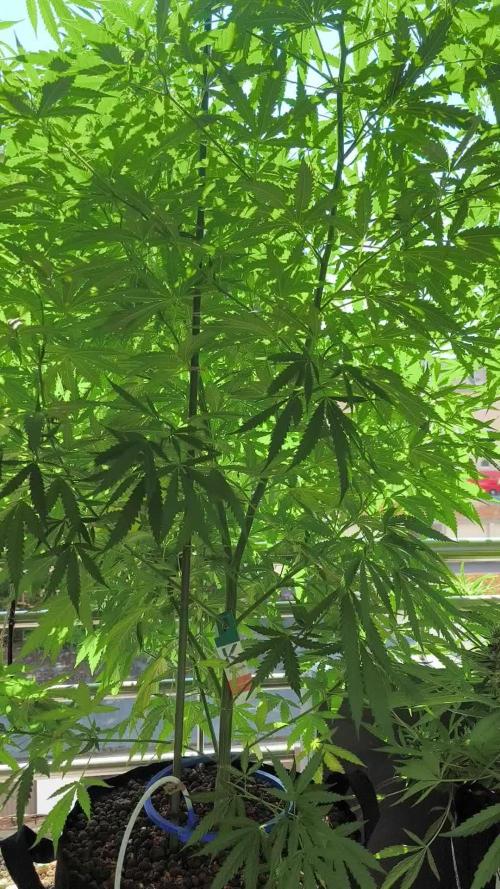
03.08.26 Die Jack47 hat sich nun mehr verzweigt als weiter in die Höhe zu wachsen. Noch sind nicht genug Pistillen an den Triebspitzen das ich von richtiger Blütephase sprechen möchte aber bald. Ein weiteres super cropping war nicht nötig im Gegensatz zu Blueberry Pie. Ich bin nun von Zitronensäure auf Phosphorsäure umgestiegen da ich hoffe den Ph Wert im Wassertank damit länger stabil zu halten (und keinen Biofilm zu bekommen) während meiner Abwesenheit in der das Reservoir drei oder vier Tage halten soll bevor es aufgefüllt wird.
Happy growing allerseits!

Likes
21
Share


@TheGanjaFarmer
Follow
The buds are starting to get really dense now, very strong smell of diesel, some amazing colours coming off this beauty looks so good 🤤🤤🤤 hopefully only a few more days

Likes
7
Share

@DogDoctorOfficial
Follow
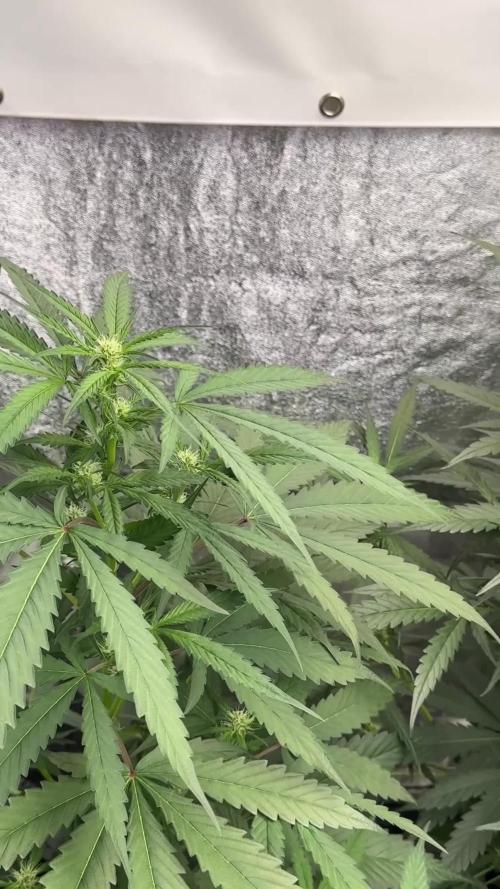
🍬 Candy Rain Auto by Zamnesia | Week 5 (Late Vegetative Growth / Pre-Flower)
🍬 The Patient One – Growing at Her Own Pace
Every grow has a story, and not every story begins perfectly.
Candy Rain is the only survivor from this folder. Losing her sister early in the project was entirely on me, and that's simply part of growing. Every mistake becomes another lesson, and rather than focusing on what was lost, this diary celebrates the plant that kept pushing forward.
Despite her delayed start, she's proving that healthy genetics and a stable environment can overcome a rough beginning remarkably quickly. While she's developing a little more slowly than the rest of the room, each passing week brings noticeable progress, and she's steadily writing her own success story.
This project continues documenting how autoflowers perform under a true 12/12 From Seed schedule from germination, challenging the common belief that this lighting regime prevents vigorous development. Supported by the complete Plagron feeding program, grown under the Future of Grow Black Series LED, and thriving inside the Zamnesia-sponsored 8×8 Adventure, Candy Rain is becoming another reminder that every plant deserves the opportunity to shine in her own time.
And this week...
She's beginning a brand-new chapter.
🌱 Week 5 – No Rush, Just Progress
Although I'm still considering this her final week of vegetative growth for reporting purposes, the plant is clearly standing at the doorstep of flowering.
Fresh white pistils are appearing across the upper growth, signaling that the transition is now underway. Unlike some of her neighbors that stretched almost overnight, Candy Rain is making the change more gradually, continuing to strengthen her structure before committing all of her energy to flower production.
Standing around 69 cm tall, she's currently one of the smaller ladies in the room, but there's nothing weak about her. Her main stem has thickened beautifully, the branch spacing remains clean and open, and every new node seems ready to become a future flowering site.
She simply isn't in a hurry.
Sometimes the plants that take their time during vegetative growth surprise us once flowering truly begins, and I'm excited to discover whether Candy Rain has one of those stories waiting to unfold.
🌿 Training & Plant Development
Training has remained simple and stress-free throughout the grow.
Low Stress Training helped open the canopy early, while regular leaf repositioning continues allowing light to reach developing branches without removing healthy foliage.
A few of the older leaves still carry small scars from the early stages of the grow. Those marks are simply reminders that the beginning wasn't perfect.
The important part is what the plant is telling me today.
Every piece of fresh growth is emerging healthy, vibrant, and beautifully green. The stems continue strengthening, the canopy remains balanced, and new flowering sites appear a little larger with every passing day.
Older leaves tell yesterday's story.
New growth tells tomorrow's.
💧 Nutrition & Irrigation
This week I made one intentional change.
Even though I'm still closing her vegetative chapter, Candy Rain has now joined the same feeding schedule as every other flowering plant inside the room.
Current feeding:
• Terra Grow — 1.9 ml/L
• Terra Bloom — 1.9 ml/L
• Pure Zym — 1 ml/L
• Sugar Royal — 1 ml/L
• Power Roots — 1 ml/L
• Power Buds — 1 ml/L
Rather than keeping her on a reduced vegetative program, I decided to support the transition she's already showing naturally.
With an EC around 1.78 and pH maintained at 6.0, she's accepted the new feeding schedule without showing any signs of stress. The newest growth remains healthy, the foliage stays richly green, and the plant appears completely comfortable with the nutritional change.
Now she's eating exactly like the rest of the room.
We'll see over the coming week whether that extra support helps her settle fully into flowering.
🌡️ Environment
The environment continues providing stable conditions throughout the flowering room:
Day temperature: 29°C
Night temperature: 25°C
Relative humidity: 60%
Solution temperature: 21°C
Root zone temperature: 21°C
CO₂: approximately 639 ppm
Even during the warmer summer days, the healthy root zone, consistent irrigation, and excellent airflow continue allowing every plant to develop comfortably.
The ecosystem remains balanced, and Candy Rain seems perfectly happy within it.
👀 Looking Ahead
Next week should officially mark the beginning of flowering.
I'm expecting the stretch to become much more noticeable as hormones shift fully toward bloom, and it'll be fascinating to see whether she begins closing the gap between herself and the rest of the room.
Right now she may be the slowest plant in the tent, but she's also showing steady, healthy development every single week.
Sometimes patience is rewarded with something truly special.
For now, I'm simply letting her tell her own story.
🙏 Final Thoughts
Not every plant follows the same schedule.
One of the most enjoyable parts of growing is learning to work with each individual plant instead of expecting every seed to perform exactly the same way.
Candy Rain has reminded me of that every week.
She isn't racing anyone.
She isn't trying to be the biggest.
She's simply growing at her own pace, building a healthy structure, and preparing for the next stage when she's ready.
Whether she finishes alongside the rest of the room or a little later, she has already earned her place in this project by showing that patience can be every bit as beautiful as speed.
A huge thank you to Zamnesia for making this incredible project possible, Plagron for providing consistently reliable nutrition, Future of Grow for delivering outstanding lighting, and to everyone following this 8×8 Adventure here on GrowDiaries.
Your support, comments, and shared passion for growing make documenting every week an absolute pleasure.
Until next week…
Growers love and happy growing! 🌱💚

Likes
25
Share


@MaxMo8
Follow
I transferred it to a half-gallon pot and I mixed the organic fertilizer with the soil.


Likes
52
Share


@MeaCulpa
Follow
Happy Easter.
According to my calculations, the final week is beginning.
Or the second to last. Let's see.
I defoliate everything that has turned yellow.
I think I read once that shortly before the end it is normal for the plants to draw all their nutrients from the leaves.
So everything looks good, I think.
Oh yes, I put my fan on the ceiling “McGyver-style”.
Functions.
Have fun looking for eggs.
Likes
10
Share
@DogDoctorOfficial
Follow
LSD Zamnesia Tripping 🙂 | Fresh Frozen, Ice Water & Temple Balls — Week 16 From Seed
First of all…
Yes 😄
We are once again dividing the harvest reports into multiple chapters, and once again we apologize for that. But honestly, there was simply no way to fit:
* harvest,
* drying,
* trimming,
* curing,
* smoke review,
* macro photography,
* fresh frozen work,
* washing,
* extraction,
* and hash making…
…into a single GrowDiaries update without rushing through important parts of the process.
And this part?
This part deserved its own spotlight completely.
Because this week was not about flower anymore.
This week was about resin.
Living resin.
Fresh frozen material.
Ice water extraction.
Patience.
Cold temperatures.
Sticky hands.
And slowly transforming trichomes into beautiful hash.
For everyone joining only now, quick recap:
These LSD girls were grown under 12/12 from seed from the very beginning. Minimal training, mostly natural structure, gentle leaf manipulation, and environmental balance instead of aggressive intervention.
Part of the harvest was dried traditionally and already covered in the previous report.
But another part…
…never got dried at all.
Straight during harvest, selected flowers were removed fresh from the plants and immediately vacuum sealed before going directly into the freezer.
No drying.
No curing.
No waiting.
Fresh frozen.
And that changes everything.
The goal here is preservation.
When flowers are frozen immediately after harvest, a large portion of the volatile compounds:
* terpenes,
* flavonoids,
* aromatic compounds,
* and delicate resin characteristics…
…can remain much closer to their living state compared to traditionally dried material.
This is why fresh frozen extraction became so respected in modern hash making.
It captures a version of the plant that only exists for a very short moment in time.
Alive.
Wet.
Fresh.
Fully expressed.
And honestly?
Opening those frozen bags weeks later felt like reopening harvest day itself 😄
The flowers still looked incredibly resinous even after sitting frozen for weeks waiting for wash day.
Now let’s talk process.
For the wash itself, we used the Bubbleator machine courtesy of Zamnesia , and honestly huge thanks to them for providing it. They knew I wanted to start exploring ice water extraction properly, and they were kind enough to support the journey.
The setup itself is actually beautifully simple.
First:
ice.
Lots of ice 😄
The machine was filled partially with ice first before adding the fresh frozen material inside the working bag.
The flowers themselves were placed inside a closed 220-micron washing bag. This is important because the bag keeps the plant material contained while still allowing the trichome heads to separate during agitation.
After placing the material inside:
* more ice on top,
* cold water added,
* everything submerged,
* and then…
…we waited.
Around 30 minutes or so.
And this step is actually extremely important.
A lot of people think washing starts when the machine turns on.
But honestly?
The wash starts before that.
This resting phase allows the frozen material to:
* slowly rehydrate,
* absorb water again,
* become fully saturated,
* and most importantly…
* become extremely cold throughout the entire plant material.
Why does this matter?
Because trichomes become brittle at very cold temperatures.
The colder everything gets:
* the easier the resin heads separate,
* the cleaner the release becomes,
* and the less physical force is required.
That is also why ice exists under and above the material:
* lower temperatures evenly,
* protect the resin,
* and maintain the cold environment throughout the wash.
Once the water temperature approached near freezing…
…the machine came alive 😄
And honestly?
Watching the water slowly transform during the wash is always magical.
At first:
just ice,
water,
and flowers.
Then slowly:
foam,
cloudiness,
resin separation,
and finally that beautiful milky golden water hash makers love seeing appear.
Meanwhile on the side, we prepared the filter bags.
We did not use every single micron separation individually because honestly sometimes over-separating becomes unnecessary depending on goals and material quality.
Instead, we focused on collecting the grades we actually wanted to work with and enjoy.
And then came one of the most satisfying parts of the entire process:
Collection 😄
Slowly lifting the bags.
Watching the resin gather.
Carefully scraping.
Separating grades.
Observing texture and color differences.
Beautiful creamy resin everywhere.
Some lighter.
Some slightly darker.
Some sandy.
Some greasy.
Every layer carrying slightly different characteristics.
After collection, the resin was carefully freeze-dried.
And this part also requires patience.
First freeze drying.
Then breaking it apart.
Then more drying.
Then more waiting 😄
Depending on environment and conditions, full drying can take several days because trapped moisture inside hash is dangerous long term. Rushing this step can ruin months of work later.
In this case, the process stretched closer to about a week before everything felt properly stable and ready to work.
And honestly…
This is where the magic really started.
Once dry enough, we allowed the hash to rest briefly before beginning the hand-working process.
No extreme heat.
No giant pressure.
No fancy machinery.
Just:
room temperature,
body warmth,
gentle pressure,
folding,
rolling,
stretching,
and patience.
The room itself stayed around 15°C, which turned out to be perfect for working the resin slowly without overheating it.
And this step matters far more than many people realize.
When hand-working hash properly:
* oils redistribute,
* compounds begin merging,
* terpenes spread through the material,
* oxidation starts slowly,
* texture evolves,
* and curing begins transforming the resin itself over time.
You are not simply “rolling hash.”
You are starting a living curing process.
And slowly…
The texture changed completely.
From sandy loose resin…
to creamy material…
to sticky dough…
to smooth beautiful temple balls.
Honestly, seeing that transformation happen in your hands never gets old 😄
Final result?
Three temple balls total:
* two smaller ones from smaller micron collections,
* and one large main temple ball that became the true star of the session.
Final weight:
46.5 grams.( big one )
And honestly?
I was extremely happy with that result.
Especially considering the quality, texture, color, and how beautifully this LSD washed overall.
Once formed, the temple balls were wrapped carefully in parchment paper before being vacuum sealed for long-term curing.
And now?
They rest.
Months.
Maybe longer.
Waiting.
Because the goal here is not “fresh hash.”
The goal is evolution.
Traditional temple ball style curing allows:
* oils to redistribute,
* compounds to merge,
* texture to transform,
* aroma to deepen,
* and the entire resin profile to mature over time.
Almost like aging wine.
Or curing cheese.
Or fermenting traditional products slowly and intentionally.
This is medicine with patience built into the process.
And honestly…
That part alone deserves respect.
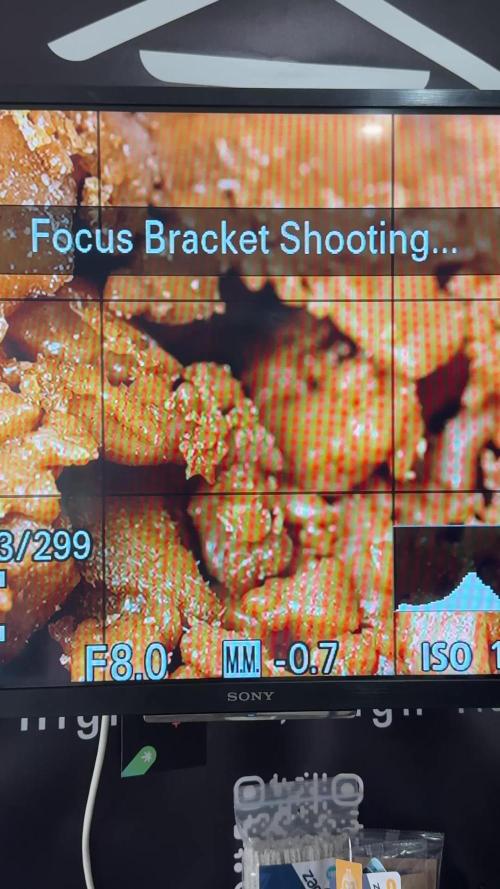
We also included:
* detailed process photos,
* collection stages,
* macro photography,
* texture closeups,
* curing progression,
* and multiple stacked macro images showing the resin in insane detail.
Some of these stacks reached:
* 62 frames,
* 87 frames,
* 114 frames,
* and even 152-frame focus stacks.
Because honestly, hash under macro magnification becomes another universe completely.
The textures stop looking real.
Tiny resin mountains.
Oil rivers.
Micro-crystals.
Glossy surfaces.
Soft creamy structures.
It almost starts looking geological instead of botanical 😄
Mr. Baggy of course supervised the entire operation like the professional resin inspector he clearly believes he is.
And next week…
The final chapter arrives.
Smoke review.
Curing review.
Flower review.
Hash review.
Terpene evolution.
Effects.
Textures.
Lessons learned.
Mistakes made.
And final thoughts after this entire LSD journey from seed to cured medicine.
And finally…
Thank you.
To Zamnesia for the genetics and the Bubbleator.
To Plagron.
To F.O.G.
To all the LEDs, gear, and equipment involved.
To GrowDiaries.
To the community.
To the OG followers.
To the new curious visitors.
To the silent supporters.
To the skeptics.
To the lovers and even the haters 😄
To everyone spending time sharing this strange beautiful plant journey with us.
Wishing everyone:
cold water,
sticky fingers,
healthy plants,
beautiful resin,
and enough patience to let good hash become great hash 🌱


Likes
8
Share

@Lebanese_Landrace
Follow
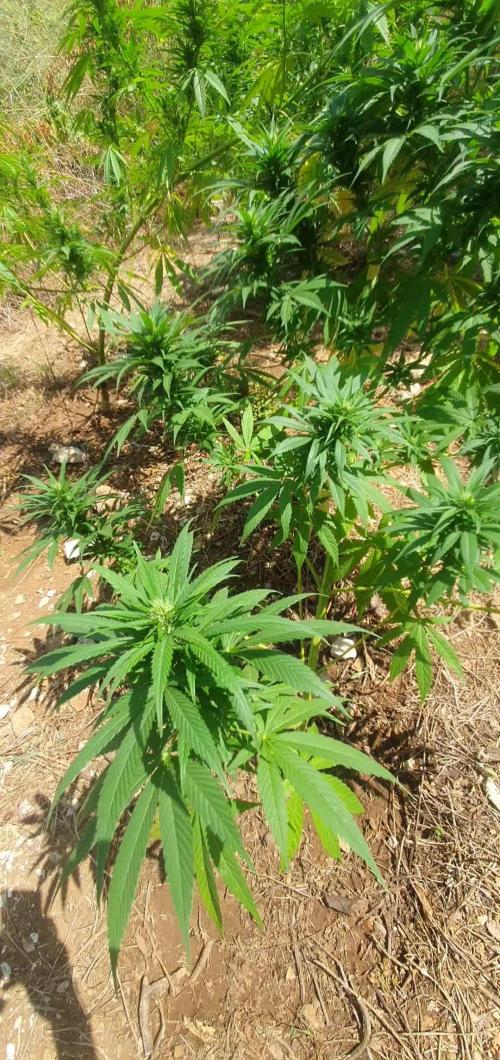
Week 16 August 23
As mentioned before two of the plants are now in week 4 of flowering so for today's feeding :
- 0-52-34 ~30gr / 30L
- Cal-Mag 3gr each.
The broken branch did not recover so decided to remove it. As for the third plant :
- 10-20-30 ~20g
- 0-52-34 ~15g
- Cal-Mag 3gr each.


Processing
Likes
7
Share


@maxpain
Follow
Week was good alot off leaves...about to start flushing soon maybe in a week or soo ..

Likes
3
Share


@PapaTerps
Follow
ZkyzcraperZ - N.Y.Ceeds
Day 71
🚿 She has been watered with 2L of RO tap water, mixed with the defined nutrients and then finally pH'd to 6.5👌🏻This week, I increased her bloom nutrients again as she will need the extra nutrients as she starts to bulk her flower
🌸 She has pretty much finished her stretch and has now switched focus to developing and bulking her flower, which is is covered in; maybe the most bud-sites I've seen on a plant this size - her scent has just about started to appear also, very fruity with notes of gas 👌
✂️ I've lollipopped her again, removing all of her lowest most budsites and fan leaves, as they are just too far away from the light source - but other than that, she hasn't required much effort 👍🏻


Likes
26
Share


@KingSalomonsWeed
Follow
Day 78 flower 54
17.04. So Leute. Die erste Main Bud liegt zum trocknen.
Die anderen Grape Ape F1 .. äh explodieren gerade.
Kommt mir so vor. Sind so fluffig.
Sieht gut aus. Und alles wächst.
Alles? Nein, nur die Knospen.
Ok , das sind ca 80 % der Pflanze.
💙👏
Genießt die Photos. Ich genieße ebenfalls+ Geruch.
Übrigens, 50 cm hat keine erreicht.
Later: Oh ein Geschmack, EIN GESCHMACK, wie Seide legt sich der Weintraubenartige Geschmack über deinen Gaumen.
Mein Kopf summt.
Müde und hungrig werde ich auch...
Häh ? War doch nur ein Köpfchen..
21% THC Punkt Indica Style.
18.04. Ich glaube der Server ist in Wartung. Keine Updates mehr.
Aber ist egal, denn sie schmeckt vorzüglich. 😂😂