


Likes
Comments
Share


@MiyaguiOkPolilla
Follow
Hola gente!!
Vaya semanita por favor... Unos calores de no creer con 37 Cº, humedad relativa extrema de hasta el 83% y poco viento... Ella está interesada en recibir un poco más de agua, pero no le daremos más de lo que necesita... No quiero arruinar los nutrientes y la vida de su sustrato así que la riego lentamente con sistema de goteo.
El fermento de guano de murciélago, palomas, conejo y cabra ya está listo. Tiene un agradable compuesto de melazas, microorganismos de Top Crop, Agrobacterias y almidones además de una buena dosis de humus de lombriz... Huele muy peculiar, ni feo ni agradable, como a levaduras...
Lo comenzamos a agregar en dosis de 1 litro a 25 litros de agua pura de lluvia para riego por goteo. Esta semana ella recibirá goteo permanente hasta acabar con la solución. Creo que los 25 litros durarán unos 10 días aproximadamente. (Podría variar según la necesidad del sustrato)
Estamos preparando además un top dress de composta, humus y trichoderma para cuando comience la temporada de floración ya que es a mi parecer la forma más eficiente de prevención contra hongos no deseados 🤞
Aplicaciones foliares permanentes cada 3 días intercalando una vez delta 9 y otra vez jabón potásico, aceite de neem y cola de caballo para mantener plagas a raya y también dar ese impulso al inicio de la floración que al parecer está funcionando más que bien.
Luego de todo esto, ella hoy toma un descanso previo al riego intenso que se viene.
Quiero dar mucho más con este cultivo y desearles a todos un gran camino de aprendizaje y agradecimiento 🙏🌿🌞🏄♂️
IRIE!

Likes
33
Share


@cheetah844
Follow
Poor little baby, still trying to recover from being a kitty toy. It's just barely hanging on with some very tiny, what looks like new growth leaves. Idk it'll be able to absorb enough light with those to say alive. I'm hoping so but it is greatly stunted in comparison with an the others if the same age.
Likes
23
Share


@PapasGrow
Follow
Used 300 watts, produced over 400 grams of dry, extremely dank cookies.
Thanks to top quality genetics, lights and nutrients.

Likes
Comments
Share

@NAG420
Follow
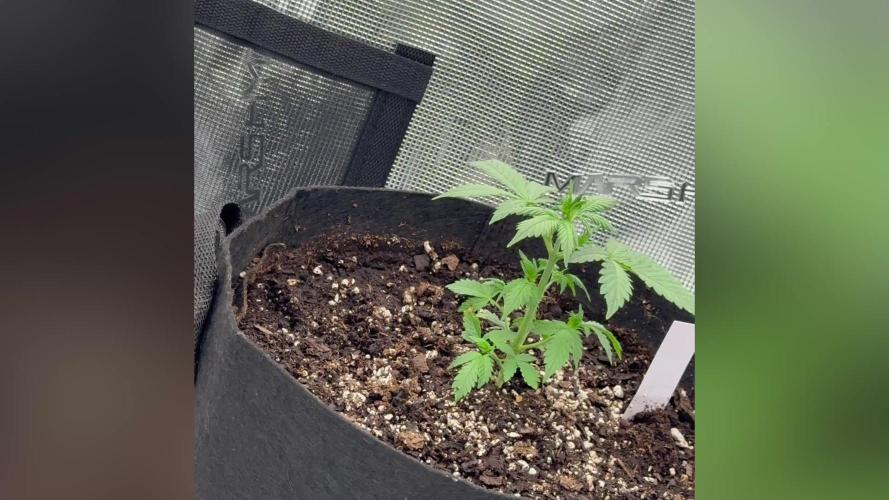
Finally get to update she is now in a 5 gallon pot inside the @MarsHydroLED tent with the FCE4800 lamp at 50% 18in day time temp was 78F with 58%RH she is doing great right now will start LST this week next feeding will be only water she is on her 2nd 3Week feeding schedule I only use Fox Farm product's. Water is always 6.5 PH Reverse Osmosis.


Likes
13
Share


@PrinceOfHerbs
Follow
Very strong plant with a taste similar to wine. Extremely potent and very resinous.
The smell and firmness of the flower are fantastic.

Likes
37
Share


@masterofsmeagol
Follow
Week begins 8/12 LAST FEED 2 gallons 8/12 AFTER A RAINING NIGHT.
8/13 I've found what appears to be septoria on a couple plants. Looks like the weather will be OK tonight so I can apply organocide or something similar before dark. I've seen random pillar damage so this will be a two-for. I also should move the middle plant back and utilize my space more. Ph seems on point around 7.3. Higher in some places of the soil. I've noticed what looks like root issues on my blueberry. Winds were horrible yesterday and this plant doesnt hace a vertical trellis for support. Stem was pretty wobbly for a while but the plant seems to be growing fine. Either that or a jpn beetle munched the top of a bud. That's probably what happened. It was in the low 50's this morning. That's a 40 degree temperature swing in just a few days. This grow season has been the most challenging I've faced. Of course it had to happen when personal, family, and health concerns rear their head. Oh well. I can only do my best.
8/14 Went over at 5am to apply organocide to treat WPM or septoria as well as insecticide for pillars. I got there and one of my healthiest plants had been turning a little lime green now it was drooped over just like the larger GDP. This one is a 9lb kush though and they were doing good. Now it looks like it's dead over night. Maybe it's that liquid kool bloom. The soil seemed dry so I watered the plants. It MIGHT have picked ok a little. I'll have to check tonight. If not something is going on at night or in the rootzone and I really don't know what the fuck is going on. I will post updates and check later tonight. Damn. This has been a real challenging year.
8/15 That plant might be overwatered or not be draining correctly. At least I was able to get underneath it and the ground was dry. It was also hard packed dirt so elevating the bag may help. I'm going to wait a few days and see if things improve. This really sucks. I'm getting that defeated feeling. I need to get out of it though as I'm starting to see flower begin. The blueberry is probably the farthest along. I need to remember to take pictures of the newly developing flowers. Granted I've had numerous medical and other issues that have taken me off my game but losing two plants in one year is pretty shitty. I was able to fix things with COVID last year or the year before so I hope I can at least save this 9lb kush plant. If I lose this plant too it will be a substantial amount of cannabis lost. I need to rearrange my cage as well to make use of the extra space. Maybe I could've overwatered that plant that had been in the rain for a long time. I need to get my water routine down pat instead of doing the "lift the pot" method I have been doing. I went to several different commercial growers and got a bunch of crazy answers. Only time will tell. Last night I finished the organocide application on all the other plants except for the two babies and the drooped 9lb kush. Don't want to stress it further. I'll see how it goes.
8/16 Despite the soil drying out the newest disaster (my 9lb kush) is much worse with chlorosis killing leaves. Stalks and branches seem good. Soil smells musty and a little wetter than the rest. It was roofed to the ground slightly. NO water underneath. I stuck my hand in the bag from a bunch of angles. It's like the same thing that happened with the other one. I added to my surveillance. I also smell bleech and I hace an idea this might not be my doing at all. I can't be detailed but I'll find out one way or another. UPDATE. Went back over after the dentist and plants were dry as a fucking bone and droopy. I mixed up five gallons of phed water and watered everything. Even the 9lb kush that is pretty much dead. The soil was dry though. Everyone is saying overwater but I really doubt that. We had some massive rainstorms bur still. I need to review a game cam I have because unfortunately my cams went on the frits for a couple days (and the dogs went wild during that time around midnight) couple nights in a row. I fucking smell bleech. I'm a good dude and don't really have any enemies but we'll see what the game cam pulls up.
8/17 Of course we are getting a shit ton of rain. I watered yestetday because everything was dry as a bone
I watched yesterday as my blueberry was almost horizontal due to the wind. I added several supports to every branch and a few more up the main stalk. That may be what has been happening. The wind blowing so hard it separates the stalk from the roots. My problems started after I took my windbreaker tarp down. I put it back up for this storm. Or maybe it's just root rot. I dont fucking know. I cut all the dead stuff off the 9lb kush thats pretty mucb dead. Its holding on though. I probably shouldnt have watered that but it seemed bone dry. Maybe further down was wet. I dont know. Extra cams are up. I didn't smell that chemical bleachy smell today so it's probably in my head. I have better peace of mind with the night cams up though.and the dogs though. I've had a visitor this year but he left very quickly.
8/18 We got a shit ton of rain last night. No damage though. I spent what time I had in the garden working on the 9lb kush that looked like it was dieing. I'm not giving up on this one so easy. It seems to want to hold on. Despite the severely overwatered medium (due to this storm) I cam see new growth that looks healthy. The branches also seem stronger. I'm cautiously optimistic. The other one straight up died. So I might be able to salvage this. I'll go over later today and check on it. I debated putting it inside for the storm bur I figured I'd let the rain leech out anything in the medium in case it's locked out or something. At least I've got a couple real healthy ones this year. That NYCSA is amazing. That's a strain I'll probably grow again. Resilient as all all. Vigorous and doesn't seem impacted by things like WPM or other fungal ok infections or diseases like some other strains. I got a great recommendation from my buddy to use pots all the same size. It makes things easier watering. I just used what I had this year. I had bigger pots so I wanted to fill them. That tarp being up I think greatly helped with the wind. It's down now so things cam dry out. Still raining bit not yard and no wind. I think that may have played a large role in killing the 7ft GDP. Wind ripping the stalk away from the roots. Or it could've been a million other things. I'll never know. I do know that I have a better mindset, a great set of resources and I'm learning something new every year. If I can br8ng this plant back to life I'm going to be very proud of myself.....and her. Oh and I'm going to buy new tiger bloom. I'll start beasty bloom (hesitant as it has caused lockout in the past) as it goes better with my other nutes than the liquid kool bloom. Plus I started getting portables around tge time I used the liquid kool bloom. That being said, after two weeks I can see buds where there weren't before so I don't know. Next year I'm using seeds and I'm doing things different. I'm STRONGLY considering rapacaps idea about adding a removable roof for flower. The more I think about it tge better it sounds. That and putting wheels on pallets (buddy suggestion) and I could attach my supports directly to the pallet. I've got a lot of work to do that's for sure. Plants look healthy but I needvto him them again with organocide to fight any fungal stuff or pillars that might be hiding.


Likes
120
Share


@Kitties_and_Colas
Follow
4th week of veg and everything is going beautifully ❤️.. we've been rotating pots every few days or so to encourage them to grow uniformly but 1 of the plants is a bit of a runt..I think its just the way it is..they're all using training ties now and couldn't look happier at the moment, which makes me happy! ❤️🌱..thanks for dropping by and happy harvests everyone!! 😽💨

Likes
3
Share


@StewartBloom
Follow
Day 54 and I think we're on track to harvest some time next week. I've decided not keep any of these as a mom, the back left one has some potential but non really seem like good hash plants. I'll jar test each to make sure but all have really greasy trichromes.

Processing
Likes
88
Share


@No_Clout
Follow
25/07/18 - watered with 300ml each 24 hours ago giving them their first taste of veg nutes and their responding well so far, I will be upping the dosage later this week.
29/07/18 - everything’s looking alright so far, plant #3 did fall over because of the weight of the leaves but I’ve sorted it all out and it’s back to standing on it’s
own two feet.
30/07/18 - I dident feed them from 72hrs and the girl in the middle started to droop so I fed them all 600ml each.
31/07/18- the girl in the middle has perked up abit but all three seem to be not praying 🙏🏻 to the sungod.

Likes
10
Share


@Myrcene_Dream
Follow
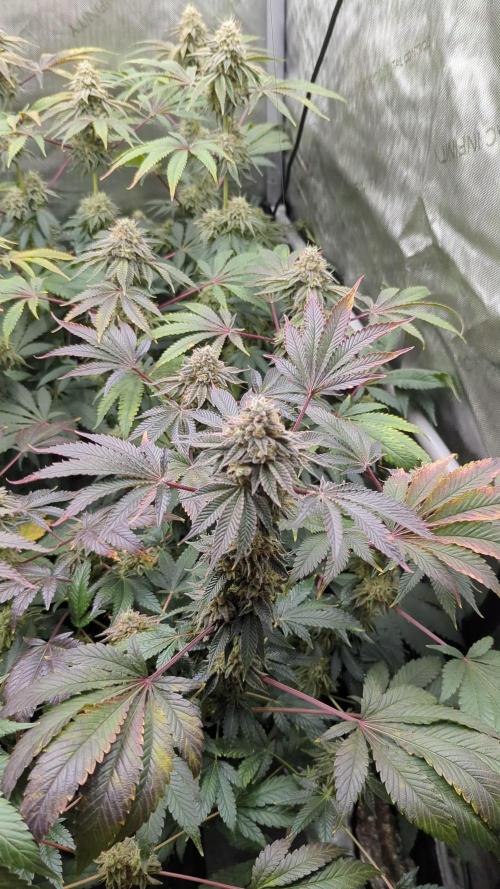
A cinch to grow and really had no problems at all. It’s my first time trying anything from Mephisto Genetics and I’m very impressed. Gave nothing but filtered water after applying the 5 tbsp of grow dots at the beginning of veg. Went into flower pretty early but still grew to a nice size with a beautiful cola and had some great trichome production. Would definitely run it again!



Likes
142
Share


@PapaNugs
Follow
Another good week in the garden. These girls are finishing up now. Some will be picked over the next few days and some will go another week here. Got some recharge and mammoth P for the first time three days ago. Hoping to finish strong 💪

Likes
4
Share

@SolitudeCorners
Follow
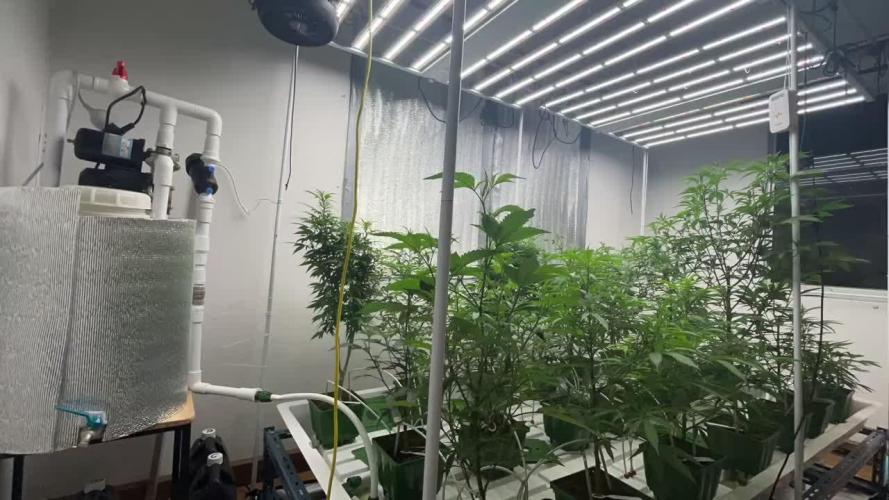
Week 3 Flower (Bloom Week 3) – Daily Tasks
Evening (Lights On)
Check environment (temp 24–27°C, RH 55–60%).
Inspect leaves and buds for pests, mold, or deficiencies.
Water/feed (depending on medium): balanced bloom nutrients with slightly higher P and K.
Ensure good airflow (oscillating fans).
Adjust plant training (light defoliation if leaves block bud sites).
Check for early signs of stretch finishing.
Evening (Before Lights Off)
Ensure irrigation is not too late in the cycle to avoid wet medium during dark period.
👉 In Week 3 bloom, the plants are finishing their stretch and starting to put more energy into forming bud sites.
Main job is: Setting Scrog net 2layers ,Control environment (VPD, airflow) ,Support the plant with bloom nutrients.

Likes
84
Share


@Belverde
Follow
Hi guys
Welcome in the last weekly upgrade 🙂
In the end ten weeks of flowering for this beautiful phenotypes of the brand new DOS SI DOS # 33
For being precise today (the same day where I have do the photos on the top) we are at 68 days of flowering..
I probably will doing harwest in one or two days , so we will arrive at day n°70..
I have still prefere to continue her maturation because she tell me to do that..
So , she decide it..
She know when it's ready , and in some way she tell it us , if we listen..
Probably it's a thinks comes from mind of a stoner , but for me it work well 👌
Anyway..
She's was easy to grow , specially using this Living Soil Hig-Brix recipe I have make..
The resin production it's very very good , super sticky glue 🔥
Like I say in previous weeks..
The aroma reminds me a lot of a Kush earthy , spicy with some other notes like citrus , but faraway for now..
After the cut I will dry it properly , for 7 to 10 days in temperature around 20/22°C and ur 55/60% , the entire plant..
After that , when the branches are dry but before the crack sound , I will do a nice manicuring and then I put the flowers in a browbag for one or two days , it depends..
Then , when I will think the moinsture of the buds can be good , I will put the flowers in to the jar..
Not all full but just for 3/4..
And then I will start the curing process..
Usually after the first time I have put the buds in to the jar , I leave it closed for 24 h..
After this full day closed , I will start to open up the jar four times a day every six hours for the first week..
And then I will doing it for about three to four weeks , and every week I will open the jar one time less..
Sometimes I change the metod , but the final product it's always be the same..
But when I will finish this process I show you in a video how the ash it's and especyally how it's will burn , nice and slowly without still continue to light up..
Unfortunately now I can't do nothing for show you how clean and rich can be the taste..
I hope for the future..
Anyway..
The first test will be around half may and after that I can be able to posting the harwest rewiew..
So stay tuned ⏳
Thank you so much for stopping by here all this pass weeks , or just only now for the first time..
And thanks for reading and support , I appreciate it 🙏
See you in a few weeks..
Or already now in some others diaries 🤙
Do vape some weed and stay safe..
Sun always comes..
But if he doesn't arrive , go in to your growbox ☀️😎
Ciao ✌️
🇮🇹
BONUS
I'm always growing the same strain but in different ways..
Here is the link below 👇
https://growdiaries.com/diaries/48209-barney-039-s-farm-dos-si-dos-33-grow-journal-by-funclouds
And I'm also using the same type of "Living Soil High-Brix" with this other lady , Blue Gelato #41 👇
https://growdiaries.com/diaries/46282-barney-039-s-farm-blue-gelato-41-grow-journal-by-fun-clouds
If you want to see 🌱😉

Likes
25
Share


@Tonks
Follow
Sorry to be mushy, but thanks to everyone on here for the comments and support. Been a particularly shitty year and it's been so nice to escape on here now and then and focus on something we all love to do and share.

Likes
66
Share


@mulch
Follow
8/14/17 Sorry for lack of updates. Been feeding the new flowering schedule. It will modify slightly every week, most likely.
FloraMicro 4ml gal
FloraGrow 1.25ml gal
FloraBloom 8ml gal
SM-90 2.5ml gal
Cannazym 2.5ml Gal
Ful-Potential 2.5ml gal
Liquid Koolbloom 2ml gal
Floralicious Plus 1ml gal
ArmorSI 1.5ml gal
Florablend 2.5ml gal
CaliMagic 3.75ml gal (1 plant started showing def again)
FloraNectar 2.5ml gal
Drip Clean 0.4ml gal
A few things were added, the Photosynthesis Plus and roots excelerator have been removed, Florablend is out next week.
It sure is crowded in that tent. Humidity is now being lowered to 45% during lights out as it was spiking during that time. Dehumidifier is on it's own timer and runs during lights out taking a liter or so water out a night. With the canopy that thick for a couple feet vertically and all the way horizontally, i do not want to take any chances with either stagnant or damp air now that most of the girls are actively flowering.
They missed a transition week, but they were suffering deficiencies so I had to quickly get them on flowering nutes. All seems good so far except for the very crowded workspace when I do anything in there.
I think I am going to drop grow. I REALLY didn't expect them to pass 3 feet but the danger is real. I have just over a foot of space to move my light up, so now seems like a good time to drop FloraGrow


Likes
23
Share


@GoodTimesOrganics
Follow
Hi liebe Community und Welcome Back! 💚
🍹🌱🍰Slush Mint Cake von Dutch Passion!
Die sechste Blütewoche ist vorbei und die Pflanze konzentriert sich weiterhin auf die Blütenausbildung.
Die Trichomabdeckung wird immer Dichter!
Ich bin immer wieder begeistert von Antonio's breedings. Die Herkunft durch die Ice Cream Cake lässt sich auch bei diesem Strain gut erkennen.
Sie verhält sich sehr ähnlich wie die Ice Cream Haze, entwickelt aber schon Mal ein anderes Aroma und die Färbung ist bei ihr auch ausgeprägter!
Ein wunderbar süßes Aroma verteilt sich im Zelt.
Die Pflanze hat nun eine Höhe von 117cm erreicht.
Sie hat eine wunderschöne und homogene Wuchsform.
Das bin ich von Dutch Passion echt gewohnt. Tolle Strains!
Diese Woche gab es nur Wasser, was vermutlich jetzt bis zum Ende nur noch gegossen wird.
Die Bedingungen im Growschrank sind für die Blütephase aktuell ok!
—————
🌞 Temp: 26
🌚 Temp: 18°C bis 19°C
💨 RH: 58%
VPD: 1,03 kPa
💡 ppfd: 830 mpm
—————
Grüne Grüße 💚🌱

Likes
14
Share

@ThatsmyGrow
Follow
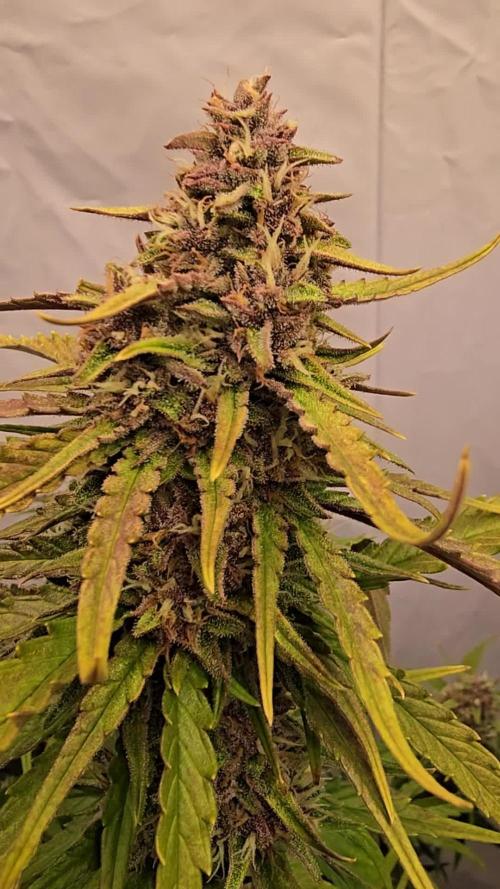
I love how the tropicana cookies turn purple and red, the terbs are so tasty like Juice.
I hope the smoke smell like the flower 🤩