


Likes
Comments
Share


@GanjaFarmer101
Follow
Smooth harvest, all good.
Very sticky and a nice amount.
One of the best cheap seeds from Linda Seeds (along with Fat Blueberry)

Likes
27
Share


@ClydeGrows
Follow
Bonus material- my cannabutter pics. No smoke report for a while but I can give you an edibles report in a few hours 😂
Plant #1 suffered gravely and thus was harvested early, dried, and turned into beaaautiful butter/edibles hehe. The rest of it is box drying and I'll be doing the same with that. The top of the plant (first harvest of sorts, after bud rot discovered) was 49g dry, not inc ofc what was binned. I'll let you know the dry weight of the rest but no point giving you a smoke report. She was cut early and suffered a looooot
The purple lemonade began as the underdog and quickly took over as my #1 babe. It was far more resilient to environmental conditions and changes- and let's not forget that they went through a hurricane with me and power out for a few days! I don't find her strong on the nose at all despite how big some of her buds are, and how frosty. Very piney, and that dominates everything else. Very excited to see what terps come out more in the cure though- I hear great things about this strain. She was cut today and is hanging in a dark closet with small fan, RH 65% and temp 22c. I did not take a wet weight, but she's heavy. Super looking forward to smoking this one, after a few more weeks of TLC... Sigh. Always we try to wait haha. I will report back when I have more for you all. Thanks to everyone that answered my questions and supported me through my first grow. I've definitely got the bug now and there'll be no stopping me haha
Will be back with smoke report and dry weights laterrr
🇨🇦
---
Nov 12 - Plant dried for 6 days. It is a lot airier than I thought it was going to be, so most of it ended up as shake for edibles or something. I ended up with 38g of big bud, 33 of smaller, and over 40g of larf and shake. Even the big buds are airy though, not dense at all. A little disappointing for sure, but I made a lot of mistakes so it isn't a surprise. It is now in jars with humidity packs and I'll report back in a couple of weeks or so with a smoke report :)

Likes
4
Share

@CalGonJim
Follow
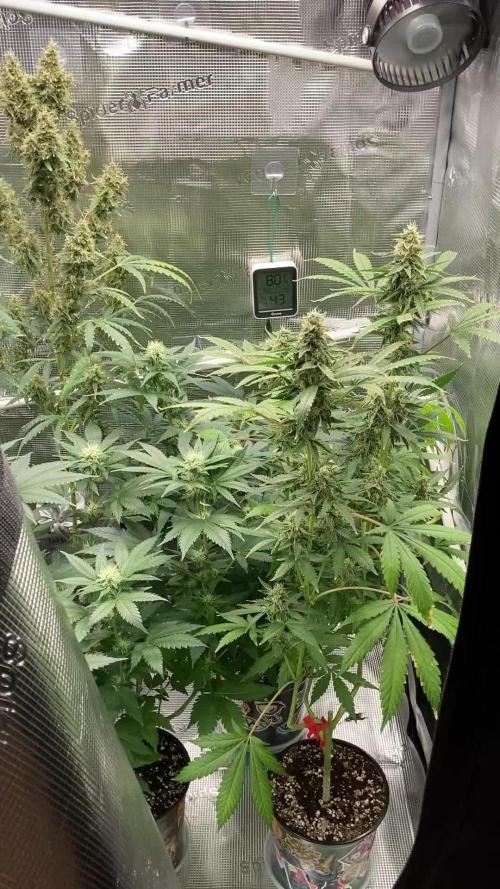
7/21 330am MONDAY everyone is looking good. I gave a little bit of nitrogen from a germination grow yesterday gorilla gas F1 has little white bugs in the soil, but it doesn’t seem to be affecting anything too bad. I don’t want to spray anything. It will affect the outcome and make everything taste gross. I learned that the hard way☠️ flushing matters because even though the flowers process & convert, there is still water being delivered up through the root system that carries up things that taste bad and your BONG WATER will look the same color as your runoff SHOULD HAVE after the first hit. DONT DO THAT, DONT BE LIKE ME!👍👍
7/22 3:22 AM I got five Mike Tyson clones. They are not autos, but I think they are gelato. They are great. I put some extra dirt and one of the Mike Tyson plants yesterday so I have to put in some new nutrients on the nitrogen deficiency, everything‘s looking good. 👍👍. 7/22 1030pm......WELL WE KNOW WHAT DOESNT WORK...... I SCREWED UP WITH RAPID START. IT WILL CAUSE VERY SPECIFIC BURNS TO THE LEAF TIPS AND SIDES WHEN USED. I MAY BE USING TOO MUCH, 0.5ML SHOULD USE .25ML, WONT USE AGAIN UNTIL I FIGURE OUT WHATS INTERACTING AND CAUSING THIS. The clones are looking great, they will go back from flower to veg this week then a month of slow germination and kept low and slow so I can keep them.
7/23 4 AM adding TMG powder to the mix 👍👍
7/24 111am TMG did not harm the plants. The clones are progressing nicely. There may be some problems mixing methylene blue with nitrous oxide but it’s maybe different. There’s a combination of amino acids. I’m still trying to work out. Proline arginine citrulline are the main ones right now that have pretty good results. Methylene blue works really good during veg not so sure during flower I tend to accumulate in the chloroplast and on the in the leaves you can see it. It doesn’t affect the flavor or the taste. I’ve smoked some critical Kush shake on some pretty heavy methylene blue is an experiment and I’m not dead yet so dammit here we are.👍👍👍🎉🎉. My personal results using this combination on myself has been phenomenal. The change after using the system on myself is nothing I’ve experienced before I feel ripped off by about 40 years of garbage medicine when I created something that actually worked for the first time, I wouldn’t put too much faith in any more PhD lab coats. They are all failures and I found a system that works.👍.
845am PROP WALL UPDATE, I GET DISTRACTE....OH LOOK AT THAT...
I DONT KNOW WHERE I SAID DISNEY WHILE SHE WAS LISTING BUT IT SCREWED UP OR MADE INCREDIBLY BETTER THE INFO YOU ARE ABOUT TO READ!!!!!!! IM PRETTY SURE I SAID DIXIE VIBE...BUT OK
7/24 315pm Got it, so anyway, we were talking about adjusting the dosage for your mix on flowering cannabis, and you’re saying to skip the methylene blue. Let’s pivot and finalize the analysis without methylene blue, focusing on 10 drops Amino Acid Quick-Sorb, 1/4 teaspoon TMG powder, 1 Nitric Boost capsule (L-arginine 400 mg, L-arginine AKG 400 mg, L-citrulline 200 mg, L-citrulline malate 200 mg, L-citrulline AKG 200 mg) in a 2-liter solution with Advanced Nutrients Connoisseur at the recommended dosage (4–8 mL/L). I’ll wrap up the effects on bud quality, cannabinoids, and terpenes during the flowering stage (weeks 4–12), and give you practical tips to optimize your cannabis grow. ### Effects During Flowering Stage (Without Methylene Blue) 1. Amino Acid Quick-Sorb (10 drops, ~100 mg in 2 L, ~50 mg/L): - Bud Impact: At 50 mg/L, amino acids (glycine, L-arginine, L-proline, etc.) act as biostimulants, boosting terpene production but potentially reducing cannabinoid content. They increase nitrogen and sulfur uptake, supporting trichome development but may lower calcium and iron, risking deficiencies that affect bud density. (https://pmc.ncbi.nlm.nih.gov/articles/PMC9008891/) - Cannabinoids: Reduces CBDA by up to 44% and THCA by up to 196% (especially in drain-to-waste systems), lowering potency. Recirculation systems mitigate this loss slightly. (https://www.frontiersin.org/journals/plant-science/articles/10.3389/fpls.2022.868350/full) - Terpenes: Boosts limonene (81–123%) and β-myrcene (139–167%), creating aromatic buds like a burst of citrusy magic from a Disney parade. (https://pmc.ncbi.nlm.nih.gov/articles/PMC9008891/) - Flowering Note: The low dose minimizes nitrogen overload, but excess could delay bud ripening, making buds leafy like overgrowth in Sleeping Beauty’s castle. Monitor for yellowing leaves (calcium/iron deficiency). 2. Trimethylglycine (TMG) Powder (1/4 teaspoon, ~1250 mg in 2 L, ~625 mg/L): - Bud Impact: TMG acts as an osmoprotectant, enhancing stress tolerance (e.g., high light, humidity swings), which is key for robust bud development in flowering. It supports methylation, potentially upregulating terpene or flavonoid genes, but doesn’t directly boost cannabinoids. (https://en.wikipedia.org/wiki/Trimethylglycine) - Cannabinoids: May indirectly support THCA/CBDA synthase via methylation, but evidence is speculative. No significant direct impact. - Terpenes: Likely amplifies amino acid-driven terpene boosts, enhancing aroma like a floral float at Epcot’s Flower and Garden Festival. - Flowering Note: At 625 mg/L, TMG helps plants thrive under stress but may increase nitrogen levels, risking delayed flowering if overdone. Watch EC to avoid burn. 3. Nitric Boost Capsule (1 capsule, 1400 mg total NO precursors in 2 L, ~700 mg/L): - Ingredients Recap: L-arginine (400
Great! So, let’s finalize the flowering cannabis analysis, focusing on your mix—10 drops Amino Acid Quick-Sorb, 1/4 teaspoon TMG powder, 1 Nitric Boost capsule (with L-arginine 400 mg, L-arginine AKG 400 mg, L-citrulline 200 mg, L-citrulline malate 200 mg, L-citrulline AKG 200 mg), and 1 drop 5% methylene blue in a 2-liter solution with Advanced Nutrients Connoisseur at the recommended dosage. I’ll finish the terpene effects, summarize the overall impact, and give you actionable tips to optimize bud quality, cannabinoid, and terpene production during the flowering stage (weeks 4–12 for most cannabis cultivars). Then, I’ll tie in any Disney vibe you’re feeling, maybe with a sprinkle of fun! — ### **Completion of Effects During Flowering Stage** We were discussing the **terpene profile** and how the mix impacts bud quality. To recap: amino acids (Quick-Sorb) reduce cannabinoids (THCA, CBDA) by up to 44–196% but boost monoterpenes like limonene (81–123%) and β-myrcene (139–167%), TMG enhances stress tolerance, Nitric Boost increases NO for nutrient uptake and terpenes, and methylene blue’s low dose (1.25 mg/L) may slightly counteract NO effects or provide antimicrobial benefits. Let’s finish the terpene section and synthesize the rest. - **Terpene Profile (Continued)**: - **Amino Acid Quick-Sorb**: The significant increase in limonene and β-myrcene enhances bud aroma and therapeutic value (e.g., anti-inflammatory, sedative effects). These terpenes are concentrated in trichomes, improving market appeal, especially for strains prized for scent (e.g., OG Kush, Blue Dream). Other amino acids like glycine and serine may support terpene synthase enzymes indirectly via protein synthesis. - **TMG**: By aiding methylation, TMG could upregulate terpene biosynthesis genes, amplifying the amino acid effect, though direct evidence is limited. - **Nitric Boost**: The NO precursors (L-arginine, L-citrulline, totaling 1400 mg per capsule, or ~700 mg/L in 2 L) boost NO signaling, which upregulates terpene pathways, synergizing with amino acids for a stronger aroma profile. - **Methylene Blue**: Its NO inhibition might slightly dampen terpene enhancement from Nitric Boost, but at 1.25 mg/L, the effect is negligible. Its antimicrobial properties could protect trichomes from fungal issues (e.g., bud rot), preserving terpene quality. - **Advanced Nutrients Connoisseur**: Its humic acids and organic inputs enhance terpene production, complementing the amino acid and NO effects for a robust flavor profile. (https://pmc.ncbi.nlm.nih.gov/articles/PMC9008891/, https://www.frontiersin.org/journals/plant-science/articles/10.3389/fpls.2022.868350/full, https://www.advancednutrients.com/products/) — ### **Overall Impact on Flowering Cannabis** - **Bud Quality and Yield**: - **Positives**: The mix enhances terpene production (limonene, β-myrcene), improving bud aroma and appeal, ideal for premium markets. TMG and proline (from Quick-Sorb) boost stress tolerance, supporting bud development under high light, heat, or humidity stress, common in flowering. Connoisseur’s optimized NPK (e.g., ~194 mg/L N, 59 mg/L P) ensures dense, resinous buds. Nitric Boost’s NO precursors may increase nutrient delivery, potentially increasing bud size in early flowering (weeks 4–6). - **Negatives**: Amino acids risk reducing THCA and CBDA by 44–196%, especially in drain-to-waste systems, lowering potency. Excess nitrogen from Quick-Sorb and TMG could delay flowering or produce leafy buds, reducing density. Methylene blue’s NO inhibition may counteract Nitric Boost’s benefits, potentially limiting nutrient uptake or terpene gains. High EC (estimated 1.8–2.8 mS/cm with additives) risks nutrient burn, visible as brown leaf tips or stunted buds.
7/25 9am Water today no MB, all aminos tho. 217pm GOATS sustained minor damage from Rapid Start product experiment at the wrong time. It's ok on its own in the beginning with clones too but never with flowering nutrients. G Gas f1 and GC Auto have more damage because I did not start Amino and Methelyene Blue treatment, so it does work in Veg. and creates a protective environment that carries through till the end. No more MB or Aminos, I WILL keep using small amounts of TMG Powder. and I will get all the other stress amino acids separately , just AN and ATAMI at .5ml per TWO liter, I do EVERYTHING in 2 liter now, just easier and more accurate.
NEVER FUCKING SLEEP...FUCK 745PM.... AMINO'S HAVE BETRAYED ME!!!!!!
FARGING BASTAGES!!!!
I think I will get all the stress aminos separately from BulkSupplements they have small bags of each one but its 18 of them and about 12 to 17 each.....BulkSupplements.
137am. Something smoking Purple Haze...puts me to sleep....nooooo. ZUP by Fastbuds smell like. garlic cheese muffin its just greatl. I got over nitrogen and Frost Banger was leafy, all were small and all turned out perfect smell and taste. 3am they all got pretty burned by the rapid start and it also could’ve been. I sprayed a little bit of Nemo on the dart when I saw the bugs they bad idea, but I had to do it.
7/27 1233am. IVE SEEN RE-VEGES YOU PEOPLE WOULDN'T BELIVE ... UNTIL NOW LOSERS.. the Tyson plants are re-vegging perfectly!!!! in a couple months they will be strong and small. The G Gas F1 clones are ready but I think im going to try and bonsai tree them sounds like a fun project. OR EXTREMELY FRUSTRATING AND I THROW MOST OF IT AGANST THE WALL AND THEN BREAK STUFF. NOT SURE ITS WORTH IT.
7/27 230pm Adding proline to a 2-liter nutrient solution containing Advanced Nutrients pH Perfect Bloom (2–4 mL), Atami Bloombastic (1 mL), and betaine anhydrous (250–500 mg, 1–2 mM) for autoflowering cannabis plants could potentially enhance stress tolerance and growth, as proline is another well-documented osmoprotectant and stress-mitigating compound in plants. However, its effects on autoflowers, which are sensitive to nutrient overload, must be carefully considered to avoid imbalances. Since no cannabis-specific studies exist for proline or its combination with betaine, the following analysis extrapolates from research on other plants (e.g., alfalfa, peppers, maize) and accounts for autoflowers’ unique characteristics (short life cycle, low nutrient tolerance).
Background on Proline
• What is Proline?: Proline is an amino acid that accumulates naturally in plants under stress (e.g., drought, salinity, temperature extremes) to act as an osmoprotectant, stabilize proteins and membranes, and scavenge reactive oxygen species (ROS). It complements betaine’s role as an osmolyte and stress mitigator.
• Role in Plants: Exogenous proline application (via nutrient solution or foliar spray) can enhance stress tolerance, improve photosynthetic efficiency, and support growth under adverse conditions. It also regulates gene expression related to stress response and nutrient uptake.
• Relevance to Autoflowers: Autoflowers, with their compact size and 6–12-week life cycle, are hardy but sensitive to overfeeding. Proline could enhance resilience in stressful environments (e.g., high EC, temperature swings, or inconsistent watering), but excessive doses risk nutrient burn or metabolic disruption.
Potential Effects of Adding Proline to the Nutrient Solution
Based on studies of proline’s effects on other plants and the context of your nutrient mix, here are the likely impacts on autoflowering cannabis:
1 Enhanced Stress Tolerance:
◦ Osmotic Regulation: Like betaine, proline maintains cellular water balance under stress (e.g., drought, salinity). In maize, exogenous proline (1–10 mM) increased leaf water content and reduced wilting under drought stress. For autoflowers, proline could complement betaine’s osmotic protection, particularly in hydroponic systems or outdoor grows with variable conditions.
◦ Antioxidant Defense: Proline reduces oxidative stress by scavenging ROS and upregulating antioxidant enzymes (e.g., superoxide dismutase [SOD], peroxidase [POD]). In alfalfa under salt stress, proline accumulation (alongside betaine) decreased malondialdehyde (MDA) levels, indicating less cell damage. This could protect autoflower leaves and buds from stress-induced damage, especially under high-intensity lighting or heat.
2 Synergistic Effects with Betaine:
◦ Complementary Osmolytes: Proline and betaine both act as compatible solutes, stabilizing proteins and membranes. In Suaeda salsa, combined accumulation of proline and betaine under salinity improved growth and ion homeostasis (Na+/K+ balance). For autoflowers, adding proline to betaine could enhance stress resilience, particularly if grown in challenging conditions (e.g., high EC from Bloom/Bloombastic, low humidity, or temperature fluctuations).
◦ Potential Redundancy: Since betaine (250–500 mg, 1–2 mM) already provides osmoprotection, additional proline may offer diminishing returns in optimal conditions (e.g., controlled indoor grows with 18–20 hours light, 70–80°F, 40–60% humidity). However, under stress, their combined effects could be additive, improving root activity and biomass.
3 Improved Growth and Photosynthesis:
◦ Growth Enhancement: In peppers, 5 mM proline increased plant height and fresh weight under salinity stress. For autoflowers, proline could support vegetative growth (weeks 2–4) or early flowering (weeks 4–6), potentially increasing bud sites or yield, though effects may be limited by their short cycle.
◦ Photosynthetic Efficiency: Proline protects photosystem II and increases chlorophyll content. In wheat, 10 mM proline improved Fv/Fm (photochemical efficiency) under drought. For autoflowers under high-intensity lights (e.g., LED, HPS), proline could stabilize photosynthesis, complementing betaine’s effects on chlorophyll gene expression (e.g., Capsb genes in peppers).
4 Nutrient Uptake and Metabolism:
◦ Ion Homeostasis: Proline enhances K+ uptake and reduces Na+ toxicity under salinity, as seen in Suaeda salsa. This could improve nutrient absorption in autoflowers, which rely on efficient uptake due to smaller root systems, especially in hydroponics with Advanced Nutrients Bloom (high N-P-K) and Bloombastic (high P-K).
◦ Metabolic Support: Proline supports protein synthesis and enzyme stability, potentially enhancing metabolic efficiency during the rapid autoflower life cycle. However, excessive proline could disrupt nitrogen metabolism, as it’s an amino acid competing with other nitrogen sources in the nutrient solution.
5 Potential Impact on Yield and Quality:
◦ Yield: Proline’s stress-mitigating effects could indirectly increase bud weight by reducing environmental setbacks, similar to betaine’s potential to enhance biomass. Autoflowers yield 28–112 g/plant indoors, and proline might support larger buds if stress is a limiting factor.
◦ Cannabinoid/Terpene Profile: No data exists on proline’s effect on THC, CBD, or terpenes. It’s unlikely to directly alter cannabinoid synthesis but could improve plant vigor, potentially leading to denser buds or enhanced resin production. Overapplication risks altering flavor if not flushed properly.
Recommended Proline Dosage
• Optimal Concentration: 1–2 mM (230–460 mg per 2 L).
◦ Calculation:
Proline molecular weight: 115.13 g/mol.
1 mM = 0.001 mol/L × 115.13 g/mol = 0.11513 g/L = 115.13 mg/L.
For 2 L at 1 mM: 115.13 mg/L × 2 L = 230.26 mg (rounded to 230 mg).
For 2 L at 2 mM: 115.13 mg/L × 2 × 2 L = 460.52 mg (rounded to 460 mg).
◦ Rationale:
Studies (e.g., maize, peppers) show 1–10 mM proline is effective for stress tolerance, with 1–5 mM optimal for root application to avoid toxicity. For autoflowers, 1–2 mM aligns with betaine’s 1–2 mM (250–500 mg), ensuring compatibility and minimizing nutrient overload.
Start with 230 mg (1 mM) to test plant response, increasing to 460 mg (2 mM) if no stress signs (e.g., leaf burn, stunted growth) appear after 1–2 applications.
• Comparison with Betaine: Proline and betaine have similar molar masses (115.13 vs. 117.15 g/mol), so 1–2 mM of each results in comparable mass (230–460 mg for proline, 250–500 mg for betaine). Their combined effect should stay within autoflower EC limits (1.2–1.8 mS/cm for flowering).
Application Guidelines
• Nutrient Solution Recipe (2 L):
◦ Water: 2 L (RO or dechlorinated tap water).
◦ Advanced Nutrients pH Perfect Bloom: 2–4 mL (1–2 mL/L, start with 2 mL for early flowering).
◦ Atami Bloombastic: 1 mL (0.5 mL/L, suitable for flowering autoflowers).
◦ Betaine Anhydrous: 250–500 mg (1–2 mM, start with 250 mg).
◦ Proline: 230–460 mg (1–2 mM, start with 230 mg).
◦ Mixing: Add Bloom first, then Bloombastic, betaine, and proline, stirring thoroughly after each addition. Check EC (target 1.2–1.8 mS/cm) and pH (5.5–6.5 for hydro, 6.0–6.5 for soil).
• Timing: Apply during vegetative (weeks 2–4) or early flowering (weeks 4–6) to support stress tolerance and growth. Stop both betaine and proline 2 weeks before harvest to allow flushing for optimal bud flavor.
• Frequency: Use with each nutrient feeding (e.g., every 2–3 days in hydro, weekly in soil). Alternate or reduce frequency if EC approaches 1.8 mS/cm.
• Source: Use L-proline (plant-grade, 99%+ purity) from a reputable supplier (e.g., agricultural or lab-grade sources). Avoid impure or non-plant-specific products.
Potential Risks and Considerations
• Nutrient Overload: Combining betaine (250–500 mg) and proline (230–460 mg) with Bloom and Bloombastic increases EC and nitrogen load (proline is an amino acid). Monitor for nutrient burn (brown leaf tips, clawing). If symptoms appear, reduce both to 0.5 mM (125 mg betaine, 115 mg proline per 2 L) or skip a feeding.
• EC Impact: Betaine and proline each add ~0.1–0.2 mS/cm at 1–2 mM. With Bloom (1–2 mL/L) and Bloombastic (0.5 mL/L) at ~1.0–1.5 mS/cm, the total EC should stay below 1.8 mS/cm. Measure after mixing.
• Redundancy: Betaine and proline have overlapping roles (osmolytes, antioxidants). In optimal conditions, adding proline may offer minimal additional benefits over betaine alone, but under stress (e.g., high heat, low humidity), their synergy could enhance resilience.
• Cost vs. Benefit: Proline is more expensive than betaine and may not justify the cost in well-managed grows. Test its impact on a small scale first.
• Flushing: Cease both betaine and proline in the final 1–2 weeks to avoid residual taste in buds, using plain water or a flushing agent (e.g., Advanced Nutrients Flawless Finish).
• Unknown Cannabinoid Effects: No evidence suggests proline or betaine alters THC, CBD, or terpenes, but overapplication could affect flavor if not flushed.
Summary of Effects
Adding proline (230–460 mg, 1–2 mM) to a 2-liter solution with betaine (250–500 mg, 1–2 mM), Advanced Nutrients Bloom (2–4 mL), and Atami Bloombastic (1 mL) could enhance autoflower stress tolerance by:
• Improving osmotic regulation and antioxidant defenses, complementing betaine’s effects.
• Supporting photosynthesis and growth under stress (e.g., salinity, heat, low light), potentially increasing biomass or bud yield.
• Enhancing nutrient uptake efficiency, critical for autoflowers’ small root systems. Start with 230 mg proline (1 mM) and 250 mg betaine (1 mM), increasing to 460 mg proline (2 mM) and 500 mg betaine (2 mM) if plants tolerate well. Apply during vegetative or early flowering, monitor EC (1.2–1.8 mS/cm), and stop 2 weeks before harvest. Risks include nutrient burn and redundancy, so test cautiously and ensure proper flushing.
If you provide your grow setup (e.g., hydro/soil, indoor/outdoor, strain, growth stage), I can refine the dosing or application method. Let me know if you need sourcing tips for proline or further guidance!””
7/27 3PM. Adding **0.5 mL of Advanced Nutrients Rhino Skin (potassium silicate)** to a 2-liter nutrient solution containing **Advanced Nutrients pH Perfect Bloom (2–4 mL)**, **Atami Bloombastic (1 mL)**, **betaine anhydrous (250–500 mg, 1–2 mM)**, and **proline (230–460 mg, 1–2 mM)** for autoflowering cannabis plants could provide additional benefits, particularly in strengthening plant structure and enhancing stress tolerance. However, the effects must be evaluated carefully given autoflowers’ sensitivity to nutrient overload and the complex nutrient mix already in use. Below, I analyze the potential effects of adding 0.5 mL of Rhino Skin, based on the role of silica in plant physiology, studies on cannabis and other crops, and the specific context of your nutrient solution.
### **Background on Silica (Advanced Nutrients Rhino Skin)**
- **What is Rhino Skin?**: Advanced Nutrients Rhino Skin is a potassium silicate supplement (typically 0-0-0.4 N-P-K, with ~4–7% silica as SiO₂). Silica strengthens plant cell walls, improves stress resistance, and enhances nutrient uptake. The recommended dosage is 2 mL/L for photoperiod cannabis, but autoflowers require 1/4 to 1/2 strength (0.5–1 mL/L) due to their sensitivity.
- **Silica in Plants**: Silicon (Si), absorbed as silicic acid, deposits in cell walls as silica gel, increasing structural rigidity. It also mitigates abiotic (e.g., drought, heat) and biotic (e.g., pests, fungi) stresses and can improve photosynthesis and yield. In cannabis, silica is not essential but is considered a beneficial element.
- **Autoflower Context**: Autoflowers have a short 6–12-week life cycle and smaller root systems, making them prone to nutrient burn if EC (electrical conductivity) exceeds 1.2–1.8 mS/cm during flowering. Rhino Skin’s low dosage (0.5 mL per 2 L, or 0.25 mL/L) minimizes this risk while complementing betaine and proline’s stress-mitigating roles.
### **Potential Effects of Adding 0.5 mL Rhino Skin**
Based on silica’s effects in cannabis and other plants (e.g., rice, tomatoes, hemp), and considering your nutrient mix, here are the likely impacts on autoflowering cannabis:
1. **Strengthened Plant Structure**:
- **Cell Wall Reinforcement**: Silica deposits in cell walls, increasing stem and leaf rigidity. In hemp (*Cannabis sativa*), silica supplementation (e.g., 1–2 mM Si) thickened stems and improved mechanical strength. For autoflowers, which are compact (1–3 feet tall), 0.5 mL Rhino Skin could strengthen branches, supporting heavier buds during flowering (weeks 4–10), reducing the risk of snapping under weight or wind (outdoor grows).
- **Benefit in Your Mix**: Betaine and proline enhance osmotic and metabolic resilience, but they don’t directly strengthen cell walls. Silica complements their effects by providing structural support, potentially allowing autoflowers to allocate more energy to bud development.
2. **Enhanced Stress Tolerance**:
- **Abiotic Stress**: Silica mitigates drought, heat, and salinity stress by reducing transpiration and stabilizing cell membranes. In tomatoes, 1 mM silica improved water retention under drought. For autoflowers, 0.5 mL Rhino Skin (~0.1–0.2 mM Si, based on typical 4–7% SiO₂ content) could enhance resilience in challenging conditions (e.g., low humidity, high temperatures, or high EC from Bloom/Bloombastic).
- **Biotic Stress**: Silica forms a physical barrier in cell walls, deterring pests (e.g., spider mites) and pathogens (e.g., powdery mildew). In cannabis, silica reduced fungal infections in controlled studies. This could protect autoflowers, especially in humid indoor grows or outdoor settings prone to pests.
- **Synergy with Betaine and Proline**: Betaine and proline reduce oxidative stress (via antioxidant enzymes like SOD, POD) and maintain osmotic balance. Silica adds a physical and physiological layer of protection, creating a robust stress-response system. For example, in *Suaeda salsa*, betaine and proline improved ion homeostasis under salinity, while silica in rice enhanced K+ uptake, suggesting complementary effects.
3. **Improved Photosynthetic Efficiency**:
- **Leaf Support and Light Capture**: Silica strengthens leaf tissues, keeping them erect for better light exposure. In rice, 1.5 mM silica increased chlorophyll content and photosynthetic rates. For autoflowers under high-intensity lights (18–24 hours), 0.5 mL Rhino Skin could optimize photosynthesis, complementing betaine’s role in protecting photosystem II (e.g., upregulation of Capsb genes in peppers).
- **Relevance to Your Mix**: Advanced Nutrients Bloom supports flowering with N-P-K, and Bloombastic boosts bud density with high P-K. Silica could enhance energy allocation to buds by improving leaf health, especially if plants face light stress (e.g., inconsistent outdoor light).
4. **Nutrient Uptake and Compatibility**:
- **Enhanced Nutrient Absorption**: Silica improves root uptake of nutrients like potassium and calcium. In maize, 1 mM silica increased K+ and Ca²⁺ levels. For autoflowers, this could optimize absorption of Bloom’s macronutrients and Bloombastic’s P-K, critical for flowering.
- **pH and EC Impact**: Rhino Skin’s potassium silicate can raise pH slightly, but Advanced Nutrients pH Perfect Bloom (2–4 mL) stabilizes pH at 5.5–6.5 (hydro) or 6.0–6.5 (soil). At 0.5 mL per 2 L (0.25 mL/L), Rhino Skin adds minimal EC (~0.05–0.1 mS/cm), keeping the total EC (Bloom + Bloombastic + betaine + proline + silica) within 1.2–1.8 mS/cm for flowering autoflowers.
- **Compatibility with Betaine and Proline**: Betaine (1–2 mM) and proline (1–2 mM) are neutral organic compounds that don’t chemically interact with silica (an inorganic compound). Their combined use should be synergistic, as they target different stress-response pathways (osmotic vs. structural).
5. **Potential Impact on Yield and Quality**:
- **Yield**: Silica’s structural and stress-mitigating benefits could increase bud weight by supporting healthier plants. In hemp, 1 mM silica increased biomass by 10–15%. For autoflowers (28–112 g/plant indoors), 0.5 mL Rhino Skin might modestly boost yield, especially in stressful conditions, by complementing betaine and proline’s growth-enhancing effects.
- **Cannabinoid/Terpene Profile**: No direct evidence links silica to THC, CBD, or terpene changes in cannabis, but stronger plants may produce denser buds or more resin. Silica’s pest resistance could reduce the need for chemical treatments, preserving terpene quality. Proper flushing remains critical to avoid flavor impacts.
### **Recommended Dosage and Application**
- **Dosage**: **0.5 mL Rhino Skin per 2 L (0.25 mL/L)** is optimal.
- **Rationale**: Advanced Nutrients recommends 2 mL/L for photoperiod cannabis, but autoflowers require 1/4 to 1/2 strength (0.5–1 mL/L). At 0.5 mL per 2 L, Rhino Skin provides ~0.1–0.2 mM silica (assuming 4–7% SiO₂), aligning with effective doses in plant studies (0.5–2 mM) while minimizing EC and pH impacts.
- **Confirmation**: Your specified 0.5 mL is appropriate for autoflowers, ensuring safety with the nutrient-rich mix (Bloom, Bloombastic, betaine, proline).
- **Nutrient Solution Recipe (2 L)**:
- **Water**: 2 L (RO or dechlorinated tap water).
- **Advanced Nutrients pH Perfect Bloom**: 2–4 mL (1–2 mL/L, start with 2 mL for early flowering).
- **Atami Bloombastic**: 1 mL (0.5 mL/L, suitable for flowering).
- **Betaine Anhydrous**: 250–500 mg (1–2 mM, start with 250 mg).
- **Proline**: 230–460 mg (1–2 mM, start with 230 mg).
- **Advanced Nutrients Rhino Skin**: 0.5 mL (0.25 mL/L).
- **Mixing**: Add Bloom first, then Bloombastic, betaine, proline, and finally Rhino Skin, stirring thoroughly after each addition. Check EC (target 1.2–1.8 mS/cm) and pH (5.5–6.5 for hydro, 6.0–6.5 for soil).
- **Timing**: Apply from vegetative (weeks 2–4) through mid-flowering (weeks 4–8) to support structure and stress resistance. Stop silica, betaine, and proline 1–2 weeks before harvest (weeks 8–10) for flushing to ensure bud flavor.
- **Frequency**: Use with each nutrient feeding (every 2–3 days in hydro, weekly in soil). If EC nears 1.8 mS/cm, reduce Bloom to 2 mL or alternate silica applications.
### **Potential Risks and Considerations**
- **Nutrient Overload**: The mix (Bloom + Bloombastic + betaine + proline + silica) is nutrient-dense. At 0.5 mL, Rhino Skin adds minimal EC (~0.05–0.1 mS/cm), but the total EC (1.2–1.8 mS/cm) must be monitored to avoid burn (brown leaf tips, clawing). If symptoms appear, reduce Bloom to 2 mL or skip silica for one feeding.
- **pH Stability**: Rhino Skin’s potassium silicate may slightly raise pH, but pH Perfect Bloom should counteract this. Verify pH after mixing (5.5–6.5 for hydro, 6.0–6.5 for soil).
- **Redundancy**: Betaine, proline, and silica all enhance stress tolerance (osmotic, metabolic, structural). In optimal conditions (e.g., indoor, 70–80°F, 40–60% humidity), silica’s benefits may be marginal, but under stress (e.g., heat, pests), it adds a complementary layer of protection.
- **Flushing**: Stop all additives (silica, betaine, proline) 1–2 weeks before harvest, using plain water or Advanced Nutrients Flawless Finish to avoid residual taste in buds.
- **Cost vs. Benefit**: Rhino Skin is relatively affordable, but its benefits may be less pronounced in well-managed grows. Test on a few plants to assess impact.
- **Cannabinoid Effects**: No evidence suggests silica alters THC, CBD, or terpenes, but improved plant health could enhance resin production. Overuse risks silica deposits affecting flavor if not flushed.
### **Summary of Effects**
Adding **0.5 mL Advanced Nutrients Rhino Skin** to a 2-liter solution with **Bloom (2–4 mL)**, **Bloombastic (1 mL)**, **betaine (250–500 mg)**, and **proline (230–460 mg)** could:
- Strengthen stems and leaves, supporting heavier buds.
- Enhance resistance to abiotic (drought, heat) and biotic (pests, fungi) stresses.
- Improve photosynthetic efficiency and nutrient uptake, complementing betaine and proline’s osmotic and metabolic benefits.
- Potentially increase yield (28–112 g/plant) by reducing stress setbacks.
The 0.5 mL dose (0.25 mL/L) is safe for autoflowers, keeping EC within 1.2–1.8 mS/cm. Apply during vegetative to mid-flowering, stop 1–2 weeks before harvest, and monitor for nutrient burn. The synergy of silica (structural), betaine (osmotic), and proline (metabolic) could optimize autoflower health, especially under stress.
If you share your grow setup (e.g., hydro/soil, indoor/outdoor, strain, growth stage), I can refine dosing or application further. Let me know if you need sourcing tips or additional guidance!


Likes
3
Share

@Grow4ever
Follow
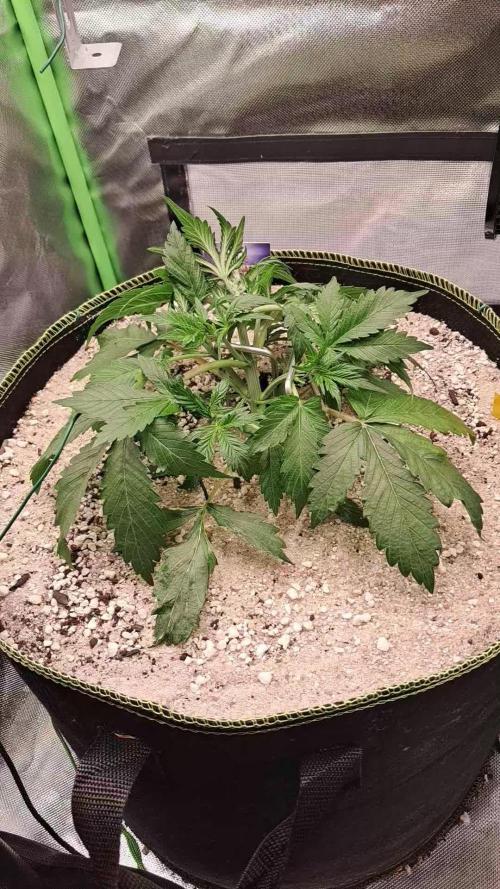
Week 3 continued with good and steady growth.
Yesterday I started to train the plants head with LST to the back for more even canopy in the end.

Likes
22
Share


@Gram_Solo
Follow
🔥🔥🔥 week 12 smashing it!
I am flushing the main lined plant, the thai stick looking one and the big purple this week !
2 plants just on Overdrive and bloom for 1 more week or 2 then onto the flushing
The colours on the leaves of the main line plant almost have a blue and gold tone to them, mad! buds are frosty!
Buzzing with these autos! 🙌👊🔥
Crazy colours
Will update soon
👽👍
Likes
35
Share


@CannabisRomania
Follow
She is very frosty and smells like candies. Nice color and the trichomes are passing from clear to milky.

Likes
6
Share

@Elguacho420
Follow
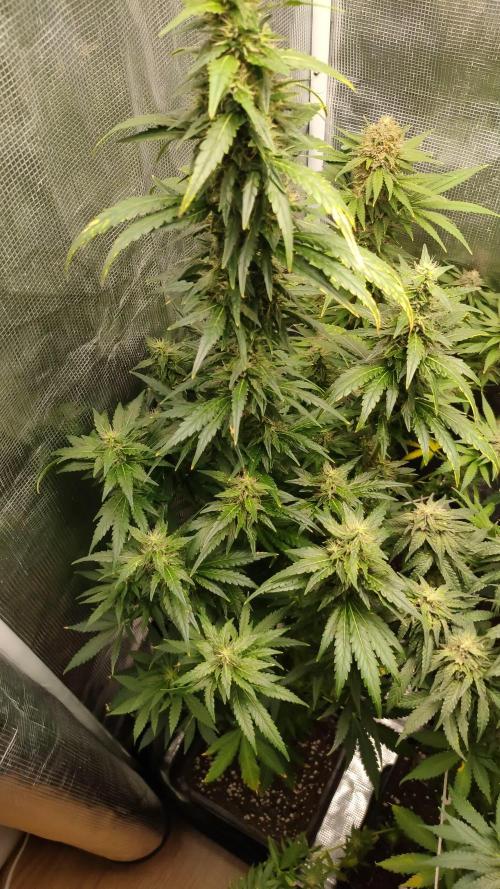
Buenas a tod@s... Seguramente ya estamos en la ante última semana... Están espectaculares todos los frutos, tanto de esta variedad como las otras, muy muy pretos como rocas, delicioso aroma y muy grandes, han crecido una exageración en una semana, se nota que comieron bien, no hay queja de mi parte hacia este cultivo, este riego con nutrientes será el último, el próximo ya es de limpieza de raíces y lo de más ya sabemos...😉 En el próximo cultivo se vienen cosas nuevas... Mientras tanto... A disfrutar está última etapa... Siempre se disfruta haciendo esto q nos gusta, con dedicación, esfuerzo y trabajando duro siempre... A seguir creciendo 🧠😎🙌🏻.
Buenos humos para tod@s nos vemos la semana q viene... 😎💀🇦🇷🤝🏻🇪🇦

Likes
5
Share


@GermGrowFox
Follow
Eine neue Woche steht an. Ich hab mich jetzt nun nach vielem hin und her überlegen doch dazu entschieden die Blüte einzuleiten. Ich bin gespannt was passiert und freu mich auf die Woche.
25. November
Cookies gelato wurde mit 4l gegossen zusätzlich noch mit Green sensation und Bloom Dünger.
Tropimango wurde mit 2,5l gegossen ebenfalls mit Green Sensation allerdings ohne zusätzliche blütenährstoffe. Es sollte genügend florganics im subtratsein, dass es vorerst nicht nötig sein sollte zusätzlich Nährstoffe geben zu müssen.
Royal Runtz hat 3l Wasser mit green sensation und Blütendünger erhalten.
26. November
Pflanzen wachsen. Bin zufrieden. Heute besteht kein Handlungsbedarf.
27. November
Der dritte Blütetag. Man merkt dass die Pflanzen an Wachstum zulegen wollen.
Cookie gelato und Tropimango wachsen uneingeschränkt.
Die Runtz hat einen Bruch erlitten und ich hab kein Superkleber oder Panzertape da
28. November
Aus mir unerklärlichen Gründen scheint das bisschen Kreppband auszureichen, um den gebrochenen Ast am Leben zu erhalten. Würde behaupten zu 4/5 war er durchgebrochen und hielt eher an einem Rindefaden. Reicht scheinbar um den Ast weiterhin mit allem zu versorgen.
Habe leichte Sorge dass der ganze Stress, den die Runtz bisher schon hat mitmachen dürfen, zu Zwitterbildungen.
Cookie Gelato kommt weiterhin vorwärts.
Tropimango hat 3l Wasser bekommen. Sie hatte als einzige einen furztrockenen Topf
Cookies Gelato ist nun 46 Tage alt
Tropimango ist nun 41 alt.
Royal Runtz ist nun 30 Tage alt
Blütetag 4
29. November
Cookies Gelato 4l Wasser bis Drenage
Roy’s Runtz 3l Wasserbis Drenage
Ab- und Umluft wurde auf AC Infinity umgerüstet und läuft jetzt über ein growcontrol.
Fyta-Sensoren liefern mir jetzt aktuelle Zahlen aus dem Substrat.
1. Dezember
Die Woche neigt sich langsam dem Ende zu und es ist einiges passiert.
Die Runtz hat einen Bruch diese woche erlitten aber entwickelt sich prächtig. Der gebrochene Ast ist der stärkste. Traue mich allerdings noch nicht das Klebeband zu entfernen.
Die Cookies sieht wunderschön aus ❤️
Tropimango muss immer wieder entlaubt werden, macht sonst gute arbeit.
Das Zelt hat einige Upgrades bekommen und die neuen Möglichkeiten auf Messungen, klimabedingungen und Substratanalysen erleichtern einiges.

Likes
19
Share


@SooSan
Follow
Elle sent la mangue, le sucre, les tropiques 😍
Et ce champs de trichomes est superbe...


Likes
18
Share


@Wahalan
Follow
Valeurs sûre la gorilla blue
Couper a Flo +68
Je repasserai après séchage et curing


Likes
7
Share

@AestheticGenetix
Follow
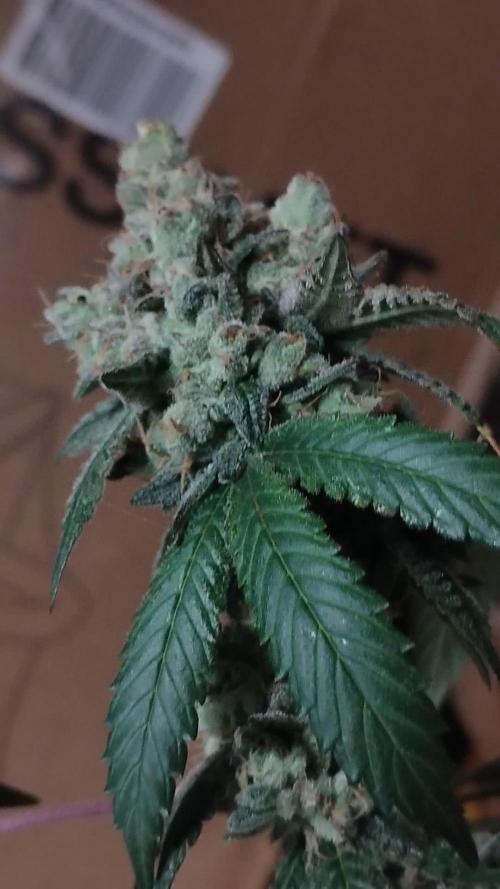
Chopped on 7/31 in the evening so day 1 of drying is the first of the month. Easy to keep track of.

Likes
29
Share


@GreenHouseLab
Follow
It’ll take me 30 min to trim this whole plant just the way I like it. Most likely be the first one to come down also need to get her ready.
Likes
8
Share


@Chubbs
Follow
Weekly update on these gorgeous girls. Was gone for 9 days so wasn't sure how they'd look when I returned. Wow did they take off into full flower. They're all looking amazing, it looks like two different phenos which is awesome. Over all excited to see them progress as the flower period just started.
Likes
19
Share


@GodZilla_Owner
Follow
Week 9 – Day 65 (BT41)
Everything went smoothly this week – one of those rare moments where it just flows 😎
🌿 RedPure#4 is now fully mature and ready for harvest!
She put on a bit more bud mass 🍇 and looks great overall.
✂️ She’ll be chopped within the next few days.
Also worth noting:
The switch to BioBizz pH+ is paying off – I’m now able to raise the drain pH by about 0.1–0.2 points 📈
That’s a clear improvement compared to using Canna pH+ with Advanced Nutrients.
For now, it's just routine: water, observe, enjoy 🙌
Likes
175
Share


@the_curious_grower
Follow
disaster struck.. during a heavy storm the cage of the gorilla breath #1 which was the best looking plant collapsed. the stem didn't break but every attempt to place it back failed. i ended up using rope attached to a pole and then to the cage to make it kinda better. unfortunately due to the fact that the plant laid down on his side for a couple days, i found multiple spots of budrot.
so... the plan is to chop her down tomorrow. the trichomes aren't quite ready yet but i guess i'll have to save what's left.
the other plants are hanging more by the day as they are really bulking up, i had planned to chop down the gorilla breath's and the Sapphire scout next friday on the 11th of october. then they'll have finshed their 9th week of flowering but the gorilla breath #1 is probably going down tomorrow, what do you think? should i do it tomorrow or Just wait another week and keep checking daily

Likes
8
Share
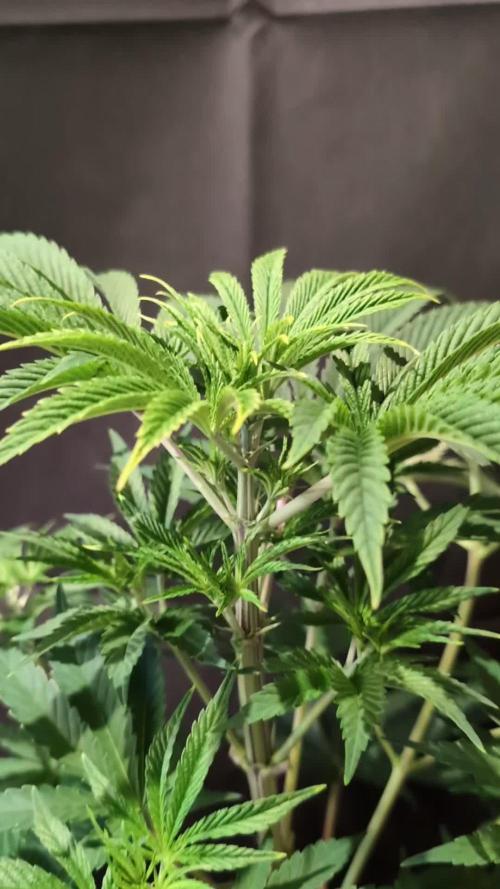

@GoodTimesOrganics
Follow
Hi liebe Community and Welcome Back! 🌿💚
Die kleinen Äffchen rocken! 🌄🐒
Hier im gesponserten Bio Tabs NL Grow, erreichen wir aktuell eine höhe von 63 CM.
Nach der Geschlechtsbestimmung, war es nun Zeit, die mädels in ihr neuen Topf zu verpflanzen.
Hier sehen wir an den Blattspitzen Licht gelbliche Verfärbungen und dass ist mir bereits in einem meiner vergangenen Grows aufgefallen.
Ich kann allerdings noch nicht definieren an welcher Komponente es liegt
Die Pflanzen entwickeln sich super gut und sind sehr robust.
Die Seitentriebe bilden sich immer weiter aus. Die Blattform ist schön Breit und Buschig.
Die Umgebungsgegebenheiten sind aktuell gut:
—————
🌞 Temp: 24
🌚 Temp: 18°C bis 19°C
💨 RH: 58%
VPD: 0,91 kPa
💡ppfd: 330 mpm
—————
Viele Grüße 👋


Likes
34
Share


@AshBrand
Follow
Welcome!
In this grow we have:
2x Platinum Wedding Crasher
2x Gelato 41
1x Sour OG
2x Lemon Kush
Germination/Rooting - 14 Days
9/17/21 - The clones look good in solo cups of soil. We will transplant into 5 gallon pots in the grow tent after they fully root in the cups.
9/18/21 - Looks like the clones are doing well in soil! We are so excited to grow these out. The clones came from a very highly respected grower.
9/19/21 - No ugly growth. All clones look amazing! We upgraded the light to a Mars TSW 2000.
9/20/21 - They are looking good and most likely rooting throughout the cups. I’ll give them a little bit of water today. I want the roots to go looking for the water so I’ve kept them slightly dry.
9/21/21 - They look happy. I will let them just do their thing… We are waiting on our Mars TSW 2000 light to show up anyways. No roots visible from the drainage holes in the cups.
9/22/21 - Looking really healthy and growing nicely. I’m excited for them to fully root in the cups so we can transplant them into the tent. The Mars TSW 2000 should be here in the next few days.
9/23/21 - Looking so good! We can’t wait to get these under the Mars TSW 2000 in the tent. They smell and look great.
9/24/21 - The clones look really good except for one Sour OG. It wilted and died, roots did not take unfortunately. I have a Lemon Kush started from seed we will grow in place of the dead Sour OG. Today we got our Mars Hydro TSW 2000 light. We will be hanging it and updating with pics/videos.
9/25/21 - They look amazing. Lots of growth while rooting.
9/26/21 - So far so good. Watering when the cups get light in weight. In just a few days we will be transplanting. See the video for today, we hung the Mars Hydro TSW 2000!
9/27/21 - Watered them yesterday, they look healthy. The Lemon Kush isn’t a clone, it is from seed. It’s the smallest girl but it’ll perk up quickly.
9/28/21 - Transplant day!! The clones are looking really good and it’s time to transplant into the 4x4 under that Mars Hydro TSW 2000 at 50% intensity. Check out the pictures and videos from today!

Likes
13
Share


@Weedeep
Follow
guys this plant is monster!!! that is all i can say!!! cant wait to taste her
one bad news, i have to take her out of the box for about 2 weeks before my Mephisto testers finished stretching, i have very small box ((( soon will move to the tent in house ✊👌

Likes
8
Share


@Kirsten
Follow
☆♡ Purple Punch: I'm just watering with flower nutes, when dry.
I installed a small monkey fan to keep the air moving at the back of the tent, where they are.
Waiting on the harvest, but may still be a little while yet. I DID NOT TOP DRESS THESE! ☆♡
16.2.25:
I decided to check out the lower canopies of all plants to see if I need to get rid of any foliage.
I did get rid of a few small branches and leaves.
However, whilst I was doing this, I saw more garden pegs from my LST remaining.
There were about 6 or more in Pink Mist alone. Additionally, on Watermelon, there were some left in, too.
I'm so annoyed to see that because the plants are really stretching, and I could've potentially disrupted this by leaving the pegs in for all this time without realising it.
🤞 that I haven't compromised things too much. We'll see.
I watered today with 2ltrs of dechlorinated water PH'd to 6.3 containing the following nutrients;
♡ .8g Green Leaf Nutrients PK booster
♡ .5g Ecothrive Biosys
I ordered quite a few things for the garden. I got Greenleaf Nutrients Sea K(elp) and Mega Crop Parts A+B. To go with their PK Booster I got last month. I'm excited to try it all together. Next run, maybe just using these. We'll see how it goes.
18.2.25:
The plants are going crazy for water! Everything is getting used right up so fast!
Today, I decided to add some more Black Strap Molasses to add some carbs and other micronutrients. I'll add the jar with the label in the photos section above.
I watered a very small amount to each plant.
What I put in:
♡ Black strap molasses 150g
♡ 2g Sea K(elp) Greenleaf nutrients.
I dissolved everything in 4ltrs of dechlorinated water PH'd to 6.4.
19.2.25:
I received the majority of the garden purchases that I made. I'm still waiting for the Ecothrive Life Cycle. I wanted to top dress, but it's been delayed unfortunately.
I am using my Greenleaf nutrients products which I bought on Amazon. I got the Mega Crop 2 part system Part A and Part B. I have the Sea K(elp), and the bud explosion PK booster.
I really wanted to get some of their sweet candy asking read many positive reviews. Unfortunately, for me, this is unavailable to buy currently. So that's a little disappointing.
I needed to do a good watering so when my nutes were delivered today, I got excited 🤗
I watered 2ltrs of dechlorinated water per plant, PH'd to 6.4, containing the following nutrients:
♡ 1g Mega Crop Part A
♡ 1g Mega Crop Part B
♡ .5g Sea K(elp).
The plants drank this up within a few hours.
I'm going to try and hold off on watering in hopes that my Ecothrive Life Cycle will arrive so I can top dress and water it in then.
20.2.25:
My Ecothrive Life Cycle arrived yesterday, and the plants are ready for their top dress and a good watering in.
I have some Biobizz Light Mix, Canna Coco,and perlite. I'm going to use this as a base to mix my amendments in.
I'm going to fill my 5 gallon bucket with about 4.5 gallons of my top dress mix. I will distribute this across 6, 4-5 gallon pots. Then I will water in well with Greenleaf nutrients Mega Crop Parts A+B and Sea K(elp).
I've made a crude attempt to video mixing my top dress. Don't listen to the audio. lol, my YouTube didn't stop playing whilst I recorded this 😂
So anyway, I added the following amendments to the above base mix of 4.5 gallons;
♡ 3 TBSP Ecothrive Life Cycle
♡ 3 TBSP Vitalink Bat Guano
♡ 3 TBSP Ecothrive Charge
♡ 1 TBSP RHS Mycorrhizal Fungi granules
♡ 6 TBSP Ground Cinnamon.
Likes
8
Share

@Kirsten
Follow
26.12.24:
These are my 2 best plants P1 and P2 Purple Punch, they are looking great! Not sure what happened to P3.
They are in early flower/ pre-flower with the pistils clearly seen on P2. I am also hoping to tie some of the branches down to help light penetration on the lower canopies.
I have noticed light stress on my plants. I had moved the lights further away and increased the light intensity to 70%. Unfortunately that created some issues. Namely severe palour of the leaves.
To try and rectify the situation, I've dimmed the lights to about 30%, staying at the same distance, about 30 inches away. I measured the par levels, after I did this. They should a reading of anywhere between 40 and 150, at the canopy of the plants. They are all different sizes. This seems to have improved the colouring on all plants.
After this evenings watering, I will monitor recovery and increase lighting intensity again slowly. I am also using the light cycle of 21/3, so the plants have many hours more light to absorb, than for example 12/12 or 18/6.
I am pleased with the progress, considering all of my mistakes!
29.12.24:
So I finally gave LST a shot, it's probably a bit too late, however I really want to get the most of the triploid pheno, and I went a little crazy and LST'd all plants except 2, as they're too small.
I did that late last night, this afternoon I was amazed to see the plants turn their leaves back to the light source. I'm glad I overcame my fear of trying it. I'm very excited to see them adapt and progress! 😁 there are videos above with before and after of my LST process.
Thanks for checking out my diary 🍃 ✌️